Power and Impact: African American Art Exhibit in Iowa

In the spirit Black History Month: African Americans and the Arts, Power and Impact is an exhibit of art work by notable Black artists in Iowa. It’s a partnership of the African American Museum of Iowa and the Cedar Rapids Museum of Art.

The exhibit runs between October 28, 2023 and March 31, 2024.

Black History Month 2024 Theme is African Americans and the Arts

February is Black History Month and in 2024 the theme is African Americans and the Arts.

This reminds me of a blues artist I heard on KCCK on the Big Mo Blues Show last Friday. His name is Toronzo Cannon and his career as a blues guitarist and songwriter is skyrocketing. I heard his song “The Preacher, the Politician, and the Pimp.”

The lyrics reminded me of a character (or maybe more properly a non-character) called Rinehart in Ralph Ellison’s book, Invisible Man. I’m by no means an Ellison scholar but in chapter 23 the main narrator gets mistaken for a black guy named Rinehart who has many faces in the black community. He’s a preacher, a numbers runner, a pimp, and is also related to a political movement in the novel. Rinehart is all of them and none of them, moving between the “rind and heart” of who black people are in America. The implication is that the identity of black people is multifaceted and the similarity of the theme in Toronzo Cannon’s song is striking.

Cannon is also multifaceted. He’s a Blues guitar star and song writer and is also still a bus driver for the Chicago Transit Authority. How does he find time to do all that?

I wonder if Cannon got the idea for the song from Ellison’s novel. I guess I’ll never know.

This reminds me of an encounter I had with a black writer at Huston-Tillotson University (then Huston-Tillotson College, located in Austin, Texas) in the 1970s when I was an undergraduate in college. I’ve described this episode before in another post (“Black Psychiatrists in Iowa” 2019). The excerpt below includes a reference to a book review I wrote that was published in The American Journal of Psychiatry over 20 years ago:

“This reminds me of a book review I wrote for the American Journal of Psychiatry almost 20 years ago (Amos, J. (2000). Being Black in America Today: A multi perspective review of the problem. Am J Psychiatry, 157(5), 845-846.).”

The book was written by Norman Q Brill, M.D. It reminded me of my experience at Huston-Tillotson College (now Huston-Tillotson University, a private school, historically with largely Black enrollment) in Austin, Texas back in the 1970s. I wrote:

“Dr. Brill’s appraisal of many black leaders in chapters such as “Black Leaders in the Black Movement” and “Black Anti-Semitism” may be refreshingly frank in the opinion of some. He tailors his prose so as not to denounce openly those whom many would describe as demagogues. At the same time, it is apparent that his underlying message is that a substantial number of them are not only out of touch with mainstream black America but may even mislead black people into adopting ideological positions that impede rather than foster progress. Dr. Brill’s description of the issue reminded me of my own experience with this phenomenon as a freshman in the mid-1970s at a college of predominantly black enrollment in the southern United States. A guest lecturer (who, as I recall, had also written a book about being black in America) told us that the white man would never allow a black man to be a man in America. He had only three choices: he could be a clown, an athlete, or a noble savage. These corresponded to the prominent and often stereotyped roles that blacks typically held in entertainment, sports, and black churches.” 

I was taken aback by the speaker’s judgment and asked him what my choice should then be. He was equally taken aback, I suspect. He advised me to be a clown.

The lyrics of Cannon’s song “The Preacher, The Politician, and the Pimp,” Ellison’s Rinehart, and another writer’s characterization of the roles allowed in American society for black men all resonate together. What drives the similarity of this perception across different artistic platforms?

When I reflect on how I’ve negotiated my life’s path over they years, I guess I would have to admit that I’ve often played the clown. Anyone can see that in the way my sense of humor comes across. Is it the healthiest way to respond to racism in this country? In terms of the psychological defense mechanisms, I think it’s a relatively mature strategy. You could argue with that by asking, “But where’s the maturity in dad jokes?”

Hey, it worked for Dick Gregory:

“I’ve got to go up there as an individual first, a Negro second. I’ve got to be a colored funny man, not a funny colored man”—Dick Gregory.

Dick Gregory

Thoughts on the Passing of Artie Hicks

Yesterday, I was thinking about Artie Hicks, one of my old English teachers at Huston-Tillotson University, which was Huston-Tillotson College back in the mid-1970s when I was a student there. I looked him up on the web, just out of curiosity—and found his obituary. That seems to happen a lot lately.

Anyway, he was a gifted teacher and had a great sense of humor. He bought tickets for the whole class to see the movie Harold and Maude, a ground-breaking film in those days. He had a simple and direct approach to talking with students. He always seemed comfortable in a place where white people (including teachers) were the minority—unlike the wider world outside the campus.

He was bald and the students called him Kojak, which was the name of the bald, tough detective star (played by Telly Savalas) of the TV crime drama which aired on CBS from 1973 to 1978.

I think you could have called Artie tough as well; not bad guy tough but honest and direct.

Make or Break Escape Plan When Your Car is in a Flood

Sena and I saw a Weather Channel segment on how to escape your car if it is sinking during a flood. It’s mainly a reminder to turn around, don’t drown. However, there were a couple of interesting things about it. One was the quiz, in the format of a “how would you survive?” quiz with 3 choices: Fasten the seat belt securely, shatter the window, or call 911. The right answer is to break the window and I’ll have more on that because there was no guidance at all about how to break the window. We thought that was an important omission.

The interesting thing about the video clip is that I thought I recognized it from a paranormal TV show, The Proof is Out There with Tony Harris. Most of the time, the conclusions tend to lean toward skepticism regarding paranormal explanations, but in this one, Tony called it a “Possible Miracle.”

In both the Weather Channel and The Proof is Out There, the vehicle was red and looked like it was bigger than a compact or standard size car. The way it moved in the flood water was very similar in both. The YouTube on The Proof is Out There was from Season 3 and it was posted on October, 2023. I’m pretty sure I saw it long before that. The video on the Weather Channel looks like a clip from the full video, and it stops early before the rest of the action.

In fact, there are a few news report videos (from the same news agency, the archives of which no longer have the video for some reason) of the incident, which happened in 2006 and which involves a woman in a red SUV in Pueblo, Colorado who drove into flood waters. The SUV sank, but not before attracting the attention of rescuers, reporters and camera crews. The SUV went underwater with windows rolled up and when it was later pulled out, the windows were still rolled up, unbroken, and all the doors were closed. It has never been clear how she escaped, although many speculated that it was a miracle.

Sena noticed that the windshield wipers were still working, something I had missed. A couple of YouTube viewers (in The Proof is Out There video) mentioned it, but nobody responded to the implication that the electric controls to the lower the windows might still have temporarily worked as the vehicle went under. That still doesn’t explain how they got rolled back up.

It’s also noteworthy that, despite the news story mentioning the driver’s name, where she worked, and that she had called her brother while the SUV was sinking, there doesn’t seem to be any record of anyone asking her how she’d gotten out of the vehicle.

This post is going to contain several YouTube videos, but I’m trying to keep them to the relevant minimum. I think, in all fairness to The Weather Channel about omitting how to shatter the vehicle window in order to escape sinking and drowning (during the TV episode mentioned above), they have posted a video in the past which does provide excellent guidance.

In this video, they mention something Sena knew about but which I was not familiar with—the little tool called a seat belt cutter and glass breaker. You can buy them just about anywhere, often for less than $20. The AAA web site has clear instructions for what to do in situations where this tool would come in handy. In that same web page, there’s a link to the AAA research study done in 2019 about these tools, which contains more helpful advice, such as that the spring-loaded tools work better than the hammer type, and that they work on tempered glass, not laminated glass.

In any case, we’re sold on the glass breaker and it’s on order. However, we would prefer to turn around, don’t drown.

FDA Issues Warning Not to Use Tianeptine

There have been several warnings from the FDA and others for several years (going back to at least 2014) against using tianeptine. It’s used as an antidepressant in other countries, but “FDA is warning consumers not to purchase or use any Neptune’s Fix products, or any other product with tianeptine — a potentially dangerous substance that is not FDA-approved for any medical use but is illegally sold with claims to improve brain function and treat anxiety, depression, pain, opioid use disorder and other conditions.”

Tianeptine has been called other names including Neptune’s Fix, Zaza, Coaxil, Stablon, Tianna Red, and others.

It reportedly has been banned in several states. Southern Iowa Mental Health Center published an educational web page in 2022 indicating that a review between 2000 and 2017 found a sharp untick in tianeptine-related poisoning calls during that time period.

The web page also pointed out that “The study specifically noted that while the drug was implicated in just five poisoning calls back in 2014, that figure rose to 38 in 2015, 83 by 2016, and 81 by 2017. And most of those calls involved relatively young people, between the ages of 21 and 40.”

Old Doctors vs Young Doctors

I ran across a recently published web article that originated from the Wall Street Journal (WSJ), to which I don’t have access because I’m not a subscriber. The title is “Do Younger or Older Doctors Get Better Results?” and it’s in the form of an essay by Pete Ryan.

It’s been picked up by over 130 news outlets and is actually based on an open access study published in the British Medical Journal (BMJ) in 2017, (BMJ 2017;357:j1797): Tsugawa Y, Newhouse J P, Zaslavsky A M, Blumenthal D M, Jena A B. Physician age and outcomes in elderly patients in hospital in the US: observational study BMJ 2017; 357:j1797 doi:10.1136/bmj. j1797.

I had a quick look at the rapid response comments. A couple resonated with me. One was from a retired person:

“I did not see specific patient age statistics vs physician age groupings. Wouldn’t older patients, whose risk of dying soon was higher, want to see their own older doctors? Lots of uncontrolled variables in this study… I also agree with one of the other comments that a patient who knew the end of their life was near would seek care from an older physician that would tend to be more empathetic with a patient of their own age.”

Another was from an emergency room physician, Dr. Cloyd B. Gatrell, who entered the comment on June 8, 2017. Part of it echoed my sentiments exactly:

“The authors’ own statements call their conclusion into question: “Our findings might just as likely reflect cohort effects rather than declining clinical performance associated with greater age….”

I suspect most of the web articles spawned by the study didn’t really talk about the study itself. They probably were mainly about your attitude if the doctor who entered the exam room had gray hair or not.

The study involved internal medicine hospitalists and measured mortality rates comparing physicians were in different age ranges from less than 40 years to over 60.

It got me wondering if you could do a similar study of younger and older psychiatrists. Maybe something like it has been done. I’m not sure what an appropriate outcome measure might be. If you focus on bad outcomes, completed suicides are probably too rare and can involve psychiatrists of any age. The quote that comes to mind:

“There are two kinds of psychiatrists—those who have had a patient die by suicide, and those who will.”

Robert Simon, MD, forensic psychiatrist

I doubt they would fall into any particular age category more often than any other.

Anyway, on the subject of physicians who are getting older and required to retire at a specific age, recent news revealed that Scripps Clinical Medical Group agreed to pay almost $7 million to physicians to settle an age and disability discrimination charge filed with the U.S. Equal Opportunity Commission over a policy requiring them to retire at age 75.

And this reminds me of an article in Hektoen International A Journal of Medical Humanities: Jean Astruc, the “compleat physician.” He was a doctor in the Age of Enlightenment and was a geriatrician. An excerpt from the article:

Jean Astruc had a special interest in geriatrics and in 1762 gave a series of lectures that were taken down by one of his students. He described how in old age the skin becomes thick and hard, the hair and teeth fall out, there becomes need for glasses, respiration becomes labored, urine escapes, there is insomnia, and people forget what they have done during the day but remember every detail of what they have done in the distant past. He recommended diet, some wine to help the circulation, exercise, long sleep, and “a life from bed to table and back to bed.”

I think there is a contradiction in Astruc’s recommendations.

I retired voluntarily a little over 3 years ago. It just so happens that one of the reasons was the Maintenance of Certification (MOC) program, which the BMJ study authors mentioned in the first paragraph of the introduction:

“Interest in how quality of care evolves over a physician’s career has revived in recent years, with debates over how best to structure programs for continuing medical education, including recent controversy in the US regarding maintenance of certification programs.”

That reminds me that I got an email a few days ago from Jeffrey M. Lyness, MD, the new President and CEO of the American Board of Psychiatry and Neurology (ABPN) in January of 2023, replacing Larry Faulkner, MD. It was a letter explaining how I could recertify. I decided not to renew several years ago and I’m not thinking of coming out of retirement. I have always been an opponent of the MOC.

Maybe he sent me the letter because he found the Clinical Chart Review Module on delirium that a resident and I made in 2018. As of January 24, 2024 you can still find the module on the web site just by typing in the word “delirium” in the search field. It could be the only document about delirium on the ABPN web site, although that’s difficult to believe.

On the other hand, it’s one of two modules that are labeled as approved although valid through December 31, 2023. Maybe it’s headed for retirement.

Sena Says Chase Away the Winter Blues, Try Lume!

Sena said I could give you an update on the Lume products. Remember, she said this was OK.

She’s actually happy with the product. She uses it as recommended by the creator, who recommends applying it “under boobs, butt crack, pits,” and so on. That’s how the commercials go.

We shoveled snow and scraped ice yesterday and she thought she could go without a shower last night—mainly to see how long the deodorant would last.

On the other hand, she’s not going to buy it again because it’s too expensive. Really, that’s the only knock against it, according to her. And her word is the only one that matters. Except her suggestion I try Mando products. Is she trying to tell me something?

I’m wondering how this will promote Lume research into making the deodorant for Bigfoot (my proposal in the original post), namely Bigfoot B.O. Begone (BBOB). Lume can even have the name, as long as they back it up with field research. That means going into the field to find Bigfoot, applying the product, and getting follow up results periodically (every hour on the hour would suffice) for at least 72 hours.

Bigfoot is about 8 feet tall and weighs over 600 pounds, so wrestling with it will require fortitude, strict dedication to the scientific method—and plenty of beef jerky. Sticking your nose into its armpits and other unmentionable body sectors will take courage, excellent health insurance, life insurance, and a total lack of sanity.

What some people will do in the name of science makes you wonder if psychiatric treatment could make a difference.

Remember, she said this update was OK. I’m available for questions just as soon as I’m released from the witness protection program.

Civil or Uncivil Bird Society

We caught sight of several birds engaged in the usual interactions with each other and their prey (in the case of the hawk). Call it civil or uncivil society, it’s natural no matter how you see it.

I’m going to call it a Red-tailed Hawk that caught a gray squirrel and had a tough time managing to eat it or even carry it up a tree.

We saw a male Cardinal nip a sparrow who was dining a little too close to him on a tree. I’m going to go out on a limb and guess it was a White-throated Sparrow.

We a Black-capped Chickadee flitting around and a couple of wild turkeys trudging through the snow. The turkeys seemed to be almost encouraging each other at times.

Music Credit for video:

Call to Adventure – Comedy by Kevin MacLeod is licensed under a Creative Commons Attribution 4.0 license. https://creativecommons.org/licenses/by/4.0/

Source: http://incompetech.com/music/royalty-free/index.html?isrc=USUAN1300022

Artist: http://incompetech.com/

Making My Own Race Card

Tomorrow’s schedule for the Martin Luther King Jr. Celebration of Human Rights Week has Michele Norris presenting the MLK Distinguished Lecture, “Our Hidden Conversations.” It’s based on her Race Card Project which produced her new book “Our Hidden Conversations: What Americans Really Think About Race and Identity.”

Sena and I probably are not going to make it to Michele Norris’s lecture tomorrow, mostly because of the bad weather.

The Race Card Project involved people sending in cards with just six words on it which described their experience with race and identity and much more than that. I didn’t learn of the project until this month.

If I were to send in a card, it would say, “Everyone changed but Jim.” What’s important about that is who said it, because it wasn’t me. It was somebody who was my best friend in grade school. I lost touch with Dan, who was white, for a while when we were kids.

When I caught up with him while we were still pretty young, he had changed. He seemed much older than our real age. He used to have a great sense of humor, despite his life being a little difficult. Our lives were both hard, in many ways that didn’t involve race. We both grew up in relative poverty.

But after only a few years of not seeing each other, he seemed cynical, which was very different from how I remembered him.

I don’t recall how I found him, but I met with him at his school. I expected to find the same guy who made me laugh. But he didn’t seem glad to see me. I must have mentioned it, and I probably pointed out that he had changed.

And that’s when Dan said, without looking at me, “Everyone changed but Jim.” The meeting was brief. I left and never saw him again.

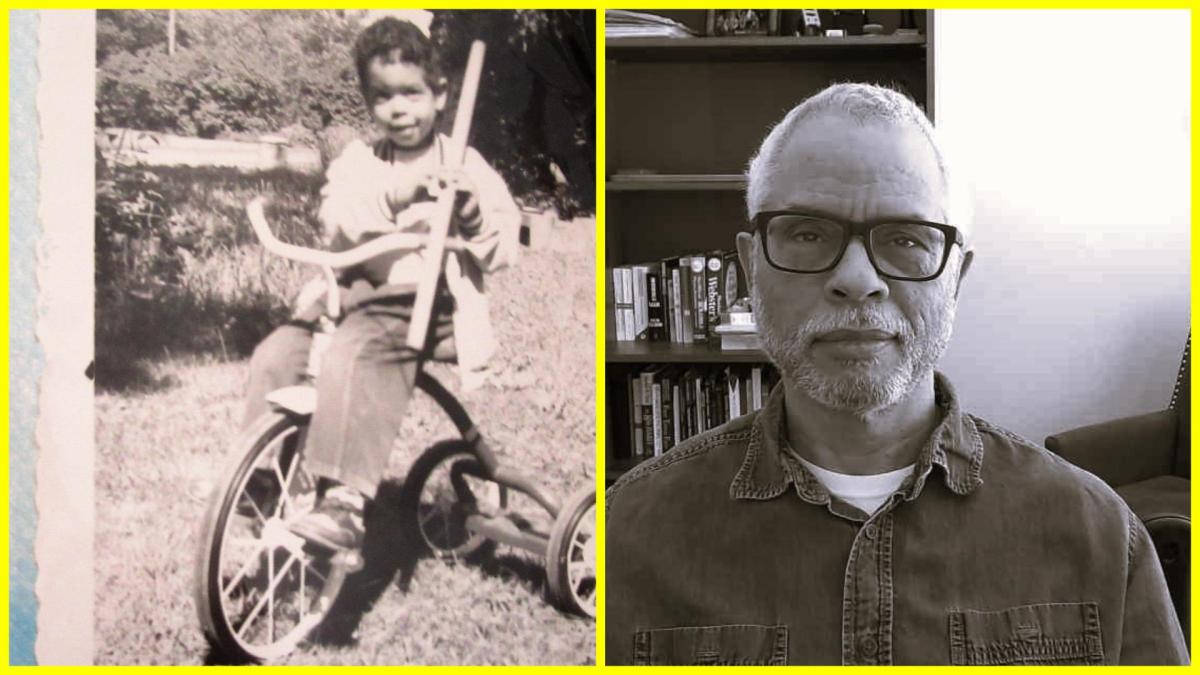
Friends were tough to find for me. I didn’t have any black friends. My father was black and my mother was white. They separated when my younger brother and I were little, and we lived with mom. Despite what some people may or are rumored to think, racism has always been a part of living in America.

Black people tended to live in different zip codes, not the one in which I grew up. I was often the only black kid in school, and this story was and is still common. I didn’t have black friends because I didn’t live in the zip codes where black people lived.

Dan wasn’t the only friend I had. There was only one other; he was white too. Like me and Dan, Tim and I didn’t stay friends.

A lot happened after that, which is always a part of coming of age. And I guess that’s because a lot of things changed—including me.

Generosity, kindness, and love, especially the love from my wife, saved me from lifelong bitterness, for which I’m grateful. I think a sense of humor was also important. And even though definitions differ about what friendship is—I have friends.