What The Heck, Let’s Talk About Butter

I’ve been pretty serious the last few blogs. Let’s lighten up and talk about butter. Is it bad for your health?

Not necessarily, according to a WebMD article. In fact, butter has health benefits:

  • It’s rich in nutrients like calcium and vitamin E
  • It may help lower your chances of cancer
  • It could slow down age-related macular degeneration
  • If you swab it all over you it’ll make you so slippery extraterrestrials will have trouble abducting you

There are risks, of course, including the risk of heart disease because butter has a lot of calories and saturated fat.

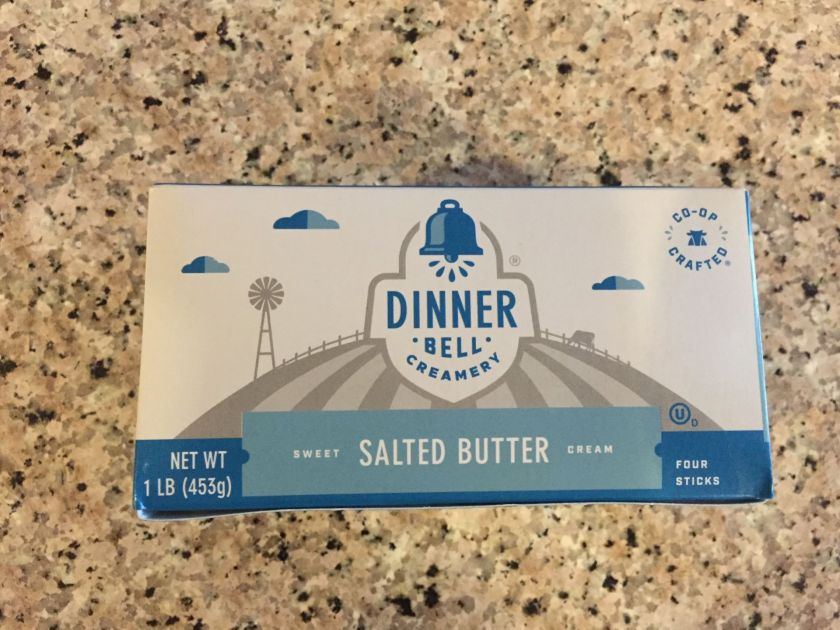
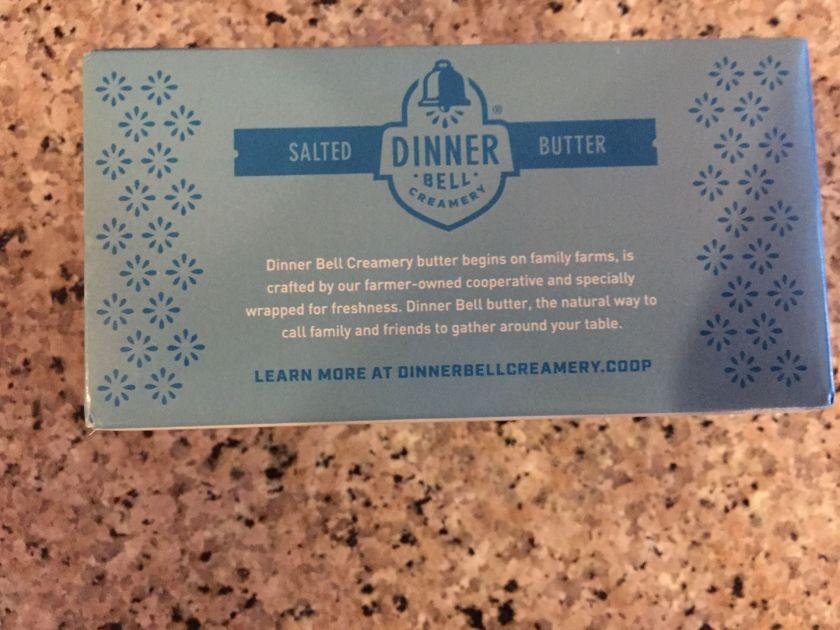
Sena puts butter on everything. She puts butter on butter. She bought a new kind of butter called Dinner Bell Creamery Salted Butter. Sounds like something the devil made, doesn’t it?

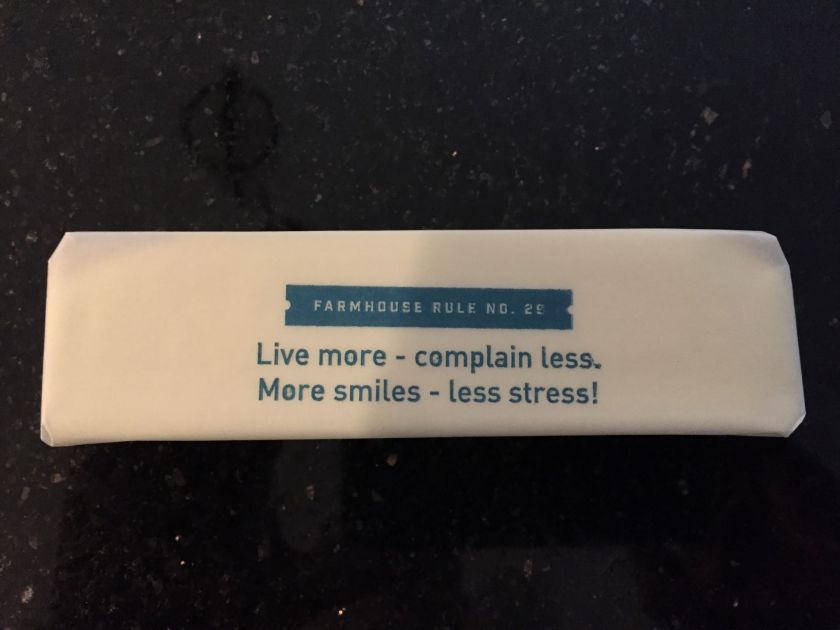
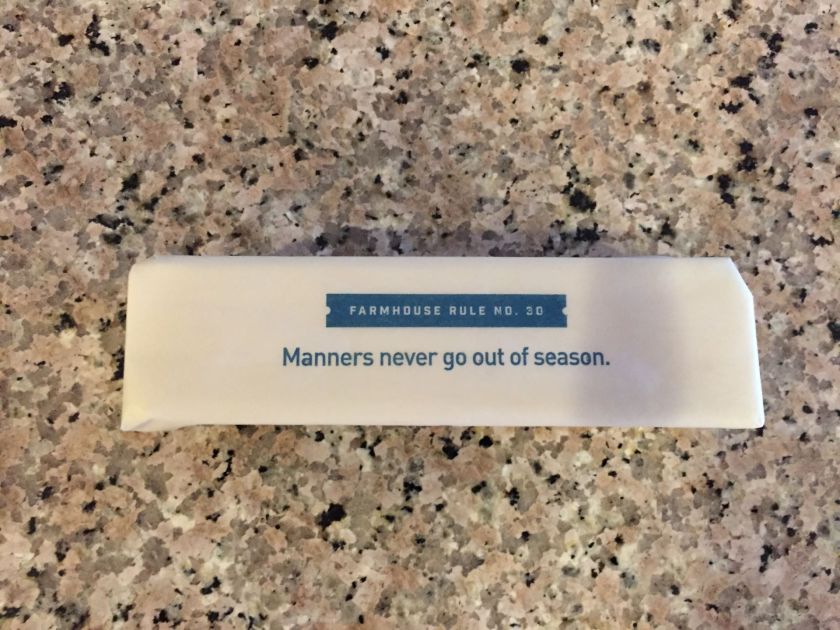
On the contrary, you can even learn a thing or two about life from reading the labels on the sticks.

An Old Blog Post About My College Days in Texas

There’s something embarrassing yet fascinating about reading my old blog posts from years ago. The one I read yesterday is titled simply “I Remember HT Heroes.” I make connections between my undergraduate college days at Huston-Tillotson College (now Huston-Tillotson University (an HBCU in Austin, Texas) and my early career as a consultation psychiatrist at The University of Iowa Hospitals & Clinics (now rebranded to Iowa Health Care).

My first remark about getting mail from AARP reminds me that organization is sponsoring the Rolling Stones current tour, Hackney Diamonds. And the name of my specialty was changed from Psychosomatic Medicine to Consultation-Liaison Psychiatry in 2017.

The photo of me attached to the original post reminds me of how I’ve gotten older—which also makes me hope that I’ve gotten wiser than how I sound in this essay. The pin in my lapel is the Leonard Tow Humanism in Medicine award I received in 2006.

I Remember HT Heroes

Getting membership solicitations in the mail from the American Association of Retired Persons (AARP) is a sure sign of aging, along with a growing tendency to reminisce. Reminiscence, especially about the seventies, may be a sign of encroaching senility.


Why would I reminisce about the seventies? Because I’m a baby boomer and because my ongoing efforts to educate my colleagues in surgery and internal medicine about Psychosomatic Medicine, (especially about how to anticipate and prevent delirium) makes me think about coming-of-age type experiences at Huston-Tillotson College (Huston Tillotson University since 2005) in Austin, Texas. Alas, I never took a degree there, choosing to transfer credit to Iowa State University toward my Bachelor’s, later earning my medical degree at The University of Iowa.


Alright, so I didn’t come of age at HT but I can see that a few of my most enduring habits of thought and my goals spring from those two years at this small, mostly African-American enrollment college on what used to be called Bluebonnet Hill. I learned about tenacity to principle and practice from a visiting professor in Sociology (from the University of Texas, I think) who paced back and forth across the Agard-Lovinggood auditorium stage in a lemon-yellow leisure suit as he ranted about the importance of bringing about change. He was a scholar yet decried the pursuit of the mere trappings of scholarship, exhorting us to work directly for change where it was needed most. He didn’t assign term papers, but sent me and another freshman to the Austin Police Department. The goal evidently was to make them nervous by our requests for the uniform police report, which our professor suspected might reveal a tendency to arrest blacks more frequently than whites (and yes, we called ourselves “black” then). He wasn’t satisfied with merely studying society’s institutions; he worked to change them for the better. Although I was probably just as nervous as the cops were, the lesson about the importance of applying principles of change directly to society eventually stuck. I remember it every time I encounter push-back from change-resistant hospital administrations.


I’m what they call a clinical track faculty member, which emphasizes my main role as a clinician-educator rather than a tenure track researcher. I chose that route not because I don’t value research. Ask anyone in my department about my enthusiasm for using evidence-based approaches in the practice of psychiatry. I have a passion for both science and humanistic approaches, which again I owe to HT, the former to Dr. James Means and the latter to Dr. Jenny Lind Porter. Dr. Means struggled to teach us mathematics, the language of science. He was a dyspeptic man, who once observed that he treated us better than we treated ourselves. Dr. Porter taught English Literature and writing. She also tried to teach me about Rosicrucian philosophy. I was too young and thick-headed. But it prepared the way for me to accept the importance of spirituality, when Marcia A. Murphy introduced me to her book, “Voices in the Rain: Meaning in Psychosis”, a harrowing account of her own struggle with schizophrenia and the meaning that her religious faith finally brought to it.


Passion was what Dr. Lamar Kirven (or Major Kirven because he was in the military) also modeled. He taught black history and he was excited about it. When he scrawled something on the blackboard, you couldn’t read it but you knew what he meant. And there was Dr. Hector Grant, chaplain and professor of religious studies, and champion of his native Jamaica then and now. He once said to me, “Not everyone can be a Baptist preacher”. My department chair’s echo is something about how I’ll never be a scientist. He’s right. I’m no longer the head of the Psychosomatic Medicine Division…but I am its heart.


I didn’t know it back in the seventies, but my teachers at HT would be my heroes. We need heroes like that in our medical schools, guiding the next generation of doctors. Hey, I’m doing the best I can, Dr. Porter.

Another Look at an Old Blog Post on Psychiatric Case Formulation

I just had a look at a blog post on case formulation I wrote about 12 years ago. Aside from sounding a little pompous, I decided to check on the title I gave it back then: “What Kind of Disease Does the Person Have And What Kind of Person Has the Disease?”

I looked at the web site that researches who said what as far as quotes go. It’s Quote Investigator and their conclusion is that the above quote should be attributed to Henry George Plimmer, a lecturer on Pathology and Bacteriology at St. Mary’s Hospital Medical School. He said:

“You will have to acquire, too, for any success to be given you, an accurate knowledge of human nature, and you will find that it is quite as important for the doctor to know what kind of patient the disease has for host, as to know what sort of disease the patient has for guest.”

Anyway, the post is below; the cases are all fictional:

I recently had the pleasure of evaluating one of our junior residents using the new clinical skills exam format. These evaluations are taking the place of the oral board examinations for certification in Psychiatry. The oral board exams have been the bane of examinees for many years in part because of the extreme anxiety they provoke. Preparing a resident in psychiatry involves a rigorous educational program over 4 to 6 years and they must master a vast amount of content knowledge just to become certified as safe and competent practitioners as defined by regulatory organizations. Elements of the clinical skill exam include interviewing skills, a mental status exam, case presentation, and case formulation.

Case formulation is the most demanding element. There are many references trainees can Google on line to find. A classic paper often cited is the one by Perry and others[1]. It helps doctors and patients by balancing the focus on both what kind of disease the person has, and what kind of person has the disease. Case formulation is an essential skill which takes years of practice to master and I’m inclined to give a lot of latitude to trainees in their ability to demonstrate it, especially in the first year of residency. Formulations can be used by psychiatrists in every subspecialty, including Psychosomatic Medicine, as the fictionalized examples will demonstrate.

Making useful case formulations can be frustrating for both trainees and experienced clinicians. On the other hand, if it’s not, there’s a good chance that oversimplification is becoming a problem. One pitfall that ironically comes with experience is dashing off a formulation that sounds deep using “psychobabble” but which misses the mark in describing the patient’s problems in the real world. Striking a balance between over inclusiveness and superficiality takes practice. Often, tying the formulation to only one model seems constrictive.

In general, making an integrative synthesis of the relevant factors in a patient’s clinical situation (abstracted from the history) is easier than making an integrative inference about why her problem exists. It helps to look for clues in the form of repetitive themes in a patient’s life which lead to conflicts that are resolved in maladaptive ways. There is no standardized format, and so there may seem to be as many formulation strategies as there are clinicians. Starting with a manageable framework can help. The phrases in bold type are the connectors that guide thinking and writing about the patient and help keep the focus on central issues:

This is a  age, employment status, illness state (acutely v. chronically ill), marital status, male/female, with  psychiatric symptoms list, duration of,  complicated by,  head injury, substance abuse, medical syndromes, that we were asked to evaluate because of  consult requestor question.  She meets criteria for Diagnostic and Statistical Manual-IV-TR diagnosis.

Her psychiatric symptoms can be associated with or precipitated by medical diagnoses. They are also known to have familial pattern, affected/exacerbated by drugs, environmental triggers.

The current behavior may have been determined by a developmental background marked by abuse, neglect, conflict in family of origin, maintained longitudinally by pattern of maladaptive management of relationships and situational stressors.  Although cross-sectional exam cannot typically confirm one central conflict, she may have difficulties with independence v. dependence, intimacy v. isolation, generativity v. stagnation.

Typical defenses may include acting out, denial, reaction formation, etc., which appears to be interfering with medical management, not an issue on the ward, and may be predictive of chronic noncompliance with therapy, conflict with caregivers, eventual return to adaptive coping, etc.

Although the scaffold looks unwieldy and long, in practice (and with practice) it can be tailored to fit the clinical need. Certain neuropsychiatric problems seen by consultants don’t require any detailed analysis of defenses, e.g., uncomplicated drug-induced deliria in patients without any psychiatric histories. But just because someone does have a complicated psychiatric history doesn’t imply that the formulation must be long and detailed. The goal is always to succinctly summarize the central issues that describe and explain the patient’s current problems so as to guide recommendations for management.

Example case formulations:

  • 44-year-old multiply divorced, alcoholic, unemployed white male without formal psychiatric history, but with acute subsyndromal depressive symptoms without suicidality in the context of recent diagnosis of diabetes mellitus after being hospitalized with diabetic ketoacidosis. His father (who also had diabetes) died of suicide when the patient was 9 years old. Consult triggered by patient refusing to get up to toilet himself, crying, insulting the nurses, yet constantly on his call light. Depression is known to be associated with Diabetes Mellitus and can run in families. He may be conflicted between dependence and independence or struggling with stagnation developmentally, given his social and occupational marginalization. Regression appears to be major defense. Tolerance of nonthreatening behavior and allowing him control over non-essential features of his care may facilitate face-saving return to more adaptive coping with grief. Monitor for development of a more well-defined depressive syndrome; supportive approach with encouragement of affect but engage effective coping by modeling; query into past successful problem solving.
  • 37-year-old divorced white female teacher aide with abrupt onset of medically unexplained slow, garbled speech. Previous psychiatric history notable for one brief hospitalization in her mid-teens after impulsive overdose over a breakup with boyfriend. Temporal association of dysarthria with her discovering her current boyfriend in bed with her teenage daughter (reported by a friend). Her presentation is consistent with conversion reaction. Major conflict is desire to confront boyfriend but fear of rejection and abandonment. Major defense is somatization. Confrontation generally contraindicated; suggest that recovery will be fairly rapid; no invasive procedures or specialist referrals needed and the condition is not dangerous. Quick follow-up in mental health clinic scheduled.
  • 57-year-old disabled man who had a liver transplant and who has polysubstance dependence in remission and longstanding antisocial behavior referred for subsyndromal depression and anxiety along with insomnia. Recently arrested for shoplifting. Also engaging in reckless driving and fistfights, neither of which he’s done in decades either. No organic brain disease identified that could explain the behavior. Possibly struggling with generativity v. stagnation because of chronic unemployment leading to regressive acting out. Refer to psychotherapy, although resistance expected with more acting out and non-adherence.
  • 49-year-old woman with Hepatitis C (HCV) on interferon (IFN) for last 3 months and with gradually increasing symptoms of syndromal depression, personality change with marked irritability, and somatic complaints. Previously diagnosed recurrent depression in the context of Cluster B personality traits complicated by alcoholism and cocaine abuse, now in sustained full remission. Consult triggered by her erupting in the GI clinic at the gastroenterologist’s suggestion that cutting interferon dose might be recommended in light of her psychiatric status. She thinks that this means she’ll get cirrhosis, be denied liver transplant because of her drug history, and be condemned to die of liver failure. She blames doctors for missing the HCV diagnosis for years, yet feels stigmatized by everyone because of the diagnosis, and at the mercy of doctors who control the only effective treatment. Several cognitive distortions could be the issues in her depression including personalization, catastrophizing, control fallacies and blaming. Interferon is also known to be associated with depression and cognitive impairment. Cognitive Behavioral Therapy (CBT) intervention may be influenced by the latter side effect; antidepressants are an effective drug treatment of IFN-induced depression.

1.       Perry, S., A.M. Cooper, and R. Michels, The Psychodynamic Formulation: Its Purpose, Structure, and Clinical Application. Focus, 2006. 4(2): p. 297-305.

Shout Out to the European Delirium Association

I just want to give an enthusiastic shout out to the European Delirium Association (EDA). I rediscovered the website. It’s updated and an extremely helpful organization in the study of delirium. It provides excellent education about the disorder.

I met one of the past presidents of the EDA, Alasdair MacLullich back in the early 2010s. In fact, while I was staffing the University of Iowa Hospital consultation-liaison service, he was generous enough to send us one of the pieces of technology which was designed to test for delirium: The Edinburgh Delirium Test Box or Delbox.

I wrote a blog post years ago about the EDA. At that time, the group published a newsletter called the Annals of Delirium. Here’s an excerpt from one of the issues in 2010:

Delirium has a long way to go before it gets the attention it deserves, before it is present in the public consciousness in the way cancer is, or even HIV. Bearing in mind the prevalence of delirium and the impact it has on patients and families we may believe it is only a matter of time, but I believe that the process is going far too slowly. Some countries are doing better than others and some areas of medicine are making greater inroads, which can only benefit us all in the long run. In the UK, however, if you search for delirium on the BBC website you are directed to the music page and the group Delirium Tremens.

I remember thinking that the anecdote reminded me of how that sounded a lot like the way things were going in the United States at that time.

And the EDA announcement about the new delirium organization in the U.S. that was just getting it’s start around that time, in 2011—the American Delirium Society (ADS).

There are educational videos about delirium on the EDA website and I’m excited to learn more about them.

Further, there was a sort of word search game I rediscovered that was made by the EDA. Some of the words are on the diagonal. Give it a shot! I finished it, but it was very challenging. If you need the key, please comment.

Gratitude to Pastor Robert Stone

I came across a couple of items that prompted my renewed gratitude. One of them was an article in Bloomberg on the web, “US Medical Schools Grapple With First Admissions Since End of Affirmative Action” by Richard Abbey, Ilena Peng, and Marie Patino, published on December 14, 2023. It’s about how hard it is for black students to get into and graduate from medical school. Just getting to college is a major hurdle.

The other item is an obituary of one of the most important persons in my life, Pastor Robert Leroy Stone. He authorized scholarships for two years of my undergraduate college education, which were at Huston-Tillotson College (now Huston-Tillotson University, one of the HBCUs) in Austin, Texas. That was back in the 1970s, ancient history now. The issue of Affirmative Action was widely discussed during that time.

As usual, I’m dumbfounded by how often I miss the passing of the critically important people who made my success in life possible. And there is this astonishing connection which followed me even to Iowa City—but of which I was unaware. After he retired, Pastor Stone moved from Mason City to Iowa City in November of 2001. At that time, I had graduated from The University of Iowa College of Medicine, finished my residency in psychiatry in 1996, and was on staff in University of Iowa Dept of Psychiatry. I never knew he was so close. He died in 2002.

Pastor Stone was a Board Member and Chair of the Mason City YMCA, where I lived for a while. He was also a Member of the Board of Chemical Dependency Services of North Iowa as well as the Mental Health Center of North Iowa.

Although I didn’t graduate from Huston-Tillotson College, I was able to transfer credit to Iowa State University. And from there I went to medical school at The University of Iowa.

I’ve read other stories about how hard it is for Black students to get into and finish medical school. My path was indirect and not easy, but Pastor Stone made it possible. And for that, I am grateful.

CDC Issues Health Alert Network Announcement Recommending Vaccinations for Seasonal Respiratory Illnesses

The CDC recently issued a Health Alert Network (HAN) announcement urging physicians to recommend that patients get their influenza, Covid-19, and RSV vaccines.

Time for Another Blast from the Past

I found an interesting blog post from my previous blog, The Practical Psychosomaticist. I wrote it in 2011 and it’s about the patient experience of delirium. I was delirious briefly after a colonoscopy many years ago. I don’t remember much about it. But from what Sena tells me about it, it was similar to other delirium episodes I’ve seen in the hospitalized medically ill. Thankfully, it was not severe.

“Recalling the Experience of Delirium: The Delirium Experience Questionnaire (DEQ)

Have you ever been delirious and recalled the experience? Many patients do and they usually are frightened by the experience which can be marked by delusions and hallucinations that are remembered as fragments of a harrowing nightmare. This has been studied by Breitbart, et al using an instrument they developed called the Delirium Experience Questionnaire (DEQ). In the article there’s a description of the scale:

The DEQ is a face-valid, brief instrument that was developedby the investigators specifically for this survey study andassesses recall of the delirium experience and the degree ofdistress related to the delirium episode in patients, spouses/caregivers,and nurses. The DEQ asks six questions of patients who haverecovered from an episode of delirium including: 1) Do you rememberbeing confused? Yes or No; 2) If no, are you distressed thatyou can’t remember? Yes or No; 3) How distressed? 0–4numerical rating scale (NRS) with 0 = not at all and 4 = extremely;4) If you do remember being confused, was the experience distressing?Yes or No; 5) How distressing? 0–4 NRS; and 6) Can youdescribe the experience? This final question allowed for a qualitativeassessment of the delirium experience through the verbatim transcriptionof patients’ description of the experience (not reported inthis paper). In addition, spouse/caregivers and nurses wereeach asked a single question: 1) Spouse/caregiver: How distressedwere you during the patient’s delirium? 0–4 NRS; 2) Nurse:Your patient was confused, did you find it distressing? 0–4NRS. The DEQ was administered on resolution of delirium[1].

54% of patients recalled their delirium experience. Perceptual disturbances were among the best predictors of recall. Delusions were the most significant predictor of distress. Patients with hypoactive delirium were just as distressed as those with hyperactive delirium. Mean distress levels for patients were rated at around 3 by patients and their nurses and close to 4 by family members.

In another more recent and similar study using the DEQ, the numbers were even more sobering. 74% of patients recalled being delirious and 81% reported the experience as distressing with a median distress level of 3[2].

In my work as a consultant, I’ve interviewed many patients who are delirious and their relatives and friends, who suffer as well from the experience of watching someone they love suffer from delirium. It’s very difficult to watch this kind of mental torture caused by medical disorders and medications.

The 6th question of the DEQ often produced accounts that sound terrifying. The point of the article was that the subjective report of delirium sufferers confirms that the distress levels are very high indeed and remind us of the major reason for developing systematic methods of preventing it or detecting it early and managing the syndrome—reducing suffering.”

1.            Breitbart, W., C. Gibson, and A. Tremblay, The Delirium Experience: Delirium Recall and Delirium-Related Distress in Hospitalized Patients With Cancer, Their Spouses/Caregivers, and Their Nurses. Psychosomatics, 2002. 43(3): p. 183-194.

2.            Bruera, E., et al., Impact of delirium and recall on the level of distress in patients with advanced cancer and their family caregivers. Cancer, 2009. 115(9): p. 2004-12.

Whirlpool Care Counts Laundry Program Cleans Up!

Sena and I just recently saw the TV commercial about the Whirlpool Care CountsTM Laundry Program, which has been providing washers and dryers for schools. It was launched to address school absenteeism, one cause of which is bullying of kids who don’t have clean clothes. They are also more likely to drop out of school.

It turns out this program has been going on since 2015. And there’s an Iowa connection. In 2017, Morris Elementary in Des Moines got a new washer and dryer (Des Moines Register, “Iowa teacher meets New Yorker on Instagram, and needy school gets a big lift” by Laura Rowley, published Oct 7, 2019, accessed 12/13/2023).

According to the Whirlpool’s website about it, there are over 150 programs in schools across 40 states.

The website even lists research studies demonstrating the link between a lack of clean clothes and school attendance rates.

We reminisced about what we did about this issue when we were in grade school. We don’t remember skipping school because of dirty clothes. We managed by washing them by hand, or in my family, using an old hand wringer as well. We hung clothes out to dry on the line in the back yard. Sena did that and also used a fan.

I was sometimes bullied, but it was related to being black rather than having old clothes. I didn’t change my outfit every day because I didn’t have enough clothes for that.

When I got old enough, I delivered the Des Moines Register. Talk about nickel and diming. The rates were pretty low compared to today, but I still had some customers who complained about the price. I walked my route to collect subscription fees. I was not a great salesman but I was a steady worker, delivering papers in any weather, even dragging them in a wagon through knee deep snow.

You could buy things with your money through the paper’s main office. The first thing I bought was an alarm clock with a glass face through which the clockwork was visible. I didn’t really need an alarm clock to get me out of bed to deliver papers. I was a light sleeper even then. I just thought the clock was cool.

I saved enough money (mostly in quarters) to buy my first bicycle. It cost about $20 at Ralph’s Bicycle & Hobby Shop in Mason City. It was used and I think it was a 24 inch. I did not do wheelies.

I don’t remember buying clothes.

I remember collecting from a young couple who were obviously newlyweds. They would often both come to the door wrapped in nothing but big bath towels. I wondered if they even had any clothes. Maybe they didn’t have any laundry facilities.

Anyway, I think the Whirlpool program is a great idea.

Rearranging My Books

The other day, I finally rearranged my bookshelf. I’ve put it off for a long time. While I was doing it, I remembered where I spend the most time in my thoughts. I don’t have a very broad library, which probably illustrates where my mind wanders. It has changed very little over the years. Retirement affected it some, but not a great deal. After I rearranged the books, it was not just better organized. It made me think about the past, the present, and the future.

I have a lot of books by Malcolm Gladwell for some reason. The Tipping Point was published around the time when all of my immediate family members died for one reason for another. They died within a few years of each other. It was a difficult time. I remember hoping I would just get through it. I did.

I’m still a fan of Stephen Covey. The 7 Habits Manual for the Signature Program marks a time when I was contemplating leaving my position at The University for a position in private practice. It didn’t work out, and it’s just as well.

Of course, there are many books about consultation psychiatry, including the one I wrote with my former Dept. of Psychiatry Chair, Robert Robinson. Every once in a while, I search the web to find out what former colleagues and trainees are doing now. I can’t find a few, which makes me wonder. A couple have died. I’m a little less eager to look around each time I find out about those. Finding obituaries is a sad thing—and it makes me a little nervous about my own mortality. One or two have apparently simply dropped off the face of the earth.

I read some books for fun. I’m a fan of humorists, which is no surprise. The most recent is The Little Prince. That book and others like it inspire me.

I like books that make me laugh and give me hope. It’s difficult to sustain hope in humanity, if you read much of the news, which I tend to avoid.

I feel better when we go out for walks. Recently we did that about a week ago when there were a couple of warm days. On one day, we saw a couple of bald eagles and northern shovelers (the latter of which we’ve never seen before), at Terry Trueblood Recreation Area.

On another warm day we saw a couple Harvest Preserve staff members preparing to hang a big Christmas wreath on the side of a barn on the property that faces Scott Boulevard. They’d got some evergreen branches from an “overgrown Christmas tree farm.” It had a big red bow. They were going to decorate it further and hang it. We hoped it would be finished by the time we returned that day, but it wasn’t done.

When we returned a day later, it was very cold but the wreath was on the barn wall and it was festooned with gorgeous decorative balls. It was worth waiting for.

Video music credit:

Canon and Variation by Twin Musicom is licensed under a Creative Commons Attribution 4.0 license. https://creativecommons.org/licenses/by/4.0/

Artist: http://www.twinmusicom.org/

Partners in Juggling Crime Breaking the Internet Again!

We are breaking the internet again as partners in juggling crime. It turns out the 2-person 6 ball juggling pattern has 3 variations:

The 1, 2 Pass: Both partners make two right hand throws, then pass to the partner on the third throw. Always throw from the right side to your partner’s left.

The 1 Pass: You pass after every other throw.

Pass: You pass on every right-hand throw. You could call it pass, pass, fast!

The Pass variation is really difficult, although some jugglers make it look easy. We mainly look funny, but we’re just getting started!

We include a slow-motion clip for each variation.