
Who Let The Puns Out?

Well, we were out for a walk around Terry Trueblood Trail yesterday and a woman stopped us and excitedly asked, “Do you want to hear a joke about Covid?”

Believe it or not, we didn’t know anybody made jokes about Covid—but we said “Yeah, go ahead.” And then she said it was about dogs, and added that dogs don’t get Covid, as if to reassure us. In fact, it turns out that the CDC says you can’t catch Covid from pets, including dogs. It went like this:

The World Health Organization, or WHO, had feared the dogs could spread Coronavirus and ordered all dogs that were exposed to the virus be held in quarantine. After review, the WHO announced that dogs cannot contract Coronavirus. Dogs previously held in quarantine can now be released.

To be clear: WHO let the dogs out.

Sena and I immediately thought of the Men in Black II scene with Frank the talking Pug, who is actually an alien—and if you don’t like it you can kiss his furry little butt! I exclaimed, sort of singing (God help everyone within earshot) “Who let the dogs out!” I forgot the barking part, but we all had fun.

Incidentally, my mondegreen for the song “Who Let the Dogs Out” used to be “Who left the dog pound?” For the record, the word “mondegreen” means:  a misunderstood or misinterpreted word or phrase resulting from a mishearing of the lyrics of a song. It often totally changes the meaning of a lyric, resulting in something ludicrously comical.

I think Dave Barry wrote about mondegreens in his book, “Dave Barry’s Book of Bad Songs,” a book I used to own but somehow lost in one of our many moves. I’m hoping he’ll find this blog post somehow and send me a free, autographed copy of the book.

If we’d had our new Polk Signa S2 sound bar when I first heard the line, I could have used the remote control Voice Adjust dialogue level to reproduce clearer, crisper dialogue.

For the record, I’ve never heard the full song “Who Let the Dogs Out,” which was performed by a “Bahamian junkanoo” band formed in 1977 and released in 2000. I had to look up “junkanoo” and it’s a Bahamian cultural celebration, a festival of music, dance, and dog pounds.

There are conflicting opinions about what the song means. Some say that it was about men calling women filthy names and women fighting back by shouting “Who let the dogs out?” On the other hand, I also read that the song won a Grammy.

When we got home, I googled Covid jokes and found a lot of them. One of the better hits was RJ Julia Booksellers, advertising a book entitled Coronavirus Humor. The author was just called “Mad Comedy,” which means several “top comics” contributed. It was published in April 2020 by Indy Pub.

The best part? There was a statement saying “A portion of the proceeds of this book benefit the hard-working ‘essential workers’ who are sacrificing so much to help us all during the 2020 epidemic.”

Who let the wags out?

Featured Image picture credit: pixydotorg
Managing Difficult Conversations Without a Neuralyzer

I think I was the last lone ranger Chief Resident in Psychiatry, meaning doing the job solo. After that, there were always at least two senior residents managing that. One of the things I did was to give lectures on various topics that were not strictly related to how to work on the wards and clinics, but how to communicate with other professionals and with patients.

The other big task was fielding outside telephone calls from doctors in other hospitals trying to transfer patients to The University of Iowa Hospital psychiatric units. That’s right, that was a resident’s duty. I had some pretty difficult conversations. I couldn’t just accept every referral.

The hospital didn’t issue neuralyzers, so it was impossible to make difficult conversations go away.

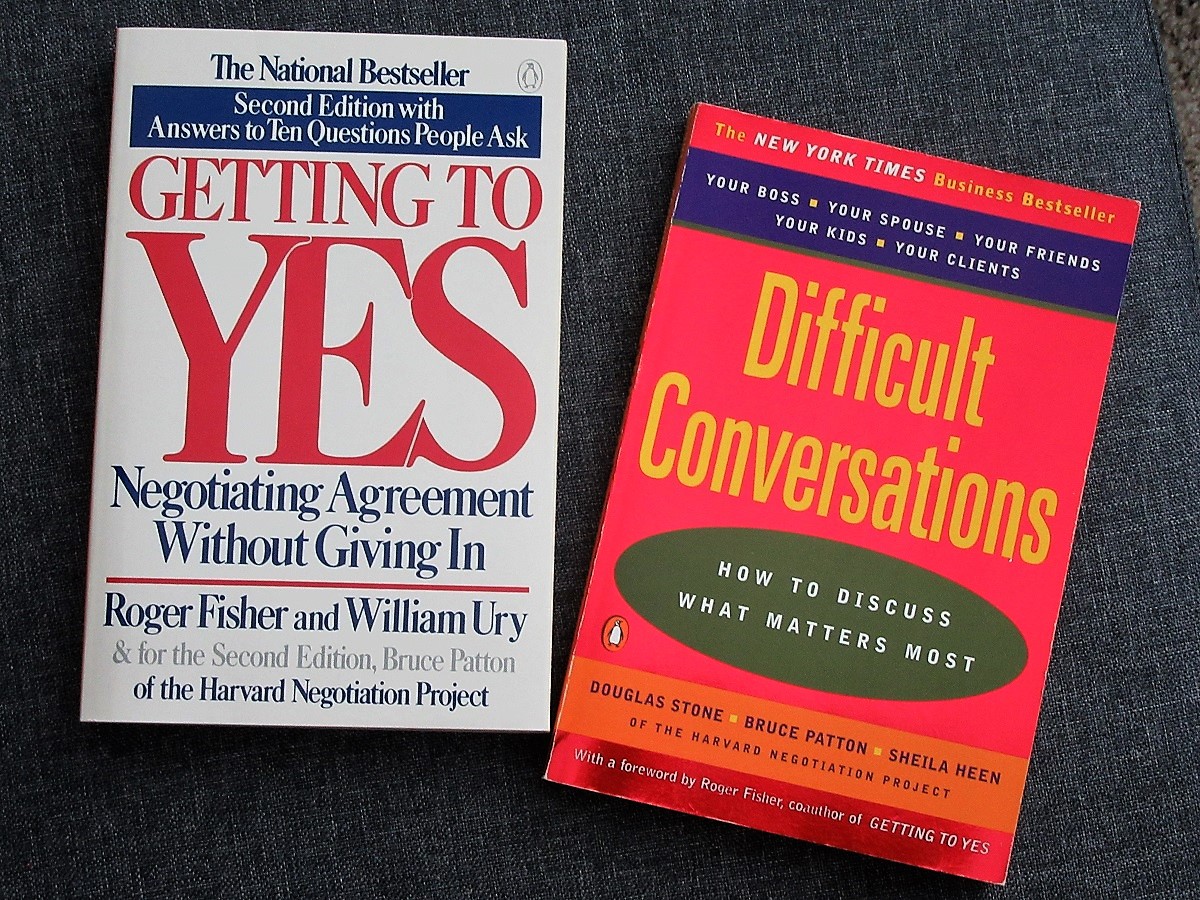
I used a couple of books as guides: “Getting to Yes” by Fisher and Ury, and Difficult Conversations by Stone, Patton, and Heen. I should seriously have reread those books during my entire career and even now. Nobody’s perfect. I encountered racism from patients, so I was no stranger to a variety of difficult conversations in many different situations.

Anyhow those two books are on the short list at the University of Iowa Conflict Management web page. There’s a ton of resources there available for learning about how to manage conflict and recognize what implicit bias is and what it is not.

Implicit bias gets a lot of press. I think it can tend to set people on edge before and during seminars on equity, diversity, and inclusion. Not everybody is a racist. But our brains are wired for implicit biases. I think we all need to get busy, and I mean everybody, including me. A good place to start is understanding implicit bias.

Wandering Thoughts on Talents and Traits in “To Kill a Mockingbird”

I’ve been reading To Kill a Mockingbird and thinking over something a character named Miss Maudie said in Chapter 10: “People in their right minds never take pride in their talents.” It seems to run counter to popular opinion. Why wouldn’t you take pride in your talents?

I got a lot of hits on my google search for this quote, by the way.

Miss Maudie’s statement was soon after Atticus shot a rabid dog with a marksman’s skill. Jem and Scout had been grousing about how they couldn’t find anything to be proud of in their old man. Atticus had never told his children about his skill as a marksman. He gave his kids guns but declined to teach them how to shoot.

I try to make sense of Miss Maudie’s comment by thinking about marksmanship as a skill, which is often distinguished from a talent, usually because the latter is thought to be a trait you’re born with. On the other hand, it’s hard to think of modesty (which is what keeps you from bragging or “taking pride”) as a talent. Some might say it’s more like a character trait.

Can you can develop a talent by practice? Can you improve your modesty by working at it and how would you do that, deadlifting your inner barbells? I tend to think you either have it or you don’t. And why does it take being in your right mind to refuse to take pride in or brag about your talent?

I often hear athletes (think Super Bowl) bragging non-stop about their talents. But I stop well short of admiring them for doing it. It’s annoying, but often preferable to the half-time show. Why do they grab their crotches?

Maybe it doesn’t make sense to brag about a talent you’re born with. I’m not sure if modesty is also something you’re born with. Babies seem very immodest, especially when they’re pooping, based on my extensive research of TV commercials and anecdotes.

On the other hand, a talent is also often said to be something which can be honed to perfection. In fact, Miss Maudie said that Atticus’s skill with a gun was a gift from God, a talent—which he perfected by practice. This might contradict the definition of talent as a thing you’re just born with. She goes on to say that Atticus thought this particular gift from God gave him an unfair advantage, so he gave it up. It would be unseemly to take pride in such a thing, and why would it even occur to someone with a talent to minimize it? The religious reference “pride goeth before a fall” is obvious, but religion doesn’t always seem to play a big role.

Maybe both talent and traits like modesty can be honed as well. What if they’re sort of like lifting just one of your eyebrows to make you look haughtily bemused? You can cultivate it, or at least some people say you can. There’s even a WikiHow for it. But it seems like you have to find your dominant eyebrow, which means there’s something inborn that makes it easier.

Can you develop modesty as though it’s a skill, assuming that it’s also a trait which is malleable? Is there a modesty cortex? Then, you could say some people have a talent for modesty. And how about those splinter talents or skills (like suddenly playing the piano like a virtuoso) which can appear abruptly after brain injuries? Can modesty be like that, a nascent itch in the body waiting to be scratched? That kind of makes you want to drop a piano on the guy at the cocktail party who brags about his golf game, doesn’t it?

I suppose some would take pride in being modest, although it sounds paradoxical—until I remember all the people I’ve seen who can feign desirable traits.

So, is there a Gold’s Gym for character traits where we can go and develop talents like modesty, patience, respect, kindness, and mercy?

Not exactly, but we can give ourselves a kick start by checking out some resources that aren’t that hard to find. Those would be different from what you can pick up from “To Kill a Mockingbird,” although it’s obvious that’s how I got steered to this topic in the first place. Remind me again, why is this book be taken off required reading lists?

Thoughts on Near-Death Experiences

There is a very interesting Medscape article on Near Death Experiences (NDEs), “Young Doctor Explores Near-Death Experiences – Medscape – Jan 13, 2022.” The story was written by Stephanie Lavaud. It was a transcript of an interview with a general practitioner from, Francois Lallier, MD, PhD, from Reims University Hospital in France. He conducted a retrospective study on NDEs for his general medicine dissertation. He discussed the results in his book, Le mystere des experiences de mort imminente (translation: The Mystery of Near-Death Experiences).

It has so far collected several interesting comments. I submitted a couple.

One of them was about a teacher and colleague of mine, Dr. Russell Noyes, Jr, MD, Professor Emeritus University of Iowa. He published several articles about NDE related to traumatic accidents, mainly in the 1970s. Lallier used the Greyson Near-Death Experience Scale for his study, and this scale was based on the work of Noyes and others.

He also participated in a Iowa Public Radio Show in 2018. Dr. Noyes collected over 200 personal accounts of NDEs but declined to publish them. I don’t recall that Dr. Noyes ever discussed his interest in this area with me.

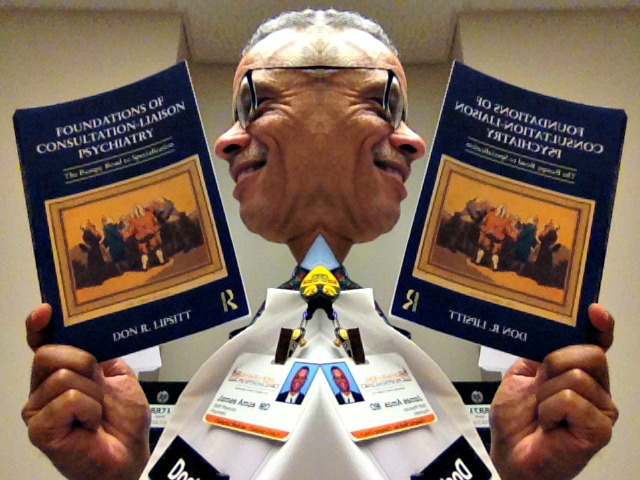
My other comment was a correction to a mistake in my first comment, in which I said no patient I saw in my career as a consult-liaison psychiatrist ever reported a Near-Death Experience to me. I remembered one later. It occurred decades ago but I had forgotten about it. I included the patient’s NDE self-report in a grand rounds presentation, which was not mainly about NDEs.

As a consultation-liaison psychiatrist, I saw many patients with severe medical illness and I can recall only one patient who described an experience of NDE. Delirium was a common syndrome in most of the patients I saw, especially those in the intensive care units.

I think it’s possible that some of the cases of NDE might be attributable to delirium. Vivid and compelling hallucinations and delusions are common symptoms of delirium. The catatonic variant of delirium, which can be caused by severe benzodiazepine withdrawal and other psychiatric disorders can lead to the rare Cotard’s syndrome, marked by the nihilistic delusion that one is dead or even paradoxically immortal, has lost one’s body, is rotting internally or is without limbs and other body parts. The line between NDEs and neuropsychiatric disease can sometimes be thin. However, I don’t categorically dismiss NDEs as mental illness.

Dr. Noyes was very familiar with delirium. He was one of my first teachers in the practice of consultation-liaison psychiatry. He taught me and countless other trainees and early career psychiatrists about anxiety, somatoform disorders, and delirium. He knew the difference between neuropsychiatric illness and NDEs.

In the National Public Radio interview, he explained that after consulting with an attorney who cautioned about the possibility of lawsuits related to breach of confidentiality (obtaining releases of information consents after so much time had passed would have been next to impossible), he decided against publishing his collection of personal accounts of NDEs.

The Medscape article author pointed out that many doctors usually take little interest in the issue of NDEs with patients. Lallier said this is because it’s not normally a part of medical school curriculum. On the other hand, one doctor pointed out in the comment section that he had been conducting NDE research for a decade and had published a series of articles in a peer-reviewed journal. Dr. John Hagan III reported that the articles were included in a medical textbook for physicians in 2017, The Science of Near-Death Experiences, copyrighted by the Missouri State Medical Association (MSMA). Dr. Hagan added that the MSMA passed a resolution which was sent to the national US medical organizations asking that all medical school curricula include education on NDEs.

Even the titles of the books I mention in this post are interesting: The Mystery of Near-Death Experiences and The Science of Near-Death Experiences. The mystery vs the science—or the mystery and the science? They seem almost analogous to bookends, or maybe the Janus head, which is fun to speculate about.

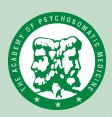
The Janus head used to be the logo for the Academy of Consultation-Liaison Psychiatry (ACLP). It was replaced by some nondescript design for reasons I don’t understand. It reminds me of waves, which could lead to seasickness.

Janus was a god in Roman mythology and is typically represented as having two heads, each facing opposite directions. Janus was the god of doors, gateways, and transitions. He held a key in one hand to open gates and a staff in the other to guide travelers. He is said to represent the middle ground between the abstract and the concrete, between life and death—and perhaps between mystery and science.

University of Iowa Health Care Black History Month Lecture: “Pursuing Health Equity—A Call to Action”

Yesterday Sena and I listened to the Zoom lecture “Pursuing Health Equity—A Call to Action,” delivered by Louis H. Hart, III, MD from noon to 1:00 PM. Dr. Hart is the inaugural Medical Director of Health Equity for Yale New Haven Health System and Assistant Professor of Pediatrics and faculty member in the Yale School of Medicine. The lecture was sponsored by the University of Iowa Office of Diversity, Equity, and Inclusion in the College of Medicine. The introductory remarks about him were that his “leadership work addresses unjust structural and societal barriers that lead to inequitable health outcomes for the patients we serve.” His lecture was intended to “focus on efforts to ingrain an equity lens into clinical operations.”

Sena and I talked a lot about Dr. Hart’s presentation, as usual in a spirited way. We don’t always agree on everything and we’re not shy about saying so to each other. The lecture was recorded. However, since I don’t know when it might be publicly available, I looked on the web, and as luck would have it, I found a YouTube (see below) of a similar lecture he gave on June 22, 2021 in New York. The message was basically the same, and included many of the same slides.

Dr. Hart is very committed and passionate about health equity. Calls to action typically, as you’d expect, are delivered with passion, which sometimes entails emphasizing the “whys” of what must be done over the “hows” regarding implementation of changes to our health care system.

He began by letting the audience know that we’d all probably be a little uncomfortable about some parts of his message. He had a little original one-liner about comfort zones, which I unfortunately can’t recall exactly, but it conveyed a message similar to the one below:

A comfort zone is a beautiful place, but nothing ever grows there.

John Assaraf

In the YouTube video below, Dr. Hart reminds me of myself in my role as a consultation-liaison psychiatrist many years ago, when I was trying to persuade our general hospital medical staff to take delirium much more seriously, stop seeing it as a psychiatric problem, and treat it as a complication of severe medical disease. I got acquainted with a famous critical care doctor, Wes Ely, MD, who recently published a fascinating book, “Every Deep Drawn Breath.” He has worked tirelessly for most of his career to teach his colleagues, nurses, and trainees, especially those in critical care, to get the point he made so succinctly in his research notebook: “Hypothesis: The lung bone is connected to the brain bone.” I wish we could keep it that simple.

I was a crusader at the time. I often took nurses and doctors and medical students out of their comfort zones, driven to ingrain in them the delirium lens that would help save patients from developing dementia and dying from the deadly syndrome of delirium.

My approach sometimes probably didn’t sit too well with my peers and my trainees. My call to action for preventing delirium likely moved a few clinicians—but just as likely alienated others.

I can see how some people might get that feeling from Dr. Hart in the video, although when I compare him with others who beat the drum loudly about structural racism in general and get pretty confrontational, I think he does a pretty fair job of moderating that approach. I get his passion and his urgency, which is for the most part balanced by his impressive ability to articulate all the “whys” about what must be done. I was reasonably confident he could collaborate with all of the people he needs to figure out the “hows.”

Now, to throw you a curve ball, I’m giving you the link to a podcast in which, if I close my eyes, I nearly don’t recognize Dr. Hart as he describes in polished detail the “hows” of his plan to improve health equity. It seemed almost miraculous. He’s just as passionate about his mission, but the crusader gives way to the thorough, confident, caring and even witty administrator presenting his very sophisticated vision of what the health care system of the future might look like. See what you think.

Update on “Endless Innovation: An R1 Research Institution (1948-1997)”

Last night’s webinar on Uncovering Hawkeye History, “Endless Innovation: An R1 Research Institution (1948-1997) was fascinating for us.

Dr. Bruce Gantz kicked off the first presentation about his work in cochlear implant surgery. Business picked up for him as far as these procedures in the last year and a half partly because of the pandemic. We were stunned to learn that the demand was driven because so many people were wearing masks—which prevented the deaf from lip-reading.

Kevin Washburn was next up and highlighted the great performance of the UI Law school’s stunning list of 4 student-led law review journals. They rank extremely high in the country, up there in the company of Yale and Harvard. I’m off on a tangent here, but Washburn’s status as a citizen of the Chickasaw Nation (which is based in Oklahoma; there are no Chickasaw tribal members in Iowa despite there being a Chickasaw County, by the way) reminded me of a guy who was a year behind my class in medical school. His name is Orrenzo Snyder and he’s a urologist in Oklahoma. Orrenzo and several other fellow students founded the American Indian Student Association (AISA) in 1989, which was later renamed the Native American Student Association (NASA). The University of Iowa Pow Wow was established in 1990. The 26th Annual Pow Wow is scheduled for April 2, 2022. Give it up for Orrenzo!

Anyway, Washburn mentioned one of the many stars in the UI Boyd Law school: Willard (Sandy) Boyd (for whom the college is named) who became one of the youngest University of Iowa presidents to take office and did so during a rowdy time of student unrest—in 1969. He raised a lot of money for the institution and was an advocate of human rights. He was appointed first chair of the University of Iowa’s Human Rights Committee.

You can also discover other facts, such as in 1839 the Iowa Territorial Supreme Court ruled that Ralph, a slave brought into free territory, must be released from slavery, in 1846; Iowa was admitted to the Union as a “Free State;” and in 1868 In Clark v. Board of Directors the Iowa Supreme Court ruled that the Iowa Constitution guarantees the right to public education to all citizens. The plaintiff parent was Alexander Clark, Sr., who later graduated from the Iowa Law School (possibly the first African American to do so at UI). Justice Chester C. Cole wrote the opinion for the case.

University Archivist David McCartney also mentioned 1969 as a noteworthy year because that was the year of the Apollo 11 moon landing. There’s an Iowa connection to the Apollo 11 mission and that is State University of Iowa professor James A. van Allen in the Department of Physics, who warned of the danger to astronauts of the radiation belts encircling the earth (these were later renamed the Van Allen belts).

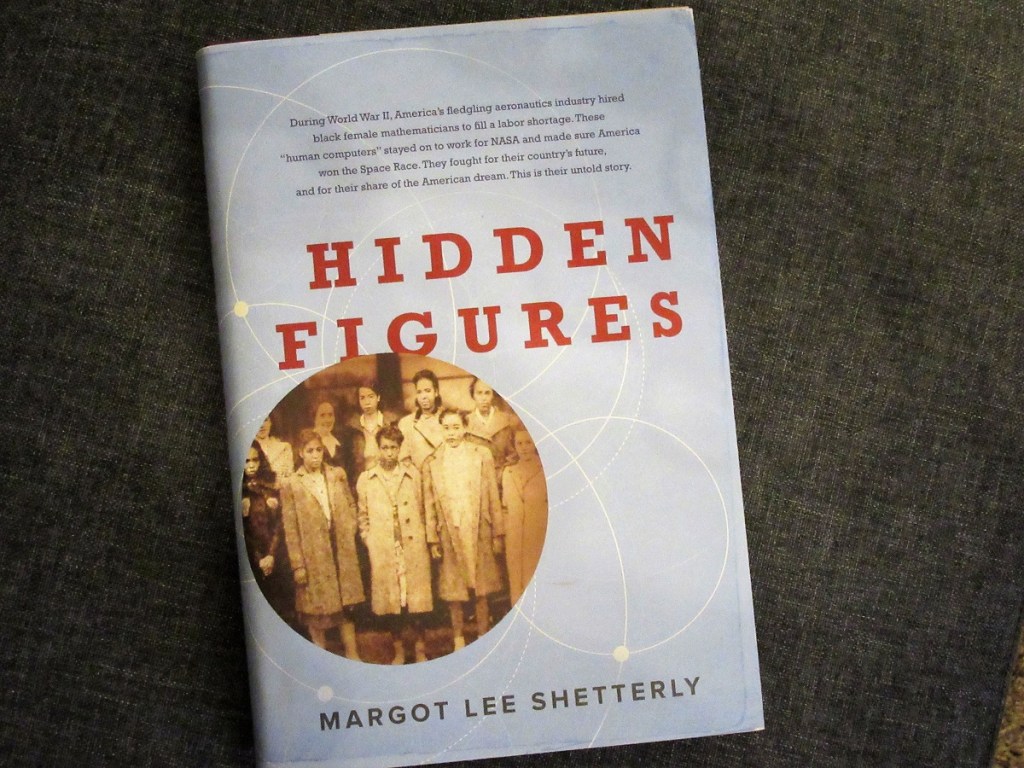
And I would add that African American women helped put astronauts on the moon in 1969.

Ed Wasserman expounded on his scientific work with pigeons and humans, comparing them on how they use their brains to solve problems. Are we better than pigeons? Maybe. Wasserman also gave many examples of how trial and error led to some surprising advances and innovations: the Ponseti method for treating clubfoot, the butterfly stroke in swimming, and Field of Dreams. His point is that the 3 Cs: consequence, context, and coincidence, play the larger role in many great achievements.

In other words, just keep pecking away at it.

Next Episode of Uncovering Hawkeye History Today

Get ready for the next episode of The University of Iowa’s virtual event of Uncovering Hawkeye History this evening from 4:30-6:00 PM. The title for this one is “Endless Innovation: An R1 Research Institution (1948–1997).” According to the official announcement, “This event series is designed to highlight notable elements of UI’s 175-year history and includes readings you can do in advance, notable guest speakers during each class, and the opportunity to ask questions each week.” You can register here.

Today’s zoom class again features university archivist David McCarty and 3 of the UI’s most talented innovators:

Bruce Gantz: 68BS, 74MD, 80MS, 80R), otolaryngology professor, the world’s first doctor to perform a robot-assisted cochlear implant surgery

Kevin Washburn: N. William Hines dean, College of Law

Ed Wasserman: experiential psychology professor

Sena and I plan to join the event this evening. I’m looking forward to hearing from Ed Wasserman, who has been studying the origins of innovation for decades. He studies pigeons to find out what really goes on in the ability of humans to come up with new ideas. Wasserman thinks it may have more to do with simple processes like trial and error then eureka type flashes of genius. In other words, we’re a lot like pigeons.

For some reason, this reminds me of an essay by James Thurber, “There’s an Owl in My Room.” It’s published in a book entitled The Thurber Carnival. The essay is all about Thurber’s impatience with a poem about pigeons written by Gertrude Stein. He thought it made pigeons way too complicated. I realized that I had never read the poem, so I went hunting for it on the web. I found a lot of comments about how ridiculous many people think “pigeons on the grass” is:

“Pigeons on the grass, alas. Pigeons on the grass, alas. Short longer grass short longer, longer shorter yellow grass. Pigeons, large pigeons on the shorter longer yellow grass, alas, pigeons on the grass.”—Gertrude Stein.

I had no trouble finding a short excerpt of Thurber’s scathing essay about it on the web.

Thurber’s closing sentence is “No other thing in the world falls so far short being able to do what it cannot do as a pigeon does. Of being unable to do what it can do, too, as far as that goes.”

You can see why some people might be offended by being compared to pigeons. On the other hand, he has written a book about the origin of the notion of creative genius, As If by Design: How Creative Behaviors Really Evolve (2021, Cambridge University Press).

I read an article on the web claiming that, scientifically speaking, there’s no difference between doves and pigeons. Sena and I have observed pigeons/doves with missing toes. That might indicate the trial and error of attempts to make nests with string, which gets wound around their feet, leading to auto-amputation. Some call it stringfoot, although it might just be bad judgment (see my YouTube description).

I can imagine what he might think about Ancient Aliens theories about how humans might come up with innovative inventions. Aliens seem to be particularly prone to crashing their space ships on our planet, making it easier for us to reverse engineer the working parts left strewn all over the ground. There’s something ironical about that. How can they be smart enough to manipulate our DNA and leave us clues about how to create inventions that advance our civilization when they can’t even stop falling out of the sky? On the other hand, maybe we just stole their technology right out from under their very small noses and slapped patents on them. So much for genius.

I’m sure Wasserman thought of all that.

Happy Valentine’s Day!

Happy Valentine’s Day! Boy, are you guys lucky! I woke up yesterday morning with the crazy idea of making a video of me singing “L-O-V-E.” You know, the one Nat King Cole made famous. What do you mean, “No, what are you talking about?”

No kidding, though; I even cleared my throat a couple of times just thinking about it, getting ready to burst into my full-throated, only slightly phlegmy 60ish voice. I let that go after my first cup of coffee, thank goodness. You don’t know how close you came. My singing would kill a cat from a hundred yards.

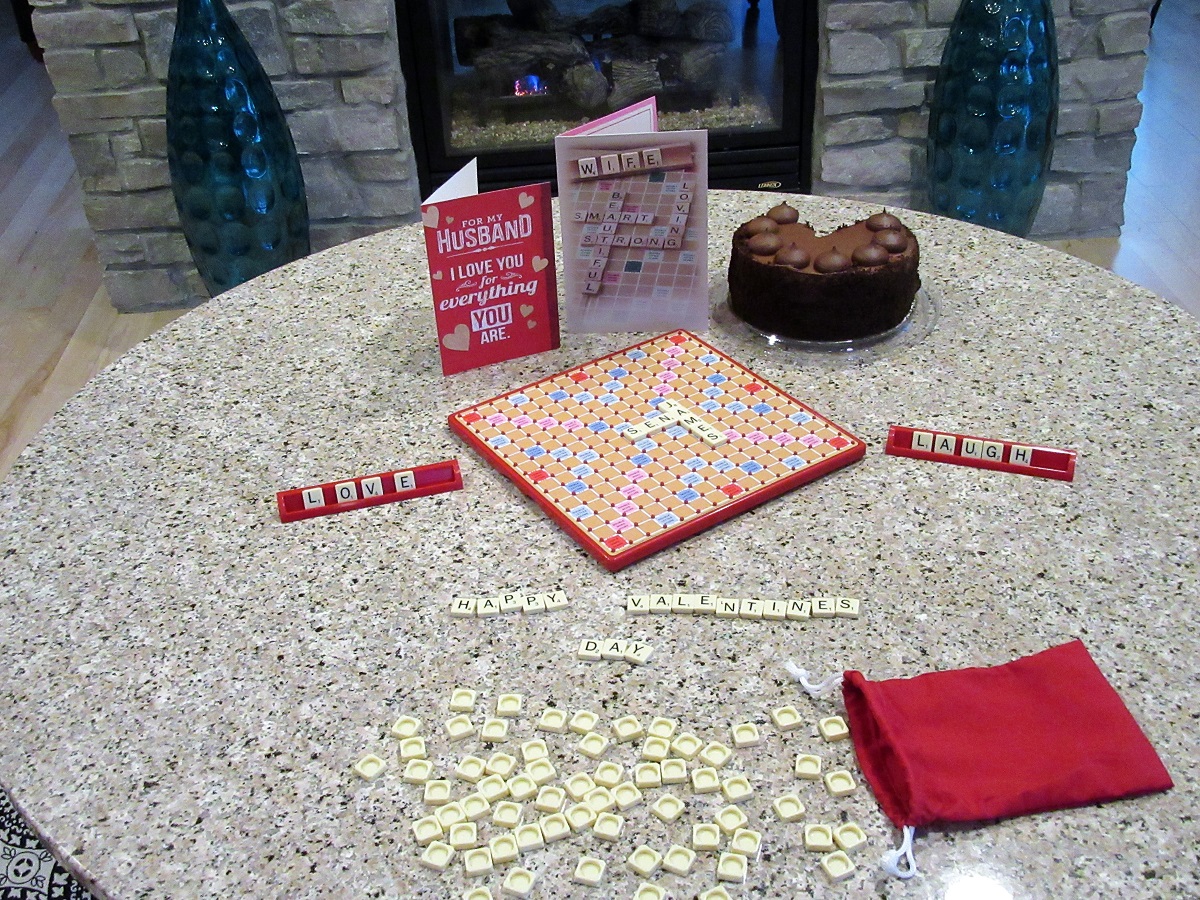
Anyway, Sena got a kick out of my Valentine’s Day card because it had a scrabble theme. The top line actually is made of 3-dimensional Scrabble tiles. I bought that card before I found the Tile Lock Scrabble game.

By the way, I’m zero for 3 games so far. We really need a Scrabble dictionary. Sena plays the video scrabble game a lot and she played the word “Qi” twice (at right angles to each other) in our second game, claiming it’s a real word. I didn’t argue and without a dictionary, I couldn’t challenge it. But she didn’t know what it meant. “I’ve been meaning to look that up,” she says.

It turns out Qi is a variant spelling of CHI (pronounced like the first syllable of cheapo, a variant of cheapskate, as in a guy who spends the least amount of money possible on a Valentine’s Day gift for his wife). Qi is defined as the energy or life force in everything and it’s the basis of most of Chinese medicine and philosophy. It’s also the single most commonly used word in Scrabble tournaments.

We made this deal a while ago. If we buy a cribbage board in the shape of the state of Iowa with a road map and names of major cities, etc. on it, then I would agree to play Scrabble. We got the Scrabble game first. A deal’s a deal, even if it’s backwards. Sena ordered the Iowa State Map cribbage board yesterday. She wins most of the cribbage games, too. Here’s how she counts her scores: “15 for 2, a run of 3 for 19 (laugh it up you people, these are the jokes; hint, you have to know what scores are impossible in cribbage), and a flush for a total of 29; hey, I win again!”

You guys need to thank for me another thing. At first, Sena allowed me to use just one snapshot of us in this post. It’s of us at Niagara Falls in front of the helicopter we took a ride on to get a fantastic view of the falls. But we got to looking at a ton of pictures. We laughed a lot. We chose more pictures.

Have a great Valentine’s Day!