Thoughts on the X-Files Episode “Humbug”

So, I was watching the X-Files episode, “Humbug” last night and it got me wondering about the meaning of the word “nature.” The character, Dr. Blockhead says “Nature abhors normality.” Of course that reminded me of a similar quote attributed to Aristotle, “Nature abhors a vacuum.”

You can read the short Wikipedia summary of “Humbug” and comments about how Otherness philosophy (perceiving oneself as distinct from others in order to form one’s own identity) figures into the story contrasting sideshow freaks with the conventional FBI agents Mulder and Scully. The episode is funny, which is one reason why I like it. It sheds a little light on the way humans treat each other (and potentially, extraterrestrials?) in terms of their genetic, cultural and other differences.

I found another connection to “Humbug” in, of all places, a WordPress blog post from 2017 entitled “Fiji Mermaid,” written by an artist who relocated to America from Scotland many years ago. The Fiji Mermaid was featured in “Humbug.” It was a humbug (fake mermaid) made up of the head and torso of a monkey stitched to the tail of a fish. Commenters actually mention that it reminded them of the X-Files episode, which the artist enjoyed, partly because she’s interested in the history of sideshows and freaks.

I also read an interesting news item about the definition of nature in terms of the relationship between humans and the rest of the natural world. That led me to check on the definition of the word.

Until recently, the word “nature” was defined in the Oxford English Dictionary (OED) as “The phenomena of the physical world collectively; esp. plants, animals, and other features and products of the earth itself, as opposed to humans and human creations.”

The updated OED has additional definition, which is “More widely: the whole natural world, including human beings.”

I think one of the points of “Humbug” is that humans are a part of nature and we are hard at work mutating it. One of the characters, Dr. Blockhead, criticizes it:

“Twenty-first century genetic engineering will not only eliminate the siamese twins and the alligator-skin people, but you’re gonna be hard-pressed to find a slight overbite, or a not-so-high cheekbone. You see, I’ve seen the future, and the future looks just like him! (points to Mulder).”

“Nature abhors normality. It can’t go for long without creating a mutant.”

You can understand the word “nature” to refer to both humans and the natural world outside of us, possibly to other galaxies. It also makes me wonder who defines what is normal. That leads to social and political factors which complicate everything. I guess that could be why Dr. Blockhead says the reason why nature abhors normality is a mystery—and should remain so.

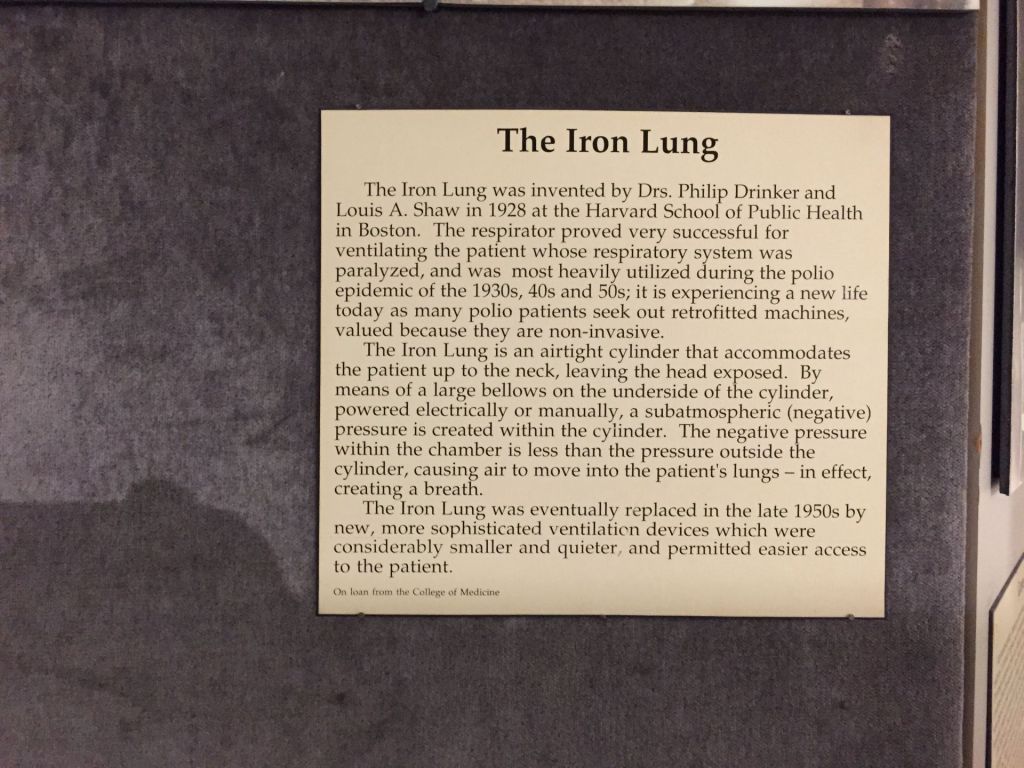
On the other hand, if it weren’t for the natural human drive to ask questions and explore, the mystery of the cause of polio would have remained a mystery and the iron lung would still be in use.

Send The Asteroid; We Deserve It

About that news article regarding an asteroid colliding with earth—I couldn’t read it…hits too close to home (rim shot!).

More seriously (but not much!), the background for this is that the asteroid 2024 YR4 has been identified by NASA and is tracking it now. News stories emphasize its large size of maybe up to a few hundred feet and the low chance of it hitting earth at all. NASA’s latest estimate today of the probability of it hitting us at 0.28%. It’s scheduled to buzz by or through us in 2032.

I’m still trying to learn the terminology about rocks in and from space:

Asteroid: a rock that orbits the sun

Comet: an icy ball of dirt that orbits the sun

Meteor: a descriptive term about the amount of a certain edible substance, as in— “What did the black hole say after it swallowed an asteroid? It was good but I wish it had been a little meteor.”

Meteorite: a space rock that enters the earth’s atmosphere, creates a streak of light in the sky and lands on the earth’s surface.

Trilobite: a funny looking creature that died out during the mass extinction caused by a meteorite landing on the earth’s surface.

Any questions? No? Then let’s move on.

This should remind everyone of the well-known X-Files episode, “Tunguska.” Like many of the episode names, it’s pretty inscrutable unless you have a little background. Tunguska is an area in Siberia that in 1908 took a big hit from a cosmic event, basically an explosion of many megatons which flattened a forest of millions of trees. The impact occurred far up in the sky and was probably caused by a meteorite which left no impact crater.

Anyway, Agent Mulder talks about the Tunguska event as part of speculation about where a rock (found early in the episode) came from that has this black oil in it which infects humans (making them homicidal maniacs) and is made by extraterrestrials. Earlier a scientist speculated that the rock might be a meteorite containing fossilized extraterrestrial bacteria—just before the black oil got him.

Neil deGrasse Tyson, the famous astrophysicist remarked in a news report about this rock that now might not be a great time to cut funding to science.  

So that’s why we should be asking ourselves, “Why are they called hemorrhoids? Because Asteroids was already taken.”

My Mt. Rushmore Dream

Lately, I’ve been anticipating my eventual immortalization as a sculptured stone bust on Mt. Rushmore. Hopefully, this will be fairly soon because I’m not getting any younger.

Among my many inventions is the internet. Don’t believe Al Gore, although he has persuaded others about his role in the development of what I argue should properly be called the world wide web. I’ve invented a lot of other things which I’ll tell you more about just as soon as I make them up.

Before I forget it, I want to tell you what I just noticed last night while I watching one of my favorite X-Files episodes, “War of the Coprophages.” I guess I never noticed that the cockroach invasion was about Artificial Intelligence (AI). It was the scientist, Dr. Ivanov, who mentioned it first and I just missed it the first few hundred times I saw the show.

Dr. Ivanov clearly thought that anybody who thought extraterrestrials would be green and have big eyes was probably crazy. Traveling across galaxies through wormholes and whatnot would tear humanoid organisms apart. The practical approach would be to send AI robots instead. You could see Mulder cringe at that idea. The little robot that kept edging closer to Mulder made him nervous and when he asked Dr. Ivanov why it did that, his reply was “Because it likes you.”

That doesn’t exactly fit with Ivanov’s other idea about extraterrestrials, which is that they would focus on important tasks like getting enough food, procreating, etc. without getting all emotional about them. Ironic that Dr. Ivanov made an AI robot that gets a crush on a sesame seed munching UFO hunter like Mulder.

However, the AI robots in the show are cockroaches which love to eat dung. In other words, they’re full of crap.

Moving right along, although I didn’t invent it, there’s a card game called schnapsen that Sena and I are trying to relearn. It’s kind of a break from cribbage. It’s a trick taking game with just a 20-card deck. We play the version that doesn’t allow you to look at your cards to see how many points you have so you can tell when you can close the deck or go out, meaning you have the 66 points to win. You have to remember how many points you’ve won in tricks. I think it’s a good way to keep your memory sharp.

Let’s see; I’ve lost every game so far, but that doesn’t mean I won’t end up with my bust on Mt. Rushmore.

AI Does Your Laundry

Recently we had somebody from the appliance store check our brand-new washing machine. The tech said “the noises are normal”—and then told us that many of the functions of the washer are run by Artificial Intelligence (AI). That was a new one on us.

Don’t get me wrong. The washer works. What sticks in the craw a little is that many of the settings we took for granted as being under our control are basically run by AI nowadays. I guess that means you can override some of the AI assist settings (which may be adjusted based on grime level, type of fabrics and the relative humidity in Botswana)—at least the ones not mandated by the EPA.

Incidentally, I tried to find some free images to use as featured images for this post. The problem is, many free pictures on the web are generated by AI these days, which is why I used the non-AI part of the Microsoft Paint app to make a crude drawing of an AI controlled washing machine.

I realize I’ll have to give up and accept the inevitable takeover of much of human society by AI. On the other hand, the prospect reminds me of the scene in an X-Files episode, “Ghost in the Machine.” A guy gets exterminated by something called the Central Operating System (COS).

Use extra detergent and add more water at your own risk.

Thoughts on X-Files Episode “Sunshine Days”

I saw the X-Files episode “Sunshine Days” again last night. It’s the second time I’ve seen it. It’s about a guy who calls himself Oliver who has telekinetic power and who yearns for a father-son relationship with a paranormal researcher (Dr. Reitz) who studied him when he was a kid named Anthony.  

The set of an old 1970s TV show “The Brady Bunch” was used. It was something Oliver created using the power of his mind. As a child, he used to insist that he and Dr. Reitz watch the show regularly. In his mind, it was the perfect family he always wanted but never had.

Anyway, Oliver (Anthony) endangers his life when he uses his telekinetic powers as an adult. He can’t control them and nearly dies from using them. He ends up near death in the hospital after showing the FBI agents including Scully and Doggett (who replaced Mulder) his miraculous ability. The agents and Dr. Reitz are ecstatic because they think it will change the world and humanity.

But after they realize the life-threatening nature of Oliver’s powers, they all agree, including Dr. Reitz, that Oliver should never use them again. Dr. Reitz even tells Oliver (who now wants to be called Anthony) firmly that he can’t use his power, to which Oliver replies that he can’t be alone. Then, Dr. Reitz tells Oliver that he’ll never have to be alone because he’ll always be with him.

A lot of fans hated it because it was the penultimate episode before the final show of the 9th and final season of the X-Files. It was one of the many Monster-of-the-Week (MOTW) shows that had nothing to do with the extraterrestrial mythology.

I liked the MOTW episodes better the ET/conspiracy shows, and Sunshine Days is one of my favorites. However, I never watched The Brady Bunch and the whole perfectly happy and well-adjusted family idea was ridiculously implausible in my opinion.

I doubt there is such a thing as a perfect family. Mine certainly was not and look how well I turned out. Even in nature, there are examples of savagery that can make you doubt the ultimate wisdom of whoever or whatever is in charge of evolution.

For example, birds can be exquisitely cruel. Cowbirds lay their eggs in the nests of completely different species of birds, where the cowbird chicks bully their weaker nestlings. And surely just about everyone has seen the pitiless pecking of the larger of the two shoebill chicks in which the parents calmly watch as the smaller chick gets stepped on, pushed out of the next and essentially murdered by the bigger chick. This is because the parents know there is not enough water for both.

Even the song “A Boy Named Sue” is based on the natural law of survival of the fittest, which has nothing to do with kindness. Incidentally, that song came out in 1969, the same year that The Brady Bunch show began.

On the other hand, the reconciliation of Anthony with Dr. Rietz always fills me with joy.

Earthquakes and Railroads and Magic Fingers, Oh My!

The hotel we’re staying in while our house is being built is very close to railroad tracks. We hear the whistle and then, we feel the train going by. No kidding, we can feel the rumble. It shakes the chairs, the sofa, the bed. The whole room shakes for as long as the train passes through the area.

It’s kind of an eerie sensation. It reminds me of the Illinois earthquake in 2010, which was felt by many in Eastern Iowa. It rattled our bed. That went on for a few minutes.

And some of you X-Files fans will get it when I say this free association would naturally lead to memories of the Bad Blood episode (season 5). This hilarious show features Mulder and Scully telling their own versions of what happened in a little town full of vampires. Both agents got all shook up using the Magic Fingers on a hotel bed.

Scrub to about 2 minutes into the YouTube to see the first Magic Fingers earthquake. There’s more, but you’ll get the idea.

Stop Me If You Heard This One Before

I saw one of my favorite X-Files episodes the other night. It’s titled “Monday.” Mulder goes through the day repetitively doing the same things, including fumbling his chance to thwart a bank robber who blows up the bank and everyone in it, including Mulder. See the Wikipedia for a full spoiler alert but I’m going to spill the beans here anyway.

A lot of people think the idea was stolen from the movie “Groundhog Day,” which I’ve never seen. Actually, it was stolen from a Twilight Zone episode called “Shadow Play,” which I have seen.

“Monday” got good reviews overall, which is saying a lot. I never got the part about how a bank robber (Bernard) who can only land a job mopping floors would be smart enough to build a bomb jacket.

That said, the scenes are mostly everybody going through the day doing the same things over and over. Mulder and Scully both meet Bernard and his girlfriend Pam, who was always waiting outside in the getaway car and is the only one who remembers what has happened each and every time, which is about 50. Pam thinks Mulder is the key to disrupting the endless cycle. She has been trying to get Mulder to change what he does every time he walks in the bank just to cash a check and interrupts Bernard in the process of robbing the bank.

Mulder never gets it right away, but does wonder aloud that he’s getting a sense of déjà vu. Déjà vu is the sense that an experience is something you had before but could not have. The medial temporal cortex triggers the false memory and, normally, the frontal lobe says, “No, this is not a memory.”

Eventually, Mulder gets the idea of repeating to himself over and over that Bernard has a bomb and changes his approach by giving his gun to Bernard and telling him he knows he has a bomb. This approach is based on the assumption Bernard will walk out without setting off the bomb because Mulder will let him go without trying to arrest him.

Then, Scully brings Pam into the bank, and Bernard almost surrenders to Mulder, until he hears police sirens—and tries to shoot Mulder but instead kills Pam because she steps into the path of the bullet. He gives up and doesn’t set off the bomb. Pam changed the ending and notices just before she dies that it never happened in any of the previous enactments.

There’s the brain-based definition of déjà vu and then there’s a more mundane definition, both of which are in the Merriam-Webster dictionary on the web. The mundane definition is “something overly or unpleasantly familiar,” mainly about situations that happen repeatedly (“here we go again”).

We all recognize the second definition. We sometimes say or do something which we would not if we just recognized that it’ll trigger a pattern of events we would like to avoid. Something has to change in order to interrupt the pattern.

Psychiatrists and psychotherapists are usually experts in helping people change repetitive, maladaptive patterns of thought and behavior.

Medications can be helpful, for example in the repetitious thoughts and behaviors of obsessive-compulsive disorder (OCD). Some cases of that may respond better to a combination of psychotherapy and medication.

One of the challenges is that there are not enough helpers to help those who need it. Another challenge is that the ones who need help often don’t recognize they need it. That’s called lack of insight.

The cycle of lack of insight and unpleasantly familiar, repetitive patterns sometimes resulting in explosive consequences is ubiquitous in our society.

Can somebody please bring Pam into the consulting room?

The AARO Finally Has a Website And is it Part of a Zero-Sum Game?

The All-Domain Anomaly Resolution Office (AARO) finally has a website—more than a year after it was formed.

It looks like there’s an intriguing message in the section “Coming Soon: US Government UAP-Related Program/Activity Reporting.” It says AARO will accept reports of UAP from current government employees who know of any programs or activities related to UAPs dating back to 1945.

One sentence tells you “This form is intended as an initial point of contact with AARO; it is not intended for conveying potentially sensitive or classified information.  Following the submission of your report, AARO staff may reach out to request additional detail or arrange for an informational interview.”

Several other sections provide further information and pictures and videos on UAP.

I wonder if all this is a reaction to the House Oversight Committee Hearing on UAP on July 26, 2023. Either the website has been under construction for all of last year and was just finished a couple days ago or it was just thrown together recently.

This makes me think of a couple of things, one is Dr. George Dawson’s blog post “Is This An Episode of the X-Files?” The other is an X-Files episode itself, “Zero Sum” which Sena and I just saw a couple of nights ago. We don’t remember seeing it when it first aired in 1997. You can read the Wikipedia article about the episode.

The gist of it is that Assistant Director Skinner makes a deal with the Smoking Man in which the latter will save Agent Scully’s life (she’s dying of cancer related to alien experiments) if Skinner hides the death of a postal worker who was killed by a swarm of bees carrying smallpox. This is part of a complex plot by a group called the Syndicate which is either trying to work with extraterrestrials to either exterminate the human race or save it (depending on which episode you watch) by using bees as a vehicle to transmit either smallpox or a vaccine to cure the Black Oil, which screws you up pretty bad. Part of this is my interpretation because the storyline sometimes is not clear about this to me.

Anyway, the back-and-forth actions and reactions of the characters, especially Skinner and the Smoking Man, are pretty good examples of a Zero-Sum game, loosely defined in that neither gets much of an edge on the other as they both try to counter each other’s efforts in what is probably just a power struggle from the Smoking Man’s perspective and a desperate effort to save Scully’s life from Skinner’s perspective.

Anyway, I wonder if the UAP reporters and the government (including the AARO) might be in some kind of zero-sum game. UAP reporters try to get the government to admit that Extraterrestrial Biological Entities (EABs) and Extraterrestrial spacecraft exist. But the government denies it. Neither side ever seems to get much further ahead of the other.

Parody vs Satire on Old X-File Show

I see Dr. George Dawson blogged about an interesting movie he saw. And Dr. H. Steven Moffic watched an interesting play the other day.

I like science fiction. I watched an old X-File show the other night, “War of the Coprophages.” You can read a Wikipedia article for a nice summary of the plot and more. You can watch X-File episodes on the Comet TV network on cable and a few streaming services.

The reason I like this is because of the parody. Many reviewers say it doesn’t rise to the level of satire, and it’s tough to challenge that view. I usually tell the difference based on a pretty good distinction you can find at this web site. Early on in the show you can tell it’s going to be one of the Monster-of-the-Week (MOTW) episodes.

The show makes fun of itself with funny lines and sight gags, several of which could almost make you gag. One makes use of an effect that makes you think a cockroach is crawling across your TV screen. The Wikipedia article calls that a fourth wall effect.

I like the big sign on Dr. Jeff Eckerle’s building where he has a lot of manure which he’s using to research how to make methane from dung. The sign says, “ALT FUELS, Inc: Waste is a Terrible Thing to Waste.” It’s clearly a parody, although I found a legitimate recycling web site in Helsinki which actually uses the phrase “Waste is a Terrible Thing to Waste.” Who knew? I can’t tell if they got the idea from the X-Files.

I also got a kick out the conversation between the scientist, Dr. Ivanov, and Mulder in which Ivanov pretty much sticks a pin in the balloon of Mulder’s conception of extraterrestrials being humanoid—of course they’d be robots according to Ivanov.

Later as the show is wrapping up with Mulder typing his report, he describes the distinction between simple and direct robotic problem solving and human higher brain function, with the latter suffering by comparison because of our tendency to get lost in default mode network ruminations which often go nowhere. He ends up seeing a giant cockroach which looks robotic crawling towards him—and flattens it with an X-File report.

The show is a string of crap jokes, which I loved. But that’s not because I love crap. I just like it when we’re deflated. It cuts us down to size—about the size of a cockroach. Sometimes that’s about the size of the difference between parody and satire.

Para-Debunking on Debunking Day

Today, in honor of Debunking Day, which is held on March 11 annually (starting in 2005) I thought I’d introduce a new word. It’s Para-Debunking and you won’t find it in the dictionary, at least not in our brand-new hardcover Merriam-Webster’s Collegiate Dictionary, Eleventh Edition. It was just delivered yesterday. We needed at least one physical dictionary for when we play Scrabble. We’re also waiting for an official Scrabble Dictionary, also on order. The heft of a real dictionary feels really good, by the way.

Anyway, the definition of “debunk” is “to expose the sham or falseness of” something.

Before I give you my definition of para-debunking, I should say that it’s a spinoff of the word “paranormal.” I know it doesn’t really make sense, but hang on, I’m getting to that.

You’ll never guess how I even found out it was Debunking Day today. Sena found out yesterday that a radio DJ was planning to observe the holiday by looking up something on MythBusters, another TV show we used to watch a lot.

That led to Sena finding a couple of X-Files episodes (a big-time paranormal TV show in the not-so-distant past): Sunshine Days and The Rain King.

If you can pick any topic to find debunkers always ranting about, the paranormal would be one of them. I’m not out to actually debunk it, so you can put your guns down. But the two X-Files episodes made me think of maybe something more important than just garden variety debunking.

Sunshine Days, an episode in the 9th season, originally aired in 2002, with Agents Doggett, Reyes, and Scully investigating two murders at a house that is off and on tricked out as the Brady Bunch house. This is the accidental result of the staggering psychokinetic powers of the homeowner, Anthony, whose psychic talents were studied when he was a child by a parapsychologist, Dr. Rietz. Anthony developed an attachment to Dr. Rietz and created doubles of the Brady Bunch (gaaahhhh!) because his family life was bad.

The agents take Anthony to FBI headquarters in Washington, D.C. and convince Assistant Director Skinner and a scientist that Anthony’s powers could change the world. But as Anthony demonstrates his powers by levitating things, including Skinner, the strain of it makes him deathly sick. Skinner is no lightweight.

As he lay dying in the hospital, Dr. Rietz realizes that Anthony loves him like a father and that relationship is more important than using him for his paranormal powers to change the world since it would kill him. Paranormal power is not debunked, but the real power is the power of love. That’s para-debunking, which doesn’t have a holiday but should.

The other X-Files episode is The Rain King, which aired in the 6th season in 1999 and features Agents Mulder and Scully investigating a guy named Daryl in Kansas, who claims he can make it rain whenever he wants, thereby controlling the awful drought that has plagued the area for months. I think it’s important that this is set in Kansas. As usual, Mulder believes that somebody is making it rain, but maybe not Daryl. Scully is skeptical as usual and tries to debunk the whole thing.

It turns out that the local weatherman, Holman, is responsible for the crazy weather because he’s been in love for decades with Sheila (who had been engaged to Daryl but he was not down with the plan). But Holman just can’t work up the nerve to tell her. He even creates a tornado that tosses a cow through Mulder’s hotel room ceiling. Holman finally convinces Sheila that he really loves her, which brings back the sunshine. The moral of the story is that we should be nice to each other because you never know when somebody will direct their paranormal ability at the skies and clobber us with flying cattle.

Just kidding. The idea is the same as it was for the Sunshine Days episode. It’s more important to feel our feelings and share them with others as long as that doesn’t involve hurling livestock at each other.

Get the idea? The paranormal is not debunked, but para-debunked in favor of focusing on the important stuff humans can achieve on earth without paranormal involvement. Maybe we can treasure what we already are capable of doing.

OK, let’s vote. Who wants to add Para-Debunking Day to our long list of holidays?