The National Weather Service predicts “snow squalls” for parts of eastern Iowa today in the afternoon.
I’m only using this GIF because I couldn’t find one for the State Farm commercial captain “A squall’s a’comin’!
Sena recognized the guy in the GIF above as W.C. Fields and wondered if there were any other videos of this scene with audio as well. They aren’t hard to find.
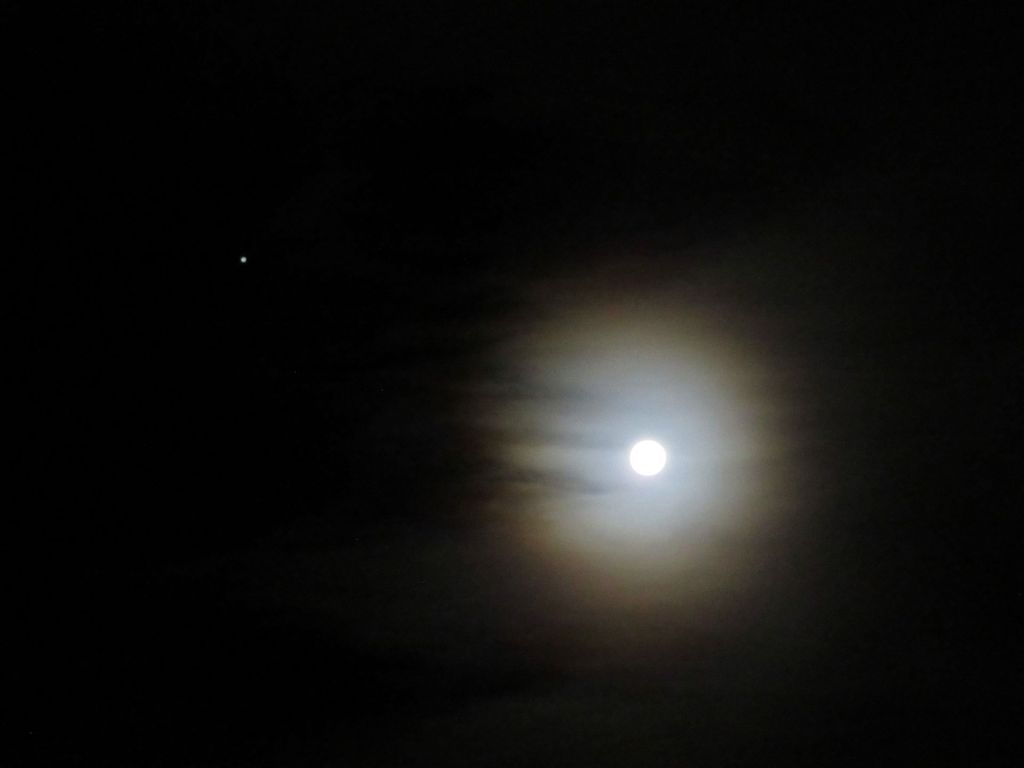
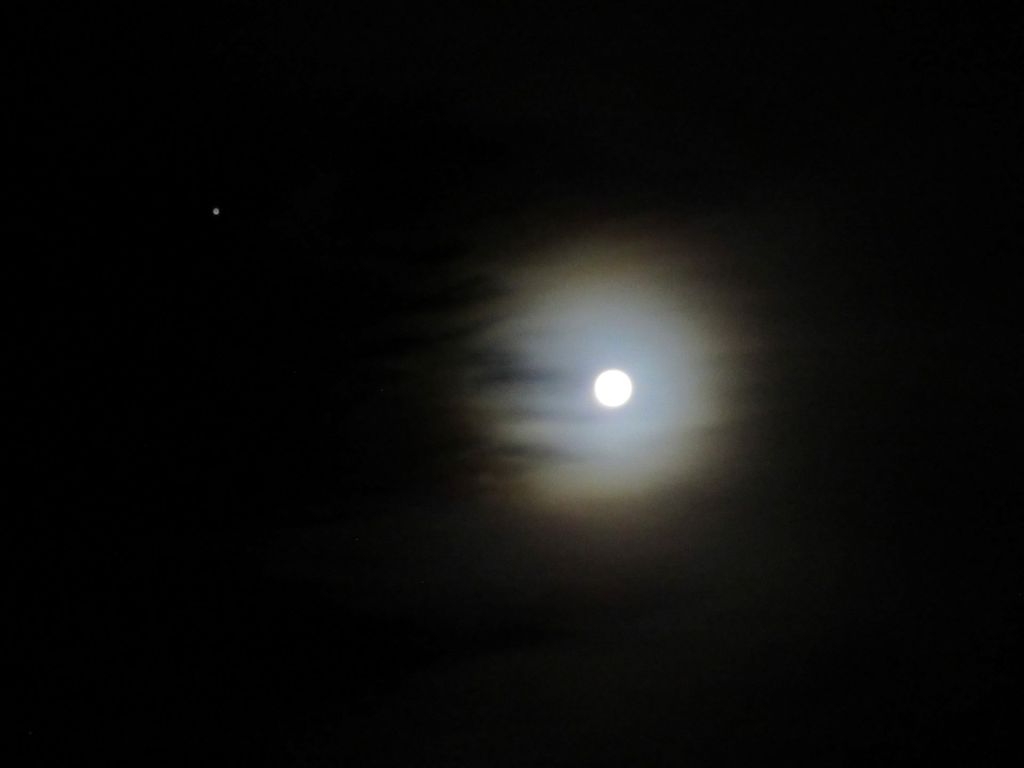
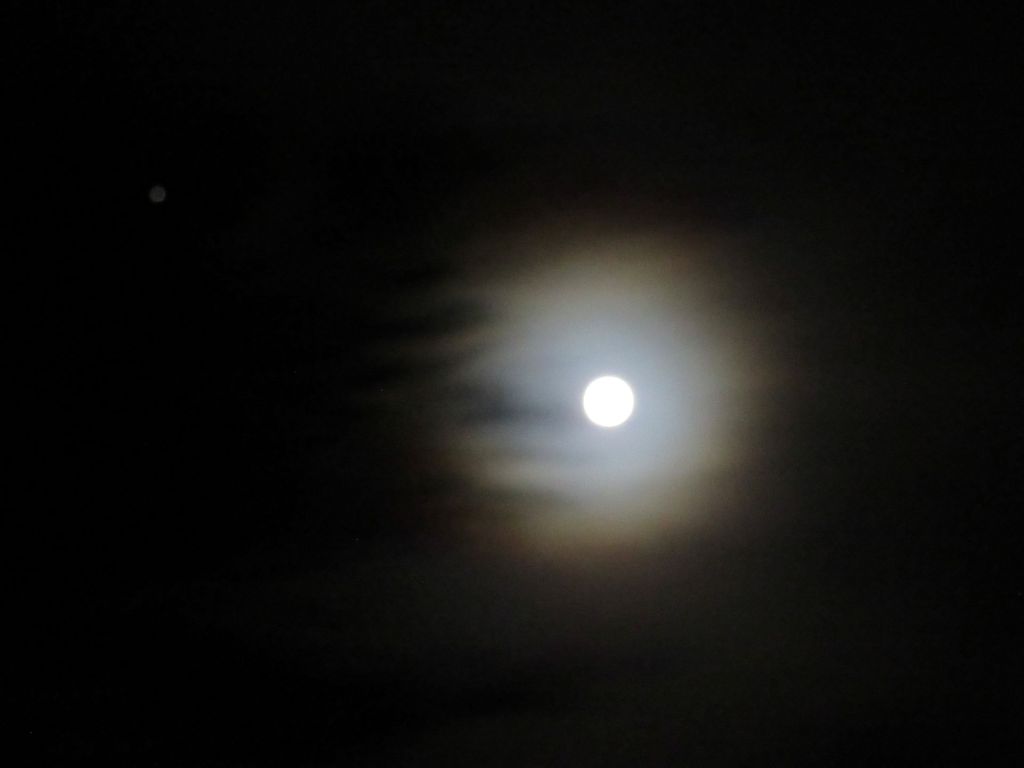
I was picking up our mail at the mailbox pod this morning around 5:45 a.m. and noticed what looked like a faint circle of color around the nearly full moon in the western sky. There were streaky white clouds. Not far from it and to the left was something that looked like a big star-which I guessed was Venus. It didn’t twinkle like stars do.
I’ve never seen anything like it before. It reminded me of a rainbow and I thought I’d heard something about moonbows (probably on the Weather Channel). By the time Sena got up and I told her about it, she suggested I get a video. By that time, it was pretty much gone, though.
According to one article, this might have been a moon halo, which differs from a moonbow. Moon halos can form from ice crystals. It was about 25 degrees outside.
So, according to some cultures, moon halos might herald bad weather, maybe in a couple of days. On the other hand, it’s going to be pretty quiet around here for next several days.
possible moon halo apossible moon halo bpossible moon halo c
The hurricane season this year continues to be deadly, and they are not named after women anymore. That stopped in 1979; how and why it stopped is quite a story in itself. The latest one is named Milton, which is a benign sounding name, but the storm is anything but that.
I was reminded of the custom of naming hurricanes after women last night when I reread E.B. White’s essay, “The Eye of Edna.” The essay is subtitled with place and date: Allen Cove, September 15, 1954. It was published in a collection “Essays of E.B. White in 1977 by HarperCollins. It was published originally in the New Yorker, according to an online quote from his essay.
I’m too young to remember Edna. When I did a web search of the term “The Eye of Edna,” I got many hits for both the essay and the hurricane. Reading White’s essay is a treat because he makes fun of how radio news reporters and the people in Maine who were listening to the radio reacted to the weather reports about Edna. Radio reporters often seemed disappointed about the lack of heavy rain and high winds.
I found the abstract of an article published a 1958 issue of the Journal of Meteorological Sciences which the driest summary of Hurricane Edna I could possibly imagine:
The eye region of Hurricane Edna (1954) is studied with the principal aid of radar and dropsonde data. Vertical sections show that over the eye there was a thick layer derived from the wall cloud which bounded the eye on the northeast. Precipitation fell from this upper layer into drier air beneath. A reasonable mechanism is thereby suggested by which large moisture values can become associated with air in the eye without producing the wet bulb potential temperatures or high winds characteristic of the rain-filled masses outside the eye.
Radar data giving the height of the “bright band” or melting level show that the warm core structure of Edna was most pronounced within the radius if maximum surface winds. The result is qualitatively confirmed by soundings and by comparison of surface winds and the speeds of radar weather elements in various portions of the storm. The radar photographs also show that heavy precipitation near the eye of Edna was bounded sharply in the western semicircle along an east-west line through the center of the storm. This boundary must be associated with a rather large change of vertical air speeds and therefore has special dynamic significance.”
If you read it the citation too quickly, you might misread the journal’s abbreviated name as my own. It’s actually J. Atmos—not J. Amos.
There is a much more vividly emotional account of Hurricane Edna in the Vineyard Gazette’s 2014 online story, along with a video.
The bottom line is hurricanes are deadly storms, no matter what people name them. Everybody, including E.B. White, would agree on that.
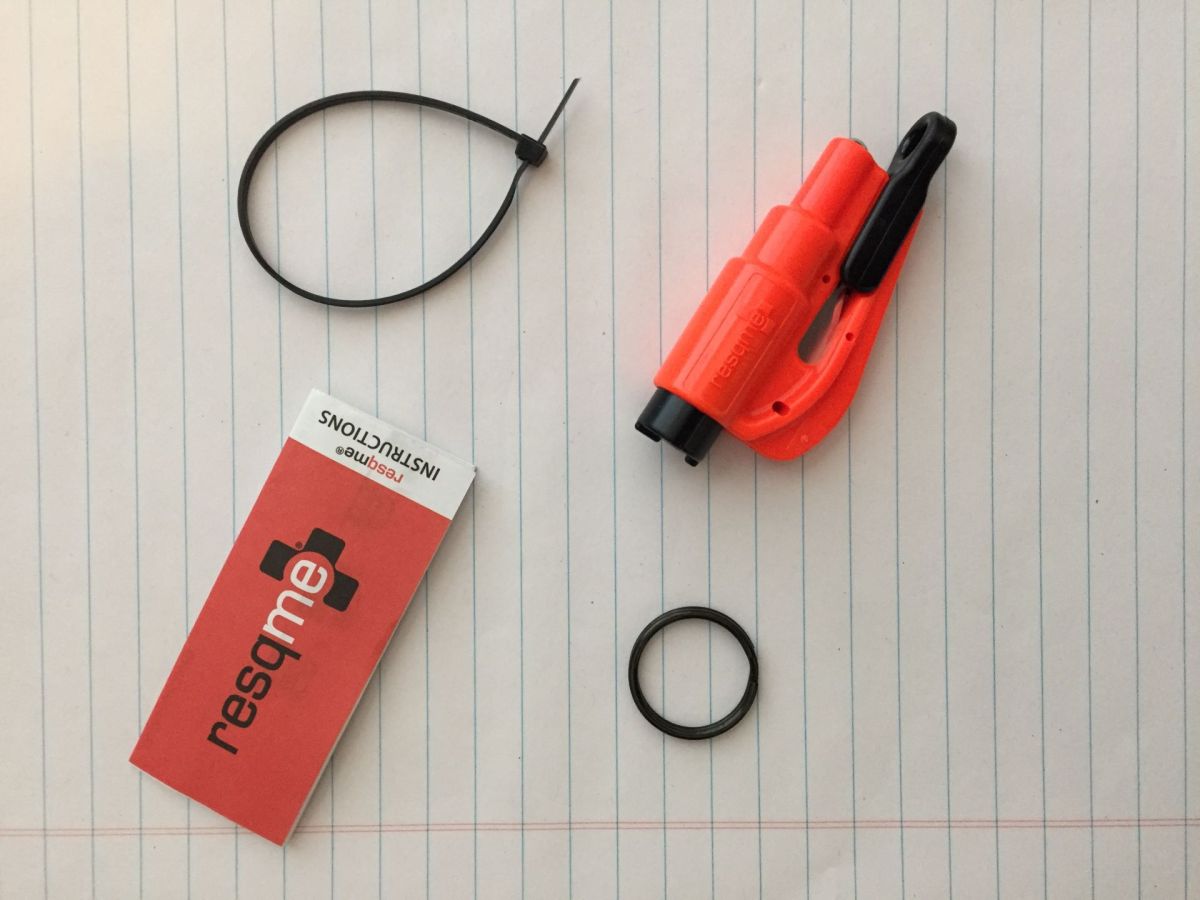
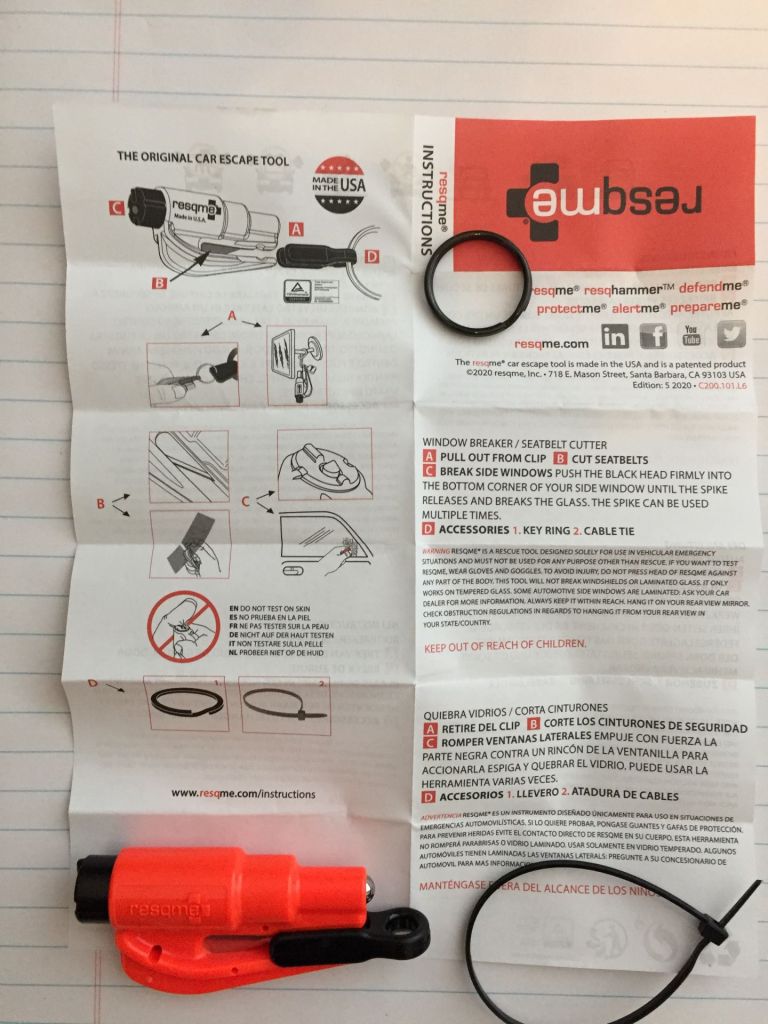
This is the follow up to my post about how to escape from a car sinking in a flood. Our new car escape tool arrived. It’s the RESQME window breaker and seat belt cutter.
We checked our side windows and they are tempered glass on both the front driver and passenger side. The other way you could check is to partly roll down the windows and look at the top edge. If the edge has layers, it’s laminated; if it’s solid, it’s tempered. The window breaker is not effective on laminated glass on the windshield, according to the AAA study.
It’s rare to be in a situation in which you might need this tool. The best way to avoid it is not to drive in flooded areas. Turn around, don’t drown.
Sena and I saw a Weather Channel segment on how to escape your car if it is sinking during a flood. It’s mainly a reminder to turn around, don’t drown. However, there were a couple of interesting things about it. One was the quiz, in the format of a “how would you survive?” quiz with 3 choices: Fasten the seat belt securely, shatter the window, or call 911. The right answer is to break the window and I’ll have more on that because there was no guidance at all about how to break the window. We thought that was an important omission.
The interesting thing about the video clip is that I thought I recognized it from a paranormal TV show, The Proof is Out There with Tony Harris. Most of the time, the conclusions tend to lean toward skepticism regarding paranormal explanations, but in this one, Tony called it a “Possible Miracle.”
In both the Weather Channel and The Proof is Out There, the vehicle was red and looked like it was bigger than a compact or standard size car. The way it moved in the flood water was very similar in both. The YouTube on The Proof is Out There was from Season 3 and it was posted on October, 2023. I’m pretty sure I saw it long before that. The video on the Weather Channel looks like a clip from the full video, and it stops early before the rest of the action.
In fact, there are a few news report videos (from the same news agency, the archives of which no longer have the video for some reason) of the incident, which happened in 2006 and which involves a woman in a red SUV in Pueblo, Colorado who drove into flood waters. The SUV sank, but not before attracting the attention of rescuers, reporters and camera crews. The SUV went underwater with windows rolled up and when it was later pulled out, the windows were still rolled up, unbroken, and all the doors were closed. It has never been clear how she escaped, although many speculated that it was a miracle.
Sena noticed that the windshield wipers were still working, something I had missed. A couple of YouTube viewers (in The Proof is Out There video) mentioned it, but nobody responded to the implication that the electric controls to the lower the windows might still have temporarily worked as the vehicle went under. That still doesn’t explain how they got rolled back up.
It’s also noteworthy that, despite the news story mentioning the driver’s name, where she worked, and that she had called her brother while the SUV was sinking, there doesn’t seem to be any record of anyone asking her how she’d gotten out of the vehicle.
This post is going to contain several YouTube videos, but I’m trying to keep them to the relevant minimum. I think, in all fairness to The Weather Channel about omitting how to shatter the vehicle window in order to escape sinking and drowning (during the TV episode mentioned above), they have posted a video in the past which does provide excellent guidance.
In this video, they mention something Sena knew about but which I was not familiar with—the little tool called a seat belt cutter and glass breaker. You can buy them just about anywhere, often for less than $20. The AAA web site has clear instructions for what to do in situations where this tool would come in handy. In that same web page, there’s a link to the AAA research study done in 2019 about these tools, which contains more helpful advice, such as that the spring-loaded tools work better than the hammer type, and that they work on tempered glass, not laminated glass.
In any case, we’re sold on the glass breaker and it’s on order. However, we would prefer to turn around, don’t drown.
We like to watch the Weather Channel. One of the meteorologists is very conservative in his forecasts. He’s always hedging:
“And here we see a radar signal that might be indicative of a tornado, not saying it definitely is a tornado, just saying it might be, and over here in this county next to a major or minor highway are what appear to be remnants of an atmospheric river although that’s according to the GPS Model mind you, and you always have to remember the European Model might say something different about what might happen, not what’s going to happen mind you, just that it possibly could transform into a manifestation of the Norse god Thor who could have a huge hammer, although that’s from mythology so you can’t rely on that definitely and if you do, let me remind you that I have a lawyer who might just give you a telephone call if you happen to make the mistake of depending on a meteorologist to forecast anything exact and reliable for goodness sake, like the occurrence of a named storm in your vicinity which might be in the Midwest, or the eastern seaboard, you just can’t know with any degree of certainty now that climate change has us in its indefinable grip as we say, so you want to be prepared for whatever might occur, which could include skies that are clear to partly cloudy to filled with UFOs as far as the eye can see but take it from me you didn’t hear that from me.”
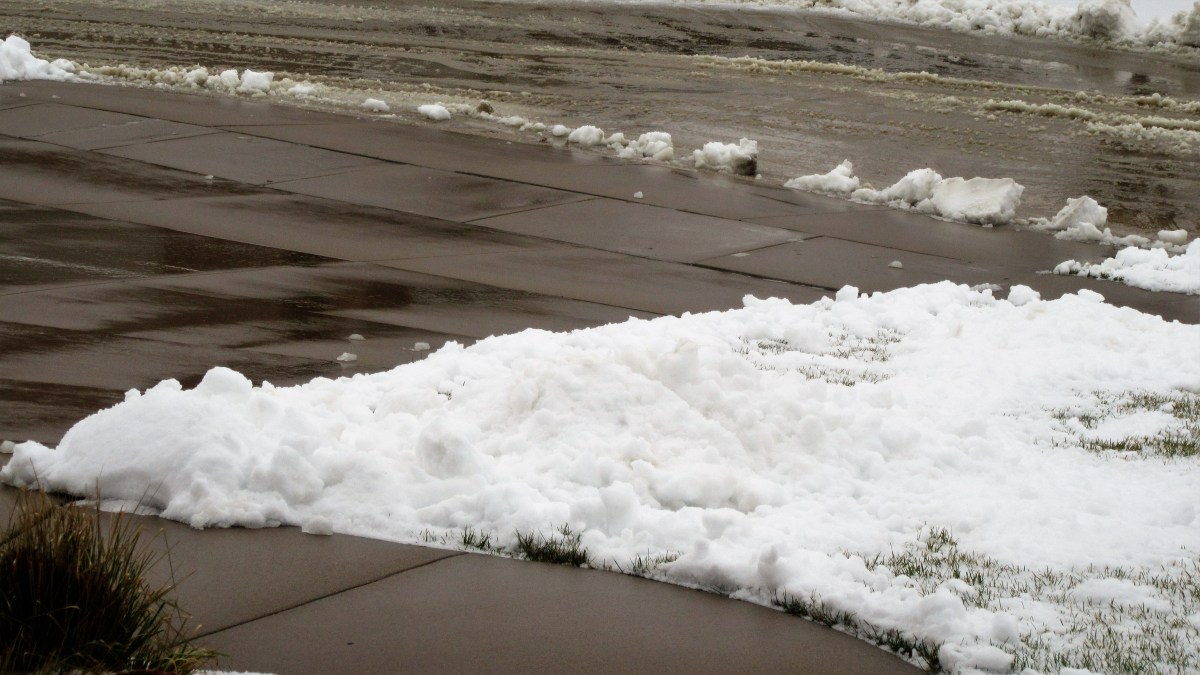
We’re going to get another several inches of snow tomorrow. Whether it’ll be a heavy, wet or fluffy snow is apparently up for debate among weather forecasters. We definitely got the heavy stuff last week. I made great snowballs for juggling.
We’re going to be shoveling it, fluffy or heavy and wet. Sena noticed I was “flinging” snow from my shovel last week and wishes I would not do that. It’s a push-plow type shovel and I can’t get enough snow in it to lift a heavy load of the stuff.
But I will try not to fling my snow. We’re hoping for the fluffy stuff. If it turns out to be heavy, I might juggle more snowballs. We’ll see.







 Go Retire Psychiatrist