How to Support University of Iowa with the One Day for Iowa Fund Drive Today!

Okay, so here’s my pitch on how potential donors can support programs at The University of Iowa. Today the One Day for Iowa fund drive kicks off, and it ends at 11:59 PM today on March 26, 2025.

I got a soft spot in my heart for The University of Iowa College of Medicine and University of Iowa Health Care (UIHC), even though my undergraduate Bachelor’s degree was from Iowa State University.

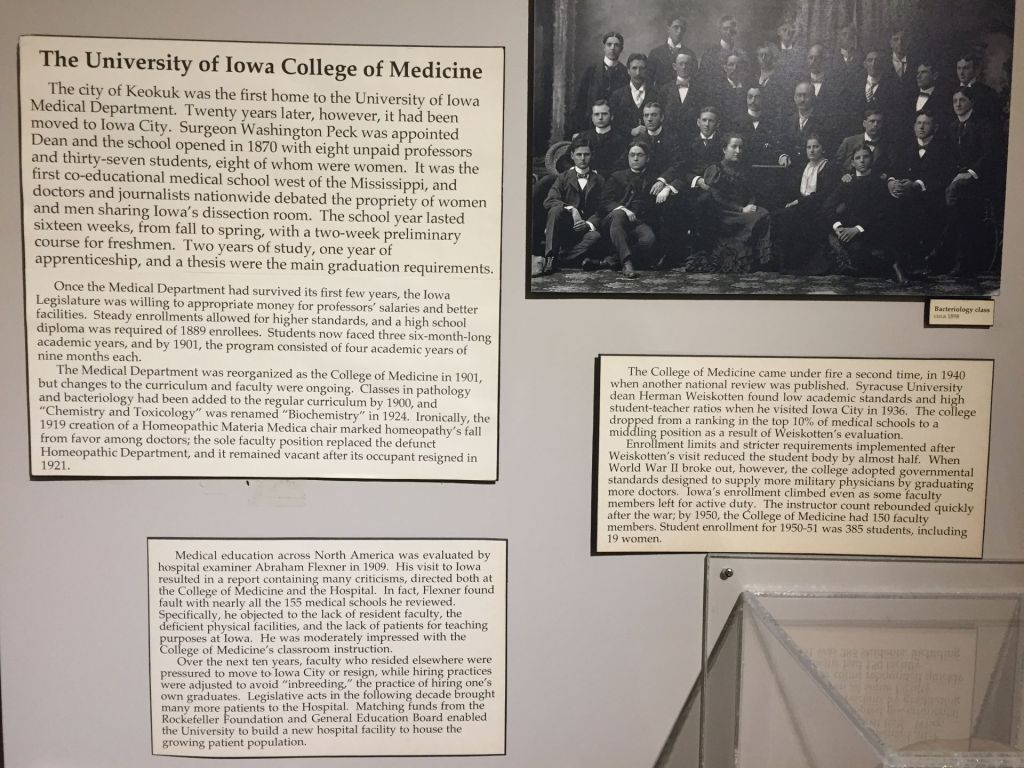
You can find in the UIHC Medical Museum a description of the historical development of the medical school. Following the Flexner Report in 1909 which found fault with all U.S. medical schools including Iowa’s, there was a drive to avoid “inbreeding,” meaning hiring of one’s own graduates. Nowadays, there are legislative efforts to keep as many as we can of Iowa’s best and brightest.  

Go Hawkeyes!

Stead Family Children’s Hospital NICU Gets a Wave from the AAP with New Designation

The University of Iowa Stead Family Children’s Hospital Neonatal Intensive Care Unit was recently recognized by the American Academy of Pediatrics (AAP) as one of only two such units in the U.S. having the highest levels of neonatal care.

It reminds me of the Iowa Hawkeye football games where, at the end of the first quarter, all the players and football fans wave from the field to the pediatric patients and their families watching the game from UI Stead Family Children’s Hospital. It’s called the Wave, one of the best traditions in college sports.

Well, the AAP waves to Stead Family Children’s Hospital NICU.

Artificial Intelligence: The University of Iowa Chat From Old Cap

This is just a quick follow-up which will allow me to clarify a few things about Artificial Intelligence (AI) in medicine at the University of Iowa, compared with my take on it based on my impressions of the Rounding@Iowa presentation recently. Also, prior to my writing this post, Sena and I had a spirited conversation about how much we are annoyed by our inability to, in her words, “dislodge AI” from our internet searches.

First of all, I should say that my understanding of the word “ambient” as used by Dr. Misurac was flawed, probably because I assumed it meant a specific company name. I found out that it’s often used as a term to describe how AI listens in the background to a clinic interview between clinician and patient. This is to enable the clinician to sit with the patient so they can interact with each other more naturally in real time, face to face.

Further, in this article about AI at the University of Iowa, Dr. Misurac identified the companies involved by name as Evidently and Nabla.

The other thing I want to do in this post is to highlight the YouTube presentation “AI Impact on Healthcare | The University of Iowa Chat From the Old Cap.” I think this is a fascinating discussion led by leaders in patient care, research, and teaching as they relate to the influence of AI.

This also allows me to say how much I appreciated learning from Dr. Lauris Kaldjian during my time working as a psychiatric consultant in the general hospital at University of Iowa Health Care. I respect his judgment very much and I hope you’ll see why. You can read more about his thoughts in this edition of Iowa Magazine.

“There must be constant navigation and negotiation to determine if this is for the good of patients. And the good of patients will continue to depend on clinicians who can demonstrate virtues like compassion, honesty, courage, and practical wisdom, which are characteristics of persons, not computers.” ——Lauris Kaldjian, director of the Carver College of Medicine’s Program in Bioethics and Humanities

Fluoride in Your Precious Bodily Fluids

Yesterday, Sena and I talked about a recent news article indicating that a federal judge ordered the Environmental Protection Agency (EPA) to review the allowed level of fluoride in community water supplies. The acceptable level may not be low enough, in the opinion of the advocacy groups who discussed the issue with the judge, according to the author of the article.

A few other news items accented the role of politicians on this issue. This seems to come up every few years. One thing leads to another and I noticed a few other web stories about the divided opinions about fluoride in “your precious bodily fluids.” One of them is a comprehensive review published in 2015 outlining the complicated path of scientific research about this topic. There are passionate advocates on both sides of whether or not to allow fluoride in city water. The title of the paper is, “Debating Water Fluoridation Before Dr. Strangelove” (Carstairs C. Debating Water Fluoridation Before Dr. Strangelove. Am J Public Health. 2015 Aug;105(8):1559-69. doi: 10.2105/AJPH.2015.302660. Epub 2015 Jun 11. PMID: 26066938; PMCID: PMC4504307.)

This of course led to our realizing that we’ve never seen the film “Dr. Strangelove Or: How I Learned to Stop Worrying And Love the Bomb,” a satire on the Cold War. We watched the entire movie on the Internet Archive yesterday afternoon. The clip below shows one of the funniest scenes, a dialogue between General Jack Ripper and RAF officer Lionel Mandrake about water and fluoridation.

During my web search on the fluoridation topic, one thing I noticed about the Artificial Intelligence (AI) entry on the web was the first line of its summary of the film’s plot: “In the movie Dr. Strangelove, the character Dr. Cox suggests adding fluoride to drinking water to improve oral health.” Funny, I don’t remember a character named Dr. Cox in the film nor the recommendation about adding fluoride to drinking water to improve oral health. Peter Sellers played 3 characters, none of them named Cox.

I guess you can’t believe everything AI says, can you? That’s called “hallucinating” when it comes to debating the trustworthiness of AI. I’m not sure what you call it when politicians say things you can’t immediately check the veracity of.

Anyway, one Iowa expert who regularly gets tapped by reporters about it is Dr. Steven Levy, a professor of preventive and community dentistry at the University of Iowa. He’s the leader of the Iowa Fluoride Study, which has been going on over the last several years. In short, Dr. Levy says fluoride in water supplies is safe and effective for preventing tooth decay in as long as the level is adjusted within safe margins.

On the other hand, others say fluoride can be hazardous and could cause neurodevelopmental disorders.

I learned that, even in Iowa there’s disagreement about the health merits vs risks of fluoridated water. Decisions about whether or not city water supplies are fluoridated are generally left to the local communities. Hawaii is the only state in the union which mandates a statewide ban on fluoride. About 90 per cent of Iowa’s cities fluoridate the water. Tama, Iowa stopped fluoridating the water in 2021. Then after a brief period of public education about it, Tama restarted fluoridating its water only six months later.

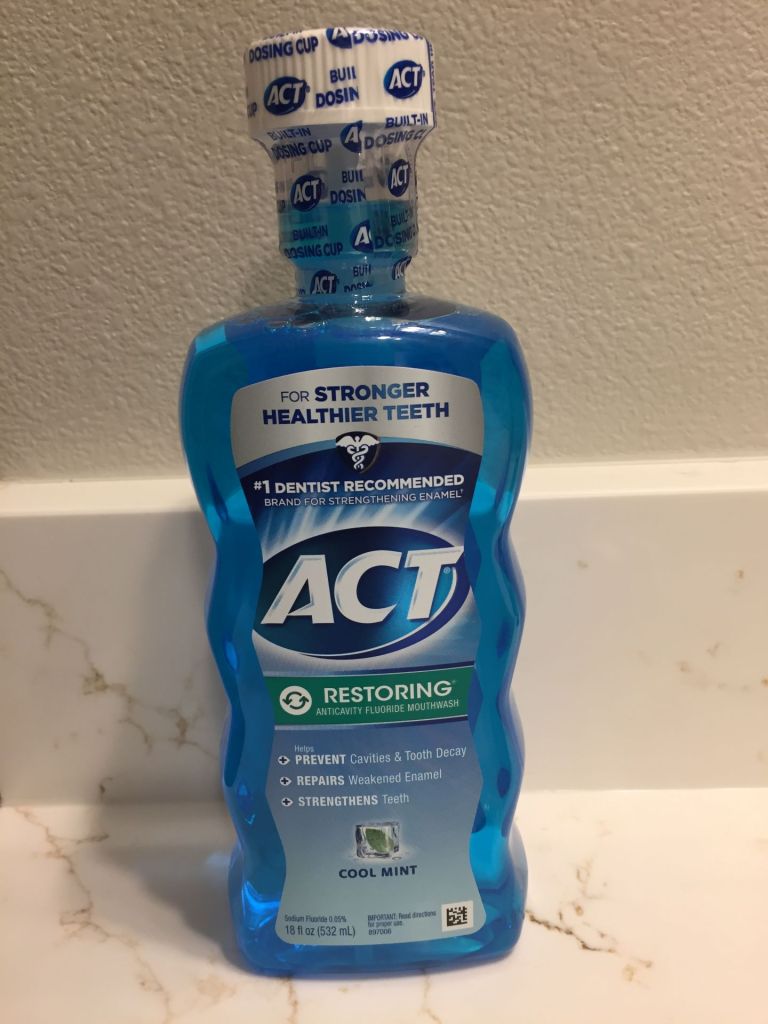
We use a fluoridated dentifrice and oral rinse every day. We drink fluoridated water, which we offer to the extraterrestrials who occasionally abduct us, but they politely decline because of concern about their precious bodily fluids.

University of Iowa Psychiatrists Publish Huntington Disease Study Results

I ran across a fascinating story about a study on Huntington’s disease published by members of the University of Iowa Health Care. The study examined how the Huntington’s disease gene might enhance brain development and function early in life prior to the onset of the devastating disease. It was published in The Annals of Neurology:

I also found an abstract for a paper about Woody Guthrie, a famous American musician and activist who was very creative in his early life, but sadly succumbed to the ravages of Huntington’s disease when he was 55 years old. I couldn’t access the full article without paying for it but the abstract was intriguing because I wondered whether the author suspected something similar to the premise of the study:

Ringman JM. The Huntington disease of woody guthrie: another man done gone. Cogn Behav Neurol. 2007 Dec;20(4):238-43. doi: 10.1097/WNN.0b013e31815cfee4. PMID: 18091075. Abstract: Woody Guthrie was an American songwriter, musician, writer, and political activist who died with Huntington disease (HD) in 1967 at age 55. His relatively brief creative life was incredibly productive with countless songs and a tremendous volume of letters to his name. His personal life was similarly driven with Woody having had 3 wives and at least 9 children and an insatiable appetite for traveling the United States. In this essay, I explore Guthrie’s art in relation to the development of the overt behavioral changes and chorea that characterized his illness. Woody’s most productive time artistically was in the 5 years immediately preceding the onset of overt symptoms of HD. I hypothesize that subclinical HD may have been an important driving force behind Woody Guthrie’s creativity.

If anybody knows, please comment.

Woody Guthrie was certainly an important figure in the American history of activism as well as music.

Usually, I would share the music of some of the artists I mention on this blog. On the other hand, one of the co-authors of the University of Iowa paper mentioned above is Doug Langbehn, my former colleague, who’s an accomplished musician and statistician. So instead, I thought I’d share the talent of Doug and his band.

U.S. News & World Report Ranks Iowa City Hospital in 9 Specialties

The University of Iowa Stead Family Childrens Hospital in Iowa City has ranked in 9 pediatric specialties, including pediatric behavioral health by U.S. News & World Report!

Thoughts on the Homeless Mentally Ill

The homeless man who lives on the sidewalk outside our hotel reminds me of a couple of things. One is Dr. Gerard Clancy, MD who is University of Iowa Health Care Professor of Psychiatry, Professor of Emergency Medicine, and Senior Associate Dean of External Affairs.

I remember Gerry, who was in the department of psychiatry when I was a resident. I saw his picture in the newspaper and hearing about him riding a bicycle around Iowa City doing a sort of outreach to the homeless mentally ill.

I found an archived article mentioning him published in 1995 in the Daily Iowan. The story starts on the bottom of the front page, entitled “I.C. opens new doors for area’s mentally ill.” It continues on page 9A.

The story mentions Dr. Clancy and what was called then the Clinical Outreach Services and the Emergency Housing Program (EHP). The challenges then sound a lot like what they are now: long waiting lists for psychiatric evaluation and treatment, a lack of funding for the treatment of mental illness, and a lack of preventive care. The most common mental illnesses in the homeless mentally ill are chronic schizophrenia, schizoaffective disorder, and bipolar disorder. The idea of reaching out to them “on their own turf” as Clancy was quoted, was to help them feel more comfortable talking about their mental illness.

The housing situation for this population of those struggling with mental illness was dismal then and it’s still dismal.

The homeless guy I’ve been calling Bob lives on the sidewalk next to a busy street. It’s just my opinion that he’s mentally ill based on my observations of his behavior. I’ve never tried to talk to him. However, Bob gets visits from people who obviously have differing views about the way he lives.

Some of them do talk to him and, although I can’t hear their conversations, the actions tell me important things. Some bring him what I call “care packages,” often food, water, and other items. They may start by acting kind, although may get impatient with him. Others try to clean up his sidewalk, and may criticize him. The police occasionally visit and have so far not taken him into custody.

It looks like things have not changed much since 1995 regarding the homeless mentally ill based on what I write here about my observations. In fact, it’s easy to find current news stories that say things are getting worse.

At the beginning of this post, I said I found a couple of things. The other thing was a very thorough teaching presentation about the current state of formal outreach to this population. It’s available on the web as a power point presentation by another University of Iowa faculty, Dr. Victoria Tann, MD, entitled “Assertive Community Treatment 101.”

Dr. Tann is currently an IMPACT Team psychiatrist. It’s an excellent source of background on the history of this effort at outreach to the homeless mentally ill. It also summarizes what’s happening with the program now.

Back to the Stanley Museum of Art

We went for a return visit to the Stanley Museum of Art the other day. It’s been a couple of years. There were a couple of head sculptures outside in the front of the building. They were in honor of one of my former medical school teachers, Dr. Richard Kerber. And the Keith Haring exhibit is excellent. He visited Horn Elementary School in 1989.

Carver College of Medicine Health Sciences Research Day!

Heads up! The Carver College of Medicine Health Sciences Research Day is on April 26, 2024. The event is open to the public. Find your way to the Medical Research Facility (MERF) by google map.

Good Luck Dr. Chris Buresh

Sena was looking up the meaning of a four-leaf clover the other day. You might call it a shamrock although that’s usually reserved for the 3-leaf variety. It’s fitting for St. Patrick’s Day to say the four-leaf clover is special because it’s rare to see one. The four leaves represent faith, luck, love, and hope.

The trouble going on in Haiti is regrettable to say the least. However, it also reminded us of how lucky it was for us to have known one of my former colleagues, Dr. Christopher T. Buresh, MD. He was an emergency room physician at the University of Iowa Hospital until just a few years ago, when he and his family moved to Seattle, Washington. Dr. Buresh is now an Associate Professor in the Department of Emergency Medicine with the University of Washington. He’s also Assistant Program Director of their Emergency Medicine Residency Program.

The connection between Dr. Buresh and Haiti goes back a long way. Many Haitians were lucky he and other physicians volunteered to help provide medical care for them on an annual basis for years.

Chris is really a humble, likeable, and practical guy. He and his family were our next-door neighbors for a while and fascinating things were going on there at times. We remember they built this really cool tree house that sort of looked like it grew out of their main home. They even had an apparatus for a zip line between the two structures. I don’t think the zip line ever actually got installed, but it was intriguing.

He and I sometimes saw each other in the emergency room at University of Iowa Hospital. His energy, compassion, and dedication to patient care were an inspiration to colleagues and learners at all levels. Sena saw one of his presentations about his volunteer work in Haiti. He never mentioned the difficult politics of the situation. He emphasized the work of caring for the Haitians most of all and gave credit to members of the team doing everything they could in that challenging and, I’m sure, sometimes horrifying environment.

It would be easy to just sit and wonder why he left Iowa, and to be sorry about that. On the other hand, when you thing about the 4-leaf clover, you really have to wonder about something else. Maybe he had one in his pocket with all four of what we all want: faith, luck, love, and hope.