Installing the iPhone 17 Pro OtterBox Glass Screen Protector

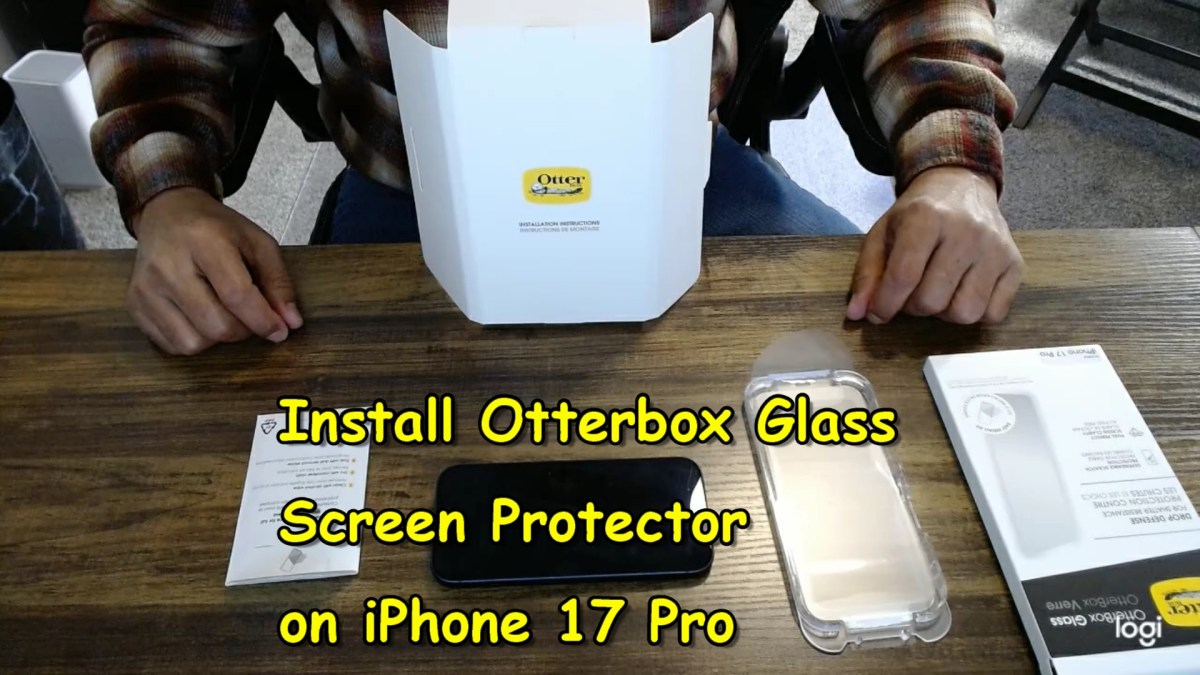
I did something for the first time today, which was to install the iPhone 17 Pro OtterBox Glass screen protector (that’s a mouthful). I remember putting the screen protector on my old iPhone many years ago and it wasn’t anything fancy. There was no device to help you line things up and apply the screen protector. You put it on by hand and prayed that you could eventually scrape out all the bubbles—if you were lucky enough to get it on straight.

The main reason I made a YouTube video about how to install the screen protector was because I couldn’t find a YouTube video about this particular brand. It turns out all the applicator devices are different and installing them is slightly different for each brand.

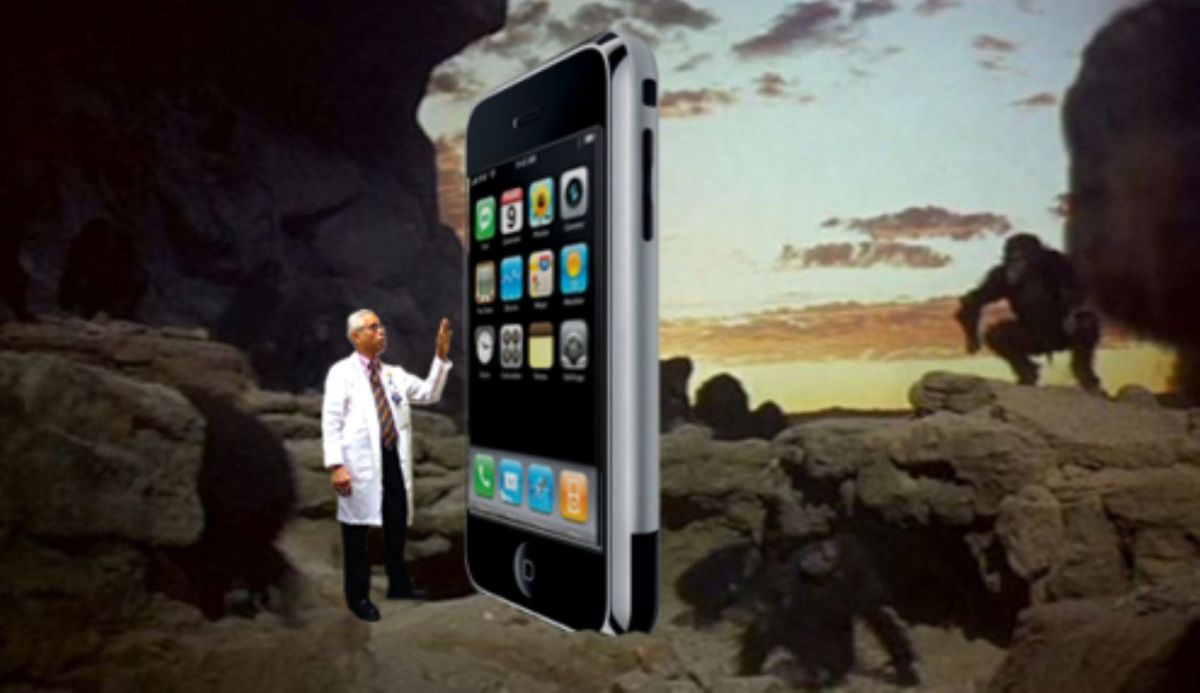
Sena ordered the case, screen protector, and holster from OtterBox, which is where I got the original case and holster for my old iPhone. I had to replace the case after the battery swelled up and cracked it five years ago. This reminds me of an old Men in Black 3 quote in which a young Agent K holds a very large mobile phone up to his ear (this film is about time travel and the action is in 1969). Agent J says to him “That’s a bigass phone; don’t hold that up to your head!).

Anyway, I decided to make a video of me installing the OtterBox Glass screen protector. I plan to make a YouTube video of installing the case as well—but that’ll be another day.

Sena Hates Her New Smartphone!

Since we’ve gotten new smartphones, we’ve been working on getting up to speed on how to use them. More often they seem to be using us.

In fact, Sena is pretty bummed about how much fiddling around with a smartphone you have to do. She used a little flip phone for years and this is a big upgrade (she would say “downgrade”) for her.

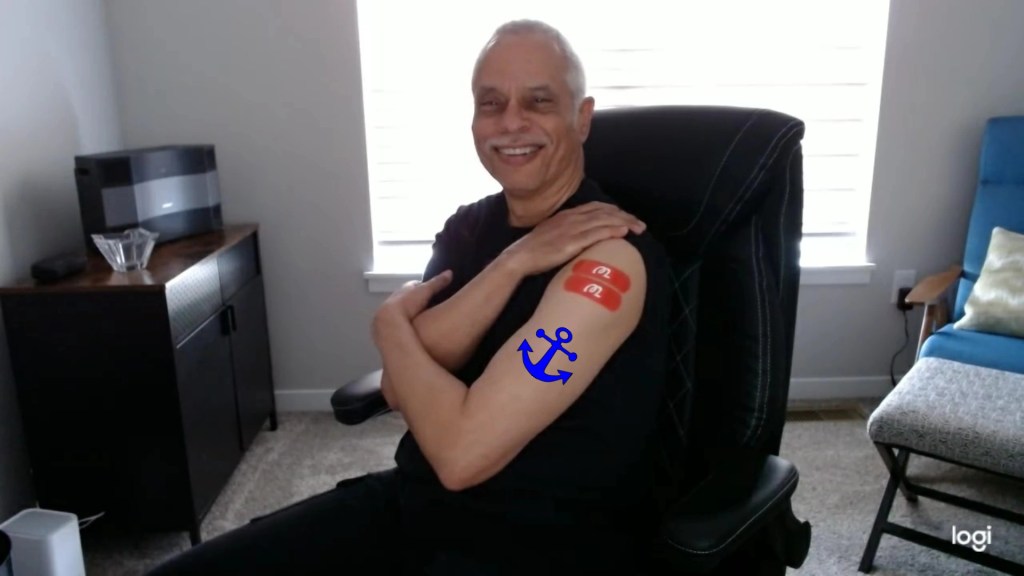
Zuckerberg wants to replace smartphones with Artificial Intelligence (AI) glasses. Sena tells me Bill Gates has been talking about replacing them with electronic tattoos.

That reminds me of a 1997 X-Files episode I don’t remember seeing called “Never Again.” Some guy gets a tattoo on his arm of a girl with the words “Never Again” under it. It starts talking to him and making him do crazy things, like buying mobile phones priced around $1,000, which is about what they cost back in 1997. Smartphones cost about the same these days.

Is that how electronic tattoos would work? Or would they just send mind control messages telling you to buy more of the same stocks in Bill Gates’ portfolio?

There are a plethora of new ads and promotional messages that we’ve never seen before:

Buy new armpit removal tool for half-price!

Upgrade to AI-assisted fruitcake recipe idea generating protocol!

Install planet construction and combustion instructions now!

I’m thinking we’ll Never Again purchase new smartphones.

We Finally Got New Phones

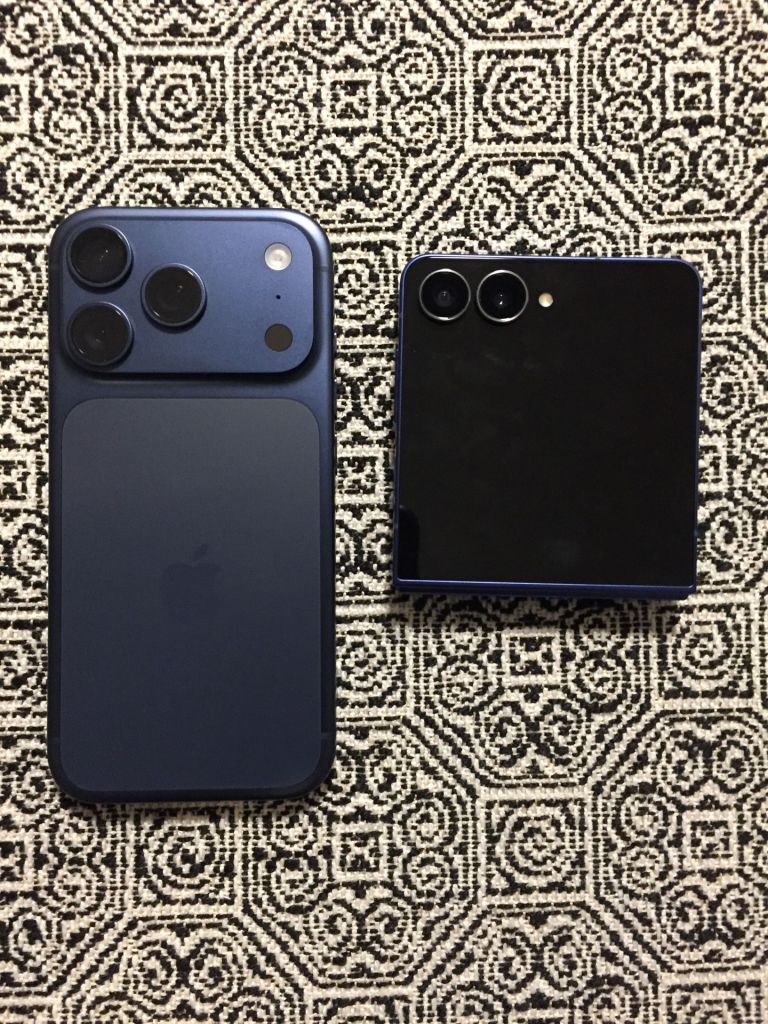
Well, we finally got new phones after several years. I think we bought the old ones from Fred Flintstone. I probably should have got a new phone after the battery swelled up in it so big it was starting to split the case. That was over 5 years ago. I have an iPhone 17 Pro now.

Sena’s always had a flip phone. She got one that still folds up, but it’s a lot nicer. It’s a Galaxy Z Flip7.

I think these phones have a feature that allows you to call extraterrestrials to order pizza. Don’t ask for extra cheese.

I remember we got along OK without portable phones at all for years until a big snowstorm made the streets impassable and I decided I had to sleep in my chair in my office at the hospital. We had only one car. I tried to call Sena to warn her not to drive in the snowstorm, but she’d already left to come pick me up. She got stuck on the way but managed to get unstuck and drove back home. I had no way to get a hold of her while she was out on the road.

We both got flip phones after that. I later got an iPhone triple zero, which ran OK most of the time on diesel. One of the residents talked me into buying one. It was a lesson in evolution. I guess we’re still evolving.

The Wild West Sandbox of AI Enhancement in Psychiatry!

I always find Dr. Moffic’s articles in Psychiatric Times thought-provoking and his latest essay, “Enhancement Psychiatry” is fascinating, especially the part about Artificial Intelligence (AI). I liked the link to the video of Dr. John Luo’s take on AI in psychiatry. That was fascinating.

I have my own concerns about AI and dabbled with “talking” to it a couple of times. I still try to avoid it when I’m searching the web but it seems to creep in no matter how hard I try. I can’t unsee it now.

I think of AI enhancing psychiatry in terms of whether it can cut down on hassles like “pajama time” like taking our work home with us to finish clinic notes and the like. When AI is packaged as a scribe only, I’m a little more comfortable with that although I would get nervous if it listened to a conversation between me and a patient.

That’s because AI gets a lot of things wrong as a scribe. In that sense, it’s a lot like other software I’ve used as an aid to creating clinic notes. I made fun of it a couple of years ago in a blog post “The Dragon Breathes Fire Again.”

I get even more nervous when I read the news stories about AI making delusions and blithely blurting misinformation. It can lie, cheat, and hustle you although a lot of it is discovered in digital experimental environments called “sandboxes” which we hope can keep the mayhem contained.

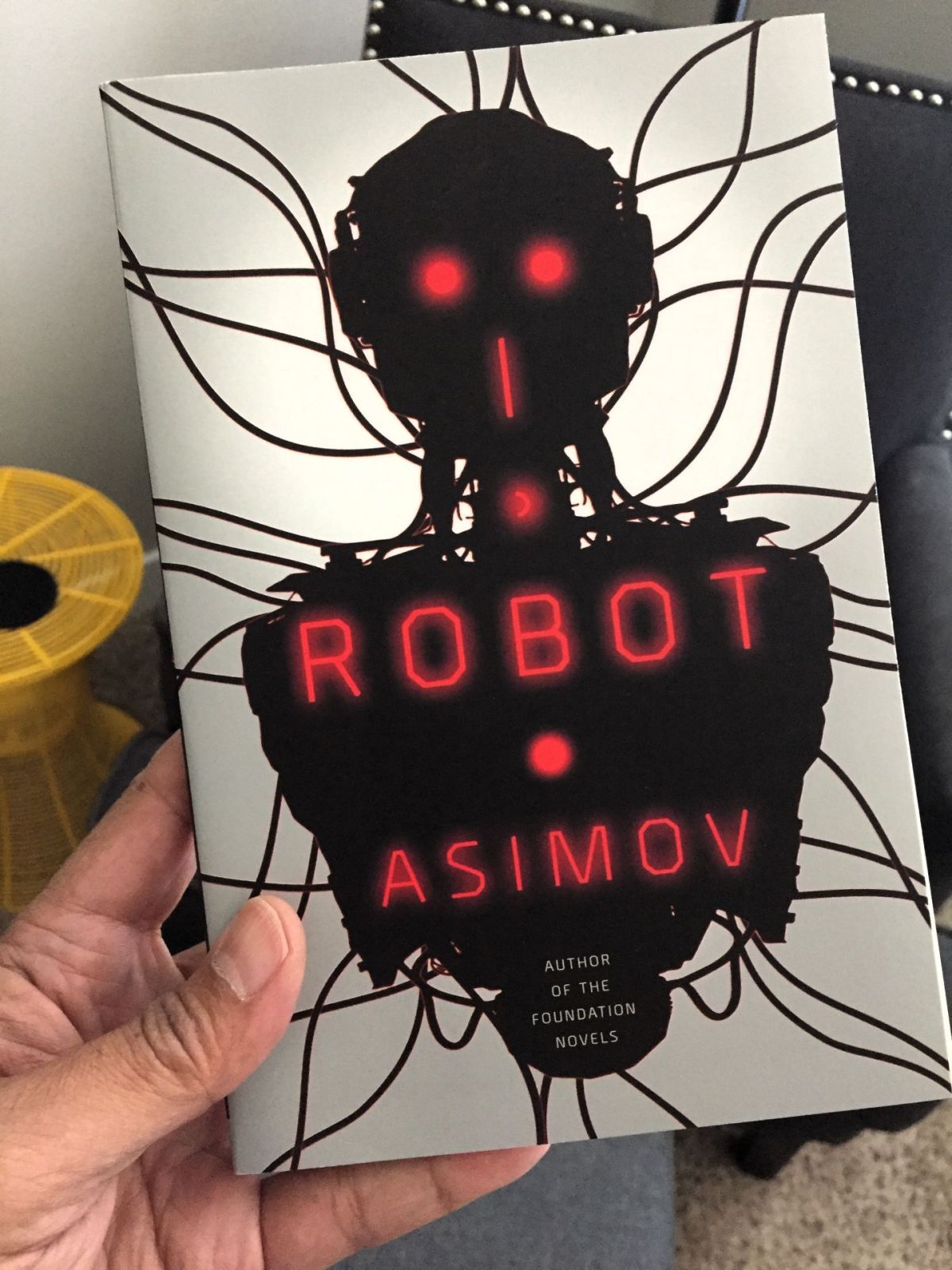
That made me very eager to learn a little more about Yoshua Bengio’s LawZero and his plan to create the AI Scientist to counter what seems to be a developing career criminal type of AI in the wild west of computer wizardry. The LawZero thing was an idea by Isaac Asimov who wrote the book, “I, Robot,” which inspired the film of the same title in 2004.

However, as I read it, I had an emotional reaction akin to suspicion. Bengio sounds almost too good to be true. A broader web search turned up a 2009 essay by a guy I’ve never heard of named Peter W. Singer. It’s titled “Isaac Asimov’s Laws of Robotics Are Wrong.” I tried to pin down who he is by searching the web and the AI helper was noticeably absent. I couldn’t find out much about him that explained the level of energy in what he wrote.

Singer’s essay was published on the Brookings Institution website and I couldn’t really tell what political side of the fence that organization is on—not that I’m planning to take sides. His aim was to debunk the Laws of Robotics and I got about the same feeling from his essay as I got from Bengio’s.

Maybe I need a little more education about this whole AI enhancement issue. I wonder whether Bengio and Singer could hold a public debate about it? Maybe they would need a kind of sandbox for the event?

Empty Pants Running Away! How Did They Do That?

Last night, I was watching the TV show Strange Evidence and noticed that they were going to show what’s been called the ghost pants video from a few years ago. I went to bed because I saw it on a similar show a few years ago. I doubted that it was solved yet. The clip shows a pair of white pants running down a street. You can’t see anyone wearing them.

There are a few interesting video-based paranormal TV shows. The one I think is pretty well done is The Proof is Out There, hosted by Tony Harris. I saw one which showed a photo of a girl whose image was different from her reflection in a mirror. The question was whether it was evidence for something paranormal, maybe proof of simulated reality.

Tony and the group of experts finally settled on it being unexplained. However, on a subsequent episode, Tony explained that someone had notified him that the photo was shot simply by using the panorama mode on a smartphone camera. It was relatively simple. Sena and I made a couple.

That was about the same time the YouTube video about the white ghost pants was circulating on the internet. Today I found a YouTube short video that shows essentially the same thing made by a couple of guys who also made a 10-minute video explaining how to achieve the effect. It’s below the short video. Of course, I don’t understand the technical explanation, but I think it might account for the ghost pants video.

Raccoon in the Mulberry Tree

I was not sure what exactly I saw this between 6:30 and 7:00 this morning shaking the mulberry tree branches in our backyard. It seemed too big to be a squirrel and I dismissed the thought, telling myself that it was most likely the usual squirrel getting its mulberry breakfast.

Just prior to this incident, I had seen and heard what I thought was a blue jay in the mulberry tree. It gave a series of short whistles while bobbing up and down on the branch. I had never heard a blue jay make whistle notes, just the usual screeches. I doubted what I saw and heard. I checked my bird book, “Birds of Iowa: Field Guide” by Stan Tekiela. It didn’t mention anything about blue jays making short whistling notes and bobbing up and down as they did so. I didn’t bother to get up and try to get a video of it. It would have been through the window of our sun room and the jay didn’t sit for more than a few seconds.

So, I looked it up on the web. It turns out blue jays make a variety of noises besides the jeer. They bob up and down as a part of a courtship ritual. They make what is termed a “pump handle call” and I found a video which duplicates what I saw and heard.

Anyhow, getting back to the critter in the mulberry tree, it turned out to be a large raccoon. It was eating mulberries and I tried to take video of it as it was climbing down the tree. This reminded me of an essay by E.B. White entitled “Coon Tree.” If you’ve ever read essays by E.B. White, you probably know already that this one is about a lot more than raccoons.

It’s basically about the conflict between nature and technology. The main essay was published in 1956 and a post script was added in 1962. The coon represents nature which White idealizes and contrasts with references to new inventions, including nuclear devices which represent the destructive side of technology.

I guess we can forget for the moment that raccoons can carry diseases like rabies and roundworm. I’m also reminded of an old TV commercial in the 1970s about margarine (an alternative to butter) in which an actor says angrily, “It’s not nice to fool Mother Nature!” The idea was that margarine (which was a new invention in the late 19th century) was healthier than the natural spread, butter—although the trans fat in it makes the comparison a bit more complicated.

White also says something interesting about unsanitary homes, claiming that children who live in them become more resistant to certain diseases like polio than the kids who grow up in clean homes. The polio scourge raised its ugly head recently in New York, which renewed the recommendation by the Centers for Disease Control recently that people who didn’t get vaccinated against polio should get vaccinated—regardless of how dirty your home was.

And then there is the artificial intelligence (AI) technology. I wonder what E.B. White would say about that? AI can improve detection of some diseases and assist in medical research. On the other hand, AI can still make mistakes and it needs human surveillance.

I read you can sometimes use loud noises to keep raccoons out of your yard. For example, you could try recordings of blue jays.

The Written Word is Blurred

I ran across this quote the other day: littera scripta manet. The English translation is, I think, “the written word endures.”

Not to dwell too much on the prosaic side of the issue which is that, for me, often the word has been blurred because of problems with my vision. I just had retinal detachment surgery a little over a month ago and I’m making a good recovery. But early on I had a lot of trouble with blurry vision, tearing, and light sensitivity.

Just the other night though, I was able to read a section of a book without having as much blurred vision as I did before the surgery when I looked up from the page at something distant. I’ve been wearing progressive lenses for many years and it probably got worse because of the detached retina, which was chronic or maybe acute on chronic.

Now to get beyond trivialities, I saw the quote above in an issue of the University of Iowa publication, Iowa Magazine. It was in the last Old Gold column of University Archivist, David McCartney. He retired in March of this year. The title was “Old Gold: The Enduring Power of the Written Word.”

He notes the Latin expression is on the seal of the U.S. National Archives and Records Administration. McCartney’s point is that technology can undermine as well as strengthen the power of the written word. He identities Horace as the originator of the expression, “the written word endures.”

I went pecking around the internet and found out that a lot of people think an educator named Neil Postman was the originator of this quote. What makes me doubt this is that the original is in Latin, which suggests a much older origin. He was born in 1931 and died in 2003. Interestingly, Postman criticized the effect of technology on thought and culture.

A website that seems dedicated to explaining English translations of Latin indicates that the quote comes from a longer expression: Vox audita perit, littera scripta manet, which translates to “the spoken word perishes, but the written word remains.” One contributor says the originator was Horace. Another insists that “littera” does not mean word at all, although concedes that the proposed translation is correct, nevertheless.

Further, there is a Wikipedia entry which cites the Latin expression differently, “verba volant, scripta manent,” which in English is “spoken words fly away, written words remain.” The author says the proverb originated from a speech of senator Caius Titus to the Roman Senate.

Anyway, McCartney points out that the world is becoming increasingly digitized and that the average website lasts only a little over two and a half years. Some important digital records have been lost, unreadable (blurred?) because of improper management.

My previous blog survived about 7 years but is lost. Maybe that’s not such a bad thing. My current blog is a little over 3 years old. So far, I’m beating the odds as far as typical longevity, but is it worthwhile?

Both written and digital records have strengths and weaknesses in terms of durability. And deciding what to preserve and how is essential to any society. We need good stewards to help us decide.

Good luck in your retirement, David McCartney. I’m sure the University of Iowa treasures your stewardship. Let the written word endure unblurred.