Thoughts on Retirement, MIB Style

Sena alerted me to an article about the 28th anniversary of when the first Men in Black movie hit the theaters in 1997. The author praises it and says it’s still pretty good.

I can’t remember the first time I saw it, but it was probably not in 1997. I was in my second year of being an assistant professor of psychiatry at the University of Iowa Hospitals & Clinics (now called University of Iowa Health Care). I was too busy to do much of anything except run around the hospital responding to requests for psychiatry consultations from medicine and surgery. I did that a long time.

I’ve been blogging since 2010. I cancelled my first blog which was called The Practical Psychosomaticist. I then restarted blogging, calling it Go Retire Psychiatrist. One blog that pays homage to my career and to the Men in Black films is “The Last White Coat I’ll Ever Wear.”

It’s part reminiscence and part comedy in the style of Men in Black dialogue and jokes. Since I retired, I have not been back to the hospital except for scheduled appointments in the eye and dentistry clinics. I don’t know if I’ve ever reconciled myself to being retired. If someone were to tell me “We have a situation and we need your help” (think Men in Black II), I would probably say something like “There is a free mental health clinic on the corner of Lilac and East Valley.”

The Incredible Shrinking Headshrinker

Last week we saw the 1957 movie “The Incredible Shrinking Man” on the Svengoolie show on the MeTV channel. We’ve never seen it before and it actually got pretty good reviews back in the day. The main character, Scott Carey, was played by Grant Williams. You can watch the movie for free on the Internet Archive.

According to some interpretations, the story uses the metaphor of diminishing size to highlight the diminishing role of masculinity in American society in the 1950s or human notions in general about one’s self-worth in society.

It got me thinking about how the challenges of adjusting to retirement as a process has been (and still is to some degree) for me. I started out with gradual reduction of my work schedule in the form of a phased retirement contract. It was difficult.

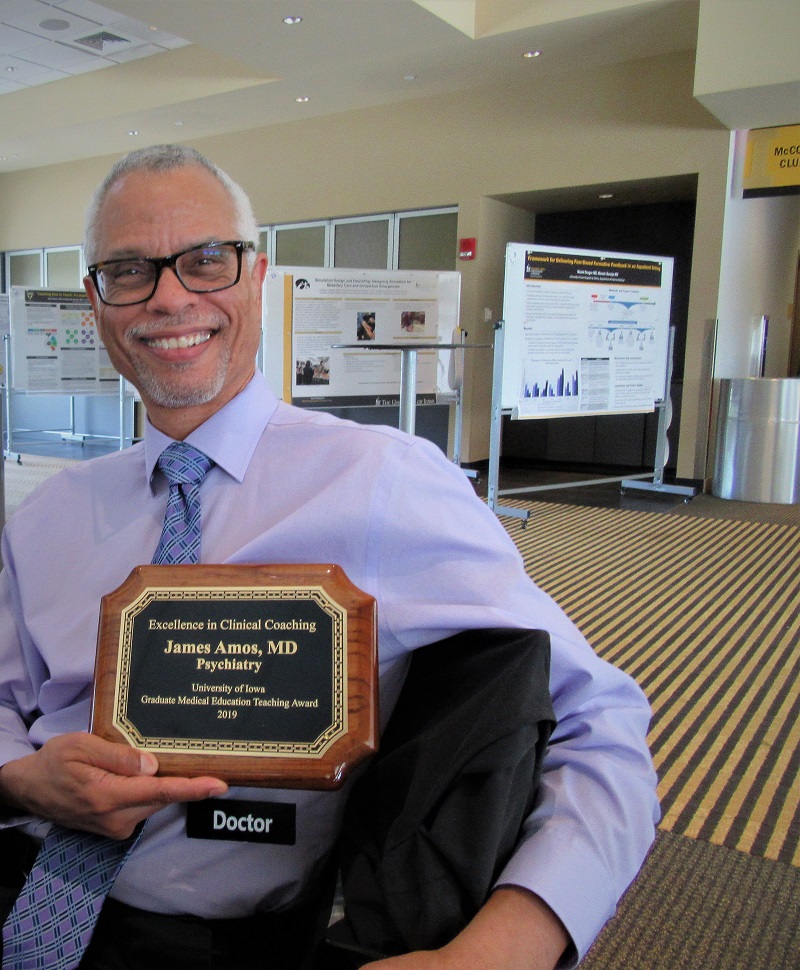
I was reminded of how difficult it was to slow down, especially as a teacher of residents and other health care trainees, when I was going through some old papers after the recent move to our new house. They included teaching awards I’d received over the years.

I was struck by how small my self-perceived role in psychiatry and medicine has gradually become in the last few years. I’ve been shrinking, similar to Scott Carey. In fact, I’m a shrinking headshrinker.

I don’t want to spend too much time ruminating about what retirement means to me. I think it’s a very common response to perceive the world gets smaller when you retire.

It doesn’t help much to intellectualize about shrinking in this way. Scott Carey eventually accepted his diminishing stature, even to the point of disappearance. Grief about this kind of loss is normal, although I’m realizing that grief might never completely disappear.

When Do We Get Out of the Woods?

We were out walking the Terry Trueblood Trail the other day. It’s always good to get out of the hotel where we’re staying until our house is built. I get this cooped up feeling and it feels great to escape.

While we were on the trail, we saw this huge field of giant, golden prairie plants that looked familiar. It lined both sides of the walking trail. It was giant mullein. We saw it for the first time a couple of years ago while walking the trail.

Anyway, when you got perspective on it, it gave a sense of coming out of the dark, coming out of the woods.

It reminded me of that scene in Wizard of Oz when Dorothy and the guys emerge from the dark woods into the light. There’s this great little song in the scene that I finally discovered is called “Optimistic Voices.” I found this blog post about it posted back in 2015 by a writer named Marti Wukelic. The blog is called Is There Life After Retirement?

It captured how I felt that day, surrounded by giant mullein. I know that sounds ironic because we were in a sense in the woods of a field of giant prairie plants.

But giant mullein is a sunny color. On both sides of the trail, it rose high above our heads. It was like a giant, golden hallway to heaven and we were stepping into the sun.

Old Doctors vs Young Doctors

I ran across a recently published web article that originated from the Wall Street Journal (WSJ), to which I don’t have access because I’m not a subscriber. The title is “Do Younger or Older Doctors Get Better Results?” and it’s in the form of an essay by Pete Ryan.

It’s been picked up by over 130 news outlets and is actually based on an open access study published in the British Medical Journal (BMJ) in 2017, (BMJ 2017;357:j1797): Tsugawa Y, Newhouse J P, Zaslavsky A M, Blumenthal D M, Jena A B. Physician age and outcomes in elderly patients in hospital in the US: observational study BMJ 2017; 357:j1797 doi:10.1136/bmj. j1797.

I had a quick look at the rapid response comments. A couple resonated with me. One was from a retired person:

“I did not see specific patient age statistics vs physician age groupings. Wouldn’t older patients, whose risk of dying soon was higher, want to see their own older doctors? Lots of uncontrolled variables in this study… I also agree with one of the other comments that a patient who knew the end of their life was near would seek care from an older physician that would tend to be more empathetic with a patient of their own age.”

Another was from an emergency room physician, Dr. Cloyd B. Gatrell, who entered the comment on June 8, 2017. Part of it echoed my sentiments exactly:

“The authors’ own statements call their conclusion into question: “Our findings might just as likely reflect cohort effects rather than declining clinical performance associated with greater age….”

I suspect most of the web articles spawned by the study didn’t really talk about the study itself. They probably were mainly about your attitude if the doctor who entered the exam room had gray hair or not.

The study involved internal medicine hospitalists and measured mortality rates comparing physicians were in different age ranges from less than 40 years to over 60.

It got me wondering if you could do a similar study of younger and older psychiatrists. Maybe something like it has been done. I’m not sure what an appropriate outcome measure might be. If you focus on bad outcomes, completed suicides are probably too rare and can involve psychiatrists of any age. The quote that comes to mind:

“There are two kinds of psychiatrists—those who have had a patient die by suicide, and those who will.”

Robert Simon, MD, forensic psychiatrist

I doubt they would fall into any particular age category more often than any other.

Anyway, on the subject of physicians who are getting older and required to retire at a specific age, recent news revealed that Scripps Clinical Medical Group agreed to pay almost $7 million to physicians to settle an age and disability discrimination charge filed with the U.S. Equal Opportunity Commission over a policy requiring them to retire at age 75.

And this reminds me of an article in Hektoen International A Journal of Medical Humanities: Jean Astruc, the “compleat physician.” He was a doctor in the Age of Enlightenment and was a geriatrician. An excerpt from the article:

Jean Astruc had a special interest in geriatrics and in 1762 gave a series of lectures that were taken down by one of his students. He described how in old age the skin becomes thick and hard, the hair and teeth fall out, there becomes need for glasses, respiration becomes labored, urine escapes, there is insomnia, and people forget what they have done during the day but remember every detail of what they have done in the distant past. He recommended diet, some wine to help the circulation, exercise, long sleep, and “a life from bed to table and back to bed.”

I think there is a contradiction in Astruc’s recommendations.

I retired voluntarily a little over 3 years ago. It just so happens that one of the reasons was the Maintenance of Certification (MOC) program, which the BMJ study authors mentioned in the first paragraph of the introduction:

“Interest in how quality of care evolves over a physician’s career has revived in recent years, with debates over how best to structure programs for continuing medical education, including recent controversy in the US regarding maintenance of certification programs.”

That reminds me that I got an email a few days ago from Jeffrey M. Lyness, MD, the new President and CEO of the American Board of Psychiatry and Neurology (ABPN) in January of 2023, replacing Larry Faulkner, MD. It was a letter explaining how I could recertify. I decided not to renew several years ago and I’m not thinking of coming out of retirement. I have always been an opponent of the MOC.

Maybe he sent me the letter because he found the Clinical Chart Review Module on delirium that a resident and I made in 2018. As of January 24, 2024 you can still find the module on the web site just by typing in the word “delirium” in the search field. It could be the only document about delirium on the ABPN web site, although that’s difficult to believe.

On the other hand, it’s one of two modules that are labeled as approved although valid through December 31, 2023. Maybe it’s headed for retirement.

When Should Psychiatrists Retire?

In answer to the question in the title, I’ll confess right away I don’t know the answer. The impetus for my writing this post is the Medscape article about an 84-year-old physician who was forced to take a cognitive test required by her employer as a way of gauging her ability to continue working as a doctor. She’s suing her employer on the grounds that requiring the cognitive test violated the American with Disabilities Act (ADA), the Age Discrimination in Employment Act, and two other laws in her state.

I didn’t retire based on any cognitive test. I recall my blog post “Gauging My Readiness for Retirement,” which I posted in 2019 prior to my actual retirement. In it I say:

I spent 4 years in medical school, 4 years in residency, and have worked for more than 23 years as a psychiatrist, mostly as a general hospital consultant. Nothing used to jazz me as much as running around the hospital, seeing patients in nearly all specialties, evaluating and helping treat many fascinating neuropsychiatric syndromes, teaching medical students and residents, and I even wrote a book.

On the other hand, I don’t want to hang on too long. When people ask me why I’m retiring so early (“You’re so young!”), I just tell them most physicians retire at my age, around 65. I also say that I want to leave at the top of my game—and not nudged out because I’m faltering.

In it, I mention a blog post written by a physician blogger, Dr. James Allen. The title is “When Physicians Reach Their ‘Use By Date.’ At the time I didn’t make a link to his post because the web site was not listed as secure.

Since that time, the web site has become secure, and you can read the post here. Dr. Allen lists anecdotes about physicians who ran close to or past their “use by” date.

Dr. Allen’s point is that we often don’t realize when we are past our “use by” date. That applies to a lot of professions, not just medicine.

There’s been a shortage of psychiatrists for a long time and it’s not getting better, the last I heard. All in all, I’m OK with the timing of my retirement.

I note for the record that I have not seen any mention in the news that the Rolling Stones have ever been required to take a cognitive test to continue working. I also want to point out that they are around 80 years old and their 2024 tour is sponsored by the AARP, the organization formerly known as the American Association of Retired Persons. I heard that the Rolling Stones new song, “Angry” is up for a Grammy.

I doubt anyone is angry about the obvious fact they’re not even thinking about retiring.

AARP Sponsors the Rolling Stones!

We have noticed that the AARP is sponsoring the Rolling Stones Hackney Diamonds Tour 2024. I don’t think it’s necessary to point out that, with all due respect, the Rolling Stones have long ago passed fossil status.

I guess that means it’s fitting that the AARP sponsor a rock music group the members of which are eligible to join the organization formerly known as Prince. Sorry, I meant to say formerly known as the American Association of Retired Persons.

Obviously, the Rolling Stones are not thinking about retirement. But unless they can come up with a plausible explanation for the name of the tour, Hackney Diamonds, they should probably not be eligible for the free tote bag the AARP offers to those who become members.

A hackney is a horse drawn carriage. A diamond is a precious stone. The Rolling Stones have thankfully clarified that, obviously, the Hackney Diamonds tour name comes from the well-known legend of the hackney cab driver who drove through the streets of a town called Hackney in London in the 17th century, tossing out diamonds to passersby if they could guess how many angels could dance on the head of a pin during a snowstorm in the Sahara Desert.

That’s about as clear as the explanation given by Keth Richards and Mick Jagger in an interview with Jimmy Fallon as reported in an article written by Tom Skinner in NME on September 7, 2023.

Anyway, the Rolling Stones have been a big deal for decades, of course and they get mentioned in a lot of different ways. For example, in the movie Men in Black 3, there’s a conversation between Agent J and young Agent K in a café which is prompted by the need to eat pie in order to clear their minds of the case they’re working on which is trying to stop the murderous bad guy, Boris the animal, from destroying Earth. Young Agent K stipulates the rule is to talk about anything about the case and to let the pie do its magic. You’ll never guess what they talk about but it goes like this:

“Young Agent K: You said we don’t talk, right? Go ahead, ask me any question. Anything you want, just as long as it doesn’t have to do with the case… just let her rip.

Agent J: What’s up with you and O?

Young Agent K: Me and O?

Agent J: Yeah, you and O.

Young Agent K: All right, all right… all right, this is it. A while back, I was assigned to keep tabs on a musician, Mick Jagger. He was in this British group, Rolling Stones…

Agent J: Rings a bell.

Young Agent K: We believed he’s on the planet to breed with Earth women, so I was in London and that’s when I met O. She’s smart, funny… great smile and we find ourselves in this pub, Whistler’s Bar, warm beer and the worst food you ever ate. We just played darts till the sun came up, neither of us wanted to leave…”

And I can remember that Microsoft used the Rolling Stones 1981 song, “Start Me Up” in their promotion of Windows 95 computer operating system. You remember that; it was a total loser which led to the evolutionary creation of a dozen operating systems, all of them laughably dysfunctional. I should know—I bought all of them.

So, the Rolling Stones turn up a lot in pop culture. Everybody knows that. That’s in part because of their stamina—and maybe doggedly persistent denial of aging leading to a refusal to ever retire, just drop on stage because their bones finally disintegrate.

So, returning to the question of why AARP (pronounced arf only with a p on the end) is sponsoring the Rolling Stones tour. I have no clear idea except that I think the organization wants to broaden appeal for the organization so that more dues paying young people join, adding money to help support those over 50 to maintain financial stability and security.

What I don’t understand is that, in part, this implies trying to work as advocates (read “lobby”) in Congress. All those old farts in Congress can do is argue and a some of them should seriously think about retiring. If they can’t command respect, they could at least get a free tote bag by joining AARP.

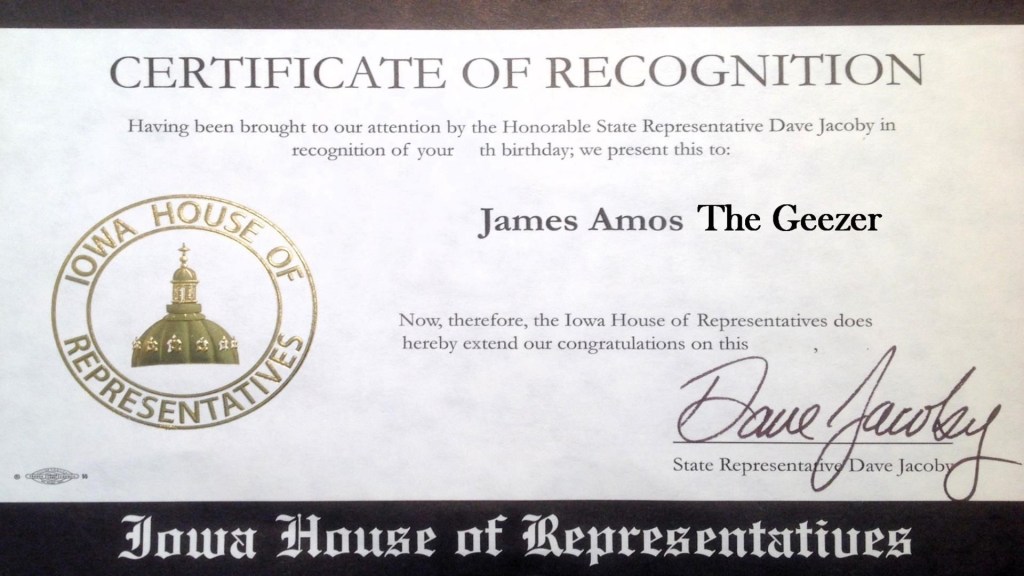
But the Rolling Stones don’t need free tote bags. They’ve earned their fossil status many times over. On the other hand, I have earned my certificate from the state legislature.

On Retiring from Psychiatry

I found this very uplifting and thought-provoking article on retiring from psychiatry by Juan C. Corvalan.

He sounds like he’s successfully navigating his retirement. On the few occasions I’ve felt compelled to make a remark about my own retirement, I typically say something like “It’s a mixed blessing.”

My retirement is a process, unfolding as time passes. It was difficult in the beginning, which was only a little over 3 years ago. It’s not what I would call easy even now.

What gave me joy since I retired were getting messages from the learners I was privileged to teach. Some of them I’d not heard from in many years. Someone from my department said, “We miss you.” I answered that, in some ways, I never left.

Time itself feels different. The days go by so quickly that I want time to slow down.

I like Corvalan’s way of expressing himself. He’s a writer and likes to talk about words and their meaning. He talked about the definition of the Spanish word for retirement, which is jubilacion, which reminds me of the English word “jubilation.”

Retirement has been, at times (perhaps often), anything but cause for jubilation.

On the other hand, I can think of several things I will never miss about being a psychiatrist. I don’t write about them, as a rule. In fact, I tend to write about anything but psychiatry: cribbage, juggling, making wisecracks about extraterrestrials.

I really appreciate colleagues like George Dawson, MD (who writes the blog Real Psychiatry), H. Steven Moffic, MD (who writes the articles “Psychiatric Views on the Daily News”), Ronald Pies, MD, Editor in Chief Emeritus of Psychiatric Times, and Jenna, the psychiatry resident who writes the blog “The Good Enough Psychiatrist,” who is very far from retirement, unlike me and the other writers just mentioned.

And I appreciate Dr. Corvalan’s excellent essay on retirement from psychiatry.

Reference:

Corvalan JC. A Retired Psychiatrist on Retirement: Rejoicing Jubilatio. Mo Med. 2022 Sep-Oct;119(5):408-410. PMID: 36338006; PMCID: PMC9616447.

Food for Thought

I’m giving a shout-out to a couple of child psychiatrists, one I know only from a blog, The Good Enough Psychiatrist. The other is an assistant professor in the University of Iowa Child Psychiatry Dept. I’ve never met her.

Since Jenna gives her name in the About Me section of her blog, I’m going to call her that because it’s easier. Jenna writes many thought-provoking posts, but I really admire the one titled “Amae.”

Dr. Ashmita Banerjee, MD wrote an essay titled “The Power of Reflection and Self-Awareness.” It’s published on line in the Mental Health at Iowa section of The University of Iowa web site.

As a relatively recently retired consultation-liaison psychiatrist who is also a writer, I feel a strong connection to them. In addition to being very glad that extremely talented persons are filling the ranks of a specialty which suffers from a serious manpower shortage, I get a big kick out of reading what really smart people write.

Here’s where a geezer retired psychiatrist starts kidding around. Jenna, a fellow blogger, is used to my habit of deploying humor, admittedly often as a defense. Dr. Banerjee doesn’t know me.

What is it about these essays that reminds me of the X-Files episode “Hungry”? It’s a Monster of the Week episode from the monster’s perspective. This monster looks like a human but sucks brains out of people’s skulls. He’s conflicted about it and even sees a therapist. But in the end his dying words were, as Agent Mulder shoots him down, “I can’t be something I’m not.”

If you read Dr. Banerjee’s essay and followed one of the links, you would have caught the clue that I actually read it because I consciously substituted the word “What” for “Why” in the previous paragraph. I could have as easily asked why instead of what—but it’s less helpful in gaining self-awareness.

And I haven’t sucked anybody’s brains out of their skulls in, what, over two weeks now! Upon reflection, I’m very aware of being incorrigible. Food for thought.

Jenna’s description of the Japanese concept of the word “amae” and Dr. Banerjee’s examination of the Japanese word “kintsukuroi” fascinated me. What made both writers consider human emotions using a language which captures the nuances so deftly?

I was a first-generation college student. There was a time in my life that a path to medical school seemed impossible. At times I probably thought I was trying to be something I’m not.

I’m just grateful for the new generation.

The Thing About Identity

I was searching on the web for something about my co-editor, Robert G. Robinson, MD, for our book Psychosomatic Medicine: An Introduction to Consultation-Liaison Psychiatry, published in 2010.

The reason I was searching for something about him was that I’ve had difficulties finding anything on the web lately about doctors I had worked with years ago and admired—and the search revealed they had died. It has been a little jarring and got me thinking about my own mortality.

My search didn’t turn up any obituary about Dr. Robinson, but I found a couple of interesting items. One of them is, of all things, a WordPress blog item, the About section. It’s dated April 2012. I’ve seen it before. It’s supposedly about a person named Dr. Robert G. Robinson, MD and the only thing on it is his name and affiliation with The University of Iowa Carver College of Medicine. Every WordPress blog has an About section. I have one and I’ve been blogging since 2010.

There’s no entry in the About section for him on WordPress. However, there was another item on the web that looked like it was a blog (It’s another blogging site called About.me), and it was labeled as an About section.  It was a biographical summary of his academic and scientific career. Of course, it was impressive. At first, it looked like he was planning to write a blog, which could have been very educational because he’s an extremely accomplished psychiatrist with a very long bibliography of published articles about psychiatric research, a lot of it about post-stroke syndromes.

But when I looked at the social media links on the WordPress page, it led to a picture of someone who is definitely not the Robinson I know. This person was a “Certified Rolfer.” Remember Rolfing? It’s a form of deep tissue massage developed in the 1970s. The Dr. Robinson I know was never involved in Rolfing.

I’m not sure what happened with the WordPress and other blog items, but it looked the WordPress section was a case of mistaken identity. The most recent genuine item on the web about him is a 2017 University of Iowa article about his receiving the Distinguished Mentor Award.

I hope somebody doesn’t get confused by that WordPress mistake.

Then, I happened to come across an article that, at first, I didn’t recognize. The link on the search page listed Dr. Robinson’s name. It’s on the Arnold P. Gold Foundation website for humanism in medicine. The title is “Are doctors rude? An Insider’s View.” It didn’t have my byline under it. It took me a minute, but I soon recognized that I wrote it in 2013. At the bottom of the page, I was identified as the author.

At first, I thought it was a mistake; there was a place for an icon that at one time had probably contained a photo of me, but it was missing. It’s my reflection about a Johns Hopkins study finding that medical interns were not doing basic things like introducing themselves to patients and sitting down with them.

This was not a case of mistaken identity. But I got a little worried about my memory for a few seconds.

Anyway, I was reminded of my tendency to have trainees find a chair for me so I could sit down with patients in their hospital rooms. I later got a camp stool as a gift from one of my colleagues on the Palliative Care consult service. It was handy, but one of my legs always got numb if I sat too long on it. It broke once and I landed flat on my fundament one time in front of a patient, family, and my trainees. The patient was mute and we had been asked to evaluate for a neuropsychiatric syndrome called catatonia. The evidence against it was the clear grin on the patient’s face after my comical pratfall—and because of the laughter that we could see but not hear.

One of the points of this anecdote is that it’s prudent to be skeptical about what you see on the internet. The other point is that parts of your identity can hang around on the web for a really long time, so it’s prudent to be skeptical about how permanent your current identity is.

Thoughts on the Passing of Dr. Russell Noyes Jr.

I recently found the obituary of my mentor, Dr. Russell Noyes, Jr. MD. He died on June 21, 2023. This is the first time I’ve ever said that he was my mentor. I probably just didn’t realize it until I found out he passed.

Dr. Noyes was my teacher during the time I was learning consultation-liaison psychiatry back in the 1990s at The University of Iowa Hospitals & Clinics. His knowledge was vast. He contributed greatly to the scientific literature on anxiety disorders. He also wrote about near death experiences.

Dr. Noyes retired in 2002. As his students, we chipped in to get him a retirement gift. It was a large bookstand. We were just a little uncertain about whether a bookstand was the right gift for someone who was a tireless researcher and teacher. He was also an avid gardener and musician. He soon returned to work in the department, staffing the outpatient clinic. He also continued to regularly attend grand rounds and research rounds. Years later at a grand rounds meeting, someone asked him about his retirement. Dr. Noyes retorted, “I don’t believe in retirement.”

I remember I could hardly wait to retire. Since then, I’ve been ambivalent about retirement, but not so much that I ever seriously considered returning to work. I sometimes have dreams about being late for college lectures because I can’t find my way to them. A couple of times lately, I’ve had dreams about not being able to find my way through a hospital to conduct a consultation evaluation. I don’t know what that means.

I was an avid student of consultation-liaison psychiatry but I was not a scientist. That was part of the reason I left the university in 2005 for a position in a private practice psychiatry clinic. He cried at the going away party my students and co-workers held for me. I still have a little book in which well-wishers wrote kind messages. Dr. Noyes’ note was:

“Jim

We’re going to miss you. You are the consummate consultation-liaison psychiatrist and your leaving is a great loss to the Department. We wish you the best and hope to see you at the Academy meetings.

Russ”

His sentiment was one of the main reasons I soon returned to the department, only to leave again a few years later—and return again after a very short time. I came back because he was a consummate teacher and I wanted to learn more from this beacon of wisdom.

Many who knew him, including me, often saw him riding a bicycle on Melrose Avenue to and from work at the hospital. We wondered why he didn’t drive instead. His son James wrote a beautiful remembrance of him and posted it on the web in 2006. It’s entitled “My Dad (Russell Noyes, Jr).”

James says his dad was a terrible driver. This triggered a memory of how it was Russ’s wife, Martie, who drove the rental car when we rode with them from the airport to the hotel where an Academy of Consultation-Liaison Psychiatry meeting was to be held. I remember gripping the armrest and wishing we’d hired a taxi as Martie steered erratically through heavy traffic.

Dr. Noyes knew how to guide his learners through their careers. He also knew how to write and was a stern editor. Even as I wrote this remembrance, I could see how he might have critiqued it. I tried to do it on my own, and of course I failed. It will have to do.