


In observance of May being Mental Health Month, this is one of my Dirty Dozen lectures. It’s on the elements that are shared among some of the important psychotherapy methods.
It’s in WordPress shortcode. A few pointers: click in the lower right hand corner of the slide if you want to view the slides full size. Use the directional arrows on your keyboard to click through the slides. You can also just use the arrow handles on the slides if you don’t want to see them full size.
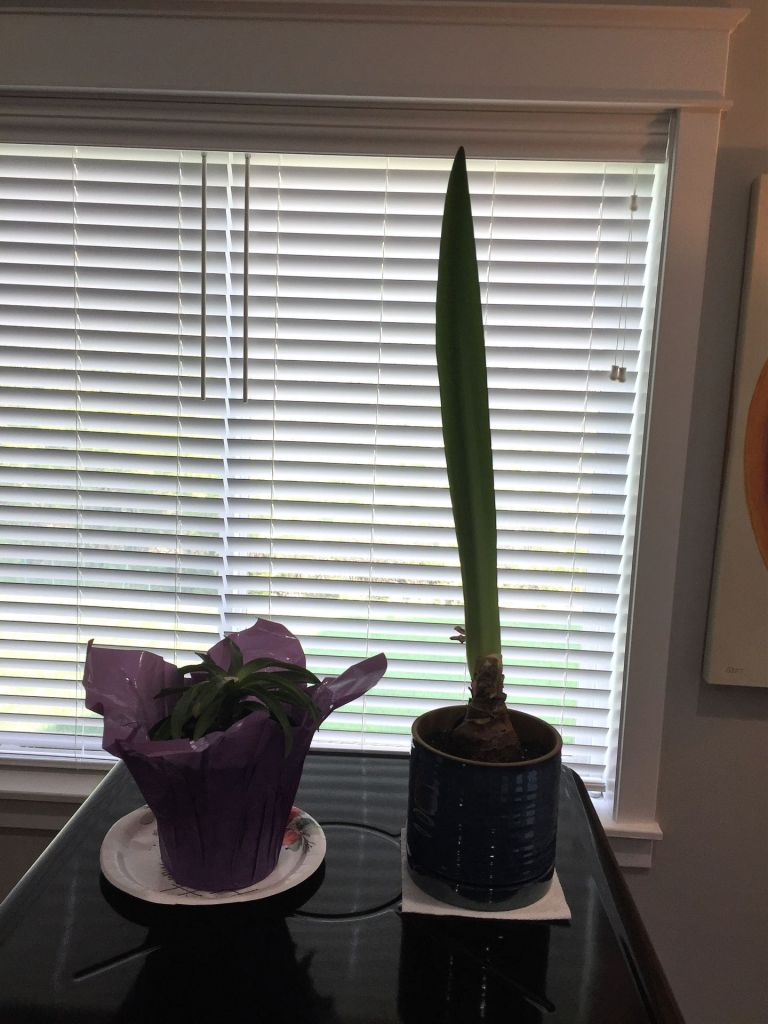
This slideshow could not be started. Try refreshing the page or viewing it in another browser. May is Mental Health Month. This would be a good month for me to practice giving myself and others grace. Here’s a link to a very nice article about grace. It’s really about giving each other a break from slamming one another and letting go—sort of like what you need to do in juggling. The author of the article on grace suggests a short list of ways to practice grace. They’re just the guidance I welcome for Mental Health Month and any other month for that matter. The one about compassion and forgiving myself and others is difficult to do. I should do it anyway. Buttoning my lip before criticizing, complaining, or venting other harsh utterances is a nice way to avoid the slamming mode I see in the news every day. It’s tough not to expect the worst from others, especially when you read the news. Hey, let’s stop reading the news. I don’t get much recognition, and that’s actually a good thing. Sometimes the last thing I need is attention. I can think of many persons who have probably gently and silently helped me over the years. While it may feel good to get my digs in on people I don’t agree with, it’s not satisfying for very long. People do remember how you made them feel. Let’s give each other grace. We all need a break. When I think of Sena learning to juggle and find her juggling balls on the floor where she drops them after a 2- or 3-minute practice, I now think of her gardening. I wondered if gardening could be a form of meditation and did a web search like I did yesterday for juggling. It turns out many people think of gardening as a kind of mindfulness meditation. It’s another one of those moving meditations, kind of like the walking dead meditation as I and some of my peers described it at a mindfulness retreat 9 years ago. Sena has been gardening for a long time. I remember she turned our back yard into a park many years ago. She is always on the lookout for something new to plant. I don’t always remember the exact names of them, but they’re very pretty. And the Amaryllis house plant stem is 22 inches tall! I found one article on Headspace, “How to practice mindful gardening” which laid it all out about the subject. The key takeaways about mindful gardening: Sena can work in the garden all day, sometimes in 100 degree plus heat—which I don’t recommend. On the other hand, she really gets a charge out of digging holes in the yard, pulling up turn to make room for more flowers and shrubs, and tilling the soil. She has kept the Amaryllis stalk thriving; it’s 22 inches tall! She’s not sure what to do yet with the Easter Lily plant, but she’ll figure something out. I still do sitting meditation, which is what I learned from the Mindfulness Based Stress Reduction (MBSR) class. And I now have begun to think of juggling as a kind of moving mindfulness meditation. On the other hand, I’m not keen on gardening in any sense, including mindfulness. Partly, it’s because a fair amount of dirt is involved. I think it would be difficult for me to do gardening all day like Sena does. I could stick it out for about as long as she practices juggling—about two or three minutes. I would put my tools away, though. I’m beginning to think of juggling practice as a kind of meditation, especially since I started to learn the shower juggling pattern. Doing that for more than 15-20 minutes at a time usually doesn’t result in much improvement—at the time. But I think I sprout more brain connections as I’m doing it because I notice gradually smoother timing and coordination. In sitting meditation, counting your breaths is generally frowned upon. On the other hand, counting my throws (especially out loud) during juggling actually helps me focus my attention. I see each throw as sort of like a single breath. I still have to consciously adjust my posture so that the “horizontal” pass doesn’t end up being more like an underhand throw. And when I modify the throws so they stay in the so-called jugglespace (not so close the balls bounce off my head, not so far out front I have to lunge for them), and space the balls out just right, I find it’s easier to get more throws in. I don’t think Sena counts the number of dirt clods she tosses aside. The attack a few days ago by what was most likely a mentally ill person on staff at the recently opened GuideLink Center in Iowa City reminded me of what may appear to be disparate views by mental health professionals on the link between mental illness and mass violence perpetrators. The GuideLink incident involved a person who assaulted GuideLink staff and who also left bags containing incendiary devices at the center and another building in Iowa City. The person is being charged with terrorism and is currently in custody in the Johnson County Jail. I have not seen information about any injuries sustained by the mental health center staff. There were no explosions or fires at either location where incendiary devices were left. Bomb squad experts removed the devices. It’s not clear whether the perpetrator had been a GuideLink Center client. The GuideLink Center opened in February 2021 and by all reports is a welcome and very much needed crisis stabilization mental health resource in the community. The staff members are dedicated to their calling. Dr. H. Steven Moffic, MD, a retired psychiatrist who writes for Psychiatric Times, readily says that the perpetrators sometimes do have mental illness that at least contributes to committing acts of mass violence. Dr. George Dawson, MD, another retired psychiatrist, seems to say that the major reason for mass shootings is the ready availability of guns, a culture of gun extremism, and mental illness accounts for a small proportion of acts of mass violence. But neither Dr. Moffic nor Dr. Dawson say that it’s only either mental illness or guns (or other instrument of mass violence) that lead to acts of mass violence. Both are important. I’m a third retired psychiatrist and by now some readers might be asking themselves whether they should listen to any retired psychiatrist. Experience counts. Speaking for myself, as a general hospital psychiatric consultant I was frequently faced with violent patients in the general hospital. Often, I found it necessary to ask a judge for a court order to involuntarily hospitalize a violent and/or suicidal patient on a locked psychiatric unit by transfer from an open medical or postsurgical unit. In order to obtain an order in the state of Iowa, I had to be able to state to the judge that the patient in question had a treatable mental disorder and was an acute threat to himself and/others. In most situations, I had an open bed on a locked psychiatric unit available ahead of time. Even if a Code Green was necessary, I usually had an inpatient resource to which I could move the patient. A Code Green is a show of force or takedown maneuver by a specially trained team to control a violent patient while minimizing injury to everyone involved. I don’t know if that kind of approach is even possible in a community crisis stabilization setting like the GuideLink Center. I think it’s fortunate that it partners with many other community resources including the Johnson County Sheriff’s Office. The outcome of the incident at the GuideLink Center was that the overall safety of the staff, the patient, and the community was preserved. More resources like this are needed everywhere. They deserve all the support we can give them. I read an interesting article in Clinical Psychiatry News the other day, written by Dinah Miller, MD in the Shrink Rap News column, “Psychiatry and semantics.” Dr. Miller’s point was that it’s sometimes hard to define terms when discussing mental illness and stress. Can stress be defined as a mental illness? What the heck is the definition of mental illness? What does it mean to say that someone is depressed? Way back in 2006, when I was an Associate Professor in psychiatry, I wrote an introductory article for a series of articles about stress for Psychiatric Times. The title was “Stress and the Psychiatrist: An Introduction.” I had a tough time defining stress also. In fact, the first 2 paragraphs of my article say it all: “Defining “stress” and how it is expressed and managed in both psychiatrists and patients is a difficult proposition. This Special Report focuses on stress and the middle ground between the impulse to say there is no such thing as “stress” and the tendency to describe many explicit addressable issues under the monolithic term, “stress.” I remember what my ward supervisor once told me about stress when I was a resident in psychiatry. I was presenting a case about a patient who was depressed and complaining about all the stress in her life. At that point, he barked testily, “There’s no such thing as stress!” He went on to direct me to be more specific in my interviewing techniques in an effort to identify the concrete problems that my patient was experiencing, instead of substituting a sort of shorthand (i.e., “lazy”) method of indicating the source of her depression. In his view, the term “stress” was being overused and it had become virtually meaningless.” At the time I wrote that article, there was surprisingly little data about stress in psychiatrists. On the other hand, it was well known that psychiatrists are prone to stress, burnout, and suicide. As I read my own article, I was surprised at how little things have changed over the years. In fact, they have gotten much worse. There is a lot of talk about The Great Resignation. Health care workers are leaving their jobs in droves, often due to the pressures of the pandemic. I was and still am a fan of Stephen Covey’s wisdom: Covey disparages the “Great Jackass” theory of management, in which the carrot-and-stick style of leadership dominates. Adopting a principle-centered leadership paradigm entails a commitment to change at the individual level, working from the inside out. This means building self-awareness, identifying one’s own vitally important goals, and creating a balance that includes a devotion to living, loving, learning, and leaving a legacy. In turn, this might lead to identifying a personal mission and a vision for an organization that empowers others to find their own motivation to service. Many of the problems that Covey finds in big business exist in the mental health care sector-low trust, low productivity, and environments in which the cultures of blame and victimization, political gamesmanship, and apathy spread. These are often the issues that get subsumed under the name of “stress” in academic departments, community mental health centers, and private practice groups. Of course, despite how wise I sounded back then, I still ended up with burnout. It took a lot out of me, but it didn’t destroy me. According to some figures, about 40%-60% of physicians are burned out. One guy I admire a great deal is Dr. George Dawson, MD. He writes the blog Real Psychiatry. He has been fighting the pressures in the health care system for decades and signs that he’s still going strong are in the Psychiatric Times article “The Bureaucratic Takeover of American Psychiatry: George Dawson, MD, DFAPA. The interviewer for that article, Dr. Awais Aftab, MD asked George what he thought about the system that psychiatrists must work in which tends to discount the effect of social adversity, poverty, and trauma on the psychiatric distress of their patients, yet corner them into a pill-prescribing role. George replied, “I heard repeated stories about how child psychiatrists and pediatricians were expected to provide a miracle medical cure to address complex psychosocial problems. As the number of prescriptions increased there was concern that children were being overmedicated and treated with inappropriate prescriptions like atypical antipsychotics. At that point a consultation line with a child psychiatrist was provided for these prescribers to discuss the prescriptions. At no point were the psychosocial parameters addressed and they still have not been addressed to this day.” In response to Dr. Aftab’s question about George’s recommendations for how to address this situation: “I have been writing and speaking about this in various capacities for the past 30 years. During this time very few physicians have been interested in a political fight. The only major figure in psychiatry I can recall is Harold Eist, MD, when he was the president of the American Psychiatric Association. Practically all other professional organizations are silent about managed care and pharmacy benefit managers as malignant forces. There is a lot written about burnout and how these companies waste physician time to the tune of billions of dollars a year. Nobody seems to talk much about all the free work physicians have to do to support the conflict-of-interest-driven decisions these companies make. There is some current interest in the Maintenance of Certification (MOC) issue that professional organizations have also ignored. But in general, nothing will happen until many more physicians get activated and unite. There is still the escapist dream out there that “I can still do private practice,” but that is vanishing fast. After decades of elaborate planning and recommendations, I am back to the beginning. The course of action at this point is fairly simple. There has to be united agreement on the fact that managed care companies and pharmaceutical benefit managers work against the best interests of physicians and their patients. Once that recognition is there, a rational course of action may follow. But it does take physician professional organizations taking a clear stand against these business practices. I do think there is a lot to be said for specialty clinics that are outside of the administrative scope of managed care companies. The first groups I noticed were radiologists and anesthesiologists. They were followed by surgical specialists. I do not see many large free-standing psychiatric practices. I think it is possible to practice with a group of like-minded psychiatrists and provide excellent care based on an agreed upon practice style that will result in greater degree of professional satisfaction than is possible as an employee of a managed care company. The required business expertise and planning is a deterrent to most but knowing what I know about the landscape today I would have tried it much earlier in my career.” George announced his retirement in January this year. But he’s not done. Dr. Miller suggests that we come up with a lingo that’s more precise to clarify what mental illness and mental health are and what our positions as practitioners and patients ought to be—and what we should do. So that naturally led me to Allen Frances, MD, who wrote the book on the subject several years ago, “Essentials of Psychiatric Diagnosis: Responding to the Challenge of DSM-5.” Dr. Frances was also interviewed by Dr. Awais Aftab, MD, leading to the article “Conversations in Critical Psychiatry: Allen Frances, MD, published in May of 2019. Dr. Frances says this about what he believes is “among the noblest of professions”: “I fear that too many psychiatrists are now reduced to pill pushing, with far too little time to really know their patients well and to apply the rounded biopsychosocial model that is absolutely essential to good care. We also have done far too little to educate the primary care doctors who prescribe 80% of psychiatric meds on the principles of cautious prescribing, proper indications, full consideration of risks, and the value of watchful waiting and tincture of time. I despair the diagnostic inflation that results from a too loose diagnostic system, aggressive drug company marketing, careless assessment, and insurance company pressure to rush to judgement. Diagnoses should be written in pencil, and under-diagnosis is almost always safer and more accurate than over-diagnosis. And, finally, I object to the National Institute of Mental Health (NIMH) research agenda that is narrowly brain reductionistic; it has achieved great intellectual masterpieces, but so far has not yet helped a single patient. So, in sum, I have loved being a psychiatrist, but wish we were better organized to end psychiatric suffering.” He rejects the dichotomy that mental illnesses are either diseases or problems in living as far too simplistic. He deplores the tendency of the DSM 5 to confuse mental disorder with “everyday sadness, anxiety, grief, disappointments, and stress responses that are an inescapable part of the human condition.” He says the DSM should be only a tool to help guide clinicians’ judgment, not replace it. So, let’s stop stressing ourselves out looking in the dictionary for definitions of mental health and mental illness.May is Mental Health Month
Gardening Works as Mindfulness Meditation






Thoughts on the GuideLink Center Incident
Don’t Look in the Dictionary for Mental Health and Mental Illness





 Go Retire Psychiatrist