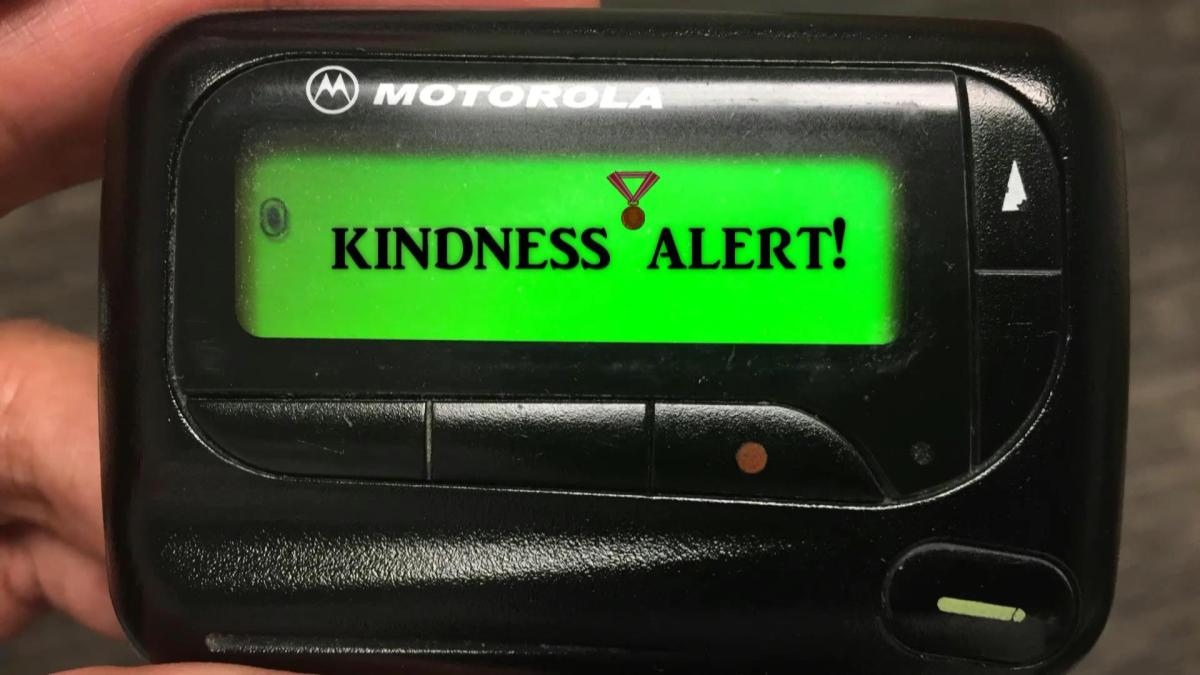
Sena saw something on the web about World Kindness Day this morning and alerted me to it right away. World Kindness Day is an international movement which started in 1998 by the World Kindness Movement. It’s observed on November 13th annually.
This made me look through my blog posts and I found a short announcement about the event from a couple of years ago. Wouldn’t it be great if this were more than an annual event? What if this were a way of life, a way of being?
There are many ways to observe World Kindness Day, limited only by imagination.There are many ways to observe World Kindness Day. Sena suggested we donate to one of Iowa City’s local food pantries.
So, she headed over to the grocery store and bought several bags of non-perishable items and delivered them to the CommUnity Crisis Services Food Bank.
The Christmas Amaryllis/Hippeastrum flowers are doing well.
I’m getting older and often I wake up early in the morning feeling anxious and a little blue. I look at the news headlines about people who die and often they’re my age or even younger. Maybe the Christmas holiday does that.
When I get this feeling of dread, I try to think of what I can be grateful for. It’s hard to think of big dramatic experiences. If I sit still long enough, it’s the little acts of kindness that drop down like snowflakes, slowly.
The grade school teacher who took the time to figure out I needed eyeglasses because I couldn’t see the blackboard.
The preacher who sat up all night in a chair with my sick mother when my brother and I were little kids and didn’t know how to help her.
The company that hired me for my first real job when I was a teenager. If they hadn’t done that, I might have become homeless.
The guy who took me to an autumn outdoor art show where he was exhibiting his paintings on a brisk autumn day. Man, it was cold.
The guy who took me to a Minnesota Twins baseball game in the summer. Man, it was hot.
I remember a couple of best friends. We weren’t friends long—but it was long enough.
The friends who supported Sena and me on our wedding day. I still remember it with gratitude 47 years later.
I saw the X-Files episode “Sunshine Days” again last night. It’s the second time I’ve seen it. It’s about a guy who calls himself Oliver who has telekinetic power and who yearns for a father-son relationship with a paranormal researcher (Dr. Reitz) who studied him when he was a kid named Anthony.
The set of an old 1970s TV show “The Brady Bunch” was used. It was something Oliver created using the power of his mind. As a child, he used to insist that he and Dr. Reitz watch the show regularly. In his mind, it was the perfect family he always wanted but never had.
Anyway, Oliver (Anthony) endangers his life when he uses his telekinetic powers as an adult. He can’t control them and nearly dies from using them. He ends up near death in the hospital after showing the FBI agents including Scully and Doggett (who replaced Mulder) his miraculous ability. The agents and Dr. Reitz are ecstatic because they think it will change the world and humanity.
But after they realize the life-threatening nature of Oliver’s powers, they all agree, including Dr. Reitz, that Oliver should never use them again. Dr. Reitz even tells Oliver (who now wants to be called Anthony) firmly that he can’t use his power, to which Oliver replies that he can’t be alone. Then, Dr. Reitz tells Oliver that he’ll never have to be alone because he’ll always be with him.
A lot of fans hated it because it was the penultimate episode before the final show of the 9th and final season of the X-Files. It was one of the many Monster-of-the-Week (MOTW) shows that had nothing to do with the extraterrestrial mythology.
I liked the MOTW episodes better the ET/conspiracy shows, and Sunshine Days is one of my favorites. However, I never watched The Brady Bunch and the whole perfectly happy and well-adjusted family idea was ridiculously implausible in my opinion.
I doubt there is such a thing as a perfect family. Mine certainly was not and look how well I turned out. Even in nature, there are examples of savagery that can make you doubt the ultimate wisdom of whoever or whatever is in charge of evolution.
For example, birds can be exquisitely cruel. Cowbirds lay their eggs in the nests of completely different species of birds, where the cowbird chicks bully their weaker nestlings. And surely just about everyone has seen the pitiless pecking of the larger of the two shoebill chicks in which the parents calmly watch as the smaller chick gets stepped on, pushed out of the next and essentially murdered by the bigger chick. This is because the parents know there is not enough water for both.
Even the song “A Boy Named Sue” is based on the natural law of survival of the fittest, which has nothing to do with kindness. Incidentally, that song came out in 1969, the same year that The Brady Bunch show began.
On the other hand, the reconciliation of Anthony with Dr. Rietz always fills me with joy.
We can see the man from our hotel window. We assume he’s homeless. He has a small area where he sits on the curb next to the street. He does this most of the day. He has a blanket and a few other loose items which sometimes are strewn on the sidewalk or the grass.
Even in 90-plus heat, he’s out there, sometimes standing beneath a small tree, presumably for shade although it’s inadequate. He waves his arms around in what looks like a futile attempt to cool himself. He might just be restless. Other times he sits on his blanket. Occasionally, people stop their cars and seem to be trying to communicate with him. He most often ignores them.
One of the hotel residents approaches him sometimes. It looked like he gives him something (probably a cigarette). Once, the homeless man left his station by the street and walked over to the front of the hotel, waving his arms, seemingly because the hotel resident was speaking to him. We couldn’t see what happened after that, but when he returned to the street, he lit a cigarette. We also saw he accepted fluid, maybe a can of soda.
Later, some people in a car gave him something they bought in a nearby drive-up fast-food joint. He threw out the ice from his drink, which he didn’t consume and sprinkled the fluid on his arms. The people left and returned later with several items they gave him. Some of it looked like more water, which he again poured on his arms. There was a backpack or something like it. He didn’t seem to know what to do with it.
He couldn’t ignore them when they try to help him (water, food, etc.). One person tried to help him clean up his little camp by picking up his trash. The police came out to check on him. We couldn’t hear the short conversation. After she left, he continued to toss his water bottles and other items into the parking lot. He sleeps on the pavement.
This reminded me of a couple of times when I’ve seen hobos. I don’t see the homeless man as a hobo. The term “hobo” is not synonymous with homeless, vagrant, or tramp. Hobos prefer not to have a home, travel around to find work, may still ride the rails to get around, and don’t see themselves as tramps.
As a young man, I worked for consulting engineers as a draftsman and survey crew worker in Mason City. This was in the 1970s. We traveled to outlying cities. One day, we went to Britt for a job. It was during the Britt Hobo Days Convention. It was not the first time I ever heard of it.
Funny thing, I thought I recognized one of the hobos in the café where we got coffee. He was wolfing down a big breakfast. When he was finished, he left in a hurry. I just assumed he was a hobo in town for the festivities. But he looked so familiar.
And suddenly it dawned on me. He had been a kindergarten classmate of mine. I couldn’t recall his name, but it was him.
Another memory that occurred to me was much later in my life, when I was a psychiatrist and co-attending on the medical-psychiatry unit in University Hospital in Iowa City. We admitted a patient who had been found walking around and around in a circle in the street, and seemed confused. Evidently the patient had an acute medical problem and no diagnosable psychiatric illness.
The patient identified as a hobo and was proud of it. The person was polite, grateful, and cooperative. The person refused any help from us beyond help for the acute medical problem. We discharged the person to the street.
Hobo life is different nowadays, I gather. Many have cars and phones. If you look carefully at their photos on the Britt Hobo Days web site, they don’t make me think of homelessness or mental illness. They have made a choice.
On the other hand, homelessness is often not a choice and severe mental illness is not uncommon. There is a homeless shelter in Iowa City, and the resources include a supportive community living program for those who struggle with mental illness. One member of the board of directors is a psychiatrist. Not every homeless person wants to go there. The University of Iowa Health Care has an Integrated Multidisciplinary Program of Assertive Community Treatment (IMPACT).
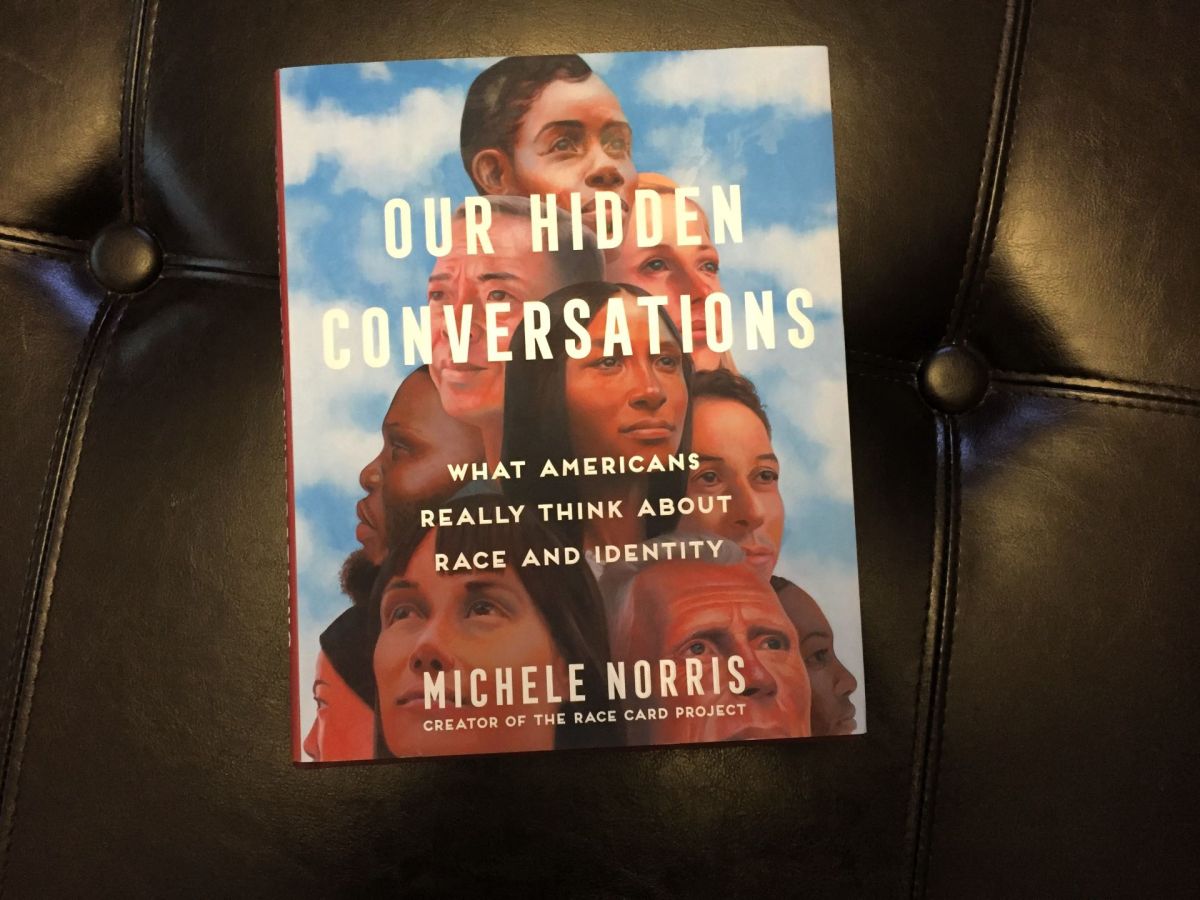
This is a short post about my initial impressions about the book, “Our Hidden Conversation” by Michele Norris.
I’m not finished with the book yet, but I thought I would let you know that the first chapter, “Bread Crumbs” was tough to read. I had to put it down and come back to it a few times because it brought back memories.
The chapter title “Bread Crumbs” means the clues that parents, grandparents, etc. might leave for subsequent generations to find which might shed light on one’s background, explain troubling circumstances, and so on.
I have some bread crumbs left to me by my family. Some are in the form of photos, although there is no family photo of all of us together.
I remember the hair combing routine my mom had with me and my brother every Sunday morning before church when we were kids. Our father was black and my mother was white. Dad was out of the home and we lived with mom. We were the only black kids in the church. In fact, all the members were white.
Mom used a prodigious amount of hair oil while vigorously combing our curly hair back. It took many strokes and the pulling pinched a bit. The ritual took a little while. When I look back on it, I guess the goal was to straighten our hair as much as possible.
Everyone in the church always treated us kindly and I was baptized there.
If you decide to read “Our Hidden Conversations,” give yourself a break whenever you feel like you need it.
Okay, we got about 14 inches of snow from Winter Storm Finn, but that doesn’t begin to convey the human meaning of it.
I’m going to call digging out from all that snow a Sisyphean labor. You don’t hear that term much, but it means a chore that never seems to end while you’re doing it. The short story about Sisyphus comes from Greek mythology.
Sisyphus was the king of Corinth. Just to be clear, it generally doesn’t snow in Corinth. One day, King Sisyphus saw a splendid, mighty eagle carrying a beautiful maiden to a nearby island (where it also does not snow). A river god named Asopus told him that his daughter had been abducted, but not by extraterrestrials. Sisyphus suspected Zeus, who had never seen a snow shovel, if you can imagine that. Like a fool, Sisyphus asked Zeus to help him find her. Because Zeus hated nosy mortals who aren’t supposed to know what the boss god is up to, he banished Sisyphus to Hades where he had to roll a giant rock uphill which always rolled back downhill (Hamilton, Edith. 1942. Mythology. New York: Little Brown and Company).
Anybody who knows what it’s like to try to shovel walks and driveways during a horizontal snowstorm knows that for every shovelful of snow you remove, twice that amount refills the space you empty almost immediately. You’d have to stay out in the snowstorm forever to keep up. It’s the definition of a Sisyphean labor.
And that’s why Sena and I left about a third of our driveway uncleared last night because we were exhausted. We’d been out in that storm shoveling all day since early morning. We ached everywhere and didn’t have much to show for it.
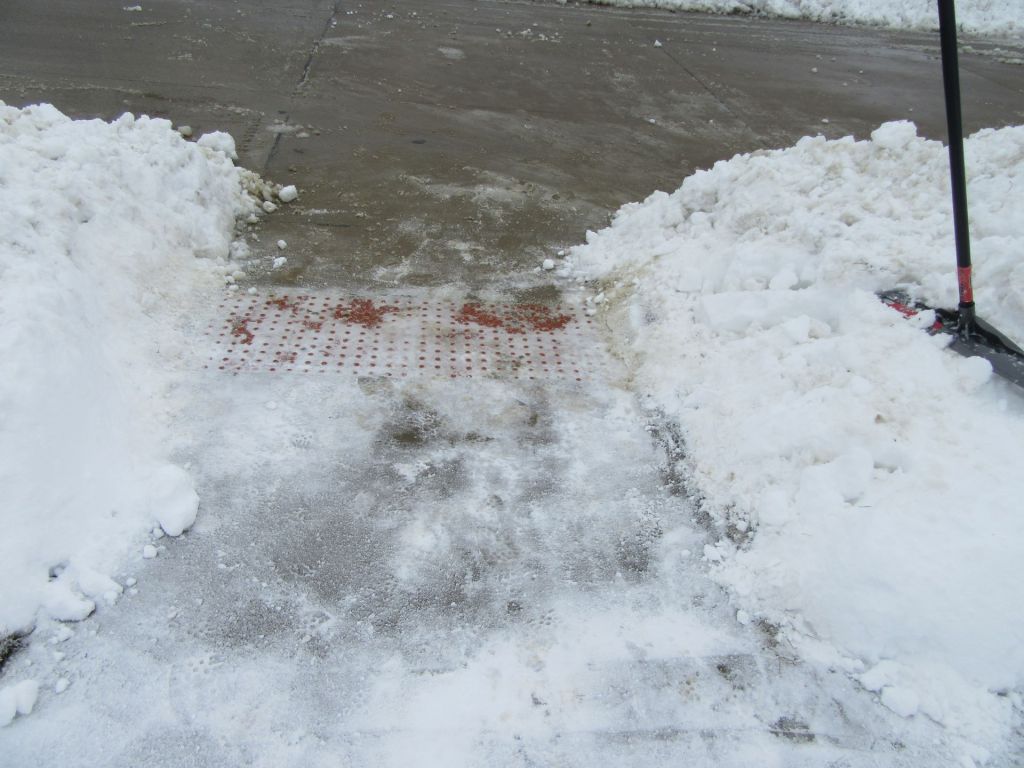
This morning we were up early again, anticipating trying to clear the driveway and again shovel all the walks, the curb ramp, the trees and whatnot.
The driveway had been cleared, probably sometime during the night, by a good Samaritan we’ll probably never know for sure. We could tell by the telltale friction wheel tracks, and the perfectly circular mark of the machine’s turning radius. A path to our curbside mailbox had also been cleared.
We are grateful. The only big job left was to clear the curb ramp, across which was a hip high mountain range of snow left by the city plow. It was also blocked by a large pickup truck. The driver must have seen us and he hurried over from where he was working with a crew building a house. He was more than happy to move it—although I was not so happy when I found out how hard we had to work to clear the curb ramp. If you start from the top, the snow spreads out over the mountain. If you start from the bottom, the snow from the top falls down. I would call that Sisyphean labor.
Anyway, we’re waiting for the next disaster, which I think the meteorologists are calling Winter Storm Gerri. They’re promising 4 inches of new snow by Friday. It almost sounds like light duty.
Sena and I just recently saw the TV commercial about the Whirlpool Care CountsTMLaundry Program, which has been providing washers and dryers for schools. It was launched to address school absenteeism, one cause of which is bullying of kids who don’t have clean clothes. They are also more likely to drop out of school.
It turns out this program has been going on since 2015. And there’s an Iowa connection. In 2017, Morris Elementary in Des Moines got a new washer and dryer (Des Moines Register, “Iowa teacher meets New Yorker on Instagram, and needy school gets a big lift” by Laura Rowley, published Oct 7, 2019, accessed 12/13/2023).
According to the Whirlpool’s website about it, there are over 150 programs in schools across 40 states.
The website even lists research studies demonstrating the link between a lack of clean clothes and school attendance rates.
We reminisced about what we did about this issue when we were in grade school. We don’t remember skipping school because of dirty clothes. We managed by washing them by hand, or in my family, using an old hand wringer as well. We hung clothes out to dry on the line in the back yard. Sena did that and also used a fan.
I was sometimes bullied, but it was related to being black rather than having old clothes. I didn’t change my outfit every day because I didn’t have enough clothes for that.
When I got old enough, I delivered the Des Moines Register. Talk about nickel and diming. The rates were pretty low compared to today, but I still had some customers who complained about the price. I walked my route to collect subscription fees. I was not a great salesman but I was a steady worker, delivering papers in any weather, even dragging them in a wagon through knee deep snow.
You could buy things with your money through the paper’s main office. The first thing I bought was an alarm clock with a glass face through which the clockwork was visible. I didn’t really need an alarm clock to get me out of bed to deliver papers. I was a light sleeper even then. I just thought the clock was cool.
I saved enough money (mostly in quarters) to buy my first bicycle. It cost about $20 at Ralph’s Bicycle & Hobby Shop in Mason City. It was used and I think it was a 24 inch. I did not do wheelies.
I don’t remember buying clothes.
I remember collecting from a young couple who were obviously newlyweds. They would often both come to the door wrapped in nothing but big bath towels. I wondered if they even had any clothes. Maybe they didn’t have any laundry facilities.
Anyway, I think the Whirlpool program is a great idea.
Just random updates for now. That 2-person 6 ball pass juggle Sena and I made a YouTube about? We could barely complete a couple of volleys, and we didn’t think we’d ever make much more progress. However, yesterday, we were starting to make 3, even 4 passes and cascades. Just when you think it’s hopeless….
What about me and the shower juggle pattern? I have not stopped trying—but I’m really no further ahead than I was 6 months ago. It wouldn’t feel right to quit. Success could happen tomorrow.
I remember watching an X-Files episode a while ago, “The Goldberg Variation.” A Rube Goldberg Contraption is a machine that is built of a lot of complex parts that in sequence result in solving a simple task. The main character in the episode is Henry Weems, who is incredibly lucky. His life is a series of improbable, complicated sequences of events that either make him rich or foil his enemies.
Unlike most people, Henry wants to use his incredible power for good, specifically to help a kid get a special treatment for liver disease which is killing him. The results he gets are wacky and complicated and result in good things happening to others.
I wonder what makes Rube Goldberg Contraptions so focused on trivial results? I think it would be nice to build one that—write your wish here.
Note: Rube Goldberg cartoon in public domain (source Wikipedia article, “Rube Goldberg machine”).










 Go Retire Psychiatrist