Sena Making Progress in Juggling

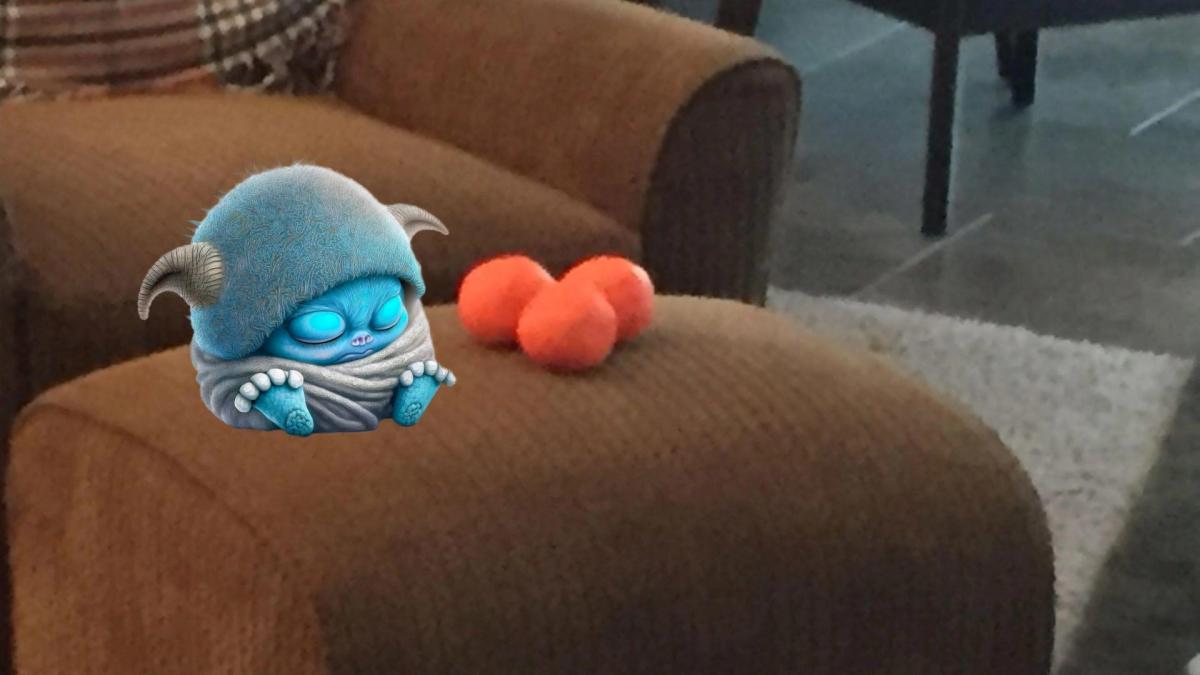
This is a progress report on Sena’s progress in juggling. She has been dedicated to practicing 2 or 3 minutes every other day. Frankly, she does more than that on some days.

She has been trying to move up to doing a 4-ball toss and catch. She thought she got it yesterday, and for a while so did I, even as I filmed it. The practice routine is to toss the balls 1-2-3-4 and catch. We thought she nailed it.

Then I looked at the video clips in slow motion. She wasn’t getting to 4 but she was getting to 3 more consistently. And part of what fooled us is that she’s now beginning to be ambidextrous. She can start the cascade from both her right and left side now!

Sena suggests I change the title of my YouTube section on juggling. As of yesterday, I changed it from Ugly Juggling to Ordinary Juggling. This distinguishes it from all the jugglers from whose videos I learn so much. They are extraordinary.

Off the Head Juggling Trick is Off the Wall

I saw the off the head juggling trick on the Juggle Man YouTube. This maneuver is off the wall. I looked at a couple of other videos because I just could not get the hang of it. One juggling teacher says it’s an “easy” trick. After fumbling a couple hundred times, I’m wondering why I’m hitting this wall with it.

I got the pattern wrong to start off—but that was the only way I could do it at all. When I started getting the pattern right, I was even more impressed with the jugglers who can make it look easy.

The two-ball practice I saw on one juggler’s video was painful. If you’re a guy and you’re doing the claw catch as instructed by some teachers, watch out. You can see what I mean in the video, and I’m not acting in that clip!

And once again, I’m having trouble letting go of a key ball that would allow me to finish the trick by smoothly moving back into the cascade.

I’ll keep you posted.

The Secret of Wiffle Ball Farm

I sometimes enjoy watching one of the paranormal TV shows, “The Secret of skinwalker Ranch.” I don’t want to mention the word “skinwalker” too often because some people consider it dangerous to even say it loud because they believe the skinwalkers will latch on to you. It’s kind of a boogeyman thing. Anyhow, the actors on the show can be pretty funny, even when they don’t intend it. There’s even an astrophysicist involved. My spellchecker says the word “skinwalker” should be capitalized. I figure if I don’t do that, I’ll be safe.

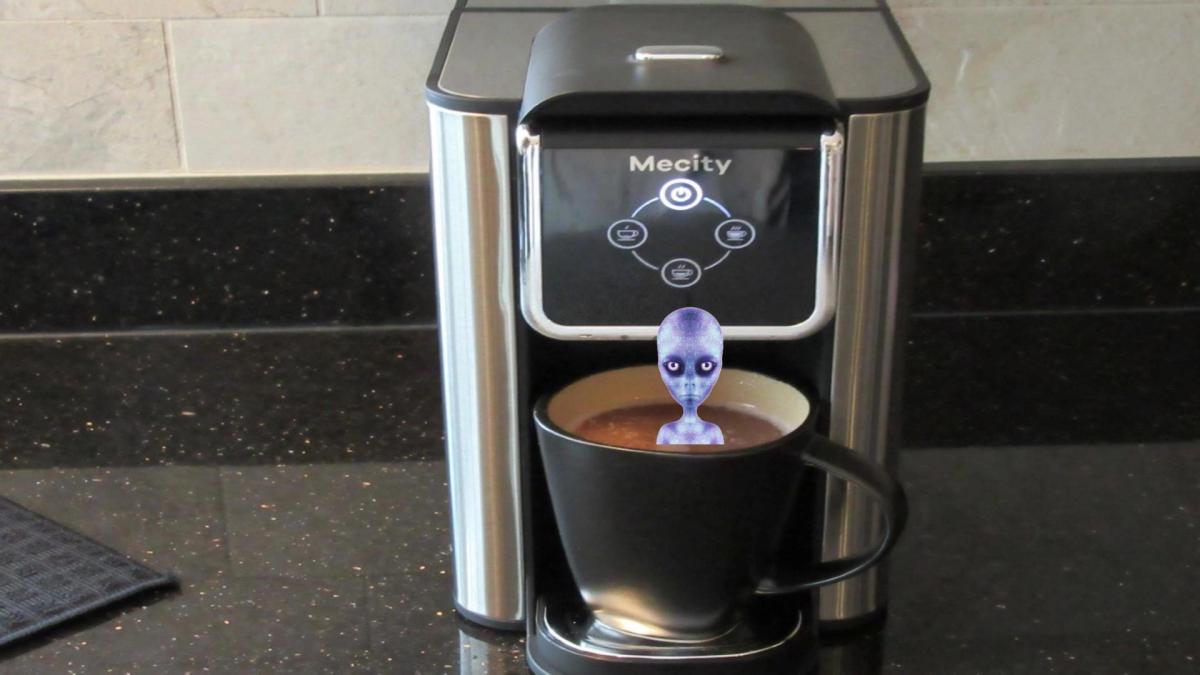
Anyhow, it gives me an idea for another show some producers might want to consider, “The Secret of Wiffle Ball Farm.” It would probably get an astronomically high rating on Rotten Tomatoes. It would have a similar format to “The Secret of skinwalker Ranch.”

The setting would be in Monticello, Iowa where the headquarters is located. It’s Whiffle Tree Mercantile. There is some controversy about whether or not you should leave the “h” in the spelling or not. If you’re the least bit superstitious, you might wonder if leaving the “h” in would open a wormhole vortex which would allow a giant Wiffle Ball to zoom in with a vicious curve trajectory and bean you on the back of your head.

This isn’t so far-fetched, at least not as far-fetched as the “skinwalker” capitalization phobia. There is a story about the cartoonist, Gary Larson, getting a letter from Wiffle Ball, Inc. lawyers insisting that Larson capitalize all the letters in WIFFLE in the future and should only be used in reference to a product made by The Wiffle Ball, Inc.

Everybody knows you can put a righteous curve on a wiffle ball, maybe especially if you alter it in sneaky ways (see below). The ball has holes in it and I think I might have played it when I was a kid. If I had been a kid in 2011, I probably wouldn’t have been allowed to play it in New York instead of Iowa. It was banned as unsafe for a short while by the state legislature. People laughed at that so hard they probably peed their pants.

The name Wiffle Ball got its name from the whiff sound you heard when players struck out, mainly because of the outrageous curve a pitcher could throw with it. I think I read somewhere the inventors left the letter “h” out because it cut down on the cost of advertising. Regardless, you’ll still sometimes see Wiffle Ball spelled as Whiffle Ball.

But to get back to Whiffle Tree Mercantile (is it too late?), the mystery about it is whether or not you can find Wiffle balls for sale there. There might be a controversy about maybe a conspiracy to hide the ball from the public by favoring another meaning for “Whiffle” by tying it to the word “tree”.

Hang on to your hat, it gets pretty confusing pretty fast. The whiffle tree (which is often spelled “whiffletree”) is supposedly a mechanism to distribute forces through linkages. It can be used to connect an animal harness to a vehicle like a cart or plow. The name would be understandably be used as a cover for an antique store in Iowa.

But wait. There’s another dimension to the meaning of whiffletree. One guy says it’s a mechanical digital-to-analog converter. It’s based on the mechanical one described above, but it was a kind of calculator used in typewriters. The comments in the YouTube video are pretty enthusiastic about it, which makes you wonder what star system they’re from.

But hang on, the conspiracy and mystery go deeper than that. Some say that the whiffle tree is where you hang your whiffle bat. Okay, we need an astrophysicist or at least a scientist of some kind to play a serious role here—sort of.

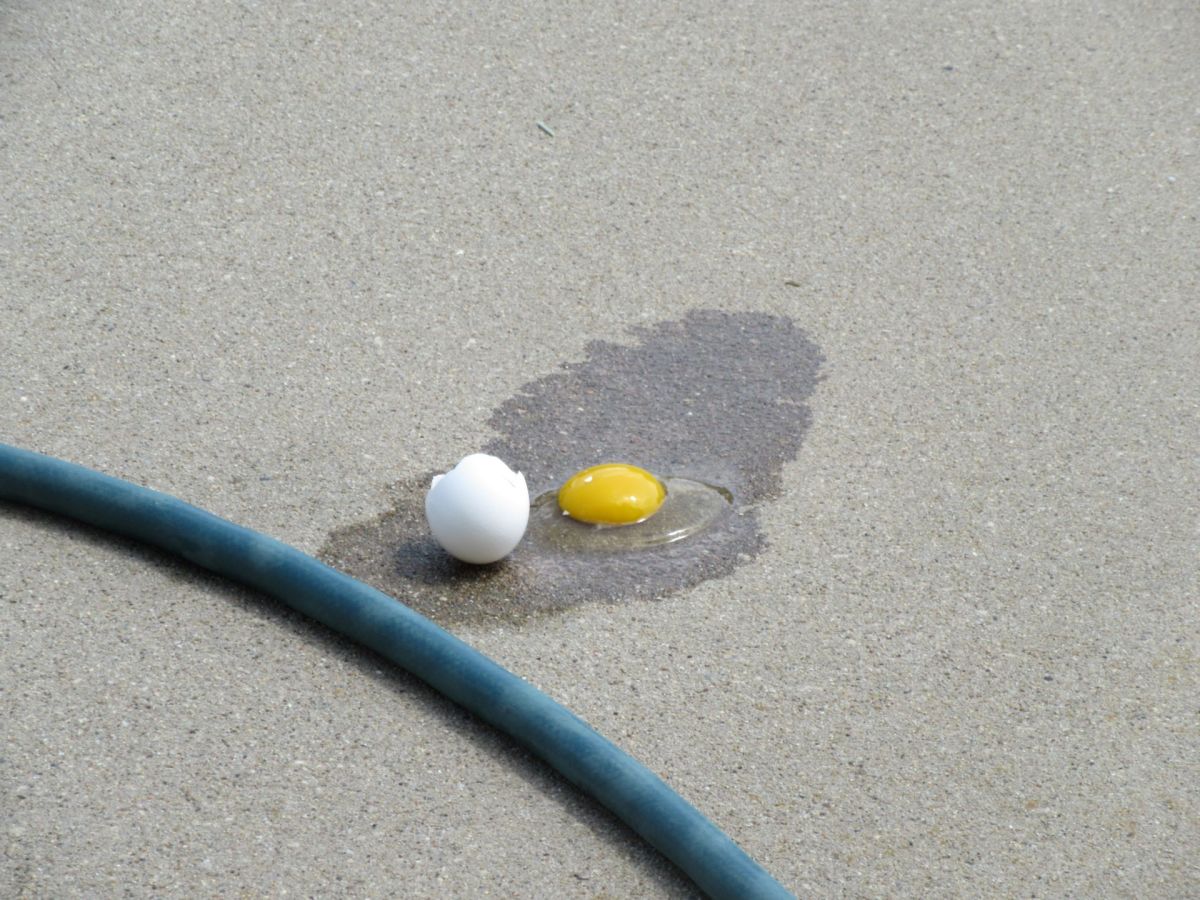
In fact, there’s a story on the internet posted in 2010 about a mechanical engineering professor who studied the unhittable Wiffle Ball pitch and possibly discovered the secret. Dr. Jenn Stroud Rossmann studied the aerodynamics of the Wiffle Ball as well as something called “scuffing” which is to cut or scrape the ball so as to give it almost magical properties to make batters strike out. Scuffing is legal in Wiffle Ball, but not in regular baseball. What’s up with that?

The connection of all this with Whiffle Tree Mercantile in Monticello, Iowa is the biggest mystery, of course. What are they hiding? Why don’t they just tell us on their web site whether or not they sell Wiffle Balls? Is there an underground cache of scuffed Wiffle (Whiffle) Balls somewhere in the back of the store? Did extraterrestrials teach humans how to scuff them? Why does the internet story about Dr. Jenn Stroud Rossmann show her juggling Wiffle Balls? Is there a wormhole connecting Jones County (where Monticello is located) with Area 51 and when will the Federal Government simply admit that?

These and countless other questions could be answered in the soon to be considered blockbuster paranormal TV show “The Secret of Wiffle Ball Farm.”

Celebrate Teacher Appreciation Week!

Teacher Appreciation Week this year started on May 8, 2023. I found my old report cards from Lincoln Elementary School in Mason City, Iowa. Lincoln was torn down many years ago to make room for expanding the Post Office. But I have my memories. I rediscovered reasons to celebrate the dedication of teachers. I don’t know how many people keep their grade school report cards. My mother kept mine along with old elementary school photos, including class pictures.

Jimmy!

Brief remarks on my grade cards remind me how supportive my teachers were—and how they expected me to buckle down. I was kind of a handful and there are indications that I had difficulty focusing my attention. My fifth-grade teacher, Mrs. Cole, was instrumental in identifying my near sightedness, which helped me to get my first pair of eyeglasses.

It wasn’t a bed of roses. My third-grade teacher, Mrs. Myrton (who always smelled like cigarettes), once slapped me so hard it made my nose bleed because I bumped into her when I was running around the classroom. I don’t remember why I was doing that. She was really sorry for slapping me.

And there was the time me and another kid got caught throwing snowballs on the playground (I can’t remember what grade I was in), which led to the usual penalty levied by the school Principal, Esther Ahrens. We each had to draw really small circles (signifying snowballs) to fill a sheet of paper.

We (meaning the kids) thought Ms. Ahrens was a witch. On the other hand, on a really hot day shortly before summer break, my 4th grade teacher, Ms. Hrubes, started acting really strange and was sort of wobbling at the open window in the classroom. There was no air conditioning in the school. Ms. Ahrens happened to be walking by the room and rushed into the room just in time to catch Ms. Hrubes as she was falling backward in a dead faint from heat exhaustion.

But other than that, along with the usual physical and psychological cuts and scrapes of elementary school, I remember those years as instrumental in turning me and other kids into smarter, nicer people and better citizens. We also learned how to make really tasty homemade ice cream the old-fashioned way, using nested containers, the larger of which had a mixture of salt an ice and a hand crank.

The notes and letters with my report cards often had illuminating comments:

“Jimmy has done well in Physical Education class. He has excellent aim and can hit a moving car’s windshield with a rock (yelling ‘bombs away’) with fair accuracy.”

“During this quarter, I was able to dissuade Jimmy from trying to fly like superman from the second-floor window of the classroom.”

“Jimmy reads well. He could apply himself more carefully in science. We were finally able to remove all the exploded paint from the gymnasium. It took only a few weeks this quarter.”

“Jimmy’s command of spatial relationships has improved a great deal! He can figure out how to fill his emptied milk carton with spinach in seconds, often without attracting the attention of the lunchroom monitors.”

I’m giving a great big thank you to all the teachers! You deserve it!

Racial Affinity Group Caucusing Separate But Not Equal to Segregation

I read the New England Journal of Medicine perspective article “Racial Affinity Group Caucusing in Medical Education—A Key Supplement to Antiracism Curricula.”

I did not see the word “segregation” anywhere in the paper, although the Daily Mail news item used it frequently in a manner that I suspect was intended to incite indignation over separating White and Black, Indigenous, People of Color (BIPOC) medical students into Racial Affinity Group Caucuses (RAGC). This was for the purpose of ultimately integrating them with the goal of defeating racism.

Words matter. The word “segregation” used in the way some news reporters did is bound to conjure up 1960s images of the effect of Jim Crow laws and remind those old to remember it the speech of Alabama governor George Wallace pledging “Segregation now, segregation tomorrow, segregation forever.”

Separating people into groups for the purpose of working out a solution to racism can be called segregation only in the strictest sense of the definition. If you can separate denotation from connotation, I think you have to question the use of the word in the news article, which was heavily freighted with negative connotations.

When I was a student at Huston-Tillotson College (now H-T University, one of the Historically Black Colleges and Universities) in the 1970s, the Greek fraternity and sorority pledges were segregated from those who chose not to pledge, including me. I was really happy to be segregated when I witnessed the hazing of the pledges.

The women and men students at H-TU who lived on campus were segregated into male and female dormitories. This did not stop certain activities like dances and fraternity events.

I recall reading news stories a year or two ago about some black college students wanting to be segregated into different dormitories at predominantly white college campuses. I don’t agree with the idea, but it sounded like some black students preferred it.

I like my socks segregated from my dress shirts. But that’s just me.

My Right-Hand Juggle Tricks Lefty

I’ve been working on my juggle tricks using my non-dominant side and it’s a little easier than I thought it would be. It didn’t take nearly as long to train my left side to handle the right-side tricks compared to the right.

I’m not sure I how to explain that. Those who teach juggling usually advise practicing with your non-dominant side at the same time you train your dominant side. I didn’t start until after about seven months.

A while ago, I tried doing the behind the back trick on the left. I felt a sudden muscle spasm in the left side of my neck. I told myself I was too old to switch sides and left it at that. But then I discovered later there were certain tricks I couldn’t do unless somehow, I got ambidextrous.

It took me less than a day to teach my left side to do the right-side tricks like behind the back, under the leg, and the finger plex.

I still don’t know how the finger plex trick got its name.

Flipping Out on Ambidexterity in Juggling

I’ve been trying to learn a new juggling trick and found out there was a prerequisite—which is that I practice some skills I’ve ignored until now. One is trying the two in one trick which is juggling two balls with one hand. The other is trying tricks on both the left and right side of my body. Ambidexterity is a plus in juggling.

That’s a tall order, at least for me. But if I’m going to move forward, I guess I have to try it.

I remember the problems I had learning the under the leg on my right side. The same problems occurred on the left, no surprise. I had trouble letting go of the ball, I threw the balls way out of the pane of glass juggle space, and I’m lunging all over the room.

But I got further than I thought I would, and I was able to at least do the trick after only a few tries. The left side under the leg is pretty ugly right now, which is normal for me anyway.

The left side two ball juggle with one hand was also difficult. I don’t know why I had a claw posture in my right hand.

Paradoxically, I’ve noticed lately that I have more trouble with the half shower on the right side than the left.

The only other time I had to make do with my left hand was when I was a kid. I broke my right wrist when I fell from the top floor of the garage. It was built like a barn and the only way up to the loft was a wooden ladder nailed flush and vertical with wall up to a sort of attic hatch. It was a good thing it was over summer vacation from school. I tried to learn how to write with my left hand, but all I did was scribble.

Juggling on my non-dominant side is like scribbling with my non-dominant hand.

AI Probably Cannot Read Your Mind

I was fascinated by the news story about the study regarding the ability of Artificial Intelligence (AI) to “read minds.” Different stories told slightly different versions, meaning they either did or did not include the authors’ caveats about the limitations of AI. Recently there has been a spate of news items warning about the dangers of AI taking over mankind.

Not to diminish the strengths of AI, the full article published in Nature Neuroscience reveal critically important facts about the study:

  • Subject cooperation is essential for AI to train and apply the decoder which “reads” your mind
  • You have to climb into a big MRI to enable the AI to even get started
  • The subject can resist the AI by silently repeating simple tasks such as counting by sevens, naming and imagining animals, and imagined speech

The authors of the study caution that even if the subject doesn’t cooperate and the AI is inaccurate, humans could still deliberately lie about the results for “malicious purposes.” Nothing new under the sun there.

The current technology here would not be usable in the emergency room to assist psychiatrists ascertain suicide risk. It probably wouldn’t help psychiatrists and other physicians diagnose Factitious Disorder in patients whose main feature is “lying” about their medical and psychiatric disorders in order to get attention from health care professionals.

This reminds me of news stories about the propensity of AI to tell lies. One story called them pathological liars. I interviewed Google Bard and found out that it makes stuff up (see my posts about Bard). Does that mean that it’s lying? Humans lie, but I thought machines were incapable of deception.

Another interesting sidelight on lying is whether or not you could use AI like a lie detector. For example, the case of people who report being abducted by extraterrestrials. Travis Walton and co-workers reported he was abducted in 1975 and they all took lie detector tests. They all “passed.” There are many articles on the internet which essentially teach how to beat the polygraph test.

And if you can beat the AI by repeating the names of animals, it will not detect lying any better than a polygraph test.

I think it’s too soon to say that AI can read your mind. But it’s clear that humans lie. And it wouldn’t hurt those who are enthusiastically promoting AI to brush up on ethics.

Reference:

Tang, J., LeBel, A., Jain, S. et al. Semantic reconstruction of continuous language from non-invasive brain recordings. Nat Neurosci (2023). https://doi.org/10.1038/s41593-023-01304-9

Abstract:

“A brain–computer interface that decodes continuous language from non-invasive recordings would have many scientific and practical applications. Currently, however, non-invasive language decoders can only identify stimuli from among a small set of words or phrases. Here we introduce a non-invasive decoder that reconstructs continuous language from cortical semantic representations recorded using functional magnetic resonance imaging (fMRI). Given novel brain recordings, this decoder generates intelligible word sequences that recover the meaning of perceived speech, imagined speech and even silent videos, demonstrating that a single decoder can be applied to a range of tasks. We tested the decoder across cortex and found that continuous language can be separately decoded from multiple regions. As brain–computer interfaces should respect mental privacy, we tested whether successful decoding requires subject cooperation and found that subject cooperation is required both to train and to apply the decoder. Our findings demonstrate the viability of non-invasive language brain–computer interfaces.”

Can Juggling and Mindfulness Meditation Complement Each Other?

I read this article about mindfulness today and it got me thinking about how juggling might be two different aspects of the same activity.

I think they both help focus the attention. There a number of articles on the web which essentially say that juggling can be a sort of meditation.

I know hardly anything about the default mode network (DMN) in the brain, but from what little I know, I suspect that both juggling and mindfulness meditation could disrupt the DMN. There’s a published study showing that meditation tends to reduce DMN activity. That would be a good thing. The DMN has been described as a brain network which may tend to lead to mind wandering and self-related thinking. That may not be the healthiest way to use your time.

I’ve been doing mindfulness meditation for about 9 years now. I still sometimes wonder whether I’m “doing it right.” On the other hand, when I miss more than a day or two of mindfulness practice, I notice that I feel more edgy and out of sorts. When I return to mindfulness practice daily, I notice less of that scattered and nervous mental state.

I took up juggling last October and I notice that it does something similar to mindfulness. I have to pay close attention to what I’m doing while I’m juggling. Otherwise, I just drop balls constantly.

Just searching the web with the question “Is there a juggling meditation?” turns up quite a lot of articles. Some suggest that juggling is a kind of “moving meditation.” That reminds me of the walking meditation, which I’ve referred to as the “walking dead meditation,” based on my Mindfulness Based Stress Reduction (MBSR) course in 2014. At the retreat toward the close of the course, we did this walking meditation thing, which for all the world seemed to more than a few learners as resembling the way zombies walk.

I think I’d have a tough time trying to juggle like a zombie walks. You can’t be herky-jerky when you juggle, you know. I guess that’s why you never see a zombie juggle. Zombies don’t meditate either, probably because they’re too busy looking for brains to munch on.

Now I get the urge to juggle when I feel the need to clear my head. It’s reinforcing for learning new juggling tricks. Sena is learning juggling now and her efforts remind me of the challenges I had. One of them is learning how to let go of the damn ball in a pattern like the three-ball cascade. You get stuck at certain stages. I hit several walls learning the cascade. And then there came a day when I just started doing the pattern right, often because I just let go.

That reminds me of a quote by Juggleman about juggling, “Doing it wrong makes you an artist.”

I’m probably doing mindfulness the way I ought to be “doing” it. Nowadays, the way I judge that is by noticing I feel better when I stick to it.

Does This Shirt Make Me Look Retired?

Sena got me a new shirt that says: “Does This Shirt Make Me Look Retired?” It’s the greatest. No, she’s the greatest.

So…does it? Think carefully about your answer.