Heat Joke Alert Again!

Here’s another heat joke.

Q: How hot is it?

A: It’s so hot, you don’t have to be a liar to set your pants on fire.

All you have to do is step outside. It’s no joke, frankly. Heat index values could be in the 110-115 degree range. The Excessive Heating Warning has been extended to August 23, 2023.

Heat Joke Alert!

OK, I got sort of a Dad joke about the heat. It’s about 106 degrees now with the heat index in Iowa City.

Q: What do you call a flying saucer on a really hot day?

A: An Unidentified Frying Object

Believe it or not, I couldn’t find this joke anywhere on the internet. So I guess that makes it original.

Sena wants to try frying an egg, and melt ice cubes and/or an ice cream bar on our driveway tomorrow.

Leave comments trying to talk her out of it and/or leave a heat joke of your own.

Thank you for your time.

How the Metta Prayer and the Shower Juggle Are Alike

I’ve been practicing mindfulness meditation since 2014, when I became uncomfortably aware of how unpleasant I was becoming on the job and elsewhere. I called this “burnout.” The word still works as an explanation although it was and is sometimes still an excuse.

I learned about the Lovingkindness meditation or the Metta Prayer during the Mindfulness Based Stress Reduction (MBSR) course I took almost a decade ago.

I used to pray when I was a child. I read the Bible and prayed. I viewed the act of prayer as a request to God back then. And I still probably regard the Metta Prayer as a kind of bargain between me and the cosmos or whatever it is I think of as a higher power.

Just because I say the Metta Prayer doesn’t mean that anybody’s going to treat each other differently. It doesn’t make people get up and square dance together. However, the caution about not expecting others to change just because you say the Metta Prayer doesn’t mean that the practice would not enhance a sense of community—if enough people did it.

There are dozens of scripts for the Metta Prayer easily accessible on the web. The part of it that is directed to those with whom I’m having a difficult time is tricky. Often enough, my goal is to use it as a way of somehow changing the person I’m having difficulty with. It’s the same way I used prayers as a child.

That’s a mistake, but at least I’m aware of it. Prayer is not a request for God or the cosmos to intercede on my behalf so that life won’t be so difficult for me sometimes.

I have trouble remembering that I’m not really a role model, especially nowadays. I’m just an old retired guy who was difficult to work with and needed to change, despite my status as a psychiatrist. I tell dad jokes and clown around but I’m still an old guy with problems—like just about every other old guy.

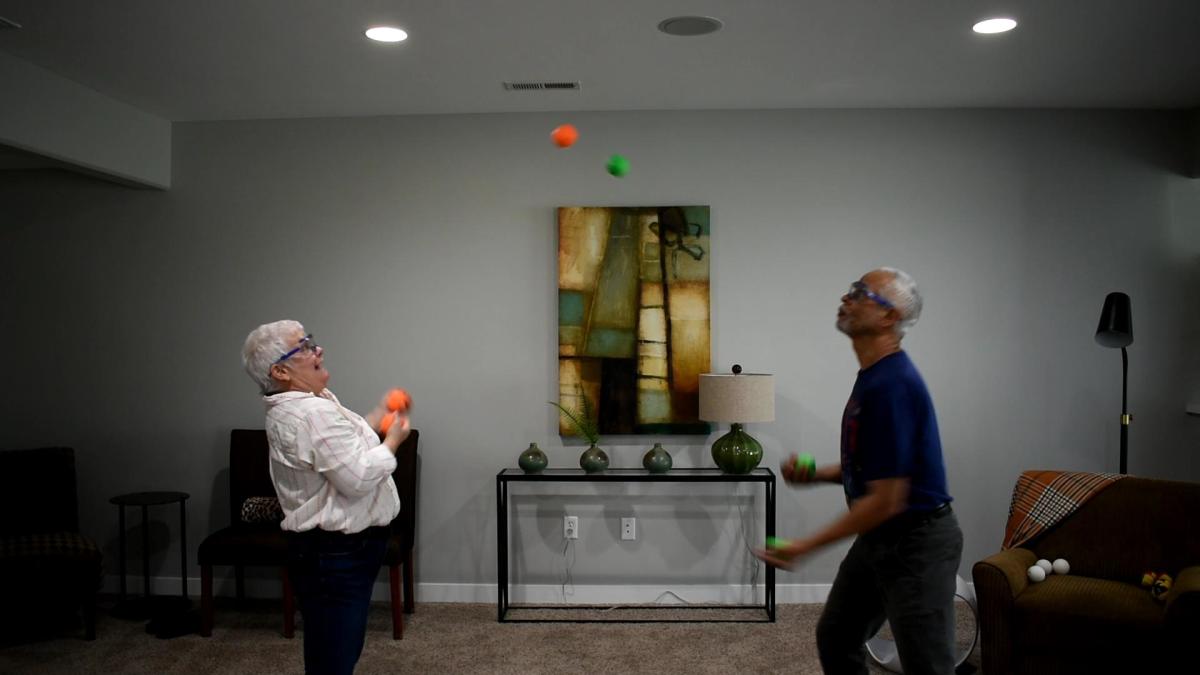
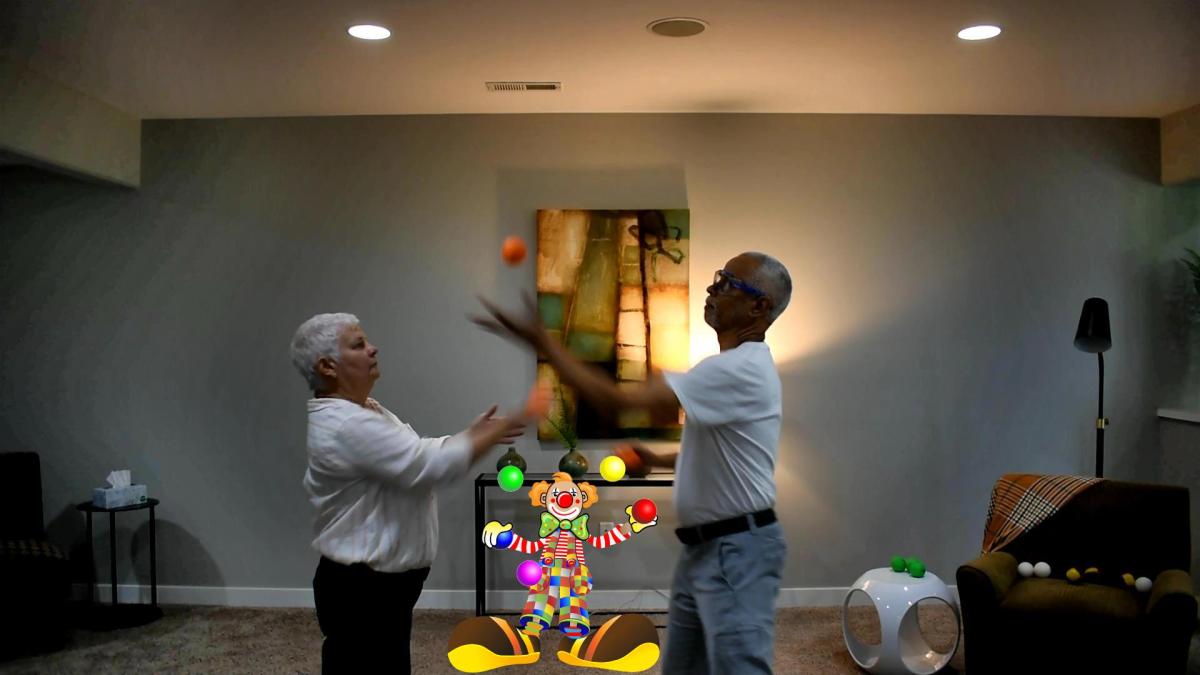
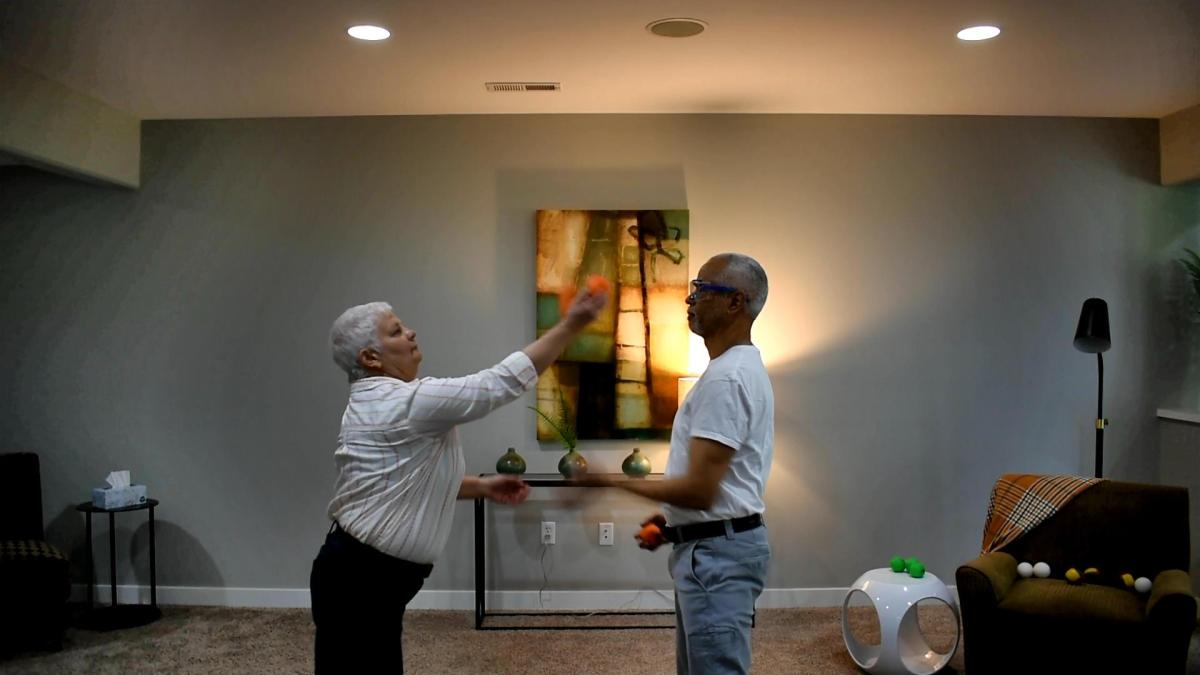
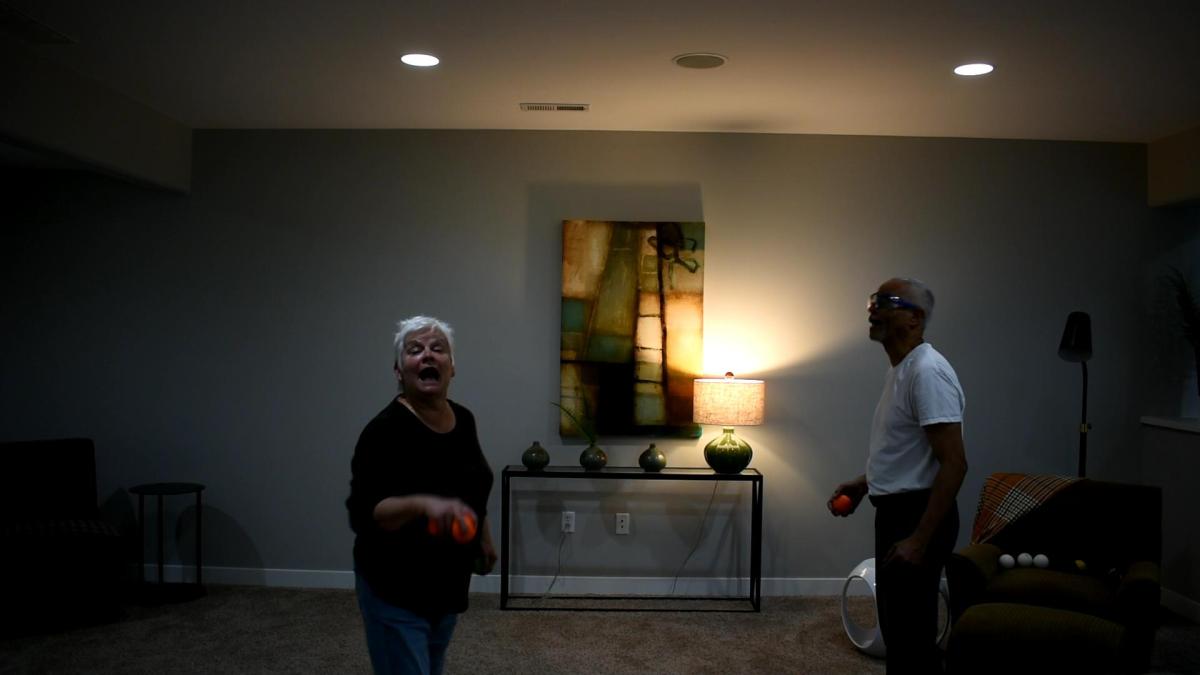
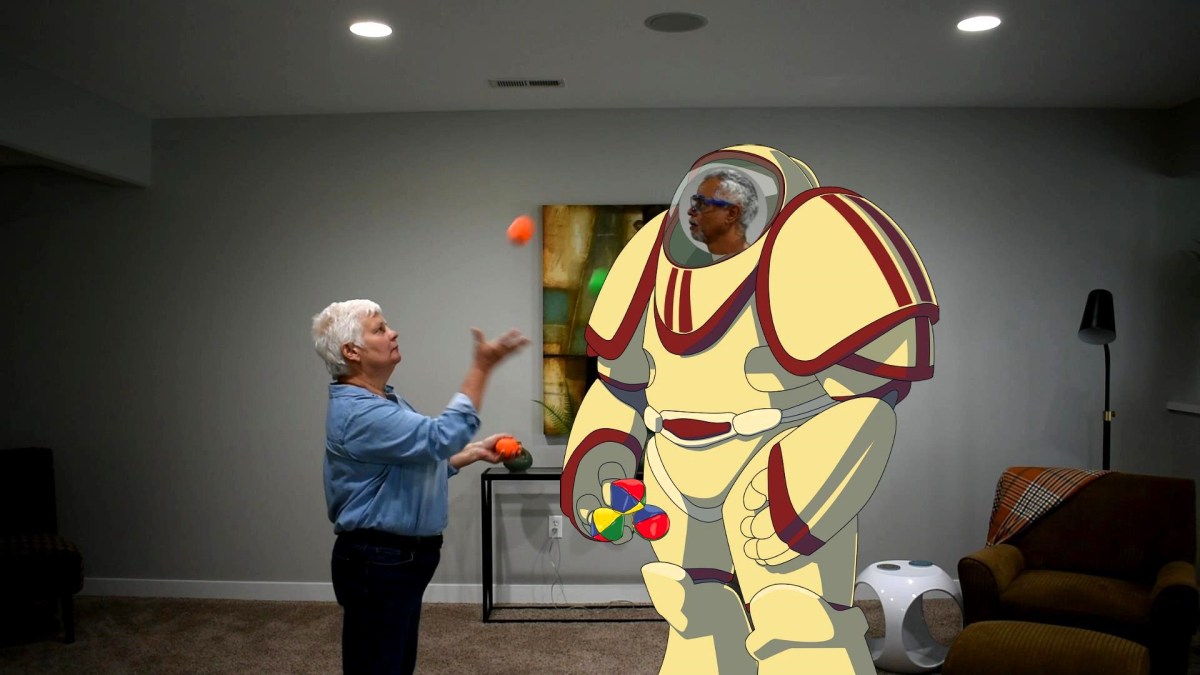
So, I’m still off and on practicing the Metta Prayer. I’ve noticed that practicing mindfulness is a lot like practicing juggling, which I’ve been doing for almost a year now. I still can’t do certain tricks, like the shower juggle. I can do about three or four throws and drop the balls, sometimes on my head (which is why I wear safety goggles!). And I still tend to use prayer like I’m negotiating a deal to get rid of my faults and troubles.

But I haven’t given up practicing the shower juggle. And I haven’t given up on the Metta Prayer.

Iowa City Art in the Parks Lark 2023

The new sculptures are out in the parks and they are wonderful! We dashed out a couple days ago and logged a little over 3 miles on my step counter visiting them in several locations. The best way to get started is to read the Iowa City article, “Iowa City Sculptors Showcase.” You can get a nice map to find out where the new sculptures are and more about the artists.

Sena can’t see why Tim Adams’ Open Arms sculpture was not named The Kiss—because that’s what she thinks it looks like.

We both like Adams’s interactive work, Prairie Tussock. It reportedly spins in the wind according to the description, but I think it would take something more like what the Weather Channel might warn you about.

In fact, it has a handle to grab and reminds me of a schoolyard game we called tetherball.  It was a dangerous game and I just read that it was banned because the ball could smack you in the head. I don’t even want to think about what the swinging Prairie Tussock could do to you. Remember the movie Beetlejuice? One of the characters was a woman who was a sculptor. She had a great line, “This is my art and it is dangerous!” Keep your head down.

Sena’s number 2 favorite was Hilde DeBruyne’s Circle of Trust. Her number 3 was Adams’ The Kiss—I mean Open Arms.

Prairie Tussock was also my number 1 favorite. Number 2 was a toss up between Dan Perry’s Architrave and DeBruyne’s Circle of Trust. Number 3 for me was Aidar Ishemgulov’s Upside Down. There was so much height to Architrave that I missed getting the whole thing from top to bottom. We had to return the next day to get a proper shot. I think the top part of it resembles a torch.

We enjoyed all of them, though. We think you would too.

What Kind of Census Does This Make?

We finished our Census Bureau survey and it seems like we just did this not long ago. It’s taken every 10 years but it seems like we got this form a few years ago.

They say it takes about 40 minutes to complete, but it sure felt like there were many more questions on it this time and the questions asked about a lot of things like income, taxes, etc. that we don’t remember from before.

Did anybody else get this feeling? I mean we really had to do things like get data from records and do math and sweat the details.

We asked ourselves what would happen if we just refused to do it. So, I looked it up. It turns out that there is a $5,000 penalty the bureau can impose if you refuse to do it or give false information.

On the other hand, Census Bureau officials have said nobody’s been prosecuted since 1970. I wonder what happened to that person? Is he still paying off the fine? Is he in jail because he couldn’t pay it? Was he abducted by extraterrestrials and is he still trying to get them to pay it?

There are other questions I had that led me to search the web. It looks like the best place to start might be the Census Bureau website itself. The section Census Bureau 101 for Students looks like a good place to start. The census has been around since 1790 and back then it was only a six-question survey:

What is your gender? (There are more choices nowadays)

What is your race? (It was not the 40-yard dash)

What is the name of the head of the household? (It’s always the wife!)

What is the relationship to the head of the household? (It’s always the husband!)

How many slaves do you own?

What is your occupation? (Tea party activists didn’t count)

There’s an interesting section on the web site PRB, entitled “Hard-to-Count Populations.”:

Decades of research have shown that the decennial census is very accurate, but (like population censuses in other countries) it is subject to both undercount and overcount errors that differ by age, sex, and race. The 2010 Census was no exception. Despite the best efforts and careful planning of Census Bureau staff, the direct, physical enumeration of the U.S. population is imperfect.

Part of the challenge in counting the population accurately is that some people are harder to count than others. People who lack a permanent address are less likely to complete a census form than people who have a permanent address. Similarly, language barriers, distrust of government, and frequent moves tend to make certain groups harder to count. On the other side of the spectrum, some people may be counted more than once. For example, those who own more than one home may submit a census form for each address, and children away at college may be counted at both their college and parental home.

If you decide not to complete the Census Bureau survey, they probably won’t fine you or throw you in jail. They could visit your house up to six times though. And if you manage to slip them every time, they could check with your neighbors to get the skinny on you.

You might as well do it.

The Dragon Breathes Fire Again

Sena and I saw a news video about a technology called “DAX” which uses Artificial Intelligence (AI) the other day which promises to reduce or even eliminate pajama time for physicians trying to get their clinical note dictations done during the day instead of taking them home for several more hours of work.

The video was a demo of the technology, which looked like it recorded a clinical interview between the doctor and the news reporter. I didn’t see how exactly DAX was recording the interview without obvious audio equipment. Was it doing it through the smartphone speaker? This was very different from how I and many other clinicians dictated their notes using a headphone set at their desks in front of their desktop computers. It not only records but transcribes the interview.

Later, I discovered that DAX stands for Dragon Ambient Experience, made by Nuance which was acquired by Microsoft in 2022. I posted about Dragon products and their limitations last year. The product often produced hilarious mistakes during dictation which required careful editing. Sometimes more errors turned up after you completed it and these were visible in the patient’s medical record, which would then need to be corrected.

Several years ago, I remember talking to somebody from Dragon on the phone about the problems I was having. She was a little defensive when I told her I’d been having difficulty with Dragon for quite a while because it made so many mistakes.

A recent article on the web revealed that the errors continue with DAX. According to the article, “…it will make mistakes. Sometimes it might omit clinical facts; sometimes it may even hallucinate something.” I remember trying to communicate with the Google Bard AI, which seemed to do this pretty often. It made stuff up.

DAX is not cheap. The article reveals that one hospital pays $8,000-$10,000 per year per physician to use it. And skeptics worry that the system has too many bugs in it yet, which can lead to bias and inaccurate information which could negatively affect patient outcomes.

A recently published JAMA network article also urges caution in adoption of this sort of AI-assisted technology (Harris JE. An AI-Enhanced Electronic Health Record Could Boost Primary Care Productivity. JAMA. Published online August 07, 2023. doi:10.1001/jama.2023.14525).

In this case, I think it’s appropriate to say “I told you so.”

Tickle Tickle Tickle!

I saw an interesting article about how lab rats react to researchers tickling them. I had no idea rats had a funny bone. They’ll even chase your hand to get tickled. When they’re tickled, they make laughing noises that are just under the threshold of human hearing, but the sounds can be heard when converted to our range of hearing. They like to be tickled on their bellies or backs.

What scientists have found is that an area in the brain called the periaqueductal gray (as medical students we had to learn about this area to pass anatomy class) that is associated with tickling and laughter. The upshot is that play is important for growing brains.

Many of us remember being tickled as children. We could get hysterical even if someone just approached us with hands outstretched, saying “kootchy kootchy koo.”

Something happens when we grow up and we lose that ticklish sensitivity. And you can’t tickle yourself to get that sensation.

Tickling sensitivity may go away, but a sense of humor usually doesn’t, at least for most of us. I can’t count the number of times Sena has caught me sort of stifling a chuckle over some funny thought that happens to cross my mind. I’m sure I look half-crazy. Sometimes I think I should come up with a semi-plausible explanation for this behavior (“Oh, I’m just being tickled by invisible extraterrestrials!”).

Scientists are still working on finding out why we’re ticklish. I don’t know exactly why we lose ticklishness as we grow up. But I don’t think building a tickling robot would fix it. It might be difficult to calibrate its finger strength, resulting in broken ribs and punctured lungs—at first. But those aren’t problems, just details to be worked out.

Tough TV Choices

I have a couple of choices for TV shows tonight. I could watch an X-Files rerun on the Comet network or the “season finale” of The Secret of Skinwalker Ranch.

Sena and I have been watching the X-Files reruns the last few nights. We didn’t know it was on until Sena happened to catch a couple of episodes. It comes on weeknights between 8-11 pm. They’re the early ones, which were pretty good.

We used to watch X-Files and munch popcorn a long time ago when the show was new. It was good entertainment.

On the other hand, it’s hard to know what to call The Secret of Skinwalker Ranch. Is it entertainment or investigative reporting? I don’t know how you can say it’s investigative in nature when mostly what you see are guys firing off dozens of hobby rockets to annoy the interdimensional entities who then lob UFOs back at them.

Calling a show a “season finale” doesn’t make me think about scientific TV programs.

I’m betting the skinwalker season finale will be an extravaganza of hobby rockets and dozens of Sasquatches flinging their hairy legs in the air in unison Rockette-style while munching on beef jerky.

I can’t afford to miss that. Sena will watch the X-Files on the TV downstairs.

The Empire Fires Back

I saw this reply tweet posted to the web. It was the reply of Sean Kirkpatrick, PhD, the director of the All-Domain Anomaly Resolution Office (AARO) in reply to the testimony of the witnesses at the House Committee’s UAP hearing on July 27, 2023. I’m not sure we’ll hear much more about it.

We Are All Still Learning to Play Pong

I noticed an article the other day about Monash University in Australia getting funding for further research into growing brain cells onto silicon chips and teaching them how to play cribbage.

Just kidding, the research is for teaching the modified brain cells tasks. They succeeded in teaching them goal-directed tasks like how to play the tennis-like game Pong last year. You remember Pong from the 1970s? Shame on you if you don’t. On the other hand, that means you probably didn’t frequent any beer taverns in your hometown while you were growing up—or that you’re just too young to remember.

The new research program is called Cortical Labs and has hundreds of thousands of dollars in funding. The head of the program, Dr. Razi, says it combines Artificial Intelligence (AI) and synthetic biology to make programmable biological computing platforms which will take over the world and bring back Pong!

It’s an ambitious project. The motto of Monash University is Ancora Imparo, which is Italian for “I am still learning.” It links humility and perseverance.

There’s a lot of suspicion out there about AI and projects like the Pong initiative in Australia. It could eventually grow into a vast industry run by robots who will run on a simple fuel called vegemite.

Shame on you if you don’t know what vegemite is!

Anyway, it reminds me that I recently finished reading Isaac Asimov’s book of science fiction short stories, “I, Robot.”

The last two stories in the book are intriguing. Both “Evidence” and “The Evitable Conflict” are generally about the conflict between humans and AI, which is a big controversy currently.

The robopsychologist, Dr. Susan Calvin, is very much on the side of AI (I’m going to use the term synonymously with robot) and thinks a robot politician would be preferable to a human one because of the requirement for the AI to adhere to the 3 Laws of Robotics, especially the first one which says AI can never harm a human or allow a human or through inaction allow a human to come to harm.

In the story “Evidence,” a politician named Stephen Byerley is suspected of being a robot by his opponent. The opponent tried to legally force Byerley to eat vegemite (joke alert!) to prove the accusation. This is based on the idea that robots can’t eat. This leads to the examination of the argument about who would make better politicians: robots or humans. Byerley at one point asks Dr. Calvin whether robots are really so different from men, mentally.

Calvin retorts, “Worlds different…, Robots are essentially decent.” She and Dr. Alfred Lanning and other characters are always cranky with each other. The stare savagely at one another and yank at mustaches so hard you wonder if the mustache eventually is ripped from the face. That doesn’t happen to Calvin; she doesn’t have a mustache.

At any rate, Calvin draws parallels between robots and humans that render them almost indistinguishable from each other. Human ethics, self-preservation drive, respect for authority including law make us very much like robots such that being a robot could imply being a very good human.

Wait a minute. Most humans behave very badly, right down to exchanging savage stares at each other.

The last story, “The Evitable Conflict” was difficult to follow, but the bottom line seemed to be that the Machine, a major AI that, because it is always learning, controls not just goods and services for the world, but the social fabric as well while keeping this a secret from humans so as not to upset them.

The end result is that the economy is sound, peace reigns, the vegemite supply is secure—and humans always win the annual Pong tournaments.