And Then There Were Four Drain Tile Lids Flipped

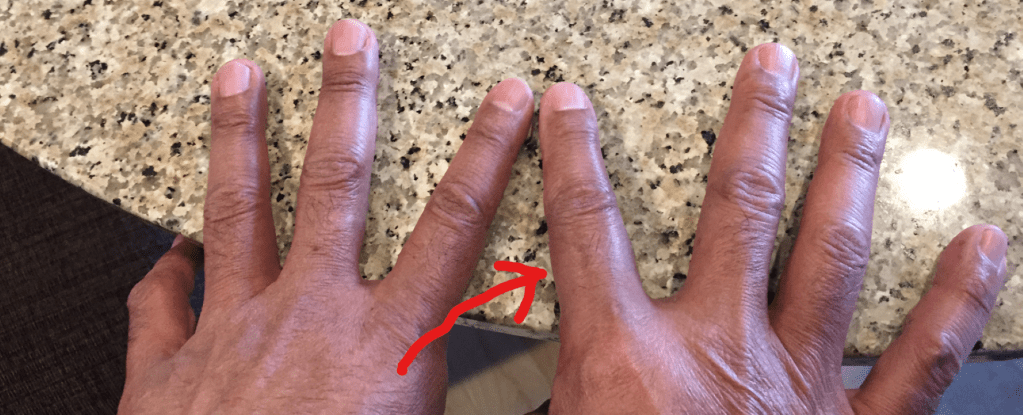
Now there are 4 tile drain lids that have been flipped. A couple of others were flipped last night. Sena put them back on and put a rock on one of them. The two others with rocks on top of them were undisturbed.

Four of the seven lids have now been flipped this season. We still don’t know what causes this. I suspect it’s an extraterrestrial playing a prank on us.

The Screaming Barn of Iowa City Rises Again

Harvest Preserve made the Screaming Barn of Iowa City rise from the grave only a couple of days after I mentioned it after our autumn walk on October 2 (Monday). Halloween is the inspiration!

It looks great!  There were enhancements in addition to the returning theme of grisly epitaph dad jokes.

It should be visible to a lot more drivers on Scott Boulevard in that area, mainly because of traffic detours from street construction.

What’s also different is a safety barricade which is for the safety of walkers. It stretches across the street entrance to the barn from Scott Boulevard. You can get great pictures from across the street near the Harvest Preserve entrance gate.

Autumn Walking Colors

Sena got some new pants with an autumn leaves print. It fit really well with the colors we saw on a walk down Scott Boulevard.

We always see something a little different along the way. We never noticed that the Sitting Man pedestal has a hole in it shaped like a heart. It could have been chipped into the stone intentionally.

There was a lot of golden rod but we didn’t see any ragweed—which I’m very allergic to this time of year.

The trees around the Harvest Preserve property are changing colors. The old barn across the street from it looks a little more weathered. We don’t know whether the staff will decorate it into a haunted house again for Halloween. They did that last year and it was a hoot.

The walk up the hill to the Sitting Man seemed a little steeper this year. I don’t remember exactly when I got so bow-legged. A runner easily ran up the hill and still had breath to say “Hi” on the way back down. He never missed a step, even though I personally know there are a lot of irregularities in the ground.

Get your walking pants on.

Autumn Miracles

We saw the miracles of autumn the other day, out on the Terry Trueblood Recreation Area. It was quiet, only a light breeze set the flowers and grasses swaying.

There were almost no birds out. No ducks were out on Sand Lake.

On the other hand, I guess there were birds, sort of. We greeted other walkers, an older couple who turned out to be snowbirds. They’ll be heading to Florida soon for the winter. They had no worries about the weather down there. They’ll be in the middle of the state, presumably far away from storm surges. They stay in an RV park over the winter months. It’s not far from a place called The Villages, which is a famous planned retirement community, which got a reputation for being a haven for older but wilder swingers. They have a very large Homeowners Association (HOA), which is sort of a very large and expensive Disney World for older retirees. It’s often called a golf cart community because that’s how most residents get around the place. While there are no HOA fees per se, there is a community development district fee of around $120-220 a month. Dave Barry wrote a chapter about The Villages in his book “Best State Ever: A Florida Man Defends His Homeland.” I told the couple about Dave Barry’s take on The Villages. I don’t think they ever heard of him. They’re excited about returning to the RV park soon.

I was a little alarmed by a loud voice, calling out like a policeman, “Get on the ground!” I looked up ahead and didn’t see a policeman. But occasionally, we heard the barking order, “Get on the ground!” Eventually we saw a young man on a walk, apparently under someone’s supervision. This was the man who was yelling “Get on the ground!” He greeted us politely. As he passed by, every so often he blurted out, “Get on the ground!” I wondered if he might be someone with a form of Tourette’s Disorder, compelled to blurt out something every few minutes. The supervisor was walking side by side with a man who seemed uncomfortable, holding his hands up to his eyes which appeared sunken in the sockets. He made no sound at all. I wondered if, peaceful as we thought the day was, whether he found it difficult to bear what might have been a sensory storm for him. The supervisor was polite to us and paid close attention to the other two men.

Mostly we watched the breeze blowing the grasses and the flowers–and were grateful.

Brand Spanking New Air Purifier!

Sena got a brand spankin’ new air purifier and it’s whisper quiet. It’s made by RENPHO. Air purifiers probably don’t reduce virus particles but they at least they give you the impression you’re doing something to keep the air clean in your home.

We had an air purifier years ago, and the whole unit had to be cleaned occasionally. This one has a filter you change every 6 months or so.

It’s easy to operate. Basically, you turn it on and forget it. Some of the directions are a little interesting. One of them is a table of what the different button symbols are. The title is “Defination.”

The list of cautions includes the instruction, “Do not place anything on top of the appliance and do not sit on the appliance.”

Why it would occur to anyone but an extraterrestrial to sit on the air purifier is beyond me.

There’s an air quality sensor light which glows a different color corresponding to how good or bad the air is in your house. Blue is very good; Green is good; Orange is bad; Red is polluted. Ours always glows a nice, comforting blue.

There’s a note below the air quality sensor light description:

“Note: Compared with professional instrument, the detecting result of this air quality sensor may has tolerance in accuracy, we suggest you regard the sensor detecting result as a reference only.”

I’m not sure how to interpret this note. Does “tolerance in accuracy” mean it has only tolerably fair accuracy, meaning good enough for government work? Would a canary work just as well?

The trouble shooting section contains an entry that might be helpful:

Problem: You can’t adjust any of the controls.

Cause: An Extraterrestrial Biological Entity (EBE) is sitting on top of the air purifier. Some EBEs are pretty finicky about air purifier settings. They might prevent you from changing them by contacting their superiors, who will abduct you and conduct various experiments using large probes.

Solution: Let the EBE have its way.

The Trouble with HOAs According to the X-Files

I just recently saw an old rerun of the X-Files episode, Arcadia. The Wikipedia spoiler link is here, but I’m going to talk about it anyway. Arcadia in Greek mythology was the home of the gods, Hermes and Pan. In the X-Files episode, though, it’s more like one of the deepest circles of Hell in Dante’s Inferno.

I think I saw this one in 1999, but I can’t be sure. I did vaguely recognize the fake names Mulder and Scully assumed when they investigated the Home Owners Association (HOA) cursed neighborhood to investigate disappearances of 3 residents. The fake names were Rob and Laura Petrie. Remember the Dick Van Dyke show about a cute, lovable, wacky married couple? You don’t? Shame on you!

The idea of the show’s nightmarish depiction of horrible HOAs was taken from the real-life experience of the guy who wrote the script. He arrived late in the evening to move in to his new house in the HOA—which fined him $1,000 for the offense of moving too late in the day. No kidding, this really happened to the poor guy.

Anyway, if you don’t mind your p’s and q’s in this neighborhood, a giant garbage goblin rises out of the yard and tears you limb from limb. Sound like fun?

Don’t put pink flamingos in your garden and definitely don’t put a basketball hoop in your driveway.

By now, those of you who have ever lived in an HOA know what this episode is driving at. We’ve lived in a couple of them and we didn’t care for the concept.

If you’ve never lived in an HOA, then you’re not just lucky. You’re probably part of a minority in this country because the HOA concept has been embraced by a growing number of Americans since the 1960s. I frequently see horrible news headlines about them in which people who don’t obey all the little rules get fined or worse. Often, the main recommendation by some experts is to take the HOA to court.

And maybe you’ll get a visit from the garbage goblin.

Phenylephrine Spelled Backwards is Enirhpelynbehp

News headlines are screaming about class action lawsuits being filed against drug companies selling the oral form of a nasal decongestant that the FDA says doesn’t work. It’s called phenylephrine. Phenylephrine has been around since the early 1970s and it’s a common ingredient in over-the-counter (OTC) cold remedies found in grocery stores in the medicine aisle.

The FDA advisory committee met on September 11-12, 2023 about phenylephrine-containing oral products and there is a clarification of the FDA committee’s decision to identify them as ineffective that was posted on September 14, 2023.

A common OTC containing the agent is Sudafed PE. The Equate version of it is Suphedrine PE, which is cheaper. The name capitalizes on its similarity to the name Sudafed, which is pseudoephedrine—which is an effective oral agent for relieving nasal congestion. The problem with it is that it’s been behind-the-counter since 2006 because it can be used in the manufacture of methamphetamine.

Sena bought a box of Suphedrine PE the other day because she caught a head cold. She thinks it’s helplful.

I took a quick look at a few of the presentations of the FDA Advisory Committee meeting. Mainly I just noted the last slide of the FDA presentation, which said that recent studies showed phenylephrine 10 mg was not significantly different from placebo.

Another presentation showed that a large consumer survey indicated that Americans rely on phenylephrine and thought it was an effective nasal decongestant.

This reminded me of Serutan, which is just Nature’s spelled backwards. Serutan was not a placebo; it was a fiber-based laxative, but a lot of people made fun of it. But that, in turn, reminded me of Geritol, which was sold as a tonic a long time ago and which, for a while, was thought by many people to help women get pregnant. Who knows? Maybe some people still believe that, although even the manufacturer disputes the claim.

On the other hand, this in turn reminded me of a medication called Obecalp. You can find many web entries about Obecalp, which is just “placebo” spelled backwards. Some physicians may still be prescribing Obecalp (placebos don’t always have to be pills). In general, the opinion about the ethics of the practice is expressed in a recent paper (Linde K, Atmann O, Meissner K, Schneider A, Meister R, Kriston L, Werner C. How often do general practitioners use placebos and non-specific interventions? Systematic review and meta-analysis of surveys. PLoS One. 2018 Aug 24;13(8):e0202211. doi: 10.1371/journal.pone.0202211. PMID: 30142199; PMCID: PMC6108457.):

“Although the use of placebo interventions outside clinical trials without full informed consent is generally considered unethical [13], surveys in various countries show that many physicians prescribe “placebos” in routine clinical practice [47].”

There’s actually a fairly large body of research about placebo effects. One really long paper has interesting conclusions and key points (Wager TD, Atlas LY. The neuroscience of placebo effects: connecting context, learning and health. Nat Rev Neurosci. 2015 Jul;16(7):403-18. doi: 10.1038/nrn3976. PMID: 26087681; PMCID: PMC6013051.):

Conclusions:

A substantial part of the therapeutic benefit patients experience when undergoing medical treatment is caused by their brain’s response to the treatment context. Laboratory investigations of placebo effects provide a way of examining the brain mechanisms underlying these effects. Consistent findings across studies include reduced activity in brain areas associated with pain and negative emotion, and increased activity in fronto–striatal–brainstem circuits. In most cases, the creation of robust placebo effects across disorders and outcomes seems to require appropriate conceptual beliefs — maintained in prefrontal cortical networks — that are supported by experience-dependent learning in striatal and brainstem circuits. However, the critical ingredients for eliciting placebo effects, at both the psychological and brain level, are just beginning to be understood. These ingredients may differ substantially depending on whether the outcomes are symptoms, behaviours or changes in physiology. A better understanding of the neuroscience of placebo could yield rich benefits for both neuroscience and human health.

Key Points:

  • Placebo effects are effects of the context surrounding medical treatment. They can have meaningfully large impacts on clinical, physiological and brain outcomes.
  • Effects of placebo treatments are consistent across studies from different laboratories. These effects include reduced activity in brain areas associated with pain and negative emotion, and increased activity in the lateral and medial prefrontal cortex, ventral striatum and brainstem.
  • Placebo effects in pain, Parkinson disease, depression and emotion are enabled by engagement of common prefrontal–subcortical motivational systems, but the similarity across domains in the way these systems are engaged has not been directly tested.
  • Meaningfully large placebo effects are likely to require a mixture of both conceptual belief in the placebo and prior experiences of treatment benefit, which engage brain learning processes.
  • In some cases, placebo effects are self-reinforcing, suggesting that they change symptoms in a way that precludes extinction. The mechanisms that drive these effects remain to be uncovered, but doing so could have profound translational implications.

I will probably catch Sena’s head cold. By the way, Phenylephrine spelled backwards is enirhpelynehp.

The Cat is Literally Littering the Litterbox with Her Litter

Is it OK to say that using the word “literally” for emphasis bugs me—a little? I don’t get enraged and break furniture when I hear it, but it does sound wrong. I get over it in a couple of days, literally without taking any hard drugs.

The problem is that some dictionaries say we can use “literally” as an intensifier, like “really” or even “virtually”. I won’t mention which dictionaries (MERRIAM-WEBSTER CAN YOU BELIEVE IT? GOOD GAAWD ALMIGHTEEE!).

But the on-line version of Merriam-Webster almost apologizes for the extension of the use of “literally” (they call it Sense 2): “Sense 2 is common and not at all new but has been frequently criticized as an illogical misuse. It is pure hyperbole intended to gain emphasis, but it often appears in contexts where no additional emphasis is necessary.”

It then goes on at length with examples of the so-called misuse, almost as if to justify the practice.

I admit I’m literally no angel when it comes to writing. I break all kinds of rules. I used to write “begs the question” when I actually meant “raises the question.” The whole begging the question thing actually got started with Aristotle and his thoughts on circular reasoning. He was always causing problems like that.

Anyway, people get on rants about using the word “literally” in the original sense (exact equivalence) as opposed to using in the idiotic and totally wrong way of expressing emphasis.

Throw down dude, you literally can’t use the word “literally” that way!

You can find articles on the web which literally make fun of those who use the word “literally” as though they had cat litter for brains. Some experts think they’ve trounced the “literally” lovers by saying that the use of the word for emphasis has been around since the 17th century.

Some might reply “That may be true, but you are literally barking mad!”

I literally cringe whenever I hear the word “literally” because I know it’s not going to be used in the way I expect. No kidding, if you were in the room with me whenever that word is used as an intensifier by someone, you would literally see me cringing.

I am literally done with this subject for now.

Striking a Blow for Science with the Coffee Temperature Experiment!

We got our new thermometer the other day and did a coffee cup temperature test. It’s certified by the National Sanitation Foundation (NSF), but we’re not sure where it was manufactured. The instruction sheet looks like it was translated into English.

First, we measured the temperature of coffee in different cups. We measured the temperature of coffee in a double wall glass mug and compared it with the temperature of coffee in a stoneware mug. Stoneware is a type of ceramic.

Right after brewing, the coffee in the double wall glass mug was around 180 degrees. In the stoneware mug, the coffee temperature was around 160 degrees. After 5 minutes the temperature dropped by about 20 degrees in both mugs. Not a big surprise to learn that the double wall glass mug kept coffee hotter.

In fact, I previously noticed when I drank coffee from the stoneware mug last week, it was less hot right after brewing.

Sena wanted to test the Keurig machine to see if the preference setting for making coffee hotter actually worked. In fact, there was no difference in the coffee temperature in either the glass or the stoneware mug after setting the temperature higher.

We then tested the claim of the makers of our old Black & Decker coffee maker that preheating the carafe with hot water actually kept coffee hotter. We were a little surprised that it seemed to work for the stoneware mug, but not for the double wall glass mug.

Just in the interest of full disclosure, we used plain water for the last two experiments. We didn’t think getting buzzed out on coffee was a worthwhile sacrifice in the name of science.

So, the takeaways from this experiment:

  1. The preference setting for temperature adjustment on the Keurig may not be all it’s cracked up to be.
  2. The stoneware mug didn’t keep coffee as hot as the double wall glass mug in either the Keurig or the Black & Decker model.
  3. The stoneware mug seemed to stay hotter when we pre-warmed the carafe on the Black & Decker coffee maker by filling it with hot water before brewing. Be sure you empty out the hot water first.

If you don’t mind sacrificing hot temperature for looks, then go with stoneware mugs. I guess some male reviewers said things like, “Now there’s a man’s coffee mug! I guess maybe that’s because they’re broader than they are tall—I mean the mugs, not the men (although I don’t know if they sent photos of themselves).

By the way, extraterrestrials are not intimidated by a thermometer.

Two Person 5 Ball Passing Jitterbugging Juggling!

Sena and I are going to break the internet with another video of two person juggling! OK, so maybe we won’t exactly break the internet—but we might give it a nosebleed. We had to think of a way to top our recent side hug version of tandem juggling with 3 balls. So, we tried the 5-ball passing juggle pattern.

This one was also inspired by Niels Duinker and his sidekick Piet. On the other hand, it was difficult to get started at first. I found the video tough to follow and was dumbfounded on how to even get started.

Overthinking can put the brakes on any endeavor. Once we just got rolling and quit sweating the details, the pattern just seemed to flow. You have to give it your undivided attention. And you both have to be able to juggle the 3-ball cascade.

There are a couple of rules to remember. The jugglers face each other rather than stand side by side. One juggler tosses balls straight to the partner while the opposite partner tosses them back diagonally to the partner’s opposite hand.

In this pattern, I start with 3 balls, 2 in my right hand and one in my left. Sena starts with 2 balls, one in each hand. The person with 2 balls in the right hand starts by tossing one ball straight to the partner’s left hand. The partner must toss the ball in her left hand (to empty it so she can catch the ball flying in) across to the other’s left hand. One person always throws diagonally and the other always throws straight across.

Even saying that is confusing. You really have to see it and that’s why we included a slow-motion clip. There’s a sweet spot in the distance between jugglers. If you’re too far apart, there’s a tendency for throws to be too long and either too high or too low. There’s a juggle space between you and your partner just as there is for you alone. It’s a little wider, but not much, because lobbing it upwards more than tossing it in a shallow arc duplicates juggling by yourself.

The more we practiced, the smoother and easier the pattern felt. I tend to jitterbug around while Sena tends to stand solidly in place. Nevertheless, we both compensate for imperfections in our throws.

The result looks almost like dancing.