Reading My Old Book in a New Light

Sena bought me a wonderful new lamp to read by and it improves on the ceiling fan light I wrote about the other day (And Then a Light Bulb Went Off).”

The new lamp even has a nifty remote control with which you can choose the ambient feel. There are several selections, one of which is called “breastfeed mode,” a new one on me. There’s a light for that?

The lamp arrived at about the same time I got a notice from my publisher for my one and only book, “Psychosomatic Medicine: An Introduction to Consultation-Liaison Psychiatry,” that people are still buying—after 14 years! My co-editor was my former psychiatry department chair, Dr. Robert G. Robinson. As far as I know, Bob has dropped off the face of the earth. I hope he’s well.

Consultation-Liaison Psychiatry is probably about the same as I left it when I retired 4 years ago. I walked all over the hospital trying to help my colleagues in medicine provide the best possible care for their patients. I put in several miles and stair steps a day. I saw myself as a fireman of sorts, putting out fires all over the hospital. I got a gift of a toy fire engine from a psychiatrist blogger in New York a long time ago.

Now I walk several miles on the Clear Creek Trail, like I did yesterday and the day before that. I have shin splints today, which tells me something—probably overdid it.

So, I’m taking a break from walking and reading an old book in a new light.

Because I Wanted a Hurts Donut…

I got an urge for a Hurts Donut so I walked on the Clear Creek Trail to Coralville get to the little hole in the wall shop. You can easily walk to several places in Coralville on the trail. Actually, I wanted to also check out the Coralville Public Library and see S.T. Morrison Park. I’ve never been to that park so it was a novelty all by itself.

It took about 45 minutes to walk to that part of town. It’s great exercise and beats the traffic. You have to walk under some railroad tracks and there’s a sign warning you not to stand in the culvert below while the train is passing over the top. I can see why.

There are funny signs in the rustic Hurts Donut shop. You can see the corny “Wanna hurts donut?” jokes on the walls. There’s another sign saying “School is important but donuts are importanter,” which reminds me of my coffee mug which says sort of the same thing about cribbage: “Education is important but cribbage is importanter.”

The Old-Fashioned donuts there are so good, but so bad for you. I had two.

The Coralville Public Library has a beautiful skylight. I haven’t been in a public library for ages and so it was fascinating to see that libraries haven’t changed much.

In fact, after I found one of Dave Barry’s books, “Dave Barry Book of Bad Songs,” (published in 1997; I had a copy but it got lost in a move) I asked one of the librarians about the old rule I learned as a kid. You might remember it too if you’re old enough. When you pick a book off the shelf and go to a reading room to look it over—can you just put it back on the shelf where you found it or do you have to give it the librarian who will reshelve it?

If you guessed that you have to give it to a librarian, you’re right and you’ve probably dated yourself. The librarian joked that some things never change. Sometimes that’s a good thing.

Among the things that never change are the difficult to understand lyrics in some songs. Dave Barry wrote a whole chapter about it in the Book of Bad Songs, “Songs People Get Wrong.” He mentions one of them, which I always got wrong but never told anyone about it because it was embarrassing. It’s a lyric in the song “Blinded by the Light” that Barry said was done by Bruce Springsteen, but which I didn’t hear until Manfred Mann’s Earth Band covered it.

So, here’s my deal with that lyric. I always heard “wrapped up like a douche” instead of “revved up like a deuce.” Barry notes that many people made the same mistake. Funny thing, Barry never mentions what that common mistake is called and it’s a mondegreen (a misunderstood or misinterpreted word or phrase resulting from mishearing the lyrics of a song). Music is important but mondegreens are importanter.

I finally saw Morrison Park and it’s a very restful place. You can contemplate the sculpture which is placed in the center of a pond. Ducks paddle around it. It’s called “Silver Lilly” and it was made by Professor Hu Hung-shu. Art is important.

Saying Goodbye to Zem the Mattress

We’re saying goodbye to Zem the mattress. This raises important questions. Who the heck is Zem? Why does a mattress have a name? If you’ve ever read Douglas Adams’ book “The Ultimate Hitchhiker’s Guide to the Galaxy: Five Novels and One Story,” you’d probably wonder why anyone should ask.

The name Zem is given to every mattress that exists. According to the Guide, mattresses were once living beings who were slaughtered (not clear who slaughters them) and sold throughout the Universe. They are friendly, talkative, and originate on Sqornshellous Zeta, a swampy planet on which Zem the mattress has a long, idiotic conversation with a depressed robot named Marvin. It’s true, at least in Adams’ book. Find it in Chapter 7 of “Life, The Universe and Everything.”

This raises the issue of how to replace a mattress. It’s a difficult thing and it’s likely there are exceptions to the rule that all mattresses have to go to the junkyard.

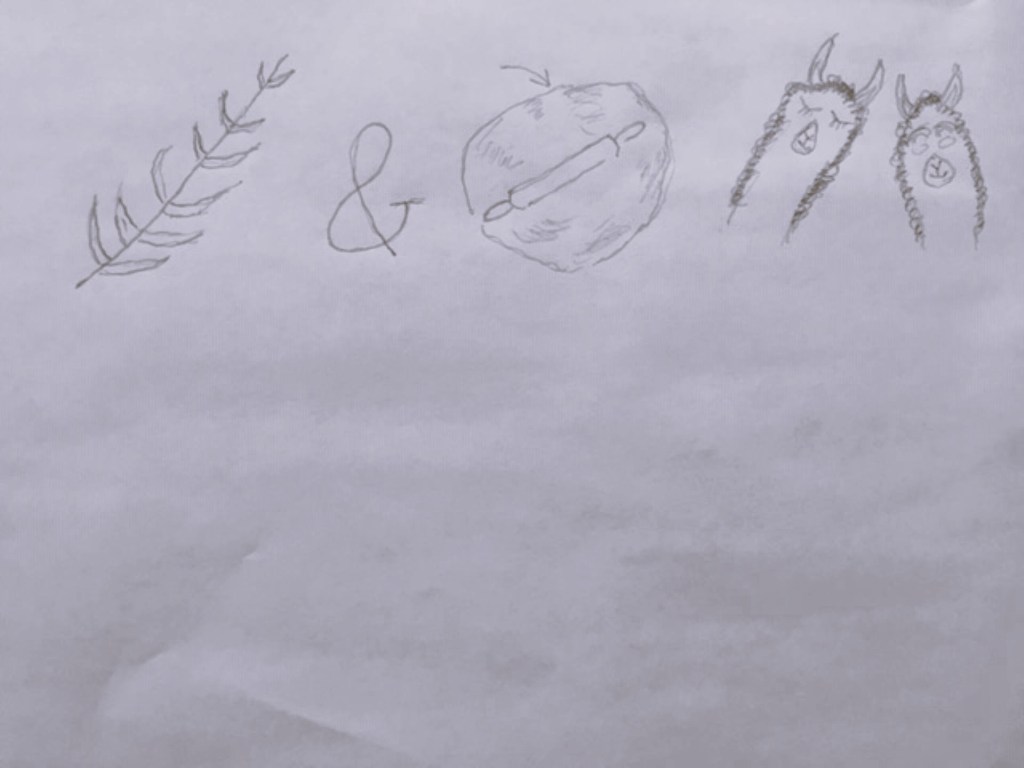
I should say that the crude drawing of our Zem is an original work by me, using Microsoft Paint. It’s definitely not made by something called Image Creator. Recently, Windows 11 added Image Creator to Paint, which claims to be able to create drawings just by clicking on the AI icon—which appears almost everywhere nowadays.

It’s getting harder to ignore, but I did. That explains why my drawing of Zem looks like it was made by a 4-year-old child. It’s a form of protest against AI. I’m not sure how long I can hold out. I suspect that AI will eventually learn to disguise itself as something completely innocent without formally introducing itself as AI.

Anyway, like most people, it was challenging to find a new home other than the landfill for Zem. It turns out there is an informal underground railroad leading to new homes for Zem. Zem can be recycled, or at least some parts of it can be repurposed, which don’t include going back into mattress production.

And, there are places like Salvation Army, Goodwill, and homeless shelters which may publicly refuse to take Zem—but then not always stick to the rules on the signs. The websites may say they won’t adopt Zem, even if it doesn’t have a port wine stain on its face. On the other hand, there are circuitous, by word of mouth only code talkers who guide you (sometimes from half-closed doors) to what “could” be a new home for Zem, but you didn’t hear it from them. That rhyme was unintentional, but it worked.

The process is a little like the old TV show “Hogan’s Heroes,” in which Stalag 13 outwardly looked like a prison camp, but contained cleverly disguised nooks, crannies, and tunnels which allowed trips to the Dairy Queen if inmates were so inclined.

It turns out Zem might have a new home—but you didn’t hear it from me.

Pooboo: Our New Exercise Bike

We just got our new Pooboo exercise bike, model D518M. I don’t know why it’s called “Pooboo.” It replaces our old exercise bike, which I’ve called the Anti-Peloton in a previous post.

The Pooboo came in a big box, and it’s worthwhile to figure out how to turn it upside down. That way you can easily slip the box up and away from the bike.

The owner’s manual starts with a scary diagram of the parts, which made me think it would be difficult to assemble. Although there are only 5 pages for assembly, it took me 3 hours to put it together. But that’s just me.

The bike got mostly positive reviews, although there were a fair number of questions about why the seat has a hole in it. Although it’s a fair question, all I can tell you is that none of my important anatomy got stuck.

We could have done without the fancy harnesses on the pedals, but they’re easy to adjust to get them out of the way.

And the pulse monitor (called the “electronic watch”) works fine. There’s also a water bottle (called a “kettle holder” in the manual), but I couldn’t find the screws to install it—nor could I find a good reason to install it because I think it’s good exercise to take the stairs and get a bottle of water from the fridge.

We’re going to give the Pooboo a good workout to decide whether the purchase was a Booboo. And if you find out why it’s named Pooboo, let me hear from you.

Progress on the Single Leg Sit to Stand Exercise

Well, it has been since late July since I first tried the single leg sit to stand exercise. Recall the videos of that effort? I couldn’t really do much except collapse in the chair.

I’m doing better lately but it’s hard to figure why. I haven’t really been practicing that much. You’ll notice that I’m using a throw to give myself a little extra height to make it less arduous.

A Game of Darts in Frankenstein Movies

I just saw the 1939 film “Son of Frankenstein” on Svengoolie last night. There was a double feature, but I didn’t see the second movie.

I’m anything but a movie reviewer and all I’m going to do is point out a parody of the dart throwing scene between Wolf Frankenstein and Inspector Krogh in “Son of Frankenstein” of the scene in the 1974 movie, “Young Frankenstein” starring Gene Wilder as the son of Frankenstein.

The dart throwing scenes are similar enough in both films to make me laugh. The comedic effect in “Young Frankenstein” of Inspector Kemp (played by Kenneth Mars) slapping his wooden arm around and sticking the darts into it is immediately obvious. While somewhat overshadowed by the “Son of Frankenstein,” melodrama, I couldn’t help but notice the similar behavior of Inspector Krogh (played by Lionel Atwill) goofing around with his wooden arm as well.

You can compare the YouTube dart throwing scene (see below) in “Young Frankenstein” with that of the last few minutes of the “Son of Frankenstein” in the scene starting about 1 hour 32 minutes in on the Internet Archive full movie.

I’m only sorry that I’m not up to the task of comparing either film to the original novel on which all the Frankenstein movies were more or less based: “Frankenstein; or, the Modern Prometheus,” written by Mary Shelley. I never read it. I skimmed the Wikipedia article about it. The section about the novel’s reception finishes with the idea that the novel asks fundamental questions about why we’re here and what our purpose is. Has anyone ever answered them?

A game of darts, anyone?

Thoughts on the Big Mo Pod Show “Funkin’ Down the Highway”

This is a post about the Big Mo Pod Show we heard last night on the KCCK FM radio dial 106.9. Incidentally, the KCCK fund drive was enormously successful this year, earning $100,000 in donations, according to Big Mo (aka John Heim) himself.

One item is the cover by Buddy Miles of the song “Tobacco Road.” This rendition was different from performances by other artists. Big Mo liked it and so did I. I did a little web search on it because I couldn’t catch all the lyrics. It was originally done by John D. Loudermilk in 1960. Miles’ version is essentially the same.

What interested me even more about “Tobacco Road” are the associations I have about it with specific literary works. I’ll admit I’ve never read nor seen the film adaptations of Erskine Caldwell’s books, “Tobacco Road” and “God’s Little Acre.” But one of my favorite short stories by James Thurber is “Bateman Comes Home,” which was published in a collection entitled “The Thurber Carnival,” in a hardcover edition in 1945. You’ve got to read it to get a sense of how comical the parody is of the regional dialect used in Caldwell’s novels. In fact, Thurber himself gives the game away about his intent in writing “Bateman Comes Home” by adding a wry comment as a subtitle:

Written after reading several recent novels about the deep south and confusing them a little—as the novelists themselves do—with “Tobacco Road” and “God’s Little Acre.”

He also adds another comment at the end of the short story: “If you keep on long enough it turns into a novel.”

The other thing I noticed about the podcast last night is that one of the songs which was not included in the list, “Joliet Bound,” was performed by an artist I haven’t heard of, the Reverend Shawn Amos, who is no relation to me, of course. But my background as a psychiatrist made me take special notice of details about his family, one of which is that his mother, Shirl-ee Ellis, a singer herself, had been diagnosed with schizoaffective disorder. Sadly, she eventually died by suicide. Shawn Amos is also the youngest son of the Famous Amos chocolate chip cookie founder, Wally Amos (again, no relation), although I’ve gotten a lot of friendly ribbing about that.

The song “Joliet Bound” is about a guy who expresses that he’s wrongly accused of killing a man over a woman and is on his way to Joliet prison in Joliet, Illinois. The Joliet Prison is a tourist destination nowadays and has other distinctions attached to it. It was featured in the 1980 film, the Blues Brothers. There were some famous inmates there, among them John Wayne Gacy, who was once evaluated and diagnosed with antisocial personality disorder by psychiatrists at The University of Iowa in 1968 as described in Dr. Donald Black’s book, “Bad Boys, Bad Men: Confronting Antisocial Personality Disorder (Sociopathy).”

Congratulations KCCK Radio!

Once More Unto the Breach of the Zinus Bed Frame Assembly

We had yet another opportunity to put together a Zinus platform bed, this time for our King size mattress.

That’s right; we didn’t learn from our experience a couple of years ago. We did it because we got rid of the old bedstead, the disassembly of which led to my left ankle injury in June. Since then, I’ve either slept on the mattress which was on the floor or on a lumpy hotel bed.

Actually, the assembly wasn’t all that bad. It did take longer than I expected, given that we went through this routine with the other bed in 2022. Again, we had the benefit of that handy little ratchet hex head wrench although I did get a charley horse in my right thumb after we got the frame assembled.

The bed was delivered in the early afternoon, I don’t remember exactly when because I was delirious by the time we finished a little after 4:00 in the afternoon. Some reviewers said one person could finish the job in a half hour. You know, time gets distorted when you’re delirious from overuse of a little ratchet hex head wrench.

When all is said and done, the choice to go with the DIY knock down furniture again still made sense. It can cut the total cost by hundreds of dollars for a similar product shipped preassembled from XpensiveStuffStore.

But a lot of sweat equity is involved, especially when the parts have confusing labels. For example, the 4 sides were labeled Left (L) and Right (R) but there didn’t seem to be any way to tell what the frame of reference was. Was it the head or the foot of the bed? Why did we end up putting both R and L sides on the same side of the bed? And why did that even work?

Don’t answer that question unless you have assembled this frame and know the correct answer. I still don’t.

It took more time and effort than it should have because I forgot to postpone tightening all screws until all the parts were screwed together. If you decide to do your own assembly and start getting the idea that a sledge hammer should have been included in the hardware box—loosen all the screws.

What comes to mind is the phrase “Once more unto the breach,” a phrase from Shakespeare, about which I know almost nothing. I think the whole quote is “Once more unto the breach, dear friends, once more or hang up the hex head wrench before you get a charley horse.”

Thoughts on X-Files Episode “Sunshine Days”

I saw the X-Files episode “Sunshine Days” again last night. It’s the second time I’ve seen it. It’s about a guy who calls himself Oliver who has telekinetic power and who yearns for a father-son relationship with a paranormal researcher (Dr. Reitz) who studied him when he was a kid named Anthony.  

The set of an old 1970s TV show “The Brady Bunch” was used. It was something Oliver created using the power of his mind. As a child, he used to insist that he and Dr. Reitz watch the show regularly. In his mind, it was the perfect family he always wanted but never had.

Anyway, Oliver (Anthony) endangers his life when he uses his telekinetic powers as an adult. He can’t control them and nearly dies from using them. He ends up near death in the hospital after showing the FBI agents including Scully and Doggett (who replaced Mulder) his miraculous ability. The agents and Dr. Reitz are ecstatic because they think it will change the world and humanity.

But after they realize the life-threatening nature of Oliver’s powers, they all agree, including Dr. Reitz, that Oliver should never use them again. Dr. Reitz even tells Oliver (who now wants to be called Anthony) firmly that he can’t use his power, to which Oliver replies that he can’t be alone. Then, Dr. Reitz tells Oliver that he’ll never have to be alone because he’ll always be with him.

A lot of fans hated it because it was the penultimate episode before the final show of the 9th and final season of the X-Files. It was one of the many Monster-of-the-Week (MOTW) shows that had nothing to do with the extraterrestrial mythology.

I liked the MOTW episodes better the ET/conspiracy shows, and Sunshine Days is one of my favorites. However, I never watched The Brady Bunch and the whole perfectly happy and well-adjusted family idea was ridiculously implausible in my opinion.

I doubt there is such a thing as a perfect family. Mine certainly was not and look how well I turned out. Even in nature, there are examples of savagery that can make you doubt the ultimate wisdom of whoever or whatever is in charge of evolution.

For example, birds can be exquisitely cruel. Cowbirds lay their eggs in the nests of completely different species of birds, where the cowbird chicks bully their weaker nestlings. And surely just about everyone has seen the pitiless pecking of the larger of the two shoebill chicks in which the parents calmly watch as the smaller chick gets stepped on, pushed out of the next and essentially murdered by the bigger chick. This is because the parents know there is not enough water for both.

Even the song “A Boy Named Sue” is based on the natural law of survival of the fittest, which has nothing to do with kindness. Incidentally, that song came out in 1969, the same year that The Brady Bunch show began.

On the other hand, the reconciliation of Anthony with Dr. Rietz always fills me with joy.

The Incredible Shrinking Headshrinker

Last week we saw the 1957 movie “The Incredible Shrinking Man” on the Svengoolie show on the MeTV channel. We’ve never seen it before and it actually got pretty good reviews back in the day. The main character, Scott Carey, was played by Grant Williams. You can watch the movie for free on the Internet Archive.

According to some interpretations, the story uses the metaphor of diminishing size to highlight the diminishing role of masculinity in American society in the 1950s or human notions in general about one’s self-worth in society.

It got me thinking about how the challenges of adjusting to retirement as a process has been (and still is to some degree) for me. I started out with gradual reduction of my work schedule in the form of a phased retirement contract. It was difficult.

I was reminded of how difficult it was to slow down, especially as a teacher of residents and other health care trainees, when I was going through some old papers after the recent move to our new house. They included teaching awards I’d received over the years.

I was struck by how small my self-perceived role in psychiatry and medicine has gradually become in the last few years. I’ve been shrinking, similar to Scott Carey. In fact, I’m a shrinking headshrinker.

I don’t want to spend too much time ruminating about what retirement means to me. I think it’s a very common response to perceive the world gets smaller when you retire.

It doesn’t help much to intellectualize about shrinking in this way. Scott Carey eventually accepted his diminishing stature, even to the point of disappearance. Grief about this kind of loss is normal, although I’m realizing that grief might never completely disappear.