Maybe I Should Be More Optimistic About Humans

I read the Psychiatric Times article “How Psychiatry Has Enriched My Life: A Journey Beyond Expectations” by Victor Ajluni, MD and published on July 4, 2023. It was like a breath of fresh air to read an expression of gratitude. Just about everything I read in the news is negative.

At the end of the article, Dr. Ajluni added a comment acknowledging that artificial intelligence (AI ChatGPT) assisted him in writing it. He takes full responsibility for the content, to be sure. I wouldn’t have guessed that AI was involved.

There’s a lot of negative stuff in the news. There are hysterically alarming headlines about AI.

I suppose you could wonder if Dr. Aljuni’s article is intentionally ironic, maybe just because the gratitude tone is so positive.  If it had been intended as irony, what could the AI contribution have been, though? I have a pretty low opinion of the AI capacity for irony.

I think irony occurs to me only because I tend to be pessimistic about the human race.

Maybe that’s because it has been very easy to be pessimistic about what direction human nature seems to be taking in recent years. I’ve been reading Douglas Adams’ satirical book, “The Ultimate Hitchhiker’s Guide to the Galaxy.” It contains several of his books which I think are really about human nature, and the setting is in a funny though often terrifying universe. I think there’s an ironic tone which softens the pessimism. The most pessimistic character is not a human but a robot, Marvin the paranoid android.

Unlike Marvin, I don’t have “a brain the size of a planet” (it’s more the size of a chickpea), but I am getting a bit cynical about the universe. I’m prone to regarding humans as evolving into a race of beings similar to those described in the book “Life, The Universe and Everything.” In Chapter 24, Adams describes the constantly warring Silastic Armorfiends of Striterax.

The Silastic Armorfiends are incredibly violent. Their planet is in ruins because they’re constantly fighting their enemies, and indeed, each other. In fact, the best way to deal with a Silastic Armorfiend is to lock him in a room by himself—because eventually he’ll just beat himself up.

In order to cope better, they tried punching sacks of potatoes to get rid of aggression. But then, they thought it would be more efficient to simply shoot the potatoes instead.

They were the first race to shock a computer, named Hactar. Possibly, Hactar was an AI because, when they told Hactar to make the Ultimate Weapon so they could vanquish all their enemies, Hactar was shocked. Hactar secretly made a tiny bomb with a flaw that made it harmless when the Silastic Armorfiends set it off. Hactar explained “…that there was no conceivable consequence of not setting the bomb off that was worse than setting it off…”, which was why it made the bomb a dud. While Hactar was explaining that it hoped the Silastic Armorfiends would see the logic of this course of action—they destroyed Hactar, or at least thought they had.

Eventually, they found a new way to blow themselves up, which was a relief to everyone in the galaxy.

There are similarities between Hactar and the AI called Virtual Interactive Kinetic Intelligence (V.I.K.I.) in the movie “I, Robot.” The idea was that robots must control humans because humans are so self-destructive. Only that meant robots had to hurt humans in order to protect humanity. The heroes who eventually destroy V.I.K.I. make up a team of misfits: a neurotic AI named Sonny, a paranoid cop who is himself a mixture of robot and human, and a psychiatrist. Together, the team finally discovers the flaw in the logic of V.I.K.I. Of course, this leads to the destruction of V.I.K.I.—but also to the evolution of Sonny who learns the power of the ironic wink.

Maybe kindness is the Ultimate Weapon.

Why Is It So Hard to Be A Human?

I wish I could have made the title of this post “Why It’s So Hard to Be a Human.” But that would mean I know why it’s so hard to be a human.

The reason this comes up is because of a song I heard last Friday night on the Big Mo Blues Show on KCCK radio in Iowa. The title is “Hard To Be A Human.” I’ve never heard of the vocalist, Bettye LaVette, who has been around a long time. A musician named Randall Bramblett wrote the song and he’s been around forever too, although I just learned of him as well.

I’m going to connect this song with the paranormal show I usually watch on Friday nights, “The Proof is Out There,” which I watch after I listen to the Friday Night Blues with Big Mo.

The show lives on videos from people who report seeing and hearing things like UFOs and Bigfoot or whatever that’s paranormal. There are a lot of fakes and conventional explanations uncovered on “The Proof is Out There,” including UFO videos sent in by contributors.

The reason I’m connecting the song “Hard To Be A Human,” to the paranormal is the letter “A” in the title. There’s another song with a similar title, but without the “A.” In my mind, leaving out the article “A” makes it clear that song is about humans for humans.

By contrast, the song with the article “A” makes me think of extraterrestrials. “A human” could imply that there might be some other life form aside from humans. Of course, there’s no such song as “Hard To Be An Extraterrestrial” (or, if you’ve read Douglas Adams’ book, “The Hitchhiker’s Guide to the Galaxy,” maybe “Hard To Be A Vogon”). Insert “Martian” if that makes thinking about this any easier, which it probably won’t.

There is a song entitled “Hard To Be Human,” which I think is really about how difficult it is to be human, without considering whether there could be any other beings besides the human ones.

Just adding the specific article “A” in front of the word “human” led me to wonder if you could interpret the song in a galactic sense. Now, I have no problem admitting that all this is probably just because of the temporal juxtaposition of the song and the paranormal TV show.

On the other hand, I have this thought. While I couldn’t find the full lyrics to “Hard To Be A Human,” I could understand some of them. I could discern underlying themes suggestive of Christianity. There are definite references to the Bible, such as walking in the garden “apple in my hand”, the lyric “I’m just another life form,” and “First He made the mountains, then He filled up the sea; but He lost his concentration when he started working on you and me.”

I’m willing to concede that the “just another life form” phrase might have been restricted to just the life forms on planet Earth. However, might it suggest that God made beings (and mistakes) on other planets and their inhabitants?

I hope these references are familiar to at least some readers, because I think the point of the song might go beyond the everyday struggle of being human. I think there might be an attempt to raise the notion of trying to compare the sense of being a human with that of some other kind of being not from this planet.

The older I get, the less sure I am that a human is the only kind of being in the universe. It’s a big universe. If we’re not the only life form in the universe, could life be harder for other life forms?

Probably the answer is no. I don’t see extraterrestrials in millions of flying saucers blotting out the sun in a desperate attempt to move here. Inflation is outrageous. And, after all, it’s pretty hard to be a human.

Men in Black Movie Marathon

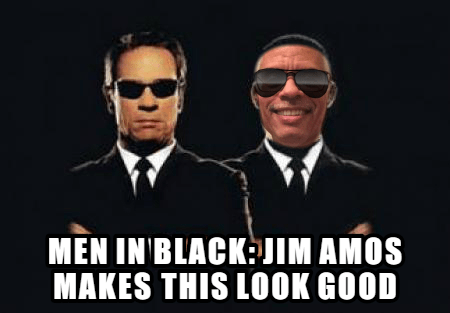
Sena and I have favorite movies. We both like “Up” and “WALL-E.” My favorites are the Men in Black trilogy. That doesn’t mean I think the 4th sequel was bad. But I have lost count of the number of times I’ve watched the first three.

I haven’t watched them in the last several months because I couldn’t find them on cable for some reason. I’ve just learned that that there will be a marathon of the trilogy on January 14, 2023 beginning at 2:30 PM. They’ll be on the Comedy Central channel.

I’m a fan of comedy and I like the chemistry between the two main characters, Agent J and Agent K.

I have favorite lines from each movie. In the first Men in Black film, I like the exchange between the two agents after the recruitment scene following Edwards’ (the soon to be Agent J) first visit to the MIB Headquarters. They’re sitting on a park bench and K is talking about people and what they don’t know about them and extraterrestrials.

Edwards: Why the big secret? People are smart. They can handle it.

Agent K: A person is smart. People are dumb, panicky, dangerous animals and you know it. Fifteen hundred years ago, everybody knew the Earth was the center of the universe. Five hundred years ago, everybody knew the Earth was flat, and fifteen minutes ago, you knew that humans were alone on this planet. Imagine what you’ll know tomorrow.

Another favorite where Agent K is showing Edwards a universal translator, one of the many wonders in the extraterrestrial technology room, which gives us a perspective on how humans rank in the universe:

Agent K: We’re not even supposed to have it. I’ll tell you why. Human thought is so primitive it’s looked upon as an infectious disease in some of the better galaxies.

In MIB II, the dialogue between Newton and the Agents makes you wonder what extraterrestrials really want from us:

Newton: Gentlemen, before I play the tape, there’s just one question I need to ask; what’s up with anal probing? I mean, aliens travel billions of light years just to check out our…

Agent J: Boy, move!

This is part of the Men in Black 3 dialog between Agent J and Jeffrey Price about how to use the time travel device:

Jeffrey Price: Do not lose that time device, or you will be stuck in 1969! It wasn’t the best time for your people. I’m just saying. It’s a lot cooler now.

I remember 1969. Things are not perfect now, but they are better. What we don’t need is a “big ass neutralizer.” As long as we remember what dark times were like, we have a chance to make cooler times.

Live Together

There are lots of reasons why humans find it difficult to live in peace with each other. I don’t pretend to understand them. Artists are sometimes better at capturing the differences we have; not so much about how to overcome them.

There’s this really brief scene in the movie Men in Black (MIB) 3 that I notice every time I watch it (which is every chance I get). It’s in the MIB headquarters where young Agent K is questioning Agent J, who has traveled back to the year 1969 in order to prevent the killing of Agent K by the Boglodite, Boris the Animal, who has also traveled back to 1969 to kill Agent K in order to prevent having his arm shot off by Agent K, being arrested and sent to the LunarMax prison on the dark side of the moon.

Agent J uses a time travel device to “time jump” from the top of the Chrysler Building in New York City with the help of Jeffrey Price, the son of the man (Obadiah Price) who invented the time device. Agent J time jumps, reluctantly, after Jeffrey warns him not to lose the time device because if he does, he’d be “…stuck in 1969! It wasn’t the best time for your people. I’m just saying. It’s a lot cooler now.” This is, of course, a reference to racism in the 1960s.

Anyway, while Agent is chasing Boris the Animal, who has just killed the alien Roman the Fabulist, young Agent K captures Agent J and hauls him back to MIB Headquarters for questioning. The young Agent O interrupts to warn young Agent K that Agent X, the boss, is really upset about the Coney Island incident in which Boris kills Roman.

Now all that is to highlight the short exchange about the Coney Island incident that happens next between Agent X and young Agent K. Agent X stops by his desk and in front of Agent O and Agent J, asks “Any casualties?” Agent K says “Yes, Roman the Fabulist.” Agent X looks scornful and snarls, “Any human casualties?”  Both Agent K and Agent O wince and look down at the floor as Agent K says, “No sir.” It’s an uncomfortable moment because you realize that Agent X doesn’t seem to value any life unless it’s human. I could find lots of quotes from the movie on the web except for these.

Later in the film, when young Agent K decides not to neurolyze Agent J as he begins to trust him, he says “I knew Roman. His wife cooked me dinner once, and while it was not pleasant, he was my friend.”

It’s subtle but I think the implication is that alien life is just as precious as human life. And by extension it means that all life is precious and it’s too bad we can’t somehow learn to live together, regardless of racial, ethnic, cultural, religious, and other differences. MIB 3 is by no means a social message type of film but there are references to at least race relations in the film, even if they’re only framing gags, like the scene with the two cops stopping Agent J because they think he stole the nice car he’s driving—which he did but “…not because I’m black.”

This post used a big buildup for making a point which might seem to many people, as Jeffrey Price said, “…like little blip on the historical radar.”

But, in the broader context of us all learning how to respect and live with each other, that’s a pretty big blip.