Thoughts on Down Time Activities for Land Survey Technicians

I was just thinking about the old-time land survey crews. When I was getting on the job training as a survey technician, the typical land survey crews were at least 2-3 persons. One rodman, one instrument man, and a crew chief who organized the job, which could be property or construction jobs.

Nowadays, you get by sometimes with one man doing the jobs using a theodolite that measures angles and distances. You don’t always need a physical measuring tape; you can use something they call “total stations.”

It’s cheaper for engineering companies to use one man survey outfits. On the other hand, one disadvantage is the lack of mentoring for learners who want to become land surveyors or civil engineers.

Mentoring from surveyors on the survey back in the day not only taught me such skills as how to throw and wrap a surveyor’s steel tape—it also taught me how to work well with others as a team. Of course, this was transferrable to working on the psychiatry consultation-liaison service in a big hospital as well.

It’s well known that playing cards in the truck while waiting for the rain to stop was an essential skill. I don’t know how they manage downtime nowadays. We didn’t play cards on the consultation service during downtime, partly because we didn’t have much downtime.

Anyway, as I mentioned in a recent post, we played Hearts in the truck on rain days. I always sat in the middle. At the time, I was a terrible card player in general. It was a cutthroat game and I had trouble remembering which cards had been played.

When you consider that the strong suit of engineers and surveyors is math ability, you’d think that survey crews would have figured out a way to play Cribbage during downtime. You can have a Cribbage game with 3 or 4 people although I’ve never played it that way. If there are 3 players, it can still be cutthroat.

The one problem I can see is that, the guy sitting in the middle would have to set the board on his lap. You’d almost need a special, custom-made board which would have a space for placing the cards to keep track of what’s been played. I think that might have made things easier for me.

The other drawback to one man survey crews is that pretty much the only card game you can play is solitaire.
The Dirty Dozen on Delirium in WordPress: A Shortcode Presentation

When I was a consultation-liaison psychiatrist I taught trainees in different ways. One of them was what I called the Dirty Dozen slide sets. They were on various basic topics that are important for psychistrists to know. I tried to put the most important points on only a dozen powerpoint slides.

After I started blogging about C-L Psychiatry around 13 years ago, the WordPress blogging platform started offering a way to post slide presentations using what is called shortcode. Presumably, you didn’t really have to know anything about coding language but the instructions weren’t very helpful.

I think I started trying to make slides using shortcode shortly after it was first introduced around 2013. I had to contact WordPress support because I couldn’t learn shortcode. A lot of bloggers had the same problem.

I think my main reason for getting interested in shortcode was so I could cut down on how many powerpoint slides I had to convert to images, which can take up a lot of space on a blog site after a while.

Anyway, in the past few days I tried to pick up the shortcode but couldn’t get the hang of it again. I finally found a WordPress help forum in which I found a blogger’s solution. She made it so clear.

Anyway, the Dirty Dozen on Delirium is below. A few pointers: click in the lower right hand corner of the slide if you want to view the slides full size. Use the directional arrows on your keyboard to click through the slides. You can also just use the arrow handles on the slides if you don’t want to see them full size. . When you click the URLs on the delirium websites, right click and open them in a new tab.

This slideshow could not be started. Try refreshing the page or viewing it in another browser.

Another Blast from the Past

Today is Labor Day, and I was looking at some of my old blog posts from my previous blog The Practical Psychosomaticist. I found one that I think I haven’t reposted on my current blog called “Going from Plan to Dirt.”

It’s a funny post, at least I think so. It draws a comparison between blue collar and white collar work, similar to what I did the other day (“Why Can’t I Wear Blue After Labor Day?”).

I wrote it in 2011, when I was on a hospital committee to improve detection and prevention of delirium in the general hospital.

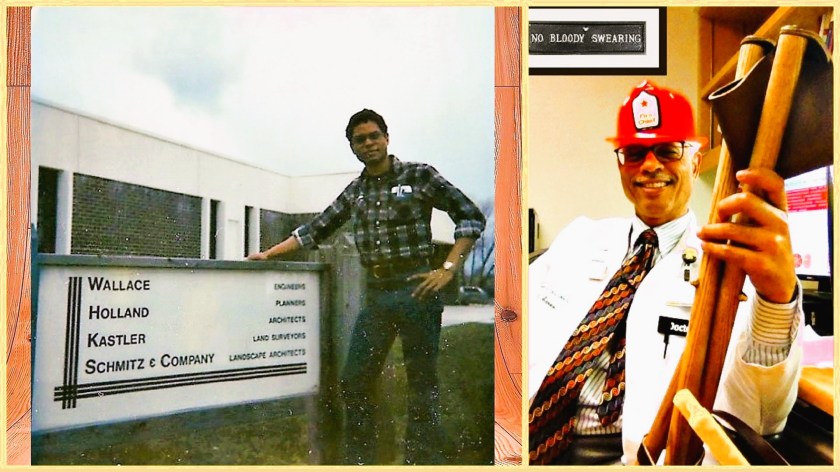
“Our work on the Delirium Early Detection and Prevention Project reminds me of my early formative experiences working as a draftsman and land survey technician starting in 1971 with an engineering company, Wallace Holland Kastler Schmitz & Co. (WHKS & Co.) in Mason City, Iowa. I remember being amazed at how a drawing on paper could be turned into a city street, highway, bridge, or airport runway. They have a website now. I can now find written there what was modeled for me then:

“WHKS & Co. is committed to the continuous improvement of the quality of service provided to our clients.”

Then and now WHKS & Co. worked hard to create the infrastructure that we depend on and then put it into the world in a “safe, functional, and sustainable” way. Out in the field we sometimes joked about how a designer’s drawing was flawed if we couldn’t go from plan to dirt.

It’s common to believe that engineers and land surveyors deal with complex mathematical formulas, structural materials, things instead of people—an applied science in which the emotions and motivations of people play a small role. Nothing could be further from the truth.

I was 16 years old when WHKS & Co. hired me. I had no idea what engineers and land surveyors did, had no experience, and I was at a crossroads in my life. They didn’t hire me because I had any talent or asset they needed. They hired me because they were as committed to the people in the community, not just to things.

And if you think land surveying doesn’t have anything to do with people’s emotions, consider property line disputes. The survey crew I was attached to had been sent out to find the property corners of two neighbors. This involves locating iron pins that mark the corners of the lots that houses sit on. Little maps or “plats” are used as guides and let me tell you, often enough we found the map is not the territory.

Anyway, while we were out there in the back yard of one of the neighbors, they both came outside. One of them was a diminutive elderly lady and the other was a tall, big-boned elderly man. They started arguing about the boundaries of their lots and it got pretty heated. Pretty soon they were yelling in each other’s faces and the lady reached down in the garden in which we were all standing. She picked up the biggest, juiciest rotten tomato she could find and it was clear to us what she planned to do with it. They were both pretty old and neither one of them could move very fast. My crew chief, sensing that something violent was about to happen, moved in between them (a decision I still can’t fathom to this day).

What followed seemed to happen in slow motion, in part because the combatants were so old. The man could see the lady was about to hurl the rotten tomato at him. Ducking must have been beyond his power, probably because of a stiff back. He bent his knees and leaned forward. She cocked the tomato as far back as she could and let fly, screeching, “You’re nothing but an old Norwegian!” My crew chief probably caught a seed or two. Amazingly, the tomato only grazed the top of the man’s head.

I think the altercation took a lot of both of them. They both went back in their houses after that.

It’s not hard for me to see the connection between my past and the present. WHKS & Co. was and still is committed to continuous improvement. And they were and still are all about finding a practical way to do it. If we’re going to improve the quality of care we provide patients and we propose to do it by preventing delirium, we’re going to have to use the same principles that my first employer used. And we’re going to have to be just as practical about how to go from plan to dirt.

We’re still trying to refine the charter for our delirium detection and prevention project, which is a kind of map, really. And even though the map is not the territory, it’s still a necessary guide to remind us of the goal.”

The Thing About Identity

I was searching on the web for something about my co-editor, Robert G. Robinson, MD, for our book Psychosomatic Medicine: An Introduction to Consultation-Liaison Psychiatry, published in 2010.

The reason I was searching for something about him was that I’ve had difficulties finding anything on the web lately about doctors I had worked with years ago and admired—and the search revealed they had died. It has been a little jarring and got me thinking about my own mortality.

My search didn’t turn up any obituary about Dr. Robinson, but I found a couple of interesting items. One of them is, of all things, a WordPress blog item, the About section. It’s dated April 2012. I’ve seen it before. It’s supposedly about a person named Dr. Robert G. Robinson, MD and the only thing on it is his name and affiliation with The University of Iowa Carver College of Medicine. Every WordPress blog has an About section. I have one and I’ve been blogging since 2010.

There’s no entry in the About section for him on WordPress. However, there was another item on the web that looked like it was a blog (It’s another blogging site called About.me), and it was labeled as an About section.  It was a biographical summary of his academic and scientific career. Of course, it was impressive. At first, it looked like he was planning to write a blog, which could have been very educational because he’s an extremely accomplished psychiatrist with a very long bibliography of published articles about psychiatric research, a lot of it about post-stroke syndromes.

But when I looked at the social media links on the WordPress page, it led to a picture of someone who is definitely not the Robinson I know. This person was a “Certified Rolfer.” Remember Rolfing? It’s a form of deep tissue massage developed in the 1970s. The Dr. Robinson I know was never involved in Rolfing.

I’m not sure what happened with the WordPress and other blog items, but it looked the WordPress section was a case of mistaken identity. The most recent genuine item on the web about him is a 2017 University of Iowa article about his receiving the Distinguished Mentor Award.

I hope somebody doesn’t get confused by that WordPress mistake.

Then, I happened to come across an article that, at first, I didn’t recognize. The link on the search page listed Dr. Robinson’s name. It’s on the Arnold P. Gold Foundation website for humanism in medicine. The title is “Are doctors rude? An Insider’s View.” It didn’t have my byline under it. It took me a minute, but I soon recognized that I wrote it in 2013. At the bottom of the page, I was identified as the author.

At first, I thought it was a mistake; there was a place for an icon that at one time had probably contained a photo of me, but it was missing. It’s my reflection about a Johns Hopkins study finding that medical interns were not doing basic things like introducing themselves to patients and sitting down with them.

This was not a case of mistaken identity. But I got a little worried about my memory for a few seconds.

Anyway, I was reminded of my tendency to have trainees find a chair for me so I could sit down with patients in their hospital rooms. I later got a camp stool as a gift from one of my colleagues on the Palliative Care consult service. It was handy, but one of my legs always got numb if I sat too long on it. It broke once and I landed flat on my fundament one time in front of a patient, family, and my trainees. The patient was mute and we had been asked to evaluate for a neuropsychiatric syndrome called catatonia. The evidence against it was the clear grin on the patient’s face after my comical pratfall—and because of the laughter that we could see but not hear.

One of the points of this anecdote is that it’s prudent to be skeptical about what you see on the internet. The other point is that parts of your identity can hang around on the web for a really long time, so it’s prudent to be skeptical about how permanent your current identity is.

Remembrance of Dr. William R. Yates MD

I was thinking about the Clinical Problems in Consultation Psychiatry (CPCP) learning sessions which was introduced to me by one of my first teachers in the University of Iowa Dept of Psychiatry, Dr. William R. (Bill) Yates.

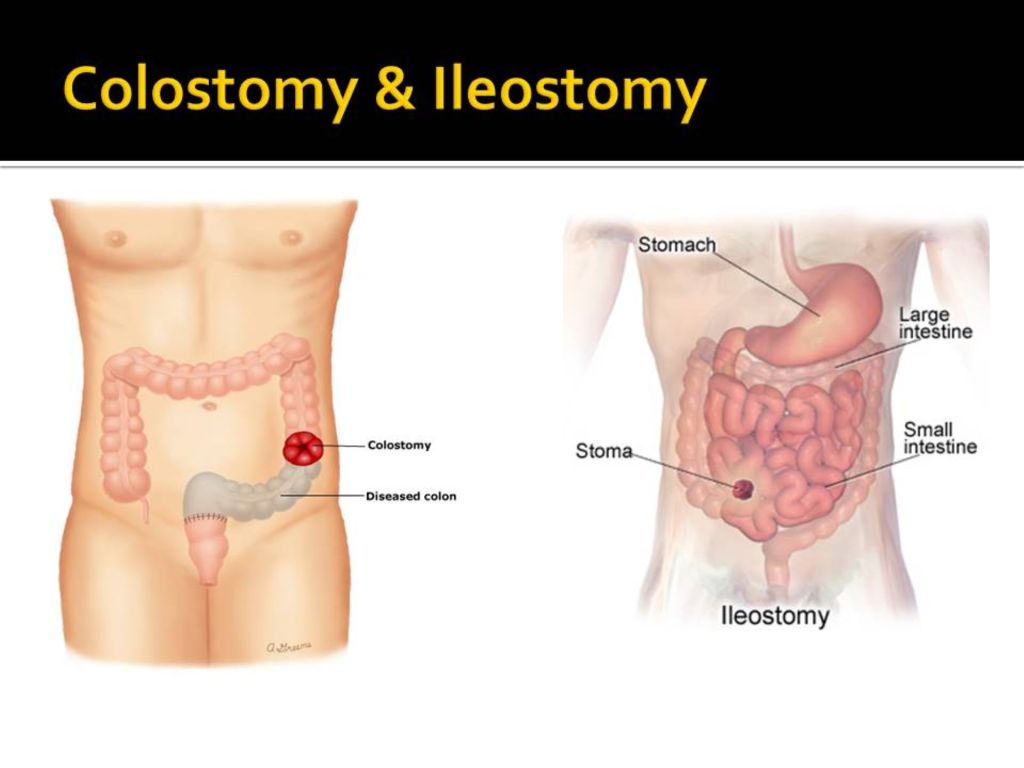
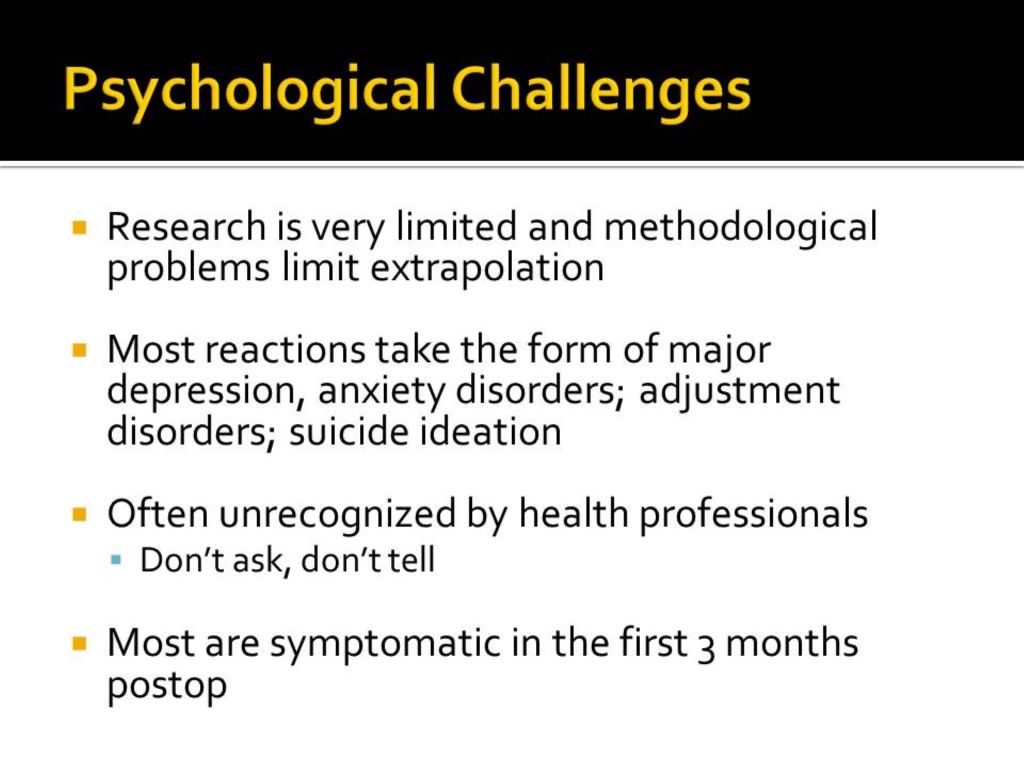
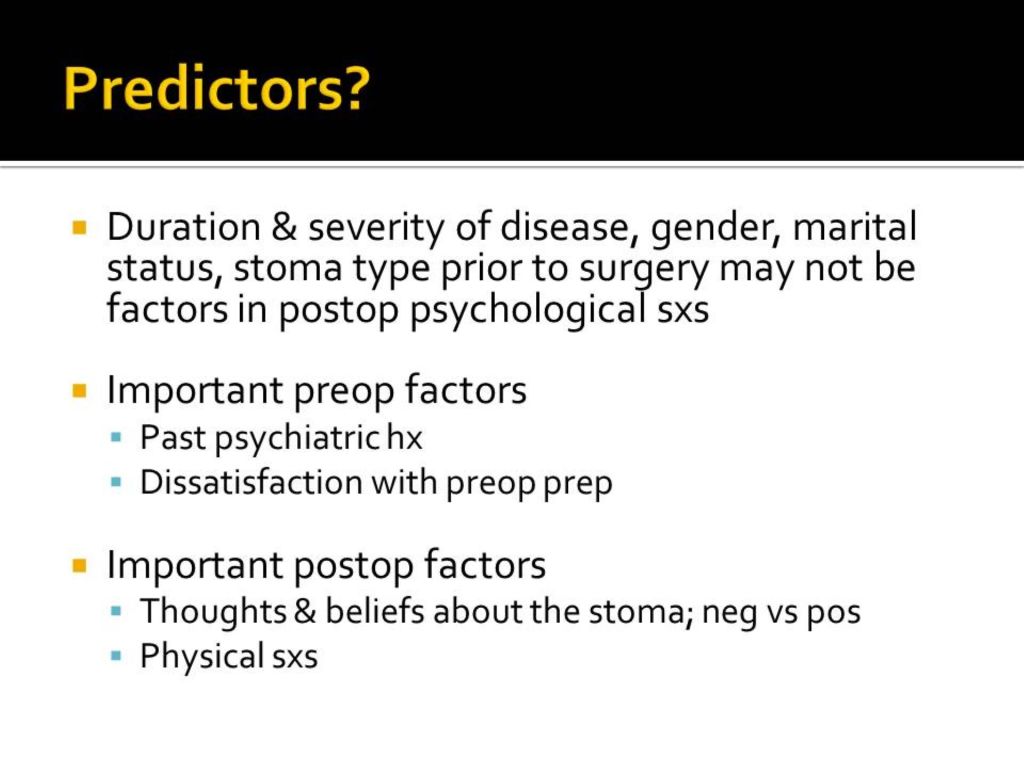
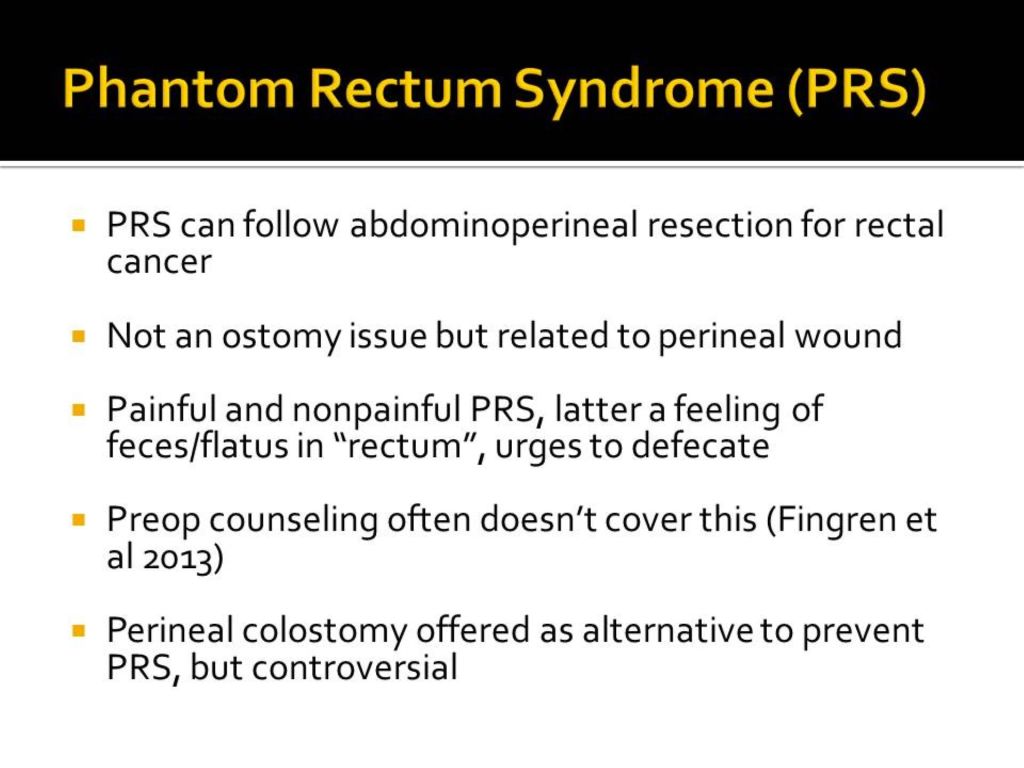
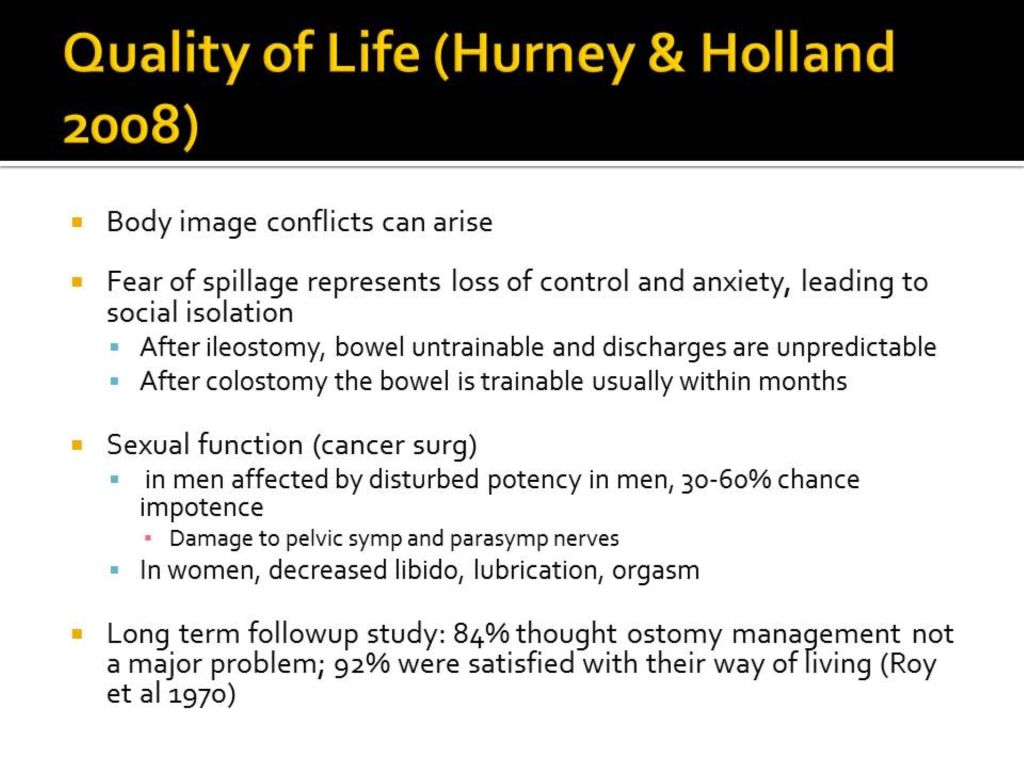
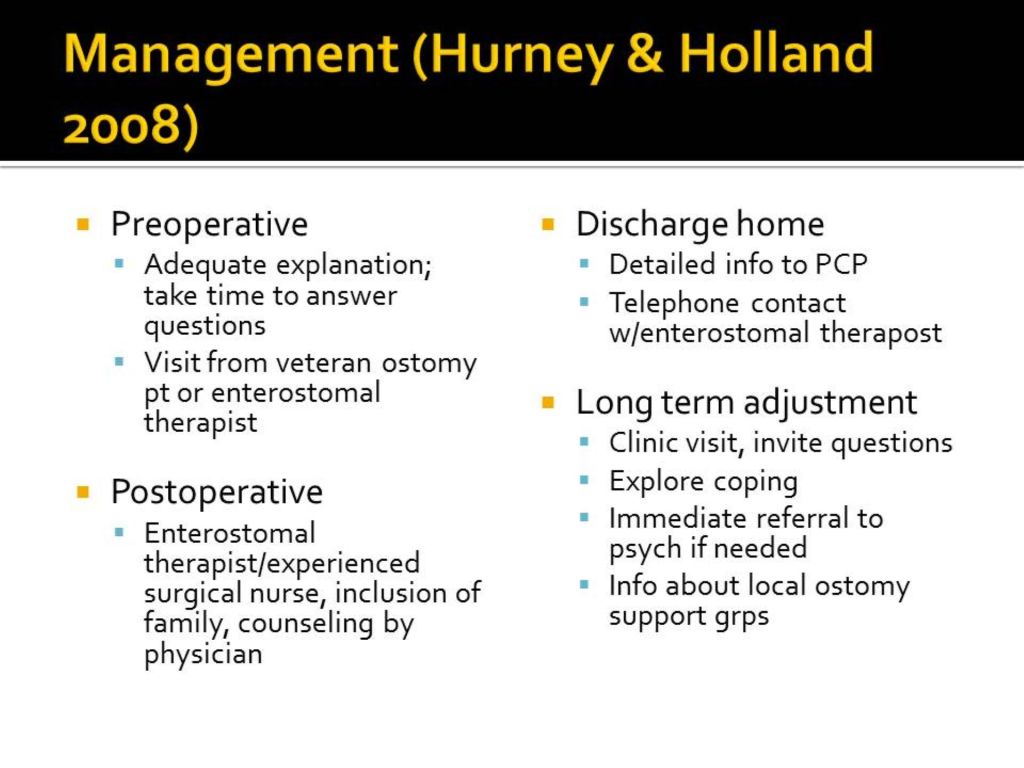
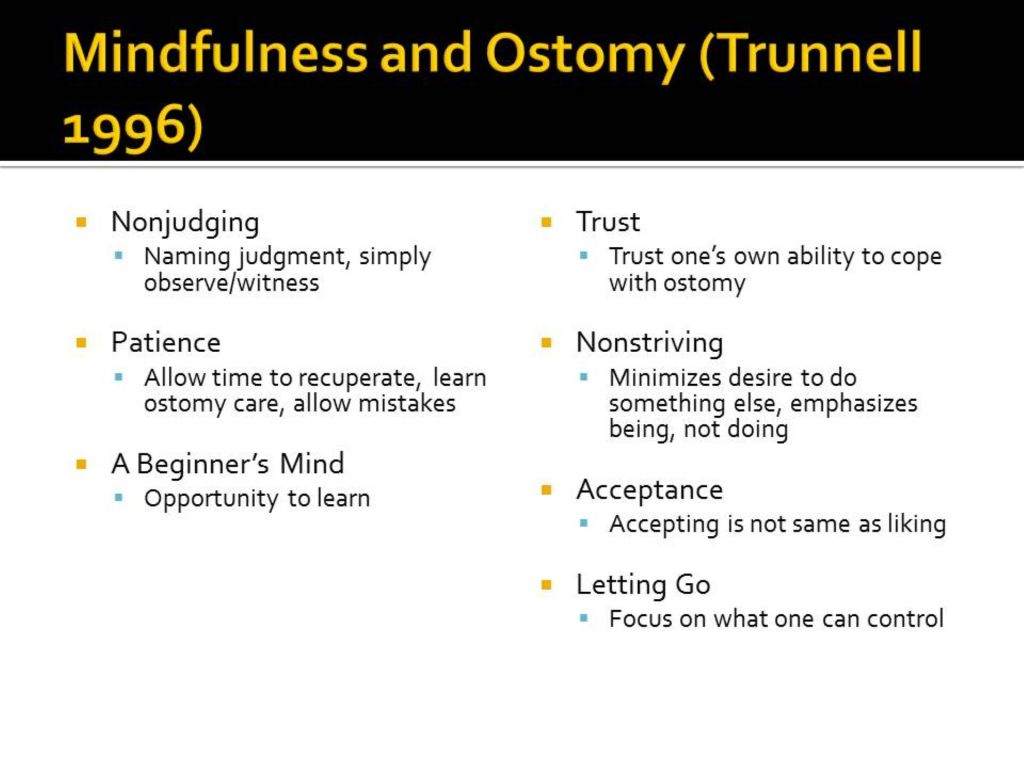
I had originally been thinking of posting one of my own CPCPs that I presented in 2015. It was about the psychosocial adjustment of patients to ostomy.

I searched widely and in vain on the web for any recent information about what Dr. Yates was doing now. I was surprised and saddened to discover his obituary. He died on January 19, 2023 in Tulsa, Oklahoma.

As the obituary says:

He served on the faculty at the University of Iowa for Psychiatry and Family Medicine before becoming Professor and Chair of Psychiatry at the University of Oklahoma College of Medicine in Tulsa. After retiring, he continued to dedicate his time as a volunteer research psychiatrist at OU and the Laureate Institute for Brain Research where he also served on the board of directors. He authored over 100 scientific manuscripts that were published in peer-reviewed journals.

He was an energetic, a great teacher, had a great sense of humor, and was easy to get along with. He published in many scientific journals and taught many trainees. He was an avid bird watcher and his blog Brain Posts highlighting neuroscience research findings is still visible on the web.

He published the paper along with a chief resident on problem-based learning used on the psychiatry consult-liaison service in 1996, the year I graduated psychiatry residency and joined the faculty at The University of Iowa Hospitals & Clinics (Yates, W. R. and T. T. Gerdes (1996). “Problem-based learning in consultation psychiatry.” Gen Hosp Psychiatry 18(3): 139-144.) You can read the abstract for it along with a description of the CPCP at the link above which takes you to my April 19, 2019 blog post “Clinical Problems in Consultation Psychiatry.”

When he was the leader of the psychiatry consult service, we were still using paper charts and his staffing comments were always very brief and encapsulated the assessment and plan succinctly without wasted verbiage—contrasting with my long-winded note.

His remarks about his role at Laureate Institute for Brain Research is still accessible:

“I work part-time as a research psychiatrist for the assessment team at the Laureate Institute for Brain Research. We do research diagnostic assessments for a variety of imaging, genetic and biomarkers studies in mood, anxiety and other brain disorders. I also provide review and analysis of neuroscience research on my blog Brain Posts that can be found at www.brainposts.blogspot.com. You can follow me on Twitter @WRY999. I also use my blog and Twitter feed to share my bird photography images.”

I respected and admired Dr. Yates, as I’m sure many learners did. I will always remember Bill as a gifted scientist and teacher.

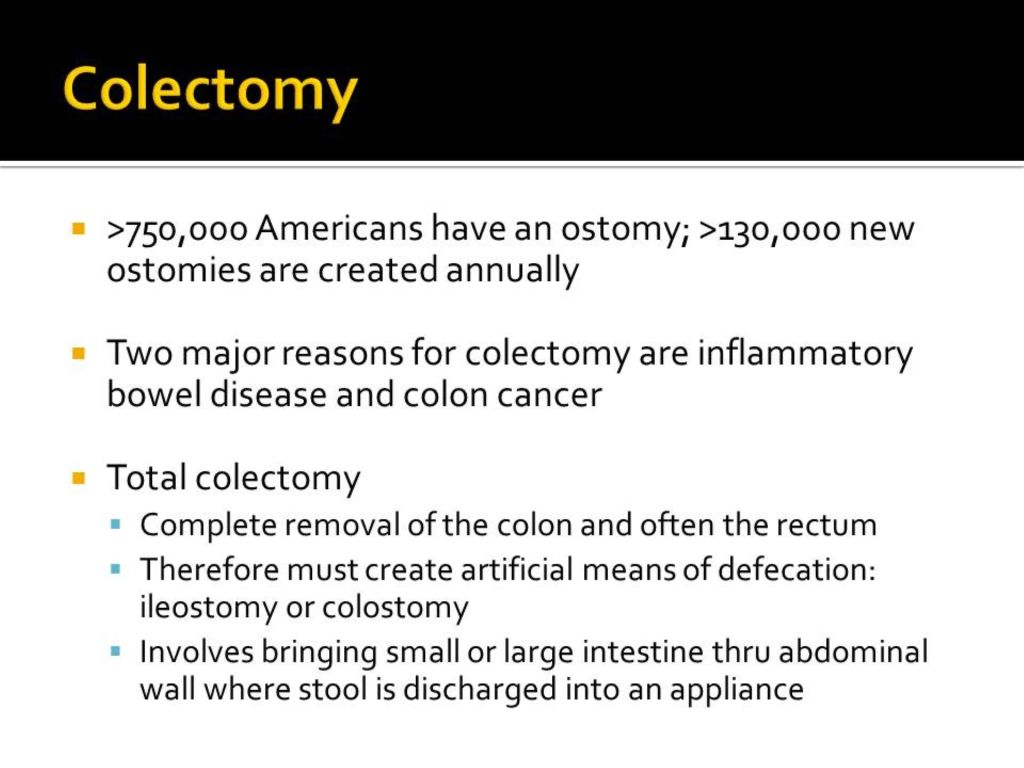
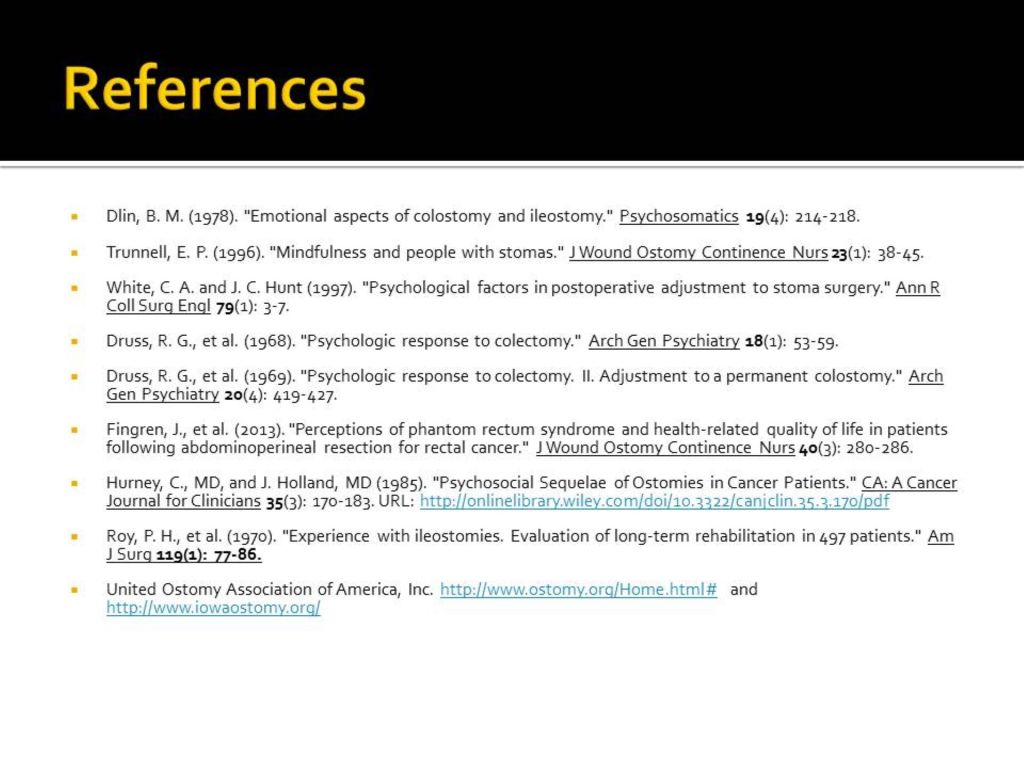
I think a fitting tribute would be to go ahead and post my CPCP on the psychosocial adjustment of patients with ostomy. One of the most interesting articles in the bibliography is how the mindfulness meditation approach to that adjustment can be very helpful. The website United Ostomy Association of America website is also informative.

The presentation is also limited to a dozen slides. I often encouraged learners to keep the number of slides to a managed number so the presentations wouldn’t run too long. I called my slide sets the Dirty Dozens.

Many thanks to Dr. William R. Yates and my condolences to his family.

Catatonia and Delirium in COVID-19

This is just a short post on delirium and catatonia in patients sick with COVID-19, which is important to look out for. There are two references below that are pertinent. One is a case report of a patient diagnosed with both catatonia and delirium in a woman with COVID-19 (Amouri et al). One of the co-authors is critical care intensivist, Dr. Wes Ely, Every Deep-Drawn Breath. Anecdotally, when Dr. Ely gave his talk on delirium at an Internal Medicine Grand Rounds presentation on April 12, 2019, I asked him what he thought should be the role of the consulting psychiatrist’s role in ICU delirium. He seemed to remember me and said we would be helpful in identifying the catatonic variant of delirium. What is ironic about this is that, while benzodiazepines are known to cause delirium, they can treat reverse catatonia in the setting of delirium and other neuropsychiatric and medical conditions.

The other article (Baller et al) is an excellent summary of pharmacological recommendations for delirium associated with COVID-19. There’s a nice pharmacologic treatment algorithm on page 589.

References:

Amouri J, Andrews PS, Heckers S, Ely EW, Wilson JE. A Case of Concurrent Delirium and Catatonia in a Woman With Coronavirus Disease 2019. J Acad Consult Liaison Psychiatry. 2021 Jan-Feb;62(1):109-114. doi: 10.1016/j.psym.2020.09.002. Epub 2020 Sep 15. PMID: 33069380; PMCID: PMC7491455.

Baller EB, Hogan CS, Fusunyan MA, Ivkovic A, Luccarelli JW, Madva E, Nisavic M, Praschan N, Quijije NV, Beach SR, Smith FA. Neurocovid: Pharmacological Recommendations for Delirium Associated With COVID-19. Psychosomatics. 2020 Nov-Dec;61(6):585-596. doi: 10.1016/j.psym.2020.05.013. Epub 2020 May 21. PMID: 32828569; PMCID: PMC7240270.

Hanging In There

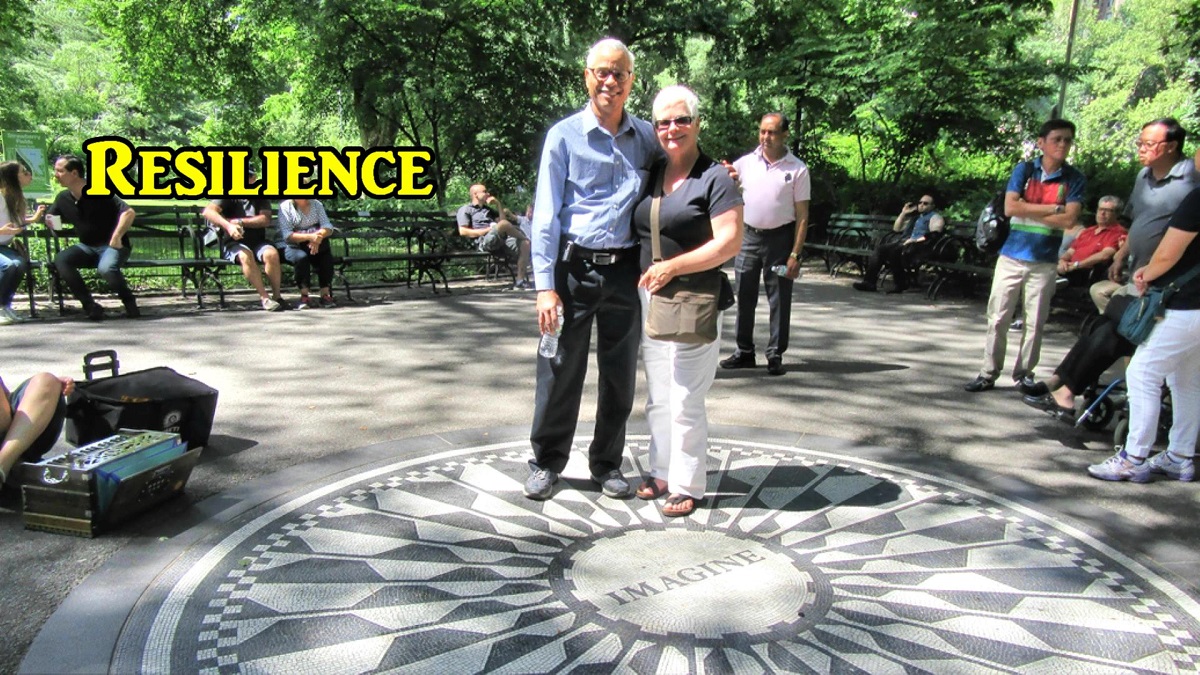
It has been a while since my last post. I’m hanging in there although sometimes it’s difficult to stay optimistic. I’m reminded of the Survivor Tree, the Callery Pear in New York City. You can easily google the story about this tree which somehow survived at Ground Zero after the 9/11 attack on America in 2001. We visited New York in the summer of 2017 and saw the Survivor Tree at the 9/11 Memorial & Museum plaza. It’s hard to believe that was 19 years ago. And now we’re dealing with the Covid-19 pandemic.

I’m still adjusting to my new identity as a retired person. I was reminded of that when I read the recent post “What is your Identity?” on 9/12/2020 by The Good Enough Psychiatrist. She’s resilient and optimistic, traits I admire. I tend to be rigid and pessimistic, especially when I have a lot of time on my hands.

I also need to get out of my head. It’s amazing how easily reminiscence can morph into rumination. Galloping all over the hospital as a psychiatric consultant distracted me from that habit. On the other hand, Sena and I reminisced the other night for quite a while. I was astonished at how much we both recalled about our 42-year long marriage and the adventures and challenges we’ve been through.

Our first house was a challenge. Shortly after we moved in, I had to try to mow the tall grass which had been neglected for a long time. I had to use either a scythe or a weed whacker. I honestly can’t recall exactly what I used but the scythe sounds more impressive, so I suspect it has crept into the story more for dramatic effect. It was a very hot day and my first encounter with my neighbor from across the street was his generous act of lending me his power lawnmower. He was a white man and, back in those days, kindness in that context was uncommon.

The only time I used a power mower other than at that house was when I went to Huston-Tillotson College in Austin, Texas. It’s now called H-T University. It was one of the historically black colleges in the country and I recall feeling a bit awkward there since I had grown up in largely white neighborhoods in the Midwest. Anyway, I helped mow the campus grounds. I guess “helped” might not be the right word, especially if you consider the perspective of the groundskeeper who was in charge of fixing the power lawnmowers I destroyed. I wrecked a few mainly because I kept running over rough, rocky ground. After I dragged the 2nd or 3rd ruined mower back to him, he stared at me and shook with rage. Mercifully, memory fails me at this point.

I’m realizing I could probably go on rambling like this for a good while. I guess that might mean I’m gradually adopting the identity of a garrulous old retired guy. I know that sounds pessimistic.

On a more positive note, Sena and I had a great time in New York City three years ago. We’re glad to have the memories. Sena is optimistic and resilient by nature. She’ll help me imagine brighter times coming in the future.