Big Board Crib Wars Video!

Date: December 12, 2025

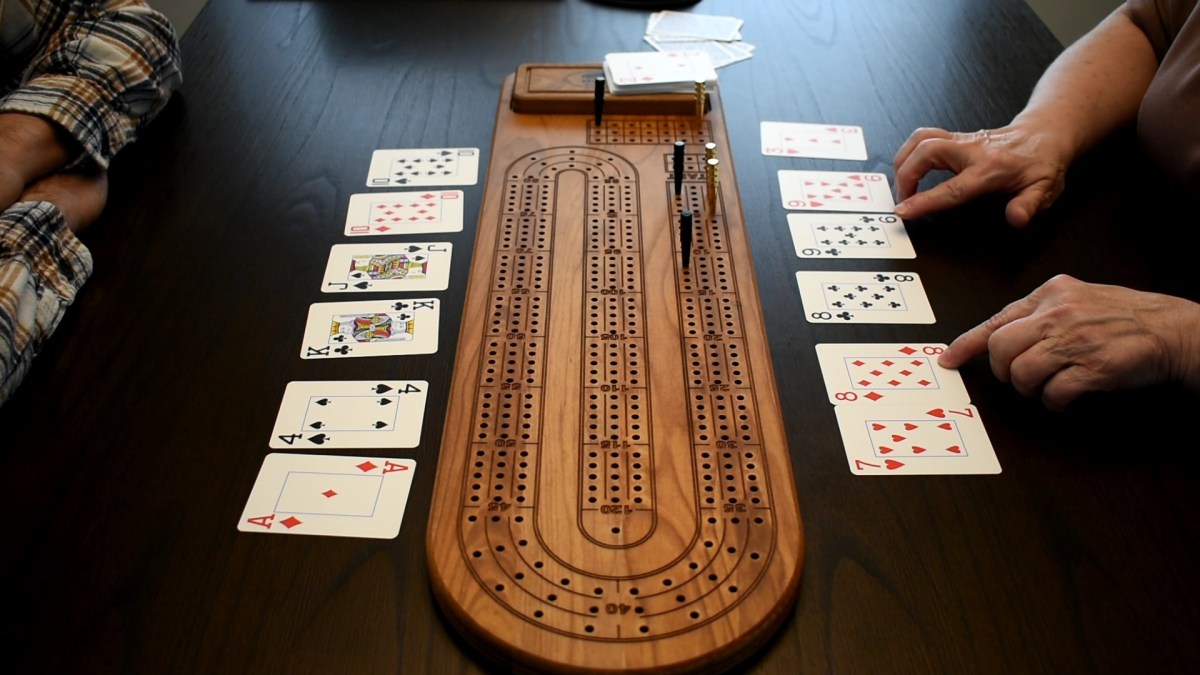
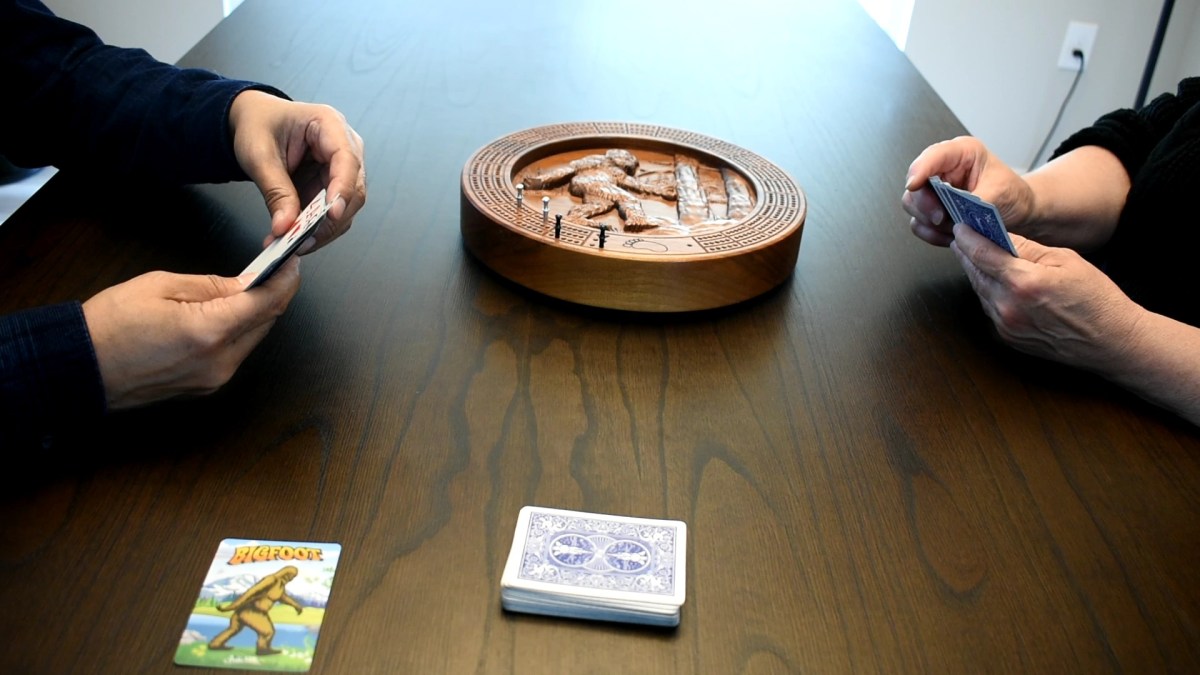
We finally made a video of us playing Crib Wars on our new Ebonwood board! The video is almost an hour long, yet as near as I can tell from a web search, it’s the shortest YouTube video of a Crib Wars game. Except for a couple of bloopers by me, it went pretty well overall as an example of playing the game. We had a chance to demonstrate and explain the different zones in the game. There are at least 2 mistakes I made in the game (which I pointed out); one of them is stealing the deal on one round (which I forgot to mention). There are likely others; just let me know! A recap of the rules as we understand them from what’s available on the web can be found below:

Ebonwood is a company located in Appleton Wisconsin and they make a variety of wood objects including cribbage boards including a Cribbage Wars game. It’s rectangular and similar to what we got. However, it lacks directional arrows on the track in the lower left quadrant. There is no Muggins Alley. The rules for Cribbage Wars are on the Ebonwood web site. I don’t know if the board ships with rules. Ebonwood charges $210 for it.

If you already know how to play basic cribbage, you can ignore most of what’s on the rules sheet (available on the web) because there’s only a short section for the Crib Wars rules. It describes the colored areas and what the players are supposed to do with them.

There’s no Muggers Alley on the Ebonwood board and we never play muggins. Below are my updated descriptions of the colored zones, which we discuss and demonstrate during the video.

Red Skips: There are 3 of these. The rule says if you land on the first red box you should slide to the next red box which gets you 20 holes further along the board. The red box just means the set of 3 holes highlighted with a red color. You get from the first one to the next one by just moving the peg 20 holes. You’ll land in the 2nd set of holes marked in red. This is a boon in the first Red Skip area. However, if you pay attention to the directional arrows in the path guiding you, it looks like they accelerate you toward two of the Blue Time Traps.

Blue Time Traps: There are 4 of these and there will be three blue lines, meaning the blue color covers all three holes and all three peg tracks (3 holes along the track and 3 holes across the track). If you land in a set of three holes highlighted in blue, you end up moving to a blue area of holes that actually set you behind several holes. You have to play your way out of them. Players note that you can end up in repetitious cycling back to the traps largely because of how often you can get one or two points at a time while scoring. In fact, some say that if their opponent gets close to a Blue Time Trap they may purposely lead with a five card (something you would rarely if ever do in a standard cribbage game). That could trap the opponent into playing a ten card or a 5 card, which might risk them moving only a couple of holes right back into the Blue Time Trap. The same thing could happen with falling into the Blue Penalty Boxes.

Blue Penalty Boxes: There are three of them. You fall into one of these by moving your peg into one of the single blue hole lines, meaning one blue track across the three peg tracks. This is a disaster because you immediately have to move back 20 holes and fold your hand and your crib while your opponent moves forward 20 holes and counts their hand and crib (if they have the crib). Asking AI is the only way I could find out how to learn how to peg moving back and forward 20 holes. The player who lands in the penalty box moves their front peg back 20 holes starting from the penalty box. You don’t move the rear peg. If your front peg lands behind the rear peg, it becomes the new rear peg. The player who doesn’t land in the penalty box moves their front peg forward 20 holes. The player who lands in the penalty box immediately folds their hand and crib.

Green Advances: There are two of them. If you land in a green hole, you take short cut path. The long one saves you from moving toward the Blue Time Trap in the left lower quadrant. You don’t avoid the potential other trap above. If you take the normal track instead you end up moving toward the lower left quadrant Blue Time Trap—but you have a chance at getting into the short Green Advance track before you get there which loops back away from it and you end up going in the direction of the upper Blue Time Trap.

You think you’re in the clear after that? You’re not because there is a sadistically placed Blue Penalty Box in the next to the last hole before the Finish Line!

A Few Thoughts on Calvinball Cribbage

OK, so Sena and I have been experimenting with a few cribbage variants in the last few days and I ran into this Calvinball comment on a Reddit cribbage thread about 10-card cribbage. Yes, people play that! I’m afraid to look on the web for 11-card cribbage although Sena asked about it.

Briefly, 10-card cribbage is usually a two-player game. Deal 10 cards each; 2 cards from each player go to the dealer’s crib; each player divides the remaining 8 cards into 2 four card hands, one for pegging and either one or both for the show.

As an aside, the Reddit thread person who started the thread about 10 card cribbage asked if anyone else ever played it. One commenter facetiously replied “Yes, there have been many many posts of Calvinball crib.”

You have to know where that term “Calvinball” comes from. I’m pretty sure it’s from another social media forum which plays a game called Calvinball—which is a whimsical, forever evolving game which has nothing to do with playing cards, is based on the comic Calvin & Hobbes and has no real rules whatsoever. Participants make it up as they go along. So, I think what the commenter might have meant was that 10-card cribbage is yet another of the many proliferating variants (some better than others) of the more well-established game, usually identified as 6-card cribbage.

Anyway, we found out later that there are two sets of rules for 10-card cribbage. The intent is to make the game play faster and yield higher scores.

 Given that context, we played it both ways to 121. In the one set according to AI, you deal each player 10 cards and both throw 2 cards to the dealer’s crib. Each player divides the remaining cards into hands of 4 cards each. You play one hand only during the pegging phase and the other for the show (scoring the hand). It was pretty slow and didn’t yield high scores, partly because we used only the four card hand for the show.

And then there’s a Wikipedia article which says you peg with one hand and score both for the show. We got higher scores all around, the game was faster, and we both enjoyed it much more.

As a reminder follow up to the post about the 9-card and 8-card cribbage games, Sena still likes the 9-card variant but doesn’t care for the 8-card (neither do I) because it seems clunkier, probably because you need to bury cards under the deck. The 9-card variant has an on-line scorer which didn’t work consistently. We seemed to fare pretty well without it for the most part. The suggestion to play to 323 (up, back, and there again on a 121-hole board) seems like overkill. I’m retired but not that retired.

Cribbage Could Help Preserve Your Brain Health!

I just saw an article that working on your cognitive skills might make you less susceptible to dementia. There are some websites that help you, but I think some, like BrainHQ, could cost you money.

On the other hand, there is some evidence that playing card games can help protect your brain. I think cribbage could be one of them, although it’s tough to find specific studies on it.

I checked around and found a few studies about how playing games like solitaire and hearts could help keep you sharp. On the other hand, when I was a young man, I worked on a land survey crew. We played hearts over lunch hour and when it rained. I consistently lost.

But for the last several years, Sena and I have regularly played cribbage, a card game that calls for some math skills, concentration, attentiveness, and strategy.

The one problem I see with picking cribbage as one of your main sources of cognitive stimulation is that many people see it has an old person’s game. They should try playing cribbage with someone who really knows how to play.

Cribbage players tend to be older; many tend to be over 50. The American Cribbage Congress (ACC) is the major organization for cribbage and they hold lots of tournaments, both local (called grass roots clubs) and national. They always welcome new and younger players. In general, you need to be able to play a game in 15 minutes in tournaments.

We have tried to finish a cribbage game in 15 minutes, but we can’t seem to do it in less than 20 minutes. I always know when Sena wants to play. She like to use the automatic card shuffler (I like to shuffle manually) and whenever I hear the card shuffling machine (which is loud enough to hear from all over the house), I know it’s time for a game!

Cribbage Drips Under Pressure

Today we played cribbage under pressure—time pressure that is. We tried it because we wondered about why, in tournament games, you always hear you should be able to play a game in 15 minutes. The American Cribbage Congress (ACC) has over 200 local grassroots cribbage clubs across North America. If you join one of them, you generally have to learn how to play a cribbage game in 15 minutes.

Most clubs have you play 9 other players during regular meetings, which typically last about two and a half to three hours.  I’m sure the practical time range is closer to somewhere between 15-20 minutes, but the driver to keep it shorter is that tournament organizers have to accommodate a large number of entrants. I’m not sure how much you can socialize during meetings. We had to cut the chit chat and focus on the cards.

We’re used to playing at a leisurely pace, chatting and dawdling. Usually, we take about 25 minutes to play a game—sometimes longer. But under time pressure, all phases of the game got more difficult to manage.

We kept getting stuck on certain phases of the game. We probably didn’t throw to the crib as well as we’d like because we felt so pressured to stay under the time limit. I’m sure we made counting and scoring mistakes in both the pegging and scoring phases.

We played 4 games and could play in 15 minutes and 36 seconds in only one of them. It seems like the average for us was somewhere in between 15 and 20 minutes. I used the stopwatch on my cell phone.

Oddly, the second time we tried to play faster led to the fastest time, which was just over 15 minutes as noted above. But each time we played, the longer times got; the first game was around 20 minutes, the next one after that was about 15 minutes; the next was a little over 16 and the next one after that was closer to 17 minutes.

I think fatigue from the pressure got to us. However, I wonder if we just practiced a little more, whether the jitteriness from the sense of pressure would ease because we’d eventually get better at scoring the less common hand and crib scores. Would an expert tell us that? By the way, do you know what the definition of an expert is? A retired drip under pressure.

I gave up on the idea of shuffling 2-3 times each hand and just did it once—which didn’t really seem to improve our times. We’re supposed to get our card shuffling machine tomorrow. I wonder if using that would speed things up or slow us down.

The other point to make is that we usually help each other score and count when we play cribbage. Well, that’s not what tournament players do. You sweat it out and if you make a mistake, your opponent can’t help you. And don’t get me started on the muggins rule. Talk about pressure.

Maybe the answer is to have a fresh deck of cards which don’t stick to each other from the snack foods you eat while playing cribbage just for fun. And don’t talk, joke, laugh, or shuffle too many times, and remember luck is part of the game. Skill can take you just so far. It’s kind of like life. Somebody called cribbage a “finicky game.” OK, so it was Barry Rigal, who’s famous for being a bridge player and edited the book Card Games for Dummies.

So, explain why cribbage players, who I’m guessing are among the most finicky people on the planet, can deal with the pressure of a card game with a lot of finicky rules but manage to play a cribbage game in 15 minutes?

If you’re a cribbage player, we’d love to hear your answers. No pressure.

My Mt. Rushmore Dream

Lately, I’ve been anticipating my eventual immortalization as a sculptured stone bust on Mt. Rushmore. Hopefully, this will be fairly soon because I’m not getting any younger.

Among my many inventions is the internet. Don’t believe Al Gore, although he has persuaded others about his role in the development of what I argue should properly be called the world wide web. I’ve invented a lot of other things which I’ll tell you more about just as soon as I make them up.

Before I forget it, I want to tell you what I just noticed last night while I watching one of my favorite X-Files episodes, “War of the Coprophages.” I guess I never noticed that the cockroach invasion was about Artificial Intelligence (AI). It was the scientist, Dr. Ivanov, who mentioned it first and I just missed it the first few hundred times I saw the show.

Dr. Ivanov clearly thought that anybody who thought extraterrestrials would be green and have big eyes was probably crazy. Traveling across galaxies through wormholes and whatnot would tear humanoid organisms apart. The practical approach would be to send AI robots instead. You could see Mulder cringe at that idea. The little robot that kept edging closer to Mulder made him nervous and when he asked Dr. Ivanov why it did that, his reply was “Because it likes you.”

That doesn’t exactly fit with Ivanov’s other idea about extraterrestrials, which is that they would focus on important tasks like getting enough food, procreating, etc. without getting all emotional about them. Ironic that Dr. Ivanov made an AI robot that gets a crush on a sesame seed munching UFO hunter like Mulder.

However, the AI robots in the show are cockroaches which love to eat dung. In other words, they’re full of crap.

Moving right along, although I didn’t invent it, there’s a card game called schnapsen that Sena and I are trying to relearn. It’s kind of a break from cribbage. It’s a trick taking game with just a 20-card deck. We play the version that doesn’t allow you to look at your cards to see how many points you have so you can tell when you can close the deck or go out, meaning you have the 66 points to win. You have to remember how many points you’ve won in tricks. I think it’s a good way to keep your memory sharp.

Let’s see; I’ve lost every game so far, but that doesn’t mean I won’t end up with my bust on Mt. Rushmore.

The Go Rule in Cribbage

Sena and I have been playing cribbage for a number of years but only recently have we begun to question the “Go rule.” I’ve looked on the web for clarification about how to use the Go, and found conflicting guidance. Incidentally, we’ve posted YouTube videos of some of our games, many of them probably showing we had an imperfect understanding of the Go rule. It occurs to me that if I had not turned off the comment section on these YouTube videos, I might have been alerted to what we’d probably been doing wrong over the years. But then I’d have had to deal with many inappropriate comments.

We have gradually realized that our use of the Go has probably been flawed, raising a couple of questions:

Do you score the one point for Go automatically just because your opponent says “Go” when she/he can’t play any cards without going over 31?

What do you do about the double Go sequence when neither of you can play without going over 31?

I looked for answers on the web.

One thing I’ll say is that the automatic pop-up Artificial Intelligence (AI) guidance is wrong. For example, AI says that the player who says “Go” gets the point for Go, which is clearly incorrect.

I also looked this up on the American Cribbage Congress (ACC) website and still couldn’t understand it. Then I found a couple of websites that seemed helpful. It’s notable that both were question/answer threads that went on for years about this one issue with the Go rule. Apparently, a lot of people don’t understand it, so I didn’t feel so bad.

The first site was a Cribbage Corner thread. At the beginning, it gave several helpful examples of the right way to use the Go rule—but then followed years of comments back and forth about it that eventually became difficult to follow. There was a question about the Stink Hole which, suffice it to say, triggered an annoyed reply which advised the questioner to quit using “kitchen table cribbage” rules.

The second one was a Stack Exchange thread. When I looked at it, it started with a question a player had in which he and his friend argued about the Go, and his friend (as it turned out) seemed to be on the right track:

“His rationale, is that when scoring 31, you are getting one point for hitting 31 exactly and 1 bonus point representing your partners’ inability to play an additional card (his “go”). He says “whether a “go” is said or not, the go is implied when you place the last card at the end of the round to make 31….thus giving you two points when you reach 31 even when a “go” is communicated”.”

The thread overall was more helpful and one commenter cited the ACC rule section (to which there’s a link), which clarified the question about reaching 31 which gives the player 2 points. The two points means: one point for the Go and one bonus point for getting the special score of 31.

There was also some clarification about the double Go, which is that if neither player can play a card that won’t take the total count over 31, neither player gets the 1 point for Go.

That has happened to us. I think this is right: If player A is the first to say “Go” and player B also says “Go,” then the count resets to zero and player A leads to the new sequence. If that’s wrong, don’t hesitate to tell me in the comment section—which I assure you will not extend for years going forward.

Update: See my update on this Go issue in the post “Update on the Cribbage Go Rule”, post dated January 23, 2025. Actually, this rule is clarified at this link.

Connection Between Cribbage and Obituaries?

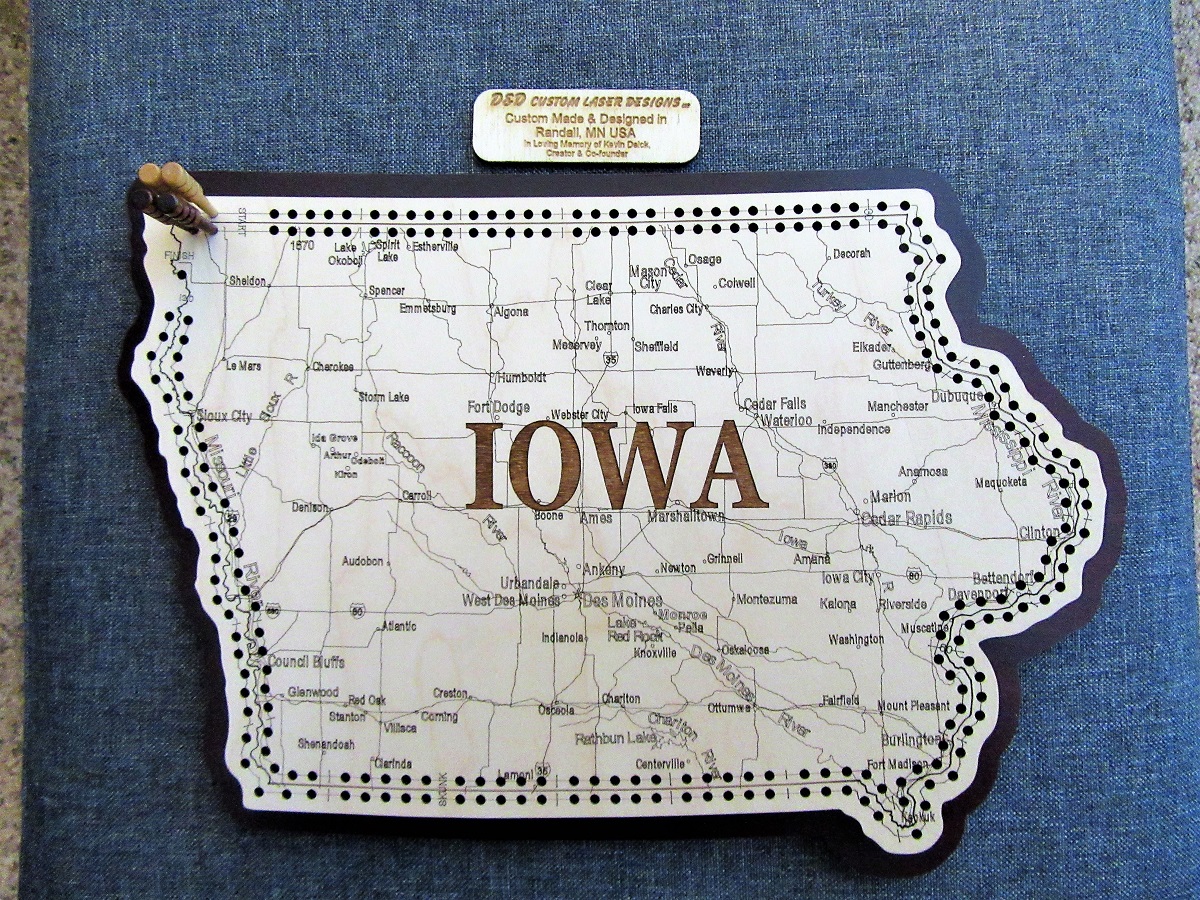
Just for fun today (which is New Year’s Day of 2025) after Sena and I played a few games of cribbage, I searched the internet using the term “cribbage in Iowa.” I found a local newspaper story entitled “There’s No Crying in Cribbage. There’s No Politics Either,” published August 18, 2024 in the digital version of the Cedar Rapids Gazette which, by the way, promised me that I have “unlimited” access to articles.

It was written by Althea Cole and it was longer than I expected it to be. Much of the story was about the longstanding history of annual cribbage tournaments at the Iowa State Fair. She also mentioned that her grandfather had been an avid cribbage player.

But I was also puzzled by the significant number of obituaries that popped up in the web links. I’ve looked up cribbage dozens of times but not with this particular search term. I checked several of the obits and found the majority mentioned that the decedents had been avid cribbage players.

I’m not sure what to make of this. What does it mean that cribbage is associated with obituaries in Iowa? I suppose some would say that it might mean that cribbage is a game mainly played by old people—which is probably true. The American Cribbage Congress (ACC) web site makes it very clear that they encourage young people to play cribbage. Be patient, the site takes a while to load.

That said, whenever I see photos of people of playing cribbage, almost all appear to be over 50 years old.

So, I tried searching the web using the term “cribbage in Wisconsin” and didn’t get any obituaries. I got the same result with “cribbage in Minnesota” and “cribbage in Illinois.” I decided not to run the search for every state in the country, because I think the point is already made. For whatever reason, cribbage in Iowa seems to be associated with obituaries and advanced age.

I imagine some reading this post might point out that the connection with obituaries in Iowa and cribbage could just mean that a lot of Iowans enjoy cribbage. That could be true. However, on the ACC web site, I can find only one city in Iowa that has an ACC Grass Roots Club, and it’s in Des Moines.

There’s a web article entitled “Is cribbage too antiquated to survive this digital world? Players and board collectors sure hope not.” It was written by Rebecca Zandbergen in April 2023 and I reviewed it again today. One thing I can say about cribbage is that it’s probably good exercise for the brain. I can find plenty of article which praise cribbage as a way to keep your brain healthy and engage socially.

I don’t know if there are any scientific studies on the benefits of cribbage for your brain. I had trouble finding them on the web, although I admit I didn’t conduct anything like a thorough search. I did find one study on the association of playing cribbage with social connectedness.

Kitheka, Bernard & Comer, Ronald. (2023). Cribbage culture and social worlds: An analysis of closeness, inclusiveness, and specialization. Journal of Leisure Research. 54. 1-21. 10.1080/00222216.2022.2148145. Accessed January 1, 2025.

“Abstract: Recreation specialization through the lenses of social worlds is a common approach used to describe how people define and are defined by recreation activities. This ethnographic study investigates the social worlds of cribbage players. The study analyzes cultural structures through the lenses of closeness, inclusiveness, and recreation specialization. Using survey questionnaires, informal interviews, and researcher observations, data were collected at cribbage events over a period of 3 years. Findings reveal a distinct cribbage culture characterized by varying levels of commitment, specialization, and degrees of connectedness. The study contributes to the currently limited literature on social worlds and indoor recreation specialization. It provides insight as to how people align at a community level to find meaning via recreational activities. Data also reveals a lack of social diversity in the cribbage community. Findings could be used in leisure programming for diversity and inclusion at community and grassroots levels.”

There was also a paper entitled “Cribbage: An Excellent Exercise in Combinatorial Reasoning:

Markel, William. (2005). Cribbage: An Excellent Exercise in Combinatorial Thinking. The Mathematics Teacher. 98. 519-524. 10.5951/MT.98.8.0519. Accessed January 1, 2025.

Abstract: Card games have long been a rich source of combinatorial exercises. Indeed, determining the probabilities of obtaining various hands in poker, and often in bridge, has been standard fare for elementary texts in both probability and combinatorics. Examples involving the game of cribbage, however, seem rare. This omission is especially surprising when one considers that cribbage hands offer excellent applications of combinatorial reasoning.

It’s a math thing, which is good for brains. Math won’t kill you and neither will cribbage. Happy New Year!

“Muggling” Through Muggins in Cribbage

We play cribbage and we tried playing using the Muggins Rule the other day. We “muggled” through it is what I should say.

During one game, Sena got the total count wrong, which led to a confusing situation leading to her overpegging and eventually winning a game, which didn’t make a lot of sense.

Most of the problem was misunderstanding how to apply Muggins rule to overpegging. It’s not clear to us how to address that. Underpegging is easier to understand. If Sena underpegs and I catch it, I’m supposed to call Muggins and peg the difference between the actual pegging score and her over score.

She overpegged a large number of holes and got so far ahead, that I couldn’t catch up. What we didn’t understand is that, according to some rules, the player who overpegs is supposed to move her peg back to the original position behind the front peg.

On the other hand, there is more than one set of rules for how play Muggins. The American Cribbage Congress (ACC) has official rules for it, and they say it only applies to underpegging. It applies after you peg.

On the other hand, I can find guidance for overpegging elsewhere on the ACC website, and it covers overpegging. It’s in the Tips Library and interestingly there’s a slang term for it: Hauling Lumber.

“Hauling Lumber – Hauling Lumber (or Timber) usually refers to intentional Over Pegging, which is one form of cheating during a cribbage game. It is believed the term originated due to most boards being made out of wood and the offending player was pegging more wood than what they were entitled to.”

“Overpegging – Overpegging is pegging more points that what you are entitled to take. It may happen during the play of the hand, in counting the hand or by accidently taking more pegs than indicated. If the opponent catches the Overpegging, you must return your front peg to the proper place and the opponent gets to take the difference between what was pegged and the correct total. If you notice your own Overpegging before your opponent, you may announce the fact and correct your front peg to its proper location with no penalty. See also False Claim of Game and Hauling Lumber.”

However, the Tips Library also says this about Muggins:

“Muggins – Muggins is taking points your opponent misses. Muggins points come from one of two sources. If your opponent misses points during the play of the cards, Muggins may be called after a pause to make sure the opponent is truly missing the points. The other situation is where your opponent fails to count and/or take all the points in the hand. Once he has under pegged his hand, Muggins may be called for the difference in what was pegged and the actual count in the hand. Muggins may not be taken in the case of an opponent failing to take his two points when a Jack is the starter card, those points are lost once the dealer plays a card. Muggins is not applicable in the case where an opponent over pegs his hand, see Over Pegging – Hauling Lumber.”

The bottom line seems to be that overpegging is not allowed in Muggins. If you do it deliberately, you might want to haul ass away from the game table.

I wondered about what the term “Muggins” itself means so I made a cursory search for the origin of the term. I found out that the term is connected to the word “mug,” which means fool or idiot. By extension, I guess it could mean that a cribbage player who makes mistakes in the game is thought to be a simpleton.

This is part of the reason why we’re not going to use the Muggins rule anymore. It takes a bit of the fun out of playing cribbage.

Great Cribbage Tutorial for Beginners!

I’ve seen a couple of Cribbage videos on Huddle Around Games, which is a YouTube site dedicated to Cribbage as well as other games.

This one is a tutorial on how to play Cribbage for beginners. He calls himself Zulwarn, which is his name when he plays the online form of a computer Cribbage game called Cribbage Pro. I play (well, mainly lose) on Cribbage Pro, but not on line. I just play the computer, on Brutal level. I guess I like punishment because Brutal doesn’t make mistakes.

Zulwarn is funny and smart. He likes coffee.

Is Cribbage Mostly Luck?

I found this cribbage YouTube site that does a really nice job of teaching you how to play Cribbage. Here’s a video about whether Cribbage is mainly a game of luck or skill. It turns out it’s a mix of both.

I play computer Cribbage games with high level computer opponents who-let’s face it, don’t make mistakes. You have to get used to losing pretty often, but there is a certain amount of skill which can help you win-sometimes.