We listened to the Christmas tunes on the KCCK Big Mo Blues Show last night, “All Dem Christmas Favorites.” We both liked Earth Kitt’s “Santa Baby,” which wasn’t on the podcast list, but what the heck. I got a kick out of Brave Combo’s silly rendition of “O Holy Night.” Fareed Haque’s guitar solo of “You’re a Mean One, Mr. Grinch” was pretty impressive.
After a short break during the Thanksgiving holiday your hosts are back at it again with another episode! This week features the usual mix of blues eras you’ve come to expect along with a few Californian artists, tune in to see which ones! Songs featured in the episode: Solomon Hicks – “Further On Up The … Continue reading
I got a kick out of a song by Catfish Keith last night on the Big Mo Blues Show on KCCK radio. It was “Who Pumped the Wind in My Doughnut.” He always sings songs with lyrics that I mostly don’t understand and that was one of them, at first. I’ll give you a hint; it’s not a Christmas tune. Catfish Keith covers some old-time blues songs and this one is for adults only.
Judging from the title of the song and some of the lyrics, you might guess it’s about doughnuts but it’s not. Don’t bother with the Artificial Intelligence (AI) description, which I did not ask for. AI just pops up in a web search whether you want it to or not:
“Who pumped the wind in my doughnut” is a playful, nonsensical phrase meaning someone has exaggerated or inflated a situation or story to make it seem much bigger than it really is; essentially, they’ve added unnecessary drama or hype to something, like adding air to a doughnut to make it appear larger.”
Once again, we see that AI makes stuff up as it goes along, creating a little story which is really concrete and far from the truth about something for which it was not programmed—to process language that is not literal but a form of humor riddled with innuendo to express something about sexual infidelity, in this case resulting in a lot of children which don’t resemble the singer because they aren’t his.
Anyway, I found a little background on the song which was originally performed by a guy called Washboard Sam (born Robert Clifford Brown). He was a blues artist in the 1930s. He performed “Who Pumped the Hole in My Doughnut” under the name Ham Gravy. I found a reference which says that Washboard Sam performed it and Robert Brown wrote it. And I found another which shows a picture of the actual record which has the name Johnny Wilson on it with the name Ham Gravy just below it. I don’t know whether Johnny Wilson was just another pseudonym. You can find the lyrics of the song identifying it as being by “Washboard Sam via Johnny Wilson.”
You can find a mini-biography about Robert Brown on, of all things, a WordPress blog called The Fried Dough Ho. It has a fair number of posts about doughnuts too. The author knows the song is not about doughnuts. There are also some pretty comical impressions in a blog post entitled “What is he talking about?” regarding the meaning of the lyrics of the song on a Blogger site called The things I think about, when I wish I were sleeping. One of the comments is fairly recent, from 2023. You can also find a Wikipedia biography.
Last Friday night on the Big Mo Blues Show on KCCK radio, I heard Eric Clapton sing a song that I later found out was a cover of a song originally co-written by William Bell and Booker T. Jones, “Every Day Will Be Like a Holiday.” A Wikipedia entry about it reports that it has been called the greatest Christmas record of all time by Hot Press magazine in 2017. It has been covered by many musicians.
That song is still in my head. I had never heard of William Bell. He’s been a top rhythm and blues performer for decades. He’s 85 years old and is still going strong. I hope he has a lot more Christmases to go.
I heard the Big Mo Blues Show just (Halloween theme) this last Friday night and was not surprised to see that one of the songs discussed on the Big Mo Pod Show on Saturday was Peetie Wheatstraw’s “Devil’s Son-in-Law.”
When I first heard it, it got me chuckling because I didn’t understand hardly a single word until the last line. It was babbling. I can remember googling the term “Peetie Wheatstraw and unintelligible,” which revealed I’m not the only one who thinks he’s unintelligible. It’s a mondegreen mine field. It’s a good thing the lyrics are available.
I want to hastily point out that he’s not always unintelligible—but William Bunch aka Peetie Wheatstraw is speaking in tongues on that song. For comparison I listened to another song, “Sweet Home Blues” and I could understand just about every word in the lyrics.
That led me down the rabbit hole about the artist in a web search that seemed to have no end. I should probably say Brer Rabbit hole since most of my searches pointed in the direction of a character called Peter Wheatstraw, Petey Wheatstraw, as well as Peetie Wheatstraw who had variations in their identities, most often in the context of African American folklore.
I’m not going to attempt a summary of my web search on Peetie Wheatstraw; there’s too many twists and turns. You can start with the Wikipedia article. But from there, you can get trapped in Brer Rabbit’s little tunnels, which can run in different directions.
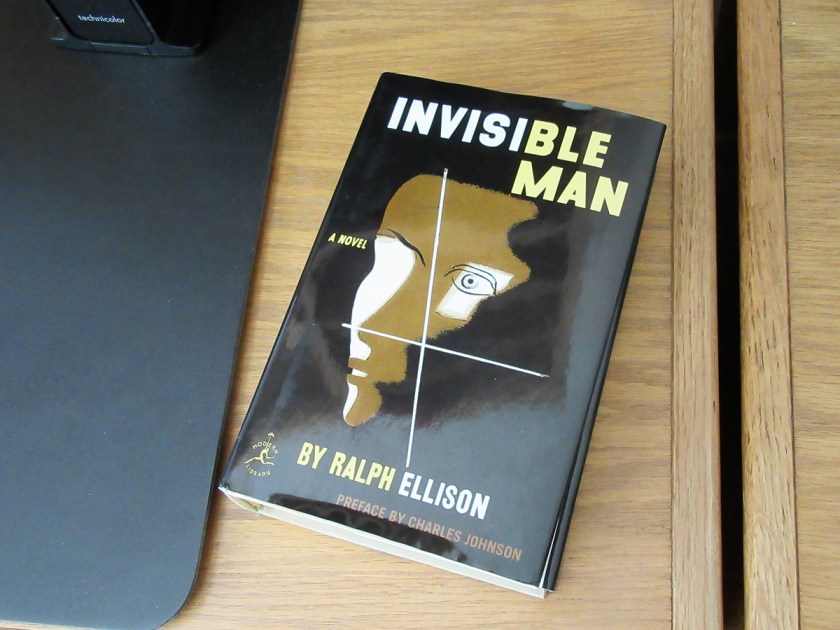
William Bunch was a blues artist in the 1930s who adopted the moniker “Peetie Wheatstraw.” While Big Mo says it’s sort of another name for Satan, I found confusing references by writers who claim that the Peter Wheatstraw character comes from Black folklore. There are those who believe that novelist Ralph Ellison wrote about a character in his book “Invisible Man” named Peter Wheatstraw and said it was the only character in the novel that was based on a live person—William Bunch.
Is that true? And did Ellison ever meet Peetie Wheatstraw (William Bunch)? I can’t tell from the web articles.
I was prompted to get my copy of “Invisible Man” out after reading a scholarly online essay mentioning the Peter Wheatstraw character, “Re-visioning Ralph Ellison’s Invisible Man for a Class of Urban Immigrant Youth” by Camille Goodison, CUNY New York City College of Technology. I couldn’t remember Wheatstraw at first, but there he was in Chapter 9.
Goodison reveals there is a lot more texture to the Wheatstraw character then just as a moniker adopted by William Bunch. Wheatstraw is probably more complex than the devil. He has many sides to him and could be helpful—but mostly in an indirect way. His guidance is full of riddles and there doesn’t seem to be a solid way to cut through the metaphorical morass. As Emily Dickinson advised, Wheatstraw may tell the truth—but tells it slant.
This is just a short piece on the Big Mo Podcast last Friday night and his comments about one of the songs he played that night. It made the list of 5 songs he and Producer Noah discussed a couple days later.
Big Mo’s had great comments about all the songs, but I took special notice of those about one of them. It was James Carr’s big hit in 1966, “Dark End of the Street.”
The most important thing about it is that I remember listening to it when I was just a kid. I was too young to understand the meaning of it. But his voice grabbed me. That’s really the only thing I can say about it. His performance still has the power to raise the hair on the back of my neck, even though I can’t identify with the lyrics or connect the theme to any life experience I’ve had. I suspect many people feel the same way.
The other reason I connect with the song other than Carr’s voice is his life story. He was said to have suffered from a psychiatric illness, the nature of which seems like it was never clearly identified. I’ve read a few web articles and terms like “bipolar disorder,” “depression,” and other similar references come up. His psychiatric diagnosis is the least important thing.
Carr’s life story is hard to read, despite what little there is of it to read about. It’s painful. The version on the Black Past website encapsulates what you find in several other articles: Tulino, D. (2018, February 21). James E. Carr (1942-2001). BlackPast.org. https://www.blackpast.org/african-american-history/carr-james-e-1942-2001/.
But to get the real point about James Carr, all you have to do is listen to that one song, “Dark End of the Street.”
I listened to the Big Mo Blues Show last night on KCCK radio (88.3 on your dial) as I usually do on Friday nights. It runs from 6:00 pm to 9:00 pm and you can learn a lot from Big Mo (aka John Heim) about the blues.
He also has a podcast called the Big Mo Pod Show, which is based on his blues show. He gets quizzed about some of the songs he played on Friday night by Producer Noah (as Big Mo calls him). Last night he was on target for all 5 of the songs he played and why he played them.
One of the songs I’ve never heard before but it was done by Taj Mahal and Keb Mo, artists I’m familiar with just from listening to Big Mo’s show. The title was “Diving Duck Blues. The chorus goes “If the river was whiskey and I was a diving duck, I’d dive to the bottom and I’d never come up.”
That led to a discussion of how alcoholism was sometimes (maybe more than sometimes) a part of the life of blues musicians. In fact, the lead off song last night was “Big Road Blues,” sung by Tommy Johnson. His last name just happens to be the same as Robert Johnson who made the song “Crossroads” famous because he claimed he sold his soul to the devil in order to become a great blues musician. Several blues artists made the claim, which Big Mo debunked as a ruse to get fans to pay more money to hear them perform.
But Tommy Johnson struggled with alcoholism and, according to Big Mo, was driven to the point of drinking Sterno, which was poisonous because it contained methyl alcohol.
This can lead you to think that maybe all blues music is gritty, played by alcoholics, and even depressing as declared by the lead character, Navin Johnson, played by Steve Martin in the movie “The Jerk” (a white guy raised by a black family).
Incidentally, this reminds me that a recent study showing that digital cognitive behavioral therapy is effective for those suffering from alcohol use disorder.
Anyway, blues musicians don’t always play sad, gritty music and die from drinking Sterno. One that is actually funny is “You Left the Water Running” by Otis Redding. You can look up the lyrics or listen to anyone who covers the song and it would be difficult not to laugh out loud.
And speaking of covering a song, Bill Withers originally wrote and sang “Lean on Me” back in 1972 which Keb Mo covered recently. I think it’s one of those uplifting examples of blues music which won’t send you diving to the bottom of any whiskey rivers.
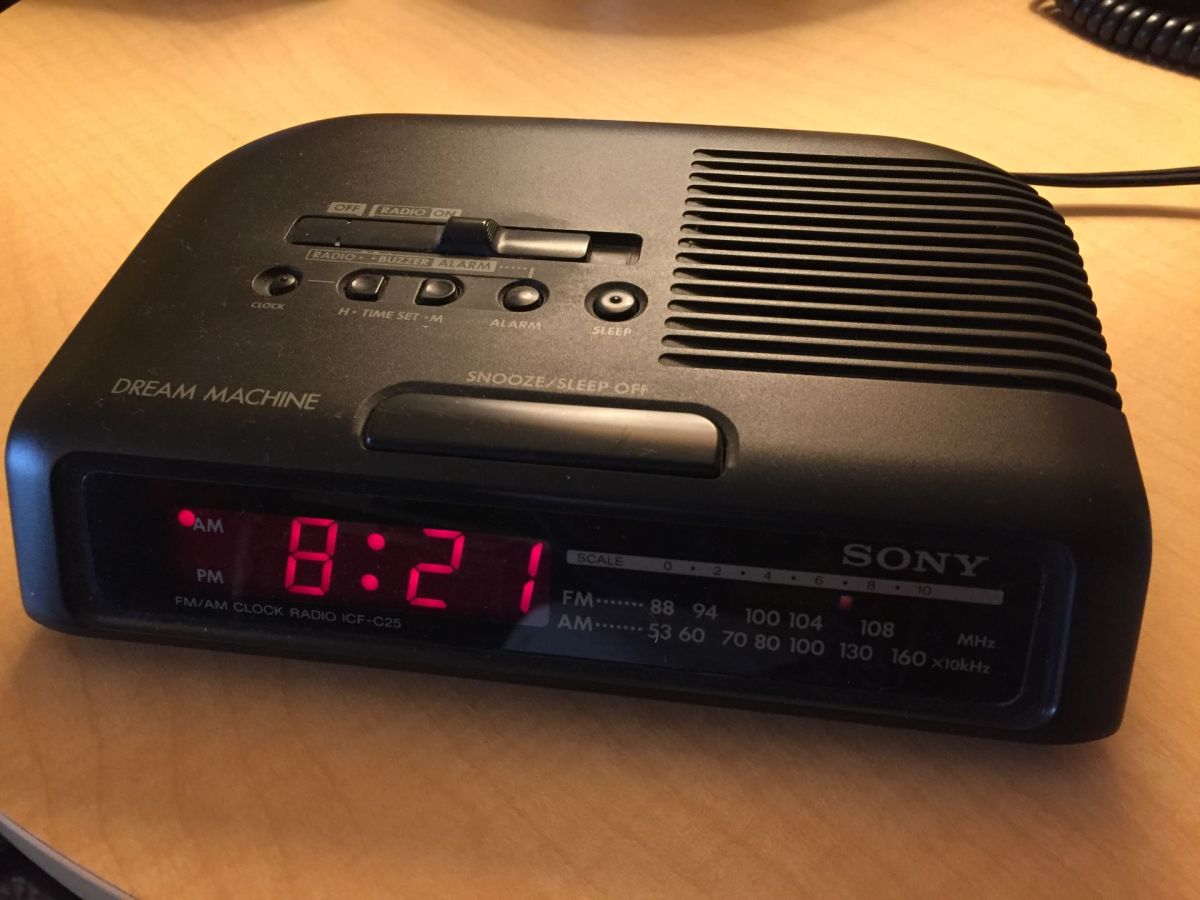
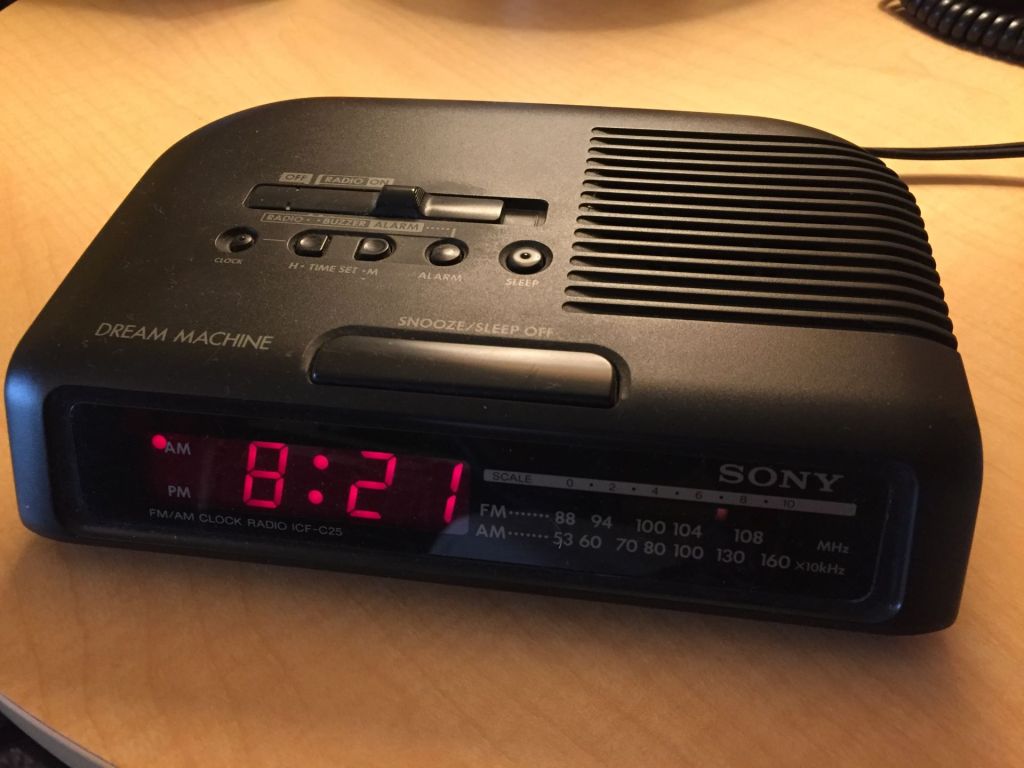
I didn’t get to listen to the Friday blues with Big Mo last Friday because my little Sony Dream Machine radio audio kept cutting out.
But on the Friday blues of August 9, 2024, I heard a tune I liked. It was “Hit ‘Em Back” by Kenny Wayne Shepherd and Shemekia Copeland.
Some blues songs can be gritty and dark, but the title “Hit ‘Em Back” isn’t what it makes you think. The song is really about turning the other cheek, emphasizing the growing importance of getting along with each other.
Getting along with each other is hard to do. I know to most old people (including me) that used to be a lot easier. Old people say that, like saying “What happened to the good old days?”
Well, when I reflect on the past just from my perspective, I have trouble remembering the so-called good old days. In general, we all struggle to get along with each other.
I think the song “Hit ‘Em Back” is a novel way of expressing how relationships between people and nations usually go, but also suggest we “hit” them with love. We mostly hit each other back-in a bad way. The lyrics send an apparently paradoxical message which gets your attention.
And then you get it. Let’s not hit each other. Let’s listen to each other instead.
Last Friday night, the Big Mo Blues Show was recorded. I found the podcast, which had the theme “Limitation Brings Innovation.” The idea behind that was that sometimes when musicians lack the resources to, say, put together a big band sound, they often innovate to create a sound that’s new and surprisingly fresh and rivals the production of bigger and better funded orchestras.
Along those lines, Big Mo played Seasick Steve’s song “Backbone Slip.” It’s a rocker. On the other hand, my favorite from him is “You Can’t Teach an Old Dog New Tricks.” Seasick Steve did a live version of it about 13 years ago. He played a homemade guitar made of a broomstick and a couple of hub caps.
I guess you call that limitation leading to innovation. It could be the anthem for old retired guys.
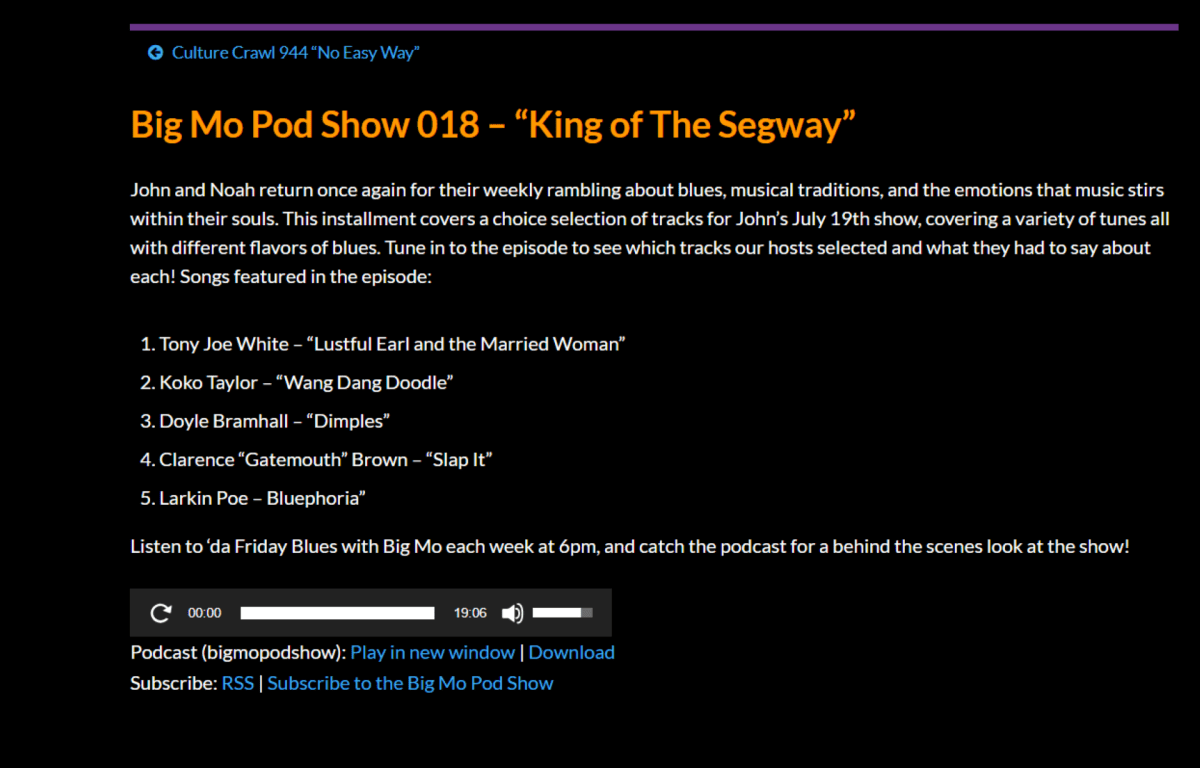
Hey, I managed to catch the Big Mo Blues Show on July 19, 2024 and then listened to the podcast the next day. Because our big Bose wave radio is packed away in storage as we wait for our house to be built, I had to use our little portable Sony Dream Machine in the hotel. I think it dates to the early 2010s. I couldn’t get the local Iowa City KCCK 106.9 or 88.3 station unless I switched the radio to AM first, then tuned to 106.9, then flipped back to FM. It gets staticky if you hover over it or touch the radio, but if you leave it alone, it sounds OK.
Now I’m just going to comment on the theme of the pod show, which was “King of the Segway.” This is in the spirit of my frustrated grade school English teacher, Miss Piggott. One of her comments on my report card was, “A little too exuberant.”
OK, that segues into my correction of the use of the word “segway” in the podcast theme title. If you listen to the show, Big Mo clearly uses the word as a verb that mean to move without stopping from one theme, song, etc to another. That should be spelled “segue.” The word “segway” is a trademarked name for an electric transportation vehicle. To be fair, the two are often confused.
Big Mo did a pretty good job of getting most of the points on the 5 songs; at least he could name all the artists. The first part of the ‘da Friday Blues show played a couple of numbers that show the funny edge of Blues music. The latter part played Blues numbers that are on the gritty side.
I’ll take the funny side over the gritty side of the Blues any day of the week.
The funniest number was the song “Lustful Earl and the Married Woman,” by Tony Joe White. I remember his tune “Poke Salad Annie” from way back. Lustful Earl is hilarious and had me laughing out loud.
I’m out of sync with the Big Mo Blues Show and his podcast, mostly because we’re in the middle of this big move and we’re staying in a hotel waiting for this house to be built. I missed his most recent show, but caught the one before that.
The podcast title was “Goodness is a Practice.” Big Mo mentioned that moving (among a lot of other sorrows and hardships) could cause the blues-and he’s right.
But some perspective on it shows that a lot of other troubles take priority over moving (even though boxes are bad, admit it). Troubles that call for a little human decency are just one variety. Practicing goodness would come in handy right about now, in a lot of places.





 Go Retire Psychiatrist