Big day on the psychiatry consult service. So, this is a short post today because I’m pooped. I logged 2.8 miles and 35 floors on the step counter and here’s a picture to prove it.
Step counter log today. I’m feeling it tonight.
The other bit of news is that the cardinal hatchlings are here—at least two of them anyway. One egg is still unhatched. The house finches are still in their eggs. And there are no eggs in the robin’s nest yet.
baby cardinals and one egg to hatch…
We were a little surprised. We weren’t expecting them to
hatch for about another week.
Since my last post about our birds, we’ve had some new developments. The robins actually have a pretty fine nest now under our deck. I managed to get a blurry snapshot of mama robin actually sitting in the nest. I’ve also caught sight of a portly male cavorting with her on our porch rail. Early this morning the nest was empty.
Broody robin?
Empty nest…so far.
There’s an odd, brownish egg amongst the house finch clutch. I’m not sure what that means, if anything. Maybe it’s the same as brown or white chicken eggs. E.B. White wrote an essay entitled “Riposte,” (in White, E. B. (1999). Essays of E.B. White. New York, HarperPerennial), which treated the difference in some detail. The general idea was that brown eggs are more “natural” than white ones because they are suggestive of the country. However, the last paragraph of the essay mentions a farmer who planned to promote green eggs and who knew of a hen who could lay them.
See that brown egg?
That reminds me. Later today, I noticed some pretty large green eggs, not just in the robin’s nest, but in a few other places too. Robins don’t lay eggs as big as my head and they generally are not green; they’re robin’s egg blue as the saying goes. As for who laid them, I think I spotted the culprit out in the garden.
What the…?
The culprit!
There are still just 3 cardinal eggs. Mama cardinal lets me get pretty close to the nest these days before she thunders off. She tries to hide behind leaf and junk. And papa is stand-offish as usual.
Hiding
Shy
My wife is pretty busy in the garden and pointed out that I don’t have any shots of the pansies. They’re a sure sign of spring, along with the daffodils and tulips—and cavorting birds leading to many eggs.
I’m coming up on my last 3 days for the academic year and
reflecting now that my favorite season is upon us. Spring does that to me,
especially now that I’ve been in the phased retirement contract for the last 2
years. I’ll be going into the 3rd and final year as of July.
I just found out that next week I’ll be among those faculty members selected to receive the Excellence in Clinical Coaching Award from the Gradual Medical Education Office at the Leadership Symposium.
I’ve received teaching awards from the residents at
graduation time (another sign of spring!) over the years and I’m always grateful
for their recognition. The Excellence in Clinical Coaching Award is recognition
from my department as a whole, the members of which put together a nomination
package including letters from department leaders as well as trainees.
I’m also humbled by
it because I’ve learned a lot from everyone with whom I’ve had the privilege of
working, but my favorites are the trainees, including medical students. In
fact, I learned from them again in the last week or so. Three talented medical
students gave outstanding presentations about issues relevant to all
physicians, not just psychiatrists.
They will be excellent physicians. They will teach others.
They will lead and it’s a good thing—medicine needs them.
I like the coach idea. I know one of the internal medicine residents thought of me as a mentor. I’m aware of the differences between mentors and coaches as well as the similarities.
Coaches spend relatively less time with learners and the
focus of the relationship is usually a set of specific skills which needs to be
passed on. Mentors tend to develop longer term relationships and guide learners
in broader ways in terms of career goals and more.
However, both mentors and coaches serve as role models,
something all teachers do—including trainees.
That’s partly why I feel less troubled about retiring as my
time to leave draws nearer. I trust the next generation of doctors and, just
like the Supremes song says, “You better make way for the young folks.” It’s my
time to leave. It’s their time to live.
I’ve been making fun of birds who build funny-looking and impractical nests. Maybe I’ve been wrong about the robins, though. My wife alerted me by phone that the robin I joked about in my YouTube video, “Nest Building for Bird Brains,” had actually cobbled together a convincing nest underneath our deck.
I couldn’t believe it. I think the only explanation is alien influence. Their heads are egg-shaped and that’s about the only proof you need.
Egg as big as my dang head!
Definitely an egghead alien…
I figure the aliens get into our dimension via spacecraft
through a wormhole, which would appeal to a bird, especially a robin. They love
worms! They would just as soon gobble up a worm as poop on your Hostas. Then
the alien probes the robin (they got this thing about cloaca probing),
inserting an egg as big as my head for crying out loud. This naturally leads to
a change in the robin’s central nervous system, leading it to become insane in
the bird brain (so to speak) and rendering it incapable of doing the normal
thing like building a nest in a tree, so they end up slapping it under a deck,
in your lawn mower, on top of your god-forsaken egghead, good gahd amighty!
However, you can hardly call it quibbling when I point out there’s no bottom in the nest—yet. On the other hand, if I were a betting man, I would have bet against it getting built at all.
You can still see the floor board! Ya gonna lay eggs on that?
Our guess is that, at this rate, the floor will be down in no time and eggs will likely be laid soon after that.
Hoorah’s nest if I ever saw one…
We now have three bird nests to keep track of for the next
couple of weeks—cardinal, house finch, and now the robin. At this rate, we’ll
be lucky to keep up.
I just can’t figure how some birds ever get the nest-building
job done. It’s mind-boggling how clueless some of them are. And it’s no wonder—they’re
all bird brains trying to figure out something that they obviously don’t have much
more than bare instinct to go on.
Robins are some of the worst nest builders around. About 4
years ago, they tried to build a nest in between our deck rail and the house.
It was the most hilarious Hoorah’s nest we ever saw!
This year they’re trying once again to build a nest
underneath our deck. Don’t they get it? That’s what trees are for.
We’ve got a bird’s eye view of the egg-laying prowess of a
house finch and a cardinal, in the front yard and the back yard respectively.
We don’t understand how the cardinal lost one of her eggs. She just laid a
replacement.
Funny thing about cardinals and house finches. We see the
male house finch feeding his mate all the time. The papa cardinal is a rare
visitor to the nest; I sometimes wonder if mama has trouble with laying enough
eggs because she’s underfed.
And the eggs of the house finches are not what we expected.
They’re creamy white, not pale blue. Guide books are not always right, I guess.
We’ll keep checking on the robin’s nest building progress. I’m skeptical, but I’ve been wrong about a lot of things.
I’m back in the saddle again after a brief hiatus according
to the terms of my phased retirement contract. During my time away, I thought
about what a short introduction to Consultation-Liaison (C-L) Psychiatry might
include to give medical students and other trainees a snapshot look at what CL
psychiatrists encounter in their work in a busy general hospital.
As I considered what to include, it occurred to me that
common consult questions typically could be classified into three basic groups:
Manage Crises:
This often involves assessment of medically ill patients for whom there are
concerns about suicide or violence toward others, including health care
professionals.
Manage Medications:
Frequently, I get questions about how to manage psychiatric medications, often
in patients who are being treated with multiple medications; or need
authorization for clozapine (an atypical antipsychotic which usually must be
authorized initially by a psychiatrist); or need adjustment of medications in
the setting of medical problems like cardiac disease or bowel resection (in
which absorption might be affected).
Manage Behavior:
This doesn’t always involve violent behavior but may include challenging and
potentially disruptive acting out in the setting of delirium, or associated
with patients who might have personality disorders or abnormal illness
affirming disorders.
These broad categories make up the biggest share of the concerns my colleagues in general medicine hospitalists and surgery have about a significant proportion of patients in a large hospital.
Short video illustrating the Dirty Dozen in broad overview.
Let’s get ready to rumble! It’s an egg laying contest. The
competition is underway and let’s face it—the house finch has the title tails
down.
As of last Friday, the house finch had 5 white eggs in the nest, which is a typical clutch. The cardinal is probably going to end up with only two, after losing one egg somehow. Usually, the number is between 3-4.
House Finch clutch
Cardinal clutch
None of the house finch eggs are the expected pale blue color—all creamy white.
But how many will actually hatch? And more importantly, how many will fledge? Also, it looks like the chipping sparrow will have some commentary about the matter because it continues to hang out and make a lot of noise.
Chipping sparrow has an opinion…
We’ll probably know the hatching result in another 12 days or so. Fledging numbers will take another couple of weeks. We can see the action in the house finch nest from our front window. We can peek into the cardinal’s nest from our back window. The competition is keen.
Drab streaks are in.
My hair sticks up more.
Anything can happen. Last year, I think a cat might have made off with at least one of the baby robins who hatched from a nest in the same tree the cardinals are in this year. We don’t know for sure if either of the two chicks actually fledged. I’ll keep you posted.
I have some bird garden updates. As of a few days ago, we
noticed a 4th egg was added to the front yard nest. I say that because
there is a mysterious triad of birds now associated with the loosely woven and
frankly untidy property.
I caught a fair snapshot of a house finch male and female which might explain the nest, although I’m still puzzled for a couple of reasons.
House finch male and female (female in the back and camera shy).
The eggs are white although I’ve read that house finch eggs are usually bluish. The other curiosity is the single chipping sparrow that hangs around and chirps up a storm whenever I get too close to the nest.
Chipping sparrow raising a ruckus (sounding an alarm?)
I can’t find another nest in any of the other front yard garden trees. What’s the motivation for the chipping sparrow? All three get really fussy whenever I’m out there messing around.
I can see the tree from inside our house through the window. I can’t get a clear picture of the bird sitting on the nest because there’s not enough light through the foliage. But every time it moves it’s head, I can see its beak, which looks sort of thick but it’s in the shadows—I don’t think that’s the sparrow.
Both male and female house finch have thick beaks. The male is pictured here; the female is brown with a heavily streaked belly.
As for the back-yard garden, there’s still only two cardinal eggs left in the nest. Mama won’t let me get too close when she’s sitting on them. She gives me that look, “Don’t you eye ball me.”
Here’s an update on front-yard and back-yard birds, doing what birds always do in the spring–nesting. There were still only two cardinal eggs in the nest as of last Wednesday. There are no robin eggs in the nest; they would be blue. The parents are still pretty fussy (click on the images to see them better).
Mama Cardinal
Papa Cardinal
The front yard juniper (I guess it’s a juniper; it’s a skinny
evergreen) has a Hoorah’s nest with 3 white eggs. The parentage of the eggs is
tough to figure out so far.
I’m not sure what’ll hatch out of those eggs. The nest itself is pretty messy for a chipping sparrow. It’s loosely woven and has bits of what looks like white textile fibers strewn around the nest and scattered on the tree branches just outside. It’s about 5 feet off the ground.
Mystery eggs
I’ve seen a male house finch and what looks like a female chipping sparrow hanging around the nest. They both look like they fly out of the juniper when I approach. I’m no expert but I doubt house finch males are that promiscuous. They both fuss at me, but from different trees.
House finch male
Chipping sparrow?
The eggs are non-descript. They don’t look like the chipping sparrow eggs we had in the spruce tree right next to the juniper about two years ago. Those eggs were definitely blue and the hatchlings were definitely sparrows. The only thing in that spruce now is what looks like it might be last year’s nest, from what I don’t know.
Chipping sparrow eggs
Chipping sparrow chicks
House finch eggs are usually “pale blue and lightly marked”,
according to my Birds of Iowa Field Guide by Stan Tekiela (2000). Lightly
marked with what? Don’t think about it.
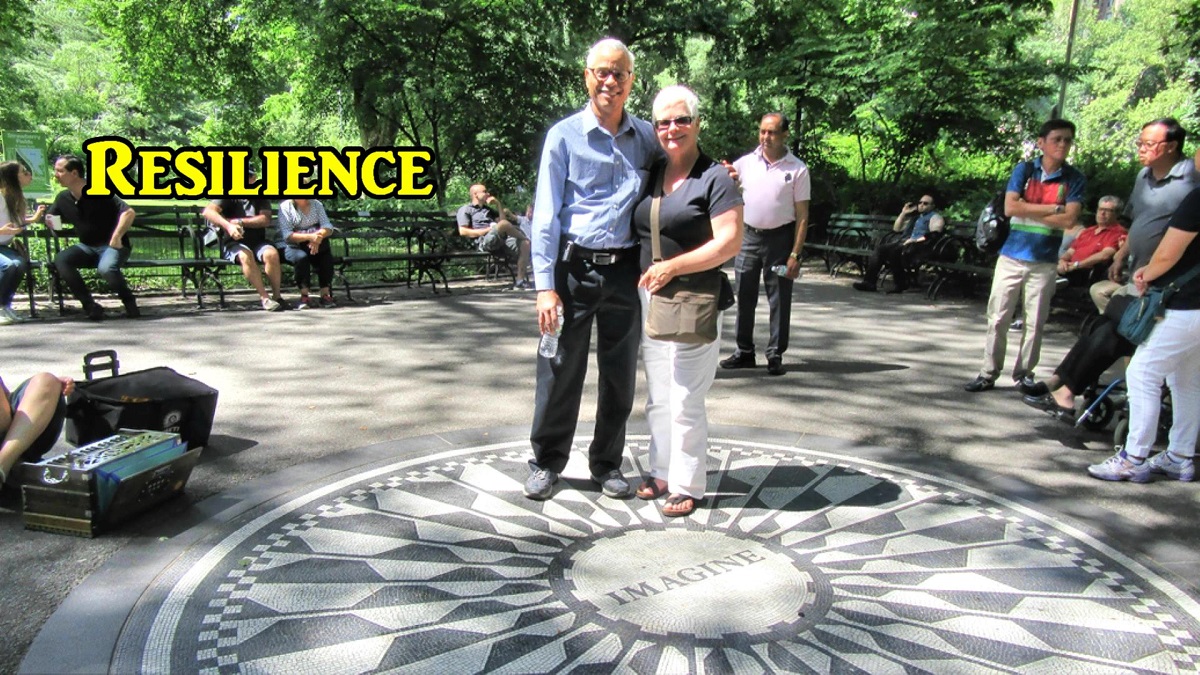
Sometimes I think about my mother, Ruby, who died 15 years ago. She reared me and my brother Randy. Those were hard times. She had a sense of humor but the years wore on her, making life a burden. She was a lifelong resident of our hometown.
Jim Amos
Ruby Amos
In early life,
she worked as a waitress. She often spoke with great pride of her ability to
carry more hot dishes barehanded from kitchen to table than anyone else she
knew.
She was an avid card
player. If you couldn’t remember what tricks were played in a game of 500 —
Ruby had you for lunch.
She lived in the heart
of the downtown area on Federal Avenue for decades — and loved every minute of
it.
She enjoyed the noise of traffic, the city waking up,
the city eating lunch, and the city having a hard time going to sleep at night.
She lived high above the street, and didn’t mind the
stairs at all, even late into her seventies.
Ruby loved going out for coffee. She was a great
talker, and thoroughly enjoyed hearing a good joke. She knew that sharing
troubles and laughter were both healing. In her own way, she reminded us to
cherish our blessings wherever we found them. We will remember.
I am very lucky to have
some snapshots of my family, and even luckier to find one of her smiling brightly.
She suffered to put it simply. Religious faith helped. We went to church regularly
for some time. My father never went to church as far as I know, but for some
reason, at one time I remember there was some hint that he might attend Sunday
service with us. A new pastor had taken over and I remember he said flatly that
he would never allow some “Black buccaneer” in his church.
Over the years, I’ve
thought about whether the pastor’s emphasis was on my father being black or
just a buccaneer. He was both. Anyway, he never showed up and that’s just as
well because he surely was not welcome.
At Christmas, we used
to get gifts of fruitcake from members of the church. I think that was one of
the first times I learned how to lie from my mother who didn’t want to hurt
anyone’s feelings who was making a gift to us during the holidays. I hated that
fruitcake so much; I can’t even begin to tell you. But I told anyone who gave
that stuff to us that I loved it.
Television was about the only entertainment we had. We used to watch Ed Sullivan, Lost in Space, and all those other shows you can see on MeTV nowadays. We used to play Old Maid with a pretty creepy deck of cards.
Mom could climb a lot
of stairs without any problems, well into her eighties. I climb a lot of stairs
too as a C-L psychiatrist in the general hospital, and I’m well into my sixties.
We’re alike in many ways.
One of the differences
was that she could play cards better than I ever will. I’m just not so good at
remembering what cards have been played. However, I try and my wife and I
occasionally play a game called Schnapsen, in which remembering what’s been
played is critical to winning. I lose more than my share of games.
Mom was a fast walker.
We often walked from our house to Central Park downtown, which was quite a
distance. We didn’t have a car, so walking was the only way to get around. I
take after her because I’m a pretty good walker. Ask any trainee who rotates
through the psychiatry consult service.
When she got very old,
her health worsened and her nerves got the best of her more often than not. I
remember she made me promise I’d never put her in a nursing home. I did promise—and
I eventually had to break it.
Mom and I were very much alike. I treasure our differences.