The Fourth in the Series Uncovering Hawkeye History: The Next Chapter: Blazing New Trails (1998-2047)

The final installment of the series of Uncovering Hawkeye History, which is The Next Chapter: Blazing New Trails (1998-2047) was recorded and is now posted on the University of Iowa Center for Advancement website. You can view it below here:

Honoring Dr. Mady Gray

I remember Dr. Mady Gray. I met her wen I was a student at the HBCU, Huston-Tillotson College (now Huston-Tillotson University) in Austin, Texas. This was way back in the mid-1970s. She died in 2014 and a legacy entry is all I can find about her on the web.

She was one of the kindest persons I ever met. She taught the Intensive English course to the international students. It was a tough job. Many came from politically complicated areas of the world, including Iran. I remember hearing many heated diatribes against the Shah. Mady took it in stride.

I don’t remember calling her Dr. Gray. Dr. Jenny Lind Porter called her by her first name, Mady. I think that’s what I called her.

She invited me to her home to meet her family. Her husband cultivated a hydroponic tomato garden in the house. He was very devoted to it.

Mady was very patient with the international students. They loved her. All of us did.

Mady performed music in the annual faculty talent show, held in the Agard-Lovinggood Chapel (now Agard-Lovinggood Auditorium). I can’t remember much about it. She sang a song and accompanied herself on the guitar. The song had something to do with how many flags she has been under, which included Texas, the United States of America, Indonesia, and there must have been several others because her introduction to the song made a reference to Six Flags Over Texas, but she had even more “Flags over me.” She was funny and endearing during the performance.

I think Mady Gray deserves special mention for Women’s History Month.

Picture Credit: Pixydotorg

The Language of Diplomacy

The other day, I got to thinking about a previous interest in my early youth in learning to speak Esperanto. I couldn’t stick with it. It’s a constructed language, invented out of Russian, Polish, German, French, and English by a Polish ophthalmologist named Zamenhof in the late 19th century. It was supposed to be a universal second language for international communication. In that sense it was supposed to be the new language of diplomacy, a distinction held for a long time by French, although some would say that English has replaced French as the lingua franca. Don’t ask me why.

Diplomacy is a big thing today, given the recent Russian invasion of Ukraine and other forms of aggression around the world. The art of diplomacy used to include rare skills like respect, restraint, civility and the like, which are in short supply all over the planet.

Esperanto is said to be relatively easy to learn and there’s even a free Google translator available.

I need to give a shout-out to somebody who has given a very even-handed description of the benefits and limitations of Esperanto, Jakub Marian. Although Jakub notes that Esperanto is the most widely spoken constructed language, it’s still spoken by too few people to be recommended as a practical means of communication. Jakub also doubts that it could be the new lingua franca, although there are many who would disagree. Interlingua might be a candidate for that. There’s a Wikipedia article about it, but I can’t read it because it’s in Interlingua.

Moving right along, I might be embarking on one of my famous tangents here, but I noticed from a web search that of my favorite undergraduate college professors, Dr. Jenny Lind Porter-Scott (who died in 2020), was honored in October of 2021 with a poetry reading of her work in Texas.

The Texas Poets’ Corner sponsored A Virtual Evening with Jenny Lind Porter where she was honored by the appearance of Professor Cyrus Cassells, 2021 Poet Laureate of Texas.

Dr. Porter was a benefactor and patron of the Texas Poets’ Corner. In May of 2021, West Texas A&M University (WTAMU) announced a $2.8 million gift from her estate. She was appointed Poet Laureate of Texas, appointed in 1964 by then Governor John Connally. In 1979, she became the only woman to receive the Distinguished Diploma of Honor from Pepperdine University. She’s also in the Texas Women’s Hall of Fame.

She also taught English Literature at an HBCU, Huston-Tillotson University, where I learned a lot from her back in the mid-1970s. She’s a fit person to remember and honor during Women’s History Month.

Why is this relevant to Esperanto? Esperanto translates into “one who hopes.” It suggests hope for a better world, which we all should do if we want the human race to survive. Dr. Porter embodied that.

There has been talk of nuclear weapons and World War III lately, connected with the Russian invasion of Ukraine. A couple of Dr. Porter’s poems in her book, The Lantern of Diogenes and Other Poems, published in 1954, probably speak to this menace, albeit in classical language that might sound a little formal nowadays.

I have an old copy of this volume. A Texas bookseller sold it to me with a handwritten message, which I have kept:

Thanks for your purchase! It’s rare to find a book of this age that when you open the pages it creaks like it is unread. I guess someone liked the way it looked on their bookshelf! Haha. Enjoy the book and Happy New Year.

The two poems in the volume which probably are relevant to the present-day crisis in Ukraine are “Atomic Age 1953″ and ‘Atomic Age 2000.”

The first one sounds like it was written during the early 1950s when there was a lot of anxiety about atomic bombs.

The second one was puzzling to me until I looked at a timeline of the Nuclear Age. It sounds just as full of fear as the first, although it’s set much later in time, in the year 2000, about the time when the dismantling of Russian nuclear weapons was happening. But as time passes, uncertainty grows about the threat of nuclear war.

D-ro Porter skribis ambaŭ pecojn kaj ŝajnas, ke ŝi havis vizion de ĝena estonteco. Ni ne povas lasi ĉi tiun libron sidi nelegita sur la breto. Ni bezonas diplomation, ĉu ĝi estas en la formo de nova lingua franca aŭ simple simpla angla. English translation of Esperanto below:

Dr. Porter wrote both pieces and it seems like she had a vision of a troubling future. We can’t let this book sit unread on the shelf. We need diplomacy, whether it’s in the form of Esperanto, another new lingua franca, or just plain English.

Featured Image picture credit: Pixabaydotcom

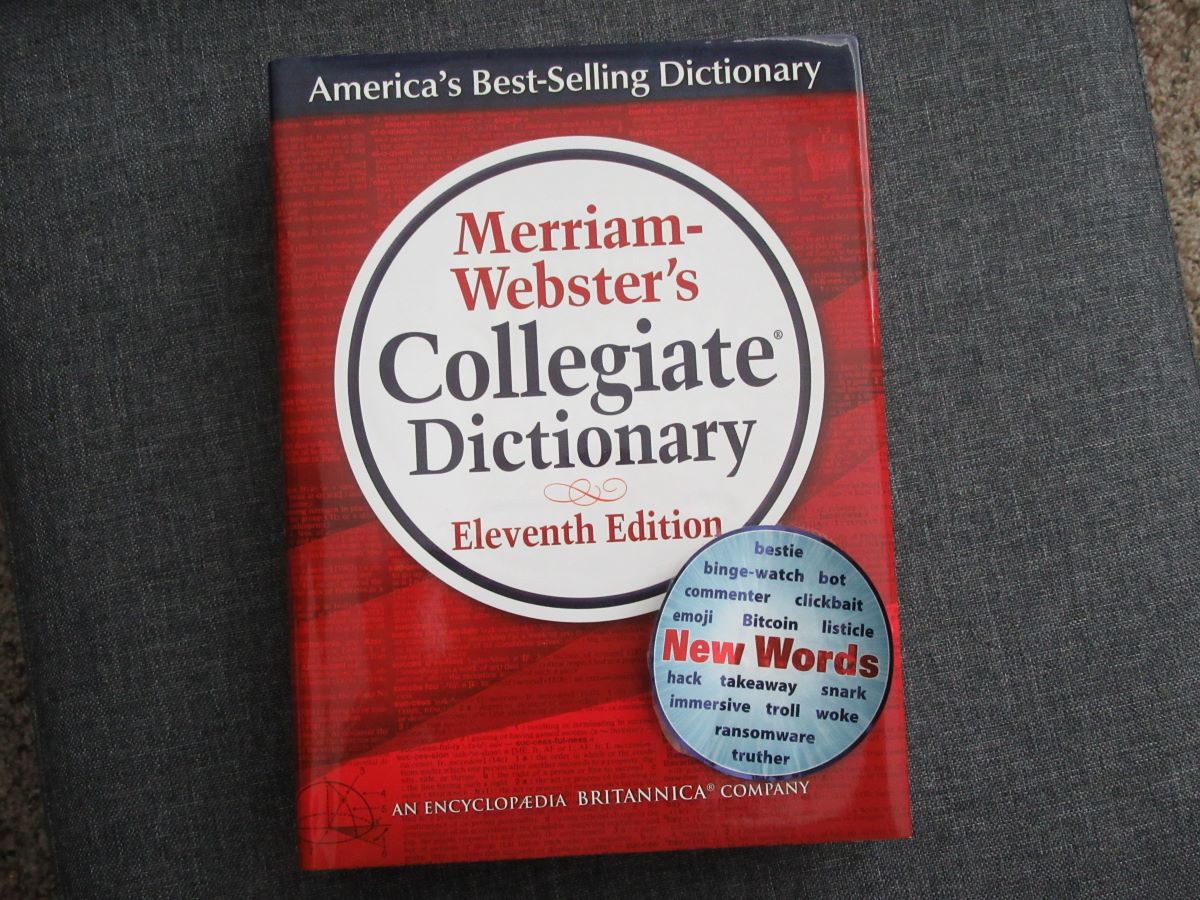
Don’t Look in the Dictionary for Mental Health and Mental Illness

I read an interesting article in Clinical Psychiatry News the other day, written by Dinah Miller, MD in the Shrink Rap News column, “Psychiatry and semantics.” Dr. Miller’s point was that it’s sometimes hard to define terms when discussing mental illness and stress.

Can stress be defined as a mental illness? What the heck is the definition of mental illness? What does it mean to say that someone is depressed?

Way back in 2006, when I was an Associate Professor in psychiatry, I wrote an introductory article for a series of articles about stress for Psychiatric Times. The title was “Stress and the Psychiatrist: An Introduction.” I had a tough time defining stress also. In fact, the first 2 paragraphs of my article say it all:

“Defining “stress” and how it is expressed and managed in both psychiatrists and patients is a difficult proposition. This Special Report focuses on stress and the middle ground between the impulse to say there is no such thing as “stress” and the tendency to describe many explicit addressable issues under the monolithic term, “stress.”

I remember what my ward supervisor once told me about stress when I was a resident in psychiatry. I was presenting a case about a patient who was depressed and complaining about all the stress in her life. At that point, he barked testily, “There’s no such thing as stress!” He went on to direct me to be more specific in my interviewing techniques in an effort to identify the concrete problems that my patient was experiencing, instead of substituting a sort of shorthand (i.e., “lazy”) method of indicating the source of her depression. In his view, the term “stress” was being overused and it had become virtually meaningless.”

At the time I wrote that article, there was surprisingly little data about stress in psychiatrists. On the other hand, it was well known that psychiatrists are prone to stress, burnout, and suicide.

As I read my own article, I was surprised at how little things have changed over the years. In fact, they have gotten much worse. There is a lot of talk about The Great Resignation. Health care workers are leaving their jobs in droves, often due to the pressures of the pandemic.

I was and still am a fan of Stephen Covey’s wisdom:

Covey disparages the “Great Jackass” theory of management, in which the carrot-and-stick style of leadership dominates. Adopting a principle-centered leadership paradigm entails a commitment to change at the individual level, working from the inside out. This means building self-awareness, identifying one’s own vitally important goals, and creating a balance that includes a devotion to living, loving, learning, and leaving a legacy. In turn, this might lead to identifying a personal mission and a vision for an organization that empowers others to find their own motivation to service. Many of the problems that Covey finds in big business exist in the mental health care sector-low trust, low productivity, and environments in which the cultures of blame and victimization, political gamesmanship, and apathy spread. These are often the issues that get subsumed under the name of “stress” in academic departments, community mental health centers, and private practice groups.

Of course, despite how wise I sounded back then, I still ended up with burnout. It took a lot out of me, but it didn’t destroy me.  According to some figures, about 40%-60% of physicians are burned out.

One guy I admire a great deal is Dr. George Dawson, MD. He writes the blog Real Psychiatry. He has been fighting the pressures in the health care system for decades and signs that he’s still going strong are in the Psychiatric Times article “The Bureaucratic Takeover of American Psychiatry: George Dawson, MD, DFAPA.

The interviewer for that article, Dr. Awais Aftab, MD asked George what he thought about the system that psychiatrists must work in which tends to discount the effect of social adversity, poverty, and trauma on the psychiatric distress of their patients, yet corner them into a pill-prescribing role.

George replied, “I heard repeated stories about how child psychiatrists and pediatricians were expected to provide a miracle medical cure to address complex psychosocial problems.

As the number of prescriptions increased there was concern that children were being overmedicated and treated with inappropriate prescriptions like atypical antipsychotics. At that point a consultation line with a child psychiatrist was provided for these prescribers to discuss the prescriptions. At no point were the psychosocial parameters addressed and they still have not been addressed to this day.”

In response to Dr. Aftab’s question about George’s recommendations for how to address this situation:

“I have been writing and speaking about this in various capacities for the past 30 years. During this time very few physicians have been interested in a political fight. The only major figure in psychiatry I can recall is Harold Eist, MD, when he was the president of the American Psychiatric Association. Practically all other professional organizations are silent about managed care and pharmacy benefit managers as malignant forces. There is a lot written about burnout and how these companies waste physician time to the tune of billions of dollars a year. Nobody seems to talk much about all the free work physicians have to do to support the conflict-of-interest-driven decisions these companies make. There is some current interest in the Maintenance of Certification (MOC) issue that professional organizations have also ignored. But in general, nothing will happen until many more physicians get activated and unite. There is still the escapist dream out there that “I can still do private practice,” but that is vanishing fast.

After decades of elaborate planning and recommendations, I am back to the beginning. The course of action at this point is fairly simple. There has to be united agreement on the fact that managed care companies and pharmaceutical benefit managers work against the best interests of physicians and their patients. Once that recognition is there, a rational course of action may follow. But it does take physician professional organizations taking a clear stand against these business practices.

I do think there is a lot to be said for specialty clinics that are outside of the administrative scope of managed care companies. The first groups I noticed were radiologists and anesthesiologists. They were followed by surgical specialists. I do not see many large free-standing psychiatric practices. I think it is possible to practice with a group of like-minded psychiatrists and provide excellent care based on an agreed upon practice style that will result in greater degree of professional satisfaction than is possible as an employee of a managed care company. The required business expertise and planning is a deterrent to most but knowing what I know about the landscape today I would have tried it much earlier in my career.”

George announced his retirement in January this year. But he’s not done.

Dr. Miller suggests that we come up with a lingo that’s more precise to clarify what mental illness and mental health are and what our positions as practitioners and patients ought to be—and what we should do.

So that naturally led me to Allen Frances, MD, who wrote the book on the subject several years ago, “Essentials of Psychiatric Diagnosis: Responding to the Challenge of DSM-5.” Dr. Frances was also interviewed by Dr. Awais Aftab, MD, leading to the article “Conversations in Critical Psychiatry: Allen Frances, MD, published in May of 2019.

Dr. Frances says this about what he believes is “among the noblest of professions”:

 “I fear that too many psychiatrists are now reduced to pill pushing, with far too little time to really know their patients well and to apply the rounded biopsychosocial model that is absolutely essential to good care. We also have done far too little to educate the primary care doctors who prescribe 80% of psychiatric meds on the principles of cautious prescribing, proper indications, full consideration of risks, and the value of watchful waiting and tincture of time.

 I despair the diagnostic inflation that results from a too loose diagnostic system, aggressive drug company marketing, careless assessment, and insurance company pressure to rush to judgement. Diagnoses should be written in pencil, and under-diagnosis is almost always safer and more accurate than over-diagnosis. And, finally, I object to the National Institute of Mental Health (NIMH) research agenda that is narrowly brain reductionistic; it has achieved great intellectual masterpieces, but so far has not yet helped a single patient. So, in sum, I have loved being a psychiatrist, but wish we were better organized to end psychiatric suffering.”

Essentials of Psychiatric Diagnosis by Allen Frances

He rejects the dichotomy that mental illnesses are either diseases or problems in living as far too simplistic.  He deplores the tendency of the DSM 5 to confuse mental disorder with “everyday sadness, anxiety, grief, disappointments, and stress responses that are an inescapable part of the human condition.” He says the DSM should be only a tool to help guide clinicians’ judgment, not replace it.

So, let’s stop stressing ourselves out looking in the dictionary for definitions of mental health and mental illness.

with permission from the publisher Guilford Press

The Dictation Dragon Breathes Fire on the Windows 11 Word App

I just got my new computer a couple of days ago, the Dell XPS 8950. I posted about this some time ago. Of course, It came with Windows 11 installed. I’m still trying to get used to it. It has a voice recognition feature that puzzles me. I can dictate in Word and probably other Microsoft applications. However, it seemed to work whether I used a microphone or not. That was puzzling until I relearned by trial and error that my webcam audio connects when my desk stand USB microphone is not plugged in.

I dictated this entire post on the Microsoft Word application containing the dictation feature. I write all my posts in Word before copying and pasting it into my blog, So, this was just an extra step. However, it made the work of creating the post a lot harder.

I’m pretty sure this feature was on my last computer and the Word application that came with it. I just can’t recall it. I know I never used it.

However, it still works the same way as another voice recognition system I have used before-and that’s, of course, Dragon Naturally Speaking. I left a few examples of how this usually works in this blog post just for fun. I have italicized them, but that was probably unnecessary.

I use dragon a lot. When I was working as a. The guy in the dental hospital.

I left that last sentence just exactly the way it was when I finished dictating it, just to make a point.

The point is obvious. You can get a lot of comical errors from using voice recognition software. And I noticed a lot of times that I could type a lot faster than I could dictate.

I used to use a disclaimer, like a lot of other doctors did, after I finished my dictations, similar to the one below:

“This note was created by speech recognition. Minor errors in transcription may be present. Please call if questions.”

This won’t provide immunity to malpractice. But mistakes were so. Problem. In voice recognition software that it seemed necessary to make apologetic–sounding excuse for them.

The voice recognition Feature in the. Microsoft Word app. Has the same problem. You’d better not hesitate more than a microsecond in between words. It’ll put periods everywhere you do that. It will also create capital letters for words that don’t require that. Who are?

That last quotation mark? Who are? Was supposed to be.

OK, OK, it was supposed to give me a new line because I said, “new line,” but it’s a lot faster to just type than to dictate. Notice that the italicized portions of this post are becoming more prevalent. Move on. I said “new line” please:

I don’t think these hiccups are specific to Windows 11 or Microsoft or the Dell XPS 8950.

In fact, I’m pretty happy with my new computer. It does weigh 30 pounds (I did not say 40 pounds, but for some reason the dictation dragon asked me if I said that).

But it’s a lot quieter, except when it’s breathing fire.

picture from pixydotorg

Third Video in the Uncovering Hawkeye History Series: “Endless Innovation: An R1 Research Institution (1948-1997)”

Here’s the video recording of the third session in the Uncovering Hawkey History Series: Endless Innovation: An R1 Research institution (1948-1997).” Enjoy!

Video of UI Breaking Barriers: Arts, Athletics, and Medicine (1898-1947)

Here is The University of Iowa video of the presentations from the February 8, 2022 Uncovering Hawkeye History series (2nd in the series), celebrating the 175th anniversary of the University of Iowa beginnings in 1847. The audio is fine on this one.

Thoughts on “The Next Chapter: Blazing New Trails (1998-2047)

The final presentation of the series night before last, Uncovering Hawkeye History in honor of the 175th anniversary of the University of Iowa was a fascinating review of the changes in architecture of the campus, how local and national politics influenced the university and vice versa, as well as the expansion of the role of philanthropy to support its mission over the years. A YouTube video of the recorded presentation will be posted here at a later date.

There was not enough time to do much more than briefly mention the new trails being blazed by three leading programs. However, you can read more about them in Iowa Magazine.

Craig Kletzing is the principal investigator for NASA’s TRACERS mission. He’s a UI physics and astronomy professor who secured the largest research grant in the history of The University of Iowa in 2019 to study the interactions of the magnetic fields of the sun and the Earth.

Christopher Merrill is the director of the International Writing Program and professor of English. Merrill has made cultural diplomacy mission to over 50 countries. He once served on the U.S. National Commission for UNESCO and the National Council on the Humanities.

Dr. Patricia Winokur, the executive dean of the Roy J. and Lucille A. Carver College of Medicine, physician and professor of internal medicine—infectious diseases, and leader of Iowa’s Covid-19 vaccine clinical trials. Dr. Winokur is a nationally recognized leader in the field of infectious diseases. She created the UI Vaccine and Treatment Evaluation Unit, one of the top vaccine research programs in the country and one of only nine nationwide funded by the National Institute of Allergy and Infectious Diseases.

At the end of the presentations, university archivist David McCartney announced that he will be retiring as soon as next week. He wished everyone well and the presenters I’m sure all wish him well.

He has held the archivist position since 2001. He has led a very interesting and varied life. A story posted in The Academic Archivist on November 12, 2020 by Katie Nash, MLIS, CA reveals he got his undergraduate degree in journalism from the University of Wisconsin-Madison. He received his MA in history and MLS (master’s degree in library and information studies) in 1998, both from the University of Maryland at College Park.

He also was a reporter for radio stations in Alaska and the Midwest. I’ll bet that was interesting. He was between warehouse jobs in the summer of 1992 when he drove around the Midwest, researching Carrie Chapman Catt, the woman suffrage leader and founder of the League of Women Voters. It turns out Catt grew up near David’s hometown. That work led to publishing a collection of Catt’s papers in a catalog.

David has done a great many things. He believes that his profession’s worth and legitimacy are being challenged, and that the value of the work he and others do is often unrecognized. He firmly believes that institutions and corporations have to understand their responsibility to maintain a strong archives and records management program. He’s very motivated to advocate for his profession.

I probably would not have looked for any further information about David McCartney had he not announced his retirement at the close of the final presentation of this series. He made his point simply and humbly, saying the challenges of keeping up with the technology demands of his job were part of the reason for his retirement.

He even said he hoped he would see the presenters in the Ped Mall (officially named City Plaza), a pedestrian mall in downtown Iowa City near the UI campus, built in 1979 as the centerpiece of the city’s urban renewal project. It’s a popular gathering place for students and locals. There are concerts, jazz festivals, and art shows.

As a relatively recent retiree myself in June 2020 (19 months or 86 weeks or 606 days ago but who’s counting?), I can relate to David on this issue. Many of those I worked with were sad to see me go. I think many will be sad to see David go.