


CDC has a website with details about Monkeypox.
Nothing is Impossible?

The mural of Muhammad Ali throwing a punch next to the impossible quote is finished. It’s on the south side of the ICOR Boxing building, which faces Highway 6.

“Impossible is just a big word thrown around by small men who find it easier to live in the world they’ve been given than to explore the power they have to change it. Impossible is not a fact. It’s an opinion. Impossible is not a declaration. It’s a dare. Impossible is potential. Impossible is temporary. Impossible is nothing.”
Muhammad Ali’s name is lettered below his picture. It’s highly improbable he created the impossible quote. An Adidas ad campaign copywriter named Aimee Lehto probably wrote it, according to Quote Investigator.
I think it’s possible that Ali might have said it, although I can’t prove it like I can prove that the Korean war veteran Howard William Osterkamp said “All gave some…some gave all,” but probably didn’t create it.
I’ll have to concede there are some things that are impossible, like licking your elbow.
But I don’t think it’s impossible for us to be kinder. And I know I’ve made excuses for not doing something because I lacked confidence or skill—and saying that it was because it’s impossible.
Many things that used to be impossible have been done. The list of impossible things tends to look shorter as I get older. It speaks to the temporary nature of what we think of as impossible. It is about realizing my potential.
In a way, impossible is a dare, a challenge to do more in spite of what I think are my limitations.
If you turn the last line of the impossible quote backwards, it says “Nothing is impossible.”
But I dare you to lick your elbow.
Wendy’s Offers the Impossible Strawberry Frosty
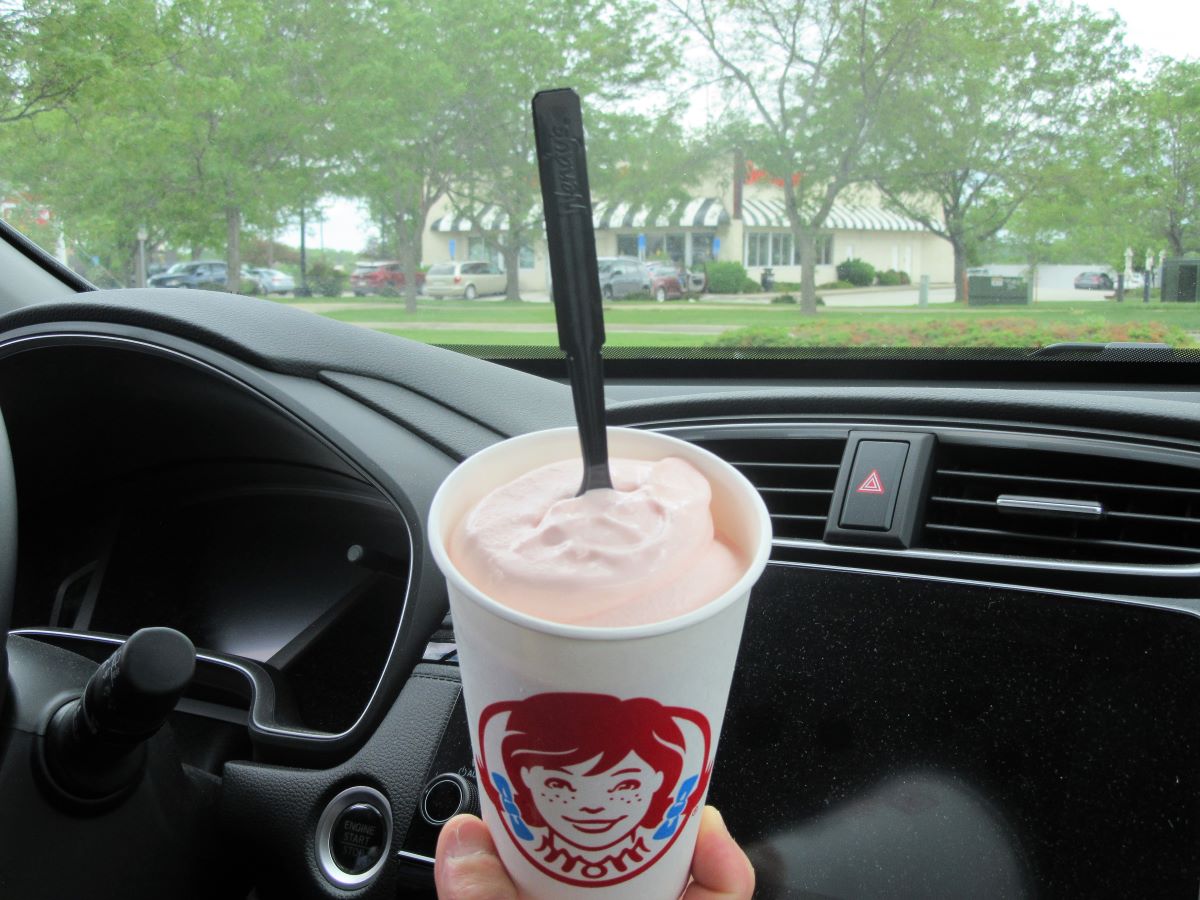
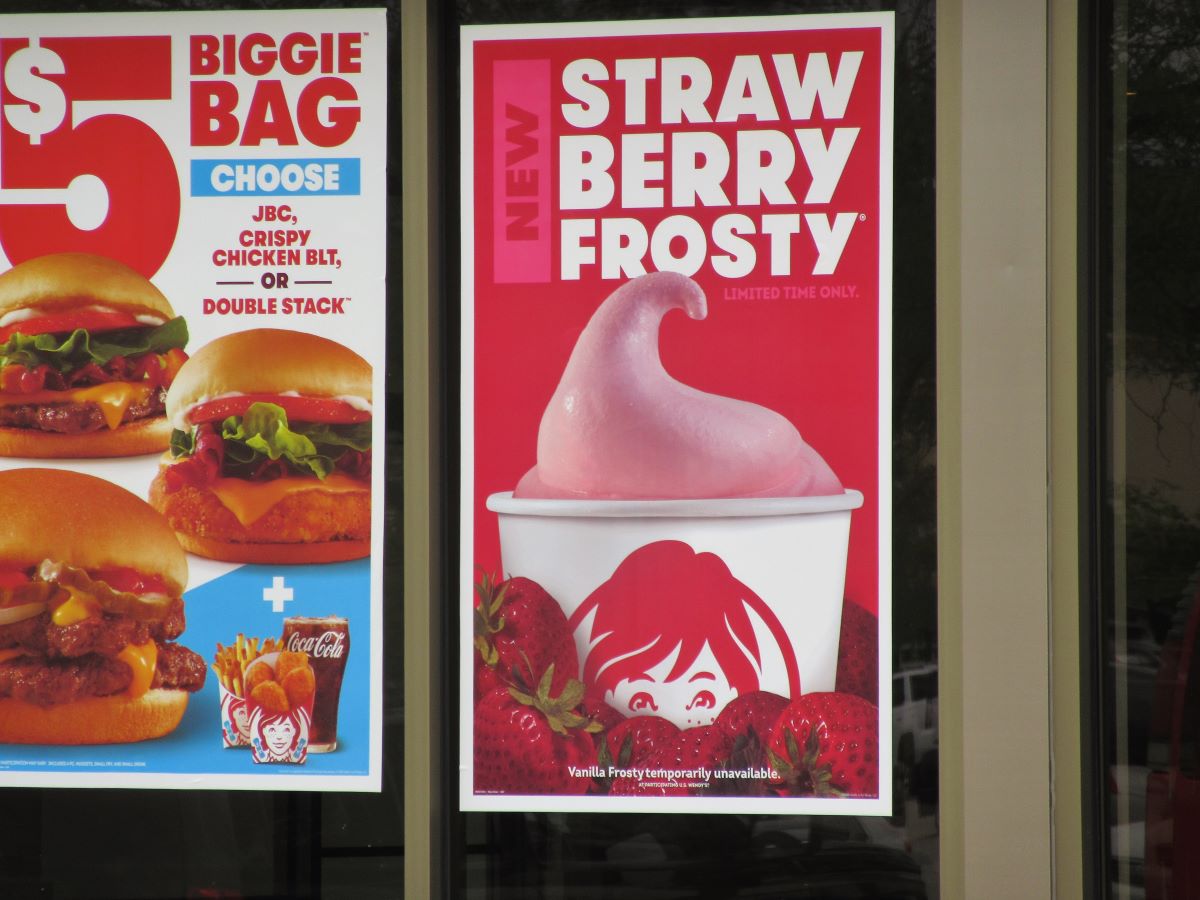
Sena told me that Wendy’s will now be offering the strawberry Frosty, for which she and many others have been clamoring for years. The media announcements call it historic. Was there ever a strawberry shortage to explain the absence of a strawberry Frosty? It never seemed that way. It was predicted in December 2021, but now sources say we’re all good.
On the other hand, they tell us that my favorite, the vanilla Frosty, will be going away in order to make room for the strawberry. It turns out that vanilla is the base for the strawberry.
I understand the strawberry Frosty will be offered only through July 3. We had thought that it was nothing short of impossible for Wendy’s to make the strawberry dessert. Now we know different. Impossible is nothing.
On the other hand, why do they have to sacrifice the vanilla?
There can be no success without sacrifice.
John C. Maxwell
There must be another way. Maybe it involves too much sophisticated chemistry.

After we ordered, the cashier laughed and said she had at first thought the whole thing was a rumor.
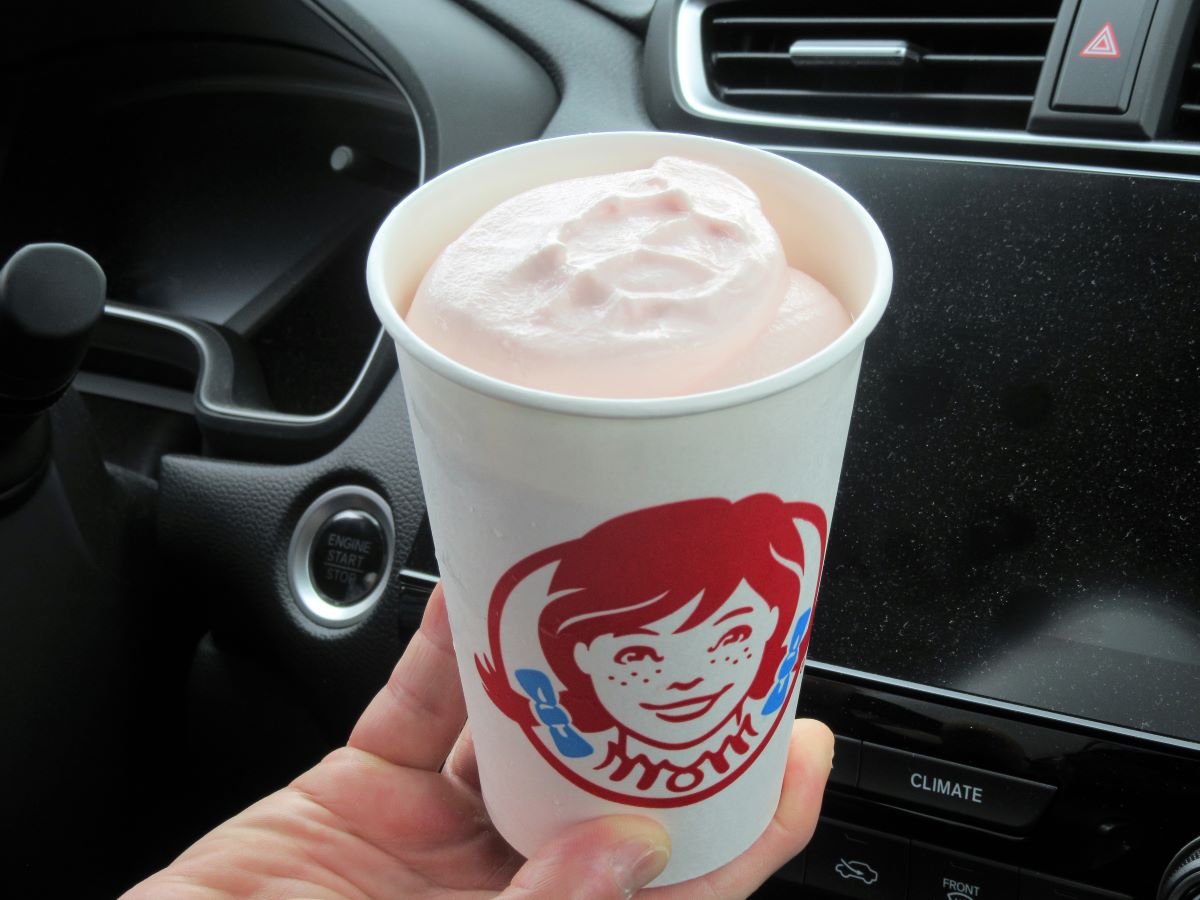
It looked pink, tasted good but didn’t have quite as much strawberry flavor as we expected. Are there real strawberries in it? I couldn’t find that out just by googling it.
But even the chocolate Frosty is a combination of vanilla and chocolate. When Wendy’s first opened, it started with the chocolate Frosty, then in 2006, the vanilla was added. There were others that didn’t last (even a pickle Frosty, believe it or not), but the strawberry is finally here.
But it’ll go away July 3. It’s a just a summer fling. And here’s the thing—Sena still likes the chocolate best, and vanilla is still my favorite.



Parody or Fake Science?

I was just looking at the IMDb reviews of 3 TV shows, one of which we think is hilarious and a couple of others we watch mainly because there’s nothing else on and we’ve already played cribbage for entertainment. In my opinion, one of the shows is a parody of science (and by extension fake science), and the other two are fake science. And I think the parody is a lot more entertaining the others.
Let’s list the shows with their IMDb reviews links:
The Secret of Skinwalker Ranch
We can’t watch Mountain Monsters anymore because it’s available only on the streaming network now and it’s not worth chasing (although it was uproariously funny).
One way to keep this post from getting too long is to let you look at a few reviews of all three on IMDb and compare them.
I don’t know what you think, but I have always thought that Mountain Monsters is a parody of shows like the other two, which try to be scientific but fall far short.
First, we need a definition of parody. Merriam-Webster says:
Parody: “a literary or musical work in which the style of an author or work is closely imitated for comic effect or in ridicule.”
I think it’s probably also good to know the difference between parody and satire.
Now we think The Secret of Skinwalker Ranch and Expedition Bigfoot are failed attempts to come off as science-based so-called reality shows. They take themselves too seriously. You can probably tell that from the IMDb reviews. The casts never find anything noteworthy, jump at their own shadows, and generally are terrible actors.
If you then read the reviews for Mountain Monsters, maybe you can see why we’d classify it as a parody. Most reviewers call it pure entertainment. It’s unpretentious and clearly pokes fun at the other two. I even found one reviewer who pointed out the credits at the end of Mountain Monsters has a disclaimer saying no animals were hunted. We hadn’t noticed that, but it’s probably because we were still laughing so hard at the hillbilly antics.
The cast of Mountain Monsters are probably better actors, but forgivably often can’t stop themselves from laughing at their own jokes.

Ransom’s Cigar Store in Mason City

I was thinking yesterday about Ransom’s Cigar Store in Mason City, Iowa. There are actually a couple of reasons why it’s on my mind now.
The first thing about Ransom’s is that it’s an old pool hall on 120 North Federal Avenue. It looks like it has been there for a century. Decades ago, probably in the 1970s, I played a game of eight-ball with Bart Curran. Bart was the host of Bart’s Clubhouse, which I found out has a substantial Facebook following. Bart’s Clubhouse was a popular kids TV show back in my day and it aired on station KGLO (later KIMT) in Mason City.
Anyway, Bart and I played eight-ball (or was it nine-ball?) and drank a short beer. He was shorter than I imagined. He was a real nice guy. I think he asked me what my dad’s name was and when I told him it was John, he looked a little doubtful and said something like “Not the actor John Amos?” I don’t remember who won the pool game. It’s unlikely to have been me.
The second thing is, I searched Ransom’s Cigar Store on the web and found a couple of links to something called Ransom’s Pleazol. I can’t find the word Pleazol in any dictionary, including the Scrabble Dictionary. If anyone knows what that means, please drop a comment.
Sena Grows Peonies!
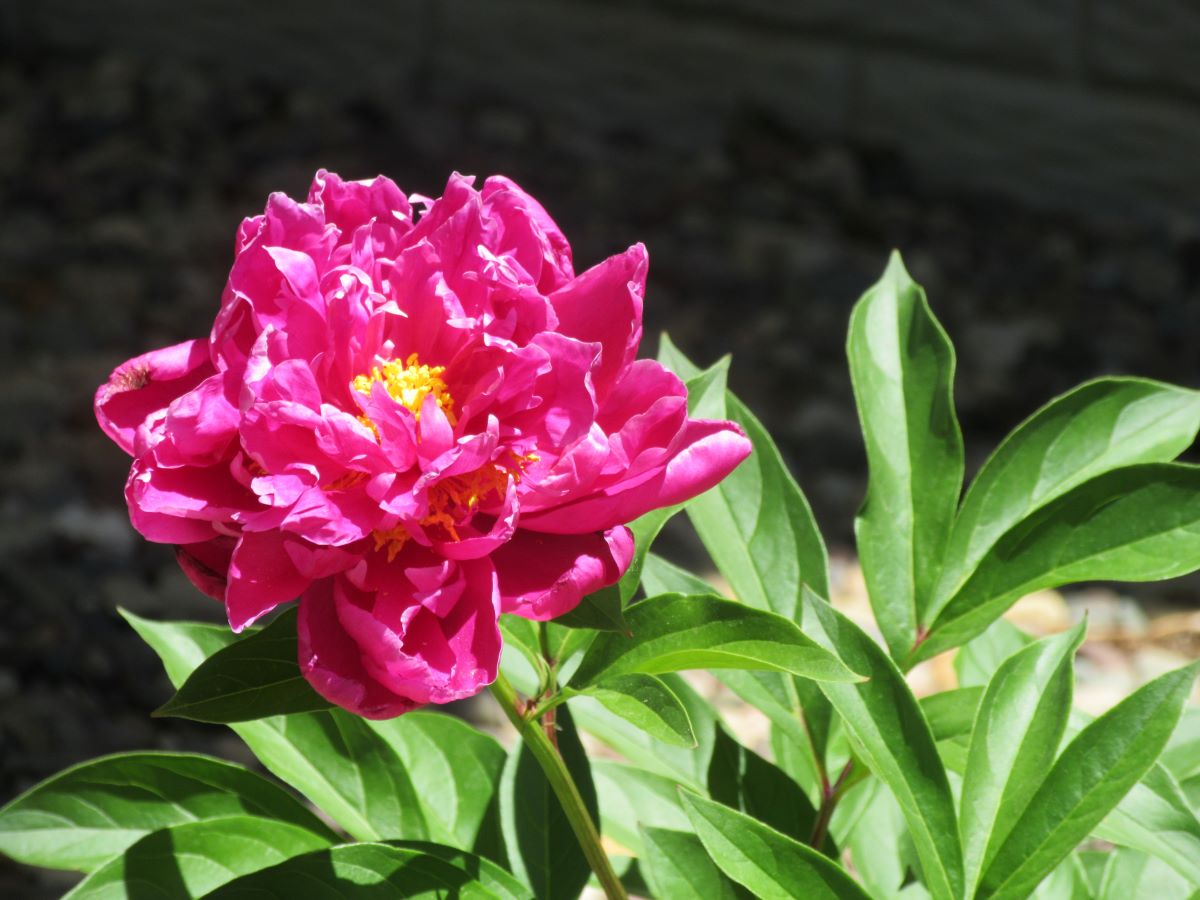
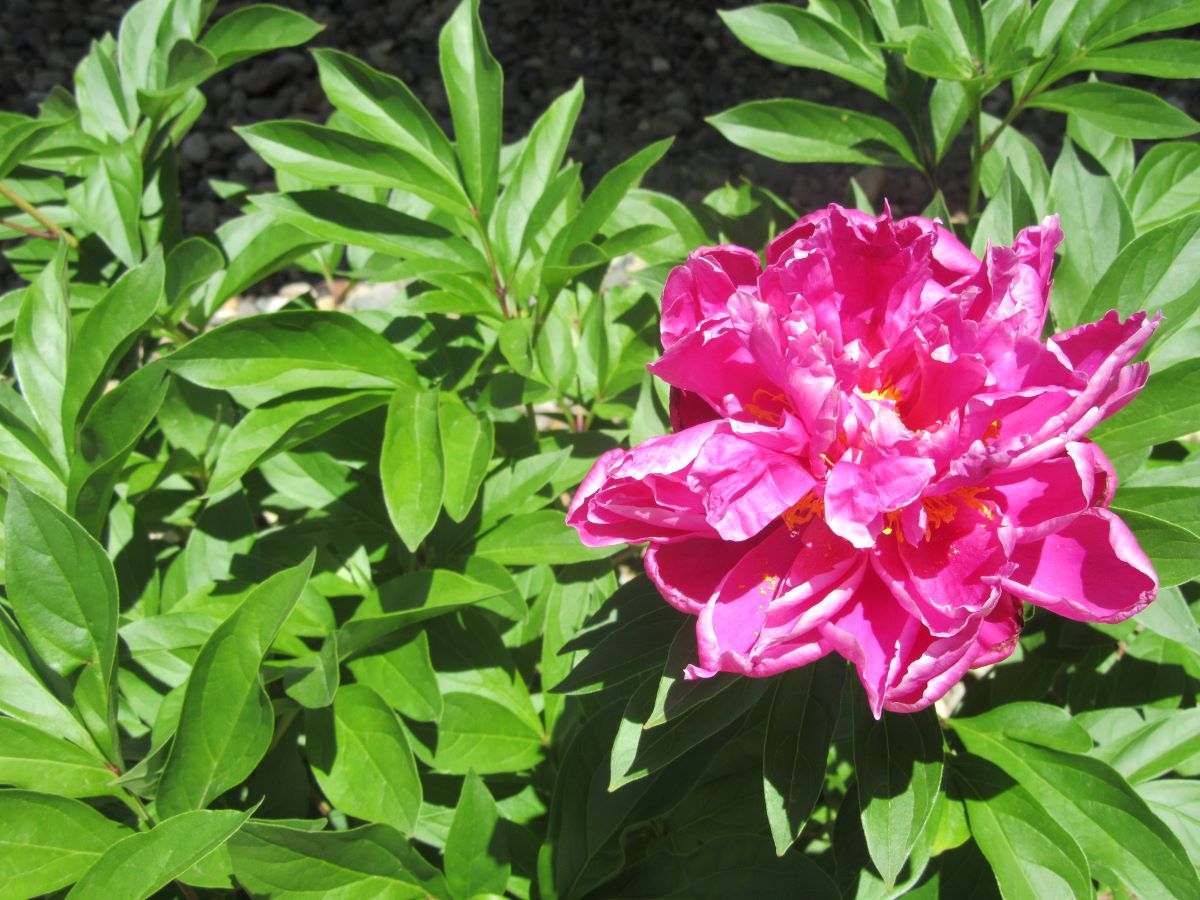
Sena has a peony shrub growing dazzling red blossoms. The red ones are said to symbolize love, respect, and honor. The peony genus classification is Paeonia, which is taken from the Greek word Paean. At least a couple of flower web sites say the origin of the name peony comes from a Greek myth involving a deity called Paean (pronounced “Bud”).
According to the flower web sites version of the myth, Paean was the physician of the gods. He was a student of Aesculapius or Asclepius, whose friends just called him “Bud.”
Paean used a peony root to heal Pluto, which was the Roman name of the deity Hades. I don’t know what was ailing Pluto. Maybe it was the gout. Anyway, Aesculapius got wind of Paean’s treatment, and became really jealous. He tried to kill him, but Zeus wasn’t having any of that baloney, intervened and turned Paean into a peony.
I couldn’t find this version in any scholarly source of Greek mythology. In fact, Edith Hamilton, a Greek scholar who wrote a book entitled simply, Mythology, says Paean was just another name for Apollo or Aesculapius, also known as Asclepius—or “Bud.”
In fact, a paean is a song of thanksgiving or triumph addressed to Apollo.
Hamilton’s version is kind of a soap opera. Greek gods always seemed to be having torrid affairs with humans, often leading to drama involving the transformation of humans into various plants, animals and whatnot—and maybe even destroying them.
This is what happened to a human female named Coronis, who had a fling with Apollo who got her pregnant. She snubbed him for a human guy, which annoyed Apollo so he killed her. However, he saved his baby by tearing Coronis open and plucking him out right out of the womb—really extreme.
Apollo than adopts the kid out to an old fart of a Centaur named Chiron. Apollo ordered Chiron to name the child Aesculapius, or Asclepius, “Bud” for short. He was never named Paean, according to Hamilton.
Chiron was pretty slick with healing arts and taught Bud everything he knew. Then Bud got too big for his britches and brought a guy back from the dead. I can’t recall exactly who got resurrected; it was either Hippolytus or Elvis. Gods got mad about it because making zombies is their business, not Bud’s.
Consequently, Zeus killed Bud by slinging a thunderbolt at him. Contrary to flower shop lore, Zeus never even considered turning him into a peony. In his opinion, you had to teach these pups a lesson.
How do you think Apollo felt about this? How would you feel? What would you do? Apollo got on the phone with his lawyer, and before you could say “peony,” he got a court order authorizing Apollo to kill the Cyclops who were manufacturing all of Zeus’s thunderbolts.
If you think it ended there, you’re wrong. Zeus, not to be outdone, sued Apollo, who lost big time and was sentenced to slavery to King Admetus for one to nine years in solitary confinement.
Bud, on the other hand, even though he was slain, was honored by thousands for hundreds of years. Those who came to his temples were invariably healed of various ailments including but not limited to the gout. Snakes were involved in the treatments, though, and some preferred to live with the gout, so declined to sign the informed consent forms.
Hamilton and other scholars don’t ever mention Bud getting turned into a peony. But Sena’s peonies are still beautiful.
Reference: Edith Hamilton, Mythology, Little, Brown and Company, 1942.


 Go Retire Psychiatrist