GFCI Outlet Torture

There’s this exercise machine commercial which has actors ask “Do you want some more?” This is the usual exhortation letting you know more pain and torture is needed if you really want to get in shape.

Well, replacing Ground Fault Circuit Interrupter (GFCI) outlets is one way you can get more torture—but only if you really want it.

I’ve replaced GFCI outlets before in our house, but yesterday I had to replace a few more. I got charley horses in places I didn’t know I had. It also took a lot more time. It took me several hours to replace just 3 of them.

You have to know something—I’m not a natural handyman. I’m also not really a trainable handyman. I’m terminally resistant to handyman stuff of any kind.

I didn’t find out the next fact I’m going to mention until after I installed the GFCIs, but since 2015, so-called Self-Test GFCIs are available—which is what Sena bought but didn’t know it. They automatically monitor the GFCI periodically. Ours self-test every 3 seconds, which sounds impressive, until you hear the rest of the story.

I found the International Association of Electrical Inspectors (IAEI) blog post which has an interesting post about Self-Test GFCIs. First, they describe why the Self-Test GFCI was made, which is that consumers rarely, if ever, tested them once a month as recommended to ensure they work.

New requirements now ensure that power denial to the GFCI and any downstream connected devices (which is what the term LOAD refers to on the GFCI outlet) when the GFCI wears out. But there’s a special exception for the self-test:

The general requirement in the event of a test failure during the auto monitoring also requires “power denial”. However, there is a special exception for two specific failure modes that allows an audible or visual indication as an alternative. These failure modes open the trip solenoid and open the solenoid driver component and make it impossible for the device to trip with these components open. The improved functionality of the GFCI resulting from the auto monitoring will provide enhanced protection for the consumer against electrical shock hazards.

The auto monitoring or self-test feature periodically tests the electronics from the sensing toroid to the trip solenoid driver and will pick up a failure of the majority of components in the GFCI.  It cannot, however, test the trip solenoid driver, the trip solenoid itself or the contacts to see if they are welded. Testing those components can only be done by actually making the GFCI trip. It is not practical to have GFCIs randomly tripping off during self-test cycles. So, the manual test button is still provided and it should still be used periodically as recommended. The presence of the self-test function is not allowed to affect the tripping of the device within the specified trip time requirements if an actual ground fault occurs.

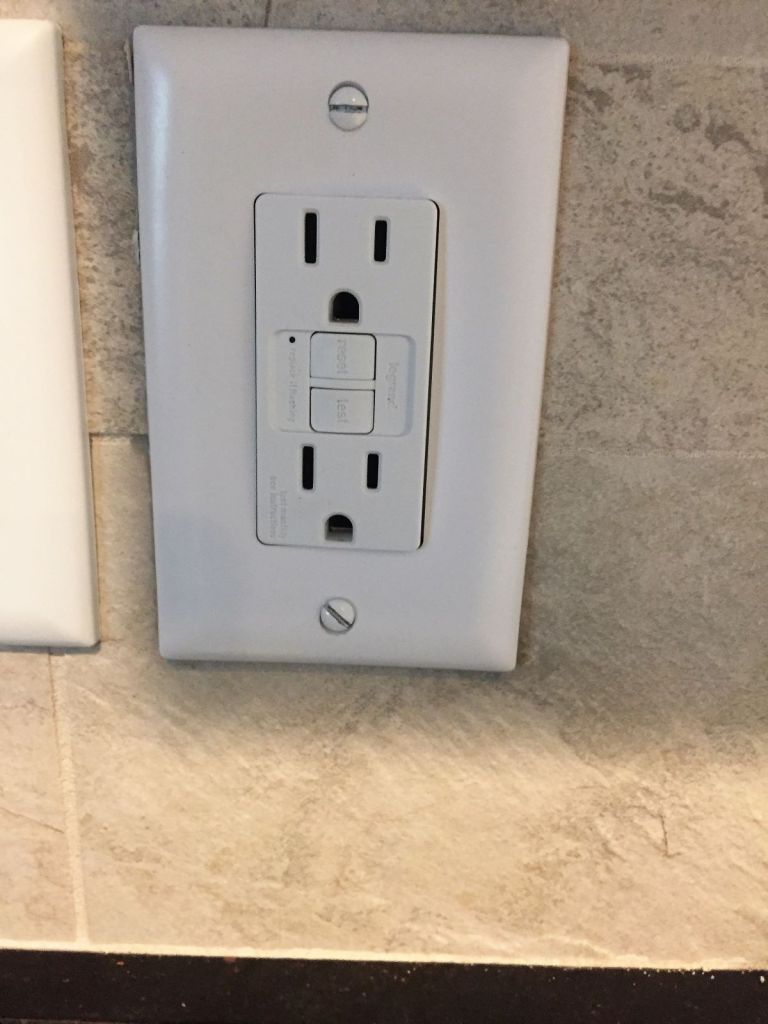
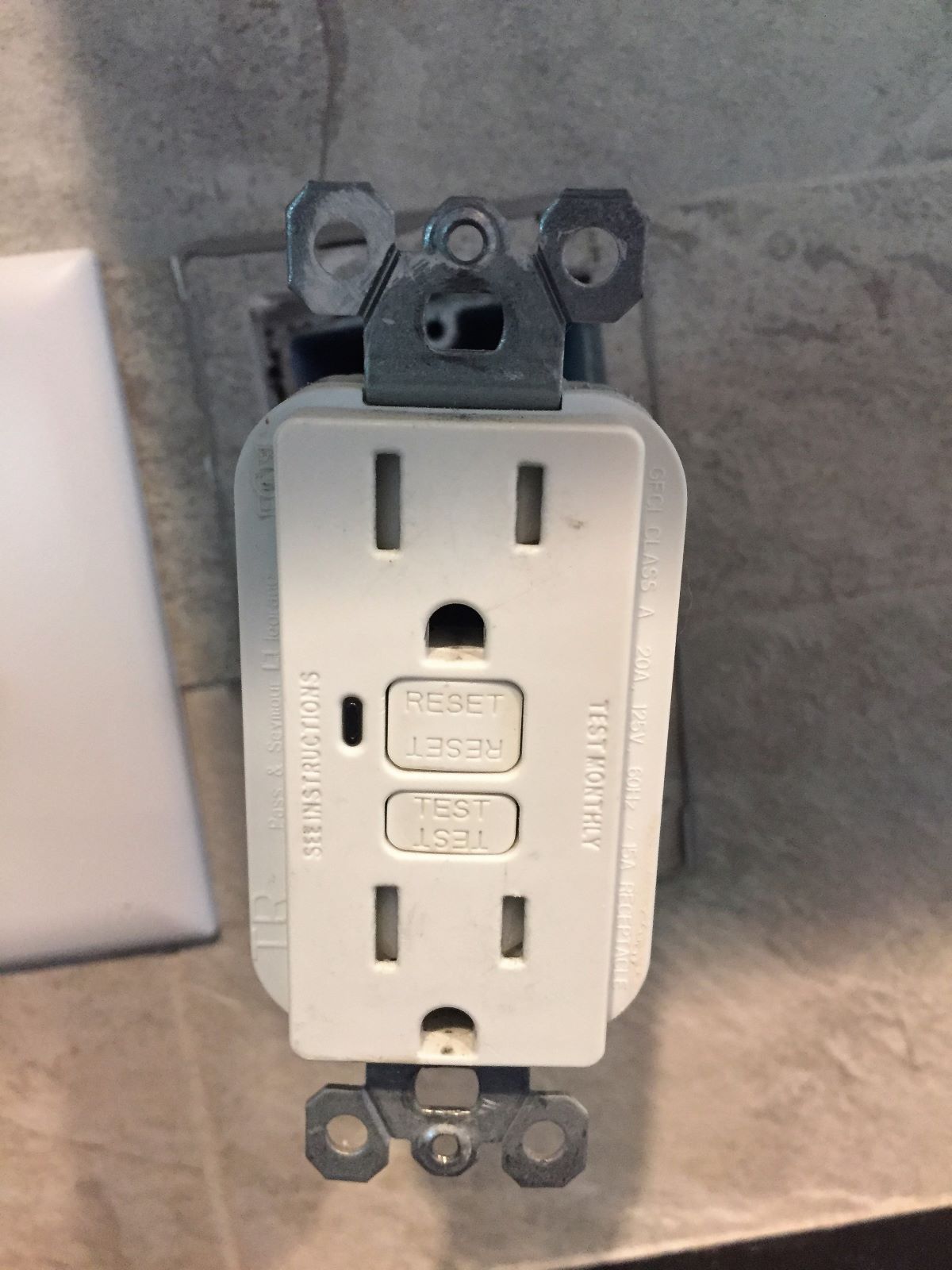
OK, two things to notice here. One is that if you have the self-test model which has a visual indicator (the red test light). Our GFCI indicator light would flash for this. That means you can’t plug a big night light in it, which would block your view of the test light.

The other thing to note is that you still have to periodically manually check it—even if it automatically self-tests every 3 seconds. That’s because if the GFCI actually did self-test the real-life relevant components, your hair dryer, radio, lava light or whatever would stop working at awkward moments.

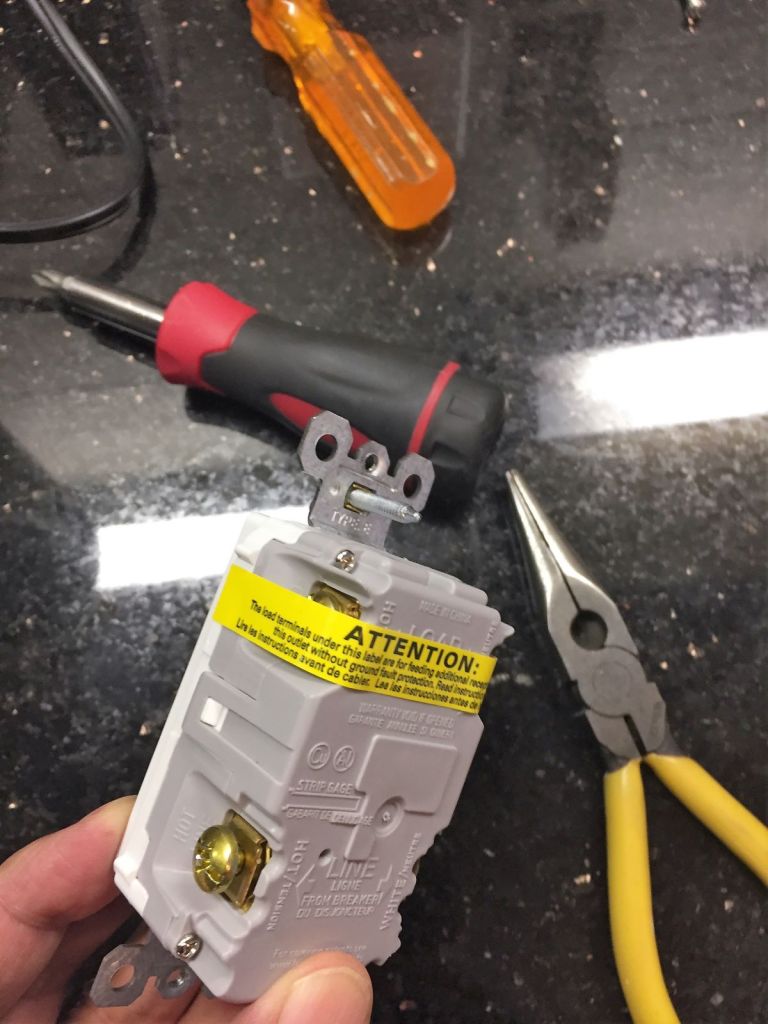
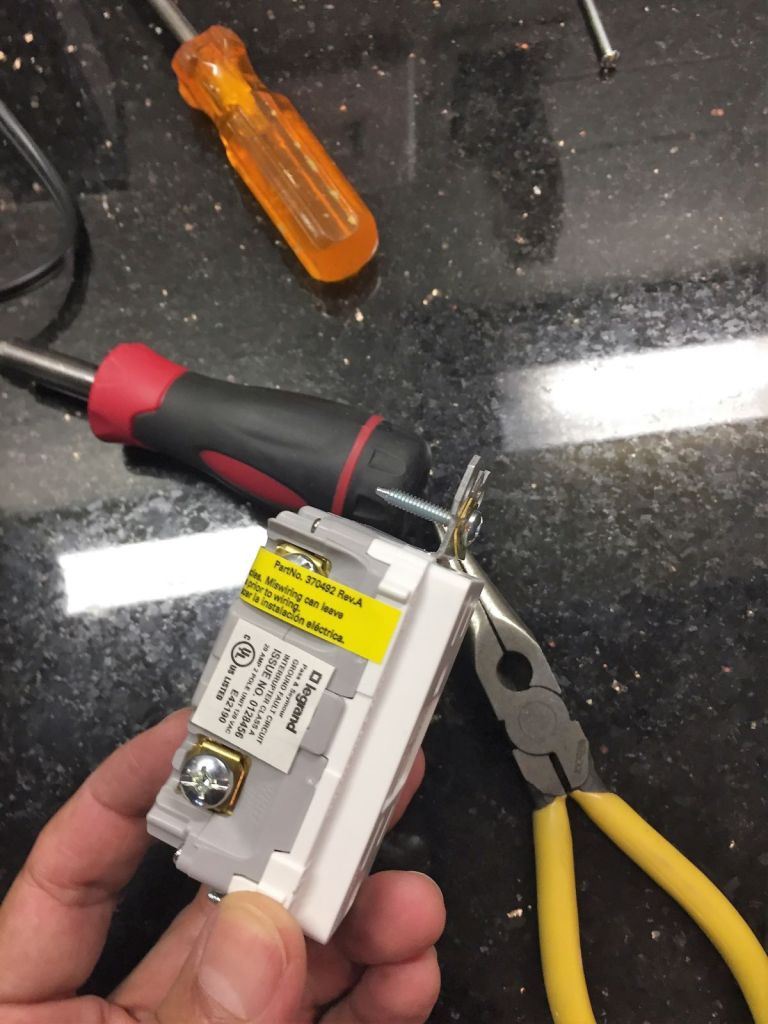
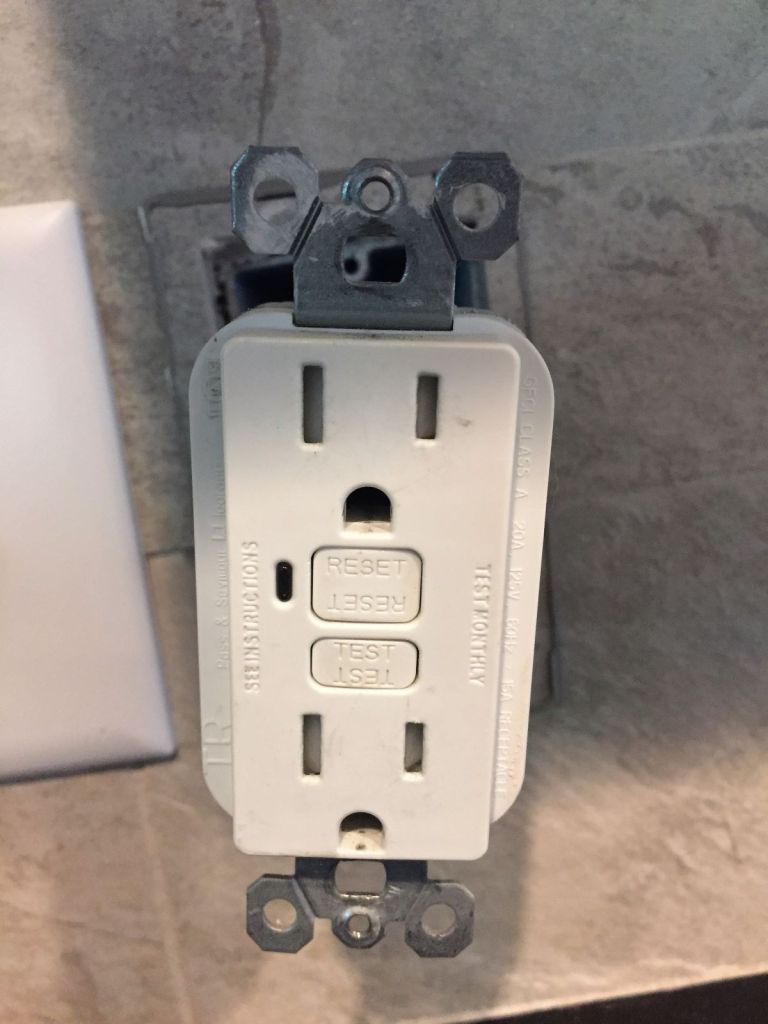
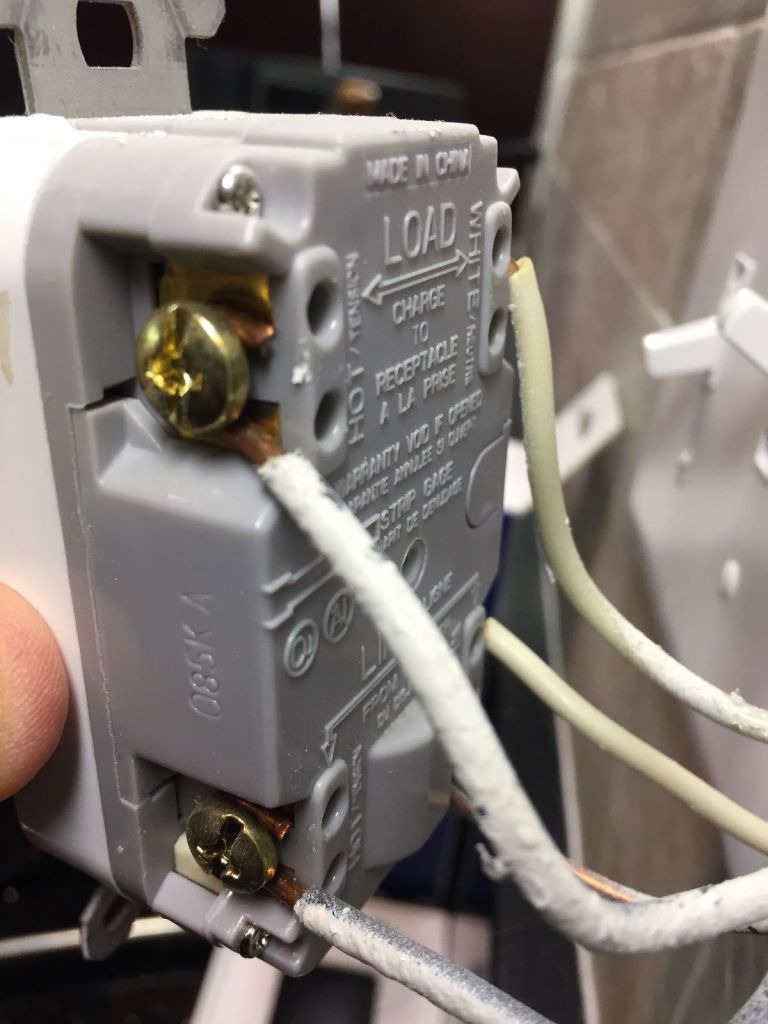
Anyway, I had a heck of a time getting the GFCI wires out from under the terminals. The procedure is not markedly different from changing an ordinary electrical outlet. You just have to make sure you get the right wires to the right terminals for LINE (in from the circuit breaker) and LOAD (out to the lava light). Changes in the design and explicit instructions are included with the product.

The hot wires are usually black (which go to the brass terminals), the white wires are usually white (which go to the silver terminals), and the ground wire is usually an orange unjacketed cooper wire. There can be as many as 4-6 wires.

Should an ordinary homeowner or an electrician replace a GFCI outlet? In fact, the included instruction sheet starts off with just this question, “Should you install it?” And yes, the word “you” is underlined. You only see it after you bought the product in the hardware store and open the package.

This does not bolster my confidence, which is already low to nonexistent.

The instructions say that you should make sure that you:

  • Understand basic wiring principles and techniques.
  • Can interpret wiring diagrams.
  • Have circuit wiring experience.
  • Are prepared to take a few minutes to test your work, making sure that you have wired the GFCI receptacle correctly.
  • Have updated your life insurance policy and your last will and testament (just kidding).

I’m not going to mention that the first 4 bullet points don’t count for ordinary consumers who are trying to save the cost of hiring an electrician to do the job for you. According to the Costimates website, this can range from $140-$310. The cost of an intensive care unit admission, funeral, etc., don’t appear anywhere on this site.

But the cost of a GFCI unit is about $20. Any questions?

I kept the instructions on the counter. I made sure I had enough lighting. We have under cabinet lighting on a separate circuit from the outlets. I shut off the relevant circuit breakers.

THESE ARE NOT INSTRUCTIONS. THIS ENTIRE POST IS AN ANECDOTE. YOU SHOULD FOLLOW THE INSTRUCTIONS INCLUDED IN THE PACKAGE OR HAVE A CUP OF COFFEE WHILE WATCHING THE ELECTRICIAN DO THE WORK (HAVE YOUR CHECKBOOK OR CREDIT CARD HANDY).

When I took the face plate off and pulled out the receptacle, I notice that most of the wires had a white coating, which a lot of wires seem to have. It’s uneven and it might be drywall spray? I can always tell which wires are white, black and ground. The ground wire is on the bottom of the receptacle, secured with a green terminal.

The hardest part was freeing the old copper posts from under the terminals and getting the news ones on. I twisted myself into a pretzel as I wrestled with the job. I was right next to the toggle switch for the overhead light and jumped every time I accidentally switched it off—which was several times.  I could have done without intermittent sudden flashes.

I followed the instructions closely, especially for testing my work. They worked. I started the job of replacing just 3 receptables about mid-morning. I finished at 2:00 PM. The average estimated time for this chore is about 15 minutes per GFCI outlet. I was sore in places I didn’t know I had.

But I saved hundreds of dollars doing it myself. Would I do it again?

Give me a little time to think it over. And remind me; how often should I manually test these things which automatically test themselves every 3 seconds?
HHS Campaign for Updated Covid-19 Updated Vaccine Booster

See the HHS Campaign for the Covid-19 updated vaccine booster for older adults-a high risk group. We’re scheduled for both the flu shot and the updated booster.

University of Iowa Surpasses Harvard, Princeton as No. 2 for Writing

The University of Iowa, according to U.S. News & World Report is No. 2 for writing in the latest rankings. It’s the only public university in the top 10, behind No. 1 Brown University. It’s out in front of Harvard, Cornell, Duke, and Princeton.

How to Get the Updated Covid-19 Vaccine Booster at University of Iowa Hospitals & Clinics

Here’s an updated link to how to get the updated Covid-19 vaccine booster (often called the Omicron bivalent booster). It’s sometimes faster to get this booster at local pharmacies, although there’s less urgency now.

Single Administration Therapeutic Interfering Particle (TIP) Reduces Covid-19 Viral Shedding & Pathogenesis in Hamsters

Proceedings of the National Academy of Sciences (PNAS) recently published a study showing:

Abstract

“The high transmissibility of severe acute respiratory syndrome coronavirus 2 (SARS-CoV-2) is a primary driver of the COVID-19 pandemic. While existing interventions prevent severe disease, they exhibit mixed efficacy in preventing transmission, presumably due to their limited antiviral effects in the respiratory mucosa, whereas interventions targeting the sites of viral replication might more effectively limit respiratory virus transmission. Recently, intranasally administered RNA-based therapeutic interfering particles (TIPs) were reported to suppress SARS-CoV-2 replication, exhibit a high barrier to resistance, and prevent serious disease in hamsters. Since TIPs intrinsically target the tissues with the highest viral replication burden (i.e., respiratory tissues for SARS-CoV-2), we tested the potential of TIP intervention to reduce SARS-CoV-2 shedding. Here, we report that a single, postexposure TIP dose lowers SARS-CoV-2 nasal shedding, and at 5 days postinfection, infectious virus shed is below detection limits in 4 out of 5 infected animals. Furthermore, TIPs reduce shedding of Delta variant or WA-1 from infected to uninfected hamsters. Cohoused “contact” animals exposed to infected, TIP-treated animals exhibited significantly lower viral loads, reduced inflammatory cytokines, no severe lung pathology, and shortened shedding duration compared to animals cohoused with untreated infected animals. TIPs may represent an effective countermeasure to limit SARS-CoV-2 transmission.”

Ever See Bigfoot Splooting?

I wonder if anyone ever got a picture of Bigfoot splooting? Why not? It’s a large furry animal which has no way of cooling off other than by panting or lying on its belly with its limbs splayed out, which is the definition of “splooting.”

I found a news item about splooting squirrels and quickly found other examples of animals who sploot including but not limited to bears, dogs, and rabbits.

The word “sploot” turns up on a web site called Language Log, devoted to people who study word etymology.

And words definitely do matter, according to the authors of an opinion piece recently published in the Annals of Clinical Psychiatry (Black DW, Balon R. Words matter. Ann Clin Psychiatry. 2022 Aug;34(3):145-147. doi: 10.12788/acp.0072. PMID: 35849767).

I agree with Drs. Black and Balon. I dislike the word “issue,” for the same reason the authors do. It’s too vague. I have the same problem with “address” which I see in many news items headlines. which doesn’t give me a clue about what kind of action is being taken to solve a problem—other than just paying attention to it.

The word “sploot” drives my spell checker crazy. It’s not in the Merriam-Webster Dictionary. Neither is it in the Scrabble Dictionary. But it’s in the Collins English Dictionary, listed as British English.

Why “sploot” is any better than “splayed” is beyond me. If you have a picture of a splooting Bigfoot, let me know.

Featured image credit: Pixydotorg.

Thoughts on Suicide Risk Assessment

I know the term “suicide risk assessment” sounds very clinical. That’s because I did it for many years as a consultation-liaison psychiatrist in the general hospital.

The human part of it was using the suicide safety plan, which I got from the Centre for Applied Research in Mental Health & Addiction (CARMHA). You can download it yourself and adapt it by writing in the National Suicide Prevention Lifeline: 988 Suicide and Crisis Lifeline. That’s because the phone numbers on the form are specific to Canada.

Most often I interviewed patients in the intensive care units, where they were admitted after a suicide attempt. The interviews were very short if they refused to talk to me or were still delirious—often the case.

If they were awake and able to converse, the interviews were often pretty long. One way to connect with the patient was working on the safety plan together. I was often able to tell whether they were sincere or not by the level of detail they gave me about support persons they could get in touch with or things they could do to help them cope with whatever was troubling them.

A lack of detail in the plan, or refusal to work on some parts of it were areas of concern. If there were comments about friends, pets, or pastimes that spontaneously led to laughter (yes, that happened occasionally!), I was more confident that the patient was able to look toward the future and make specific plans for staying alive.

There is healthy debate about how useful specific suicide risk assessment scales are for predicting and preventing suicide. They are an essential part of the computerized medical records now, whatever anyone thinks of their reliability at predicting imminent suicide. I never used no-suicide contracts because well before the time I entered professional practice, most experts agreed that they don’t prevent suicide.

What was more useful for me as a clinician was to sit down at the patient’s bedside and, after getting the details about what the patient actually did in the suicide attempt and the events connected with it (along with a comprehensive and thorough history), I would get the safety plan from my clipboard, hold it up so they could see it and say, “Now let’s work on this; it’s your safety plan.”

I can’t tell you how often working on those plans, frequently for more than half an hour, led to laughter as well as tears from the patient. When it worked, meaning the relationship between us deepened, I sometimes did not find it necessary to admit the person to the psychiatric ward. While this occasionally alarmed the ICU nurses, things usually turned out fine later.

I Say Omicron and You Say Ahmicron

Well, we tried the Miracle Whip salad dressing on egg salad sandwiches the other day. I thought they tasted better than the tuna fish sandwiches we had before.

But maybe it was the mustard in the egg salad. Anyway, Sena says we’ll be going back to Mayonnaise after the Miracle Whip is gone.

The difference between Mayo and Miracle Whip may be debatable. But the difference between the updated Covid-19 vaccine Omicron bivalent booster and the previous Covid-19 vaccines is more important than just the difference between the two pronunciations of Omicron. I say OH-muh-kraan, you say AH-muh-kraan. You say tuh-May-toh, I say to-MAH-toh, etc.

Some clinicians are worried about the risk for substituting the wrong vaccine for the new bivalent booster. That’s more than just fussiness; administration errors have already occurred with previous formulations of the vaccines and their boosters. These are nontrivial, reportable mistakes.

Some say the different colors of the vial caps should be enough to prevent mistakes. The CDC advisory committee members disagreed.

It doesn’t seem to be enough to simply read the vial labels. Busy workers in pharmacies and primary care clinics have grabbled the wrong ones and injected them.

One person at the CDC ACIP meeting on September 1, 2022 said, “Structural problems required structural solutions,” referring to the vials which have similar packaging, an opinion shared by others. The Interim Clinical Considerations for COVID-19 Vaccines: Bivalent Boosters slide set makes the distinctions pretty clear.

I hope the pharmacies and other clinics get the pictures. Just because we’re all a little nervous about making mistakes doesn’t mean we have to call the whole thing off.

Big Mo Blues Show on KCCK

I heard Riveria Paradise by Stevie Ray Vaughn a few minutes ago on the Big Mo Blues Show on KCCK 88.3 radio. I think I may have this CD somewhere in the house. Big Mo really appreciates virtuoso guitar players like SRV. That’s because Big Mo is a guitar player himself.

Another thing Big Mo mentions every Friday night are the show’s sponsors. One is a place I never heard of. He says the name and it sounds like “May Rees (Reese?) hand battered catfish; it’s better because it’s battered.”

I can’t find it anywhere. I’m beginning to think it’s a Big Mo joke. It’s similar to another thing he says every Friday night: “It’s Big Mo with your blue prophylactic, protecting you from the demon seeds of life.”

September is Suicide Prevention Awareness Month

September is Suicide Prevention Awareness Month (SPAM). This spam is good. Here’s a link to the National Alliance on Mental Illness (NAMI) website on SPAM. And see the message below from University of Iowa President Barbara Wilson. We can all use this well-being toolkit as well.