Sena bought some Wagyu beef the other day at Walmart. It was $8 for 4 ounces. I know I said you could entice Bigfoot to shovel snow for you by giving it Wagyu beef—but I was just kidding.
But I’m not kidding when I tell you that Wagyu beef is available in Iowa. Now, Walmart probably gets its Wagyu beef from somewhere other than Iowa, but there are about 40 registered Wagyu operations in Iowa and even in Iowa City. Wagyu originated in Japan but there is such a thing as American Wagyu.
Normally when I hear that meat is heavily “marbled” I think it’s unhealthy. But according to the National Institute of Health, Wagyu makes for healthy eating partly because it has monounsaturated fats which makes it healthier for your heart.
The producers locally here have a bull named Oh-No and I guess he’s named after the cows who moo Oh-No whenever he gets a glint in his eye because I guess Oh-No needs doesn’t need any Nugenix Total-T. He produces perfect offspring just like himself every time.
So, if you’re looking for the great American Wagyu, look no further than Iowa City.
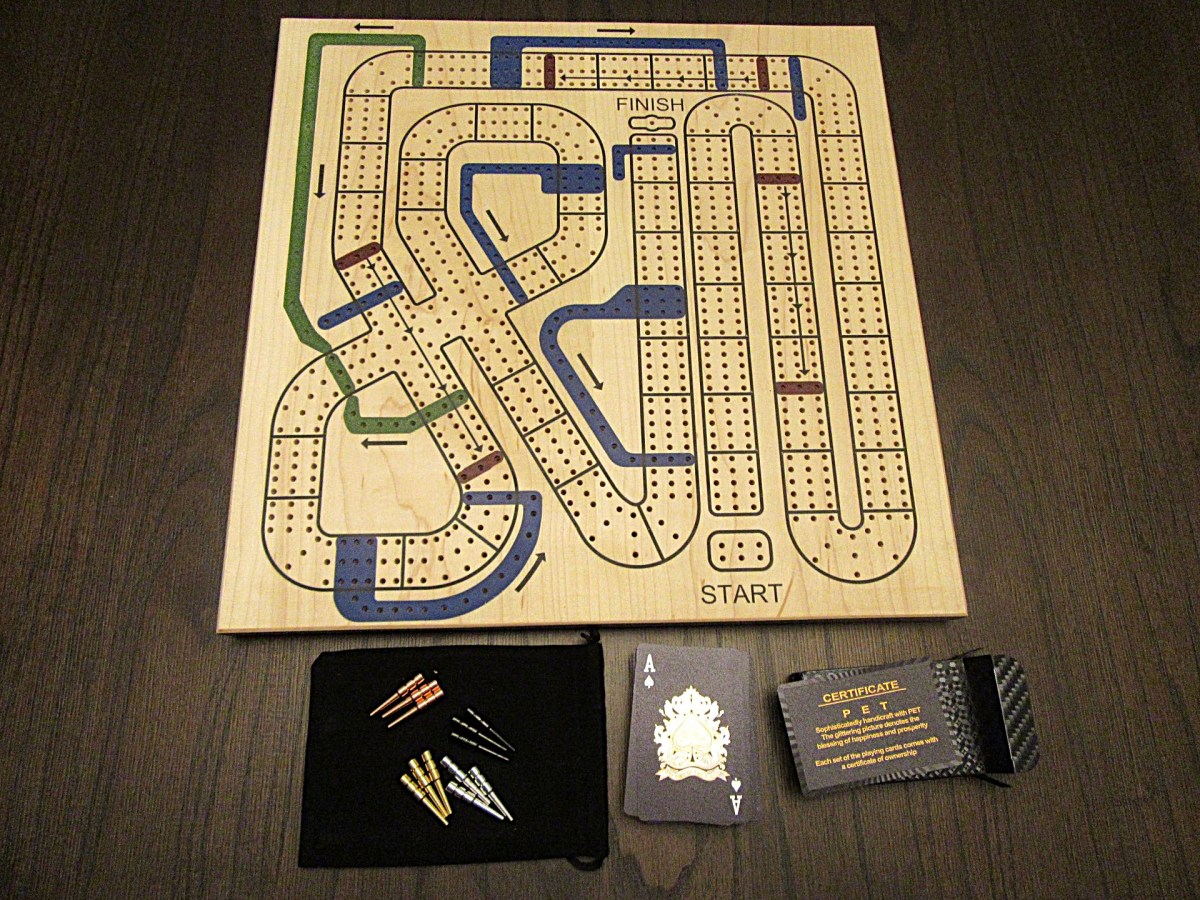
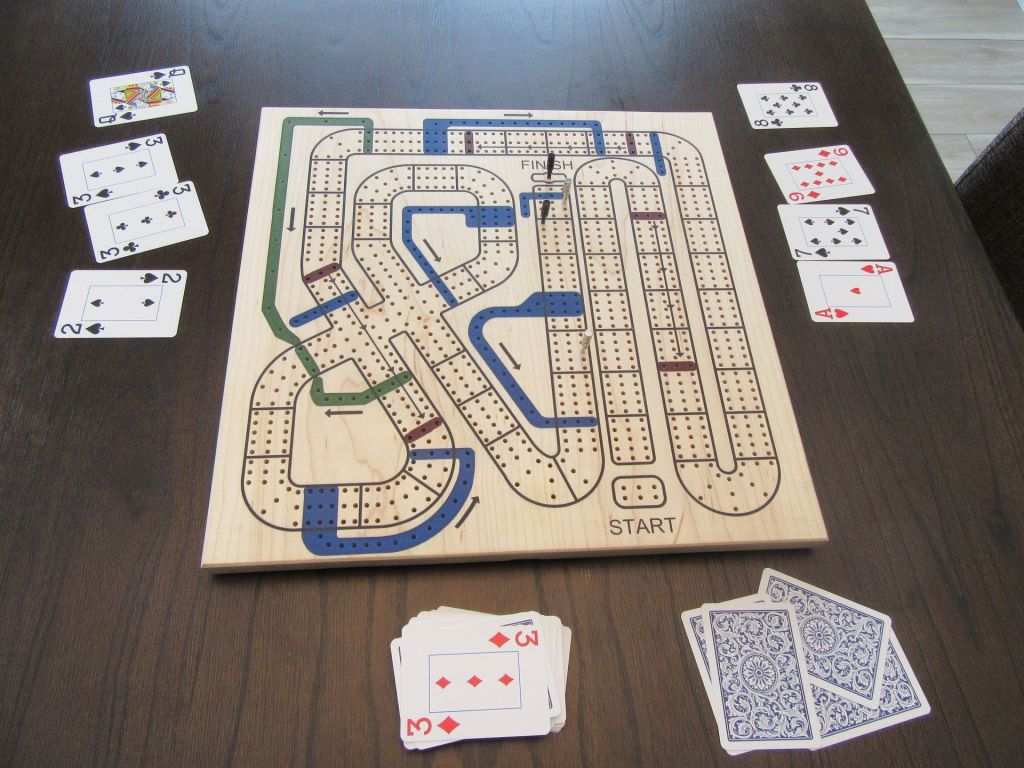
Well, we got the new Ebonwood Cribbage Wars board last night. It was delivered shortly after 8:00 p.m. We took it for a test spin this morning and our inaugural game went for well over 2 hours. By some miracle and partly because of the sadistically placed final Blue Penalty Box just outside the winning hole—I won! Sena had a comfortable lead most of the game until then. We both tripped over a couple of Blue Time Traps. Sena lucked up on the little Green Advance zone and I lucked up on landing in the first Red Skip zone.
We both were a little confused by the board because it lacked some key directional arrows in the lower left quadrant which we got used to on the little board. In fact, it’s a good thing we learned how to play by practicing on the little board. The Ebonwood board is 16 inches square and, while it was easier to peg because the holes were better spaced and bigger, the single blue streak across the exit from the Blue Time Traps also was misleading because it looks so much like the single line Blue Penalty Box.
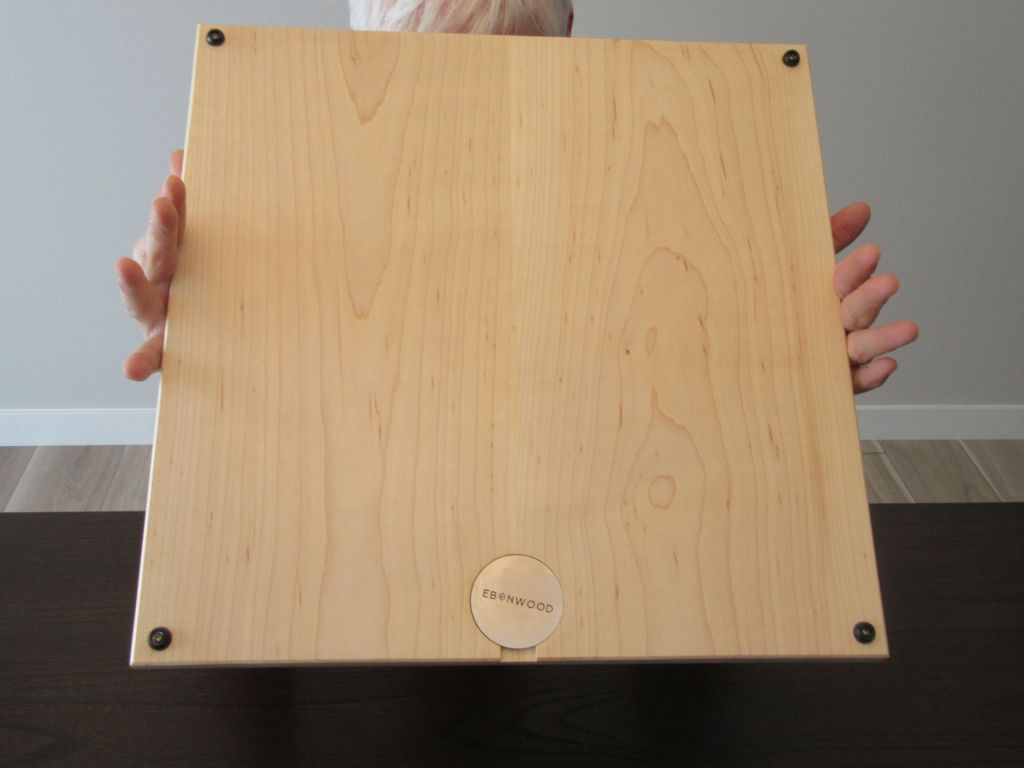
Photos of the little board and the Ebonwood board side by side shows the differences between the two. The little one seems crowded with lettering which can be hard to read and the peg holes are tiny but the directional arrows are helpful. There’s a lot more real estate on the Ebonwood board, but it could have done with a couple more directional arrows to clarify the pegging paths. The special zones are made of different colored resin inlays.
compare big and little cribbage wars boardsEbonwood Cribbage Wars Board and stuff includedEbonwood Cribbage Wars Board back sideJim wins!
And of course, there seems to be no way to shorten the time it takes to play a Cribbage Wars game. On the other hand, we tend to get absorbed by it and often hardly notice that we spend more than 2 hours playing a game. We did get through a game in a little over an hour a couple days ago, but that’s the exception to the rule.
An interesting side note was the answer to Sena’s question by one of the makers about the origin of the name Ebonwood:.
Sorry for the late reply on this. We used to be a strictly table top gaming accessories company (back when myself and the other cofounder started in my garage). Then we realized that if we wanted to sell cribbage boards, and other non ttrpg items our name “Deathroll Gaming” might not give the best impression. So we sat down and brainstormed up Ebonwood. Something a lot more elegant than a strictly TTRPG sounding name; but it also allowed us to keep with the TTRPG stuff as that name fit both worlds.
I think TTRPG stands for Table Top Role-Playing Game. The board ships with a deck of cards and pegs. It doesn’t come with a printed set of rules but they’re all over the internet anyway. It’ll set you back $210.
The length of the game is the main reason why we haven’t yet filmed one. Luck plays such a big part in every game that it’s almost impossible to predict how long one will last. We’ll film one eventually, but hopefully I can edit so that it doesn’t put people to sleep. Time traps are the main issue. During a game, I usually start remembering the chorus of one of the songs in the Rocky Horror Picture Show: Let’s Do the Time Warp Again.”
You don’t want to just take my word for it but there seems to be conflicting messages on a live, attenuated shingles vaccine called Zostavax.
One message is that “the live, attenuated herpes zoster (HZ; shingles) vaccine” might prevent or slow down dementia, especially in women according to a study in Wales and Australia. The article doesn’t mention the name Zostavax (the trade name for the live, attenuated herpes zoster vaccine), which according to a Wikipedia article was “discontinued in the U.S. in November of 2020.”
The other message is that partly because of several lawsuits against Merck (the manufacturer, which faced a lot of Zostavax lawsuits) regarding possible severe, potentially life-threatening side effects alleged to be associated with it, production and marketing of the vaccine was discontinued in the United States as of 2020. The other reason was that Shingrix, a recombinant form of the vaccine, was developed.
Shingrix is said to be superior to Zostavax, although it is also associated with some side effects.
I don’t know why I don’t find any FDA or CDC notifications that Zostavax is no longer available in the United States. Both agencies have archived approval notices still on their websites.
CIDRAP doesn’t mention that residents of the U.S. can longer get Zostavax (in other words, the live attenuated vaccine against shingles) as of 2020.
One of the problems I find with web-based information is that some of the entries can be confusing. I found several articles on line from law firms including one which posted a report on November 14, 2024 that two Black Box Warnings were published by the FDA about Zostavax. I could find only one safety warning on the FDA website (not labeled as “Black Box”) and it was about the new recombinant vaccine, Shingrix. It’s been associated with Guillain Barre Syndrome (GBS) and it’s dated March 24, 2021—a year after Zostavax was removed from the market in the U.S.
OK, as an old retired doctor, my bottom line on this issue of live, attenuated herpes zoster vaccine being touted as an agent that could delay or prevent dementia is that it would be a lot more helpful to me as a consumer to know the whole story about the product. It might be scientifically interesting but it’s moot because the product is not even available in this country and for good reason. And even if it were, would the potential risk and benefit assessment be favorable to recommend its use? And how does this affect the ongoing disagreement dividing the country about the safety and effectiveness of vaccines? Only about 20% of Iowans are even getting the flu shot this season so far.
One thing people could do which might slow down some of the cognitive impairment is to take up the game of cribbage. As far as I know, it has almost no detrimental side effects unless you insist on playing the muggins rule.
So, the upcoming Svengoolie film is “Duel” which I’ve never seen before but Sena has—and she says it’s pretty good! She even plans to watch it. It was released in 1971 and stars Dennis Weaver. Steven Spielberg directed it. According to Svengoolie, it did so well on TV it was also released in theaters.
It’s about this Fuller Brush man who just happens to have the name David Mann (Fuller Brush “Mann,” get it?) who’s driving across the country trying to find anyone who’ll buy brushes and things like car wax which he tries to sell to a long haul trucker who doesn’t think much of the quality of the wax which turns out to be nothing but beeswax which is often used as a finish on cribbage boards like the Cribbage Wars board we’re supposed to get sometime this evening from Ebonwood, which is a store in Appleton, Wisconsin. Anyway, the long-haul trucker gets really mad about this overpriced beeswax and transforms into a massive Bigfoot with a chauffeur’s license and a huge truck full of frozen fruitcake which he’s hauling to the only state, Massachusetts, in the U.S. which allows fruitcake to be used as construction material because, let’s face it, nobody in their right mind is going to eat that stuff and people are known to mail each other moldy fruitcake every Christmas for years on end as a beloved but truly warped tradition that has led to laws in some jurisdictions which penalize this practice heavily, even imposing life sentences to hard labor consisting of trying to cut this fruitcake, which is, not to pun-alize you, a “fruitless” exercise because it’s hard as rock. Well, this raging Bigfoot truck driver rams all 16 gears of his massive truck into overdrive, which makes the truck completely shut down, making it necessary for him to put on his neon green jogging suit and chase David Mann all the way to a run-down Dairy Queen that…OK, so the movie probably doesn’t go exactly like that, but you should watch it anyway.
Svengoolie Intro: “Calling all stations! Clear the air lanes! Clear all air lanes for the big broadcast!”
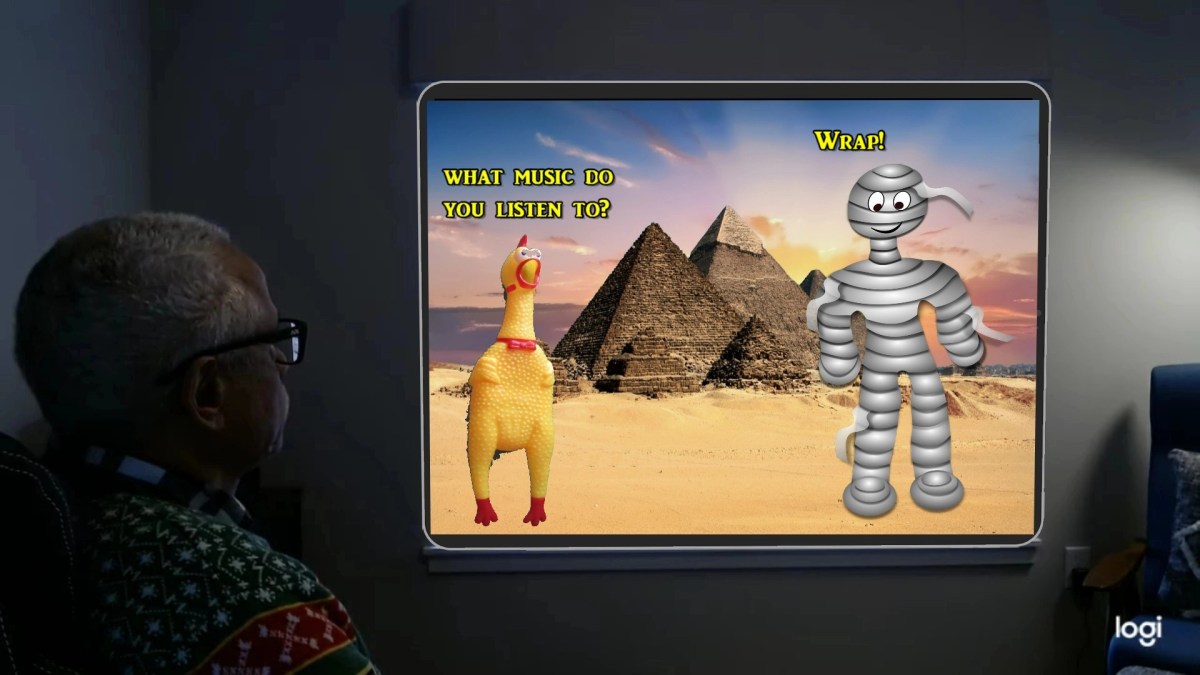
I watched the Svengoolie movie “The Mummy’s Tomb the other night. This is the first time I’ve ever seen a mummy movie (unless you count the one in which Brendan Fraser appeared in 1999 and I didn’t pay much attention) and most of the hour-long film shared my TV screen with the local weather report, which happens sometimes. This time it was about the snowfall, which dumped 5 inches on Iowa City. We spent about a couple of hours clearing it the following day with the help of Sena’s favorite tool, the cordless electric snow shovel and me with the brand new 48’ snow pusher plow.
Anyway, “The Mummy’s Tomb” is a relatively short movie made in 1942 and starred Lon Chaney as Kharis the mummy. He had no lines because he had to keep mum, evidently. There was plenty of stock footage from “The Mummy’s Hand,” released in 1940. Just so you know, I’m aware of the 1932 film “The Mummy” with Boris Karloff as the mummy, but I’m not planning to watch it unless, of course, it appears on the Svengoolie show.
There’s this character named Babe in “The Mummy’s Tomb” who evidently was also in “The Mummy’s Hand” and the two had different last names and the 1942 version of Babe was more serious.
This movie is a sequel to “The Mummy’s Hand” and they killed off Kharis in that one but resurrected him in “The Mummy’s Tomb” although didn’t give the monster new bandages. Kharis limps around and never uses his right arm early in the show yet is nimble enough to carry Isobel Evans (Elyse Knox) in his right arm while climbing a flower trellis. This is the first clue that Kharis had a personal trainer and despite being thousands of years old, he perked right up after only one bottle of Nugenix Total-T thanks to Frank Thomas and Doug Flutie.
Hey, remember Flutie’s historic last second 64-yard Hail Mary pass to Gerard Phelan in the end zone in the 1984 Boston College vs Miami game? It’s not mummified ancient history, but it’s more fun to watch than this movie!
Where was I? Oh yeah, it was difficult to tell if Isobel fully appreciated this because she fainted as soon as she saw Kharis and remained pretty much unconscious the whole time Kharis was carrying her around (so much for Frank’s “she’ll like it too” promise).
The funny thing is Mehemet Bey (Turhan Bey) doesn’t get this because he develops a huge crush on Isobel and orders Kharis to fetch her for him. This happens more than halfway through the film but until then, Mehemet’s main goal was to get revenge on the guys who were responsible for “killing” Kharis the first time around. Mehemet has the power to control Kharis, yet pulls a gun on John Banning (John Hubbard) who is the son of Prof. Stepen Banning who started the whole business of desecrating the tomb of Kharis and can by god whip John any day of the week in a game of checkers.
This turns out to be a wrong move because the sheriff just shoots Mehemet, and that’s the end of the boss of Kharis.
The smartest person in the movie is Professor Norman (Frank Reicher) who figures out what the substance is on the throats of Kharis’s victims (myrrh, cedar oil, Nugenix-Total T) proving that these items were used in the embalming process of mummies, thus proving that even scientists can be guilty of fraud.
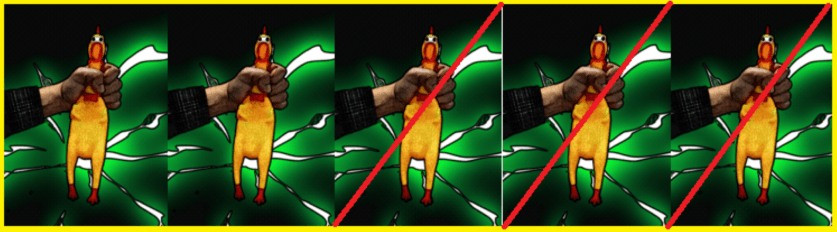
So, there you have it. Towards the end of the movie, Kharis learns how to play checkers and whips the pants off John Banning. So there, only one spoiler in this review of a movie which I would give a 2/5 shrilling chicken rating.
Today is Pearl Harbor Day and it reminds me of the time we made a trip to Hawaii in 1997 and visited the USS Arizona Memorial. There was a guy named Norm in our tour group and he and his wife Lee (Leota) made friends with me and Sena. They were in their seventies at the time. Norm wept openly when we stood inside the memorial and viewed the names of those killed in the attack. I don’t think he served in WWII. He would have been only 16 years old at the time. I think he was just very affected by the loss of so many lives. Standing in the place where so many died can make us want to cry. You could call it normal—and it is sad. We exchanged Christmas cards with Norm and Lee for years afterward until they passed.
Well, I listened to the Big Mod Pod Show today and I have a couple of thoughts. Big Mod mentioned something about some kind of an AI assistant maybe selecting some records on the KCCK Facebook site. He didn’t sound all that pleased with the choices the AI makes, specifically with the John Lee Hooker tune, “Mr. Lucky.”
I may have the wrong understanding about the “AI guy blues buddy” on the Big Mo Facebook page but if it’s the AI guy like CoPilot or Gemini, then it would be great if you could deactivate it somehow. I know I get pretty annoyed with AI when I search the web (not always, but sometimes it’s annoying).
I just happen to have the 1995 CD called “The Very Best of John Lee Hooker.” Far be it from me to be the judge of what’s the best for any blues artist, but I think the CD is pretty good, though I haven’t listened to it in a while. The other thing I have to admit is that I’ve found differences of opinion on is whether “Hobo Blues” is a 12-bar blues type number or not.
If Big Mo says he can’t understand why Hooker would confine himself to a constraining 12-bar blues song, then I’ll have to agree with him.
Then, of course, I ran into something else I don’t know about and that’s something called “trance blues.” Supposedly, John Lee Hooker did trance blues. How I find out about things I don’t know anything about is to peck around the internet and I found this link that defines it as something that has “a strong electronic component.”
I don’t know about “electronic” and I noticed some authors describe trance blues as “repetitive and hypnotic.” Does that mean that 12-bar blues is not trance blues?
So, here’s the thing. I’ve got my own pesky AI assistant Gemini that I never ask for any advice from, but it never misses a chance to make a point about some query I have for the internet—like trance blues.
Gemini says Hooker’s “Boogie Chillen” is an example of trance blues and also mentions that “Hobo Blues” is another example of it.
I don’t know if I can get this straight. Is 12-bar blues an example of a chord progression pattern and is trance blues a genre of blues which has a repetitive, hypnotic rhythm? It’s over my head.
Sena bought me a bigger snow plow shovel because we’re getting a fair amount of snow lately. I’ll try it out tomorrow because we’ll be getting a couple of inches or so starting tonight.
The new snow plow shovel is 48 inches wide. The one she got last year was 36 inches wide. We have 6-foot-wide sidewalks (really a trail) and with the driveway, it’s kind of a chore.
I never checked out the maker’s website until today. The About Us section indicates they are based in Iowa, starting in 1996. The company name is JM Enterprises, hence the website name jmenterprisesdotcom. All the materials are made in the U.S.A. but I couldn’t see what city they’re based in. Another interesting thing about the website is that they have a link to The Farmer’s Almanac, which I clicked on and from there found out that there are two versions of The Farmer’s Almanac—I guess.
The one called just The Farmer’s Almanac is going to stop publishing soon. The Old Farmer’s Almanac is not going to stop publishing.
It makes me wonder if the Snow Plow company will switch to displaying a link to The Old Farmer’s Almanac.
The other nice thing about the web site is the Shovel Safety page. Bob Vila recommends their snow pushers. The guidance for snow removal using both snow pushers and scoop shovels sounds like solid common sense. It’s another feather in Iowa’s cap.
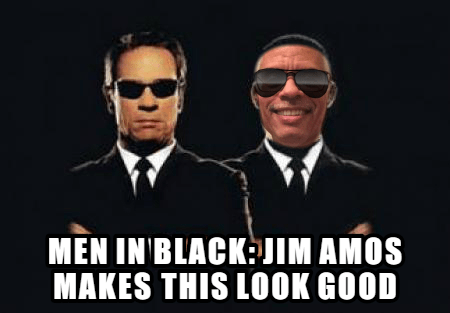
I just saw something on the web which look like Men in Black 5 could be for real. Supposedly, maybe, I dunno—but I hope so.
It may be more than a rumor, but there are doubts about whether Will Smith and Tommy Lee Jones will reprise their roles as Agents K & J respectively. Sony Pictures may or may not be confirming this depending on what article you read. Maybe somebody is drafting a script but I’m not sure.
I can’t confirm whether Frank the talking pug will be in it, but I doubt it because I think he passed away. Agent K will get around pretty well in a plutonium powered mobility scooter and Agent J will take Serutan (remember, that’s Natures spelled backward!) just before pressing the little red button.
Serleena will not stick her 3-foot-long green tongue into Agent K’s ear. I can never stand to watch that part.
Yours truly might be involved—but I really can’t say at this time because I’m still negotiating my contract.
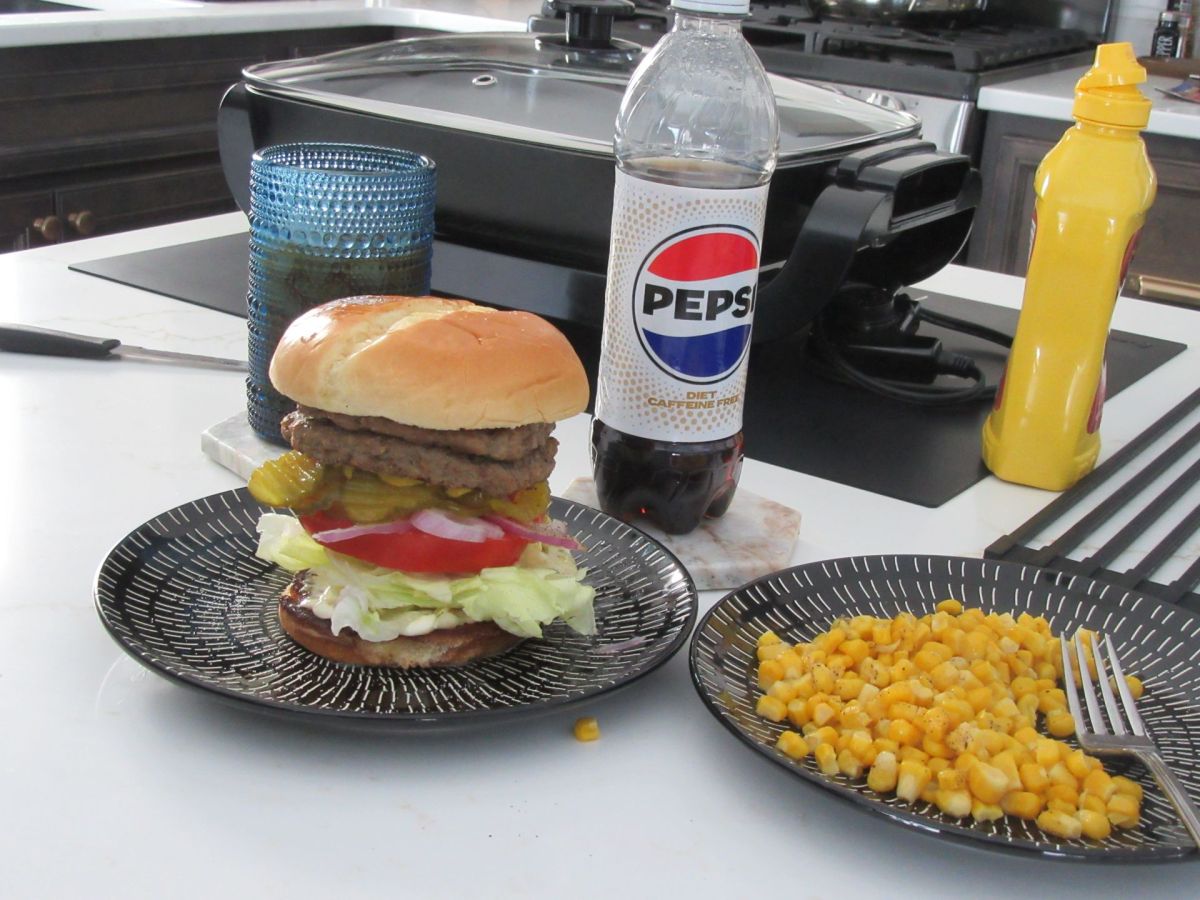
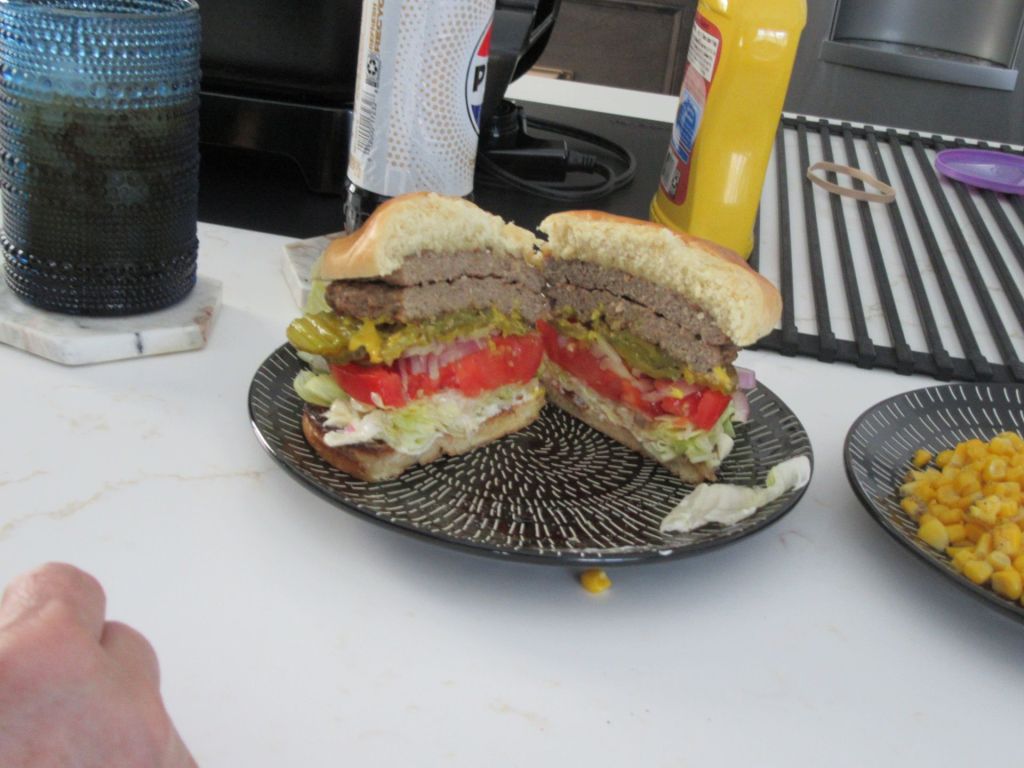
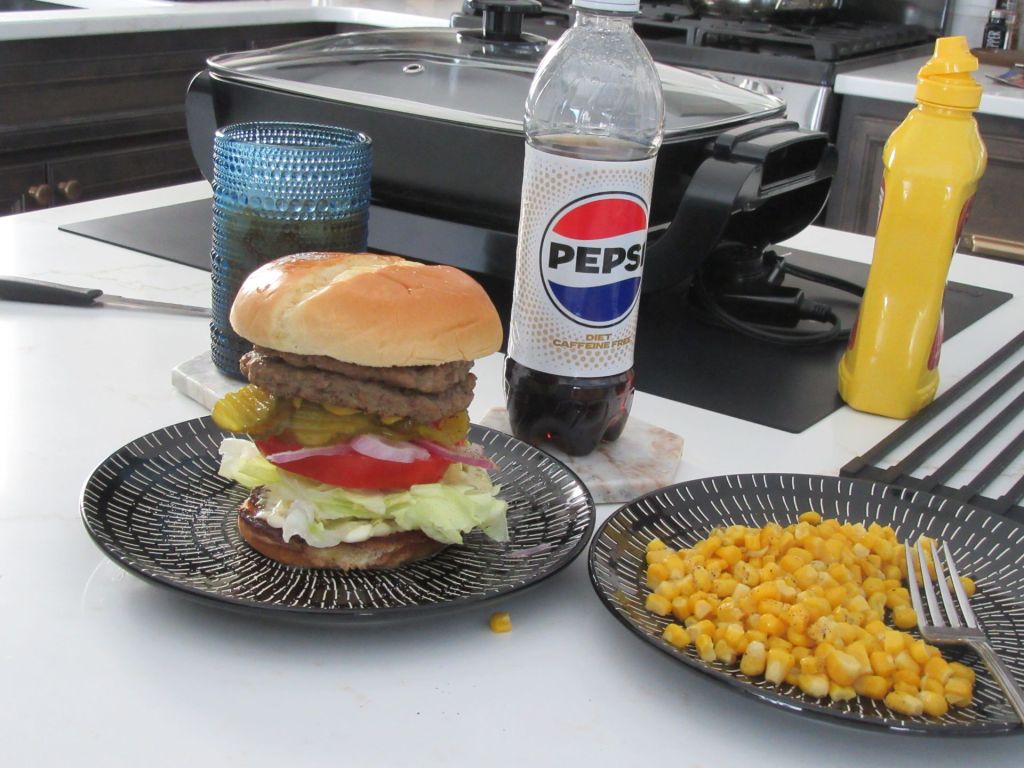
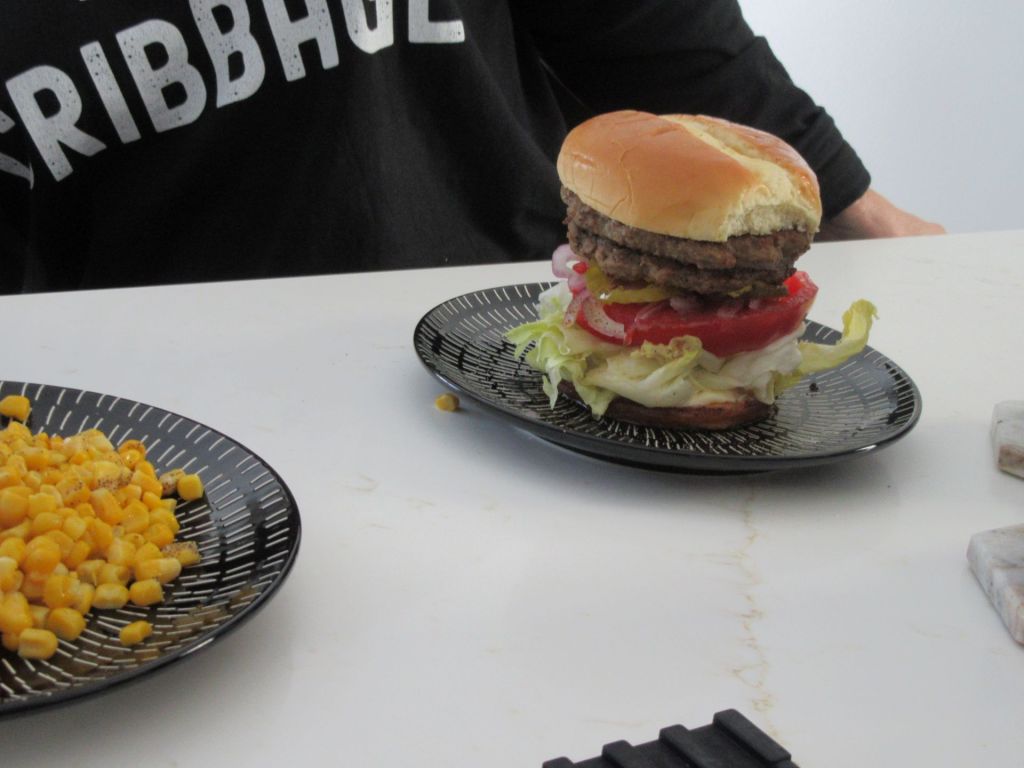
Sena made tall burgers for lunch today. Now, I know you have to be careful what you call a tall burger when it comes to questions about how tall is tall. What do you mean by “tall”?
We’ve all seen pictures on the web of tall burgers that are 4 feet and better in height and what have you. I’m not talking about the extremes which make it big on the internet but which nobody can realistically eat without a hook and ladder.
Sena’s tall burgers are tall but not crazy tall. We have different approaches for how to eat them. Sena always just picks her burger up and takes a big bite out of crime, often ending up with much of it on her face (mayo mustache, lettuce eyebrows, mustard chin, etc.).
On the other hand, I’m a knife and fork guy and always attack it like a salad—which she laughs at.
You have to consider your plan of attack on a tall burger. It’s like two wrestlers, the burger and the eater. They have to size each other up, circle each other, lunge, feint, head fake this way or that—then just go for the takedown.
Sena would get a step over toe hold and be done eating before I’ve even raised my knife and fork after figuring out that with all that sauce on my fingers, I probably can’t hold on long enough to get it to my mouth.
It reminds me of a quote from Men in Black 3 (what doesn’t remind me of things like that?). Background is that Andy Warhol in 1969 is actually Agent W, one of the men in black under cover and he’s talking with young Agent K:
Off camera, woman says to Andy Warhol (really Agent W): Andy, Yoko’s here to see you!
Agent W: [under his breath] Oh, Yoko!
Agent W speaking as Andy Warhol: Tell her I’m filming this man eating a hamburger, it’s… transcendent. Okay, now the pickle!
Watching Sena eating a tall burger is transcendent.












 Go Retire Psychiatrist