Is it About the Nail or Not?

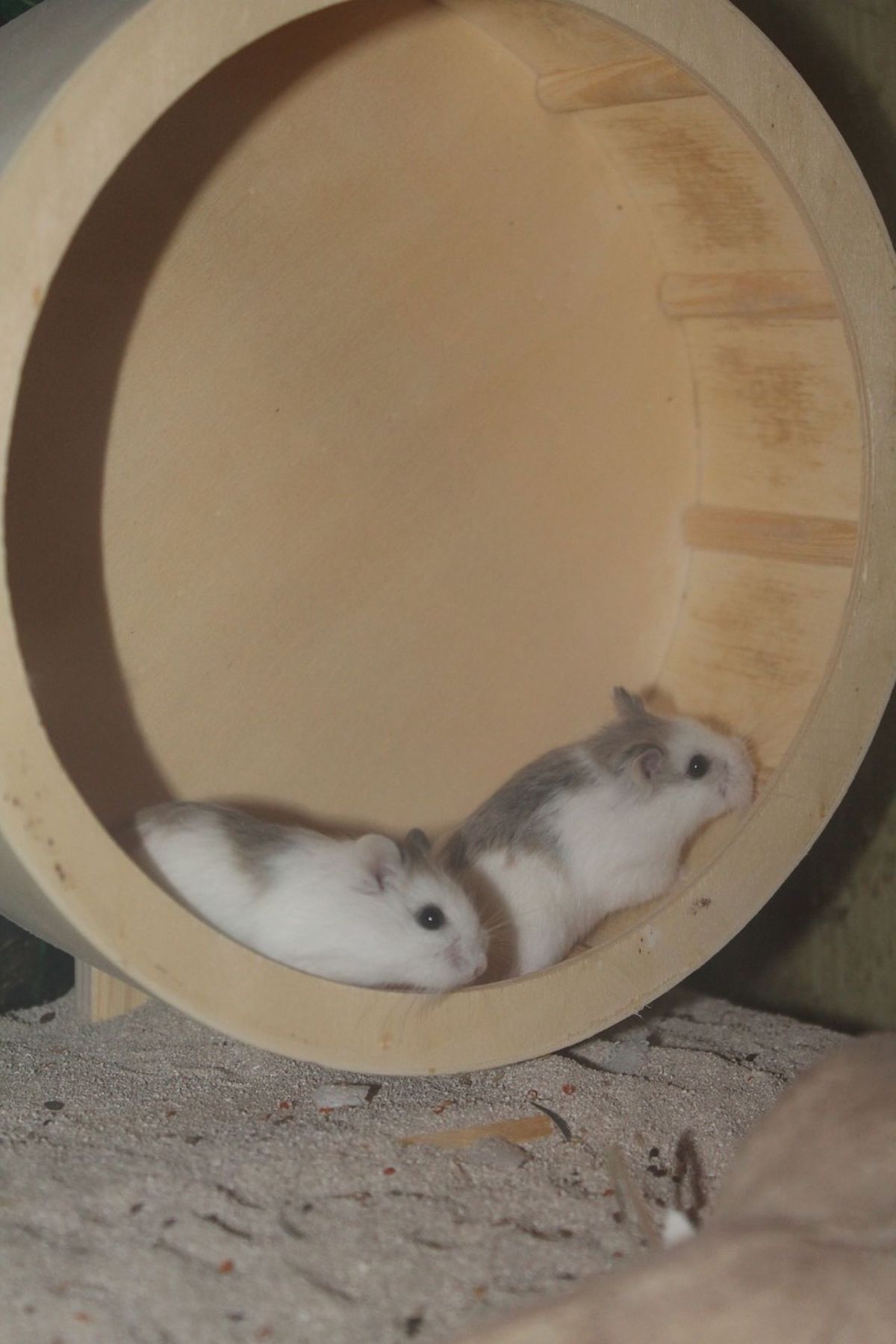
I saw this essay about getting your hamster off the treadmill and being in the moment. It’s not just for University of Iowa employees.  I do the mindfulness thing, I juggle, I make dumb YouTube videos. And for a little over a month now, I have not scrolled past the first few headlines at the top of the on-line news outlets. It’s a little easier than I thought to give up FOMO zombie-scrolling news habit, if you can even call it the news.

And the nail video is a hoot.

Partial Social Eclipse Viewing on the Pentacrest April 8, 2024!

The University of Iowa Dept of Physics and Astronomy and the Sciences Library invites the public to view the partial solar eclipse on April 8, 2024 between 12:30 PM-3:00 PM at the Pentacrest and the Sciences Library courtyard. Solar eclipse glasses free while they last.

Solar Eclipse Around the Corner So We May Need to Protect the Cicadas!

The solar eclipse is just around the corner! We’re hoping for decent weather. We’re also hoping that everyone views the event with safety in mind.

University of Iowa Health Care ophthalmologist Dr. Ian Han has great tips on how to observe the solar eclipse on April 8, 2024. He pointed out that eclipse glasses that pass muster for safe viewing of what will be a partial eclipse in Iowa are typically on a list of approved eyewear and often have an ISO (that stands for International Organization for Standardization) number stamped on them. Our glasses have the right stuff!

However, animals sometimes get confused by solar eclipses, including cicadas (see my other post about cicada weirdness posted today). Cicadas might stop singing or maybe their gonads drop off a little sooner than usual, I don’t know exactly. But the zombie cicada gonad apocalypse timing probably makes that a non-issue. I did say “probably.” But how could we protect them if necessary?

There might be a scientific way to custom fit the cicadas with solar eclipse glasses using groundbreaking technology first used in the 1989 documentary film, “Honey, I Shrunk the Kids,” which I have not personally watched but which could be featured on Svengoolie. We’d have to scale up production for possibly trillions of bugs. And I guess we can’t protect their gonads.

But we can all protect our eyes.

Update: I found a very good web site which tells you how to check if your solar eclipse glasses are genuine and protective. In addition to the information above, you can test the eclipse glasses indoors by putting them on. You shouldn’t be able to see anything but the brightest light bulbs and those just barely. You can test them outside as well. On a sunny day, look around at any reflective surface. You shouldn’t be able to see much at all. I tested ours and they passed with flying colors.

Good Luck Dr. Chris Buresh

Sena was looking up the meaning of a four-leaf clover the other day. You might call it a shamrock although that’s usually reserved for the 3-leaf variety. It’s fitting for St. Patrick’s Day to say the four-leaf clover is special because it’s rare to see one. The four leaves represent faith, luck, love, and hope.

The trouble going on in Haiti is regrettable to say the least. However, it also reminded us of how lucky it was for us to have known one of my former colleagues, Dr. Christopher T. Buresh, MD. He was an emergency room physician at the University of Iowa Hospital until just a few years ago, when he and his family moved to Seattle, Washington. Dr. Buresh is now an Associate Professor in the Department of Emergency Medicine with the University of Washington. He’s also Assistant Program Director of their Emergency Medicine Residency Program.

The connection between Dr. Buresh and Haiti goes back a long way. Many Haitians were lucky he and other physicians volunteered to help provide medical care for them on an annual basis for years.

Chris is really a humble, likeable, and practical guy. He and his family were our next-door neighbors for a while and fascinating things were going on there at times. We remember they built this really cool tree house that sort of looked like it grew out of their main home. They even had an apparatus for a zip line between the two structures. I don’t think the zip line ever actually got installed, but it was intriguing.

He and I sometimes saw each other in the emergency room at University of Iowa Hospital. His energy, compassion, and dedication to patient care were an inspiration to colleagues and learners at all levels. Sena saw one of his presentations about his volunteer work in Haiti. He never mentioned the difficult politics of the situation. He emphasized the work of caring for the Haitians most of all and gave credit to members of the team doing everything they could in that challenging and, I’m sure, sometimes horrifying environment.

It would be easy to just sit and wonder why he left Iowa, and to be sorry about that. On the other hand, when you thing about the 4-leaf clover, you really have to wonder about something else. Maybe he had one in his pocket with all four of what we all want: faith, luck, love, and hope.

Black History Month: In Honor of James Alan McPherson

I thought it would be nice to mention James Alan McPherson, Pulitzer Prize winning author and longtime Iowa Writers’ Workshop faculty member, in keeping with the theme of this month’s Black History Month: African Americans and the Arts. A neighborhood park was named in his honor (James Alan McPherson Park) in 2021. There has been a plan to erect a memorial plaque in his honor, which I believe is still in process.

There is a very nice summary of his accomplishments as a writer on the Black Past website.

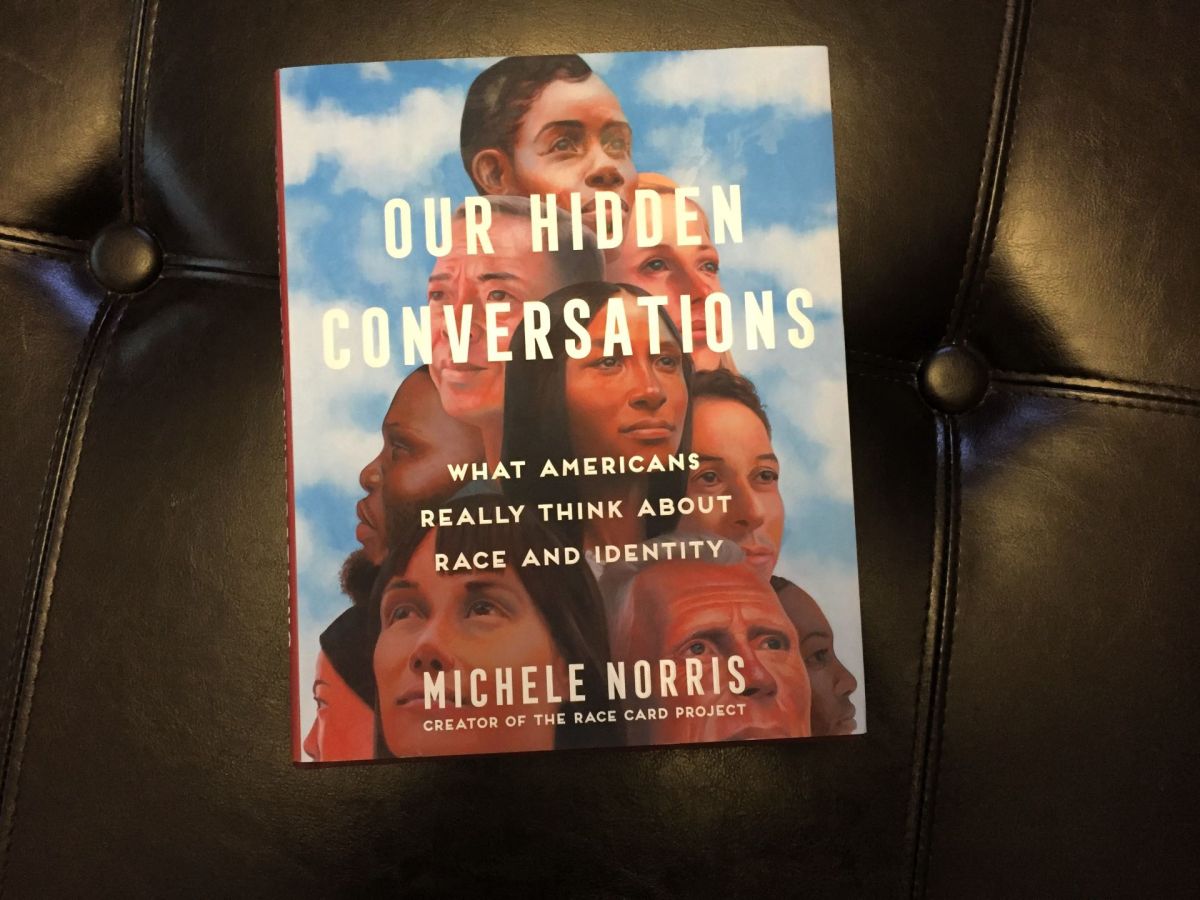
More Thoughts On “Our Hidden Conversations” Book by Michele Norris

I need to correct something I got wrong in my first post about Michele Norris’s Distinguished Lecture on January 23rd. While reading her book, “Our Hidden Conversations” I ran across this race card in the chapter “Black Babies Cost Less to Adopt:”

“Vote (for) Obama! He looks like me!”

That was the 8-year-old daughter said that. The person who sent in the card was her father, Dr. Val Sheffield and he was a medical student in Iowa at the time. Once you know that, you realize why he wondered whether he should have been “…happy or dismayed by this comment.”

Anyway, I’m a little over halfway through the book, “Our Hidden Conversations.”

The title of the chapter above, “Black Babies Cost Less to Adopt” is troubling and it has a lot to say about how it was common in the past to discount the cost of adopting black babies. Foster care of non-white kids was also a subject in the chapter. Identity conflicts are common and can lead to reminiscing about things like:

“I was not Black enough.”

“I was not Asian enough.”

“I was not Hispanic enough.”

What matters is being kind enough.

Bootless II: Dr. Russell Ledet’s Story

Recall that I had been checking to see if the Distinguished Education Lecture given by Dr. Russell Ledet, MD, PhD on January 17, 2024 during the MLK Celebration of Human Rights would be available for the general public. While somebody may be working on that, I managed to find Dr. Ledet’s YouTube, entitled “Bootless II.” I think it’s a great distillation of his major theme.

Afro-American Cultural Center Activities for Black History Month 2024

The Afro-American Cultural Center in Iowa City has many activities scheduled for Black History Month 2024. Check it out!

Thoughts on the Dr. MLK, Jr Distinguished Lecture by Michele Norris

Sena and I viewed a recording of the Dr. Martin Luther King, Jr Distinguished Lecture given by Michele Norris on January 23, 2023. It was not available to the general public, about which I have inquired. It was a very interesting, informative, and entertaining presentation. It was about her 14-year Race Card Project which led to her new book, “Our Hidden Conversations: What Americans Really Think About Race and Identity.”

Michele opened with a little information about Bayard Rustin, which we didn’t know. There’s a film titled “Rustin,” available on Netflix which is about him and Dr. King and their complicated relationship. He was a gay black man, which was difficult for the civil rights movement leaders to accept. He was the key organizer for the 1963 March on Washington for Jobs and Freedom.

In her own words, Ms. Norris created the Race Card Project because she thought no one wanted to talk about race. She found out she was wrong because there was an avalanche of response to her request that people write something about race on a small postcard (6 words) and send it back. Interesting examples:

“Father was racist. I’M NOT. Progress!”

“Did my Southern Grandpa attend lynchings?” (This card came from Iowa.)

“Married a white girl. Now what?” (The girl thought of the guy as an “assimilated” brown man.)

“Alabama. MLK assassinated. Students cheered. Horrified.” (This was in a college classroom.)

“We aren’t all strong, black women.” (Norris’s comment was that it makes black women seem more like a weed and not a flower).

“Two white dads. Three black kids.” (Adorable photo included of gay married men with three adopted black children.)

“Can someone help me find my privilege?” (Photo of a white man included. Ms. Norris said that most of the cards are from white people, which surprised her.)

“My name is Jamaal. I’m white.” (Include a picture of a white guy. This was a story about Iowa. The guy showed up for a job interview, and the receptionist says “I thought you would be taller.”)

“Vote for Obama. Look like me.” (White guy married to white gal; they adopted black girl. I think he meant, in the abstract, that no matter what color you or the candidate are you should vote based on whether the person is qualified for the job. It’s funny that his very young daughter commented on it in a predictably concrete way given her age. She said she lived in Iowa and didn’t see too many people who looked like her. Ms. Norris said this story would be included in the book.)

It’s tough to express complicated ideas in just six words.

Ms. Norris says it’s unlikely that we’re going to agree with each other. She wants to build bridges across the chasm which divides us and she is hopeful about our ability to do that. We ordered her book.