Update to My 2019 Post “Black Psychiatrists in Iowa”

Back in 2019, I wrote a post about black psychiatrists in Iowa. What got me interested in updating it is my having just finished reading Jonathan Eig’s biography of Dr. Martin Luther King, Jr: “King: A Life.” I have just started reading the other biography, “The Autobiography of Martin Luther King, Jr, Edited by Clayborne Carson.”

Looking back on the post I wrote almost 7 years ago, I noticed a difference from today’s context: now, Artificial Intelligence (AI) confirms my impression that I might have been the only black psychiatrist at The University of Iowa Dept of Psychiatry in its history at least until 2021 as far as I know. I didn’t specifically ask AI; as always, I can’t stop it from putting its two cents in whenever I search for anything on the web.

AI Answer: “Based on available records and personal accounts, there appears to be a notable lack of documentation regarding African American faculty in the University of Iowa Department of Psychiatry historically. A 2019 report indicated that the author, a Black psychiatrist in the area, could not identify any other Black psychiatrists on the faculty in the department’s history. 

  • Documented History: A 2019 article stated that “I could be the only Black psychiatrist who has ever been a faculty member here at The University of Iowa Hospitals and Clinics”.
  • Emeritus Faculty: The list of Emeritus Faculty for the department does not explicitly highlight African American faculty members. 

The department’s history, according to this source, does not explicitly list Black psychiatrists who have served in that capacity.”

I’m the source AI mentions and the “2019 article” is the one I’m updating today.

Not much has changed. There’s no update of the 2019 Greater Iowa African American Resource Guide. Dr. Rodney Dean is still the only other black psychiatrist in Iowa (as far as I know) of the easily locatable MDs/DOs in a general web search of hospitals and clinics in the state and he still practices in Sioux City. That doesn’t mean there are no minority non-physician psychiatric providers. There are many.

Dr. Norman Brill, the black psychiatrist whose book I reviewed (“Being Black in America Today:A Multiperspective Review ofthe Problem) died in 2001, shortly after I wrote the review. The University of California posted a glowing in memoriam message on the web. You can read his book on the Internet Archive although you’ll just need to log in to borrow it.

I guess I can remind everyone that the University of Iowa Dept of Psychiatry history book mentions me:

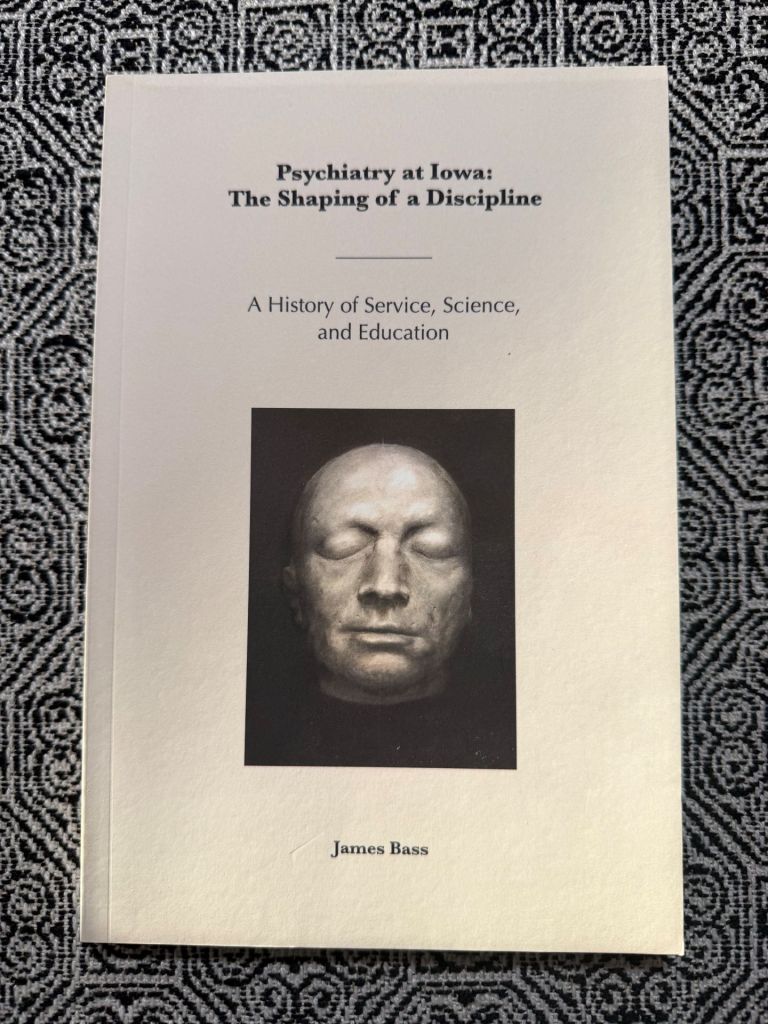
There are a few words about me in the department’s own history book, “Psychiatry at Iowa: The Shaping of a Discipline: A History of Service, Science, and Education by James Bass: Chapter 5, The New Path of George Winokur, 1971-1990:

“If in Iowa’s Department of Psychiatry there is an essential example of the consultation-liaison psychiatrist, it would be Dr. James Amos. A true in-the-trenches clinician and teacher, Amos’s potential was first spotted by George Winokur and then cultivated by Winokur’s successor, Bob Robinson. Robinson initially sought a research gene in Amos, but, as Amos would be the first to state, clinical work—not research—would be Amos’s true calling. With Russell Noyes, before Noyes’ retirement in 2002, Amos ran the UIHC psychiatry consultation service and then continued on, heroically serving an 811-bed hospital. In 2010 he would edit a book with Robinson entitled Psychosomatic Medicine: An Introduction to Consultation-Liaison Psychiatry.” (Bass, J. (2019). Psychiatry at Iowa: A History of Service, Science, and Education. Iowa City, Iowa, The University of Iowa Department of Psychiatry).”

And in Chapter 6 (Robert G. Robinson and the Widening of Basic Science, 1990-2011), Bass mentions my name in the context of being one of the first clinical track faculty (as distinguished from research track) in the department. In some ways, breaking ground as a clinical track faculty was probably harder than being the only African American faculty member in the department.

If I don’t toot my own horn, well, you know.

I Got a 28 Hand in Cribbage Today!

I got a 28 hand in Cribbage Pro scrimmage today against Brutal (the most difficult level). I also won the game. The odds of getting a 28 hand in cribbage is about 1 in 15,028. It’s the second highest hand score in cribbage. The highest score is a 29 hand and the odds of getting that is 1 in 216,580. There are different ways to calculate the odds which yield different results which involve crazy difficult statistics that I can’t explain, but you can find the details here.

September Crayons

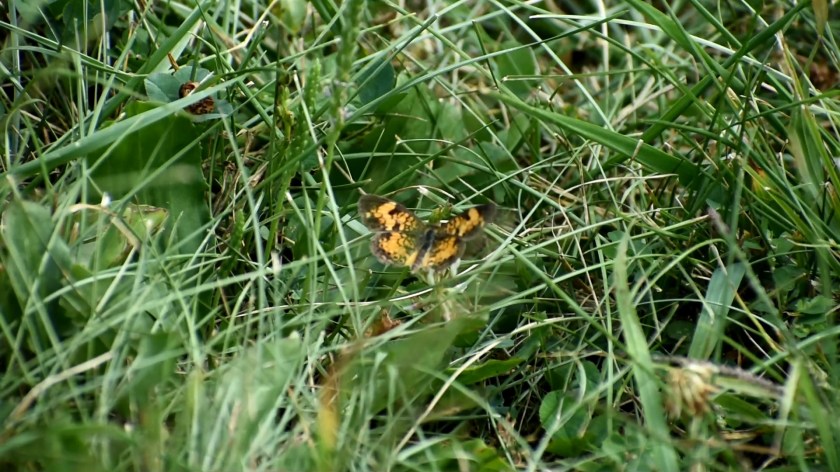
We saw a good deal more than monarch butterflies the other day. In fact, we both saw we could “see” a face in a big sunflower. I believe that could be called pareidolia. It’s the tendency to perceive meaningful images in the world that aren’t really there (like the Virgin Mary in a jelly donut). A closely related term is apophenia, which is to think there are connections and patterns that aren’t really there.

Anyway, it’s normal to see things in nature change in color when fall begins to creep in to the world. The sumac is starting to turn red and that’s not my imagination.

There are a lot of butterflies about, among them the common buckeyes (their wings look like they have eyes in them) and swallowtails. I wish I could find a reference to identify all the little brown, white, lavender, and yellow ones.

We even saw a White Pelican out on Sand Lake. They commonly live in Iowa. They’re very social birds although I’ve often seen solitary pelicans out there.

And of course we saw wooly bear caterpillars. They looked like they were all black, not with brown and black bands. Can a wooly bear caterpillar predict whether we’ll have a tough winter (a narrow brown band) or a mild one (a wide brown band)? The simple answer is “no” but that didn’t stop the Farmer’s Almanac from posting a very long article about the issue.

Don’t Sit for Too Long in the Catbird Seat!

I was just wondering where the saying “you’re sitting in the catbird seat” came from. Some say it’s from how a catbird looks for food sitting on a high or secluded perch.

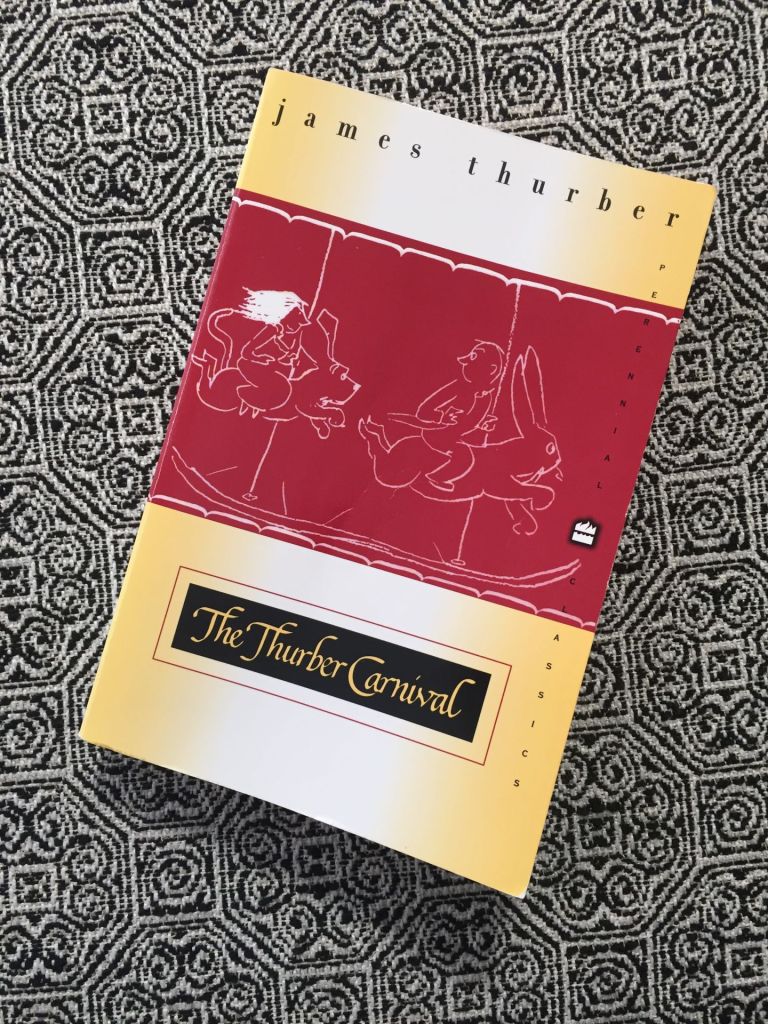
It’s hard to tell exactly where the saying originated but many point to James Thurber’s short story “The Catbird Seat,” first published in the New Yorker in 1942 and later included in his collected stories, “The Thurber Carnival.” The story’s a hoot and you can find it on line despite it still being under copyright.

Sitting in the catbird seat generally means being in an advantageous or superior position. In terms of health, especially if you’re getting to be an old guy like me, it means trying to maintain your health in several ways. I’m not the greatest example, but there are some hacks out there.

Dietary discretion is important. The whole story about processed and unprocessed food is beyond me but you can read more about it from the experts. One of them is University of Iowa researcher Dr. Terry Wahls. She’s got the low down on a healthy gut and part of her work is studying how an on-line wellness course might help those with multiple sclerosis, fibromyalgia, long COVID, and cancer patients with fatigue.

Dr. Wahls also like to play in the dirt in her garden, meaning she doesn’t wear gloves. Sena does that too. I worry about things like tetanus, but maybe that’s just me.

Staying mentally sharp is also important. A University of Alabama at Birmingham aging expert has interesting advice, and it includes “complex card games.” I think that would include cribbage, although you wouldn’t know it if you knew how seldom I win in games with Sena.

Exercise is big on the list and another University of Iowa expert says you could get enough with just 5 minutes a day. And it doesn’t necessarily involve barbells.

And after all that, we might be sitting in the cat bird seat! But don’t sit for too long.

“Trick or Treat” Dopey Archaeology!

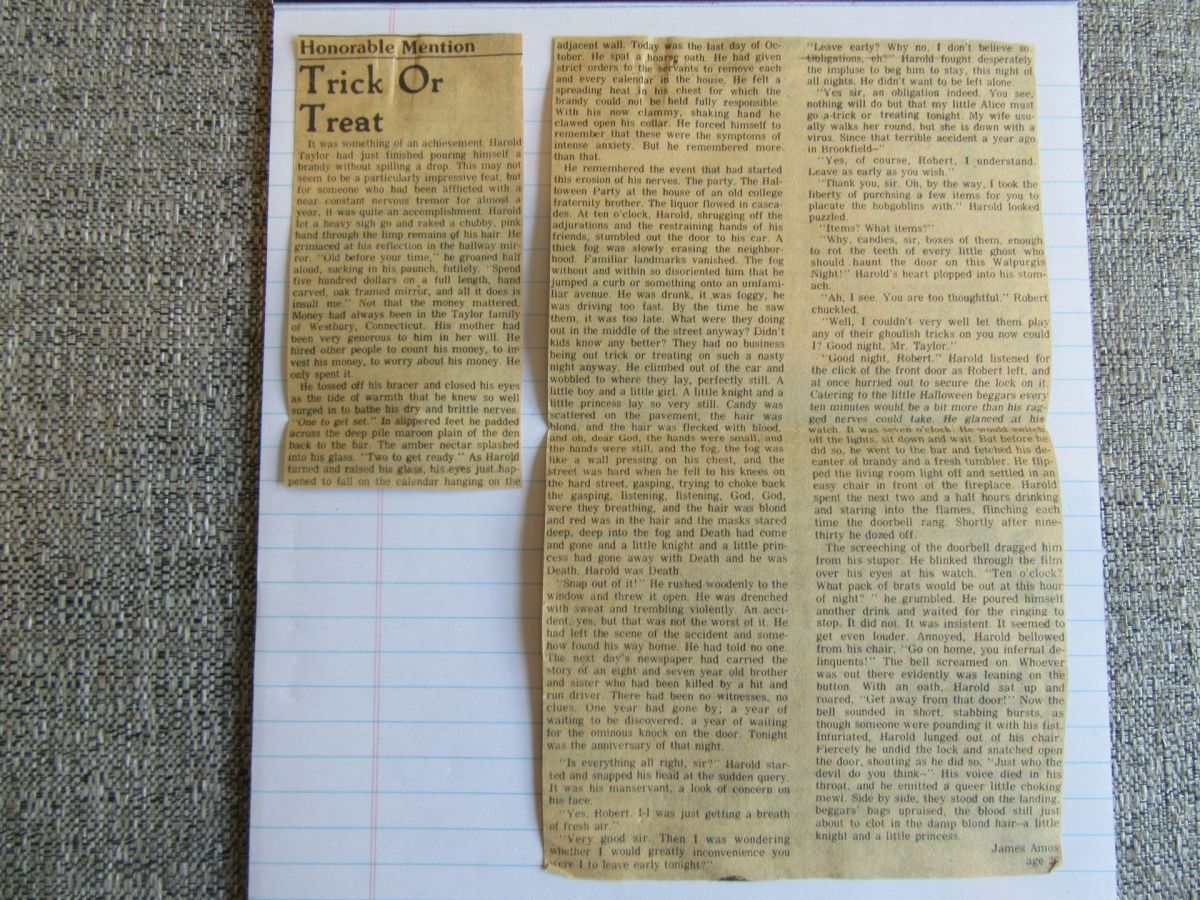
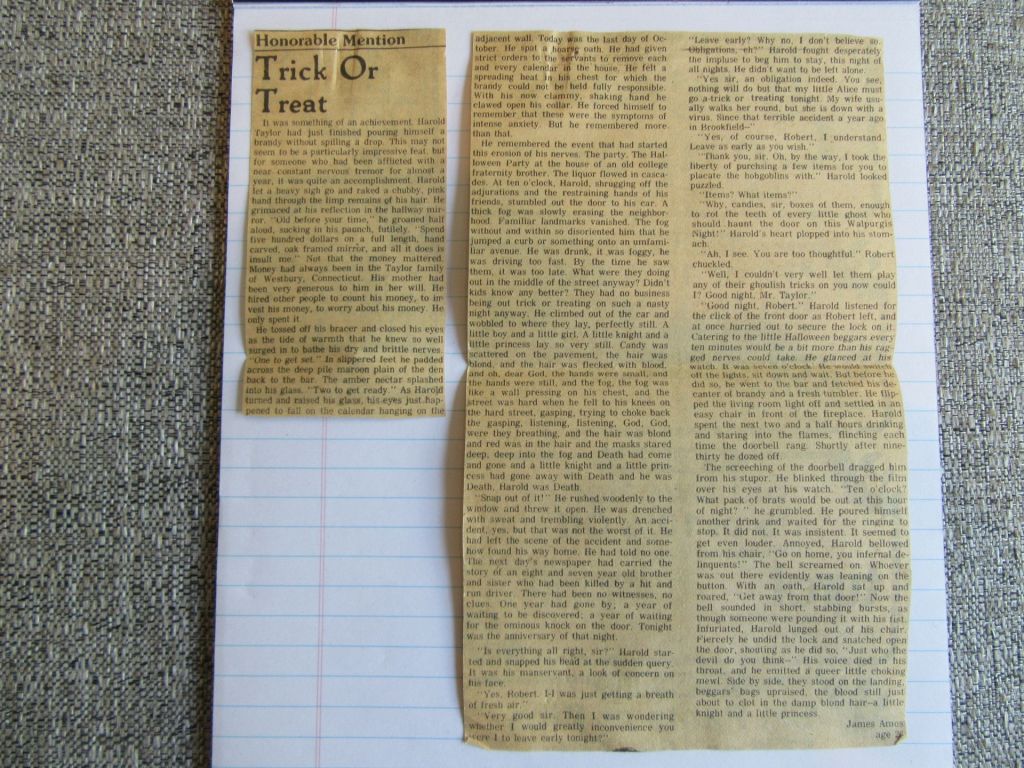
Yesterday, in the “Writing is Dope” post, I said I didn’t remember what happened to an old Halloween story contest to which I submitted an entry (got honorable mention) in our hometown newspaper, the Globe Gazette in Mason City, Iowa. Sena took one look at that and declared we had a clipping of the story somewhere in the basement.

I doubted it. She insisted and went looking for it. Then we both looked. She finally found it! What a miraculous dope! The title was “Trick or Treat” and I wrote it way back in 1981. That would have been shortly before we moved to Ames, Iowa so I could start college at Iowa State University—44 years ago. That was the beginning of an earthquake of a life path change.

After re-reading it after all these years, I remembered how formal my prose was. In fact, I think I was subconsciously imitating one of my favorite writers, Ray Bradbury. This morning, Sena ordered some of his books.

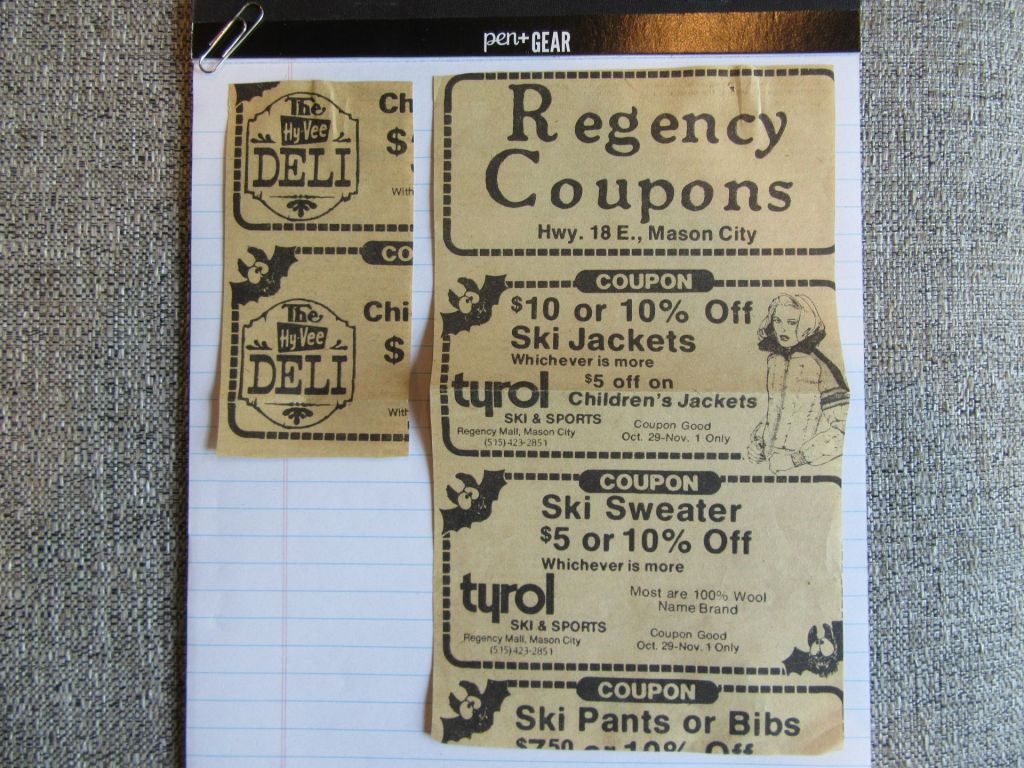
This yellowed relic brought back so many memories! Now I can torture you with one of them!

Note: You can magnify the images by clicking on the little “i” icon below the images. Below the image, click to view full size. You should get a little magnifying glass you can click to resize the image so you can read it. It’ll open up in a new window. You can also comment on the image by clicking the little dialogue balloon.

How to Support University of Iowa with the One Day for Iowa Fund Drive Today!

Okay, so here’s my pitch on how potential donors can support programs at The University of Iowa. Today the One Day for Iowa fund drive kicks off, and it ends at 11:59 PM today on March 26, 2025.

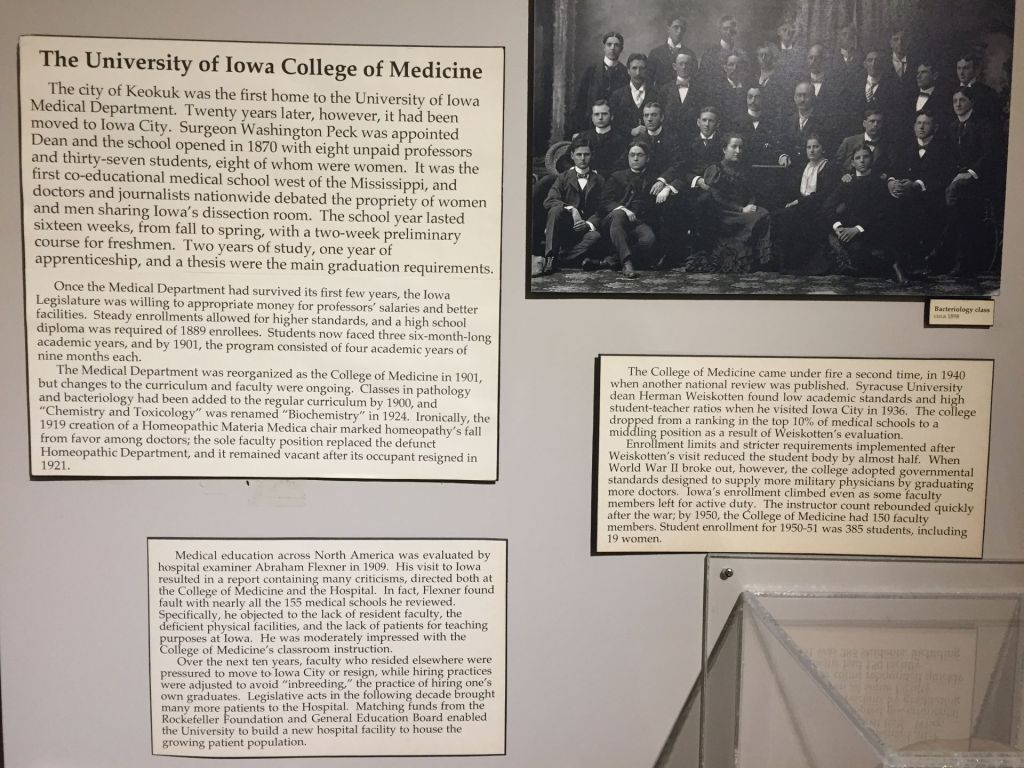
I got a soft spot in my heart for The University of Iowa College of Medicine and University of Iowa Health Care (UIHC), even though my undergraduate Bachelor’s degree was from Iowa State University.

You can find in the UIHC Medical Museum a description of the historical development of the medical school. Following the Flexner Report in 1909 which found fault with all U.S. medical schools including Iowa’s, there was a drive to avoid “inbreeding,” meaning hiring of one’s own graduates. Nowadays, there are legislative efforts to keep as many as we can of Iowa’s best and brightest.  

Go Hawkeyes!

And Then There Were Four Drain Tile Lids Flipped

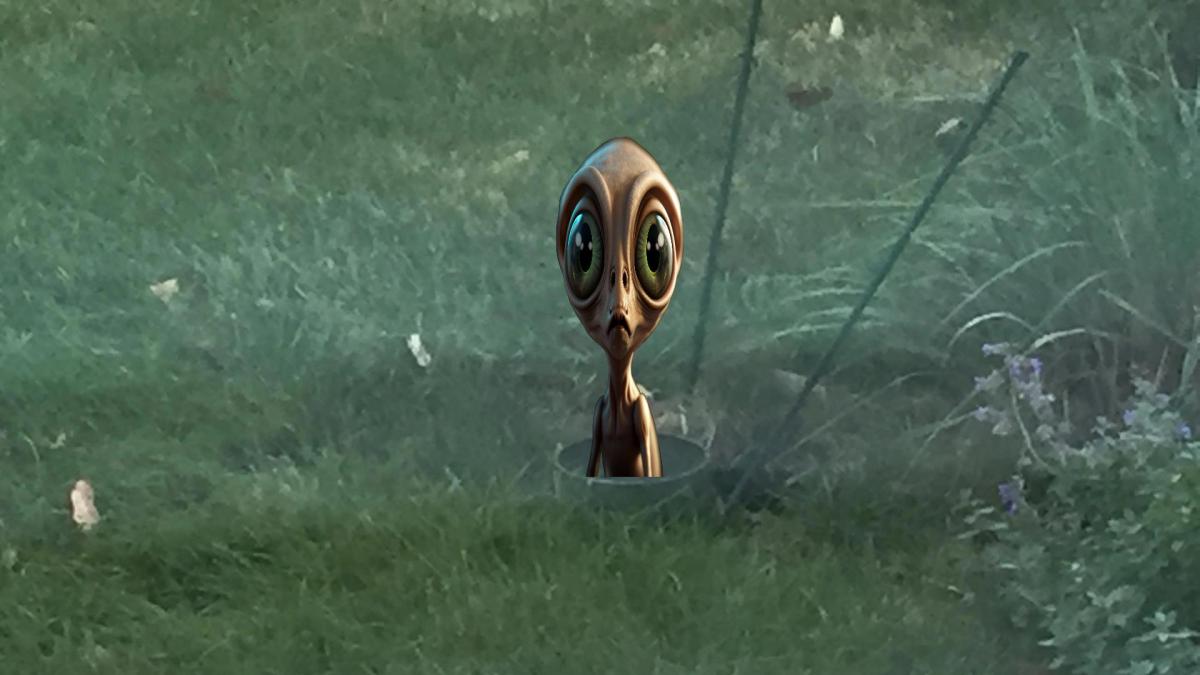
Now there are 4 tile drain lids that have been flipped. A couple of others were flipped last night. Sena put them back on and put a rock on one of them. The two others with rocks on top of them were undisturbed.

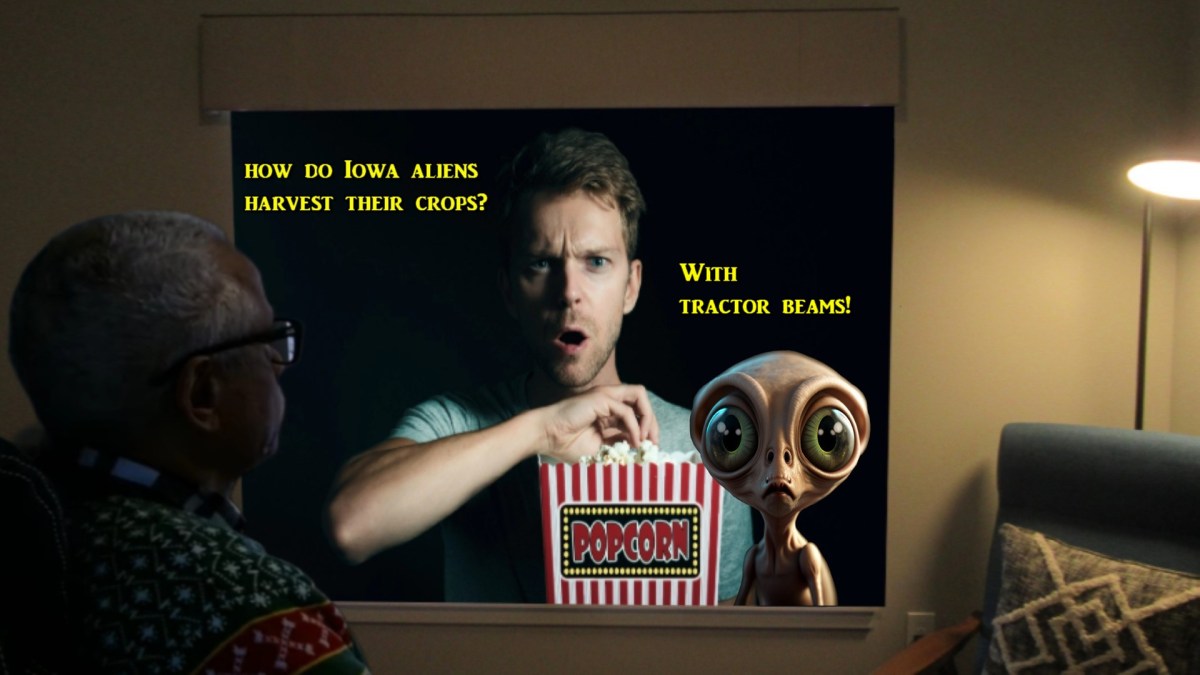
Four of the seven lids have now been flipped this season. We still don’t know what causes this. I suspect it’s an extraterrestrial playing a prank on us.

Clumsy Juggling

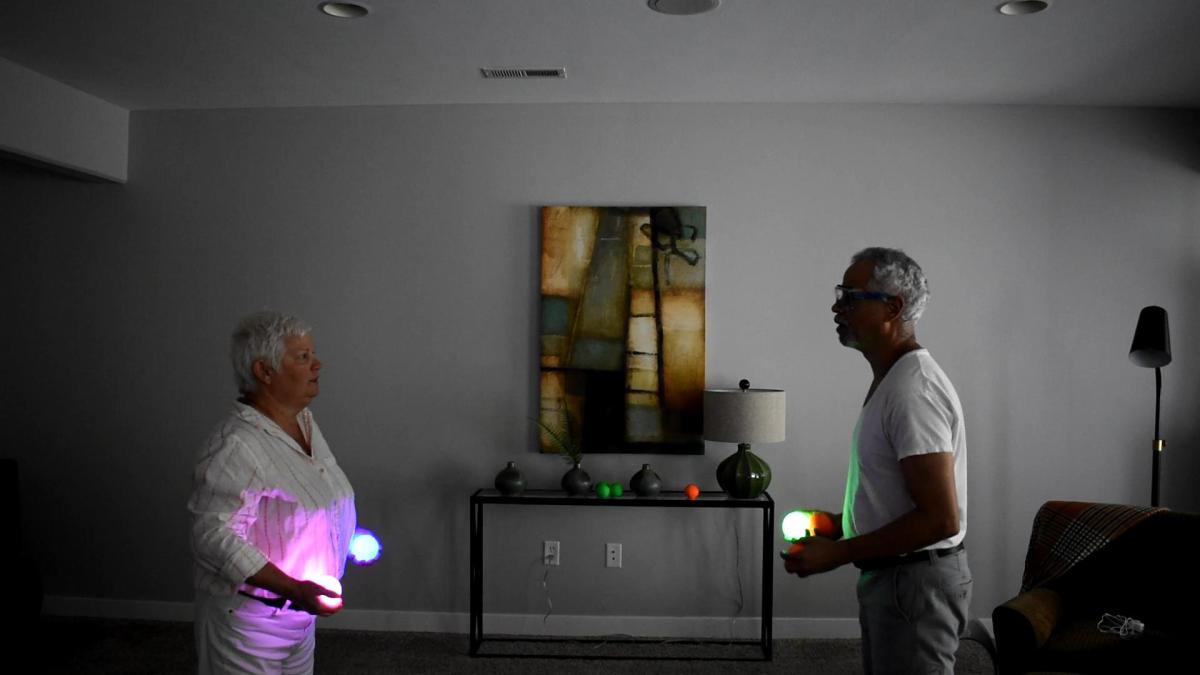
We decided to kick it up a notch with our two-person ball passing juggle routine. We switched out three of the bean bag Zeekio balls for some glowing LED juggling balls.

The LEDs are bigger and heavier than the bean bags, which led to more challenging passes. They also look better in low light, so it was a little harder to see the balls flying at us. We really didn’t know when we’d have to change our grip—so we often ended up losing our grip.

Clumsy juggling is fun juggling.

The AARO Finally Has a Website And is it Part of a Zero-Sum Game?

The All-Domain Anomaly Resolution Office (AARO) finally has a website—more than a year after it was formed.

It looks like there’s an intriguing message in the section “Coming Soon: US Government UAP-Related Program/Activity Reporting.” It says AARO will accept reports of UAP from current government employees who know of any programs or activities related to UAPs dating back to 1945.

One sentence tells you “This form is intended as an initial point of contact with AARO; it is not intended for conveying potentially sensitive or classified information.  Following the submission of your report, AARO staff may reach out to request additional detail or arrange for an informational interview.”

Several other sections provide further information and pictures and videos on UAP.

I wonder if all this is a reaction to the House Oversight Committee Hearing on UAP on July 26, 2023. Either the website has been under construction for all of last year and was just finished a couple days ago or it was just thrown together recently.

This makes me think of a couple of things, one is Dr. George Dawson’s blog post “Is This An Episode of the X-Files?” The other is an X-Files episode itself, “Zero Sum” which Sena and I just saw a couple of nights ago. We don’t remember seeing it when it first aired in 1997. You can read the Wikipedia article about the episode.

The gist of it is that Assistant Director Skinner makes a deal with the Smoking Man in which the latter will save Agent Scully’s life (she’s dying of cancer related to alien experiments) if Skinner hides the death of a postal worker who was killed by a swarm of bees carrying smallpox. This is part of a complex plot by a group called the Syndicate which is either trying to work with extraterrestrials to either exterminate the human race or save it (depending on which episode you watch) by using bees as a vehicle to transmit either smallpox or a vaccine to cure the Black Oil, which screws you up pretty bad. Part of this is my interpretation because the storyline sometimes is not clear about this to me.

Anyway, the back-and-forth actions and reactions of the characters, especially Skinner and the Smoking Man, are pretty good examples of a Zero-Sum game, loosely defined in that neither gets much of an edge on the other as they both try to counter each other’s efforts in what is probably just a power struggle from the Smoking Man’s perspective and a desperate effort to save Scully’s life from Skinner’s perspective.

Anyway, I wonder if the UAP reporters and the government (including the AARO) might be in some kind of zero-sum game. UAP reporters try to get the government to admit that Extraterrestrial Biological Entities (EABs) and Extraterrestrial spacecraft exist. But the government denies it. Neither side ever seems to get much further ahead of the other.