


We’re moving back a little closer to Coralville although technically we’ll still be in Iowa City. We always used to walk the Clear Creek Trail. It’ll be good to be back.
Category: reminiscence
When Do We Get Out of the Woods?

We were out walking the Terry Trueblood Trail the other day. It’s always good to get out of the hotel where we’re staying until our house is built. I get this cooped up feeling and it feels great to escape.
While we were on the trail, we saw this huge field of giant, golden prairie plants that looked familiar. It lined both sides of the walking trail. It was giant mullein. We saw it for the first time a couple of years ago while walking the trail.
Anyway, when you got perspective on it, it gave a sense of coming out of the dark, coming out of the woods.

It reminded me of that scene in Wizard of Oz when Dorothy and the guys emerge from the dark woods into the light. There’s this great little song in the scene that I finally discovered is called “Optimistic Voices.” I found this blog post about it posted back in 2015 by a writer named Marti Wukelic. The blog is called Is There Life After Retirement?
It captured how I felt that day, surrounded by giant mullein. I know that sounds ironic because we were in a sense in the woods of a field of giant prairie plants.
But giant mullein is a sunny color. On both sides of the trail, it rose high above our heads. It was like a giant, golden hallway to heaven and we were stepping into the sun.
Take Out Wrenched Ankle

Early this month, I was reminded of the old Operation game (some of us remember the TV commercial) when I wrenched my left ankle. It was the lateral malleolus, to be anatomically correct about it.
I was dismantling a bedstead. It’s kind of an old-fashioned piece and the headboard was pretty heavy. I was removing the side rails. I thought they were hooked to slots in the headboard and footboard and the parts would stay together after I unscrewed the side rails.

They weren’t and they didn’t.
I was facing the footboard removing the last screw from the side rail. I didn’t see the headboard falling when it struck the outer aspect of my left ankle with a loud bang on the joint flexed in sort of a sprinter’s starting posture. Surprise!
I was able to walk with a slight limp. It was swollen and bruised, but I could still put my shoes and socks on. I could even do a left one leg stand for a few seconds.
The swelling is down but still noticeable. It’s much less painful. I thought I could go without seeing a doctor because I could walk on it without limping. I eventually saw a web article about this kind of injury which pointed out that in some cases you can still walk on a broken ankle.
I may be in denial, but I’m betting it’s sprained. The moral of the story is that you should always have a spotter with you to hang onto potentially unstable heavy objects like headboards.
Annual Kickball Challenge Tonight: Psychiatry Residents vs Faculty

I almost forgot to announce the annual KickBall Challenge, which is tonight! This used to be called Matball, but is now called Kickball.
It starts with pizza at 6 pm and then the barfing starts at 7 pm. Just kidding! Usually this event is marked by extreme heat and humidity, but I gather it may be almost balmy by comparison tonight-around 78 degrees.
What’s the difference between matball and kickball? I think it’s the use of large mats for bases and that is usually played indoors. The size of the bases during the first match was like the one in the photo below. It rained briefly, but then it cleared off so the humidity only felt like it was raining.

I never actually played in a game of matball/kickball. In fact, I took it easy because the temperature was usually in the mid-90s at least.

The faculty team losers in the first matball/kickball match were accused of suspending the resident team trophy in Jello. I refuse to answer any questions about the issue on the grounds it may incriminate me.

Other special rules apply as usual, at least I assume:
For every point the residents score, faculty automatically score 5.
Faculty may tackle the base runner at any time.
If it rains, faculty win by 10 points.
The games are fun to watch. Residents jumping over faculty; Faculty collapsing from pizza overload or heat stroke.
Just win, baby.
Go Fly a Kite Right Now!

We got a couple of those ready-made kites the other day, took them out to Terry Trueblood Park and man did they fly! We used to fly kites you had to spend a little time and effort putting together back in the day. It was close to 90 degrees but we barely noticed.
I remember the first time we ever flew a kite. I was in medical school and we lived out in one of the cinder block apartment houses on Hawkeye Drive in Iowa City. They don’t exist anymore. The kite flew like a dream—and got stuck in a tree.
The next time we flew a kite was well after I graduated from residency. We got a kite that I couldn’t stop flying. I flew it in the nearby park, and afterward flew it in our driveway for hours.
There’s nothing like flying a kite.
Releasing Your Inner Nerd

Getting the new laptop reminds me of my pocket protector nerd days. That’s because the modern laptop is a sharp contrast to the big heavy desktops. I worked for consulting engineers back in the stone age and I wore a pocket protector. Some people might not know what that is. It’s a little plastic pen holder that fits in your shirt pocket. It protects your shirt from ink spots, but makes you look like a nerd. I would also keep notes on a little pocket flip cover paper notebook.
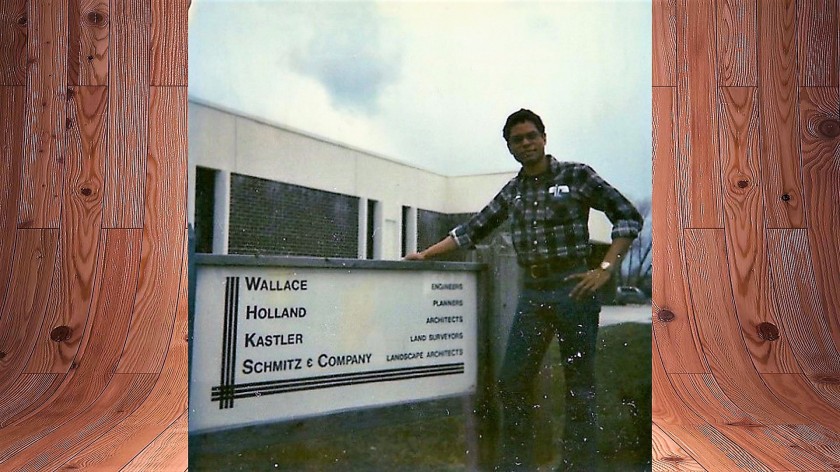
It was mandatory that you carry six or seven pens and mechanical pencils in the pocket holder, which typically would be emblazoned with some kind of engineering advertising label: Nerdy Engineers Are Us or The Silos of Tomorrow.
When I graduated to a Personal Digital Assistant (PDA) complete with stylus, I thought that was a major upgrade. It was a mobile handheld device on which I took notes using a stylus. It was a little on the big side for my shirt pocket, so it displaced the paper notebook and the pocket protector.
You can see the PDA in action by watching the Men in Black II movie in which a couple of junior level men in black are using them to take notes. This is the scene at Ben’s Pizza Parlor in which Frank the talking pug says the deflated body of Ben has “zero percent body fat” and the two men in black laugh at the joke.
Also on the nerdy side, I used to wear bow ties. They were kind of fun to tie. I had many. One of them was plaid, which I realize raises the nerd level up a notch. My nerd fashion attire also included (you might want to sit down for this)—clip on suspenders. I later graduated to the suspenders you button on the inside of your pants beltline.
I think you can still release your inner nerd by getting a pocket protector. And remember, you didn’t hear it from me.
Thoughts On Laptop Computers

We bought a laptop computer. It has been years since I’ve used one. I forgot how exasperating a touchpad is. Luckily, we have a spare wireless mouse and a USB port. The laptop is slim and very light, like most laptops these days.
I remember the first “laptop” I had early in my career as a consulting psychiatrist. I think it weighed about 2-3 times what the modern ones weigh nowadays. I think I could have stopped a thief from taking it from me by whacking him over the head with it.
If I remember correctly, it had a slot for floppy discs and another for disc media. It developed a hardware problem which forced me to box it up and send it back to the manufacturer for repairs. I don’t remember how long I kept it after that.
The new laptops don’t have any internal optical drives built into them.
I read a tech article in which the author’s opinion about the gradual disappearance of internal optical drives and other physical media for laptops was probably the result of large companies finding out they could make more money by charging subscription fees for digital media.
Microsoft comes to mind.
In Memory of L. Jay Stein

I was thinking of one of the Johnson County judicial mental health referees I often worked with years ago. L. Jay Stein died in 2014. I looked up his obituary the other day and was a little surprised to find I had written a remembrance for him. I’d forgotten it.
“I will always remember my first encounters with Judge Stein. I was a first-year resident in psychiatry at The University of Iowa Hospitals & Clinics. He often presided at mental health commitment hearings at which I was often the nervous trainee providing “expert testimony” as the treating physician. Jay taught me and countless other psychiatry residents about the importance of procedure. His knowledge was prodigious. But it was his compassion, his fairness, and his inimitable sense of humor I will always treasure.”
Judge Stein’s vocabulary was impressive. Even his recorded telephone automatic replies sounded amusingly erudite. Occasionally, when I had a question about legal procedures in mental health I would call him but get his answering machine. These out of office replies were entertaining and sounded very much like the way he did during commitment hearings. I can’t remember all of it, but it began with something like, “Once again, your request has been denied…” It made me think of what I might hear at a parole hearing—not mine of course.
L. Jay Stein was wise and funny.
Thoughts on Down Time Activities for Land Survey Technicians

I was just thinking about the old-time land survey crews. When I was getting on the job training as a survey technician, the typical land survey crews were at least 2-3 persons. One rodman, one instrument man, and a crew chief who organized the job, which could be property or construction jobs.
Nowadays, you get by sometimes with one man doing the jobs using a theodolite that measures angles and distances. You don’t always need a physical measuring tape; you can use something they call “total stations.”
It’s cheaper for engineering companies to use one man survey outfits. On the other hand, one disadvantage is the lack of mentoring for learners who want to become land surveyors or civil engineers.
Mentoring from surveyors on the survey back in the day not only taught me such skills as how to throw and wrap a surveyor’s steel tape—it also taught me how to work well with others as a team. Of course, this was transferrable to working on the psychiatry consultation-liaison service in a big hospital as well.
It’s well known that playing cards in the truck while waiting for the rain to stop was an essential skill. I don’t know how they manage downtime nowadays. We didn’t play cards on the consultation service during downtime, partly because we didn’t have much downtime.
Anyway, as I mentioned in a recent post, we played Hearts in the truck on rain days. I always sat in the middle. At the time, I was a terrible card player in general. It was a cutthroat game and I had trouble remembering which cards had been played.
When you consider that the strong suit of engineers and surveyors is math ability, you’d think that survey crews would have figured out a way to play Cribbage during downtime. You can have a Cribbage game with 3 or 4 people although I’ve never played it that way. If there are 3 players, it can still be cutthroat.
The one problem I can see is that, the guy sitting in the middle would have to set the board on his lap. You’d almost need a special, custom-made board which would have a space for placing the cards to keep track of what’s been played. I think that might have made things easier for me.
The other drawback to one man survey crews is that pretty much the only card game you can play is solitaire.
What Kind of Mailbox Does the USPS Really Want from Us?

I just saw the latest headline about the United States Postal Service (USPS) new recommendation that we all get a nice, big mailbox. Huh?
I gather one reason for the suggestion is to cut down on mail theft. I don’t think I’m allowed to put a lock on a mailbox, no matter how big it is.
In fact, the only way I’ve seen to reduce (notice I said reduce, not eliminate) mail theft are those big mailbox clusters you see everywhere in neighborhoods nowadays. Those are the neighborhoods with Homeowners Associations (HOAs), which require you to paint your window trim with beige (not taupe, read my lips!) or face lawsuits.
You know about those clusters, they’re a block away from your house. And you know how small your mailbox is there, yet the postal service is also big on recommending that you use them, probably because it makes their job easier. Which is it? Big mailbox with no lock or big locked mailbox cluster with small boxes?
Is the postal service in charge of maintenance on those mail cluster boxes? Of course not. We’re responsible for clearing away the ice and snow. And is theft not a problem with the cluster boxes? Scan the web for stories about armed bandits who hold up the letter carrier for the key. It happens.
Bigger mailboxes are not the answer to the postal service problems. They can attract the Halloween pranksters showing off their Hank Aaron batting skills (look him up!) and sadistic city snowplow drivers who like dragging your mailbox into the next county after plugging your driveway.
I can remember when the letter carrier walked the delivery route pushing a cart filled with mail. He stopped at every house in the neighborhood to put your mail in the mailbox, which was attached to the front of your house, or to drop it in the mail slot in your front door.
I’m not saying mail theft was not a problem in those days, but I don’t recall hearing about it on the news broadcasts or reading about it in the newspaper—which I hand delivered, sometimes risking injury from big dogs. The only theft I recall was by customers who avoided paying when I tried to collect:
“Do you have change for a hundred-dollar bill, sonny?”
“I’m a paperboy, not a banker!”
“Come back next week.”
Here’s an idea. What if some scientist invented a mailbox which contained a device which would trip only after your mail was delivered? This device would spray concentrated poison ivy resin all over the inside of the mailbox, teaching thieves a lesson. Of course you would have to wear gloves to collect your mail.
Another idea is to make your own mailbox, which would be big enough for a Ninja warrior to hide inside. That would surprise the crooks! I think you can get a Ninja for a fair price on eBay.
 Go Retire Psychiatrist