

I just want to send a link to Dr. George Dawson’s post The Phenomenological Suicide Assessment – The Legacy of Dr. H. It’s a great Christmas gift to teachers and learners everywhere. Happy holidays to George and everyone else.
Category: reflections
Thoughts on Comebacks

I watched the first half of the Colts vs 49ers game last night and I thought Philip Rivers didn’t look half bad for a 44-year-old guy who’s been out of the game for five years. Did you know he has 10 kids? OK, now that I’ve got that out of my system and that would be, what—the 44th time you’ve heard that since he took the field?
So what the Colts lost? His big family was up in the stands going crazy, cheering him on.
I read an article this morning which had Steve Young saying he could make a comeback at his age—which is 64. I couldn’t believe it. The same story mentions that George Blanda played for the Oakland Raiders when he was 48 back in 1975.
It got me wondering whether I could make a comeback as a general hospital consulting psychiatrist. Could I gallop up 6-8 floors of University of Iowa Health Care? You bet your bottom dollar—I couldn’t.
It’s hard to retire. Every once in a while, I miss hiking up and down the hospital with my camp stool, deftly swinging it around and sitting with the patients and families, telling medical students and residents all kinds of lies (I mean “wise old adages and pearls of clinical wisdom”).
I get a kick out of just wondering what it would be like. I get a vision of myself with a big, golden glowing aura of greatness around my head—until I come to my senses. Hey, nobody’s going to pay me a quarter million dollars to run the consult service for the few months I’d be able to limp around the hospital, falling off my camp stool when my legs go numb or the chair breaks.
It’s not like I can just throw a football like it’s nothing after 5 years. I’d have to prove I still have enough clinical smarts to figure out how to introduce myself (Hi! I’m Philip Rivers and you need to go long!”).
The Maintenance of Certification Circus is still a thing and it’s worse. I’m not saying doctors don’t undertake the arduous task of essentially retraining to be what they once were—because that’s not good enough anymore.
Last night, the camera caught Phil more than once being just as hard on himself as he was with other members of the team who weren’t in the right spot at the right time. Most physicians are perfectionists and if you’ve been out of the game for a while and you try to squeeze back in, you could wind up mumbling to yourself, “They don’t make footballs like they used to!”
I didn’t stay up for the second half of football game. It wasn’t because of anything Philip did or didn’t do on the field.
I just can’t stay up that late nowadays.
Profound Thoughts on Topological Brain Changes
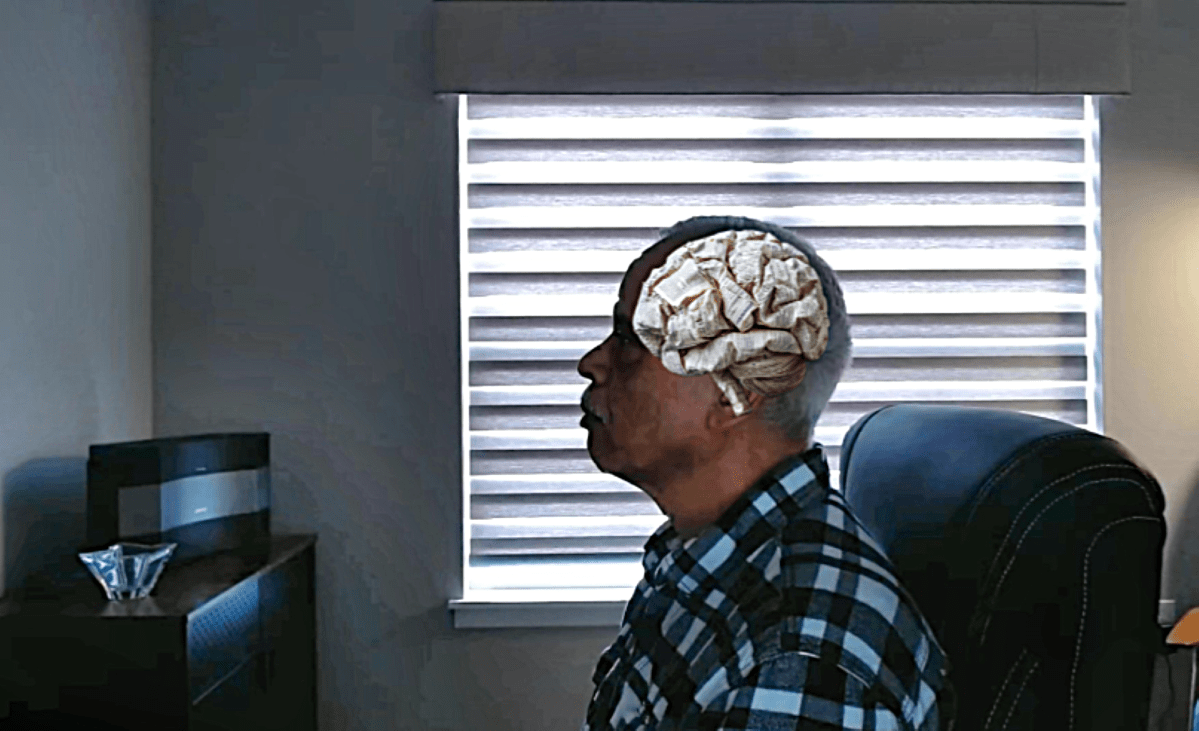
I ran across this article in the news about topological changes that happen in our brains as we age. You can try to read the original open access paper published by the author Alexa Mousley.
The topological changes in the brain that occur in the brain are linked to the structural connections that are made or not in human development and roughly correspond to the main epochs of brain structure in our lives: childhood (transition to adolescence around 9 years old), adolescence lasts until around 32 years old when we finally reach adulthood, then at age 66 we reach the early ageing stage and that finally changes into late ageing or old farthood around age 83. It’s a good thing I retired 5 years ago.
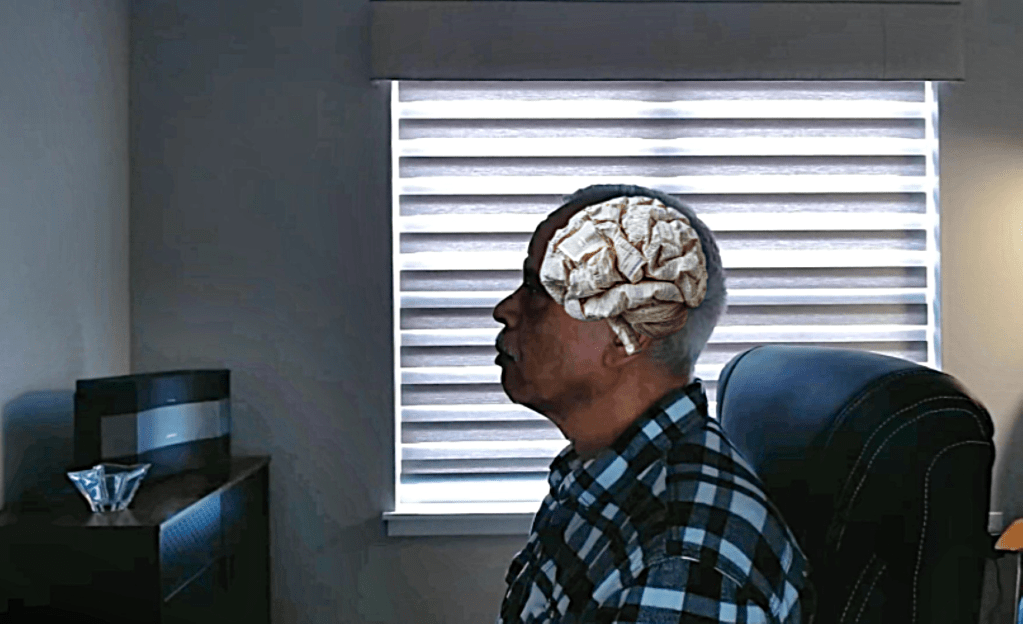
What this says, of course, is that nobody should be getting married or driving until they hit age 32. There are buses, you know, although we do have self-driving cars which explode on impact so thank goodness we don’t need to worry about that.
Also, it implies that you shouldn’t be drafted into military service until you’re presumably old enough to know that war doesn’t solve any problems.
Furthermore, this could lead to earlier retirements, reducing the need for awkward discussions with tenured professors who are apparently unaware they often arrive at the office with their pants on backwards. Just boot them out the door!
Why didn’t we think of this topology thing a long time ago?
For an interesting topology discussion, see the Wikipedia article, which has an interesting photo of something called homeomorphic topology, an amusing example of which is the picture of continuous transformation of a coffee mug into a donut, or as many Iowa City people would prefer, a bagel (something that looks like a doughnut but is so tasteless you have to slather it with a pound of cream cheese).
If you have any questions, call the author of the study. You’re welcome!
Mousley, A., Bethlehem, R.A.I., Yeh, FC. et al. Topological turning points across the human lifespan. Nat Commun 16, 10055 (2025). https://doi.org/10.1038/s41467-025-65974-8
Big Mo Blues Show Christmas Music Featuring Peter Green

Last night was the second time John Heim (aka Big Mo) introduced the song “Silent Night” by Peter Green and the Men in Blue using the title in German, “Stille Nacht.” He also played it last Friday night, saying “Stille Nacht, Heilige Nacht” in what sounded like perfect German. I immediately liked this version.
I might be remembering this wrong, but when I was a kid, I think I somehow got assigned to sing “Silent Night” when I went out caroling (in a horse-drawn sleigh, no less!) with the members of our church. It’s a good thing smartphones weren’t around to record that.
I remember last week trying to find it on the Big Mo Blues Show playlist but I couldn’t. Then I tried to find it by searching the title in German. I forgot or didn’t hear the name of the band. I gave up looking for it and I wondered why he said the title in German.
So, after I heard it again last night and looked for it on the playlist, I found it right away on the web.
I have never heard of Peter Green, so I looked him up and found a Wikipedia article about him. His original name was Peter Allen Greenbaum. I found out that Greenbaum is a German surname (originally Grünbaum which means greenery or green tree. As an aside, Heim is also a German name. It means “home.” For many people (just listen to his Shout-Outs list!) the Big Mo Blues Show is home.
Those are just observations I find interesting and maybe point to a clue why Big Mo pronounced the title of the song “Silent Night” in German.
Anyway, the Wikipedia article doesn’t say anything about Peter Green’s ancestry. He was born in 1946 in London and died in his sleep at the age of 73 on Canvey Island, Essex.
He was a gifted blues rock guitarist and singer-songwriter and was founder and original leader of the band Fleetwood Mac. He was a very influential figure in the British blues movement. Some thought he was greater than the other often-mentioned blues guitarist, Eric Clapton.
Peter got some coaching early in life from his older brother but was essentially self-taught by the age of 11. In the mid to late 1960’s people were calling him “The Green God” which was similar to what many were calling Eric Clapton (“God’).
Around 1969(70) Peter started to develop signs of mental illness and during the 1970s he also used LSD several times. Eventually he was diagnosed with schizophrenia. Like other people who develop psychiatric illness, it was probably difficult to settle the chicken/egg question of which came first. He attributed much of his mental health issues to his use of LSD. He was hospitalized and treated with electroconvulsive therapy (ECT) in the mid-1970s.
However, by the 1980s, he returned to the music scene. He was inducted into the Rock and Roll Hall of Fame in 1998. He was described as being more interested in expressing emotion in music rather than displaying dazzling technical skill. He influenced many musicians.
Merry Christmas!
Swearing as a Performance Improvement Method?

I read this article about swearing being a good thing to do to increase your workout performance or whatever. There’s a link to the study that a researcher says supports that conclusion. I mean this story is talking about really bad words being good for you. It reminds me of a time when I was a pre-teen kid and broke my wrist falling out of a barn loft. I don’t remember exactly how I got to the emergency room. We didn’t have a car so our next-door neighbor must have driven me with my crooked arm and my hysterical mom to the hospital.
My mom was in the emergency room with me. When I cut loose with a torrent of really bad words, nurses had to practically carry her out because she fainted. This was right after I asked the doctor if it was OK if I swore and he said “Go ahead,” injected anesthetic—and immediately started to manhandle my wrist. I don’t think I ever swore in front of my mom before that.
I don’t remember if the swearing helped me withstand the pain or not. I don’t think so.
There was my other trip to a hospital for chest surgery when I was in my early teens. I had a chest tube after the operation. My roommate had undergone some kind of abdominal surgery. We had a lot of stitches and were in a lot of pain, which was bearable if we didn’t move at all. It even hurt to breathe. But the other factor was the TV in our room. It was way across the room and there was some kind of comedy show on. It was really funny—which made us feel really terrible. We could barely move and even had to talk quietly, yet this funny show made us laugh, which expanded our chest and abdomen areas, stretching the sutures. It was excruciating.
Even swearing would have hurt, not to mention laughing out loud. We really couldn’t stand to laugh and it’s too bad I can’t describe the sound of two guys trying not to even chuckle. If you ever watched Loony Tunes cartoons and remember how Elmer Fudd sounded when he laughed—that was how we sounded because we were trying to suppress laughing. It was funny but pitiful. My roomie finally made this desperate slow motion move out of bed, crept to the TV and shut it off. I was so grateful. Neither one of us ever swore.
The other thing this swearing for power reminds me of is the movie Signs, which starred Mel Gibson as Graham Hess. It was about an alien invasion and in one scene, some people/aliens (they don’t yet know what) are running around the house and Graham’s brother Merril (Joaquin Phoenix) are getting set to chase them. Merril tells Graham to yell and curse, although because Graham is a former Episcopal priest, swearing is beyond him:
- All right, listen, we both go outside, move around the house in opposite directions. We act crazy, insane with anger, make them crap in their pants, force them around till we meet up on the other side.
- Graham Hess: Explain “act crazy”.
- Merrill: You know, curse and stuff.
- Graham Hess: You want me to curse?
- Merrill: You don’t mean it. It’s just for show. What?
- Graham Hess: Well, it won’t be convincing. It doesn’t sound natural when I curse.
- Merrill: Just make noises, then.
- Graham Hess: Explain “noises”.
- Merrill: Are you gonna do this or what?
- Graham Hess: No, I’m not.
- Merrill: All right, you want them stealing something in the house next time?
- [outside light comes on]
- Merrill: On the count of three. One…
- Graham Hess: All right.
- Merrill: two… three!
- Graham Hess: Ahh! I’m insane with anger!
- Merrill: We’re gonna beat your ass bitch! We’re gonna tear your head off!
- Graham Hess: I’m losing my mind! It’s time for an ass-whupping!
- [Merrill and Graham meet each other]
- Graham Hess: I cursed.
- Merrill: I heard.
Anyway, I think we have to make a distinction between cursing about something or cursing at someone before we start claiming, like the author of the study says:
“Swearing is literally a calorie-neutral, drug-free, low-cost, readily available tool at our disposal for when we need a boost in performance.”—psychology researcher Richard Stephens of Keele University in the UK.



Today is Our 48th Wedding Anniversary!
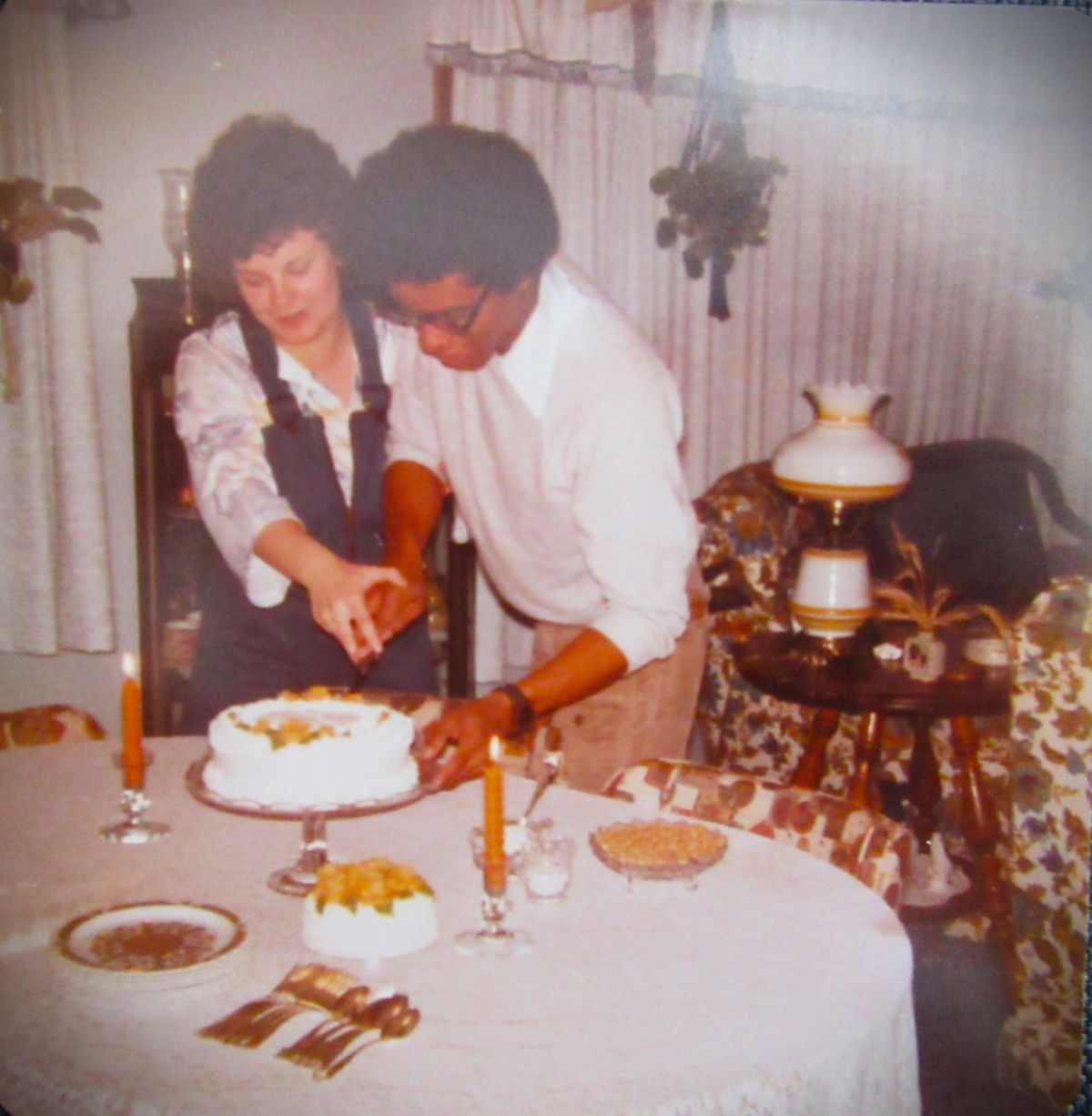
Today is our 48th wedding anniversary! I looked through a bunch of photos last night and probably picked all the wrong ones—but I doubt it’ll matter. It has been 48 years, so I’m unlikely to learn from mistakes now.
We were married at the Little Brown Church in Nashua, Iowa. We were nervous, but got through our vows, rang the bell, and cut the wedding cake. We are thankful for friends who were there for us and shared the joy.
We’ve been to a lot of places and had a lot of fun. Times are not always easy. We get through them.
I’m happy and grateful for this funny, crazy woman who wins a lot of cribbage games with me and does more for my soul than I can ever say.









Autumn is the Time to Slow Down

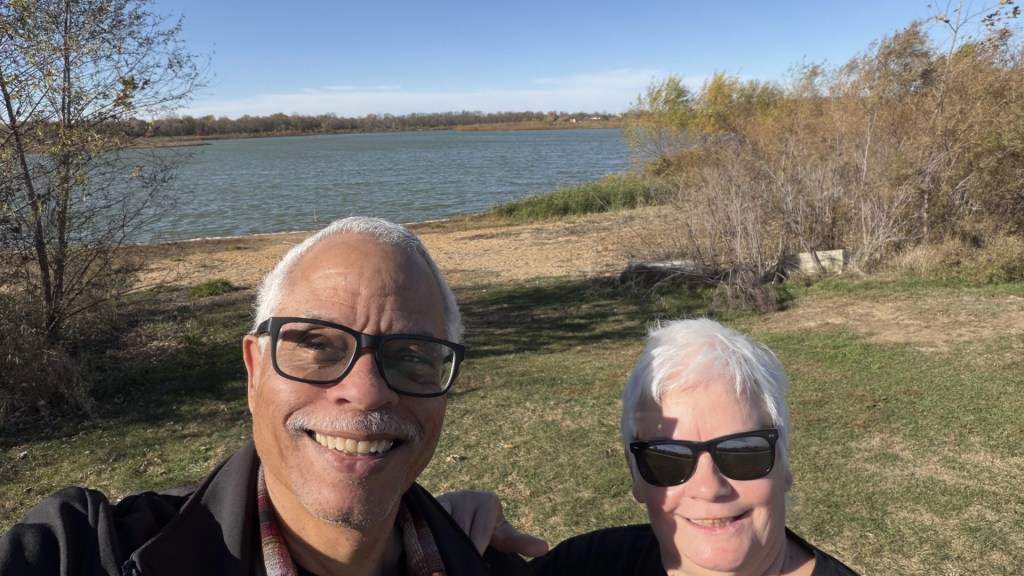
We visited the Terry Trueblood Trail and relaxed. The temperature was in the 60s, just a little on the breezy side. Everything seemed to move slower, except for the lady bugs which tried to keep warm by landing on us everywhere they could. I thought they would get into my rolled up blue jean cuffs, but amazingly they did not.
There was a small, brave patch of asters hanging on for dear life, literally. We both loved the red tree and you can tell which one it is in the video. I should know what kind of tree it is, but for now I guess just seeing it was good enough.
The cedar waxwings were flitting around maniacally and sometimes that means they’re getting smashed on fermented berries. But I didn’t see that there was enough on the branches for a party.
A pelican lazily swam across the lake in a way that suggested that it’s OK to just relax. What’s the hurry?
We might have seen one of the last northern shovelers (a dabbling duck) still hanging around. It’s like it was saying, “There’s still plenty of time.”
Whether that’s true or not, slowing down doesn’t hurt at all.
Thoughts on Retirement, MIB Style

Sena alerted me to an article about the 28th anniversary of when the first Men in Black movie hit the theaters in 1997. The author praises it and says it’s still pretty good.
I can’t remember the first time I saw it, but it was probably not in 1997. I was in my second year of being an assistant professor of psychiatry at the University of Iowa Hospitals & Clinics (now called University of Iowa Health Care). I was too busy to do much of anything except run around the hospital responding to requests for psychiatry consultations from medicine and surgery. I did that a long time.
I’ve been blogging since 2010. I cancelled my first blog which was called The Practical Psychosomaticist. I then restarted blogging, calling it Go Retire Psychiatrist. One blog that pays homage to my career and to the Men in Black films is “The Last White Coat I’ll Ever Wear.”
It’s part reminiscence and part comedy in the style of Men in Black dialogue and jokes. Since I retired, I have not been back to the hospital except for scheduled appointments in the eye and dentistry clinics. I don’t know if I’ve ever reconciled myself to being retired. If someone were to tell me “We have a situation and we need your help” (think Men in Black II), I would probably say something like “There is a free mental health clinic on the corner of Lilac and East Valley.”
When it Comes to AI, What Are We Really Talking About?

I’ve been reading about artificial intelligence (AI) in general and its healthcare applications. I tried searching the web in general about it and got the message: “An AI Overview is not available for this search.”
I’m ambivalent about that message. There are a couple of web articles, one of which I read twice in its entirety, “Are we living in a golden age of stupidity?” The other, “AI, Health, and Health Care Today and Tomorrow: The JAMA Summit Report on Artificial Intelligence”was so long and diffuse I got impatient and tried to skip to the bottom line—but the article was a bottomless pit. The conflict-of-interest disclosures section was overwhelmingly massive. Was that part of the reason I felt like I had fallen down the rabbit hole?
I recently signed an addendum to my book contract for my consult psychiatry handbook (published in 2010, for heaven’s sake) which I hope will ultimately protect the work from AI plagiarism. I have no idea whether it can. I delayed signing it for months, probably because I didn’t want to have anything to do with AI at all. I couldn’t discuss the contract addendum with my co-editor Dr. Robert G. Robinson MD about the contract addendum because he died on December 25, 2024.

I found out today the book is old enough to find on the Internet Archive as of a couple of years ago. One notice about it says “Borrow Unavailable” and another notice says “Book available to patrons with print disabilities.”
All I know is that an “archivist” uploaded it. The introduction and first chapter “The consultation process” is available for free on line in pdf format. I didn’t know that until today either.
Way back in 2010 we didn’t use anything you could call AI when we wrote the chapters for the book. I didn’t even dictate my chapters because the only thing available to use would have been a voice dictation software called Dragon Naturally Speaking. It was notorious for transcribing my dictations for clinic notes and inserting so many errors in them that some clinicians added an addendum warning the reader that notes were transcribed using voice dictation software—implying the author was less than fully responsible for the contents. That was because the mistakes often appeared after we signed off on them as finished, which sent them to the patient’s medical record.
Sometimes I think that was the forerunner of the confabulations of modern-day AI, which are often called hallucinations.
Now AI is creating the clinic notes. It cuts down on the pajama time contributing to clinician burnout although it’s not always clear who’s ultimately responsible for quality control. Who’s in charge of regulatory oversight of AI? What are we talking about?
 Go Retire Psychiatrist