I came across a couple of items that prompted my renewed gratitude. One of them was an article in Bloomberg on the web, “US Medical Schools Grapple With First Admissions Since End of Affirmative Action” by Richard Abbey, Ilena Peng, and Marie Patino, published on December 14, 2023. It’s about how hard it is for black students to get into and graduate from medical school. Just getting to college is a major hurdle.
The other item is an obituary of one of the most important persons in my life, Pastor Robert Leroy Stone. He authorized scholarships for two years of my undergraduate college education, which were at Huston-Tillotson College (now Huston-Tillotson University, one of the HBCUs) in Austin, Texas. That was back in the 1970s, ancient history now. The issue of Affirmative Action was widely discussed during that time.
As usual, I’m dumbfounded by how often I miss the passing of the critically important people who made my success in life possible. And there is this astonishing connection which followed me even to Iowa City—but of which I was unaware. After he retired, Pastor Stone moved from Mason City to Iowa City in November of 2001. At that time, I had graduated from The University of Iowa College of Medicine, finished my residency in psychiatry in 1996, and was on staff in University of Iowa Dept of Psychiatry. I never knew he was so close. He died in 2002.
Pastor Stone was a Board Member and Chair of the Mason City YMCA, where I lived for a while. He was also a Member of the Board of Chemical Dependency Services of North Iowa as well as the Mental Health Center of North Iowa.
Although I didn’t graduate from Huston-Tillotson College, I was able to transfer credit to Iowa State University. And from there I went to medical school at The University of Iowa.
I’ve read other stories about how hard it is for Black students to get into and finish medical school. My path was indirect and not easy, but Pastor Stone made it possible. And for that, I am grateful.
Sena and I just recently saw the TV commercial about the Whirlpool Care CountsTMLaundry Program, which has been providing washers and dryers for schools. It was launched to address school absenteeism, one cause of which is bullying of kids who don’t have clean clothes. They are also more likely to drop out of school.
It turns out this program has been going on since 2015. And there’s an Iowa connection. In 2017, Morris Elementary in Des Moines got a new washer and dryer (Des Moines Register, “Iowa teacher meets New Yorker on Instagram, and needy school gets a big lift” by Laura Rowley, published Oct 7, 2019, accessed 12/13/2023).
According to the Whirlpool’s website about it, there are over 150 programs in schools across 40 states.
The website even lists research studies demonstrating the link between a lack of clean clothes and school attendance rates.
We reminisced about what we did about this issue when we were in grade school. We don’t remember skipping school because of dirty clothes. We managed by washing them by hand, or in my family, using an old hand wringer as well. We hung clothes out to dry on the line in the back yard. Sena did that and also used a fan.
I was sometimes bullied, but it was related to being black rather than having old clothes. I didn’t change my outfit every day because I didn’t have enough clothes for that.
When I got old enough, I delivered the Des Moines Register. Talk about nickel and diming. The rates were pretty low compared to today, but I still had some customers who complained about the price. I walked my route to collect subscription fees. I was not a great salesman but I was a steady worker, delivering papers in any weather, even dragging them in a wagon through knee deep snow.
You could buy things with your money through the paper’s main office. The first thing I bought was an alarm clock with a glass face through which the clockwork was visible. I didn’t really need an alarm clock to get me out of bed to deliver papers. I was a light sleeper even then. I just thought the clock was cool.
I saved enough money (mostly in quarters) to buy my first bicycle. It cost about $20 at Ralph’s Bicycle & Hobby Shop in Mason City. It was used and I think it was a 24 inch. I did not do wheelies.
I don’t remember buying clothes.
I remember collecting from a young couple who were obviously newlyweds. They would often both come to the door wrapped in nothing but big bath towels. I wondered if they even had any clothes. Maybe they didn’t have any laundry facilities.
Anyway, I think the Whirlpool program is a great idea.
The other day, I finally rearranged my bookshelf. I’ve put it off for a long time. While I was doing it, I remembered where I spend the most time in my thoughts. I don’t have a very broad library, which probably illustrates where my mind wanders. It has changed very little over the years. Retirement affected it some, but not a great deal. After I rearranged the books, it was not just better organized. It made me think about the past, the present, and the future.
I have a lot of books by Malcolm Gladwell for some reason. The Tipping Point was published around the time when all of my immediate family members died for one reason for another. They died within a few years of each other. It was a difficult time. I remember hoping I would just get through it. I did.
I’m still a fan of Stephen Covey. The 7 Habits Manual for the Signature Program marks a time when I was contemplating leaving my position at The University for a position in private practice. It didn’t work out, and it’s just as well.
Of course, there are many books about consultation psychiatry, including the one I wrote with my former Dept. of Psychiatry Chair, Robert Robinson. Every once in a while, I search the web to find out what former colleagues and trainees are doing now. I can’t find a few, which makes me wonder. A couple have died. I’m a little less eager to look around each time I find out about those. Finding obituaries is a sad thing—and it makes me a little nervous about my own mortality. One or two have apparently simply dropped off the face of the earth.
I read some books for fun. I’m a fan of humorists, which is no surprise. The most recent is The Little Prince. That book and others like it inspire me.
I like books that make me laugh and give me hope. It’s difficult to sustain hope in humanity, if you read much of the news, which I tend to avoid.
I feel better when we go out for walks. Recently we did that about a week ago when there were a couple of warm days. On one day, we saw a couple of bald eagles and northern shovelers (the latter of which we’ve never seen before), at Terry Trueblood Recreation Area.
On another warm day we saw a couple Harvest Preserve staff members preparing to hang a big Christmas wreath on the side of a barn on the property that faces Scott Boulevard. They’d got some evergreen branches from an “overgrown Christmas tree farm.” It had a big red bow. They were going to decorate it further and hang it. We hoped it would be finished by the time we returned that day, but it wasn’t done.
When we returned a day later, it was very cold but the wreath was on the barn wall and it was festooned with gorgeous decorative balls. It was worth waiting for.
In answer to the question in the title, I’ll confess right away I don’t know the answer. The impetus for my writing this post is the Medscape article about an 84-year-old physician who was forced to take a cognitive test required by her employer as a way of gauging her ability to continue working as a doctor. She’s suing her employer on the grounds that requiring the cognitive test violated the American with Disabilities Act (ADA), the Age Discrimination in Employment Act, and two other laws in her state.
I didn’t retire based on any cognitive test. I recall my blog post “Gauging My Readiness for Retirement,” which I posted in 2019 prior to my actual retirement. In it I say:
I spent 4 years in medical school, 4 years in residency, and have worked for more than 23 years as a psychiatrist, mostly as a general hospital consultant. Nothing used to jazz me as much as running around the hospital, seeing patients in nearly all specialties, evaluating and helping treat many fascinating neuropsychiatric syndromes, teaching medical students and residents, and I even wrote a book.
On the other hand, I don’t want to hang on too long. When people ask me why I’m retiring so early (“You’re so young!”), I just tell them most physicians retire at my age, around 65. I also say that I want to leave at the top of my game—and not nudged out because I’m faltering.
In it, I mention a blog post written by a physician blogger, Dr. James Allen. The title is “When Physicians Reach Their ‘Use By Date.’ At the time I didn’t make a link to his post because the web site was not listed as secure.
Since that time, the web site has become secure, and you can read the post here. Dr. Allen lists anecdotes about physicians who ran close to or past their “use by” date.
Dr. Allen’s point is that we often don’t realize when we are past our “use by” date. That applies to a lot of professions, not just medicine.
There’s been a shortage of psychiatrists for a long time and it’s not getting better, the last I heard. All in all, I’m OK with the timing of my retirement.
I note for the record that I have not seen any mention in the news that the Rolling Stones have ever been required to take a cognitive test to continue working. I also want to point out that they are around 80 years old and their 2024 tour is sponsored by the AARP, the organization formerly known as the American Association of Retired Persons. I heard that the Rolling Stones new song, “Angry” is up for a Grammy.
I doubt anyone is angry about the obvious fact they’re not even thinking about retiring.
We have noticed that the AARP is sponsoring the Rolling Stones Hackney Diamonds Tour 2024. I don’t think it’s necessary to point out that, with all due respect, the Rolling Stones have long ago passed fossil status.
I guess that means it’s fitting that the AARP sponsor a rock music group the members of which are eligible to join the organization formerly known as Prince. Sorry, I meant to say formerly known as the American Association of Retired Persons.
Obviously, the Rolling Stones are not thinking about retirement. But unless they can come up with a plausible explanation for the name of the tour, Hackney Diamonds, they should probably not be eligible for the free tote bag the AARP offers to those who become members.
A hackney is a horse drawn carriage. A diamond is a precious stone. The Rolling Stones have thankfully clarified that, obviously, the Hackney Diamonds tour name comes from the well-known legend of the hackney cab driver who drove through the streets of a town called Hackney in London in the 17th century, tossing out diamonds to passersby if they could guess how many angels could dance on the head of a pin during a snowstorm in the Sahara Desert.
That’s about as clear as the explanation given by Keth Richards and Mick Jagger in an interview with Jimmy Fallon as reported in an article written by Tom Skinner in NME on September 7, 2023.
Anyway, the Rolling Stones have been a big deal for decades, of course and they get mentioned in a lot of different ways. For example, in the movie Men in Black 3, there’s a conversation between Agent J and young Agent K in a café which is prompted by the need to eat pie in order to clear their minds of the case they’re working on which is trying to stop the murderous bad guy, Boris the animal, from destroying Earth. Young Agent K stipulates the rule is to talk about anything about the case and to let the pie do its magic. You’ll never guess what they talk about but it goes like this:
“Young Agent K: You said we don’t talk, right? Go ahead, ask me any question. Anything you want, just as long as it doesn’t have to do with the case… just let her rip.
Agent J: What’s up with you and O?
Young Agent K: Me and O?
Agent J: Yeah, you and O.
Young Agent K: All right, all right… all right, this is it. A while back, I was assigned to keep tabs on a musician, Mick Jagger. He was in this British group, Rolling Stones…
Agent J: Rings a bell.
Young Agent K: We believed he’s on the planet to breed with Earth women, so I was in London and that’s when I met O. She’s smart, funny… great smile and we find ourselves in this pub, Whistler’s Bar, warm beer and the worst food you ever ate. We just played darts till the sun came up, neither of us wanted to leave…”
And I can remember that Microsoft used the Rolling Stones 1981 song, “Start Me Up” in their promotion of Windows 95 computer operating system. You remember that; it was a total loser which led to the evolutionary creation of a dozen operating systems, all of them laughably dysfunctional. I should know—I bought all of them.
So, the Rolling Stones turn up a lot in pop culture. Everybody knows that. That’s in part because of their stamina—and maybe doggedly persistent denial of aging leading to a refusal to ever retire, just drop on stage because their bones finally disintegrate.
So, returning to the question of why AARP (pronounced arf only with a p on the end) is sponsoring the Rolling Stones tour. I have no clear idea except that I think the organization wants to broaden appeal for the organization so that more dues paying young people join, adding money to help support those over 50 to maintain financial stability and security.
What I don’t understand is that, in part, this implies trying to work as advocates (read “lobby”) in Congress. All those old farts in Congress can do is argue and a some of them should seriously think about retiring. If they can’t command respect, they could at least get a free tote bag by joining AARP.
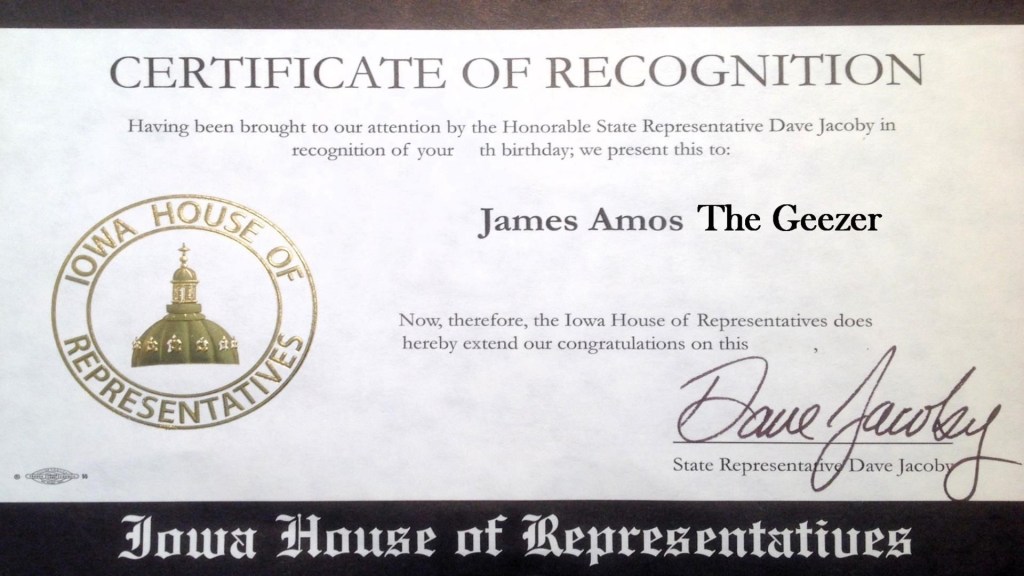
But the Rolling Stones don’t need free tote bags. They’ve earned their fossil status many times over. On the other hand, I have earned my certificate from the state legislature.
I found this very uplifting and thought-provoking article on retiring from psychiatry by Juan C. Corvalan.
He sounds like he’s successfully navigating his retirement. On the few occasions I’ve felt compelled to make a remark about my own retirement, I typically say something like “It’s a mixed blessing.”
My retirement is a process, unfolding as time passes. It was difficult in the beginning, which was only a little over 3 years ago. It’s not what I would call easy even now.
What gave me joy since I retired were getting messages from the learners I was privileged to teach. Some of them I’d not heard from in many years. Someone from my department said, “We miss you.” I answered that, in some ways, I never left.
Time itself feels different. The days go by so quickly that I want time to slow down.
I like Corvalan’s way of expressing himself. He’s a writer and likes to talk about words and their meaning. He talked about the definition of the Spanish word for retirement, which is jubilacion, which reminds me of the English word “jubilation.”
Retirement has been, at times (perhaps often), anything but cause for jubilation.
On the other hand, I can think of several things I will never miss about being a psychiatrist. I don’t write about them, as a rule. In fact, I tend to write about anything but psychiatry: cribbage, juggling, making wisecracks about extraterrestrials.
I really appreciate colleagues like George Dawson, MD (who writes the blog Real Psychiatry), H. Steven Moffic, MD (who writes the articles “Psychiatric Views on the Daily News”), Ronald Pies, MD, Editor in Chief Emeritus of Psychiatric Times, and Jenna, the psychiatry resident who writes the blog “The Good Enough Psychiatrist,” who is very far from retirement, unlike me and the other writers just mentioned.
And I appreciate Dr. Corvalan’s excellent essay on retirement from psychiatry.
Reference:
Corvalan JC. A Retired Psychiatrist on Retirement: Rejoicing Jubilatio. Mo Med. 2022 Sep-Oct;119(5):408-410. PMID: 36338006; PMCID: PMC9616447.
It was 46 years ago today Sena and I were married at the Little Brown Church in the Vale in Nashua, Iowa. I was a skinny guy with a big afro. She was and is a beautiful bride.
We cut the wedding cake together. We fed each other big bites. It was the biggest event of our lives.
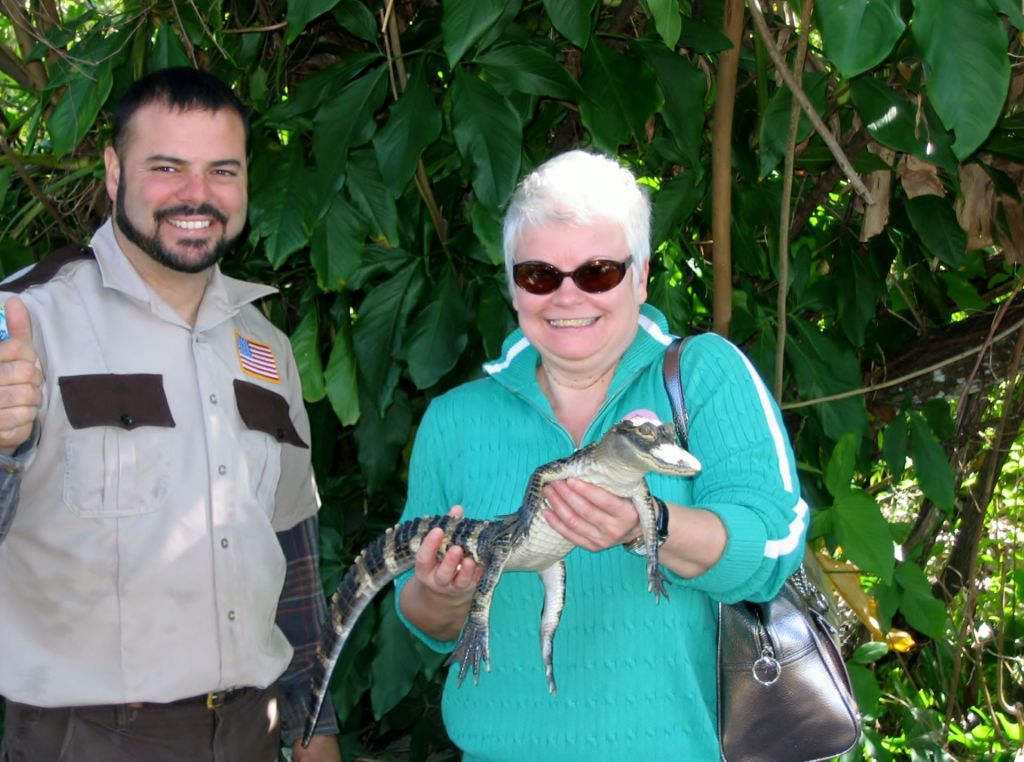
There were other big events. The trip to Vegas and marveled at the Bellagio fountains. The helicopter ride over the Niagara Falls. The view over New York City from the Empire State Building. That was my first senior discount ticket. Sena holding a little alligator in Miami. The Lincoln Book Tower in Washington, D.C. Festooned with the birds of Hawaii.
Wherever we went, whatever we did, we were always together. She’s always fearless. She’s gone with me wherever I went, even when I was wrong. I am often wrong—but I was right about marrying her.
Just random updates for now. That 2-person 6 ball pass juggle Sena and I made a YouTube about? We could barely complete a couple of volleys, and we didn’t think we’d ever make much more progress. However, yesterday, we were starting to make 3, even 4 passes and cascades. Just when you think it’s hopeless….
What about me and the shower juggle pattern? I have not stopped trying—but I’m really no further ahead than I was 6 months ago. It wouldn’t feel right to quit. Success could happen tomorrow.
I remember watching an X-Files episode a while ago, “The Goldberg Variation.” A Rube Goldberg Contraption is a machine that is built of a lot of complex parts that in sequence result in solving a simple task. The main character in the episode is Henry Weems, who is incredibly lucky. His life is a series of improbable, complicated sequences of events that either make him rich or foil his enemies.
Unlike most people, Henry wants to use his incredible power for good, specifically to help a kid get a special treatment for liver disease which is killing him. The results he gets are wacky and complicated and result in good things happening to others.
I wonder what makes Rube Goldberg Contraptions so focused on trivial results? I think it would be nice to build one that—write your wish here.
Note: Rube Goldberg cartoon in public domain (source Wikipedia article, “Rube Goldberg machine”).
I’m giving a shout-out to a couple of child psychiatrists, one I know only from a blog, The Good Enough Psychiatrist. The other is an assistant professor in the University of Iowa Child Psychiatry Dept. I’ve never met her.
Since Jenna gives her name in the About Me section of her blog, I’m going to call her that because it’s easier. Jenna writes many thought-provoking posts, but I really admire the one titled “Amae.”
Dr. Ashmita Banerjee, MD wrote an essay titled “The Power of Reflection and Self-Awareness.” It’s published on line in the Mental Health at Iowa section of The University of Iowa web site.
As a relatively recently retired consultation-liaison psychiatrist who is also a writer, I feel a strong connection to them. In addition to being very glad that extremely talented persons are filling the ranks of a specialty which suffers from a serious manpower shortage, I get a big kick out of reading what really smart people write.
Here’s where a geezer retired psychiatrist starts kidding around. Jenna, a fellow blogger, is used to my habit of deploying humor, admittedly often as a defense. Dr. Banerjee doesn’t know me.
What is it about these essays that reminds me of the X-Files episode “Hungry”? It’s a Monster of the Week episode from the monster’s perspective. This monster looks like a human but sucks brains out of people’s skulls. He’s conflicted about it and even sees a therapist. But in the end his dying words were, as Agent Mulder shoots him down, “I can’t be something I’m not.”
If you read Dr. Banerjee’s essay and followed one of the links, you would have caught the clue that I actually read it because I consciously substituted the word “What” for “Why” in the previous paragraph. I could have as easily asked why instead of what—but it’s less helpful in gaining self-awareness.
And I haven’t sucked anybody’s brains out of their skulls in, what, over two weeks now! Upon reflection, I’m very aware of being incorrigible. Food for thought.
Jenna’s description of the Japanese concept of the word “amae” and Dr. Banerjee’s examination of the Japanese word “kintsukuroi” fascinated me. What made both writers consider human emotions using a language which captures the nuances so deftly?
I was a first-generation college student. There was a time in my life that a path to medical school seemed impossible. At times I probably thought I was trying to be something I’m not.
Every once in a while, I get an urge to try to learn to speak, or at least read Spanish. Recently, Men in Black was on the Telemundo broadcasting network. I tried to watch it but gave up after a few minutes. The dubbing was disappointing because the actors don’t speak Spanish and the dialogue sounds weird.
I enjoyed my basic Spanish courses in my freshman year of college at Huston-Tillotson University (then Huston-Tillotson College). I think I impressed my teachers simply because I could mimic the sound of Spanish. That’s only because our family lived next door to a Spanish-speaking family. As a child, I got so used to hearing it that I must have absorbed the sounds and cadence.
That didn’t help me in actually learning to speak Spanish in college, though. My teacher, Dr. Whitby, gave me a book of jokes and funny stories titled “Risas Y Sonrisas.” I think he gave it to me because I did my homework and, at least on paper, did well on written exams. I found a book with the same name on Amazon that was originally published in the late 1940s. The title can be translated as “Smiles and Laughter.” My teacher translated it more loosely as “Giggles and Grins.” I kept the book for many years, but it got lost in a move. Toward the latter part of the first semester, Dr. Whitby invited a native Spanish-speaker who was a senior to class one day. The idea was for us to use what language skills we had tried to learn to communicate with her. None of us could even bring ourselves to say Como Esta used! I was extremely shy and embarrassed.
When I was working as a consulting psychiatrist, I always used a translator service that health professionals could access by telephone. It was a little awkward, but handy when a Spanish-speaking translator was not available in person.
There are free Spanish lessons on the web and other ways to learn that cost money. I’m leery of both. If I could find a course in Spanish that didn’t cost an arm and a leg, I would consider trying it.
Then I could say some of my favorite Men in Black quotes in Spanish. I found out Tommy Lee Jones (who plays Agent K) actually can speak Spanish. I have to use the Google Translate application:
Men in Black quote:
Edwards: Why the big secret? People are smart. They can handle it.
Agent K: A person is smart. People are dumb, panicky dangerous animals and you know it. Fifteen hundred years ago everybody knew the Earth was the center of the universe. Five hundred years ago, everybody knew the Earth was flat, and fifteen minutes ago, you knew that humans were alone on this planet. Imagine what you’ll know tomorrow.
Men in Black quote in Spanish:
Edwards: ¿Por qué el gran secreto? La gente es inteligente. Pueden manejarlo.
Agent K: Una persona es inteligente. Las personas son animales peligrosos, tontos y asustados, y tú lo sabes. Hace mil quinientos años todo el mundo sabía que la Tierra era el centro del universo. Hace quinientos años todo el mundo sabía que la Tierra era plana y hace quince minutos sabíamos que los humanos estábamos solos en este planeta. Imagínate lo que sabrás mañana.

















 Go Retire Psychiatrist