Complexity Intervention Units Past And Present

Here’s another blast from the past about Complexity Intervention Units (CIUs) or what used to be called Medical-Psychiatry Units. I co-staffed one for 17 years at Iowa Health Care, the organization formerly known as Prince. No wait, that used to be called the University of Iowa Hospitals & Clinics. They’re rebranding.

I was looking up CIU on the web. It’s a common search term now, so Roger Kathol, the guy who built the CIU at Iowa Health Care, was right.

On the other hand, I was also puzzled when the results showed that a hospital in Wisconsin has what’s called a brand new CIU-only it’s not a psychiatric unit.

I thought a CIU was, by definition, a combined specialty unit, with facilities for acute care of both psychiatric and medical problems. But Froedtert Medical Center in Milwaukee has a new CIU and yet says: “The department is licensed as a Medical Unit – not a Psychiatric Unit.”

In fact, Medical College of Wisconsin says essentially the same thing about the CIU: “Please note that the CIU is not an inpatient psychiatric unit, but rather a facility dedicated to integrated care.”

OK, so I probably missed the memo about what a CIU is nowadays. It’s tough to find out how many CIUs are in operation in the U.S., maybe partly depending on how you define it and who you ask. Anyway, this is what I wrote about them 12 years ago:

The Complexity Intervention Unit for Managing Delirious Patients

Is there such a thing as a specialized unit in the general hospital where patients with delirium could be treated, where both their medical and behavioral issues could be managed by nurses and doctors specifically trained for that purpose? It turns out there is. Although they are usually called medical-psychiatry units, an internationally recognized expert about designing and staffing these specialized wards, Dr. Roger Kathol, M.D., F.A.P.M., would prefer to call them “Complexity Intervention Units” (CIUs). It’s a mouthful, but it’s a better description of the interaction between physical and psychiatric illness, along with social and health care system challenges typically managed in these units.

We’ve had one at Iowa since Dr. Kathol started it in 1986. It was one of the first such units built and now that it has been redesigned, updated, and beds with cardiac monitors added, it’s arguably the only unit of its kind in the country. The CIU allows us to provide both intensive medical and psychiatric interventions that would be all but impossible to deliver on general medical floors with psychiatric consultation. The essential features of the CIU include:

  1. Both medical and psychiatric safety features in the physical structure.
  2. Consolidated general-medical and psychiatric policies and procedures.
  3. Location in the general hospital under medical bed licensure and with psychiatric bed attributes.
  4. Moderate-to-high medical and psychiatric acuity capability.
  5. Physicians from combined residencies general medicine and psychiatry co-attending model with consistent communication and coordination of medical and psychiatric care.
  6. Nurses and other staff cross-trained in medical and psychiatric assessments and interventions.

The unit is used to optimize management of a variety of patients with both medical and psychiatric diagnoses. The focus is on providing care for the 2%-4% of patients admitted to general hospitals who are too complicated to manage on either psychiatric or medical units. And it’s an excellent teaching resource for helping new doctors learn about the inevitable interaction between medical and psychiatric disorders in an environment that fosters both/and thinking. Trainees learn that delirium mimics nearly every other psychiatric disorder and how to distinguish delirium from primary psychiatric illness.

I co-staff the unit with a colleague from internal medicine when I’m not staffing the general hospital consultation service. That helps me blend the perspectives of each role. Often, acting in the role of psychiatric consultant, I can assist the generalist in managing patients with less complicated delirium without transferring them to the CIU. And for those whose behavioral challenges would be overwhelming for nurses and physicians on open medical units, it’s helpful to have the CIU option available.

While the CIU is a great resource for managing delirious patients, they are expensive to build and generally have a limited number of beds. So it’s still important to continue work on developing practical delirium early detection and prevention programs in every hospital.

Who Gets the Credit?

When I think about peak moments, I remember this guy back in junior high school who decided to try to break the Guinness Book of World Records for skipping rope. I don’t remember his name but the school principal and his teachers all agreed to let him do it during class hours. They marked out a little space for him in our home room. He was at it all day. And he was never alone because there was always a class in the room throughout the day. We didn’t get much work done because we couldn’t keep our eyes off him. It was mesmerizing. The longer he jumped, the more we hoped. We were very careful about how we encouraged him. We didn’t want to distract him and make him miss a jump. And so we watched him with hope in our hearts. It was palpable.  As he neared the goal, we were all crowded around him, teachers and students cheering. He was exhausted and could barely swing the rope over his head and lift his knees. When he made the time mark, we lifted him high above our heads and you could have heard us yelling our fool heads off for miles. Time stood still. He was a hero and we were his adoring fans. It didn’t occur to us to be jealous. His achievement belonged to all of us.

In 2016, an article was published in Psychosomatics, the official journal of the Academy of Consultation-Liaison Psychiatry (ACLP), which detailed the success of a quality improvement program to co-manage patients with co-morbid medical and psychiatric disorders in the general hospital (Muskin PR, Skomorowsky A, Shah RN. Co-managed Care for Medical Inpatients, C-L vs C/L Psychiatry. Psychosomatics. 2016 May-Jun;57(3):258-63. doi: 10.1016/j.psym.2016.02.001. Epub 2016 Feb 2. PMID: 27039157.). This entailed making a psychiatrist an embedded member of the general medicine team in the hospital who actively comanaged medical patients.

It was so successful that it reduced length-of-stay and lost days to the hospital by a significant margin. It also supported the idea of liaison psychiatry. Dr. Muskin visited the University of Iowa Hospital Department of Psychiatry and gave a Grand Rounds presentation about the project. It also was funded in large part by a philanthropic donation. Who gets the credit? It doesn’t matter because the achievement belonged to all who participated.

“It is amazing what you can accomplish if you do not care who gets the credit”-Harry Truman, Kansas Legislature member John Solbach, Ronald Reagan, Charles E. Montague, Benjamin Jowett, a  Jesuit Father, a wise man, Edward T. Cook, Edward Everett Hale, a Jesuit Priest named Father Strickland.

For the full story on the history of this quote, see Quote Investigator.

Testament to Testiness on Liaison Psychiatry

The other day, I got an email message from the Academy of Consultation-Liaison Psychiatry (ACLP). It was from the Med-Psych Special Interest Group (SIG). It was an intriguing question about a paper somebody was looking for and having trouble getting it through the usual channels.

The paper was “The Liaison Psychiatrist as Busybody” by somebody named G.B. Murray and published in the Annals of Clinical Psychiatry in 1989. The person looking for the paper mentioned that there was a note from the editor that the paper was of a “controversial nature.”

I was immediately intrigued after doing a search of my own and finding out that the full note from the editor was as follows:

“Editor’s Note: We are aware of the controversial nature of this communication and invite responses from psychiatrists in practice as well in academic settings.”

Nothing is as exciting as holding something out to us and at the same time hiding it from us. Why was it unavailable through the usual channels? Nowadays “usual channels” means accessing the digital copy over the internet from the journal.

Anyway, soon enough somebody found a copy of what turned out to be Dr. George B. Murray’s presentation of the paper with the title “The Liaison Psychiatrist as Busybody” at the American Psychiatric Association (APA) meeting in 1983 in New York. It looked like it was copied from the Annals of Clinical Psychiatry journal where it was published in 1989.

The paper was one of four APA presentations (p. 76) in a symposium entitled “The Myth of Liaison Psychiatry.” The titles and presenters including Murray’s:

  1. Teaching Liaison Psychiatry as Medicine at Massachusetts General Hospital—Ned Cassem MD, Boston, MA
  2. The Liaison Psychiatrist as Busybody—George Murray MD, Boston, MA
  3. Liaison Psychiatry to the Internist—John Fetting, MD, Baltimore, MD
  4. The Hazards of “Liaison Psychiatry”—Michael G. Wise, MD, Baltimore, MD

Before I get to the paper itself, I should mention that it was my wife, Sena, who gets the credit for actually finding out that “G.B. Murray” was George B. Murray, a distinguished consultation psychiatrist at Massachusetts General Hospital.

I purposely omitted the word “liaison” from “consultation psychiatry” because he was said to have “loathed the word ‘liaison’.” This was according to the blogger (Fr Jack SJ MD) who posted an in-memoriam piece on his blog in 2013 shortly after Father George Bradshaw Murray died. He had been a Jesuit priest as well as a psychiatrist. Fr Jack SJ MD also noted that Murray ran the consult fellowship at Mass General, saying:

“George’s fellowship was unique.  He founded it in 1978 and directed it full-time until a few years ago.  By the time he retired he had trained 102 fellows mostly on his own.  His didactic methods would be frowned upon by politically-correct, mealy-mouthed, liberals of academe (bold face type by J. Amos).  His fellows thrived.  George turned us, in the words of Former Fellow Beatriz Currier, MD, “into the kind of psychiatrist I wanted to be but didn’t know how to become.”  We worked hard.  Many consults per day.  Vast amounts of reading for which he expected us to be prepared.  But he worked even harder for us.”

So, right about now, to quote one of my favorite Men in Black movies character, Agent J: “That grumpy guy’s story’s starting to come into focus a little bit here.”

I’m not going to dump big quotes from Murray’s presentation, but I can say that it’s understandable to me now why it has been described as controversial. He just sounds a little testy.

Getting back to the New York symposium, I noticed that the chairperson was Thomas P. Hackett, and the co-chair was Ned Cassem, both of Mass General, the latter also a Jesuit priest. I never met either of them, but they are legends. Hackett died in 1988 and Cassem died in 2015.

I’ve read what Hackett wrote about the difference between psychiatric consultation and psychiatric liaison:

“A distinction must be made between a consultation service and a consultation liaison service.  A consultation service is a rescue squad.  It responds to requests from other services for help with the diagnosis, treatment, or disposition of perplexing patients.  At worst, consultation work is nothing more than a brief foray into the territory of another service, usually ending with a note written in the chart outlining a plan of action.  The actual intervention is left to the consultee.  Like a volunteer firefighter, a consultant puts out the blaze and then returns home.  Like a volunteer fire brigade, a consultation service seldom has the time or manpower to set up fire prevention programs or to educate the citizenry about fireproofing.  A consultation service is the most common type of psychiatric-medical interface found in departments of psychiatry around the United States today.

A liaison service requires manpower, money, and motivation.  Sufficient personnel are necessary to allow the psychiatric consultant time to perform services other than simply interviewing troublesome patients in the area assigned.  He must be able to attend rounds, discuss patients individually with house officers, and hold teaching sessions for nurses. Liaison work is further distinguished from consultation activity in that patients are seen at the discretion of the psychiatric consultant as well as the referring physician.  Because the consultant attends social service rounds with the house officers, he is able to spot potential psychiatric problems.”—T. P. Hackett, MD.

Here’s the thing. This quote comes from Hackett’s chapter in the 1978 edition of the Massachusetts General Handbook of General Hospital Psychiatry. But I tended to gloss over what he wrote right below it:

“Once organized, a liaison service tends to expand. Most liaison services are appreciated and their contribution is recognized. Sometimes this brings tangible benefits such as space and salary from the departments being serviced. However, even under the best circumstances, the impact of a liaison effort seldom lingers after the effort is withdrawn. Lessons taught by the psychiatrist need constant reinforcement or they are forgotten by our medical colleagues. In a way, this is an advantage since it ensures a continuing need for our presence. Conversely, it disappoints the more pedagogical, because their students, while interested, fail to learn. I believe we must be philosophical. After all, our surgical colleagues do not insist that we learn to do laparotomies. They insist only that we be aware of the indications.”—T.P. Hackett, MD.

You get a clear sense of Hackett’s sense of humor as well as a practical appreciation of what can and maybe cannot be done when you try to apply liaison principles in a formal teaching approach.

So, what does Murray say about liaison psychiatry that seemed cloaked behind the term “controversial”? He starts off by admitting that his remarks will be “inflammatory” and makes no apology for it. He starts with three main statements:

  1. What all nonpsychiatric physicians appreciate, and what, in fact, works, is the medical model of consultation psychiatry.
  2. Liaison psychiatry is more myth than reality.
  3. The liaison psychiatrist is to a great extent a relatively high-status busybody.

It’s difficult to pick out excerpts from Murray’s presentation—so much of it is integral to the main message and entertaining as well that I hate to omit it. Here’s my pick anyway:

“There is a certain Olympian quality surrounding liaison psychiatrists. It is as if they will teach others the wonders of the labyrinthine biopsychosocial factors involved in patient care. The other Olympian feature centers on the so-called consultee-oriented consultation. In hearing discussions and reading the literature one can get a downwind whiff of antiphysician feeling. There are remarks made, for example, of the insensitivity of surgeons, of patient “harassment” and how little the attending physician understands this hysteric’s or sociopath’s inner dynamics. This attitude is snobbish, unhelpful, and in semistreet parlance, “chickendip.” It does not seem to bother liaison psychiatrists that there are no liaison cardiologists, liaison endocrinologists, and so forth—another clue to the vacuity of liaison psychiatry.”

He is testy and with good reason, if you define liaison in this way. His paper is uproarious. And there are lots of controversies in medicine. I’m still not sure why this one seemed hidden from public view.

I opened up the door by saying “…if you define liaison in this way.” There are other ways to convey useful information to “consultees.” For example, I had better luck talking in a casual way about what I could for a MICU medicine resident about how to help manage a very agitated delirious patient on a ventilator who was in restraints because of the fear of self-extubation (a common problem psychiatric consultants get called about).

We were sitting in the unit conference room and the unit pharmacist was present. I don’t remember if the attending was there. I started to describe what had been studied in the past, which was continuous intravenous infusions of haloperidol lactate (there are several studies which do not support the use of haloperidol for treating delirium). There was no way to administer oral sedatives. In fact, the patient was being given heavy doses of intravenous benzodiazepines and opioids.

I notice that the more details I shared about the intravenous haloperidol, the wider the pharmacist’s eyes got. Long story short, the MICU resident decided to try something other than psychiatric medication. Indirectly, you could say I was using a motivational interviewing technique to teach. But Murray would have described that as Olympian and in any case, I didn’t consciously do that. All I had were facts and I told the resident what they were. A matter-of-fact approach and tact can be part of a liaison approach, but that’s not what Murray was concerned about and probably not what he saw from most liaison psychiatrists.

And I had to work hard not to display testiness (much less loftiness), which I’m afraid I didn’t always do.

An Old Blog Post About My College Days in Texas

There’s something embarrassing yet fascinating about reading my old blog posts from years ago. The one I read yesterday is titled simply “I Remember HT Heroes.” I make connections between my undergraduate college days at Huston-Tillotson College (now Huston-Tillotson University (an HBCU in Austin, Texas) and my early career as a consultation psychiatrist at The University of Iowa Hospitals & Clinics (now rebranded to Iowa Health Care).

My first remark about getting mail from AARP reminds me that organization is sponsoring the Rolling Stones current tour, Hackney Diamonds. And the name of my specialty was changed from Psychosomatic Medicine to Consultation-Liaison Psychiatry in 2017.

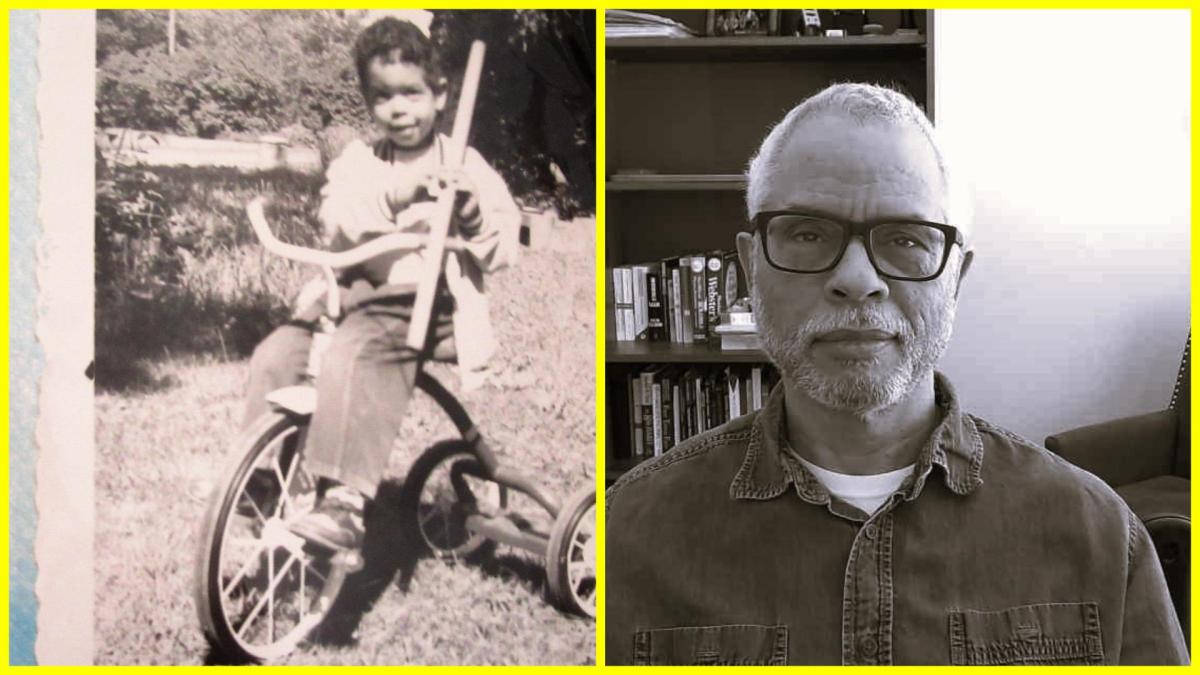
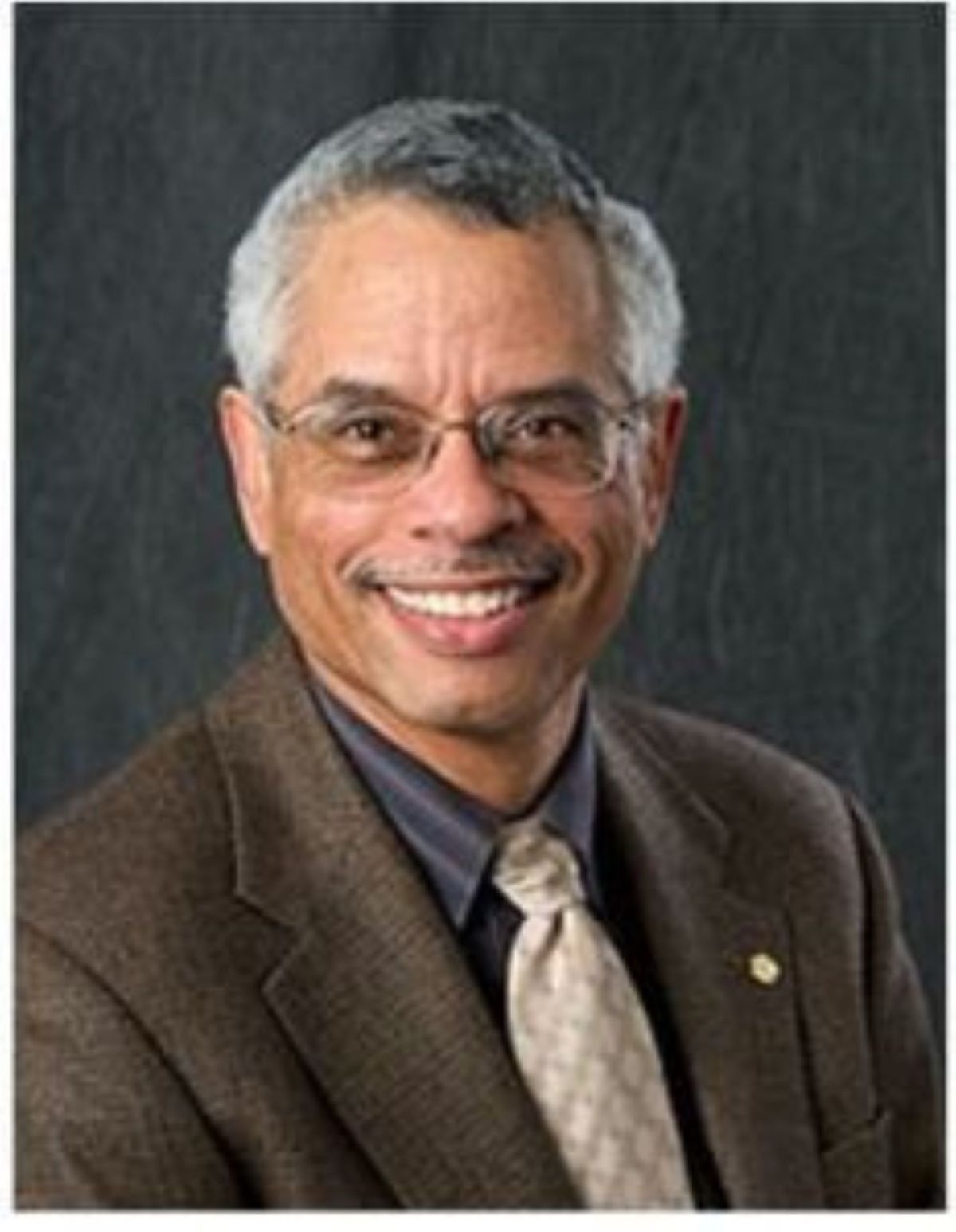
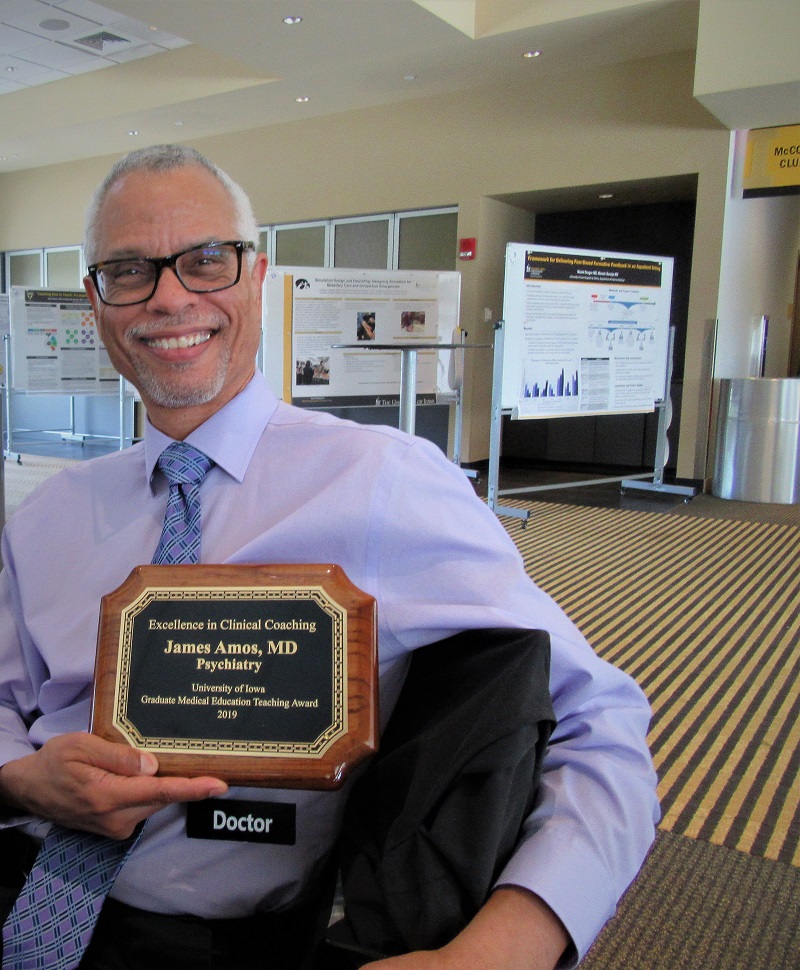
The photo of me attached to the original post reminds me of how I’ve gotten older—which also makes me hope that I’ve gotten wiser than how I sound in this essay. The pin in my lapel is the Leonard Tow Humanism in Medicine award I received in 2006.

I Remember HT Heroes

Getting membership solicitations in the mail from the American Association of Retired Persons (AARP) is a sure sign of aging, along with a growing tendency to reminisce. Reminiscence, especially about the seventies, may be a sign of encroaching senility.


Why would I reminisce about the seventies? Because I’m a baby boomer and because my ongoing efforts to educate my colleagues in surgery and internal medicine about Psychosomatic Medicine, (especially about how to anticipate and prevent delirium) makes me think about coming-of-age type experiences at Huston-Tillotson College (Huston Tillotson University since 2005) in Austin, Texas. Alas, I never took a degree there, choosing to transfer credit to Iowa State University toward my Bachelor’s, later earning my medical degree at The University of Iowa.


Alright, so I didn’t come of age at HT but I can see that a few of my most enduring habits of thought and my goals spring from those two years at this small, mostly African-American enrollment college on what used to be called Bluebonnet Hill. I learned about tenacity to principle and practice from a visiting professor in Sociology (from the University of Texas, I think) who paced back and forth across the Agard-Lovinggood auditorium stage in a lemon-yellow leisure suit as he ranted about the importance of bringing about change. He was a scholar yet decried the pursuit of the mere trappings of scholarship, exhorting us to work directly for change where it was needed most. He didn’t assign term papers, but sent me and another freshman to the Austin Police Department. The goal evidently was to make them nervous by our requests for the uniform police report, which our professor suspected might reveal a tendency to arrest blacks more frequently than whites (and yes, we called ourselves “black” then). He wasn’t satisfied with merely studying society’s institutions; he worked to change them for the better. Although I was probably just as nervous as the cops were, the lesson about the importance of applying principles of change directly to society eventually stuck. I remember it every time I encounter push-back from change-resistant hospital administrations.


I’m what they call a clinical track faculty member, which emphasizes my main role as a clinician-educator rather than a tenure track researcher. I chose that route not because I don’t value research. Ask anyone in my department about my enthusiasm for using evidence-based approaches in the practice of psychiatry. I have a passion for both science and humanistic approaches, which again I owe to HT, the former to Dr. James Means and the latter to Dr. Jenny Lind Porter. Dr. Means struggled to teach us mathematics, the language of science. He was a dyspeptic man, who once observed that he treated us better than we treated ourselves. Dr. Porter taught English Literature and writing. She also tried to teach me about Rosicrucian philosophy. I was too young and thick-headed. But it prepared the way for me to accept the importance of spirituality, when Marcia A. Murphy introduced me to her book, “Voices in the Rain: Meaning in Psychosis”, a harrowing account of her own struggle with schizophrenia and the meaning that her religious faith finally brought to it.


Passion was what Dr. Lamar Kirven (or Major Kirven because he was in the military) also modeled. He taught black history and he was excited about it. When he scrawled something on the blackboard, you couldn’t read it but you knew what he meant. And there was Dr. Hector Grant, chaplain and professor of religious studies, and champion of his native Jamaica then and now. He once said to me, “Not everyone can be a Baptist preacher”. My department chair’s echo is something about how I’ll never be a scientist. He’s right. I’m no longer the head of the Psychosomatic Medicine Division…but I am its heart.


I didn’t know it back in the seventies, but my teachers at HT would be my heroes. We need heroes like that in our medical schools, guiding the next generation of doctors. Hey, I’m doing the best I can, Dr. Porter.

Gratitude to Pastor Robert Stone

I came across a couple of items that prompted my renewed gratitude. One of them was an article in Bloomberg on the web, “US Medical Schools Grapple With First Admissions Since End of Affirmative Action” by Richard Abbey, Ilena Peng, and Marie Patino, published on December 14, 2023. It’s about how hard it is for black students to get into and graduate from medical school. Just getting to college is a major hurdle.

The other item is an obituary of one of the most important persons in my life, Pastor Robert Leroy Stone. He authorized scholarships for two years of my undergraduate college education, which were at Huston-Tillotson College (now Huston-Tillotson University, one of the HBCUs) in Austin, Texas. That was back in the 1970s, ancient history now. The issue of Affirmative Action was widely discussed during that time.

As usual, I’m dumbfounded by how often I miss the passing of the critically important people who made my success in life possible. And there is this astonishing connection which followed me even to Iowa City—but of which I was unaware. After he retired, Pastor Stone moved from Mason City to Iowa City in November of 2001. At that time, I had graduated from The University of Iowa College of Medicine, finished my residency in psychiatry in 1996, and was on staff in University of Iowa Dept of Psychiatry. I never knew he was so close. He died in 2002.

Pastor Stone was a Board Member and Chair of the Mason City YMCA, where I lived for a while. He was also a Member of the Board of Chemical Dependency Services of North Iowa as well as the Mental Health Center of North Iowa.

Although I didn’t graduate from Huston-Tillotson College, I was able to transfer credit to Iowa State University. And from there I went to medical school at The University of Iowa.

I’ve read other stories about how hard it is for Black students to get into and finish medical school. My path was indirect and not easy, but Pastor Stone made it possible. And for that, I am grateful.

Whirlpool Care Counts Laundry Program Cleans Up!

Sena and I just recently saw the TV commercial about the Whirlpool Care CountsTM Laundry Program, which has been providing washers and dryers for schools. It was launched to address school absenteeism, one cause of which is bullying of kids who don’t have clean clothes. They are also more likely to drop out of school.

It turns out this program has been going on since 2015. And there’s an Iowa connection. In 2017, Morris Elementary in Des Moines got a new washer and dryer (Des Moines Register, “Iowa teacher meets New Yorker on Instagram, and needy school gets a big lift” by Laura Rowley, published Oct 7, 2019, accessed 12/13/2023).

According to the Whirlpool’s website about it, there are over 150 programs in schools across 40 states.

The website even lists research studies demonstrating the link between a lack of clean clothes and school attendance rates.

We reminisced about what we did about this issue when we were in grade school. We don’t remember skipping school because of dirty clothes. We managed by washing them by hand, or in my family, using an old hand wringer as well. We hung clothes out to dry on the line in the back yard. Sena did that and also used a fan.

I was sometimes bullied, but it was related to being black rather than having old clothes. I didn’t change my outfit every day because I didn’t have enough clothes for that.

When I got old enough, I delivered the Des Moines Register. Talk about nickel and diming. The rates were pretty low compared to today, but I still had some customers who complained about the price. I walked my route to collect subscription fees. I was not a great salesman but I was a steady worker, delivering papers in any weather, even dragging them in a wagon through knee deep snow.

You could buy things with your money through the paper’s main office. The first thing I bought was an alarm clock with a glass face through which the clockwork was visible. I didn’t really need an alarm clock to get me out of bed to deliver papers. I was a light sleeper even then. I just thought the clock was cool.

I saved enough money (mostly in quarters) to buy my first bicycle. It cost about $20 at Ralph’s Bicycle & Hobby Shop in Mason City. It was used and I think it was a 24 inch. I did not do wheelies.

I don’t remember buying clothes.

I remember collecting from a young couple who were obviously newlyweds. They would often both come to the door wrapped in nothing but big bath towels. I wondered if they even had any clothes. Maybe they didn’t have any laundry facilities.

Anyway, I think the Whirlpool program is a great idea.

Rearranging My Books

The other day, I finally rearranged my bookshelf. I’ve put it off for a long time. While I was doing it, I remembered where I spend the most time in my thoughts. I don’t have a very broad library, which probably illustrates where my mind wanders. It has changed very little over the years. Retirement affected it some, but not a great deal. After I rearranged the books, it was not just better organized. It made me think about the past, the present, and the future.

I have a lot of books by Malcolm Gladwell for some reason. The Tipping Point was published around the time when all of my immediate family members died for one reason for another. They died within a few years of each other. It was a difficult time. I remember hoping I would just get through it. I did.

I’m still a fan of Stephen Covey. The 7 Habits Manual for the Signature Program marks a time when I was contemplating leaving my position at The University for a position in private practice. It didn’t work out, and it’s just as well.

Of course, there are many books about consultation psychiatry, including the one I wrote with my former Dept. of Psychiatry Chair, Robert Robinson. Every once in a while, I search the web to find out what former colleagues and trainees are doing now. I can’t find a few, which makes me wonder. A couple have died. I’m a little less eager to look around each time I find out about those. Finding obituaries is a sad thing—and it makes me a little nervous about my own mortality. One or two have apparently simply dropped off the face of the earth.

I read some books for fun. I’m a fan of humorists, which is no surprise. The most recent is The Little Prince. That book and others like it inspire me.

I like books that make me laugh and give me hope. It’s difficult to sustain hope in humanity, if you read much of the news, which I tend to avoid.

I feel better when we go out for walks. Recently we did that about a week ago when there were a couple of warm days. On one day, we saw a couple of bald eagles and northern shovelers (the latter of which we’ve never seen before), at Terry Trueblood Recreation Area.

On another warm day we saw a couple Harvest Preserve staff members preparing to hang a big Christmas wreath on the side of a barn on the property that faces Scott Boulevard. They’d got some evergreen branches from an “overgrown Christmas tree farm.” It had a big red bow. They were going to decorate it further and hang it. We hoped it would be finished by the time we returned that day, but it wasn’t done.

When we returned a day later, it was very cold but the wreath was on the barn wall and it was festooned with gorgeous decorative balls. It was worth waiting for.

Video music credit:

Canon and Variation by Twin Musicom is licensed under a Creative Commons Attribution 4.0 license. https://creativecommons.org/licenses/by/4.0/

Artist: http://www.twinmusicom.org/

When Should Psychiatrists Retire?

In answer to the question in the title, I’ll confess right away I don’t know the answer. The impetus for my writing this post is the Medscape article about an 84-year-old physician who was forced to take a cognitive test required by her employer as a way of gauging her ability to continue working as a doctor. She’s suing her employer on the grounds that requiring the cognitive test violated the American with Disabilities Act (ADA), the Age Discrimination in Employment Act, and two other laws in her state.

I didn’t retire based on any cognitive test. I recall my blog post “Gauging My Readiness for Retirement,” which I posted in 2019 prior to my actual retirement. In it I say:

I spent 4 years in medical school, 4 years in residency, and have worked for more than 23 years as a psychiatrist, mostly as a general hospital consultant. Nothing used to jazz me as much as running around the hospital, seeing patients in nearly all specialties, evaluating and helping treat many fascinating neuropsychiatric syndromes, teaching medical students and residents, and I even wrote a book.

On the other hand, I don’t want to hang on too long. When people ask me why I’m retiring so early (“You’re so young!”), I just tell them most physicians retire at my age, around 65. I also say that I want to leave at the top of my game—and not nudged out because I’m faltering.

In it, I mention a blog post written by a physician blogger, Dr. James Allen. The title is “When Physicians Reach Their ‘Use By Date.’ At the time I didn’t make a link to his post because the web site was not listed as secure.

Since that time, the web site has become secure, and you can read the post here. Dr. Allen lists anecdotes about physicians who ran close to or past their “use by” date.

Dr. Allen’s point is that we often don’t realize when we are past our “use by” date. That applies to a lot of professions, not just medicine.

There’s been a shortage of psychiatrists for a long time and it’s not getting better, the last I heard. All in all, I’m OK with the timing of my retirement.

I note for the record that I have not seen any mention in the news that the Rolling Stones have ever been required to take a cognitive test to continue working. I also want to point out that they are around 80 years old and their 2024 tour is sponsored by the AARP, the organization formerly known as the American Association of Retired Persons. I heard that the Rolling Stones new song, “Angry” is up for a Grammy.

I doubt anyone is angry about the obvious fact they’re not even thinking about retiring.

AARP Sponsors the Rolling Stones!

We have noticed that the AARP is sponsoring the Rolling Stones Hackney Diamonds Tour 2024. I don’t think it’s necessary to point out that, with all due respect, the Rolling Stones have long ago passed fossil status.

I guess that means it’s fitting that the AARP sponsor a rock music group the members of which are eligible to join the organization formerly known as Prince. Sorry, I meant to say formerly known as the American Association of Retired Persons.

Obviously, the Rolling Stones are not thinking about retirement. But unless they can come up with a plausible explanation for the name of the tour, Hackney Diamonds, they should probably not be eligible for the free tote bag the AARP offers to those who become members.

A hackney is a horse drawn carriage. A diamond is a precious stone. The Rolling Stones have thankfully clarified that, obviously, the Hackney Diamonds tour name comes from the well-known legend of the hackney cab driver who drove through the streets of a town called Hackney in London in the 17th century, tossing out diamonds to passersby if they could guess how many angels could dance on the head of a pin during a snowstorm in the Sahara Desert.

That’s about as clear as the explanation given by Keth Richards and Mick Jagger in an interview with Jimmy Fallon as reported in an article written by Tom Skinner in NME on September 7, 2023.

Anyway, the Rolling Stones have been a big deal for decades, of course and they get mentioned in a lot of different ways. For example, in the movie Men in Black 3, there’s a conversation between Agent J and young Agent K in a café which is prompted by the need to eat pie in order to clear their minds of the case they’re working on which is trying to stop the murderous bad guy, Boris the animal, from destroying Earth. Young Agent K stipulates the rule is to talk about anything about the case and to let the pie do its magic. You’ll never guess what they talk about but it goes like this:

“Young Agent K: You said we don’t talk, right? Go ahead, ask me any question. Anything you want, just as long as it doesn’t have to do with the case… just let her rip.

Agent J: What’s up with you and O?

Young Agent K: Me and O?

Agent J: Yeah, you and O.

Young Agent K: All right, all right… all right, this is it. A while back, I was assigned to keep tabs on a musician, Mick Jagger. He was in this British group, Rolling Stones…

Agent J: Rings a bell.

Young Agent K: We believed he’s on the planet to breed with Earth women, so I was in London and that’s when I met O. She’s smart, funny… great smile and we find ourselves in this pub, Whistler’s Bar, warm beer and the worst food you ever ate. We just played darts till the sun came up, neither of us wanted to leave…”

And I can remember that Microsoft used the Rolling Stones 1981 song, “Start Me Up” in their promotion of Windows 95 computer operating system. You remember that; it was a total loser which led to the evolutionary creation of a dozen operating systems, all of them laughably dysfunctional. I should know—I bought all of them.

So, the Rolling Stones turn up a lot in pop culture. Everybody knows that. That’s in part because of their stamina—and maybe doggedly persistent denial of aging leading to a refusal to ever retire, just drop on stage because their bones finally disintegrate.

So, returning to the question of why AARP (pronounced arf only with a p on the end) is sponsoring the Rolling Stones tour. I have no clear idea except that I think the organization wants to broaden appeal for the organization so that more dues paying young people join, adding money to help support those over 50 to maintain financial stability and security.

What I don’t understand is that, in part, this implies trying to work as advocates (read “lobby”) in Congress. All those old farts in Congress can do is argue and a some of them should seriously think about retiring. If they can’t command respect, they could at least get a free tote bag by joining AARP.

But the Rolling Stones don’t need free tote bags. They’ve earned their fossil status many times over. On the other hand, I have earned my certificate from the state legislature.

On Retiring from Psychiatry

I found this very uplifting and thought-provoking article on retiring from psychiatry by Juan C. Corvalan.

He sounds like he’s successfully navigating his retirement. On the few occasions I’ve felt compelled to make a remark about my own retirement, I typically say something like “It’s a mixed blessing.”

My retirement is a process, unfolding as time passes. It was difficult in the beginning, which was only a little over 3 years ago. It’s not what I would call easy even now.

What gave me joy since I retired were getting messages from the learners I was privileged to teach. Some of them I’d not heard from in many years. Someone from my department said, “We miss you.” I answered that, in some ways, I never left.

Time itself feels different. The days go by so quickly that I want time to slow down.

I like Corvalan’s way of expressing himself. He’s a writer and likes to talk about words and their meaning. He talked about the definition of the Spanish word for retirement, which is jubilacion, which reminds me of the English word “jubilation.”

Retirement has been, at times (perhaps often), anything but cause for jubilation.

On the other hand, I can think of several things I will never miss about being a psychiatrist. I don’t write about them, as a rule. In fact, I tend to write about anything but psychiatry: cribbage, juggling, making wisecracks about extraterrestrials.

I really appreciate colleagues like George Dawson, MD (who writes the blog Real Psychiatry), H. Steven Moffic, MD (who writes the articles “Psychiatric Views on the Daily News”), Ronald Pies, MD, Editor in Chief Emeritus of Psychiatric Times, and Jenna, the psychiatry resident who writes the blog “The Good Enough Psychiatrist,” who is very far from retirement, unlike me and the other writers just mentioned.

And I appreciate Dr. Corvalan’s excellent essay on retirement from psychiatry.

Reference:

Corvalan JC. A Retired Psychiatrist on Retirement: Rejoicing Jubilatio. Mo Med. 2022 Sep-Oct;119(5):408-410. PMID: 36338006; PMCID: PMC9616447.