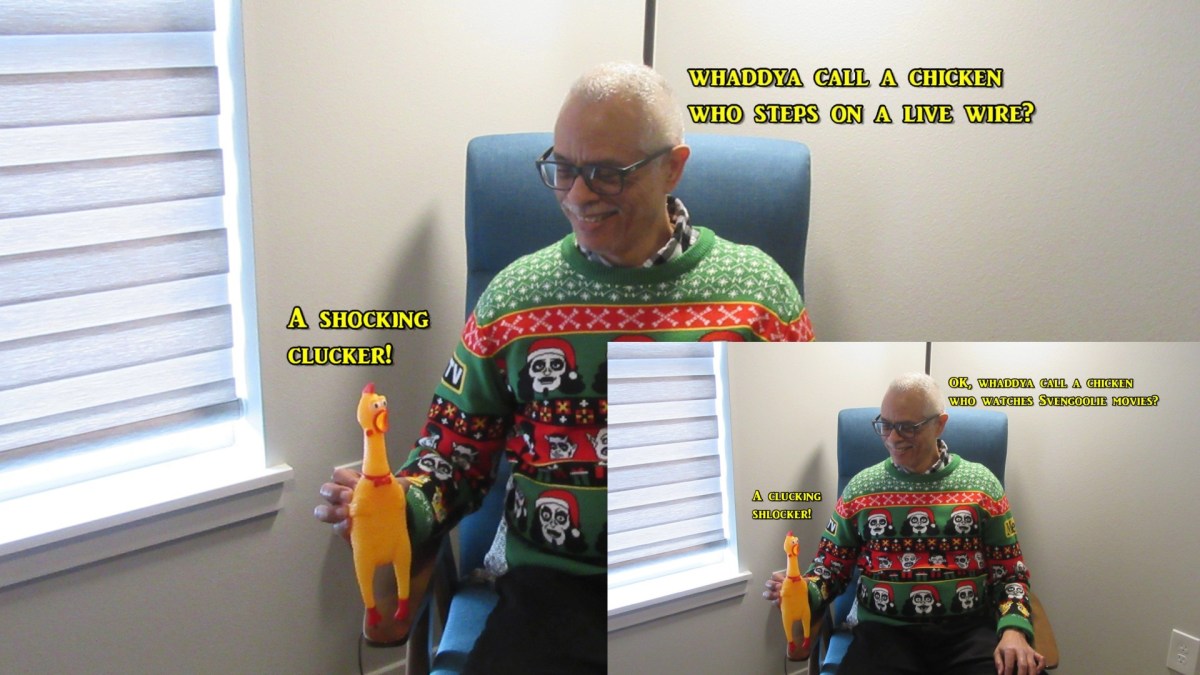
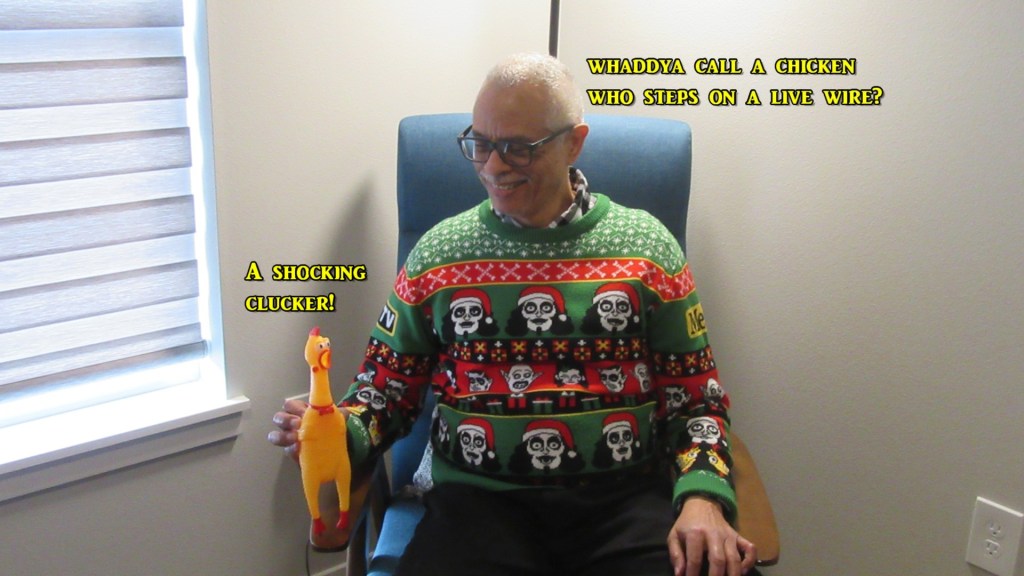
Svengoolie Show Upcoming Movie: “The Curse of Frankenstein”!

Svengoolie Show Intro: “Calling all stations, clear the air lanes, clear all air lanes for the big broadcast!”

The Svengoolie show movie coming up this Saturday is Hammer’s 1957 production of “The Curse of Frankenstein”! Guess what? This time, Christopher Lee plays Frankenstein’s monster and—he has no lines at all. The movie is loosely based on Mary Wollstonecraft Shelley’s classic novel, “Frankenstein; or The Modern Prometheus.”

There’s lots of blood and gore, so wear goggles because the film was shot in SpatterVision. Don’t look for screws on the monster’s neck. I guess they were loose and fell off.

Big Mo Pod Show: The Yellow Butane Curse and Other Fun Things

I got off my schedule last week on listening to the Big Mo blues show, but as it turns out, he was gone last Friday. I heard last night’s blues show and heard Stevie Ray Vaughn’s Riviera Paradise.

So, of course that was not on the list of songs for the pod show today, but Big Mo did mention that Riviera Paradise and the name of the collection, which was In Step was related to Stevie Ray Vaughn’s having been successful at staying sober from substance use disorder for a year. The name In Step was evidently related to his going through a 12-step program to achieve sobriety. I learned about Stevie Ray Vaughn early in my residency (if I recall correctly) from a University of Iowa psychiatrist who is now the chair of the psychiatry department.

The name of today’s pod show was “The Yellow Butane Curse” which is about superstition. I’m not sure if this means that blues music enthusiasts are prone to being superstitious, but Big Mo did admit to believing that yellow butane lighters were unlucky for him.

This is probably going to seem like a disconnected transition but I missed last week’s pod show (“He plays what can’t be written down” see below), which was not the usual format of song talk but an interview with a successful local musician, Merrill Miller. I don’t know anything about him except what I learned in the podcast. I got a kick out of listening to a couple of musicians just more or less shooting the breeze about living the musician’s life.

Merrill mentioned playing in places like Strawberry Point, Iowa. I don’t have a musical connection to Strawberry Point, and I never went anywhere there that was connected with music like Merrill did. In fact, the only reason I was in Strawberry Point was because I was part of a survey crew staking Highway 13 between there and Elkader to straighten out some of the many curves in the road. We didn’t have much time to listen to music.

One piece of Iowa history they talked about was the issue of black musicians not being able to find a place to stay in this area because of racism. They had to find somebody they knew who would put them up while they were in town for a gig. Funny where a rambling, relaxed conversation will sometimes lead you.

I had few connections to music while I was growing up. My mother tried to teach my little brother and I how to play piano. It was an old out of tune piano. I managed to learn where the “middle C note” was—and that’s about all I recall about it. I took guitar lessons and got pretty good at making buzzing notes with it. Man, I could make that guitar buzz, although my teacher got a good laugh out of it—and couldn’t get me to break the habit. I could blow into a harmonica (what real musicians like Merrill and Big Mo call a harp), but I couldn’t kidnap any notes out of it. I tried picking notes on a banjo for a short while, had a second stab at the guitar, and got not much more than callouses on my fingers before moving on to non-music making careers.

You can be glad about that. Now about that suggestion that I have for a tee shirt design about my favorite faux sponsor created by Big Mo, Mayree of the legendary Mayree’s hand battered catfish; it’s better because it’s battered. I wonder if there’s any movement on that.

Big Mo Pod Show 085 – “California Bluesin” KCCK's Big Mo Pod Show

After a short break during the Thanksgiving holiday your hosts are back at it again with another episode! This week features the usual mix of blues eras you’ve come to expect along with a few Californian artists, tune in to see which ones! Songs featured in the episode: Solomon Hicks – “Further On Up The … Continue reading
  1. Big Mo Pod Show 085 – “California Bluesin”
  2. Big Mo Pod Show 084 – “Garage Blues”
  3. Big Mo Pod Show 083 – “Legal Pirate radio”
  4. Big Mo Pod Show 082 – “Tribute”
  5. Big Mo Pod Show 081 – “Cheers To Kevin”

Pride or Rhetoric? What Would Dr. Melvin P. Sikes Say?

I noticed the headlines about the DEI flap at The University of Iowa, the one with the official apparently spilling the beans about University of Iowa’s DEI program not going away despite being illegal while maybe being unaware of being filmed. I’m not going to retell the story.

However, it does remind me of a time back in the 1970s in the days of affirmative action when I was a freshman student at Huston-Tillotson College (now Huston-Tillotson University) in Austin, Texas.

I learned about tenacity to principle and practice from a visiting African American professor in educational psychology from the University of Texas. It was 1975. Dr. Melvin P. Sikes paced back and forth across the Agard-Lovinggood auditorium stage in a lemon-yellow leisure suit as he talked about the importance of bringing about change in society.

He was a scholar yet decried the pursuit of the mere trappings of scholarship, exhorting us to work directly for change where it was needed most. He didn’t assign term papers, but sent me and another freshman to the Austin Police Department. The goal evidently was to make them nervous by our requests for the Uniform Crime Report, which Dr. Sikes suspected might reveal a tendency to arrest blacks more frequently than whites. He wasn’t satisfied with merely studying society’s institutions; he worked to change them for the better. Although we were probably just as nervous as the police were, this real-life lesson about the importance of applying principles of change directly to society was awkward.

Nothing like confronting social issues head on, right?

We would have preferred a term paper. We sat in the police station looking at the Uniform Crime Report, which was the only resource we could get. I think we were there a couple of hours; it felt a lot longer than that. The officer who got us the paperwork was polite, but a little stiff and wasn’t really open to anything like an interview or anything close to that. I can’t remember what we came up with as a write-up for what felt like a fiasco. I’m pretty sure we didn’t bring about anything even close to change. It was a humbling experience. Maybe that was the point but I’ll never know.

Dr. Melvin P. Sikes was a member of the Tuskegee Airmen although he didn’t see combat. He was the dean of two historically black colleges, a clinical psychologist, and a University of Texas professor. He died in 2012 after a long and successful career as a psychologist, teacher, and author.

I found a podcast about him which was sponsored by the Hogg Foundation for Mental Health and which aired February 15, 2024. It’s an hour long, but there are segments of interviews of him in 1972 that I consider fascinating. A couple of times he says something which I wish the interviewer had allowed him to expand on. The gist of it is that we need to have a system of education which allows people to speak from the standpoint of pride rather than rhetoric. I think what he might have meant is that it would be wonderful if we felt secure and confident in ourselves to express our minds sincerely. The word “rhetoric” makes me think of talk that is persuasive, even impressive, but maybe insincere. I think it still fits today.

Success of Johnson County Civil Mental Health Court in its First Year

I’ve been looking for other ways that Iowa addresses mental illness and its impact on homelessness and other adverse outcomes since my last post on the issue.

It turns out that, despite Iowa ranking 51st out of all U.S. states for the low number of psychiatric beds according to the Treatment Advocacy Center statistics (in 2023, it had just two beds per 100,000 patients in need), a new mental health court established in in May of 2023 has made substantial progress in reducing the number of crisis contacts, psychiatric hospitalizations, and days in the hospital. Arrests, jailings, and days in jail were also reduced.

Participants in the new program include the University of Iowa Health Care, Iowa City VA Hospital, the Abbe Center, Guidelink Center, National Alliance for the Mentally Ill (NAMI), Shelter House, and several other mental health service agencies in Johnson County.

The Johnson Mental Health Court continues to operate since June of this year when the pilot program’s funding from the East Central Iowa Mental Health Region was supposed to have ended on June 30, 2025, due to the change in mental health regions. This is a program for patients under involuntary mental health commitment that avoids incarceration and placement in a state psychiatric hospital.

This civil mental health program didn’t exist until well after I retired and I hope for its continued success.

Luett, T. (2024, April 24). Civil Mental Health Court in Johnson County finds success in first year. The Daily Iowan. https://dailyiowan.com/2024/04/24/civil-mental-health-court-in-johnson-county-finds-success-in-first-year/ Accessed July 30, 2025

Mehaffey, T. (2024, April 14). News Track: ‘Challenging, rewarding’ first year of Johnson County mental health court. The Gazette – Local Iowa News, Sports, Obituaries, and Headlines – Cedar Rapids, Iowa City. https://www.thegazette.com/crime-courts/news-track-challenging-rewarding-first-year-of-johnson-county-mental-health-court/ Accessed July 30, 2025.

It Takes a Village to Tackle Homelessness: What’s Iowa Doing?

After I read Dr. Dawson’s post today “More on homelessness and violence as a public health problem,” it got me thinking about what the situation on homelessness of people with mental illness and substance use disorder is here in Iowa.

First, I looked at the 2024 Iowa Homelessness Needs Assessment, which is a thorough report you can download if you need it. It’s a 23-page pdf document which doesn’t mention the intersection with the homeless mentally ill until almost the very last page. It gets mentioned in the section subtitled “Improve Coordination With Adjacent Systems”:

To end or substantially reduce homelessness, a coordinated response is needed that aligns the resources in adjacent systems with CoC resources and housing. Homelessness is often caused by and/or exacerbated by the inability of public support systems to address the complex needs of people in extreme poverty experiencing housing crises. These systems include education, hospitals, behavioral health, criminal justice, and child welfare. Engagement and service delivery approaches need to be responsive to the particular needs of people at imminent risk or experiencing literal homelessness. More responsive adjacent systems will provide specialized engagement, enrollment supports, discharge planning, and coordination with CoCs in each region.

Typically, this kind of document makes me thirsty for a more granular, human connected account of what kind of person actually becomes homeless. Are they always dangerous? The answer is “no.”

Actually, there’s this human-interest Iowa’s News Now story published December 27, 2024, “A Closer Look: U.S. and Iowa homelessness reach record highs” (accessed July 28, 2025). It’s about a real person who became homeless despite being a University of Iowa graduate.

People become homeless for many reasons. I just want to mention resources that are available in Iowa that could be helpful. The website Homeless or At-Risk of Homelessness presents the idea that “Sometimes, life takes an unexpected turn. People face hardships and turn toward their communities for support.”

There are some people who struggle with mental illness and substance abuse and as a consequence of those challenges become homeless, as the Iowa Homelessness Needs Assessment above points out.

One resource I think is important is The University of Iowa’s Integrated Multidisciplinary Program of Assertive Community Treatment or PACT program. It’s an evidence-based treatment model that’s been around for decades in many locations in the U.S.

There’s also an Iowa Health and Human Services program called PATH (Projects for Assistance in Transition from Homelessness) to help homeless adults with mental illness, substance abuse and trauma.

This was just a quick and admittedly superficial summary of what Iowans have been doing about the homelessness crisis. It really takes a village.

Shout Out to Dr. George Dawson for Post “The Autocratic Approach to Homelessness”

I want to give a shout out to Dr. George Dawson for his post today “The Autocratic Approach to Homelessness” in reference to President Trump’s most recent executive order, “Ending Crime and Disorder on America’s Streets.” As a retired psychiatrist, I look back and remember seeing the problem of the homeless mentally ill a lot. You can read my take on it from last summer’s posts:

I spend a lot of time joking around on my blog, but this is no joking matter. I think the President gets it wrong.

A Small Update to a Pseudo-Rap YouTube Video and a Big Tribute to Dr. Robert G. Robinson

I just noticed something about one of my YouTube videos that I made sort of as a combination gag and educational piece about pseudobulbar affect. It needed a couple of updates—one of which is minor and which I should have noticed 10 years ago when I made it.

It’s a pseudo-rap performance (badly done, I have to agree although it was fun to make), but it’s one of my most watched productions; it has 18,000 views.

One minor update is about the word “Dex” in the so-called lyrics of this raggedy rap song (see the description by clicking on the Watch on YouTube banner in the lower left-hand corner). It stands for dextromethorphan, one of the ingredients along with quinidine in Nuedexta, the medication for pseudobulbar affect. Dextromethorphan has been known to cause dissociation when it’s abused (for example, in cough syrup).

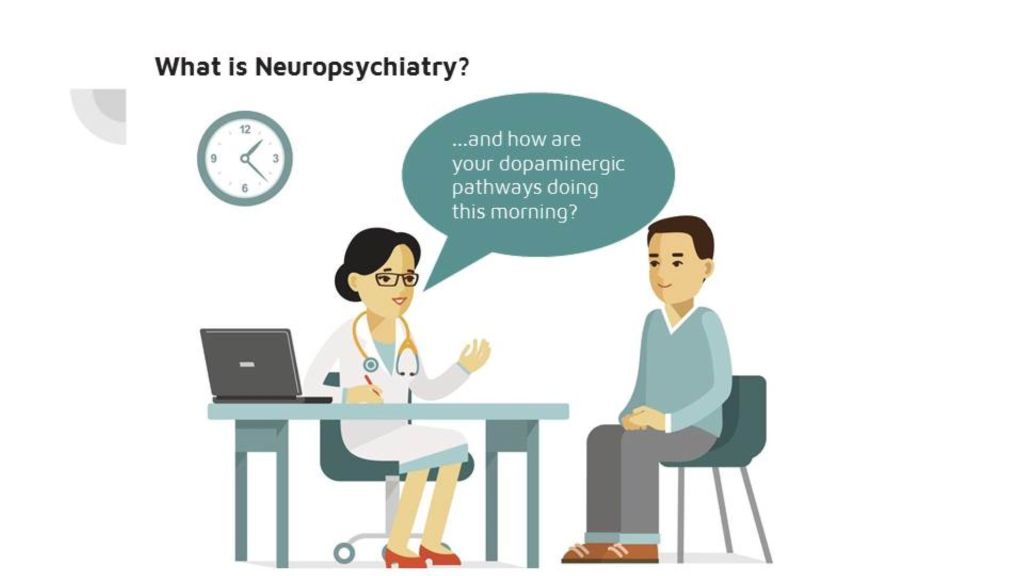
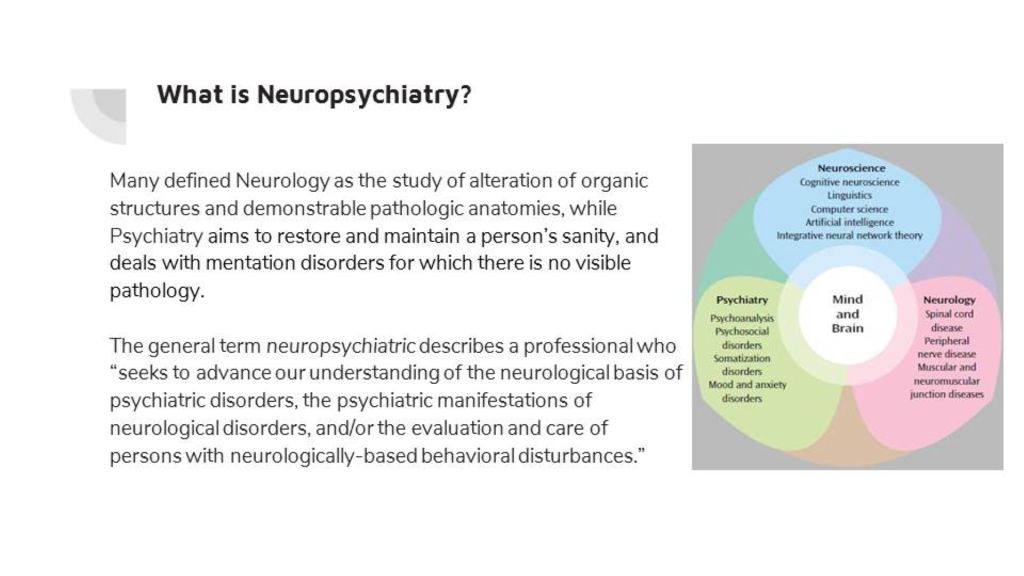
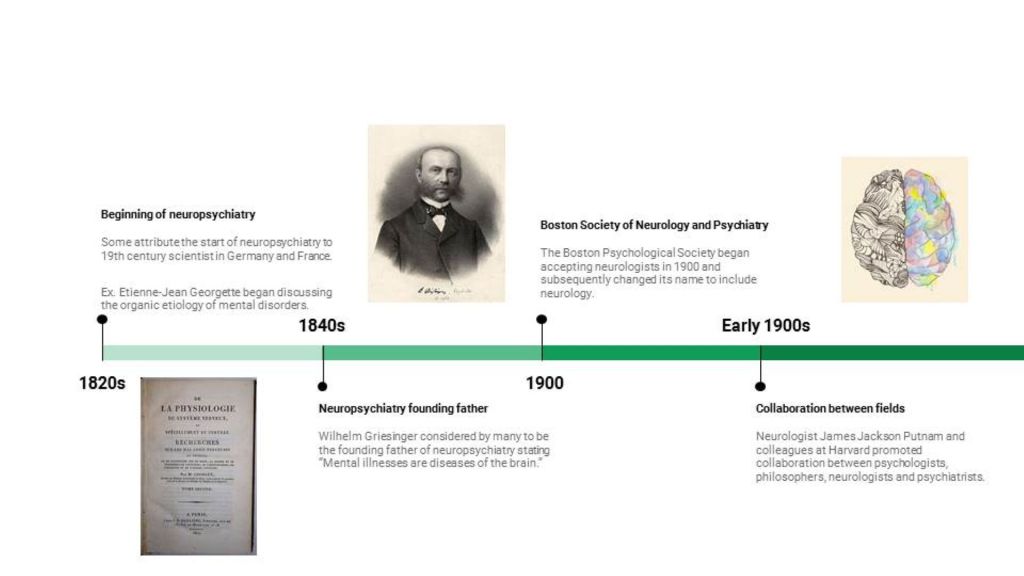
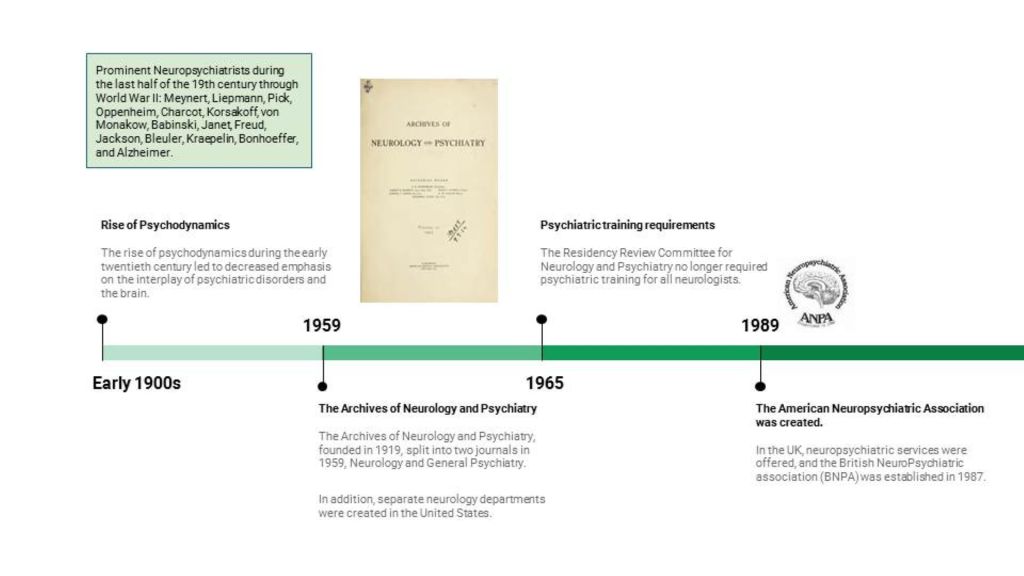
The most important update is about Dr. Robert G. Robinson, who I joked about in the piece. He passed away December 25, 2024. He was the chair of The University of Iowa Dept. of Psychiatry from 1999-2011. He was a great teacher, mentor, and researcher. He published hundreds of research papers and books on neuropsychiatric diseases like post-stroke depression and pseudobulbar affect. He lectured around the world and was widely regarded as a brilliant leader in his field.

Early in my career in the department, I left twice to try my hand in private practice psychiatry. Both times Dr. Robinson welcomed me back—warmly. He was my co-editor of our book, Psychosomatic Medicine: An Introduction to Consultation-Liaison Psychiatry, published in 2010.

All who worked with Dr. Robinson will never forget him.

Thoughts on Long Covid

I read Dr. Ron Pies, MD’s essay today, “What Long COVID Can Teach Psychiatry—and Its Critics.” As usual, he made thought- provoking points about the disease concept in psychiatry. What I also found interesting was the connection he made with Long Covid, a debilitating illness. He cited someone else I know who was involved with a group assigned to create a working definition for it—Dr. E. Wes Ely, an intensive care unit physician at Vanderbilt University in Nashville, Tennessee.

I remember when I first encountered Dr. Ely, way back in 2011 when I was a consulting psychiatrist in the University of Iowa Health Care general hospital. I was blogging back then and mentioned a book he and Valerie Page and written, Delirium in Critical Care. Back then I sometimes read parts of it to trainees because I thought they were amusing:

“…there is a clearly expressed opinion about the role of psychiatrists. It’s in a section titled “Psychiatrists and delirium” in Chapter 9 and begins with the sentence, “Should we, or should we not, call the psychiatrist?” The authors ask the question “Can we replace them with a screening tool, and then use haloperidol freely?” The context for the following remarks is that Chapter 9 is about drug treatment of the symptoms and behaviors commonly associated with delirium.”

I would point out that the authors say, while acknowledging that the opinions of psychiatrists and intensivists might differ, “…we would advocate that a psychiatrist should be consulted for patients already under the care of a psychiatrist or on antipsychotic medications”. Usually, in most medical centers in the U.S.A. a general hospital consultation-liaison psychiatrist sees the delirious inpatient rather than the patient’s outpatient psychiatrist. And many delirious patients don’t have a previous formal history of psychiatric illness and so would not have been seeing an outpatient psychiatrist in the first place.” (Page, V. and E.W. Ely, Delirium in Critical Care: Core Critical Care. Core Critical Care, ed. A. Vuylsteke 2011, New York: Cambridge University Press).

I’m pretty sure I got an email from Wes shortly after I posted that, with his suggestion that I write more about the delirium research he was doing. He sent me several references. I met him in person at a meeting of the American Delirium Society later on and attended an internal medicine grand rounds he presented at UIHC in 2019, “A New Frontier in Critical Care Medicine: Saving the Injured Brain.” He’s also written a great book, “Every Deep-Drawn Breath.”

Anyway, Dr. Ely and others were tasked by the Administration for Strategic Preparedness and Response and the Office of the Assistant Secretary of Health in the Department of Health and Human Services tasked the National Academies of Sciences, Engineering, and Medicine (NASEM) with developing an improved definition for long Covid.

At first, I was puzzled by the creation of criteria that essentially defined Long Covid as a disease state which didn’t even necessitate a positive test for Covid in the history of patients who developed Long Covid. I then read the full essay by Family Medicine physician, Dr. Kirsti Malterud, MD, PhD, “Diagnosis—A Tool for Rational Action? A Critical View from Family Medicine.”

I was hung up on the dichotomy between physical illness and somatization and thought the Long Covid definition posed a dilemma because it purposely omits any need for an “objective” test to verify previous Covid infection, making the Long Covid diagnosis based completely on clinical grounds. The section on persistent oppositions (dichotomies) was helpful, especially the 2nd point on the dichotomy of the question of whether an illness is physical or psychological (p.28).

The point on how to transcend the dichotomy was well made. I guess it’s easy to forget how the body and mind are related when a consultation-liaison psychiatrist is called to evaluate somebody for “somatization.” Often that was the default question before I ever got to see the patient.

Still, the person suffering from Long Covid often doesn’t seem to have a consistently effective treatment and may stay unwell or even disabled for months or years. Social Security criteria for disability look well-established.

I can imagine that many persons with Long Covid might object to have their care transferred to psychiatric services alone. I can see why there are Long Covid clinics in several states. It’s difficult to tell how many and which ones have psychiatrists on staff. The University of Iowa calls its service the Post Covid Clinic and can refer to mental health and neuropsychology services. On the other hand, a recent study of how many Long Covid clinics are available and what they do for people showed it was difficult to ascertain what services they actually offered, concluding:

“We find that services offered at long COVID clinics at top hospitals in the US often include meeting with a team member and referrals to a wide range of specialists. The diversity in long COVID services offered parallels the diversity in long COVID symptoms, suggesting a need for better consensus in developing and delivering treatment.” (Haslam A, Prasad V. Long COVID clinics and services offered by top US hospitals: an empirical analysis of clinical options as of May 2023. BMC Health Serv Res. 2024 May 30;24(1):684. doi: 10.1186/s12913-024-11071-3. PMID: 38816726; PMCID: PMC11138016.)

I’m interested in seeing how and whether the new Long Covid definition will be widely adopted.

Big Mo Pod Show: “Smoke Stack Howlin”

I got a big kick out of the Big Mo Blues Show last night. And the Big Mo Pod Show this morning was another great teaching session by John Heim aka Big Mo.

It’s also another peek into the lives of blues and rock musicians which would appeal to the headshrinkers in the listening audience, including me. Coincidentally, on the shout-outs part of the show, Big Mo announced somebody he called “Dr. Jim, the shrink.” There are probably a lot of guys who could fit that moniker, not just me.

Anyway, one of the artists listed on the pod show included James Booker who played a piano piece entitled “Junco Partner.” It turns out Booker was in and out of jail and struggled with substance use disorder. He eked out a living from tips playing piano in bars.

The highlight of the pod show was Big Mo’s history of Howlin’ Wolf (Chester Burnett) who is well known for his song “Smokestack Lightnin.” As I usually like to do, I glanced at the web articles on sites with biographical information about Burnett, although I’m unable to curate them for accuracy. So, I checked the Britannica website entry. There are different versions of the story about what “Smokestack Lightnin” means. As near as a I can tell, I think Big Mo’s explanation is probably as accurate as you can get. There are web articles that claim Burnett said it was about train engine sparks blowing out of the stack.

Interestingly, Burnett formed a group that included another artist on the pod show, Little Junior Parker, whom I knew nothing about and as it turns out, neither did Big Mo. The question posed by Producer Noah was about how he got his name. Did “Little” mean there was a senior Parker? The African American Registry entry doesn’t shed any light on it. But both Burnett and Parker were inducted into the blues hall of fame. Burnett was also inducted into the rock and roll hall of fame.

Just a smidgeon of trivia on Little Junior Parker’s song “Look on Yonders Wall.” I know that other artists have recorded this song. Elmore James is one of them and I happen to still have a copy of the CD, Elmore James, Shake Your Money Maker, Best of the Fire Sessions, released in 1960 (I didn’t buy it in 1960). It’s just an odd thing that you can find on the web a YouTube version of that, the title of which has an odd note, “Wrong Lyrics.” It has the lyric “look on yonders wall, hand me down my precious cane” instead of “walkin’ cane.” I’m unsure if it’s legit. And the words of the title are “Look on Yonder Wall” instead of “Look on Yonders Wall” although I think I can hear Elmore James sing “yonders.”

Now, one of the most interesting parts of the blues show last night was not something on the pod show today. I think it was during the last half hour of the blues show. I heard a rock and roll song I’d never heard of and I don’t know how I missed it because it was during my wasted youth when I was listening to similar songs at the time. It was released in 1975.  It was the song “Green Grass and High Tides” by The Outlaws. I was absolutely open-mouthed thunderstruck by the guitar licks. One bit of trivia is that the song title is very similar to the title of an album released in 1966 by the Rolling Stones, “High Tide and Green Grass.” There’s no song with that title ever done by the Rolling Stones, it’s just the name of their album.

Rock on, Big Mo!

The Wild West Sandbox of AI Enhancement in Psychiatry!

I always find Dr. Moffic’s articles in Psychiatric Times thought-provoking and his latest essay, “Enhancement Psychiatry” is fascinating, especially the part about Artificial Intelligence (AI). I liked the link to the video of Dr. John Luo’s take on AI in psychiatry. That was fascinating.

I have my own concerns about AI and dabbled with “talking” to it a couple of times. I still try to avoid it when I’m searching the web but it seems to creep in no matter how hard I try. I can’t unsee it now.

I think of AI enhancing psychiatry in terms of whether it can cut down on hassles like “pajama time” like taking our work home with us to finish clinic notes and the like. When AI is packaged as a scribe only, I’m a little more comfortable with that although I would get nervous if it listened to a conversation between me and a patient.

That’s because AI gets a lot of things wrong as a scribe. In that sense, it’s a lot like other software I’ve used as an aid to creating clinic notes. I made fun of it a couple of years ago in a blog post “The Dragon Breathes Fire Again.”

I get even more nervous when I read the news stories about AI making delusions and blithely blurting misinformation. It can lie, cheat, and hustle you although a lot of it is discovered in digital experimental environments called “sandboxes” which we hope can keep the mayhem contained.

That made me very eager to learn a little more about Yoshua Bengio’s LawZero and his plan to create the AI Scientist to counter what seems to be a developing career criminal type of AI in the wild west of computer wizardry. The LawZero thing was an idea by Isaac Asimov who wrote the book, “I, Robot,” which inspired the film of the same title in 2004.

However, as I read it, I had an emotional reaction akin to suspicion. Bengio sounds almost too good to be true. A broader web search turned up a 2009 essay by a guy I’ve never heard of named Peter W. Singer. It’s titled “Isaac Asimov’s Laws of Robotics Are Wrong.” I tried to pin down who he is by searching the web and the AI helper was noticeably absent. I couldn’t find out much about him that explained the level of energy in what he wrote.

Singer’s essay was published on the Brookings Institution website and I couldn’t really tell what political side of the fence that organization is on—not that I’m planning to take sides. His aim was to debunk the Laws of Robotics and I got about the same feeling from his essay as I got from Bengio’s.

Maybe I need a little more education about this whole AI enhancement issue. I wonder whether Bengio and Singer could hold a public debate about it? Maybe they would need a kind of sandbox for the event?