Big Mo Pod Show: “Spiritual IV”

I’m trying to figure out what the meaning of the title is of this week’s Big Mo Pod Show. It’s “Spiritual IV” and I looked at all of his past pod shows looking for Spiritual I-III. I can’t find them.

Big Mo Pod Show 085 – “California Bluesin” KCCK's Big Mo Pod Show

After a short break during the Thanksgiving holiday your hosts are back at it again with another episode! This week features the usual mix of blues eras you’ve come to expect along with a few Californian artists, tune in to see which ones! Songs featured in the episode: Solomon Hicks – “Further On Up The … Continue reading
  1. Big Mo Pod Show 085 – “California Bluesin”
  2. Big Mo Pod Show 084 – “Garage Blues”
  3. Big Mo Pod Show 083 – “Legal Pirate radio”
  4. Big Mo Pod Show 082 – “Tribute”
  5. Big Mo Pod Show 081 – “Cheers To Kevin”

The other thing I noticed about the pod show is that the theme of many of last night’s songs is less about spirituality and more about carnality and brutality. Now, that doesn’t mean I’m preaching. I just wonder if the title “Spiritual IV” is ironic.

Take the song “Talk to Me Baby” by Elmore James, or “44 Blues” by Little Arthur Duncan. One song that didn’t make the pod show list was “The Circus is Still in Town (The Monkey Song)” by Rick Estrin and the Nightcats. And Buddy Guy sang his new song “Been There Done That,” meaning he’s been to hell and back. He’s 89 years old and still does gritty blues. The music often seems only about sex, violence and drug addiction.

And the discussion gravitated to guns, specifically the .44 caliber handgun. I never knew Muddy Waters carried a gun. Hey, even Big Mo owns a .44. I didn’t make that up; he said so. It weighs about 7 pounds, by the way.

This morning’s pod show is a reminder that a lot of blues music sounds more earthy than spiritual. However, you can usually find at least one spiritual note letting in a little ray of hope. One of the songs featured in the pod show is Sugaray Rayford’s “How the Other Half Lives.” One line seems to offset the misery and injustice in the rest of the lyrics: “Take it slow, find the flow.”

I’m going to put my nickel down on one of last night’s songs that didn’t make to to the pod show list and it’s “Don’t Wanna Go Home” by Eric Gales, featuring Joe Bonamassa. It’s not spiritual. It’s about having a good time—but notice, he paid all of his bills first.

Mourning Dove Toe Deformities Revisited

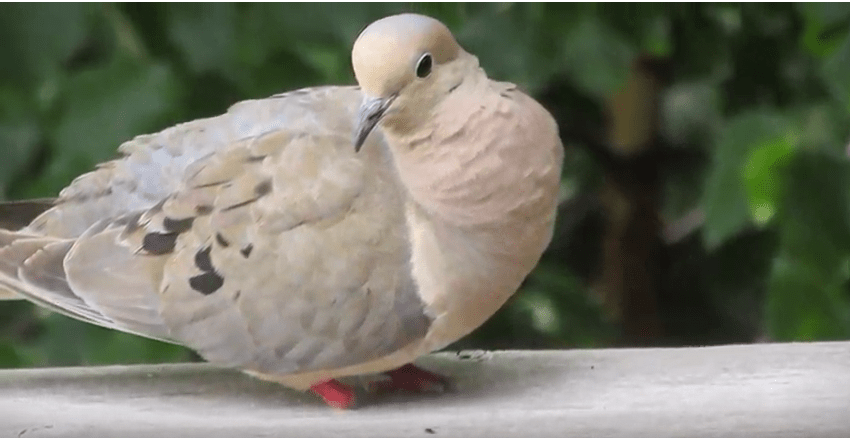
I recently got my first and only comment on a blog post I posted on March 30, 2019 about toeless mourning doves which were visiting our backyard deck of a house in which we lived previously. I also found an article published about the issue later that year in December of 2019, which is about pigeons losing toes. Pigeons and mourning doves are not exactly the same (although they are relatives within the same family), but apparently pigeons are thought by the authors of the article to lose their toes because of urban pollution.

The commenter is from West Texas who has seen toe deformities, notes that it’s a new problem to him (never saw it prior to this year), remarks that the toe deformities were visible in newly hatched birds and further suspects the problem is more complicated than exposure to stringfeet or frostbite injury.

When I searched the web for more information, what appeared is my 2019 blog post at or near the top of the page and little else. There was one news item about the issue published in 2021 suggesting the problem of missing toes in doves at that time was probably due to frostbite from a winter storm in North Texas.

We haven’t seen any mourning doves lately. They don’t frequent our new property, which is actually close to the same neighborhood where we observed the toeless birds several years ago.

So, the mystery deepens. If anyone has new information, let me know.

New reference:

Frédéric Jiguet, Linda Sunnen, Anne-Caroline Prévot, Karine Princé,

Urban pigeons losing toes due to human activities,

Biological Conservation,

Volume 240,

2019,

108241,

ISSN 0006-3207,

(https://www.sciencedirect.com/science/article/pii/S0006320719306901)

Abstract: Measuring the impacts of urban pollution on biodiversity is important to identify potential adaptations and mitigations needed for preserving wildlife even in city centers. Foot deformities are ubiquitous in urban pigeons. The reasons for these mutilations have been debated, as caused by frequenting a highly zoonotic environment, by chemical or mechanistic pigeon deterrents, or by necrosis following stringfeet. The latter would mean that pigeons frequenting pavements with more strings and hairs would be more exposed so subject to mutilations. We tested these hypotheses in Paris city (France), by recording the occurrence and extent of toe mutilations on samples of urban pigeons at 46 sites. We hypothesized that mutilations would be predicted by local overall environmental conditions, potentially related to local organic, noise or air pollutions, so gathered such environmental predictors of urban pollutions. We showed that mutilations do not concern recently fledged pigeons, and that their occurrence and frequency are not related to plumage darkness, a proxy of a pigeon’s sensitivity to infectious diseases. Toe mutilation was more frequent in city blocks with a higher degree of air and noise pollution, while it tended to increase with the density of hairdressers. In addition, the number of mutilation on injured pigeons was higher in more populated blocks, and tended to decrease with increasing greenspace density, and to increase with air pollution. Pollution and land cover changes thus seem to impact pigeon health through toe deformities, and increasing green spaces might benefit bird health in cities.

One sentence summary

Toe mutilation in urban pigeons is linked to human-induced pollution.

Keywords: Columba livia; Feral pigeon; Toe mutilation; Stringfeet; Urban pollution

Patio Tomatoes Did Not Turn Red!

OK, so Sena picked all the patio tomatoes and most of them didn’t turn red, especially the slicers. She’s done with growing vegetables. I saw an article about why tomatoes don’t turn red and it makes sense. The featured image shows the patio tomatoes in the plastic bucket for comparison with the red store-bought tomatoes. The bigger green ones are the slicers.

I’m a little leery about eating green tomatoes. According to another article, it’s safe to eat them as long as you don’t gorge on a lot of them. You’d have to eat about a pound and a half to get the amount of some compounds called solanine, atropine, and tomatine, which would turn you into an extraterrestrial. And University of Iowa researchers discovered green tomatoes have an alkaloid called tomatidine which may actually build muscles (don’t tell teenage boys!).

Big Mo Pod Show: The Yellow Butane Curse and Other Fun Things

I got off my schedule last week on listening to the Big Mo blues show, but as it turns out, he was gone last Friday. I heard last night’s blues show and heard Stevie Ray Vaughn’s Riviera Paradise.

So, of course that was not on the list of songs for the pod show today, but Big Mo did mention that Riviera Paradise and the name of the collection, which was In Step was related to Stevie Ray Vaughn’s having been successful at staying sober from substance use disorder for a year. The name In Step was evidently related to his going through a 12-step program to achieve sobriety. I learned about Stevie Ray Vaughn early in my residency (if I recall correctly) from a University of Iowa psychiatrist who is now the chair of the psychiatry department.

The name of today’s pod show was “The Yellow Butane Curse” which is about superstition. I’m not sure if this means that blues music enthusiasts are prone to being superstitious, but Big Mo did admit to believing that yellow butane lighters were unlucky for him.

This is probably going to seem like a disconnected transition but I missed last week’s pod show (“He plays what can’t be written down” see below), which was not the usual format of song talk but an interview with a successful local musician, Merrill Miller. I don’t know anything about him except what I learned in the podcast. I got a kick out of listening to a couple of musicians just more or less shooting the breeze about living the musician’s life.

Merrill mentioned playing in places like Strawberry Point, Iowa. I don’t have a musical connection to Strawberry Point, and I never went anywhere there that was connected with music like Merrill did. In fact, the only reason I was in Strawberry Point was because I was part of a survey crew staking Highway 13 between there and Elkader to straighten out some of the many curves in the road. We didn’t have much time to listen to music.

One piece of Iowa history they talked about was the issue of black musicians not being able to find a place to stay in this area because of racism. They had to find somebody they knew who would put them up while they were in town for a gig. Funny where a rambling, relaxed conversation will sometimes lead you.

I had few connections to music while I was growing up. My mother tried to teach my little brother and I how to play piano. It was an old out of tune piano. I managed to learn where the “middle C note” was—and that’s about all I recall about it. I took guitar lessons and got pretty good at making buzzing notes with it. Man, I could make that guitar buzz, although my teacher got a good laugh out of it—and couldn’t get me to break the habit. I could blow into a harmonica (what real musicians like Merrill and Big Mo call a harp), but I couldn’t kidnap any notes out of it. I tried picking notes on a banjo for a short while, had a second stab at the guitar, and got not much more than callouses on my fingers before moving on to non-music making careers.

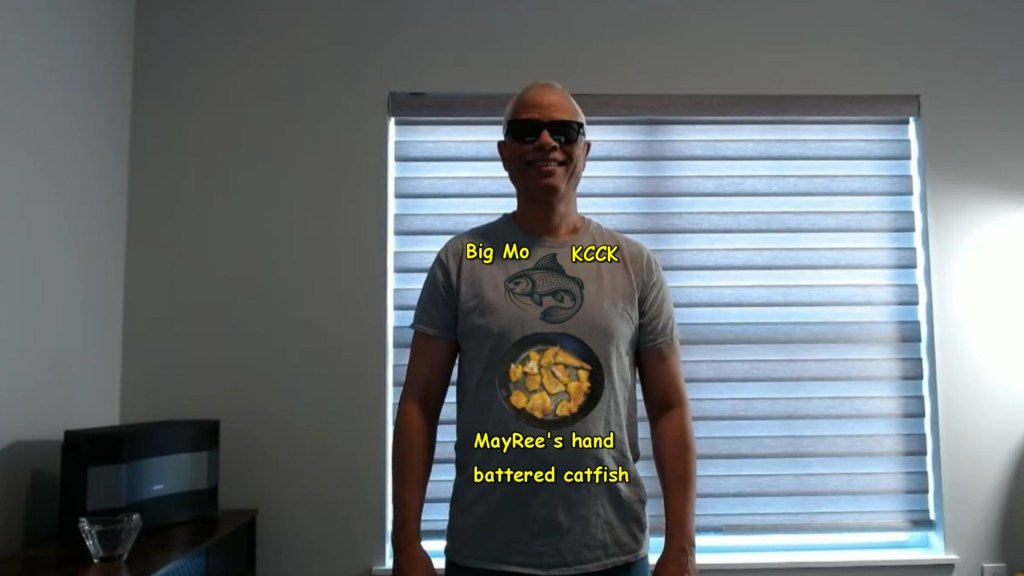
You can be glad about that. Now about that suggestion that I have for a tee shirt design about my favorite faux sponsor created by Big Mo, Mayree of the legendary Mayree’s hand battered catfish; it’s better because it’s battered. I wonder if there’s any movement on that.

Big Mo Pod Show 085 – “California Bluesin” KCCK's Big Mo Pod Show

After a short break during the Thanksgiving holiday your hosts are back at it again with another episode! This week features the usual mix of blues eras you’ve come to expect along with a few Californian artists, tune in to see which ones! Songs featured in the episode: Solomon Hicks – “Further On Up The … Continue reading
  1. Big Mo Pod Show 085 – “California Bluesin”
  2. Big Mo Pod Show 084 – “Garage Blues”
  3. Big Mo Pod Show 083 – “Legal Pirate radio”
  4. Big Mo Pod Show 082 – “Tribute”
  5. Big Mo Pod Show 081 – “Cheers To Kevin”

Pride or Rhetoric? What Would Dr. Melvin P. Sikes Say?

I noticed the headlines about the DEI flap at The University of Iowa, the one with the official apparently spilling the beans about University of Iowa’s DEI program not going away despite being illegal while maybe being unaware of being filmed. I’m not going to retell the story.

However, it does remind me of a time back in the 1970s in the days of affirmative action when I was a freshman student at Huston-Tillotson College (now Huston-Tillotson University) in Austin, Texas.

I learned about tenacity to principle and practice from a visiting African American professor in educational psychology from the University of Texas. It was 1975. Dr. Melvin P. Sikes paced back and forth across the Agard-Lovinggood auditorium stage in a lemon-yellow leisure suit as he talked about the importance of bringing about change in society.

He was a scholar yet decried the pursuit of the mere trappings of scholarship, exhorting us to work directly for change where it was needed most. He didn’t assign term papers, but sent me and another freshman to the Austin Police Department. The goal evidently was to make them nervous by our requests for the Uniform Crime Report, which Dr. Sikes suspected might reveal a tendency to arrest blacks more frequently than whites. He wasn’t satisfied with merely studying society’s institutions; he worked to change them for the better. Although we were probably just as nervous as the police were, this real-life lesson about the importance of applying principles of change directly to society was awkward.

Nothing like confronting social issues head on, right?

We would have preferred a term paper. We sat in the police station looking at the Uniform Crime Report, which was the only resource we could get. I think we were there a couple of hours; it felt a lot longer than that. The officer who got us the paperwork was polite, but a little stiff and wasn’t really open to anything like an interview or anything close to that. I can’t remember what we came up with as a write-up for what felt like a fiasco. I’m pretty sure we didn’t bring about anything even close to change. It was a humbling experience. Maybe that was the point but I’ll never know.

Dr. Melvin P. Sikes was a member of the Tuskegee Airmen although he didn’t see combat. He was the dean of two historically black colleges, a clinical psychologist, and a University of Texas professor. He died in 2012 after a long and successful career as a psychologist, teacher, and author.

I found a podcast about him which was sponsored by the Hogg Foundation for Mental Health and which aired February 15, 2024. It’s an hour long, but there are segments of interviews of him in 1972 that I consider fascinating. A couple of times he says something which I wish the interviewer had allowed him to expand on. The gist of it is that we need to have a system of education which allows people to speak from the standpoint of pride rather than rhetoric. I think what he might have meant is that it would be wonderful if we felt secure and confident in ourselves to express our minds sincerely. The word “rhetoric” makes me think of talk that is persuasive, even impressive, but maybe insincere. I think it still fits today.

Success of Johnson County Civil Mental Health Court in its First Year

I’ve been looking for other ways that Iowa addresses mental illness and its impact on homelessness and other adverse outcomes since my last post on the issue.

It turns out that, despite Iowa ranking 51st out of all U.S. states for the low number of psychiatric beds according to the Treatment Advocacy Center statistics (in 2023, it had just two beds per 100,000 patients in need), a new mental health court established in in May of 2023 has made substantial progress in reducing the number of crisis contacts, psychiatric hospitalizations, and days in the hospital. Arrests, jailings, and days in jail were also reduced.

Participants in the new program include the University of Iowa Health Care, Iowa City VA Hospital, the Abbe Center, Guidelink Center, National Alliance for the Mentally Ill (NAMI), Shelter House, and several other mental health service agencies in Johnson County.

The Johnson Mental Health Court continues to operate since June of this year when the pilot program’s funding from the East Central Iowa Mental Health Region was supposed to have ended on June 30, 2025, due to the change in mental health regions. This is a program for patients under involuntary mental health commitment that avoids incarceration and placement in a state psychiatric hospital.

This civil mental health program didn’t exist until well after I retired and I hope for its continued success.

Luett, T. (2024, April 24). Civil Mental Health Court in Johnson County finds success in first year. The Daily Iowan. https://dailyiowan.com/2024/04/24/civil-mental-health-court-in-johnson-county-finds-success-in-first-year/ Accessed July 30, 2025

Mehaffey, T. (2024, April 14). News Track: ‘Challenging, rewarding’ first year of Johnson County mental health court. The Gazette – Local Iowa News, Sports, Obituaries, and Headlines – Cedar Rapids, Iowa City. https://www.thegazette.com/crime-courts/news-track-challenging-rewarding-first-year-of-johnson-county-mental-health-court/ Accessed July 30, 2025.

It Takes a Village to Tackle Homelessness: What’s Iowa Doing?

After I read Dr. Dawson’s post today “More on homelessness and violence as a public health problem,” it got me thinking about what the situation on homelessness of people with mental illness and substance use disorder is here in Iowa.

First, I looked at the 2024 Iowa Homelessness Needs Assessment, which is a thorough report you can download if you need it. It’s a 23-page pdf document which doesn’t mention the intersection with the homeless mentally ill until almost the very last page. It gets mentioned in the section subtitled “Improve Coordination With Adjacent Systems”:

To end or substantially reduce homelessness, a coordinated response is needed that aligns the resources in adjacent systems with CoC resources and housing. Homelessness is often caused by and/or exacerbated by the inability of public support systems to address the complex needs of people in extreme poverty experiencing housing crises. These systems include education, hospitals, behavioral health, criminal justice, and child welfare. Engagement and service delivery approaches need to be responsive to the particular needs of people at imminent risk or experiencing literal homelessness. More responsive adjacent systems will provide specialized engagement, enrollment supports, discharge planning, and coordination with CoCs in each region.

Typically, this kind of document makes me thirsty for a more granular, human connected account of what kind of person actually becomes homeless. Are they always dangerous? The answer is “no.”

Actually, there’s this human-interest Iowa’s News Now story published December 27, 2024, “A Closer Look: U.S. and Iowa homelessness reach record highs” (accessed July 28, 2025). It’s about a real person who became homeless despite being a University of Iowa graduate.

People become homeless for many reasons. I just want to mention resources that are available in Iowa that could be helpful. The website Homeless or At-Risk of Homelessness presents the idea that “Sometimes, life takes an unexpected turn. People face hardships and turn toward their communities for support.”

There are some people who struggle with mental illness and substance abuse and as a consequence of those challenges become homeless, as the Iowa Homelessness Needs Assessment above points out.

One resource I think is important is The University of Iowa’s Integrated Multidisciplinary Program of Assertive Community Treatment or PACT program. It’s an evidence-based treatment model that’s been around for decades in many locations in the U.S.

There’s also an Iowa Health and Human Services program called PATH (Projects for Assistance in Transition from Homelessness) to help homeless adults with mental illness, substance abuse and trauma.

This was just a quick and admittedly superficial summary of what Iowans have been doing about the homelessness crisis. It really takes a village.

Extreme Heat Warning for I-80 Corridor

There’s an extreme heat warning from the National Weather Service for much of the I-80 corridor today and tomorrow. Heat indices of 95-110+ are expected.

Cooling Centers in Iowa City, IA

Cooling Centers in Coralville, IA

Consider donating to the Iowa City Shelter House Beat the Heat drive!

Mighty Hawk!

Today we saw this cool Red-Tailed Hawk on the fence—sort of, in a manner of speaking. This hawk was definitely not on the fence about getting brunch though. It would fly off the fence a few times and we expected it would come up with a mouse or squirrel or something—empty claws.

The woodchucks are too big for the hawk.

The experts say you can distinguish a male from a female Red-Tailed Hawk because the female is “25% larger.” I guess that might work if you saw them together—doing something X-rated.

On the other hand, there was a Red-Tailed Hawk named Pale Male that was famous in the New York City Central Park area. He got his name because his head was white. He took several females as mates during his life. They raised several eyasses, which was a new word for me today; it means young hawks. Mary Tyler Moore (“Oh, Rob”) participated along with other neighbors in protests about anti-pigeon spikes being removed and eventually they were replaced by “cradles.”

If you don’t remember the “Oh, Rob!” quote it was Mary Tyler Moore’s (as Laura Petrie) frequent complaint about husband Rob Petrie (Dick Van Dyke) on the Dick Van Dyke show (sitcom in the 1960s). Give yourself a gold star if you thought of the X-File episode “Arcadia” in which Agents Mulder and Scully took the names of the Petries.

Anyway, the Red-Tail Hawk is an impressive bird. It was just not a lucky day for hunting.