The Triple Berry Frosty at Wendy’s

We got the Triple Berry Frosty at Wendy’s and we got a surprise answer at the order station when we asked what berries are in it:

“Uh, I don’t actually know.”

Fair enough. We tried to guess. Sena thought one of them was strawberry and another was blueberry (to account for the slightly bluish color). I couldn’t tell what was in it-but it was good.

I had to look on the web to find out the berries are strawberry, blackberry, and raspberry.

The Wendy’s Blog says that the Triple Berry Frosty is one way to take a break: “We all have moments when we could use a bit of an escape from our busy lives.”

That fits right now.

Coin Rolling Conniptions!

Bank tellers who hand you sleeves to roll your coins laugh in their sleeves (so to speak) because they don’t count coins anymore and they like to see the customers wince.

I complained about this in a previous post. I tried it. It’s doable. I used the Wikihow method. Using a cloth to put the coins on helps because they just slide around on a smooth tabletop.

Lining them up in your palm and sliding them into the sleeve just right so they don’t jam is the hard part. Once you get the hang of it—it’s still incredibly slow.

Maybe the Coinstar machine?

UPDATE: I got $55 dollars rolled up in coins. All told, I probably put in about 2 hours on the project. I also want to point out that you’ll have different numbers of piles of 10 coins depending on what denomination is marked on the sleeves.

Who Wants to Roll Their Own Coins?

The other day we noticed our piggy bank is getting really full. We decided to take it to the bank and get it counted.

Much to our surprise and dismay, the bank told us they don’t count piggy bank small change anymore. In fact, they stopped that about 6 years ago. Then they gave us these little sleeves with different coin denominations on them and basically said count it and roll it yourselves. Nerve!

I looked this up on the web and it turns out this has been a trend for a few years now with the big banks. Smaller banks and credit unions may still count coins. I even saw that Quik-Trip will do it.

And most banks will charge you for counting your coins for you. And there is something called a Coinstar machine which will do it—but it’ll cost you.

I found a web page that explains a little more about Coinstar. You need to know a few things about those big machines. Skip to the end of the article to get the skinny.

There’s a WikiHow instruction web page where you can learn in 15 steps (that’s right, I said “15 steps.”) how to roll coins. I read through the first half-dozen steps and had to go take a nap. And banks may not like the idea of either depositing your coins or exchanging them for folding money.

I’m not liking this idea of rolling coins. But our piggy bank won’t accept many more coins. Maybe I should try to roll some.

Releasing Your Inner Nerd

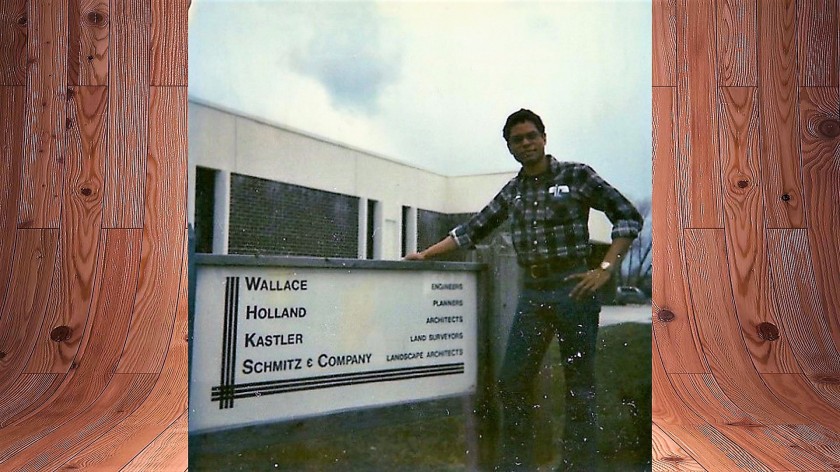
Getting the new laptop reminds me of my pocket protector nerd days. That’s because the modern laptop is a sharp contrast to the big heavy desktops. I worked for consulting engineers back in the stone age and I wore a pocket protector. Some people might not know what that is. It’s a little plastic pen holder that fits in your shirt pocket. It protects your shirt from ink spots, but makes you look like a nerd. I would also keep notes on a little pocket flip cover paper notebook.

It was mandatory that you carry six or seven pens and mechanical pencils in the pocket holder, which typically would be emblazoned with some kind of engineering advertising label: Nerdy Engineers Are Us or The Silos of Tomorrow.

When I graduated to a Personal Digital Assistant (PDA) complete with stylus, I thought that was a major upgrade. It was a mobile handheld device on which I took notes using a stylus. It was a little on the big side for my shirt pocket, so it displaced the paper notebook and the pocket protector.

You can see the PDA in action by watching the Men in Black II movie in which a couple of junior level men in black are using them to take notes. This is the scene at Ben’s Pizza Parlor in which Frank the talking pug says the deflated body of Ben has “zero percent body fat” and the two men in black laugh at the joke.

Also on the nerdy side, I used to wear bow ties. They were kind of fun to tie. I had many. One of them was plaid, which I realize raises the nerd level up a notch. My nerd fashion attire also included (you might want to sit down for this)—clip on suspenders. I later graduated to the suspenders you button on the inside of your pants beltline.

I think you can still release your inner nerd by getting a pocket protector. And remember, you didn’t hear it from me.

Is Cribbage Mostly Luck?

I found this cribbage YouTube site that does a really nice job of teaching you how to play Cribbage. Here’s a video about whether Cribbage is mainly a game of luck or skill. It turns out it’s a mix of both.

I play computer Cribbage games with high level computer opponents who-let’s face it, don’t make mistakes. You have to get used to losing pretty often, but there is a certain amount of skill which can help you win-sometimes.

Thoughts On Laptop Computers

We bought a laptop computer. It has been years since I’ve used one. I forgot how exasperating a touchpad is. Luckily, we have a spare wireless mouse and a USB port. The laptop is slim and very light, like most laptops these days.

I remember the first “laptop” I had early in my career as a consulting psychiatrist. I think it weighed about 2-3 times what the modern ones weigh nowadays. I think I could have stopped a thief from taking it from me by whacking him over the head with it.

If I remember correctly, it had a slot for floppy discs and another for disc media. It developed a hardware problem which forced me to box it up and send it back to the manufacturer for repairs. I don’t remember how long I kept it after that.

The new laptops don’t have any internal optical drives built into them.

I read a tech article in which the author’s opinion about the gradual disappearance of internal optical drives and other physical media for laptops was probably the result of large companies finding out they could make more money by charging subscription fees for digital media.

Microsoft comes to mind.

About That Artificial Intelligence…

I’ve got a couple of things to get off my chest about Artificial Intelligence (AI). By now, everyone knows about AI telling people to put hot glue on pizza and whatnot. Sena and I talked to a guy at an electronics store who had nothing but good things to say about AI. I mentioned the hot glue thing and pizza and it didn’t faze him.

I noticed the Psychiatric Times article, “AI in Psychiatry: Things Are Moving Fast.” They mention the tendency for AI to hallucinate and expressed appropriate reservations about its limitations.

And then I found something very interesting about AI and Cribbage. How much does AI know about the game? Turns out not much. Any questions? Don’t expect AI to answer them accurately.

In Memory of L. Jay Stein

I was thinking of one of the Johnson County judicial mental health referees I often worked with years ago. L. Jay Stein died in 2014. I looked up his obituary the other day and was a little surprised to find I had written a remembrance for him. I’d forgotten it.

“I will always remember my first encounters with Judge Stein. I was a first-year resident in psychiatry at The University of Iowa Hospitals & Clinics. He often presided at mental health commitment hearings at which I was often the nervous trainee providing “expert testimony” as the treating physician. Jay taught me and countless other psychiatry residents about the importance of procedure. His knowledge was prodigious. But it was his compassion, his fairness, and his inimitable sense of humor I will always treasure.”

Judge Stein’s vocabulary was impressive. Even his recorded telephone automatic replies sounded amusingly erudite. Occasionally, when I had a question about legal procedures in mental health I would call him but get his answering machine. These out of office replies were entertaining and sounded very much like the way he did during commitment hearings. I can’t remember all of it, but it began with something like, “Once again, your request has been denied…” It made me think of what I might hear at a parole hearing—not mine of course.

L. Jay Stein was wise and funny.

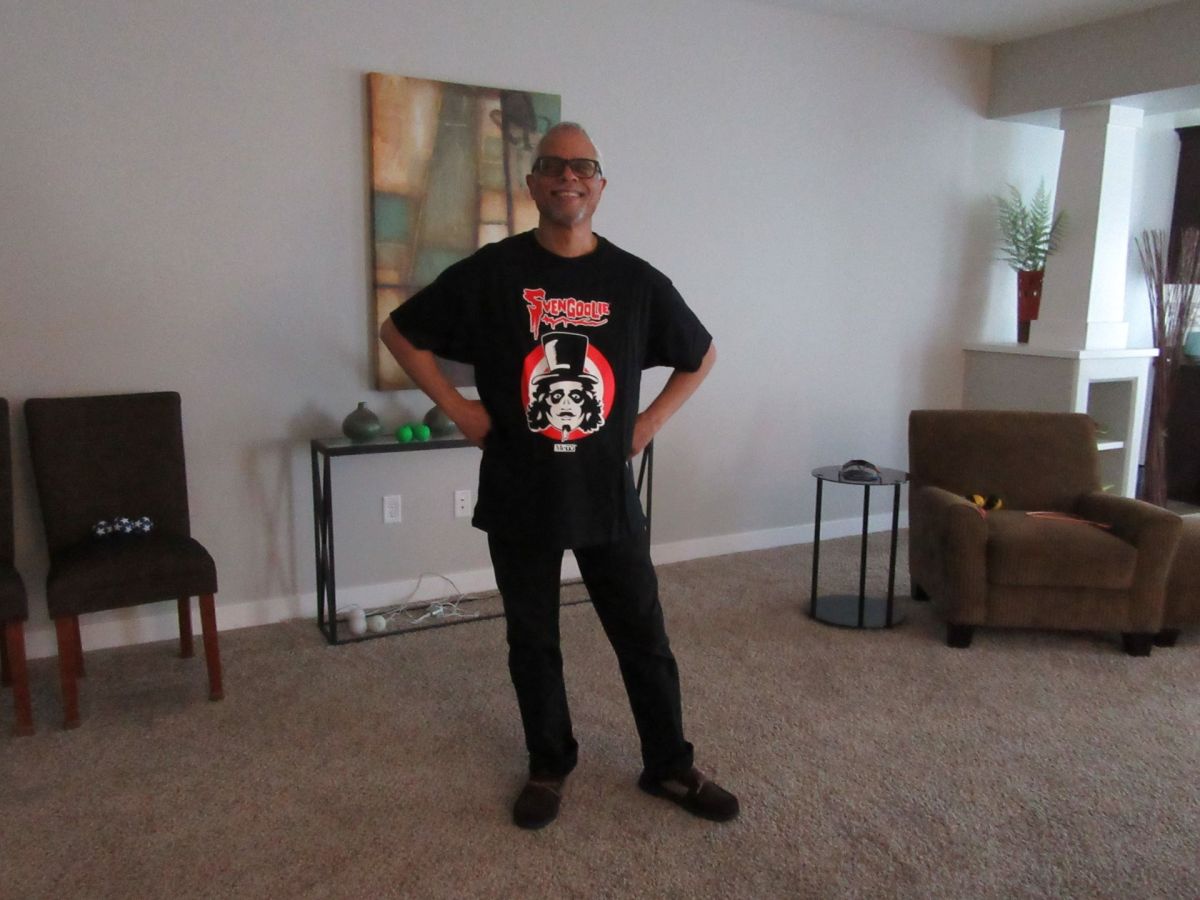
Svengoolie Movie: The Tingler!”

We saw the 1959 movie “The Tingler” starring Vincent Price on the Svengoolie show last Saturday. Price plays a prison pathologist, Dr. Warren Chapin, who’s trying to scientifically study a parasitic creature called the tingler (tingles up and down your spine means you’re scared right out of your mind!).

It sits on your spine and feeds on fear by clamping down on it, eventually breaking it unless you scream. Then it’ll just let go. However, if you’re mute, scared speechless, or it grabs you by the throat—you’re done. So, the tingler lives on fear, although if you express fear vocally by screaming, you escape it.

OK, so I’m going to spoil the opening scene, which shows a prisoner being dragged to the electric chair, screaming all the way until the executioner throws the switch. When Dr. Chapin does an autopsy, he finds the prisoner’s spine is cracked. He says it wasn’t caused by the electrocution, but by the tingler.

Huh? But the prisoner screamed bloody murder (murder was why he got the death penalty by the way) hardly stopping to take a breath. Shouldn’t that have weakened or killed the tingler? You can find examples of inconsistencies like this in any cheesy movie, but where’s the fun in that?

One web article says the tingler creature was modeled after the velvet worm, which looks pretty creepy. In reality, the velvet worm is harmless to humans, but is a predator of many invertebrates. Just keep telling yourself, “I’m a vertebrate.”

You can watch the full movie on the Internet Archive. The most interesting part of it for me was the use of what was called “acid,” (meaning the hallucinogen LSD) by Dr. Chapin. He wanted to experience and record the actual experience of being scared by the tingler, just to see what it’s like apparently. He mainlines himself with a fairly stiff dose of LSD although I can’t remember how much.

Incidentally, an article in JAMA notes, “Doses of 20μg/kg of body weight are known to have been taken without a lethal outcome.” (Materson BJ, Barrett-Connor E. LSD “Mainlining”: A New Hazard to Health. JAMA. 1967;200(12):1126–1127. doi:10.1001/jama.1967.03120250160025). I don’t know how much Dr. Chapin weighs.

This was about the same time as a lot of people in the U.S. were experimenting with the hallucinogen in various ways, including mainlining it. There are web references to psychiatrists using LSD recreationally (this was when it was legal). Bad trips were and still are common, although there is a growing body of clinical studies that involve using the psychedelics as adjuncts in psychotherapy. It’s not for everybody, although tinglers might have a different opinion.

Anyway, Dr. Chapin has a bad trip, gets really scared of hallucinations and screams. Web articles say that killed his tingler, but I didn’t see it flop out of his mouth.

There you have it. Another really cheesy and fun Svengoolie movie. I’m a vertebrate.

The Mumbo Jumbo on Some Big Antique Cribbage Boards

Today, I’m going on a tangent about big, mostly antique cribbage boards which were specially made for making the scoring more complex. The main perpetrator (I mean manufacturer), was Drueke (variously pronounced as Drooky, Drew, Drooka).

The Drueke name turns up on most of the big two, three and four track vintage cribbage boards you find for sale on eBay. There are a few other makers, but Drueke is the one you commonly see. I don’t know anything about Drueke except it was a well-known maker of board games including chess and cribbage sets. The company was based in Grand Rapids, Michigan.

If you know how to play the basic version of cribbage, you probably think it’s complicated enough as is. But Drueke made boards that allowed you to score many aspects of the game right on the playing surface.

There are other 4 track cribbage boards that aren’t designed to allow players to go crazy with scoring everything you do in a cribbage game. But typically, you’ll see a lot of what Drueke called the “Once-A-Round Scoremaster” boards. I got curious about the rules and found a couple of web pages on which I found out more about them. The rules are a little hard to find and a little vague when you do find them.

I couldn’t find out anything about them even on the American Cribbage Congress (ACC) website—and it’s the main authority about cribbage rules.

Reddit has a page titled Cribbage-Four Track Board (Example Rules). Click the “read more” below the image. It also shows a nice photo of a typical board. It’s tough to follow.

Then I found a Board Game Geek (BGG) page on which a guy named Jeff Bridghman outlined a clearer explanation of how to play on such a board. It’s actually better than the rules included with the Drueke game. By the way, if you have trouble with the web page, just reload it by typing “4 track boards and all the extra mumbo jumbo?” and hit the search button again.

What puzzled me were his comments about the High Hand score. He said his board had something I’ve not seen on pictures of the boards on eBay. The High Hand score goes from 1-10 on every one of those I saw. On the other hand, his board shows actual scores (14 through 29). I think it must have been a custom build. The thread has longevity; it started in 2011 and the latest comment I saw was in 2023.

If you buy the Drueke board, you’ll need the rules. But even if you have the Drueke rules, you’ll probably need something more specific. Maybe Drueke figured people would be more creative than they are. It’s a lot like life. I think sometimes you have to make up some rules.