The Fortuitous Connection Between the Meyer Lemon and James Thurber

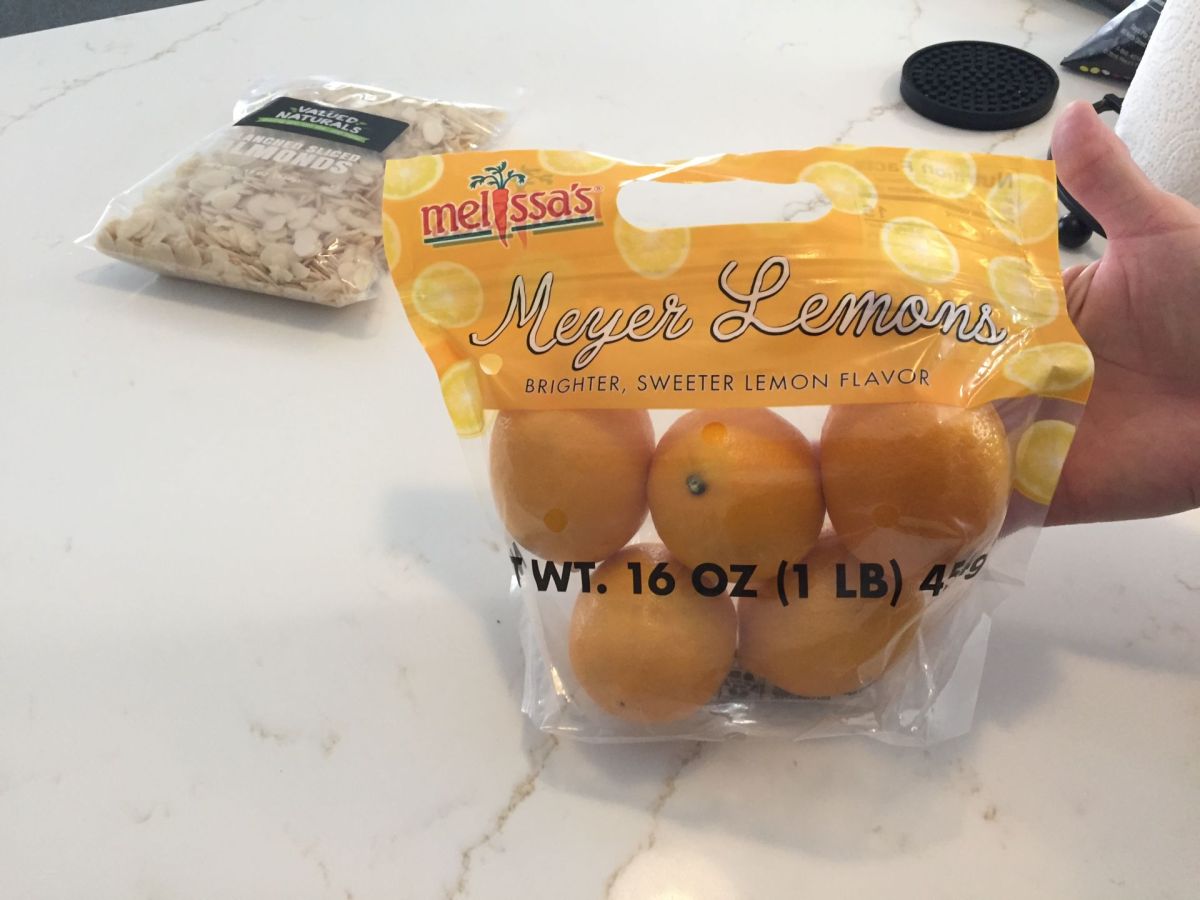
Sena bought some Meyer Lemons today, which we had not heard of until she saw them on TV on the QVC network. She bought them for a fish dinner.

I was curious about the Meyer Lemon. We’ve never eaten them before. People say they’re sweeter than regular lemons. It’s a hybrid between a lemon and an orange.  I did a little digging on the web and found a little background about them, which curiously connects to James Thurber in a roundabout way.

Anyway, an explorer and employee of the U.S. Department of Agriculture named Frank Nicholas Meyer introduced the fruit to the United States in 1908 after he collected them while traveling in China. It was named after him although the fruit had been growing in China for millennia. Meyer was an immigrant to America from Amsterdam in 1901 and became a citizen in 1908, modifying his name from Frans Nicolaas Meijer to Frank Nicholas Meyer.

Meyer is also credited with the discovery that the Chestnut blight disease was originally imported to America from trees in China. He collected fungus specimens which were identified as the cause of the disease which was killing chestnut trees in America in 1904.

That gets us to the connection of Meyer lemons to the writer James Thurber, although I confess the connection is indirect. Thurber wrote a short story, “The Car We Had to Push” which was published in the 1945 collection, The Thurber Carnival.

Part of the story is about a character named Cousin Zenas, who died of—yep, you guessed it, the Chestnut blight. Now, even though the story is in a copyrighted book, the full text turns up in a couple of blogger sites. I found one copy of The Thurber Carnival you might be able to borrow and read for free on the Internet Archive. Don’t believe the Google Gemini Artificial Intelligence bot, which always intrudes itself at the top of my web searches. You can’t get the book as a free pdf from “The Project Gutenberg website,” which I suspect is a confabulation.

Anyway, the Meyer Lemon tastes great and Sena was able to squeeze a lot of juice out of one small Meyer lemon. You can even eat the rind. She bought a bag of 5 of them which cost $7.00, and they were little compared to the large ones she saw on the QVC network.

They’re a great accent to a fish and hush puppies’ dinner. The sauce is made with Miracle Whip, by the way.

My Mt. Rushmore Dream

Lately, I’ve been anticipating my eventual immortalization as a sculptured stone bust on Mt. Rushmore. Hopefully, this will be fairly soon because I’m not getting any younger.

Among my many inventions is the internet. Don’t believe Al Gore, although he has persuaded others about his role in the development of what I argue should properly be called the world wide web. I’ve invented a lot of other things which I’ll tell you more about just as soon as I make them up.

Before I forget it, I want to tell you what I just noticed last night while I watching one of my favorite X-Files episodes, “War of the Coprophages.” I guess I never noticed that the cockroach invasion was about Artificial Intelligence (AI). It was the scientist, Dr. Ivanov, who mentioned it first and I just missed it the first few hundred times I saw the show.

Dr. Ivanov clearly thought that anybody who thought extraterrestrials would be green and have big eyes was probably crazy. Traveling across galaxies through wormholes and whatnot would tear humanoid organisms apart. The practical approach would be to send AI robots instead. You could see Mulder cringe at that idea. The little robot that kept edging closer to Mulder made him nervous and when he asked Dr. Ivanov why it did that, his reply was “Because it likes you.”

That doesn’t exactly fit with Ivanov’s other idea about extraterrestrials, which is that they would focus on important tasks like getting enough food, procreating, etc. without getting all emotional about them. Ironic that Dr. Ivanov made an AI robot that gets a crush on a sesame seed munching UFO hunter like Mulder.

However, the AI robots in the show are cockroaches which love to eat dung. In other words, they’re full of crap.

Moving right along, although I didn’t invent it, there’s a card game called schnapsen that Sena and I are trying to relearn. It’s kind of a break from cribbage. It’s a trick taking game with just a 20-card deck. We play the version that doesn’t allow you to look at your cards to see how many points you have so you can tell when you can close the deck or go out, meaning you have the 66 points to win. You have to remember how many points you’ve won in tricks. I think it’s a good way to keep your memory sharp.

Let’s see; I’ve lost every game so far, but that doesn’t mean I won’t end up with my bust on Mt. Rushmore.

Artificial Intelligence in Managing Messages from Patients

I ran across another interesting article in the JAMA Network about Artificial Intelligence (AI) with respect to health care organization managing messages from patients to doctors and nurse. The shorthand for this in the article is “in-basket burden.” Health care workers respond to a large number of patients’ questions and it can lead to burnout. Some organizations are trying to test AI by letting it make draft replies to patients. The results of the quality improvement study were published in a paper:

English E, Laughlin J, Sippel J, DeCamp M, Lin C. Utility of Artificial Intelligence–Generative Draft Replies to Patient Messages. JAMA Netw Open. 2024;7(10):e2438573. doi:10.1001/jamanetworkopen.2024.38573

One of the fascinating things about this is the trouble we have naming the problems with misinformation that AI has. We tend to use a couple of terms interchangeably: hallucinations and confabulation. Whatever you call it, the problem interferes with communication between health care workers and patients.

Dr. English describes the interference as a “whack-a-mole” issue, meaning every time they think they got the hallucination/confabulation problem licked, the AI comes up with another case of miscommunication.

Just for fun, I did a web search trying to find out whether “hallucination” or “confabulation” fit the AI behavior best. Computer experts tend to use the term “hallucination” and neuropsychologists seem to prefer “confabulation.” I think this community chat site gives a pretty even-handed discussion of the distinction. I prefer the term “confabulation.”

Anyway, there are other substantive issues with how using AI drafts for patient messaging affects communication. I think it’s interesting that patients tend to think AI is more empathetic than medical practitioners. As Dr. English puts it: “This GPT is nicer than most of us,” and “And ChatGPT, or any LLM, isn’t busy. It doesn’t get bored. It doesn’t get tired.” The way that’s worded made me think of a scene from a movie:

OK, so I’m kidding—a little. I think it’s important to move carefully down the path of idealizing AI. I think back to the recent news article about humans teaching AI how to lie and scheme. I remember that I searched the web with the question “Can AI lie?” and getting a reply from Gemini because I have no choice on whether or not it gives me its two cents. I’m paraphrasing but it said essentially, “Yes, AI can lie and we’re getting better with practice.”

I like Dr. English’s last statement, in which she warns us that AI can be a fun tool which clinicians need to have a healthy skepticism about. It may say things you might be tempted to gloss over or even ignore, like:

“I’ll be back.”

Update on the Cribbage Go Rule and More!

I just discovered a little more about the Go Rule in Cribbage. It turns out that it’s easy to over think it. I found a few websites that state it more clearly than what I have recently found and posted about last Friday, January 17th.

Probably the simplest explanation is a pdf document of rules for cribbage available for free.

“A player who cannot play without exceeding 31 does not play a card but says Go, leaving his opponent to continue if possible, pegging for any further combinations made…. Bringing the total to exactly 31 pegs 2, but if the total is 30 or less and neither player can lay a card without going over 31, then the last player to lay a card pegs one for the go or one for last.”

There are a couple of YouTube videos with clear instructions about how to play cribbage. Both are less than 30 minutes long and entertaining. One of them is called “How to Play Cribbage Properly”. The video is well done, in my opinion. The only mistake he made was pointed out by a viewer who noticed he made a minor goof on demonstrating how to peg between two imaginary players “Attenborough” and Bowie.” He just switched the names of the players. It really doesn’t affect the actual demonstration of pegging points.

The other YouTube is also well done and demonstrates the rules of cribbage in a game between a guy and his father, titled “A Game of Cribbage.” Only once is the word “Go” mentioned although they played it according to the rule above.

Testing the New Snow Removal Tools!

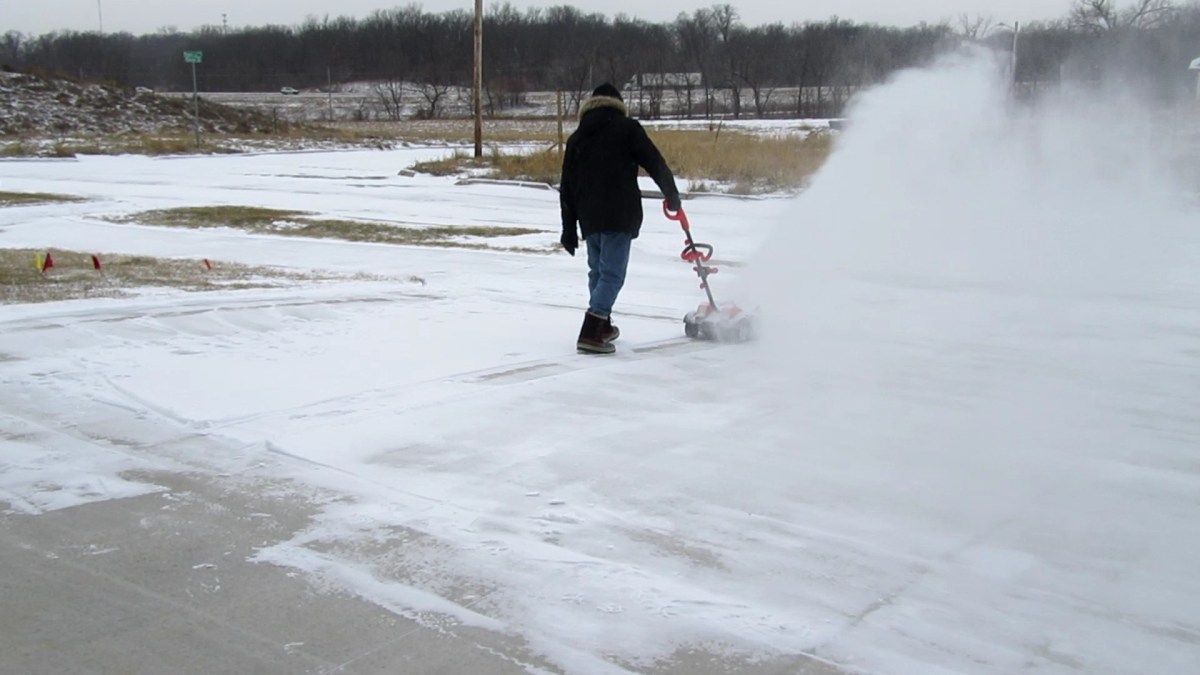
We finally got enough snow to test the new shovels today. Recall we have a cordless electric snow shovel and a snow pusher plow shovel with a 36-inch blade. The battery-powered model is a 48V 16-inch Voltask.

I was a little surprised to learn how powerful the electric shovel is. It comes with two batteries. It has a safety button which you have to press at the same time you pull the trigger. It comes with lights so if you ever want to clear snow after dark, you could do that. Of course, there’s no heavy lifting and it’s easy to push. It can throw snow a long way and you can also direct it left or right. It’s like a vacuum in reverse.

Sena selected the Voltask and save a lot of money. There were other models that were priced in the 400–500-dollar range which didn’t have the features the Voltask has.

The snow plow of course, is a simple tool—just the way I like them. The narrow 36-inch blade makes snow clearing quick and there is also no heavy lifting. Spraying a little snow and ice repellent on the blade cuts down on buildup as you work.

I still prefer a shovel.

Is Edinburgh Manor in Iowa Haunted?

I have no idea whether an old former county home in Jones County is one of the most haunted places in the Midwest or Iowa or the USA. And I wouldn’t be saying that if Sena and I had not watched a TV show called “Mysteries of the Abandoned” (broadcast on the Science Channel) which aired a 20-minute segment about Edinburgh Manor the other night.

Supposedly, Edinburgh Manor started off as a county poor farm back in the 1800s, which didn’t do well and then quickly declined into an asylum for the mentally ill. When a couple bought the old place after it closed sometime between 2010 and 2012, they started to report having paranormal experiences and it was then off to the races for the place to become a haunted attraction, for which you can buy tickets for day passes and overnight stays.

There’s a 10-minute video by a newspaper reporter who interviews the wife and which shows many video shots of the house. I can’t see any evidence that it’s on the National Register of Historic Places.

What this made me think of was the Johnson County Historic Poor Farm here in Iowa City, which is on the National Register of Historic Places. We’ve never visited the site, but you don’t pay admission and the tone and content of the information I found on the website is nothing like what’s all over the web about Edinburgh Manor. There are no ghosts tickling anybody at the Johnson County Historic Poor Farm.

There’s a lot of education out there about the history of county poor farms in general. In Johnson County, Chatham Oaks is a facility that houses patients with chronic mental illness and it used to be affiliated with the county home. It’s now privatized. The University of Iowa department of psychiatry used to round on the patients and that used to be part of the residents training program (including mine).

I found an hour-long video on the Iowa Culture YouTube site about the history of Iowa’s county poor farms. It was very enlightening. The presenter mentioned a few poor farms including the Johnson County site—but didn’t say anything about Edinburgh Manor.

Fifty Degrees in Iowa City Yesterday!

It was fifty degrees in Iowa City yesterday so we went for a walk on the Terry Trueblood trail yesterday. Other people got the same idea. One guy was jogging in shorts! Yeah, it’s fifty degrees, but there’s still snow on the ground (in places) and there’s ice on Sand Lake.

About that ice on Sand Lake. It looked thin in places and we could see cracks in it everywhere. But that didn’t stop ice fisherman and others from going out on the lake.

We even saw an American Kestrel! That’s the first time in over 4 years. In 2020, we were out on the Trueblood trail and another walker pointed out an American Kestrel. I couldn’t get a clear shot of it then, but I did this time. I think it’s a female because of the black bands on the tail.

The balmy weather won’t last. We’ll be in the deep freeze next week.

The Go Rule in Cribbage

Sena and I have been playing cribbage for a number of years but only recently have we begun to question the “Go rule.” I’ve looked on the web for clarification about how to use the Go, and found conflicting guidance. Incidentally, we’ve posted YouTube videos of some of our games, many of them probably showing we had an imperfect understanding of the Go rule. It occurs to me that if I had not turned off the comment section on these YouTube videos, I might have been alerted to what we’d probably been doing wrong over the years. But then I’d have had to deal with many inappropriate comments.

We have gradually realized that our use of the Go has probably been flawed, raising a couple of questions:

Do you score the one point for Go automatically just because your opponent says “Go” when she/he can’t play any cards without going over 31?

What do you do about the double Go sequence when neither of you can play without going over 31?

I looked for answers on the web.

One thing I’ll say is that the automatic pop-up Artificial Intelligence (AI) guidance is wrong. For example, AI says that the player who says “Go” gets the point for Go, which is clearly incorrect.

I also looked this up on the American Cribbage Congress (ACC) website and still couldn’t understand it. Then I found a couple of websites that seemed helpful. It’s notable that both were question/answer threads that went on for years about this one issue with the Go rule. Apparently, a lot of people don’t understand it, so I didn’t feel so bad.

The first site was a Cribbage Corner thread. At the beginning, it gave several helpful examples of the right way to use the Go rule—but then followed years of comments back and forth about it that eventually became difficult to follow. There was a question about the Stink Hole which, suffice it to say, triggered an annoyed reply which advised the questioner to quit using “kitchen table cribbage” rules.

The second one was a Stack Exchange thread. When I looked at it, it started with a question a player had in which he and his friend argued about the Go, and his friend (as it turned out) seemed to be on the right track:

“His rationale, is that when scoring 31, you are getting one point for hitting 31 exactly and 1 bonus point representing your partners’ inability to play an additional card (his “go”). He says “whether a “go” is said or not, the go is implied when you place the last card at the end of the round to make 31….thus giving you two points when you reach 31 even when a “go” is communicated”.”

The thread overall was more helpful and one commenter cited the ACC rule section (to which there’s a link), which clarified the question about reaching 31 which gives the player 2 points. The two points means: one point for the Go and one bonus point for getting the special score of 31.

There was also some clarification about the double Go, which is that if neither player can play a card that won’t take the total count over 31, neither player gets the 1 point for Go.

That has happened to us. I think this is right: If player A is the first to say “Go” and player B also says “Go,” then the count resets to zero and player A leads to the new sequence. If that’s wrong, don’t hesitate to tell me in the comment section—which I assure you will not extend for years going forward.

Update: See my update on this Go issue in the post “Update on the Cribbage Go Rule”, post dated January 23, 2025. Actually, this rule is clarified at this link.

New Snow Shovels!

The new shovels were delivered today. Both required some assembly. I’m the least handy person when it comes to that. I did OK with the snow plow but Sena had to come to the rescue when it came to the cordless snow shovel. The handle was tricky for some reason.

The batteries for the electric shovel needed minimal charging and it roared to life. It doesn’t sound like a toy.

Now all we need is snow. I can wait.

Did You Know They Won’t Be Making Yardsticks Any Longer?

Anecdote alert! Sena just got back from shopping and had a priceless little story about shopping for a yardstick for measuring window film to apply on a door window. I suppose I should say that the title of this post is a dad joke that some people might not get.

Sena asked a Menards worker where to find a yardstick. She said the guy looked like he was in his thirties. His English was probably a little rough. He looked puzzled and directed her to the lawn and garden center. She clarified that a yardstick was something like a ruler. He replied that they didn’t carry school supplies.

Another worker was in the same aisle and chuckled. He directed her to where the yardsticks were.

You know, I haven’t seen a yardstick in a long time. We don’t own a ruler although we have a tape measure. Just to let younger people know, a yardstick is typically a piece of wood 36 inches long (which is 3 feet), marked off into inches, and used for measuring things.

The worker who didn’t know what a yardstick was could probably relate to football games because the length of the field is still divided into yards—but only if he’s a football fan, I guess. But you don’t measure distances to a first down on a football field with a yardstick. . Incredibly, they measure it with a chain between two sticks. None of your lasers for the officials.

We had a yardstick in the house where my brother and I grew up. You could also use it to reach stuff that rolled under tables. You could make comparisons by saying “By any yardstick, blah blah.”

And you can make dad jokes about yardsticks. By the way, the company that makes yardsticks won’t be making them any shorter either.