Who Else Remembers the “Red Green Show”?

I was clicking through the web the other day and came across something that triggered a distant memory—The Red Green Show. It was a Canadian sketch comedy TV program that ran between 1991 and 2006.

I used to watch it and now I can’t see how I ever found the time to do that. I was in medical school between 1988-1992, and was in residency between 1992-1996. After that, I was on staff in the psychiatry department at University of Iowa Health Care.

The Red Green Show was on in the evening and it caught my attention like a couple others: Monty Python’s Flying Circus and Red Dwarf (a really quirky outer space show), which came on just before the Red Green Show. I’ve always been big on comedy, but I just don’t know how I ever found time for it. I was usually pretty tired or up all night on call.

Anyway, there’s this Red Green web site where you can watch all the episodes over the 15 years it was on—for free. The big star was Steve Smith, who played Red Green. The web site marketing all the old shows and T-shirts and whatnot is based in Overland Park in Kansas City, Kansas. Figure that one out, a Canadian TV show now selling souvenirs and Possum Lodge membership cards in Kansas City.

The show won a Canadian Gemini Award (similar to the Academy Emmy Award in America) for comedy in 1998.

If you watch one of the episodes, it’ll make you scratch your head about the notion of making Canada the 51st state, but I won’t get into it.

I had a book written by Steve Smith a long time ago but I can’t remember which one it was. I think it had a red cover. Maybe it was “How to Do Everything.” It’s a guide for do-it-yourself and self-help. That’s a hoot because I can barely tie my shoes, much less fix anything. On the other hand, neither could Red Green.

I watched the first YouTube episode from 1991 and it made me chuckle. I admit that one of the Red Green quotes, the Man’s Prayer, fits me like a fishing vest (I don’t fish!):

“I’m a man, but I can change, if I have to…I guess.” Red Green.

It Turns Out I Did Not Invent the Term “Zamboni Effect”

Today’s post connects weirdly with the one I wrote yesterday entitled “The Zamboni Effect,” in which I mistakenly believed I had invented the term “Zamboni Effect” based on my observation of what an ice resurfacing machine did to an ice rink in a local mall. It clarified the ice and also metaphorically, by extension, clarified relationships from the past viewed in the present—sort of.

As a reminder, the ice resurfacing machine was first invented in 1949 by a guy named Frank Zamboni. A lot of companies with different names make them nowadays but people still tend to call them all Zambonis.

Just for fun, I looked up the “Zamboni Effect” on the web today and it returned a few surprising results. Among the different meanings of the Zamboni Effect:

  1. Zamboni Effect related to optimizing the ocular surface for surgery.
  2. Zamboni Effect related to a scientist named Paolo Zamboni, who invented a controversial treatment for multiple sclerosis which later turned out to be ineffective.
  3. Zamboni Effect related to something that happens in connection with dynamical nuclear spin polarization (whatever that is).

And for all I know, there may be other meanings for the Zamboni Effect that just never made it to the internet.

The Zamboni Effect

I was walking around the mall today doing ordinary old guy things: watching the Zamboni machine resurface the ice rink, which I’ve never seen before, by the way. The surface was pretty dull before the Zamboni team started. There were two kids in the seat, one young lady driving and the other young man pointing out spots she missed. They went around and around getting the thin layer of water on the whole rink while eager skaters waited to get out there. They rejuvenated the rink, got it shining like crystal and skaters spun, twirled, and had a great time. It was the Zamboni Effect.

After that, I got up and did my usual thing, looked at books in Barnes & Noble, got a bite to eat, wondered why the mall security guy was walking by the bench so often where I was sitting. After his third pass, I got up and did my best to look like a solid citizen who is aware that loitering might look sinister to some mall security guys.

And when I wandered back to the tables next to the ice rink, I sat down again because the mall security guy was nowhere in sight. While I was just zoning out watching people pass by, one of them stopped and made a funny face at me. For a half-second, he didn’t register in my memory and then he called me by name. I suddenly recognized him as a former resident in the Medical-Psychiatry training program at University of Iowa Health Care (UIHC). It was Ravneet, one of the best trainees I have ever had the pleasure to work with.

It was kind of a shock. He had left for a great position with a health care organization out in Arizona many years ago and is very successful. He and his wife and daughter were on vacation and were walking through the mall. His son is also a high-level performer in science but he was not with them today. Ravneet takes time out every so often to travel like that. I’m sure it helps rejuvenate him—kind of like how the Zamboni machine rejuvenates the ice rink–the Zamboni Effect.

We exchanged pleasantries, he took a selfie with me, and I forgot to ask him to send me a copy, probably because I was so flabbergasted at running into him at the mall. It really brightened my day. Again—the Zamboni Effect. I really felt rejuvenated.

Every now and then, we all need the Zamboni Effect. Maybe it could even help the mall security guy.

Svengoolie Movie: “The Thing That Couldn’t Die”

The thing about this movie we saw last night on the Svengoolie show, “The Thing That Couldn’t Die,” is that it heads in the wrong direction from the start—with a woman who douses for treasure. Dousing or witching for water or other things employs a special stick or rods to find objects buried underground. I actually saw this many years ago when I worked as a land survey crew member and watched an old guy use dousing rods to find buried water tile lines in a field. I remember one guy in my crew mentioned under his breath that the guy was probably old enough to remember where the tile line was originally buried.

Anyway, this film was released in 1958 and the general idea is that a sorcerer named Gideon Drew was beheaded by Sir Francis Drake 400 years ago. The head was buried in a box and the rest of the body was buried somewhere else. This would ensure that Gideon would suffer for all eternity—as long as nobody used his head to figure out that if you reconnected Drew’s body and his head, he could again commit mayhem.

Jessica is a seemingly empty-headed woman who is really able to find important objects by dousing. She finds the box containing Gideon’s head and a special charm necklace that protects her (at first) from Gideon’s ability to get inside your head.

Gideon possesses the deadhead character Mike because he’s the one who first opens the box. He then kills his controlling buddy, Boyd, who yells his head off, waking up Peggy’s Aunt Flavia, the owner of the land on which the box was found. Aunt Flavia has a head for figures because she runs the dude ranch where all the characters are and realizes that the box contained something valuable, learning later that she could get $5,000 for it from an archaeologist.

Mike drags Boyd’s body around in the woods by the head for a while, eventually dropping it into the hole where the box was originally found, but then gets killed off early in the movie. The actor, Charles Horvath, was ticked off about it and later went on to form the well-known rock band, the Ungrateful Head.

Meanwhile, Linda, who earlier invited Jessica to a square dance who declined because she preferred head banger music, gets hypnotized by Gideon. Linda then puts Gideon in a hatbox, which she gifts to Jessica after Jessica’s wannabe boyfriend, Gordon, takes the charm away from her to get it cleaned up. When Jessica opens the hatbox, Gideon zaps her, causing her to become a bad girl. Linda slaps her boyfriend Hank in the head a couple of times, which leads him to head back to their cabin to tear up his painting of her portrait and get his head bad by drinking whiskey.

Linda, Jessica, and Hank all get pretty drunk, and eventually Jessica decides to witch for the body of Gideon Drew, which she finds and the action starts coming to a head—Gideon’s head that is.

Jessica replaces Gideon’s head on his body. He integrates into the consistency of grayish head cheese and his vocal cords start working. The gang’s all there and Gideon threatens everybody and starts to bully them. Gordon tries to shoot him but bullets don’t work, and he then gets his head on straight, remembering he has the charm necklace. Gordon points it at Gideon, who reacts like Dracula does to a crucifix and almost immediately jumps back into the coffin his body was buried in, where he disintegrates.

Gideon’s spell is broken and a good time was had by all with nothing left to suffer but a mild headache from the whiskey hangover.

The moral of the film’s story is lost in all the interpersonal drama, but it might be that if you’re having trouble with water witching for drain tile lines, you should not lose your head because you can probably find a map of tile line locations in the city engineer’s office.

New Wrinkle on Iowa Bill to Oppose mRNA Vaccines in Iowa

This is a follow up to yesterday’s post about the Iowa legislature’s proposition of a new law that would essentially ban mRNA vaccines in Iowa. I don’t understand the numbers and codes on the new sections, but the new one proposes that manufacturers of vaccines would have to waive immunity from lawsuits arising from “a design defect of the vaccine.”

I’m not sure if that’s addition to being charged with a simple misdemeanor, subject to a $500 fine for administering the vaccine. I oppose this one too because I think it would essentially make vaccines difficult to access and harder to persuade new medical staff to come to Iowa.

There’s going to be a meeting about the bill at 4:30 PM CST. I can’t remember if it’s at the state house or at the Exile Brewing Co. for sandwiches and Ruthie’s beer.

In any case, the comment section is overwhelmingly in opposition to the bill. I saw several comments mentioning that we already have the National Vaccine Injury Compensation Program (NVIP), which is designed to field requests for compensation to those who believe they’ve been injured by certain vaccines. I had not heard of it before. It’s administered by the federal government, Health Resources & Services Administration, which is under the Health and Human Resources department.

There is a nice easy to read summary about the complicated story of vaccine safety and liability at the Children’s Hospital of Philadelphia website. It was reviewed by Dr. Paul A. Offit, MD last year. He attends meeting of the Centers for Disease Control and Prevention, although I think he missed the one last month about the flu vaccine because it was cancelled.

If I see anything earth shaking about the meeting this afternoon on HF712, I’ll make an addendum to this post.

Proposed Bill Would Ban mRNA Vaccines in Iowa

Sena just alerted me to a bill in the Iowa legislature right now that proposes mRNA vaccines (like the Covid vaccine for example) be banned in Iowa. Part of it says that any person who provides or administers such a vaccine would be guilty of a simple misdemeanor and subject to a $500 fine. I do not support it although I also support the right of others to disagree.

The bill advanced out of subcommittee yesterday and I’m not sure how although, admittedly, I don’t know what exactly that means about its chance of being ultimately passed into law. There were hundreds of comments against it. It moves for further consideration to the Iowa Senate Health and Human Services Committee according to a story in the Daily Iowan.

This sent me to the web to find out what other silly laws Iowa has passed. A few of them are below:

“Any person who attempts to pass off margarine, oleo, or oleomargarine as real butter is guilty of a simple misdemeanor in Iowa. This one originated in 1943, but is still in force today.”

“In Marshalltown, horses are forbidden to eat fire hydrants.”

“It is illegal for a mustached man to kiss a woman in public.”

All of the above are on this Iowa State University web page.

The Connection Between Vitamin A and Measles Is Not Just About Carrots

The measles outbreak is big in the news and the issue of the role of Vitamin A in measles reminded me of something I saw back in the 1970s. I was working as a drafter and survey crew assistant for WHKS & Co (consulting engineers in Mason City, Iowa) at the time. As I was working on a drawing, a co-worker walked by my desk and I noticed her skin was the color of a carrot. She was orange. She explained that she and her husband had been taking high doses of beta-carotene, which is a precursor for Vitamin A. She and her husband both worked at WHKS & Co but I think he was home sick that day, from taking too much beta carotene.

So that segues into what I found out about the connection between measles and Vitamin A. The Centers for Disease Control and Prevention (CDC) has a web page on it and cites references for the role of Vitamin A. Vitamin A does not prevent measles. But in children who are severely ill and hospitalized from measles and under a physician’s supervision, age-specific doses of Vitamin A can be given for a limited period of time.

There are two references for the administration of Vitamin A in the context of kids with measles, available through weblinks from the CDC. One of them is the World Health Organization (WHO), which recommends Vitamin A for vitamin deficient children and because measles infection by itself can cause acute Vitamin A deficiency, resulting in xerophthalmia (severe dry eyes). This can lead to blindness.

Usually this is more of a problem in developing countries, but the WHO recommends it even for children in the US.

The other reference is Red Book. This is not the magazine for American women looking for tips on beauty. The Red Book is from the American Academy of Pediatrics and it notes the WHO recommendation to administer Vitamin A to patients “…regardless of their country of residence.”

The caveat is that you can get either not enough or too much of a good thing. Beta-carotene is a precursor to Vitamin A.  Vitamin A toxicity is bad.

And you could avoid all this because there is an effective vaccine for measles. Don’t take my word for it. Talk to your pediatrician.

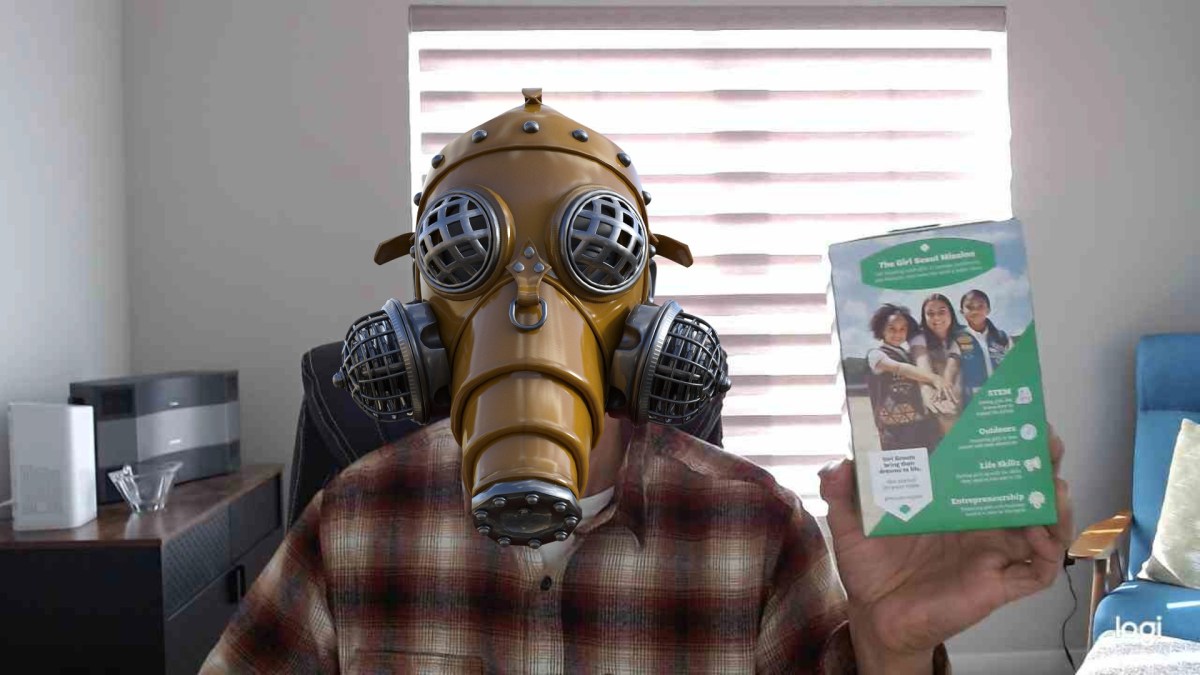
Girl Scout Cookies Are Safe!

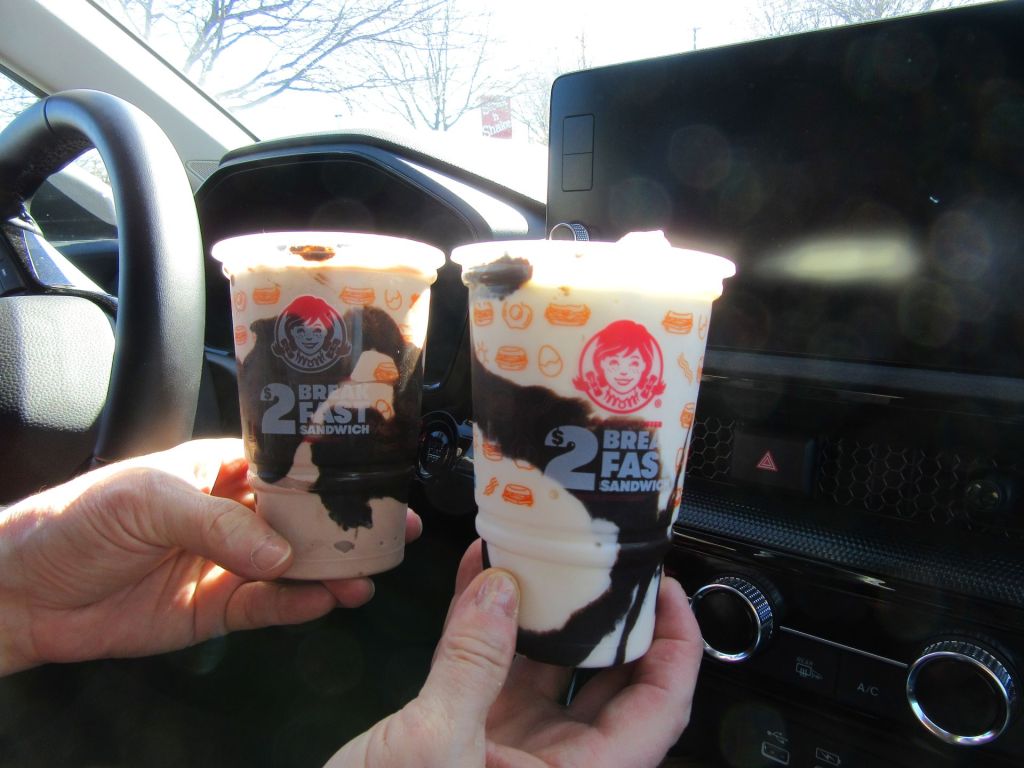
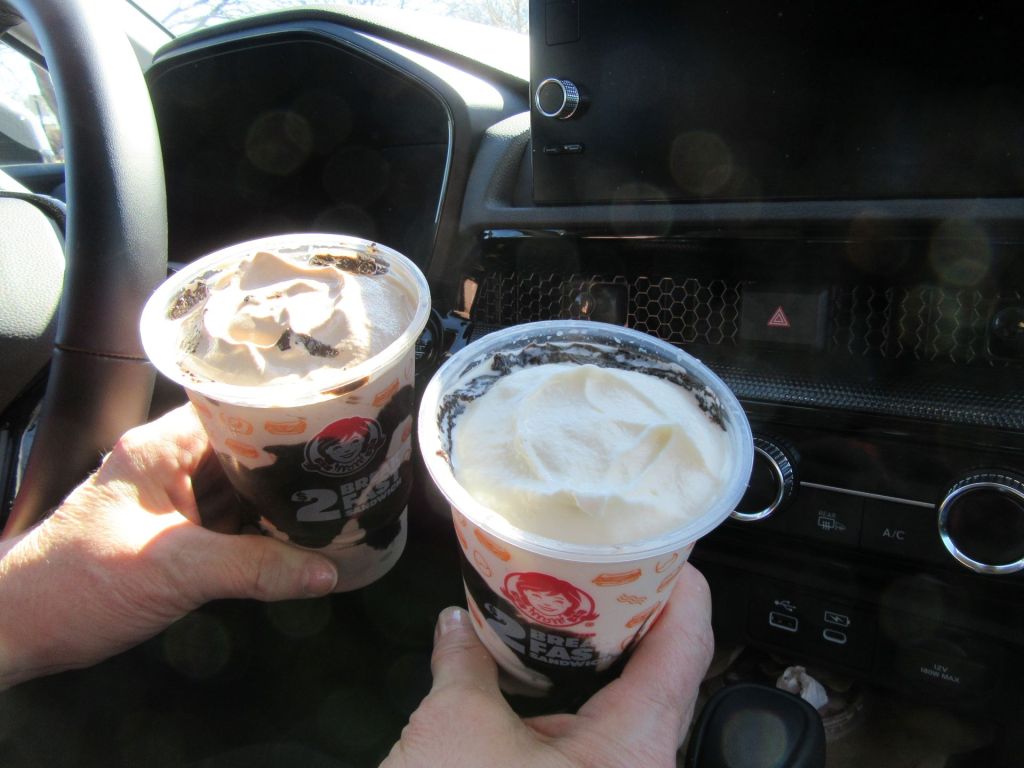
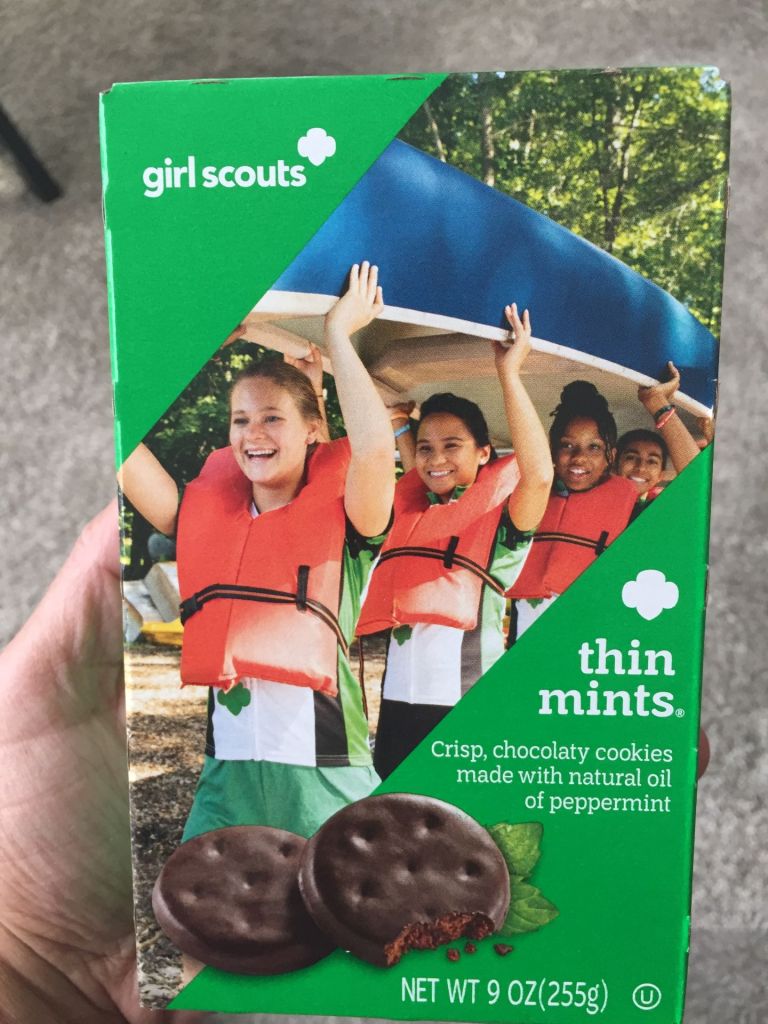
We were out the other day and tried the new Girl Scout Thin Mint Frosties. Sena got chocolate and I got vanilla. We thought they were delicious. Wendy’s partnered with Girl Scouts of the USA to serve them up and it’s a great idea. They’re swirled and topped with a mint-flavored cookie crumble sauce.

We heard that the Girl Scouts would be out selling their famous cookies the same day at booths outside different stores across Iowa including Iowa City, but we couldn’t find them that day. Maybe it was because it was a little cold to be standing outside in a booth. Interestingly today, the girl scout didn’t know this whole idea was a collaboration between Wendy’s and the Girl Scouts of America.

We finally found a website that posted a schedule of when and where the cookies would be selling.

The weird thing is just before Sena left to get some Thin Mints cookies, we found a news story on the web which raised an alarm about whether or not they are poisonous (they’re not), if you can imagine that. People have been buying Girl Scout cookies for years and I’ve never heard of any problems.

So, it occurred to me that even though we’re not employees of the federal government, we could find 5 things to say relevant to the Department of Gustatory Explorations (DOGE) as part of our frivolous investigation of this issue. I think I’ve got that department name right.

  1. It turns out there’s a group called Moms Across America which has partnered with an outfit called GMOScience and they’re calling out Girls Scout of America for selling cookies with “toxic” metals and glyphosate (an herbicide). In their own small, unpublished, non-peer reviewed study, they tested some cookies and found they all had some traces of these substances. They tested cookies including Thin Mints in 3 states which included Iowa.
  2. Snopes investigated and found a number of facts, one of which is that “a child would have to eat 9,000 cookies in a day to approach harmful levels of pesticide or naturally occurring metals.”
  3. The FDA says you can safely eat the Thin Mints and any of the other kinds of Girl Scout cookies. On the other hand, I will not eat cookies containing coconut because it has the consistency of little pieces of cellophane, which I would chew endlessly without ever being able to bring myself to swallow them. This is a personal idiosyncrasy that has nothing intrinsically to do with any food containing coconut.
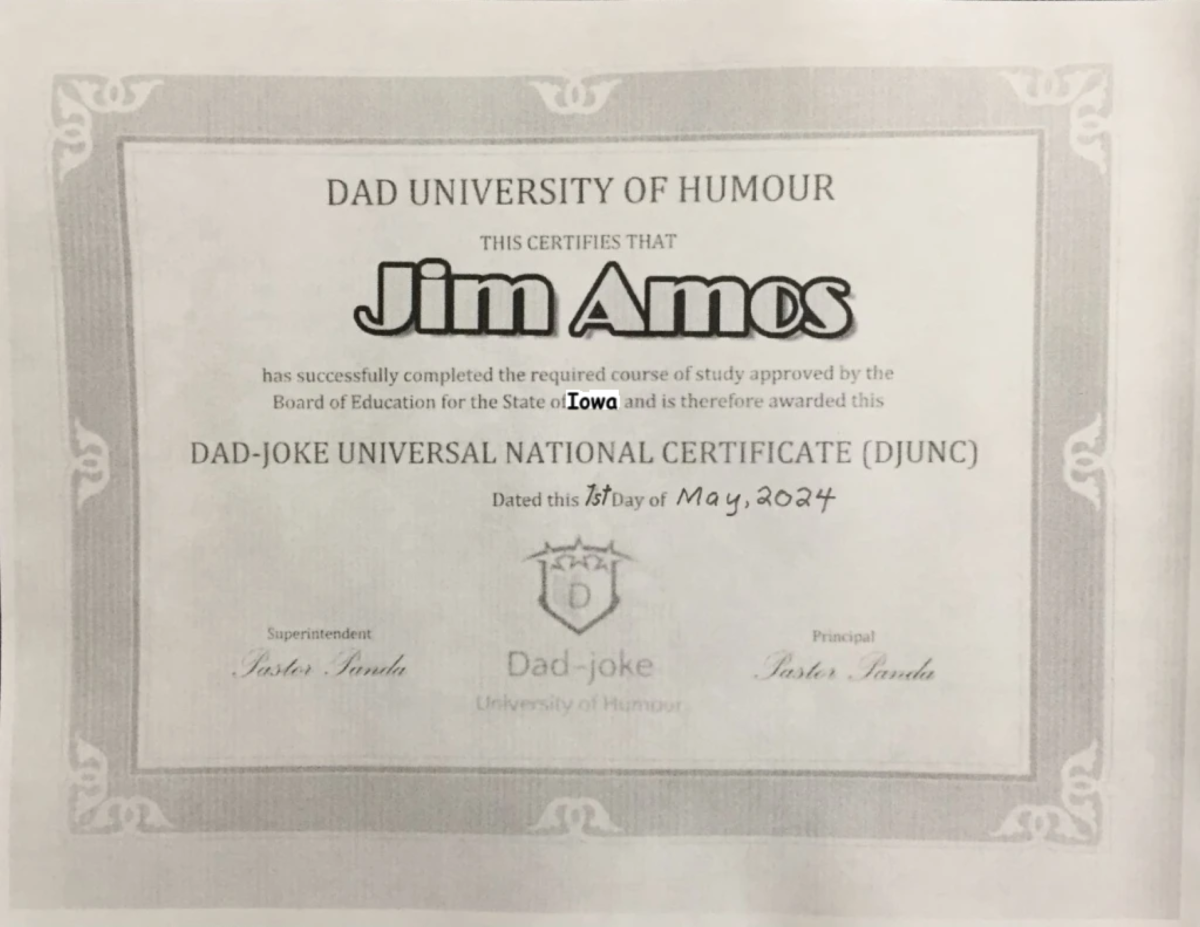
  4. Don Huber is a retired Purdue University professor of plant pathology who is part of the anti-GMO movement. He’s made many claims which have been criticized and refuted, even by Purdue University faculty members. One of them is that glyphosate causes a number of diseases including Alzheimer’s disease and he claims his ideas are supported by the research of a Maharishi movement expert in yogic flying. By the way there is a Maharishi International University (MIU) located in Fairfield, Iowa. You can learn transcendental meditation there and read about yogic flying (more like hopping) in an interesting 2016 NPR article but you won’t find anything in the curriculum per se on their website about levitation (but you will if you search for the term “yogic flying”). Consequently, you won’t learn dad jokes about this, including but not limited to “Help, I’ve levitated and I can’t get down!”
  5. The Girl Scout cookies and the Frosties taste great.

Well, I think that about wraps it up for DOGE.

The Pizza in a Bowl Enigma

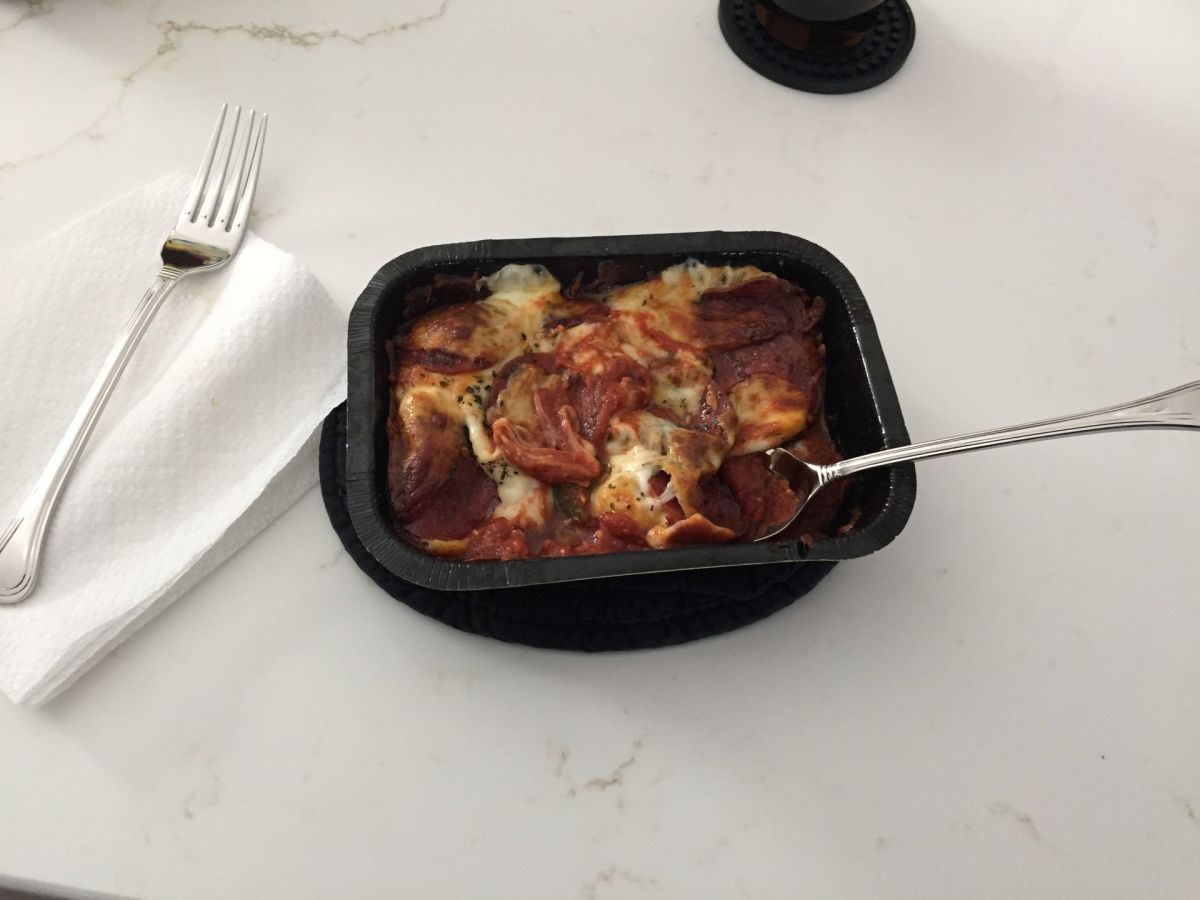
Sena got a couple of pizza bowls and it’s quite an experience. It might be one of the things extraterrestrials would not invent because they don’t have mouths big enough to eat anything but chick peas one at a time.

Don’t get me wrong. The pizza tastes great. Has anybody figured out how to eat them? The importance of crust for pizza doesn’t occur to you until you don’t have it.

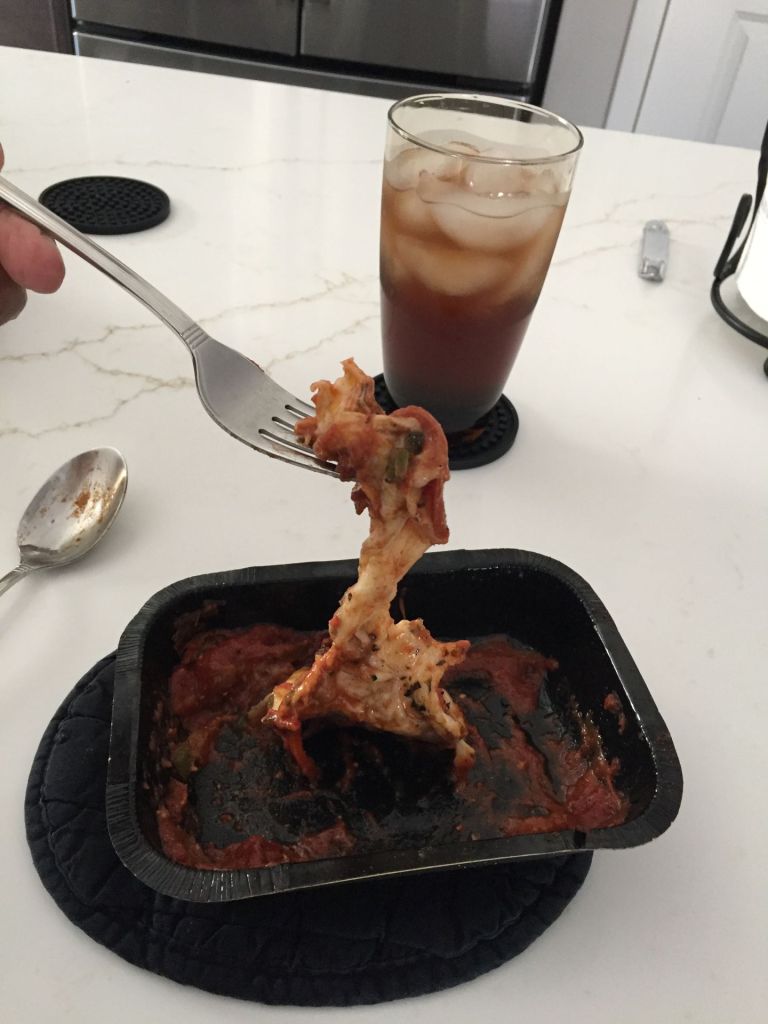
First of all (and second of all too for that matter), what is the etiquette required? How about the utensils? We tried eating them with spoons but then opted for forks. Adding a knife seems like overkill—until you find out how forks work.

You pick up the whole gooey mess and it gets all over your face. Have plenty of napkins ready, maybe even a wash cloth or a hose. I even use a knife and fork to eat pizza with a crust, which I admit some would call fastidious.

This reminds me of Pizza in a Cup. If you remember the movie “The Jerk,” which starred Steve Martin and Bernadette Peters, there’s the scene of them eating Pizza in a Cup. I can hardly believe that movie was released way back in 1979.

You can see that some of the comments below the YouTube indicate that not everybody believes the crust makes the pizza. Some even openly admit they purposely make pizza in a cup. And you can find recipes on the web for it. When I was in college, we went out for pizza with friends, one of whom blotted her pizza slice with a paper towel. I’ll bet she would have run away from pizza bowls.

Pizza in a bowl is in the same category as pizza in a cup—Foods That Puzzle You.

Bluebirds Fly on the Terry Trueblood Trail

We got out today on the Terry Trueblood Trail because it was sunny and 60 degrees. It felt like early spring, although Punxsutawney Phil put the kibosh on that.

The ice was giving way on Sand Lake. The birds were waking up and hungry. And I can’t remember the last time we saw bluebirds at all, let alone the many we saw out in the open grassland today.

It was the kind of day you forget what’s in the news and just celebrate the coming of spring. Just watch the bluebirds fly.