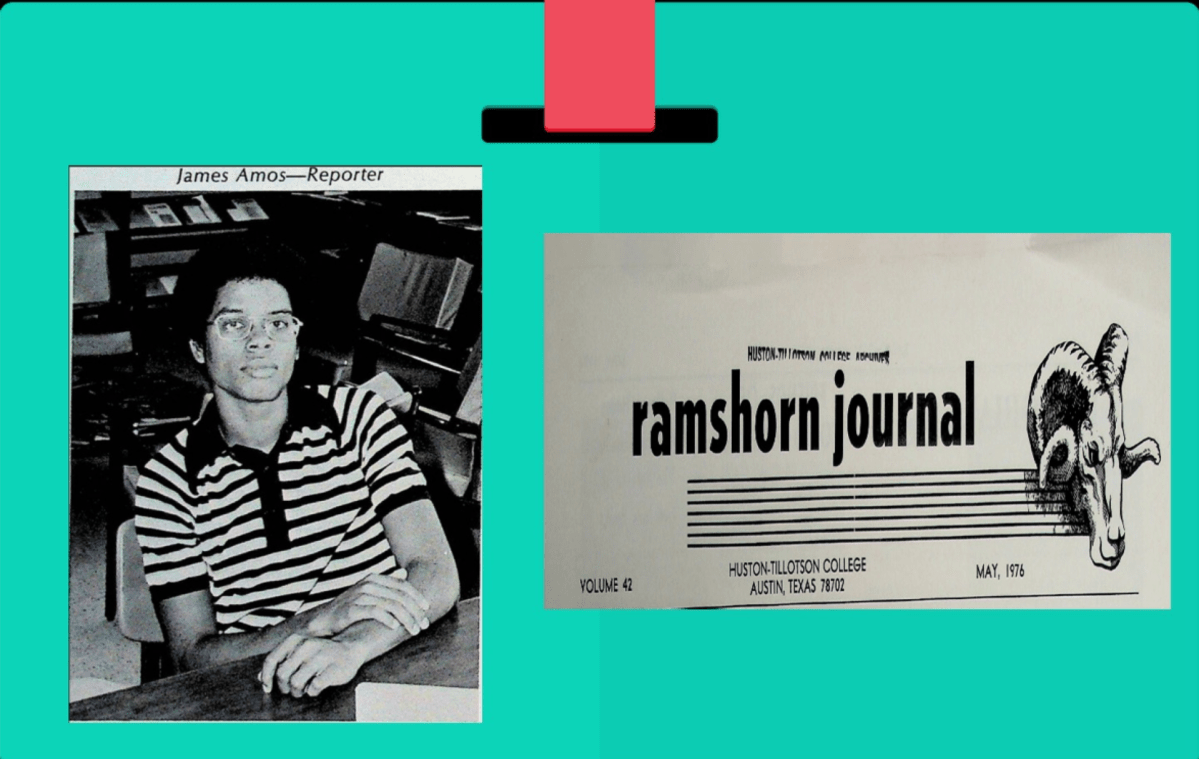
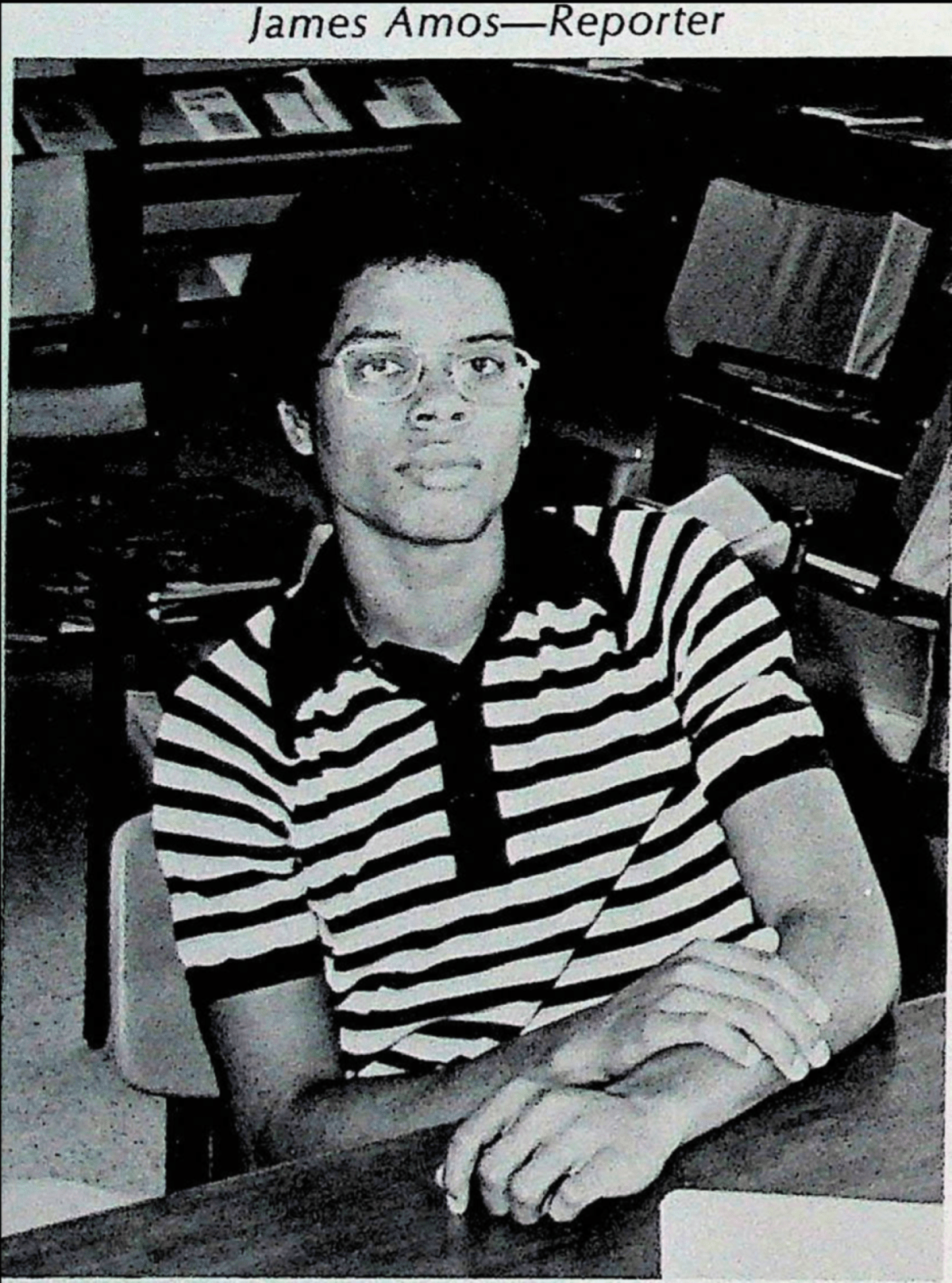
I feel like I should put on my Huston-Tillotson College (H-TC) news reporter press tag for this brief announcement, which you can get pretty much anywhere on the web anyway. Just a reminder, I was a reporter for the Ramshead Journal back in the 1970s for H-TC (now H-T University).
The breaking news is that the Moody Foundation recently gave H-TU a large gift of $150 million. It’s the largest gift to a single Historically Black College and University (HBCU) in history. Furthermore, the philanthropist MacKenzie Scott gave a $70 million gift to the United Negro College Fund recently to be divided among the 37 HBCUs. H-TU will also get a piece of that.
For more details about these donations, see the pbs story.
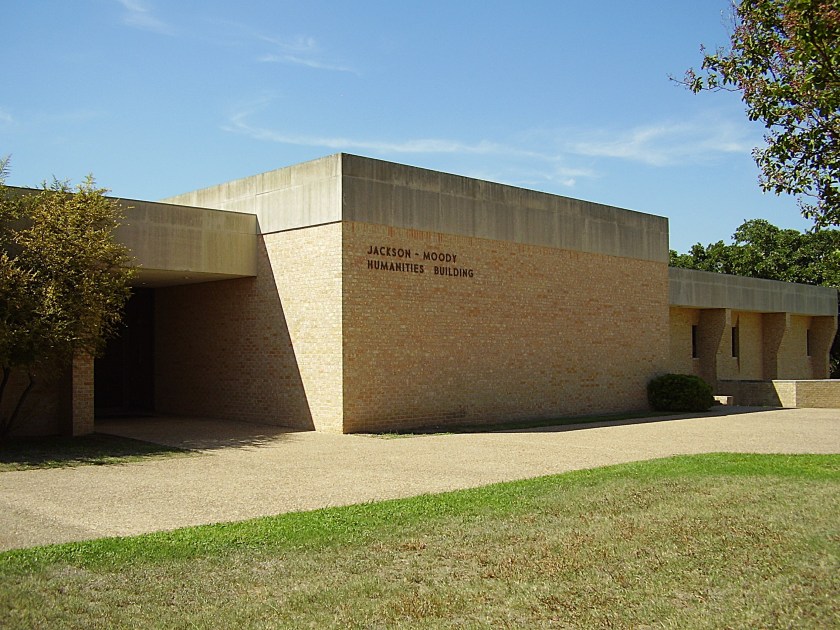
As an aside, the Jackson-Moody Humanities building on campus was named after the Moody Foundation, which covered the financial cost of construction. E.W. Jackson was a former trustee and donor. I took my English, Literature, and Spanish classes there.
picture is in the public domain
The other news is that H-TU rose in the National rankings and is now the #1 private HBCU in Texas for 2026.
A big congratulations to Huston-Tillotson University!
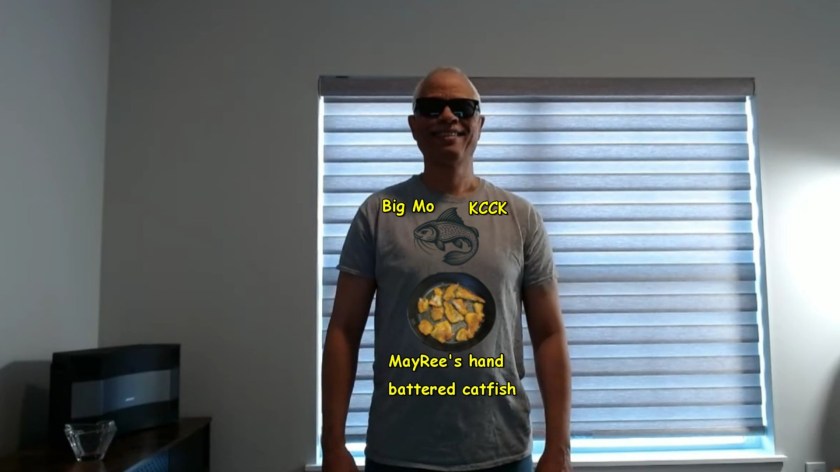
The Big Mo Pod Show title is about planting seeds in a metaphorical way. One of the seeds Big Mo sows is his comedy bit on MayRee’s hand-battered catfish. It’s just one of his hilarious faux sponsor routines that he frequently tweaks, and the subtle changes are difficult to catch if you don’t listen to his show every Friday night. It evolves, kind of like a shaggy dog story joke. My lame imitation from my crippled memory is below:
You see, MayRee’s hand-battered catfish is better because it’s battered, cooked to perfection with manic delight, packed with nitrates at her shack which you can find at the corner of Highway 6 and Snowflake Drive, and if you tip her and give her a wink, she’ll set you up with a mason jar of her famous kickin’ mule’ not sure if it’s all the way legal, but it comes in 3 flavors, Classic Clear, Golden Grabass, and just right for the holidays, Pumpkin Spice, that’s Mayree’s hand-battered catfish; it’s better because it’s battered.
You get the idea. I’m still trying to sell him on my design for a MayRee’s hand-battered catfish tee shirt. Don’t know why he’s not biting that hook. The catfish could be a fire truck red color, just sayin’.
So, the pod show title is “Planting Seeds” and that’s related to the idea of fundamental, historically important basic elements of blues music, specifically in the case of Jessie Mae Hemphill’s song “Jump, Baby, Jump.” Both Big Mo and Producer Noah agree that this example of North Mississippi hill country folk trance or hypnotic griot music (or grio, pronounced Gree-oh; a kind of West African traditional oral folklorist) which serves as the seed or basis for building on other layers (instrumental or otherwise). That’s just what I picked up from the internet.
Big Mo distinguishes this from “production” style music you hear a lot of nowadays on the radio and I get his disparaging tone about it.
Anyway, that’s the rich music history part of the pod show, which you can get by listening to KCCK on your radio dial at 88.3 or click on the Listen Now to hear by internet.
Now, what is also great about the show is Big Mo’s own historical perspective on music. That’s what you get by growing older. And that’s why my favorite song from last night from the Big Mo Blues Show was Curtis Salgado’s “The Longer That I Live.” I can identify with the lyrics.
How about some good news? This just in, University of Iowa Physician-Scientist, Dr. Michael Welsh, wins the 2025 Lasker Award for his research on cystic fibrosis.
His work and the work of two other researchers with whom he’ll share the award set the stage for the development of new drugs which saves the lives of those who suffer from cystic fibrosis.
I learned from the article that the cystic fibrosis gene was discovered in 1989; I was a second-year medical student then. Since then, the development of new treatments has meant that many people who died in early adulthood now can live into their 80s.
I think I found a pair of articles from the mid-1970s in the Huston-Tillotson College Ramshorn Journal that might have a connection to each other, even though the authors didn’t know it at the time.
One of them was written by yours truly and published in December of 1975, entitled “H-TC Sponsors Education Seminar.”
The other is a New York Times editorial from January 1976 which was reprinted in the May 1976 volume of the Ramshorn Journal and was written by Christopher F. Edley, a very successful lawyer and, at the time, the Executive Director of the United Negro College Fund.
Both were written about the same time, in the era of the civil rights struggles. I’m not comparing myself to the brilliant and accomplished Mr. Edley. And I’m just going to admit that I really don’t remember much about the trip to Houston for the Education Seminar about which I wrote my article, despite my being a participant. But I think it’s hard not to notice the language I used in my description of the importance of what the education seminar was all about. While much of the text is rather dry, when I discuss what was emphasized, I sound a little more intense. I may not remember much of what we specifically did and said but I caught the tone.
When I say the trip was not a guided tour, I mean that both faculty and students were serious about what the main message was for us—as black people. We had to measure up in a way that implied that we had to be better than best. That whole section starting with “Throughout the program, our people were reminded that any person who aspires to a position with any company must fulfill particular criteria.” It was as if I were saying we had to be perfect to make up for being black. We had to be the exemplars.
The individual must exhibit creativity, aggressiveness, ambition, self-confidence, initiative, dedication, maturity, and an ability and willingness to cooperate and effectively communicate with other people. The individual must punctual and reliable. Industry demands nothing less than high-gear performance. But they pay handsomely for that high-gear performance.
As I read this now, I get caught up on all the exhortations to be scrupulous, alert, and so on because, after all, we’re in a corporate jungle which is all about survival. I could have recast the last sentence above as “But they pay dearly for that high-gear performance”—which refers to the candidate, not the one doing the hiring.
I admit that how I wrote the story may reflect my reaction to rather than the reality of the emphasis of speakers at the seminar. But I did get the impression that I, as a black person, would be held to a higher standard than a white person. And I was uncomfortable about that.
When I turn to the New York Times article by Mr. Edley, I again am impressed with the struggle for fairness and justice, which didn’t seem forthcoming. He expressed the same sense of unfairness that I felt in Houston. The tone is almost one of outrage. He described the black people who were going to college in those days as most likely being the first ones in their families to go to college.
That’s what I was.
Mr. Edley was expressing frustration about blacks and browns just being able to get to the door of opportunity. I got the message that the struggle would go on forever—even if we got in the door. We didn’t just have to prove we were equal. We had to prove we were better.
Anyway, as I read the articles I wrote for the Ramshorn Journal 50 years ago, I begin to realize why I had no memory of having written them. It gradually becomes less strange that I still don’t really remember much of my time at Huston-Tillotson College, one of the historically black colleges and universities (HBCU) in America. But I needed that experience, even if I did pay dearly for it.
Click in the gallery; click on the picture, click the icon with an “i” in a circle, click view full size, click the plus sign to enlarge the image.
I’m thinking about the upcoming commemoration of the 24th Anniversary of the 9/11/2001 attack on America. There will be the annual event in New York City.
In Muscatine, Iowa, there will be the annual Patriot Day ceremonies sponsored by the City of Muscatine and the Muscatine Fire Department. After the morning ceremony, the Memorial Stair Climb will begin at 8:52 a.m. at the Muscatine High School football stadium bleachers.
The KCRG news reported on August 7, 2025 that 3 more World Trade Center victims were identified last month by DNA testing. The New York medical examiner’s office continues testing the remains recovered from the wreckage.
Like many people, I remember where I was and what I was doing when the attack happened in 2001. I was the general hospital psychiatric consultant on duty at the hospital at the time. I was hustling up the stairs back to my office after responding to a consultation request.
I happened to glance at the big television screen on the wall of the main floor lobby in the south part of the hospital. I watched in horror as a newscast showed the fire and smoke coming from one of the towers, which I later learned came from the plane crashing into the building. The rest of the day was full of reports of the attack.
When we visited New York City in 2017, we saw the Memorial & Museum Plaza as well as the Survivor Tree, the Callery Pear. It was discovered at Ground Zero, scarred and scorched but alive and replanted at the Memorial in 2010 after being nursed back to health at the city nursery. It is still alive and well today. It remains a symbol of strength, hope, and a reminder of our connection to each other.
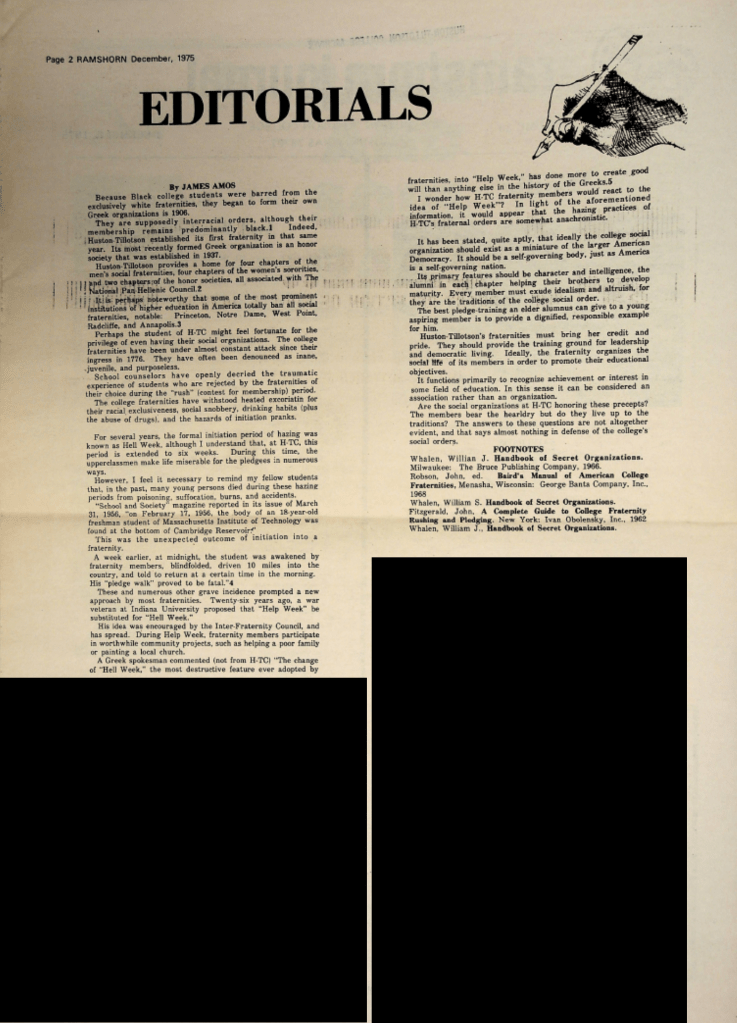
This is the 2nd editorial I wrote in 1975 about fraternities during my freshman year at Huston-Tillotson College (now Huston-Tillotson University, one of the Historically Black Colleges and Universities, HBCUs). There are a couple of misspelled words (“incidence” should be incidents; “altruish” should be altruism).
On the whole, it’s a more developed piece than the editorial about college hazing. I thought then and still think that Help Week should be substituted for Hell Week.
ramshorn journal vol 38, dec 1975 Click the image; Click the little icon circle with i; hover over the image and click the plus sign to enlarge.
Ramshorn Journal dec 1975another editorial on fraternity hazing
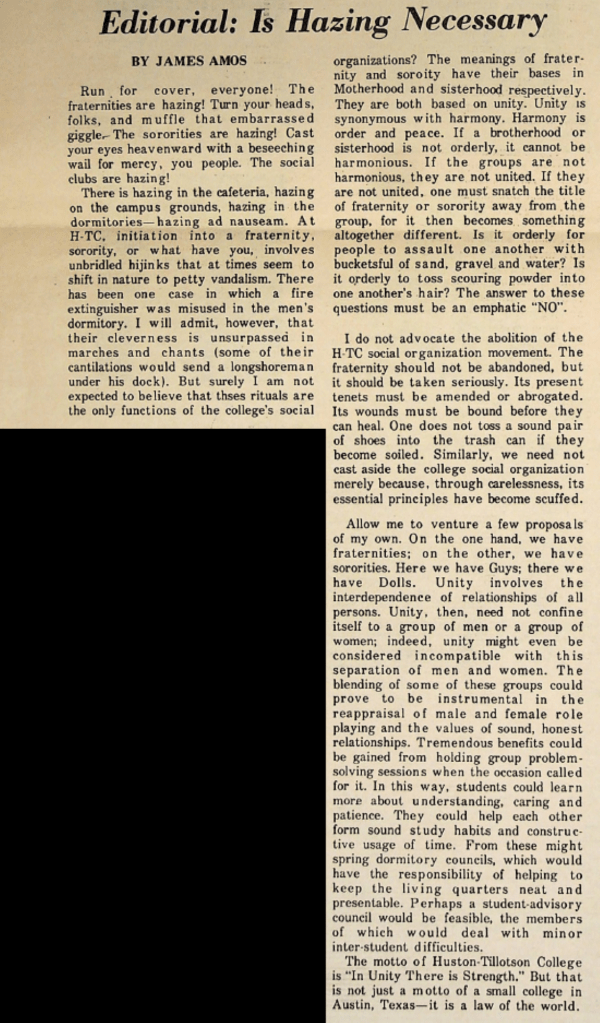
It turns out I was a news reporter for the Huston-Tillotson College Ramshorn Journal after all! I wrote a few of them, including an editorial about Greek fraternity hazing in 1975. I’m including it in this post below. It has an apparent typo in it (“Motherhood” should be brotherhood).
It’s typical for fired up freshman writing. I see lots of youthful idealism, energy, and a drive for change. How did I forget so much of what I was over the last 50 years?
I wrote “Is Hazing Necessary” (the question mark is missing) because I saw it going on in my freshman year. I can’t remember whether the fraternity members gave me flak about it or not. But I guess I can’t say it didn’t happen just because I can’t remember it.
Hazing still happens, as I found out when I did a quick web search today. I still don’t know why. Even The University of Iowa had an incident in November of 2024.
I don’t know how I lost such an important part of my past. And I don’t know what led me to recover it. I do know that if Sena hadn’t pursued the search after I was ready to forget it, I wouldn’t have these fragments of my personal history now. And I’m grateful to Huston-Tillotson Downs-Jones University Library for their help.
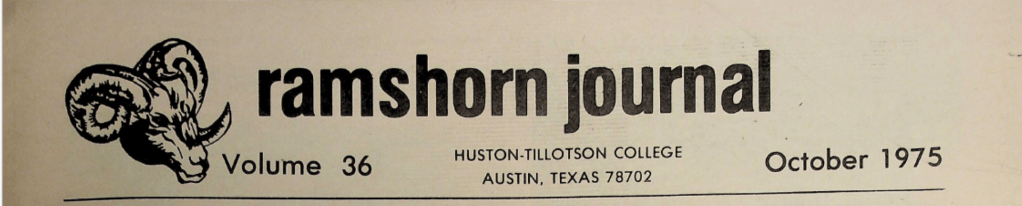
Ramshorn Journal Oct.1975 (page 4) Click the image; Click the little icon circle with i; hover over the image and click the plus sign to enlarge.
Sena played a couple of games of cribbage solitaire today and came within 8 points of making 121! And so that makes us both fans of this variation on cribbage.
There was a little project I set for myself given that DeLynn Colvert’s book, “Play Winning Cribbage” has a section called Cribbage World Publication, which is a monthly publication you can find on the American Cribbage Congress (ACC) website. Colvert was an editor of Cribbage World and included in his book copies of events and ads of interests to ACC members. Many items are odd and comical.
One of the interesting tidbits is an announcement that is historically important for cribbage in Iowa. However, none of the items including this one are dated. So, I had to hunt it down in the archives on the ACC website. The title is “Two 29’s Within 5 Minutes!” It refers to an event called the Hawkey Classic, which used to be the name for the annual cribbage tournament held in Des Moines, Iowa. Two 29 hands were scored within 5 minutes of each other during this tournament. This is remarkable because the odds of dealt a 29 hand are 1 in 216,580!
I had to dig through many pages of Cribbage World and Artificial Intelligence (AI) was no help at all (not that I asked it because AI intrudes itself on all my searches whether I want it’s help or not). In fact, it denied the existence of the Hawkeye Classic cribbage tournament.
Anyway, I had to make a guess about what issue of Cribbage World that announcement was published. I guessed that it was in the 1990s (for no particular reason) and I found it on page 3 in the June 1990 issue after striking out in the 1991-1993 issues (although I found one item related to cribbage solitaire which involved playing five hands instead of six).
It turns out that there’s been an annual cribbage tournament for over 40 years in Iowa and that tradition did start in Des Moines. It was called the Hawkeye Classic and was ACC sanctioned. However, my guess is that it gradually became absorbed into the Iowa State Fair schedule of events. It’s usually held on the last day of the fair. This year, I found out there were 252 entrants, which I think is probably not unusual.
Another interesting note about this issue of Cribbage World I noticed is that there isn’t a Hawkeye Classic cribbage tournament announcement listed in The Tournament Trail section. However, it does list the Grand National (National Awards Banquet) on September 20, 21, 23 in 1990 at the Hotel Fort Des Moines, Des Moines, Iowa. But I did find an announcement about the Hawkeye Classic in one of the earlier issues from 1991-1993.
I just played 3 games of cribbage solitaire that I posted about in the last couple of days. I got to 4th street in 2 of them and got to 115 in one. I think getting to 121 is at least possible. You have 6 deals to get there and you need over 20 points per deal to make it. Each game takes me about 10 minutes.
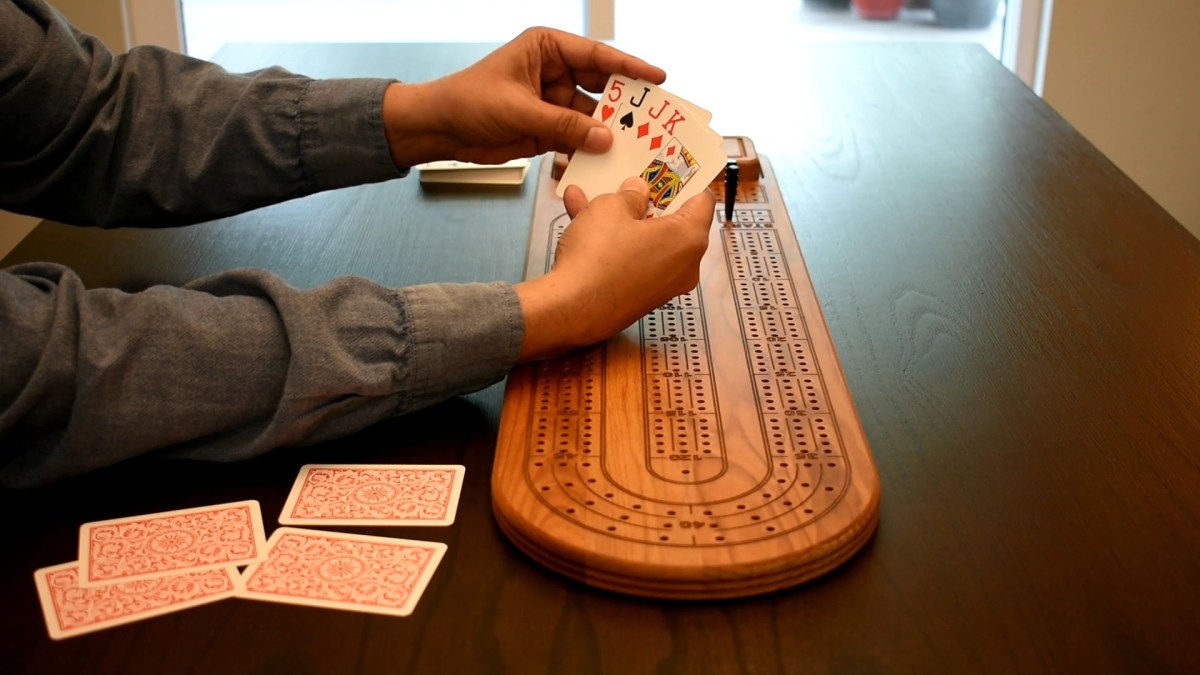
I haven’t seen any rules for this cribbage solitaire variation about looking at your cards or not as you deal them. I deal the hand cards face down as well as the first two crib cards face down. I look at the six cards in my hand from which I select the other two cards to throw to the crib. I only look at all four crib cards when I’m ready to count the crib points. I don’t know if anybody else does it differently. See my YouTube video demo for how I interpret the game play.
The only rules I’ve seen for this cribbage solitaire version are in DeLynn Colvert’s book (“Play Winning Cribbage, 5th edition, published in 2015) or were cited by someone on the boardgamegeekdotcom thread which dates to 2008 and they are virtually identical. Neither source identifies the inventor of the rules. I wonder if they would be in the original edition of Colvert’s book, which was first published in 1980. You can find a 1993 edition on eBay going for $150. There’s a 1985 edition advertised for $113. I can’t find anything on the Internet Archive about it.
The Svengoolie show last night was the 1957 Hammer production “The Curse of Frankenstein” starring the 3 stooges. Actually, this film was no laughing matter and this was my first time (and last time) seeing it.
That’s not saying it’s a “bad” movie. It’s just tough to come up with anything comical to say about a gothic horror flick that was inspired by Mary Shelley’s novel, “Frankenstein; or, The Modern Prometheus.”
I’ve not read Mary Shelley’s novel and I only skimmed the Encyclopedia Britannica entry. That’s good enough for an old guy pretending to be a movie reviewer.
What hooked me, though, early on the film was a short dialogue between Paul Krempe (Robert Urquhart) and Elizabeth Lavensa (Hazel Court). Paul describes Victor Frankenstein (Peter Cushing) in contemptible and scary terms, to which Elizabeth reacts by saying that Victor is either “wicked or insane.” Paul answers that Victor is neither—which struck me as odd.
I would have no trouble saying Victor is evil, but what do I know? On the other hand, I ran across a couple of web articles that mentioned “psychopath” as a suitable label for someone who thinks nothing of pushing an old man like the scientific scholar Professor Bernstein (Paul Hardtmuth) over a banister to kill him in order to dig his brain out of his skull to insert into a do-it-yourself hodgepodge of spare body parts in an experiment to create a living being.
Victor, from the time he first meets Paul, presents as an insufferable, entitled brat lacking a conscience and by the time he reaches adulthood he’s the perfect example of someone with the most creepily severe case of antisocial personality disorder (ASPD) imaginable.
He gets the housekeeper Justine (Valerie Gaunt) pregnant, tricks her into entering the laboratory where the monster (Christopher Lee) kills her, marries Elizabeth and then abandons her on their wedding night in order to cheat in a cribbage game with the monster.
He pretends to bury the monster in the woods after Paul kills it by shooting it in the eye with an AK-47—then sneaks back to dig it up, carry it back to the lab and reanimates the wreck. He proudly shows it off to Paul, who throws up on him. This makes no difference to Victor who is always smeared with dirt anyway because he hangs out in morgues, graveyards, and golf courses (“as he approaches this critical putt, somebody leaps out and cuts off his feet”), filching eyes, hands, Adams apples and what have you to assemble and repair the monster.
There are big differences between Shelley’s monster and Hammer’s creature—the latter doesn’t speak at all while the former is eloquent. Hammer’s creature can barely stand up or sit down on command while Shelley’s monster can do triple axels skating across the Arctic ice as Victor pursues him.
During the movie, my mind often wandered off to memories of Mel Brooks’ “Young Frankenstein.”












 Go Retire Psychiatrist