


I just want to send a link to Dr. George Dawson’s post The Phenomenological Suicide Assessment – The Legacy of Dr. H. It’s a great Christmas gift to teachers and learners everywhere. Happy holidays to George and everyone else.
Category: health care
See Me at the Neckademy Awards About This Neck Massager
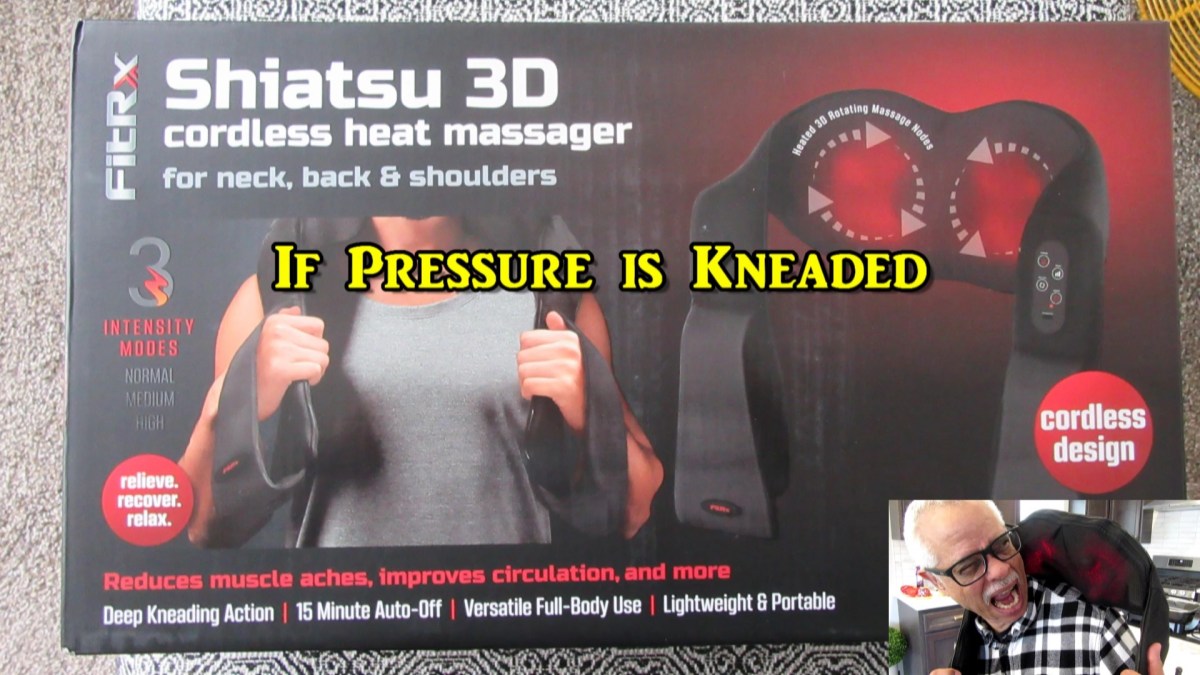
Sena bought some device for neck and shoulder massage called the Shiatsu cordless heat massager today. She tried it and then wanted me to try it. I’m not up for massagers of any kind, especially after seeing the extraterrestrial massage torturer I posted about early this month, “So, Is This Anything?”
She didn’t want it for various reasons. It doesn’t get warm enough, it’s difficult to hold on to it, and has this general weirdness that’s difficult to describe. That’s why I made a little video about it. Sena made me do it.
Thoughts on Comebacks

I watched the first half of the Colts vs 49ers game last night and I thought Philip Rivers didn’t look half bad for a 44-year-old guy who’s been out of the game for five years. Did you know he has 10 kids? OK, now that I’ve got that out of my system and that would be, what—the 44th time you’ve heard that since he took the field?
So what the Colts lost? His big family was up in the stands going crazy, cheering him on.
I read an article this morning which had Steve Young saying he could make a comeback at his age—which is 64. I couldn’t believe it. The same story mentions that George Blanda played for the Oakland Raiders when he was 48 back in 1975.
It got me wondering whether I could make a comeback as a general hospital consulting psychiatrist. Could I gallop up 6-8 floors of University of Iowa Health Care? You bet your bottom dollar—I couldn’t.
It’s hard to retire. Every once in a while, I miss hiking up and down the hospital with my camp stool, deftly swinging it around and sitting with the patients and families, telling medical students and residents all kinds of lies (I mean “wise old adages and pearls of clinical wisdom”).
I get a kick out of just wondering what it would be like. I get a vision of myself with a big, golden glowing aura of greatness around my head—until I come to my senses. Hey, nobody’s going to pay me a quarter million dollars to run the consult service for the few months I’d be able to limp around the hospital, falling off my camp stool when my legs go numb or the chair breaks.
It’s not like I can just throw a football like it’s nothing after 5 years. I’d have to prove I still have enough clinical smarts to figure out how to introduce myself (Hi! I’m Philip Rivers and you need to go long!”).
The Maintenance of Certification Circus is still a thing and it’s worse. I’m not saying doctors don’t undertake the arduous task of essentially retraining to be what they once were—because that’s not good enough anymore.
Last night, the camera caught Phil more than once being just as hard on himself as he was with other members of the team who weren’t in the right spot at the right time. Most physicians are perfectionists and if you’ve been out of the game for a while and you try to squeeze back in, you could wind up mumbling to yourself, “They don’t make footballs like they used to!”
I didn’t stay up for the second half of football game. It wasn’t because of anything Philip did or didn’t do on the field.
I just can’t stay up that late nowadays.
Big Mo Blues Show Christmas Music Featuring Peter Green

Last night was the second time John Heim (aka Big Mo) introduced the song “Silent Night” by Peter Green and the Men in Blue using the title in German, “Stille Nacht.” He also played it last Friday night, saying “Stille Nacht, Heilige Nacht” in what sounded like perfect German. I immediately liked this version.
I might be remembering this wrong, but when I was a kid, I think I somehow got assigned to sing “Silent Night” when I went out caroling (in a horse-drawn sleigh, no less!) with the members of our church. It’s a good thing smartphones weren’t around to record that.
I remember last week trying to find it on the Big Mo Blues Show playlist but I couldn’t. Then I tried to find it by searching the title in German. I forgot or didn’t hear the name of the band. I gave up looking for it and I wondered why he said the title in German.
So, after I heard it again last night and looked for it on the playlist, I found it right away on the web.
I have never heard of Peter Green, so I looked him up and found a Wikipedia article about him. His original name was Peter Allen Greenbaum. I found out that Greenbaum is a German surname (originally Grünbaum which means greenery or green tree. As an aside, Heim is also a German name. It means “home.” For many people (just listen to his Shout-Outs list!) the Big Mo Blues Show is home.
Those are just observations I find interesting and maybe point to a clue why Big Mo pronounced the title of the song “Silent Night” in German.
Anyway, the Wikipedia article doesn’t say anything about Peter Green’s ancestry. He was born in 1946 in London and died in his sleep at the age of 73 on Canvey Island, Essex.
He was a gifted blues rock guitarist and singer-songwriter and was founder and original leader of the band Fleetwood Mac. He was a very influential figure in the British blues movement. Some thought he was greater than the other often-mentioned blues guitarist, Eric Clapton.
Peter got some coaching early in life from his older brother but was essentially self-taught by the age of 11. In the mid to late 1960’s people were calling him “The Green God” which was similar to what many were calling Eric Clapton (“God’).
Around 1969(70) Peter started to develop signs of mental illness and during the 1970s he also used LSD several times. Eventually he was diagnosed with schizophrenia. Like other people who develop psychiatric illness, it was probably difficult to settle the chicken/egg question of which came first. He attributed much of his mental health issues to his use of LSD. He was hospitalized and treated with electroconvulsive therapy (ECT) in the mid-1970s.
However, by the 1980s, he returned to the music scene. He was inducted into the Rock and Roll Hall of Fame in 1998. He was described as being more interested in expressing emotion in music rather than displaying dazzling technical skill. He influenced many musicians.
Merry Christmas!

New Do it Yourself (more or less) Electrotherapy for Depression at Home!

OK, so the title is a little provocative; on the other hand, this is my take on a legitimate treatment for depression that was just approved by the FDA only last week. A company called Flow Neuroscience is marketing the newly approved FL-100 device for treatment of depression and their website definitely has their marketing skills down. And I definitely was reminded of a TV commercial about removing your own appendix.
That’s my smartass joke, but hang on, there’s more to it than jokes. I had to search around a while to find actual FDA web evidence that they actually did approve the FL-100, but I was saved by the reliable and trustworthy Psychiatric Times article about the FL-100 with references that I could verified the FDA’s approval.
So, I’m a retired psychiatrist and I was a clinician educator type doctor, not a neuroscientist, but I can read the FDA approval document section XV. Conclusions Drawn from Preclinical and Clinical Studies (starts on page 12). It boils down to, yeah, this device’s probable benefits outweigh its probable risks.
The Effectiveness Conclusions subsection on effectiveness outcomes at Week 10 contains what sounds like realistic answers: “The medical literature lacks consensus regarding what constitutes a clinically significant or meaningful between-group difference in HDRS-17 scores. As such, the clinical significance or meaningfulness of the between-group difference of -2.3 points on the HDRS-17 scale has not been established. Nevertheless, the 2.3 point between-group difference helps support the view that FL-100 provides probable benefit.”
I’m not familiar with the EQ-5D-3L scale of health-related quality of life but the summary says:
“The EQ-5D-3L measures a person’s health-related quality of life by assessing five dimensions: mobility, self-care, usual activities, pain/discomfort, and anxiety/depression. There was no between-group statistical difference in EQ5D-3L scores at Week 10. The EQ-5D-3L frequently fails to detect mild depressive symptoms, as individuals with subclinical depression often select “no problems” on the anxiety/depression dimension. The insensitivity of EQ-5D-3L is documented in the literature.”
I happen to think that comparison of medical treatments with psychotherapy is a good idea but: “Data were not provided regarding FL-100 used adjunctively with psychotherapy or with psychotherapy and antidepressants.”
The device has no recommendation for use with patients with treatment-resistant depression:
“Patients who previously had an inadequate clinical response to two or more antidepressants at an adequate dose and duration were excluded from the study, limiting the evidence for use of the FL-100 in a more treatment resistant population.”
The potential risks are first degree skin burns if you’re not careful with the electrodes, headaches, and scalp pain. The benefit is modest but outweighs the risk.
You can use the device at home under the supervision of a clinician—they don’t do house calls so you’d presumably do this by zoom call. You can also get advice through an app on your device, which may or may not be a monotonal AI. You pay $500-800 and there won’t be any answers to questions about insurance coverage until at least next spring. But it’s being used by tens of thousands of people in Europe and beyond.
So go ahead, take your own appendix out (just kidding; put that jack knife away!). Did you know that at least one guy actually did that? A Russian surgeon, Dr. Leonid Rogozov managed it in 1961 while he was stranded in Antarctica.
It’s just my opinion, but the headset could be more stylish.
Tango Boxing a New Hybrid Sport?

Here’s how I got off on a tangent about Tango Boxing, which honestly did sound like a hybrid sport combining dancing the Tango and boxing, you know, like chess boxing, in a ring with gloves and sustaining head injuries and dancing the Tango. I was amazed when I at first misread something in an article in Medical News Today about how to live to be 100 after age 80.
In the article some fitness person actually said: “From tango to boxing and everything in between….” I read it too quickly and thought she said “From tango boxing and everything in between.” You’re not going to give me a hard time about misreading that are you? It could happen to anybody, no matter how old you are.
Anyway, it set me down the rabbit hole and I even managed to confuse the AI assistant Gemini (give me a break, I never ask for this joker to help me; it just pokes its nose into all my internet searches) yet here’s what it said on one of my searches for Tango Boxing (my question was “is tango boxing about a combination of boxing and dancing the tango?”):
“Yes, “tango boxing” is a form of fitness class or exercise that combines elements from both tango dancing and boxing techniques.
It is not a traditional martial art or a specific, established combat sport. Instead, it is a workout designed to provide a low-impact, full-body fitness experience, leveraging the unique aspects of each discipline for exercise and well-being.
Key Aspects of Tango Boxing
- Combination Workout: It blends the core elements of boxing (punches, jabs, crosses, hooks) with basic tango dance movements (box steps, pivots, coordination drills).
- Focus on Fitness: The primary goals are to improve physical fitness, including cardiovascular endurance, strength, flexibility, balance, and coordination.
- Rhythm and Timing: Both boxing and tango require a strong sense of rhythm and timing, and the workout emphasizes developing these skills for effective movement and body control.
- Mind-Body Connection: The class format is designed to engage both the body and mind, as learning the routines and movements requires focus and quick thinking.
- Improvisation and Expression: Much like traditional tango and individual boxing styles, the fitness class allows for personal expression and improvisation within a structured format.
This type of class, sometimes marketed as “Tango Fitness,” is a creative way to stay active and healthy, offering a unique alternative to standard gym routines.”
That’s the danger of AI and it could not be clearer why it’s answers should not be appearing at the top of any web search result. And you can’t turn it off.
Here all I was doing was chasing down my mistake and you see how easily AI gets misled. Some would call this an example of an AI “hallucination” although I prefer to think of it as confabulation.
I found out later that the Tango involves doing something called a “box step.” Those of you who know the Tango know what I’m talking about, even if I and AI don’t. Actually, let me correct that; AI could describe the Tango box step, which involves a dance pattern that forms a square on the floor.
So far am I OK? There’s no such hybrid sport as Tango Boxing? On the other hand, who can forget Muhammad Ali dancing around his opponents in the ring? He actually did sort of dance.
When all is said and done, the main point is how to live to be 100 years old and still be cool, strong, graceful, and joyful.
What’s the Skinny on a Vaccine that Might Prevent or Slow Down Dementia?

You don’t want to just take my word for it but there seems to be conflicting messages on a live, attenuated shingles vaccine called Zostavax.
One message is that “the live, attenuated herpes zoster (HZ; shingles) vaccine” might prevent or slow down dementia, especially in women according to a study in Wales and Australia. The article doesn’t mention the name Zostavax (the trade name for the live, attenuated herpes zoster vaccine), which according to a Wikipedia article was “discontinued in the U.S. in November of 2020.”
The other message is that partly because of several lawsuits against Merck (the manufacturer, which faced a lot of Zostavax lawsuits) regarding possible severe, potentially life-threatening side effects alleged to be associated with it, production and marketing of the vaccine was discontinued in the United States as of 2020. The other reason was that Shingrix, a recombinant form of the vaccine, was developed.
Shingrix is said to be superior to Zostavax, although it is also associated with some side effects.
I don’t know why I don’t find any FDA or CDC notifications that Zostavax is no longer available in the United States. Both agencies have archived approval notices still on their websites.
CIDRAP doesn’t mention that residents of the U.S. can longer get Zostavax (in other words, the live attenuated vaccine against shingles) as of 2020.
One of the problems I find with web-based information is that some of the entries can be confusing. I found several articles on line from law firms including one which posted a report on November 14, 2024 that two Black Box Warnings were published by the FDA about Zostavax. I could find only one safety warning on the FDA website (not labeled as “Black Box”) and it was about the new recombinant vaccine, Shingrix. It’s been associated with Guillain Barre Syndrome (GBS) and it’s dated March 24, 2021—a year after Zostavax was removed from the market in the U.S.
OK, as an old retired doctor, my bottom line on this issue of live, attenuated herpes zoster vaccine being touted as an agent that could delay or prevent dementia is that it would be a lot more helpful to me as a consumer to know the whole story about the product. It might be scientifically interesting but it’s moot because the product is not even available in this country and for good reason. And even if it were, would the potential risk and benefit assessment be favorable to recommend its use? And how does this affect the ongoing disagreement dividing the country about the safety and effectiveness of vaccines? Only about 20% of Iowans are even getting the flu shot this season so far.
One thing people could do which might slow down some of the cognitive impairment is to take up the game of cribbage. As far as I know, it has almost no detrimental side effects unless you insist on playing the muggins rule.
So, Is This Anything?
We used to watch David Letterman a long time ago and he had this sketch called “Is this Anything?” I can’t remember any specific example but I thought I recognized a YouTube of one segment that was originally aired years ago.
I was reminded of the “Is This Anything” sketch when Sena showed me this video of a thing called a Bionic Neck and Shoulder Massager. It looks like something out of a Svengoolie movie; a headless set of fingers. People strap it to their necks and then look like they’re being strangled by an extraterrestrial.
I thought I saw red marks on the person’s skin when the device was removed. I’m sure some people swear by their effectiveness for relaxing tight neck muscles. On the other hand, they look creepy to me.
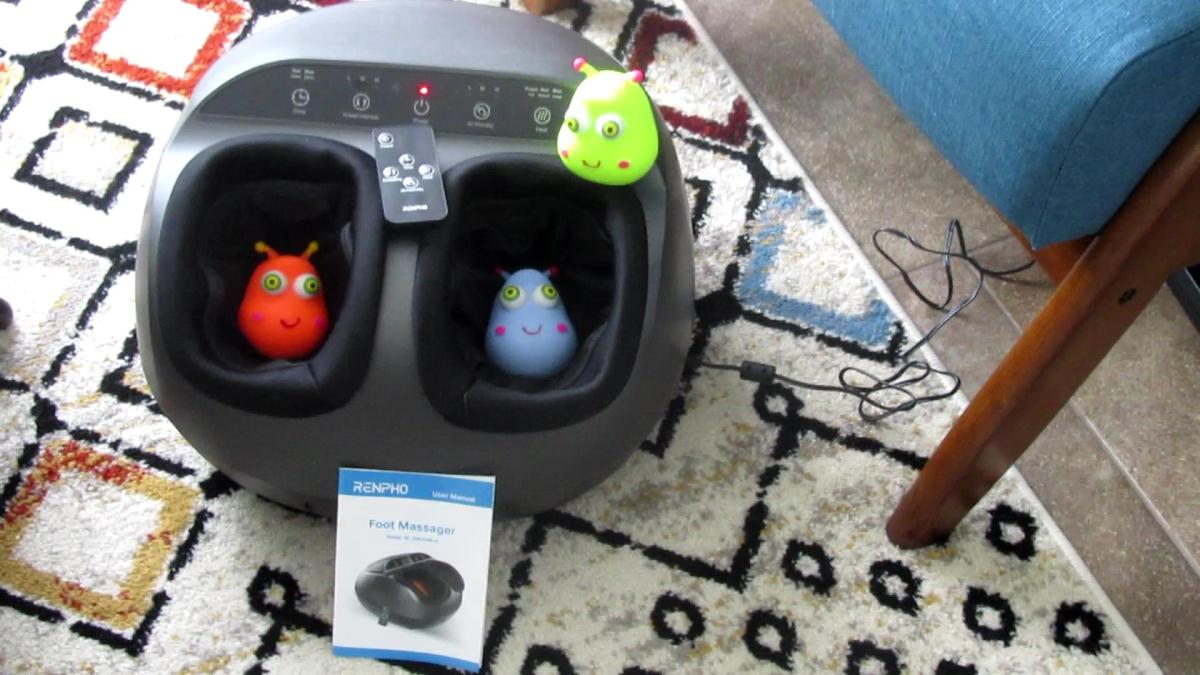
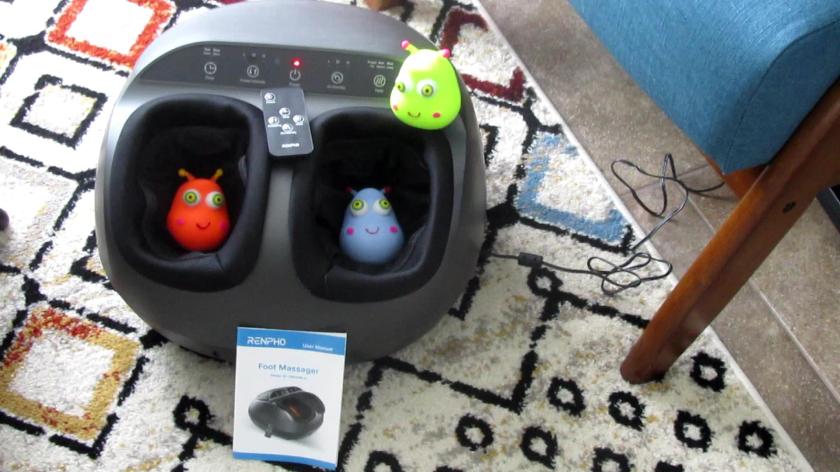
It reminded me of a foot massager we got 3 years ago. You stuck your feet in it and it massaged your feet. It was kind of creepy.
Cannabinoid Hyperemesis Syndrome in the News Lately

I’ve seen a few articles about Cannabinoid Hyperemesis Syndrome (CHS) and because my funny bone is sensitive to provocative titles, I first read the one with the title that starts off with “I still partly think this is bullshit…” My reference list resulting from a quick search is below.
Of course, I don’t think CHS is “bullshit” (quote from an emergency room patient in the Collins et al paper). I agree it’s hard to diagnose and the news media tends to sensationalize it by promoting popular terminology like “scromiting,” which my spell checker doesn’t recognize. This is a vogue portmanteau word combining screaming and vomiting. It makes me wonder why someone didn’t try harder to come up with a portmanteau that might be more descriptive of the complex triad of vomiting, belly aches, hot baths, and screaming. Why not barfinbawlinbellyachinbathingbadness?
But it’s not funny and attempts to attach funny words like scromiting to the condition by the press (or whoever) is misguided.
I found one systematic review and treatment algorithm (Hsu et al) written to guide consultation-liaison psychiatrists who are likely to get called when CHS patients are admitted to emergency departments. However, I think the place to start would be the StatPearls review by Cue et al. One thing I found out from that paper is that the interesting ACCENT study ((Achieving Cannabis Cessation: Evaluating N-Acetylcysteine Treatment) the authors cite does not yet have results available, although it was started way back in 2014.
Just a couple of comments about the treatment algorithm by Hsu et al: haloperidol can cause dystonic reactions and akathisia as well as cardiac conduction problems like QTc prolongation and more. One episode of neck dystonia or akathisia or both can lead to mistrust of physicians who administer the causative agents, especially if there were no explanations of side effects as well as potential benefits. Benzodiazepines, while they may work, may also lead to some patients with substance use disorders becoming attached to them. Less commonly, patients with somatoform, factitious, or eating disorders will complicate the diagnostic picture.
Reference List:
Alexandra B. Collins, Francesca L. Beaudoin, Jane Metrik, Rachel S. Wightman,
“I still partly think this is bullshit”: A qualitative analysis of cannabinoid hyperemesis syndrome perceptions among people with chronic cannabis use and cyclic vomiting,
Drug and Alcohol Dependence,
Volume 246,
2023,
109853,
ISSN 0376-8716,
(https://www.sciencedirect.com/science/article/pii/S0376871623000911)
Abstract: Background
Cannabis is the most widely used psychoactive substance in the United States (US), with reported use patterns increasing among adults in recent years. Cannabinoid hyperemesis syndrome (CHS) has been one concern related to increased cannabis use patterns. US emergency departments have reported an increase of CHS cases over the last decade, yet little is known about CHS. This study explores the experiences of people with chronic cannabis use and cyclic vomiting and their perceptions of CHS.
Methods
Semi-structured interviews were conducted with 24 people recruited from a prospective cohort of patients presenting to Rhode Island emergency departments with symptomatic cyclic vomiting and chronic cannabis use. Data were analyzed thematically using NVivo.
Findings
Participants characterized their cyclic vomiting as related to food and alcohol consumption patterns, stress, and existing gastrointestinal issues. Despite recurrent episodes of cyclic vomiting, nausea, and abdominal pain, many participants remained uncertain whether their symptoms were driven by cannabis. Many participants relied on at-home research to assess their symptoms and seek out management approaches. Clinical treatment recommendations focused on cannabis cessation. However, most participants felt clinical recommendations failed to consider the complexity and challenge of stopping cannabis use given the chronicity of use and therapeutic benefits some perceived cannabis to have.
Conclusions
Although cannabis cessation is the only reported CHS cure to date, additional clinical and non-clinical treatment approaches are needed to better support people with chronic cannabis use and cyclic vomiting to meet their ongoing needs.
Keywords: Cannabinoid hyperemesis syndrome; Cyclic vomiting; Cannabis use; Qualitative
Cue L, Chu F, Cascella M. Cannabinoid Hyperemesis Syndrome. [Updated 2023 Jul 3]. In: StatPearls [Internet]. Treasure Island (FL): StatPearls Publishing; 2025 Jan-. Available from: https://www.ncbi.nlm.nih.gov/books/NBK549915/
Jennifer Hsu, Saurabh Kashyap, Cheryl Hurd, Lauren McCormack, Zachary Herrmann, Ann C. Schwartz, Joshua Jackson, Dustin DeMoss,
Treatment of cannabinoid hyperemesis syndrome: A systematic review and treatment algorithm for consultation-liaison psychiatrists,
General Hospital Psychiatry,
Volume 97,
2025,
Pages 185-191,
ISSN 0163-8343,
(https://www.sciencedirect.com/science/article/pii/S0163834325002038)
Abstract: Background
Cannabinoid Hyperemesis Syndrome (CHS) is a cyclical vomiting syndrome associated with chronic cannabis use and is often resistant to anti-emetics. Despite increasing incidence of suspected CHS, literature regarding its treatment is limited, and there are no established treatment guidelines.
Objectives
With the goal of establishing treatment guidelines for consultation-liaison (C-L) psychiatrists managing CHS, the authors systematically reviewed existing literature for pharmacologic treatment strategies using Preferred Reporting Items for Systematic reviews and Meta-Analyses (PRISMA) guidelines. With the results of the review, the authors propose a treatment algorithm for CHS.
Methods
We searched PubMed, PyschINFO & PsychARTICLES, Embase, and Web of Science from inception to July 2021 to identify literature describing treatment of CHS. We included cases of CHS where patient-level data describing the treatment of CHS was available. Pharmacologic treatments were considered beneficial if the patient’s nausea, hyperemesis, and urge to take hot showers resolved. Non-independent review of exclusion criteria assisted in reducing individual bias of the literature.
Results
The authors identified 34 eligible articles, consisting of 63 individual cases. Among these articles and cases, capsaicin cream, antipsychotics, and benzodiazepines were reported to improve CHS more effectively than other, more frequently used anti-emetics, such as promethazine, ondansetron, and metoclopramide.
Conclusion
An examination of treatment strategies for CHS can allow for more effective care while providing a foundation for further research in treatment. This proposed algorithm is designed to aid in establishing treatment strategies for C-L psychiatrists who assist with managing CHS for patients in general medical settings. The goal of this research is to establish evidence-based treatment guidelines for C-L psychiatrists who are managing patients with CHS in general medical settings. Recognizing the limitations of this algorithm being based on case reports adds to the necessity of further research in this area.
Registration
PROSPERO (https://www.crd.york.ac.uk/PROSPERO/view/CRD42021254888) registration number CRD42021254888.
Keywords: Cannabinoid hyperemesis syndrome; Treatment strategies; Systematic review; Pharmacologic treatment
Loganathan, P.; Gajendran, M.; Goyal, H. A Comprehensive Review and Update on Cannabis Hyperemesis Syndrome. Pharmaceuticals 2024, 17, 1549. https://doi.org/10.3390/ph17111549
 Go Retire Psychiatrist