The Best Cribbage Song You Never Heard Of

I was looking for fun cribbage facts the past few days and while I couldn’t find any good cribbage jokes, I did find an interesting song about cribbage called “One for His Nob (The Cribbage Song.” It was done by a British artist, Richard Thompson. It’s included with another song by him entitled “Meet on the Ledge.” See the credit below and in the YouTube video description.

ADDENDUM 7/16/2025: The video below for the song “One for his nob” has vanished, unfortunately. I found another one called “The Crib Song” by Brett Kessler. You can find out more on my post from 7/16/2025 “Whoops, The One for his nob Cribbage Song Vanished.”

Anyway, the song “One for his Nob” is full of references to cribbage lingo, a lot of which is hard to catch because the tune is so fast. One of the terms is “19 in the box,” which refers to a score of zero in what American cribbage players call the “crib.” A no score in cribbage is often called 19 because that score is impossible. The term “one for his nob” is also standard cribbage lingo for holding the Jack of the same suit as the cut card.

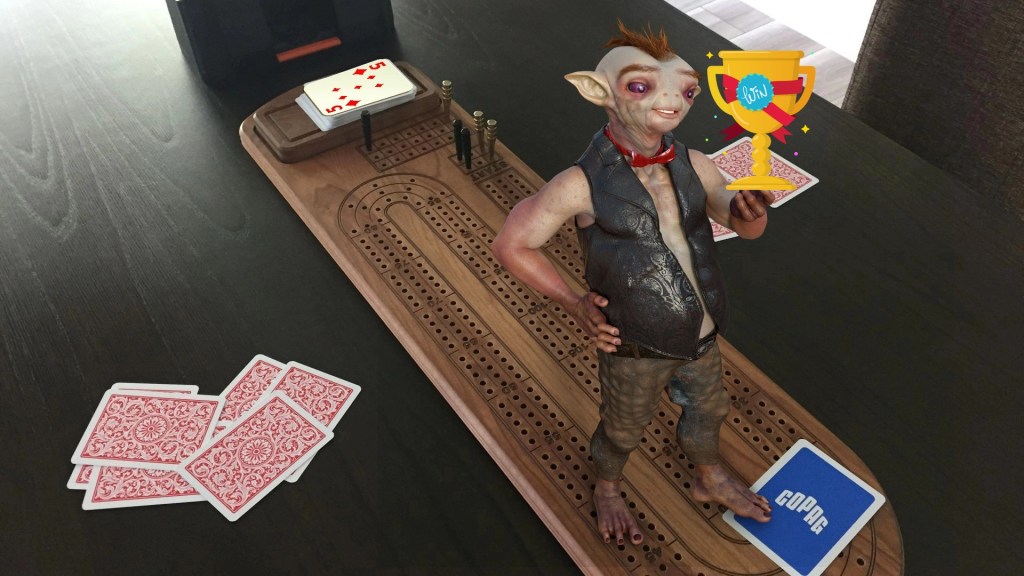
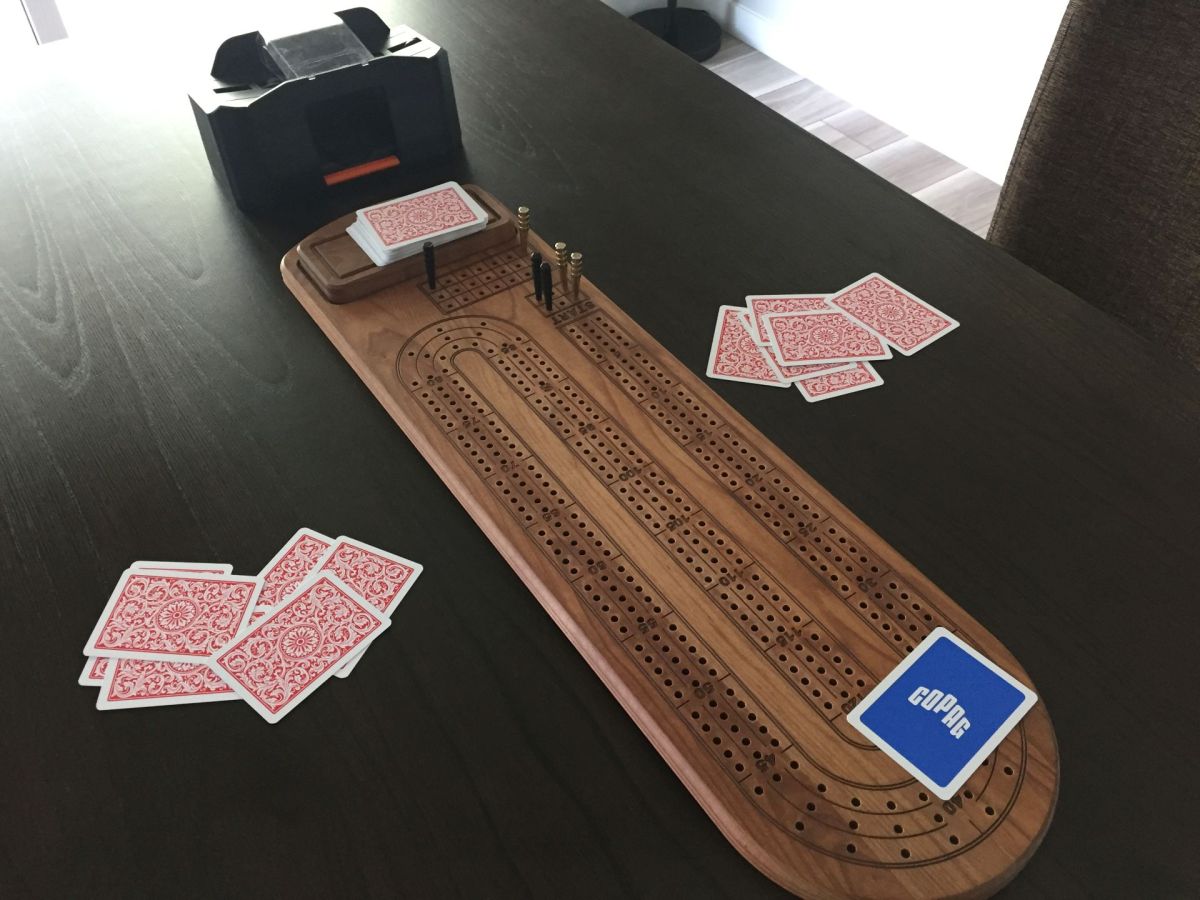
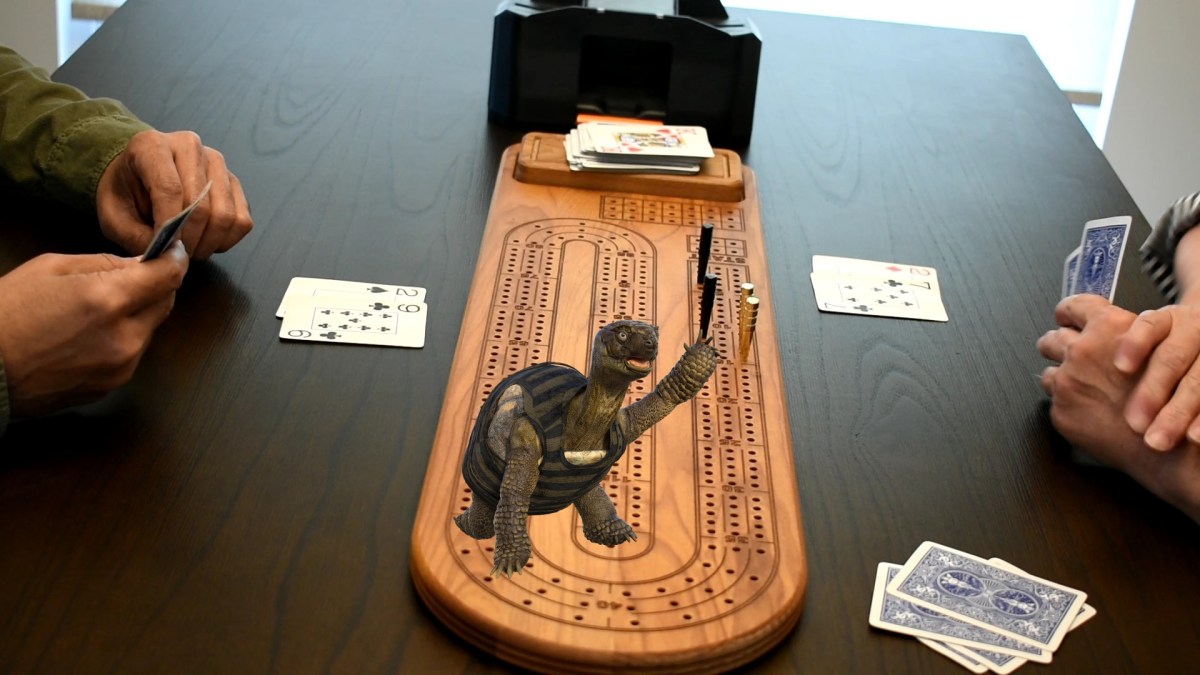
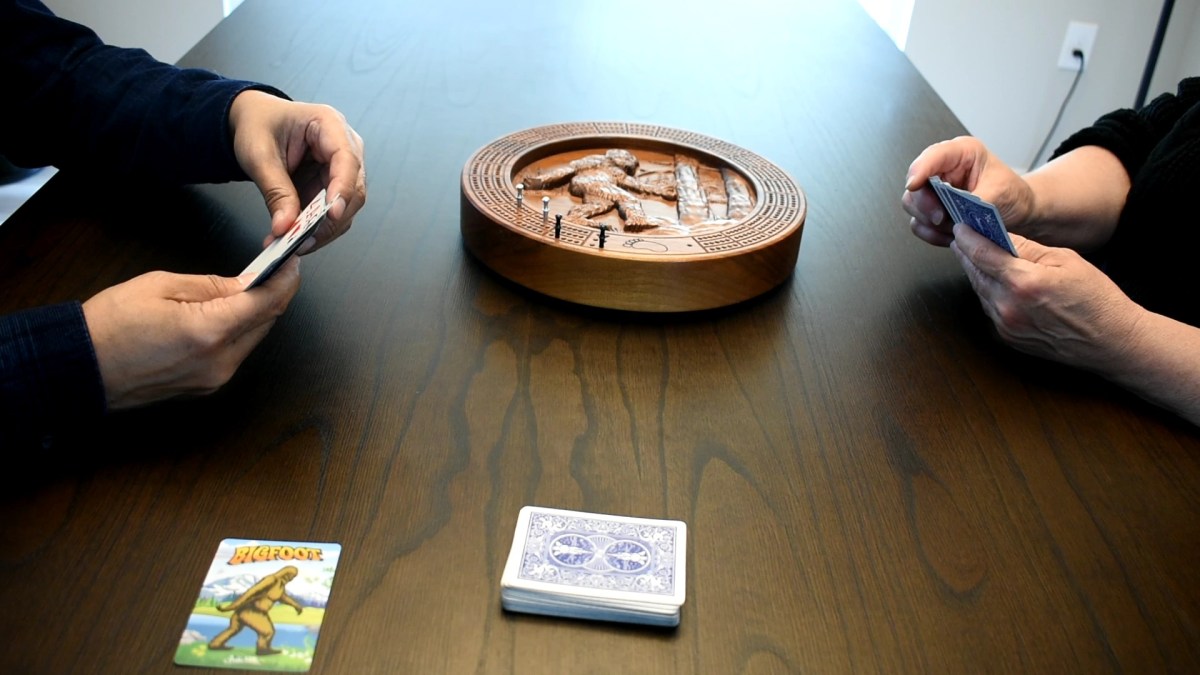
Sena and I thought it would be fun to record a video of us playing cribbage so we could play it back along with Thompson’s song. The thing is I had to speed up the video because it took us a little over 10 minutes to play a cribbage game just to 60 instead of 120. It felt frenetic, but it fits the song a little better because the song is 2 min and 44 seconds long.

If you play the YouTube vide of “One for His Nob” just right and watch our speeded-up video of us playing cribbage, it’s funny. In fact, it just so happened that Sena scored a point twice in the game because she got the nob Jack in two separate hands.

I’ve included the regular speed video of our cribbage game for comparison.

“One for His Nob” is a song about cribbage recorded by British singer-song writer Richard Thompson. It was published by Avon Records and released on July 1, 2015.

Super Bowl Commercial “Mean Joe Frank” 2025 Looked Familiar!

We watched the Super Bowl last night and one of the many commercials (always a big thing) looked vaguely familiar only after Sena pointed it out. It was the Fareway Frank commercial about Fareway stores. It was a reprise of the famous 1979 Coca-Cola commercial with Mean Joe Green, defensive tackle for the Pittsburg Steelers and a kid. When you compare them, the similarities are obvious. There are two Fareway commercials that are the same, but have different titles, one of them being “Mean Joe Frank.”

The Hey Kid, Catch commercial with Mean Joe Green featured a 9-year-old kid named Tommy Okon. I couldn’t find a name for the kid in the “Mean Joe Frank” version.

But you can find film information on Turner Classic Movies titled “The Steeler and the Pittsburgh Kid” which is based on the commercial. The kid is Henry Martin who later starred in the movie, “E.T. The Extraterrestrial” (1982).

This led to reminiscence of Fareway Store in Mason City, Iowa. I used to walk to Fareway to get groceries and walked back carrying at least two big paper sacks. My arms were always pretty sore when I got home. I used a wagon later on, but had to be careful crossing the railroad tracks on the way back to ensure the eggs didn’t break.

There are Fareway stores all across Iowa and several neighboring states now, but the first one opened in Boone, Iowa in 1938. It popularized the idea of shoppers picking out their own items from the shelves rather than letting a store employee pick them out from the shopper’s list. The store name was inspired by what was sold (“fare”) and treating customers and employees fairly.

The Fareway Frank character was called Forrest Frank in 2024 although it looks like the company has settled on Fareway Frank.

The other Iowa connection worth mentioning is that rookie defensive player for the Philadelphia Eagles (Super Bowl winners), Cooper DeJean, who played for the University of Iowa Hawkeye football team, made a pick-6 interception touchdown in the game.

While the Fareway Frank version of the Super Bowl commercials line-up didn’t make the short list (or any list for that matter) of favorites, it sure did bring back memories for us.

Update on the Cribbage Go Rule and More!

I just discovered a little more about the Go Rule in Cribbage. It turns out that it’s easy to over think it. I found a few websites that state it more clearly than what I have recently found and posted about last Friday, January 17th.

Probably the simplest explanation is a pdf document of rules for cribbage available for free.

“A player who cannot play without exceeding 31 does not play a card but says Go, leaving his opponent to continue if possible, pegging for any further combinations made…. Bringing the total to exactly 31 pegs 2, but if the total is 30 or less and neither player can lay a card without going over 31, then the last player to lay a card pegs one for the go or one for last.”

There are a couple of YouTube videos with clear instructions about how to play cribbage. Both are less than 30 minutes long and entertaining. One of them is called “How to Play Cribbage Properly”. The video is well done, in my opinion. The only mistake he made was pointed out by a viewer who noticed he made a minor goof on demonstrating how to peg between two imaginary players “Attenborough” and Bowie.” He just switched the names of the players. It really doesn’t affect the actual demonstration of pegging points.

The other YouTube is also well done and demonstrates the rules of cribbage in a game between a guy and his father, titled “A Game of Cribbage.” Only once is the word “Go” mentioned although they played it according to the rule above.

The Go Rule in Cribbage

Sena and I have been playing cribbage for a number of years but only recently have we begun to question the “Go rule.” I’ve looked on the web for clarification about how to use the Go, and found conflicting guidance. Incidentally, we’ve posted YouTube videos of some of our games, many of them probably showing we had an imperfect understanding of the Go rule. It occurs to me that if I had not turned off the comment section on these YouTube videos, I might have been alerted to what we’d probably been doing wrong over the years. But then I’d have had to deal with many inappropriate comments.

We have gradually realized that our use of the Go has probably been flawed, raising a couple of questions:

Do you score the one point for Go automatically just because your opponent says “Go” when she/he can’t play any cards without going over 31?

What do you do about the double Go sequence when neither of you can play without going over 31?

I looked for answers on the web.

One thing I’ll say is that the automatic pop-up Artificial Intelligence (AI) guidance is wrong. For example, AI says that the player who says “Go” gets the point for Go, which is clearly incorrect.

I also looked this up on the American Cribbage Congress (ACC) website and still couldn’t understand it. Then I found a couple of websites that seemed helpful. It’s notable that both were question/answer threads that went on for years about this one issue with the Go rule. Apparently, a lot of people don’t understand it, so I didn’t feel so bad.

The first site was a Cribbage Corner thread. At the beginning, it gave several helpful examples of the right way to use the Go rule—but then followed years of comments back and forth about it that eventually became difficult to follow. There was a question about the Stink Hole which, suffice it to say, triggered an annoyed reply which advised the questioner to quit using “kitchen table cribbage” rules.

The second one was a Stack Exchange thread. When I looked at it, it started with a question a player had in which he and his friend argued about the Go, and his friend (as it turned out) seemed to be on the right track:

“His rationale, is that when scoring 31, you are getting one point for hitting 31 exactly and 1 bonus point representing your partners’ inability to play an additional card (his “go”). He says “whether a “go” is said or not, the go is implied when you place the last card at the end of the round to make 31….thus giving you two points when you reach 31 even when a “go” is communicated”.”

The thread overall was more helpful and one commenter cited the ACC rule section (to which there’s a link), which clarified the question about reaching 31 which gives the player 2 points. The two points means: one point for the Go and one bonus point for getting the special score of 31.

There was also some clarification about the double Go, which is that if neither player can play a card that won’t take the total count over 31, neither player gets the 1 point for Go.

That has happened to us. I think this is right: If player A is the first to say “Go” and player B also says “Go,” then the count resets to zero and player A leads to the new sequence. If that’s wrong, don’t hesitate to tell me in the comment section—which I assure you will not extend for years going forward.

Update: See my update on this Go issue in the post “Update on the Cribbage Go Rule”, post dated January 23, 2025. Actually, this rule is clarified at this link.

Connection Between Cribbage and Obituaries?

Just for fun today (which is New Year’s Day of 2025) after Sena and I played a few games of cribbage, I searched the internet using the term “cribbage in Iowa.” I found a local newspaper story entitled “There’s No Crying in Cribbage. There’s No Politics Either,” published August 18, 2024 in the digital version of the Cedar Rapids Gazette which, by the way, promised me that I have “unlimited” access to articles.

It was written by Althea Cole and it was longer than I expected it to be. Much of the story was about the longstanding history of annual cribbage tournaments at the Iowa State Fair. She also mentioned that her grandfather had been an avid cribbage player.

But I was also puzzled by the significant number of obituaries that popped up in the web links. I’ve looked up cribbage dozens of times but not with this particular search term. I checked several of the obits and found the majority mentioned that the decedents had been avid cribbage players.

I’m not sure what to make of this. What does it mean that cribbage is associated with obituaries in Iowa? I suppose some would say that it might mean that cribbage is a game mainly played by old people—which is probably true. The American Cribbage Congress (ACC) web site makes it very clear that they encourage young people to play cribbage. Be patient, the site takes a while to load.

That said, whenever I see photos of people of playing cribbage, almost all appear to be over 50 years old.

So, I tried searching the web using the term “cribbage in Wisconsin” and didn’t get any obituaries. I got the same result with “cribbage in Minnesota” and “cribbage in Illinois.” I decided not to run the search for every state in the country, because I think the point is already made. For whatever reason, cribbage in Iowa seems to be associated with obituaries and advanced age.

I imagine some reading this post might point out that the connection with obituaries in Iowa and cribbage could just mean that a lot of Iowans enjoy cribbage. That could be true. However, on the ACC web site, I can find only one city in Iowa that has an ACC Grass Roots Club, and it’s in Des Moines.

There’s a web article entitled “Is cribbage too antiquated to survive this digital world? Players and board collectors sure hope not.” It was written by Rebecca Zandbergen in April 2023 and I reviewed it again today. One thing I can say about cribbage is that it’s probably good exercise for the brain. I can find plenty of article which praise cribbage as a way to keep your brain healthy and engage socially.

I don’t know if there are any scientific studies on the benefits of cribbage for your brain. I had trouble finding them on the web, although I admit I didn’t conduct anything like a thorough search. I did find one study on the association of playing cribbage with social connectedness.

Kitheka, Bernard & Comer, Ronald. (2023). Cribbage culture and social worlds: An analysis of closeness, inclusiveness, and specialization. Journal of Leisure Research. 54. 1-21. 10.1080/00222216.2022.2148145. Accessed January 1, 2025.

“Abstract: Recreation specialization through the lenses of social worlds is a common approach used to describe how people define and are defined by recreation activities. This ethnographic study investigates the social worlds of cribbage players. The study analyzes cultural structures through the lenses of closeness, inclusiveness, and recreation specialization. Using survey questionnaires, informal interviews, and researcher observations, data were collected at cribbage events over a period of 3 years. Findings reveal a distinct cribbage culture characterized by varying levels of commitment, specialization, and degrees of connectedness. The study contributes to the currently limited literature on social worlds and indoor recreation specialization. It provides insight as to how people align at a community level to find meaning via recreational activities. Data also reveals a lack of social diversity in the cribbage community. Findings could be used in leisure programming for diversity and inclusion at community and grassroots levels.”

There was also a paper entitled “Cribbage: An Excellent Exercise in Combinatorial Reasoning:

Markel, William. (2005). Cribbage: An Excellent Exercise in Combinatorial Thinking. The Mathematics Teacher. 98. 519-524. 10.5951/MT.98.8.0519. Accessed January 1, 2025.

Abstract: Card games have long been a rich source of combinatorial exercises. Indeed, determining the probabilities of obtaining various hands in poker, and often in bridge, has been standard fare for elementary texts in both probability and combinatorics. Examples involving the game of cribbage, however, seem rare. This omission is especially surprising when one considers that cribbage hands offer excellent applications of combinatorial reasoning.

It’s a math thing, which is good for brains. Math won’t kill you and neither will cribbage. Happy New Year!

Amaryllis Progress and Other Notes

I have a few messages to pass on today. This is the last day of November and the Amaryllis plants are doing so well Sena had to brace the tallest one using a Christmas tree stake and a couple of zip ties. It’s over two feet tall!

I’m not sure what to make of almost a dozen comments on my post “What Happened to Miracle Whip?” Apparently, a lot of people feel the same way I do about the change in taste of the spread. So, maybe it’s not just that my taste buds are old and worn out.

Congratulations to the Iowa Hawkeye Football team last night! They won against Nebraska by a field goal in the last 3 seconds of the game. I had to chuckle over the apparent difficulty the kicker had in answering a reporter’s question, which was basically “How did you do it?” There are just some things you can’t describe in words. There’s even a news story about how thinking doesn’t always have to be tied to language.

Along those lines, there might be no words for what I expect to think of tonight’s 1958 horror film on Svengoolie, “The Crawling Eye.” This movie was called “The Trollenberg Terror” in the United Kingdom version. I can tell you that “Trollenberg” was the name of a fictitious mountain in Switzerland.

I’m not a fan of Jack the Ripper lore, but I like Josh Gates expedition shows, mainly for the tongue in cheek humor. The other night I saw one of them about an author, Sarah Bax Horton, who wrote “One-Armed Jack”). She thought Hyam Hyams was the most likely candidate (of about 200 or so) to be Jack the Ripper, the grisly slasher of Whitechapel back in 1888. He’s a list of previously identified possible suspects. I found a blogger’s 2010 post about him on his site “Saucy Jacky” and it turns out Hyams is one of his top suspects. Hyams was confined to a lunatic asylum in 1890 and maybe it’s coincidental, but the murders of prostitutes stopped after that. I’m not going to speculate about the nature of Hyams’ psychiatric illness.

There’s another Psychiatric Times article about the clozapine REMS (Risk Evaluation and Mitigation Strategies) program. I found a couple of articles on the web about the difficulties helping patients with treatment resistant schizophrenia which I think give a little more texture to the issue:

Farooq S, Choudry A, Cohen D, Naeem F, Ayub M. Barriers to using clozapine in treatment-resistant schizophrenia: systematic review. BJPsych Bull. 2019 Feb;43(1):8-16. doi: 10.1192/bjb.2018.67. Epub 2018 Sep 28. PMID: 30261942; PMCID: PMC6327301.

Haidary HA, Padhy RK. Clozapine. [Updated 2023 Nov 10]. In: StatPearls [Internet]. Treasure Island (FL): StatPearls Publishing; 2024 Jan-. Available from: https://www.ncbi.nlm.nih.gov/books/NBK535399/

The paper on the barrier to using clozapine by Farooq et al is very interesting and the summary of the barriers begins in the section “Barriers to the use of clozapine in TRS (treatment resistant schizophrenia). I think it gives a much-needed perspective on the complexity involved in managing the disorder.

So what do you think about Miracle Whip?

“Muggling” Through Muggins in Cribbage

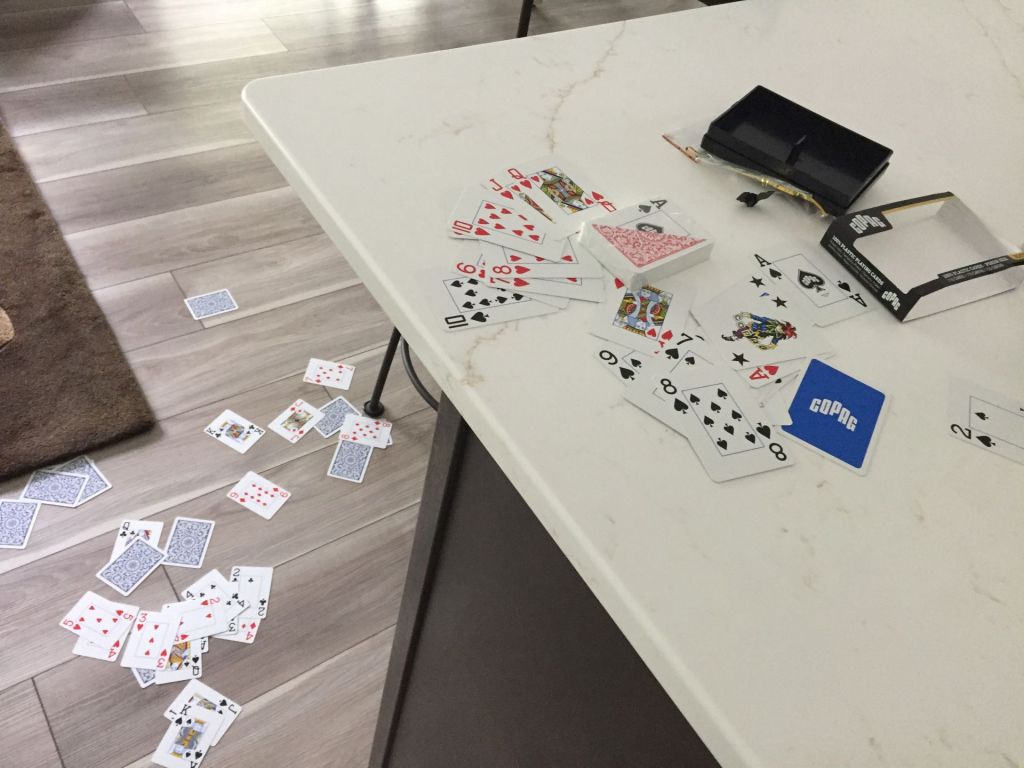
We play cribbage and we tried playing using the Muggins Rule the other day. We “muggled” through it is what I should say.

During one game, Sena got the total count wrong, which led to a confusing situation leading to her overpegging and eventually winning a game, which didn’t make a lot of sense.

Most of the problem was misunderstanding how to apply Muggins rule to overpegging. It’s not clear to us how to address that. Underpegging is easier to understand. If Sena underpegs and I catch it, I’m supposed to call Muggins and peg the difference between the actual pegging score and her over score.

She overpegged a large number of holes and got so far ahead, that I couldn’t catch up. What we didn’t understand is that, according to some rules, the player who overpegs is supposed to move her peg back to the original position behind the front peg.

On the other hand, there is more than one set of rules for how play Muggins. The American Cribbage Congress (ACC) has official rules for it, and they say it only applies to underpegging. It applies after you peg.

On the other hand, I can find guidance for overpegging elsewhere on the ACC website, and it covers overpegging. It’s in the Tips Library and interestingly there’s a slang term for it: Hauling Lumber.

“Hauling Lumber – Hauling Lumber (or Timber) usually refers to intentional Over Pegging, which is one form of cheating during a cribbage game. It is believed the term originated due to most boards being made out of wood and the offending player was pegging more wood than what they were entitled to.”

“Overpegging – Overpegging is pegging more points that what you are entitled to take. It may happen during the play of the hand, in counting the hand or by accidently taking more pegs than indicated. If the opponent catches the Overpegging, you must return your front peg to the proper place and the opponent gets to take the difference between what was pegged and the correct total. If you notice your own Overpegging before your opponent, you may announce the fact and correct your front peg to its proper location with no penalty. See also False Claim of Game and Hauling Lumber.”

However, the Tips Library also says this about Muggins:

“Muggins – Muggins is taking points your opponent misses. Muggins points come from one of two sources. If your opponent misses points during the play of the cards, Muggins may be called after a pause to make sure the opponent is truly missing the points. The other situation is where your opponent fails to count and/or take all the points in the hand. Once he has under pegged his hand, Muggins may be called for the difference in what was pegged and the actual count in the hand. Muggins may not be taken in the case of an opponent failing to take his two points when a Jack is the starter card, those points are lost once the dealer plays a card. Muggins is not applicable in the case where an opponent over pegs his hand, see Over Pegging – Hauling Lumber.”

The bottom line seems to be that overpegging is not allowed in Muggins. If you do it deliberately, you might want to haul ass away from the game table.

I wondered about what the term “Muggins” itself means so I made a cursory search for the origin of the term. I found out that the term is connected to the word “mug,” which means fool or idiot. By extension, I guess it could mean that a cribbage player who makes mistakes in the game is thought to be a simpleton.

This is part of the reason why we’re not going to use the Muggins rule anymore. It takes a bit of the fun out of playing cribbage.

Single Leg Sit to Stand Redux

Well, we’ve been working on the single leg sit to stand exercise. After I did a little more reading about it, I think it’s really an exercise for runners. We don’t run, but this seems more like a game when you do it together.

It’s a lot easier to do if you find a seat level higher than a regular chair. We found out that our hotel bed is high enough for us to come closer to doing this with one leg raised off the floor.

Our form? It needs a little work.

Cribbage Tournament at Iowa State Fair Again This Year!

The Iowa State Fair will again have the Cribbage Tournament this year! It’s on August 18 (the last day of the fair) from 11:00 a.m. to 2:00 p.m at the Oman Family Youth Inn. Registration begins at 10:00 a.m.

Making Life in the Hotel Livable

We’ve been in the hotel a couple of weeks now. We’ll probably be here 2 months until our house is built. Making it livable is about keeping it simple.

While we were busy packing and moving out of our old house, we got away from regular habits that helped keep us happier and at least somewhat saner.

We’re working to get back to that.