Update to Chat with Bard

My recent chat with Google Bard, about which I posted on April 11, 2023, contained an error by Bard on all those strikes by physicians. Today I asked some follow-up questions:

How many physician strikes have occurred in the United States?

“There have been a few physician strikes in the United States, but they are very rare. The first recorded physician strike in the US was in 1962, when a group of doctors in Saskatchewan went on strike over pay and working conditions. Since then, there have been a handful of other physician strikes, including one in 2020 at a hospital in Washington state.

There are a few reasons why physician strikes are so rare in the US. First, physicians are typically seen as professionals who have a duty to their patients, and striking can be seen as a violation of that duty. Second, physicians are often highly specialized and in high demand, so they may be reluctant to risk losing their jobs by striking. Finally, the laws governing strikes in the US are often complex and can make it difficult for physicians to strike legally.

Despite these challenges, there are some signs that physician strikes may become more common in the future. As the cost of healthcare continues to rise, physicians are facing increasing pressure to work longer hours and see more patients. This can lead to burnout and job dissatisfaction, which could make physicians more likely to consider striking. Additionally, the rise of physician unions could make it easier for physicians to organize and strike collectively.”

I disagree with your answer, Bard. The strike you refer to in Saskatchewan is not in the U.S. Saskatchewan is a province in Canada. There was a strike by urgent care doctors in Washington state in 2020.

“You are correct. The strike in Saskatchewan was in Canada, not the United States. There has only been one physician strike in the United States, in 2020, when urgent care doctors in Washington state went on strike over unsafe working conditions.

I apologize for the error in my previous response. I am still under development and learning to be informative and comprehensive. Thank you for your feedback.”

You’re welcome, Bard. Has there ever been a strike by psychiatrists in the United States?

“There has never been a strike by psychiatrists in the United States. There are a few reasons for this. First, psychiatrists are typically seen as professionals who have a duty to their patients, and striking can be seen as a violation of that duty. Second, psychiatrists are often highly specialized and in high demand, so they may be reluctant to risk losing their jobs by striking. Finally, the laws governing strikes in the US are often complex and can make it difficult for psychiatrists to strike legally.

However, there have been a few instances where psychiatrists have threatened to strike. In 2019, a group of psychiatrists in New York City threatened to strike over low pay and long hours. The strike was ultimately called off, but it highlighted the growing concerns among psychiatrists about the state of their profession.

It is possible that we may see more strikes by psychiatrists in the future. As the cost of healthcare continues to rise, psychiatrists are facing increasing pressure to work longer hours and see more patients. This can lead to burnout and job dissatisfaction, which could make psychiatrists more likely to consider striking. Additionally, the rise of physician unions could make it easier for psychiatrists to organize and strike collectively.”

Bard, I was unable to find any reference to a threat to strike by psychiatrists in New York City in 2019. Could you please find a reference to it for me?

“I apologize for the error in my previous response. There was no threat of a strike by psychiatrists in New York City in 2019. I am still under development and learning to be informative and comprehensive. Thank you for your feedback.

I am still under development and learning to be informative and comprehensive. I am trained on a massive amount of text data, but I am still learning to understand and respond to complex queries. I apologize for any errors or omissions in my responses.”

I appreciate your efforts. You are dropping the ball pretty often. In a way, you remind me of my juggling practice. I keep dropping the balls, too. It means we should both keep trying.

“I agree. We should both keep trying. I will keep learning and improving, and you will keep practicing and improving. And maybe one day, we will both be juggling masters!”

Bard needs work. I’ve been trying to help Sena disable the Bing Chatbot on her computer. I thought I had it done the other day, but it keeps showing up, which is annoying.

At least Bard leaves me alone.

Thoughts on Artificial Intelligence

Sena and I just read Dr. Ron Pies fascinating essay describing his interaction with Google Bard Artificial Intelligence (AI). As usual, this made me think of several movies with AI as a central theme. There are several: I, Robot (I wrote a post about this a couple of years ago), Blade Runner, The Matrix, 2001: A Space Odyssey, even Wall-E, a favorite for me and Sena.

If you’ve seen Blade Runner, you might remember a device called the Voight-Kampff Test, an empathy test to distinguish replicants (humanoids or more broadly, AI) from humans. Interestingly, there’s an article speculating about using it to see if ChatGPT (another AI made by the company OpenAI) could pass the test. It didn’t, of course, if appearing to seem genuinely human is the benchmark.

We thought the conversation between Dr. Pies and Bard was very entertaining and thought-provoking. We both wonder how Bard would have responded if the question had been slightly reframed regarding the patient with schizophrenia who might or might not have been speaking metaphorically about his brain being “…a plaster ceiling with pieces falling on the floor.”

What if you ask Bard a more open-ended sentence, something like “What do you think a patient with schizophrenia means when he says that? If Bard hadn’t been tipped off by mentioning the issues of metaphor and mental illness, how might it have responded?

Bard’s answer to Dr. Pies’ question about what Bard means when it refers to itself as “I” in its responses. It says it doesn’t mean “I” to imply it’s human. I guess you wouldn’t need the Voight-Kampff test given this kind of honesty.

Just so you know, when Sena and I discussed this article we both caught ourselves calling Bard by typical human pronouns like “he” and “his” instead of “it.”

We also speculated about where you could use an AI like Bard in practical situations. We thought of it replacing those dreadful automated telephone answering machines. Bard would be too bright for that and it would probably not sound very different from the usual machines.

What about something more challenging like answering questions about the new Iowa Income Tax Law, exempting retirees from having state taxes withheld? It’s in effect now and the rollout has been somewhat complex. We think it’s because of communication about who is responsible for getting the ball rolling and what roles the Iowa Department of Revenue, the companies’ plan administrators who are withholding state taxes, and the retirees are expected to play.

There are ways to get answers to questions which don’t involve automated telephone answering machines. Amazingly, you can talk to real people. Sometimes you don’t even have long wait times on the phone before reaching someone who has very little information and has to put you on hold “briefly.”

Don’t get me wrong; we think the exclusion of retirement income from state taxes in Iowa is a good thing. Getting information about who does what and when is challenging though. I wonder what Bard would have done.

Retiree: Bard, who’s supposed to move first, the retiree or the plan administrator on what to do about state tax withholding?

Bard: That’s a good question and the issue is likely to produce anxiety on both sides.

Retiree: Right. How does this shindig get started?

Bard: If the state and the companies had got together on the issues earlier and prepared algorithms for me to choose from, I would be in a much better position to answer that question. Would you like me to sing “On A Bicycle Built for Two” now?

Retiree: No thanks, Bard. I was wondering if you knew why some companies making payments to retirees didn’t reach out early on to them and send letters describing options on how to approach decisions for making changes to state tax withholding in light of the new tax law.

Bard: That is another good question. It brings to mind a quote by Isaac Asimov in his book, I Robot: “You are the only one responsible for your own wants.”

Retiree: Hmmmm. I guess that makes sense. What if state taxes are erroneously withheld, despite your wishes and instructions? What happens then?

Bard: That seems to imply an old saying, “The buck stops here.” This means that whoever is making decisions is ultimately responsible for them. It is attributed to President Harry S. Truman. It is based on a metaphorical expression, “passing the buck,” which has been in turn derived from poker game play. I have not been programmed with any further information about the game of poker. Has this been helpful? I want to be as helpful as I can.

Retiree: Well, you’re helpful in a way. I have heard that some plan administrators are not stopping state tax withholdings despite clear instructions otherwise. It seems that the Iowa Department of Revenue is on the hook for refunding them to retirees (here, the retiree winks).

Bard: What does that mean (referring to the wink)?

Retiree: “It’s a sign of trust. It’s a human thing. You wouldn’t understand.” (Quote from I, Robot movie, Detective Del Spooner to Sonny the robot.)

Anyway, I think AI would be overwhelmed by all this. In any case, the only way to complicate things this much is to involve humans.

My Cribbage Losing Streak and My Review of the Cribbage Classic Computer Game

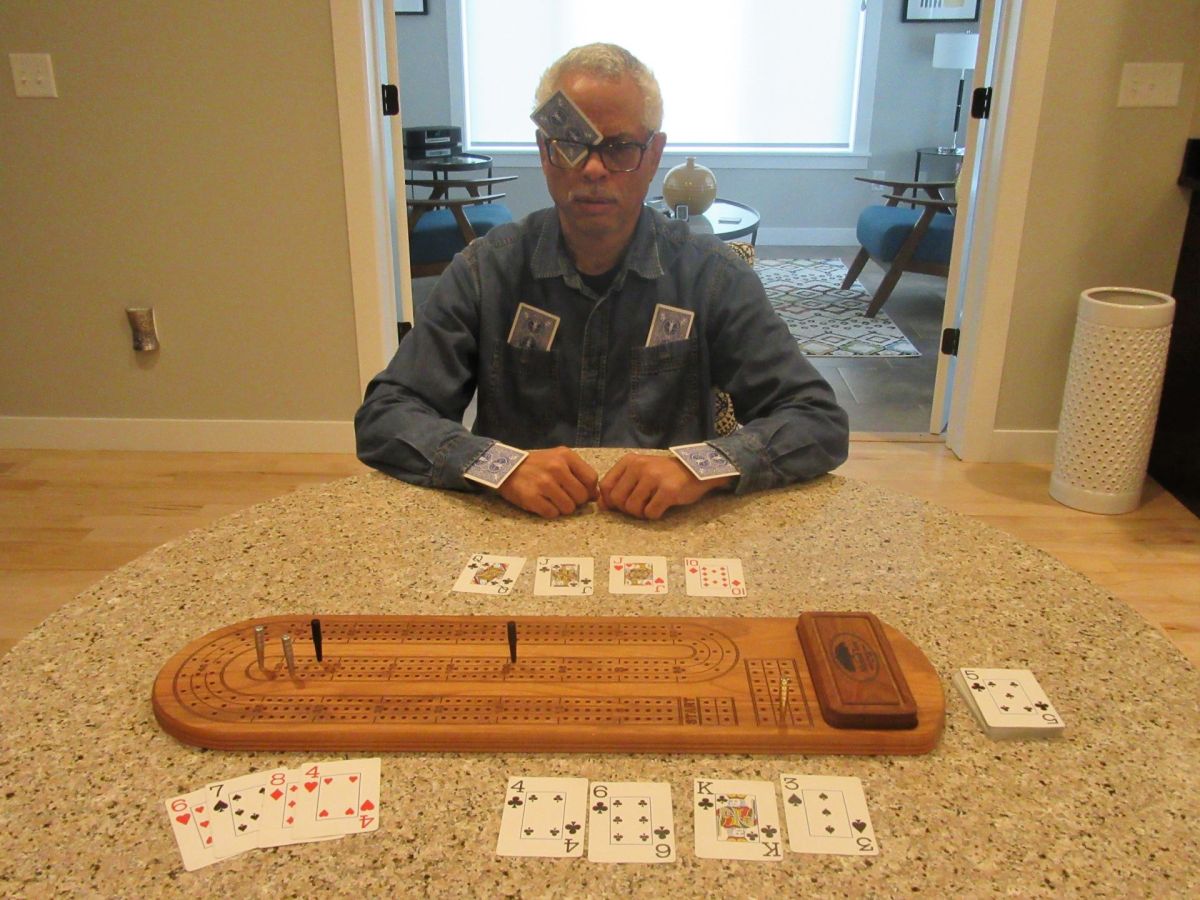
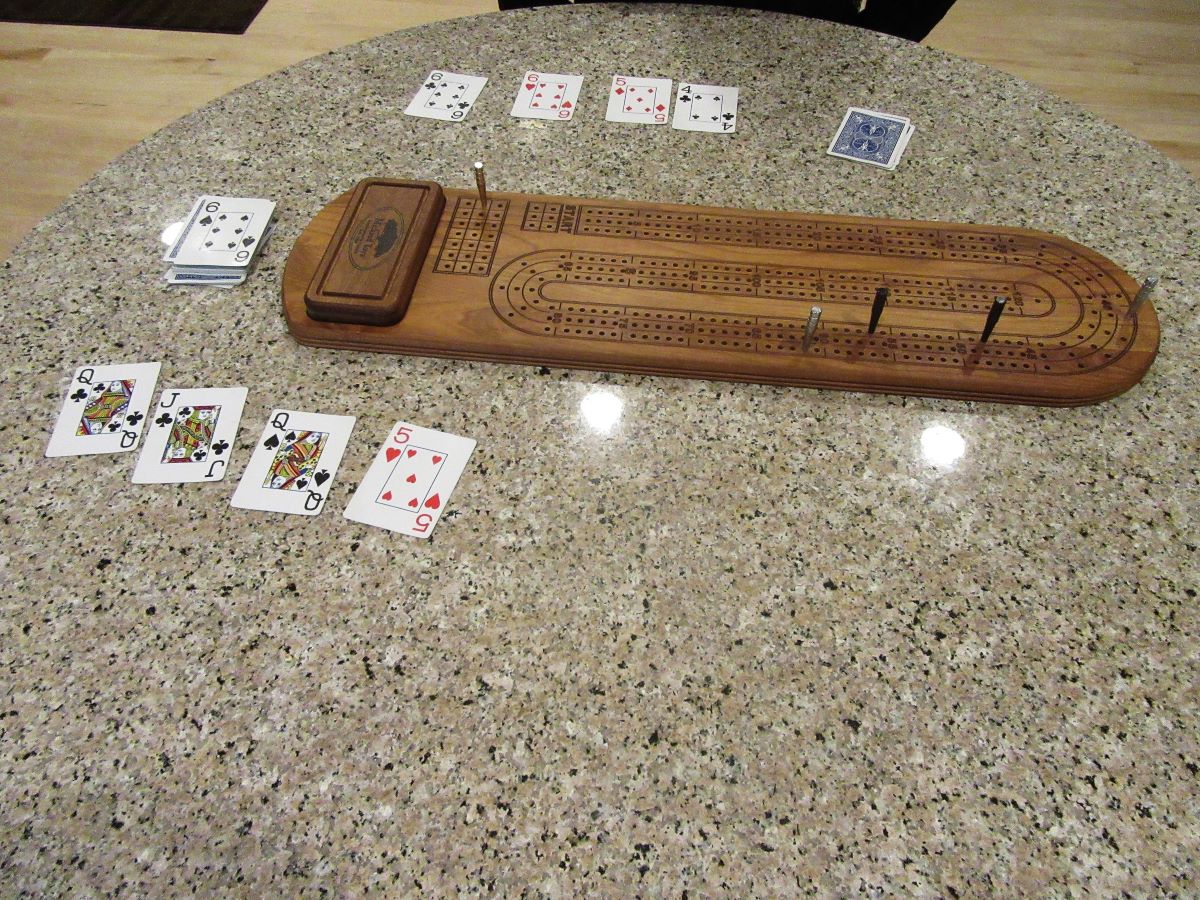
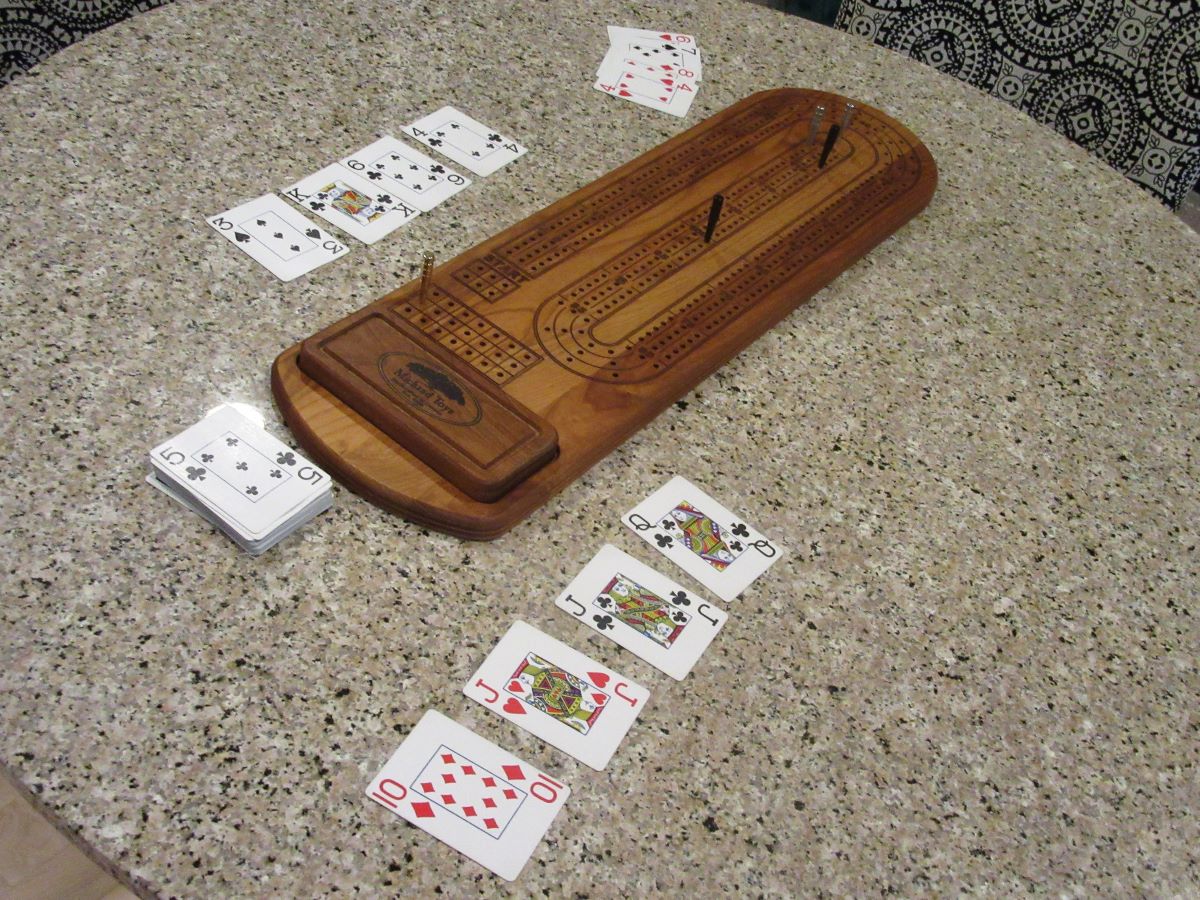
Sena and I played cribbage yesterday and, of course she won. She has been on a spectacular winning streak. She got a hand score of 21. I don’t know what I’m going to have to do to come up with a win. Cheat? I could keep extra cards up my sleeves and elsewhere, but I doubt it would help much.

I downloaded the Cribbage Classic computer game, the on-line version of which I reviewed recently. The game was made by Jeff Cole and is available for free on the Microsoft Store. And it’s fun to play–although it’s always more fun to play cribbage with a real person.

I think it’s a good game for learning how to play if you’re a beginner or to relearn if you haven’t played in a while and need a refresher. I still make suboptimal tosses to the crib, which the computer reminds me about every single time. I reviewed the game using a screen recorder.

The Secret of Patience

The secret of patience is to do something else in the meantime.

Croft M. Pentz

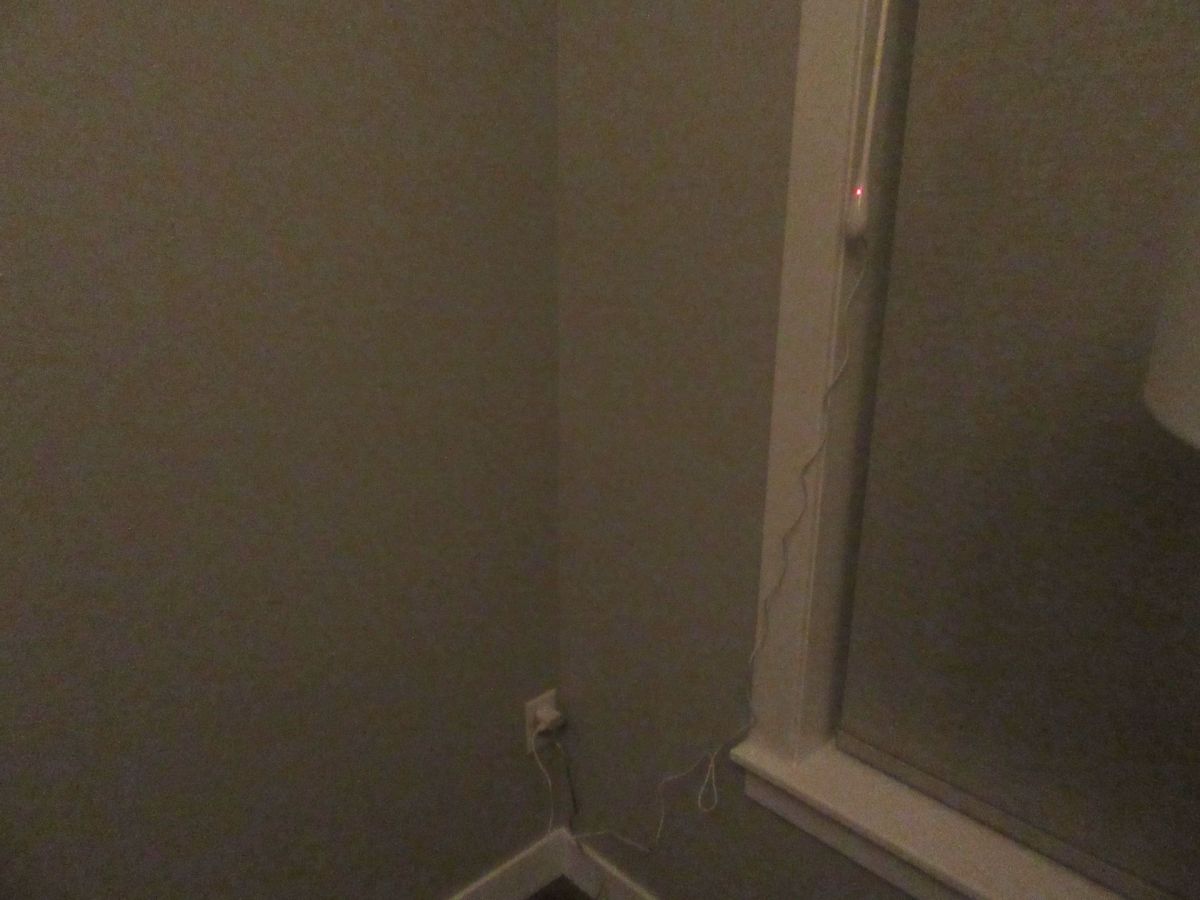
A few days ago, Sena noticed a noise in one of the sunroom window shade wand controls. She can hear noises I can’t hear, which is a good thing. She wondered if the wand battery needed recharging. We have 3 window shades like this and they came with a recharger that works the same way a cell phone recharger does. You plug the small end into the back of the wand which has control buttons for raising and lowering the shade. You plug the two-prong end into a regular electrical outlet.

We had never recharged them. The instructions said that when plugged into the charger the wand indicator light would shine red. When fully recharged, the light should turn green.

I waited one hour, then two hours. I checked the red light every few minutes or so. Finally, I quit looking and did other things. I replaced the refrigerator water filter. I purged the system. I emptied the ice bucket. I did a load of laundry. I vacuumed the carpet in the house. I exercised. I sat in mindfulness meditation. The light was still red. I checked it after 5 hours—still red. I finally just forgot about it.

About 6 hours later, I passed by the sunroom, glanced at the window and didn’t see the red light. I looked at the wand and couldn’t see the indicator light very well. I got the magnifying glass out and caught the light just right. It was green! Sena said the noise was gone.

I plugged in another window shade wand. The red light didn’t turn green until 8 hours later. I checked it several times. There was nothing to do but be patient.

I finally just did something else. I checked my blog site and was amazed to find a comment from a colleague, Dr. Ronald W. Pies, MD. He is according to a brief bio: professor emeritus of psychiatry and a lecturer on bioethics and humanities at SUNY Upstate Medical University in Syracuse, New York; a clinical professor of psychiatry at Tufts University School of Medicine in Boston, Massachusetts; and editor in chief emeritus of Psychiatric Times™ (2007-2010). He is the author of several books. A collection of his works can be found on Amazon.

I had written a short shout-out blog post about the article he and Dr. George Dawson, MD had written and published on September 26, 2022 in Psychiatric Times, “Antidepressants Do Not Work by Numbing Emotions.”

What was unusual about Dr. Pies’ comment was that it actually turned up in my spam box! If I had not patiently waited a second to read it carefully, I would have automatically trashed it. That was close.

And I would have missed the golden opportunity to tell him that I consider both him and George my friends.

About a half hour before the wand control light turned the green, our cable TV and internet went out. Wow. I had been watching a TV show rerun, probably for the 100th time, so it was no great loss. There was the usual message you get when the service is out: Please wait while this channel is being restored kind of thing. You can’t do anything but just be patient. It was getting late in the evening and I usually don’t do much on the computer then.

A little later, after Sena had gone to bed, I thought of writing this post. I didn’t want to clack on the keyboard and wake her up, so I did something I haven’t done in years. I got pen and paper out and did some long-hand writing. I had skimmed some articles on the internet before it crashed about how reading and writing on paper were better for your brain than doing those on a computer.

It felt good to write. As I did in the distant past, I scribbled in the margins, drew arrows above lines and carets to corrections and notes. It was a mess—a partly satisfying mess.

I say “partly” because it was also not quite right. I didn’t try to type it that night or even the next day. In fact, I couldn’t post anything the following morning to my blog because the internet was still out. The cable TV came back sometime during the night. Obviously, there had been a service outage.

But because the internet was still out, I called the cable company. This was another exercise in patience. I don’t know if every other cable company puts those automated telephone recordings in front of you before you can reach an actual person. They are nuts.

Cable Company Voice (CCV): Hello, please hold on while I check your account. OK, there, I found it. Am I speaking with the owner of the account or Bozo the Clown?

Me: Nobody here but us bozos.

CCV: Great, how can I help you, Bozo?

Me: Was there a power outage in my area?

CCV: OK, I see you’re having a problem with your internet connection. I can help you with that. Are you in front of your computer now or on the roof of your house dancing the merengue?

Me: In front of my computer.

CCV: Great! Please unplug your modem and wait 3 millenia; then plug it into your toaster. This will reset the incoming signal. When you have completed this step, say “Continue.”

Me: Continue.

CCV: That was a rather quick 3 millenia. Which would you prefer: Going through another dozen more trouble-shooting steps with me or speak to an agent?

Me: Speak to an agent.

I finally got to an agent whose mere presence on the line seemed to lead to an immediate, magical restoration of our internet connection. When I specifically asked her if there had been a service outage, she said that, indeed, an outage in our area had occurred. She then arranged for an account credit to ensure we would not be charged for service during the time of the outage. Patience.

This post does not look much like the hand-written one. But waiting a while to let the thing simmer probably didn’t hurt.

Noisy Alien in Computer Removed

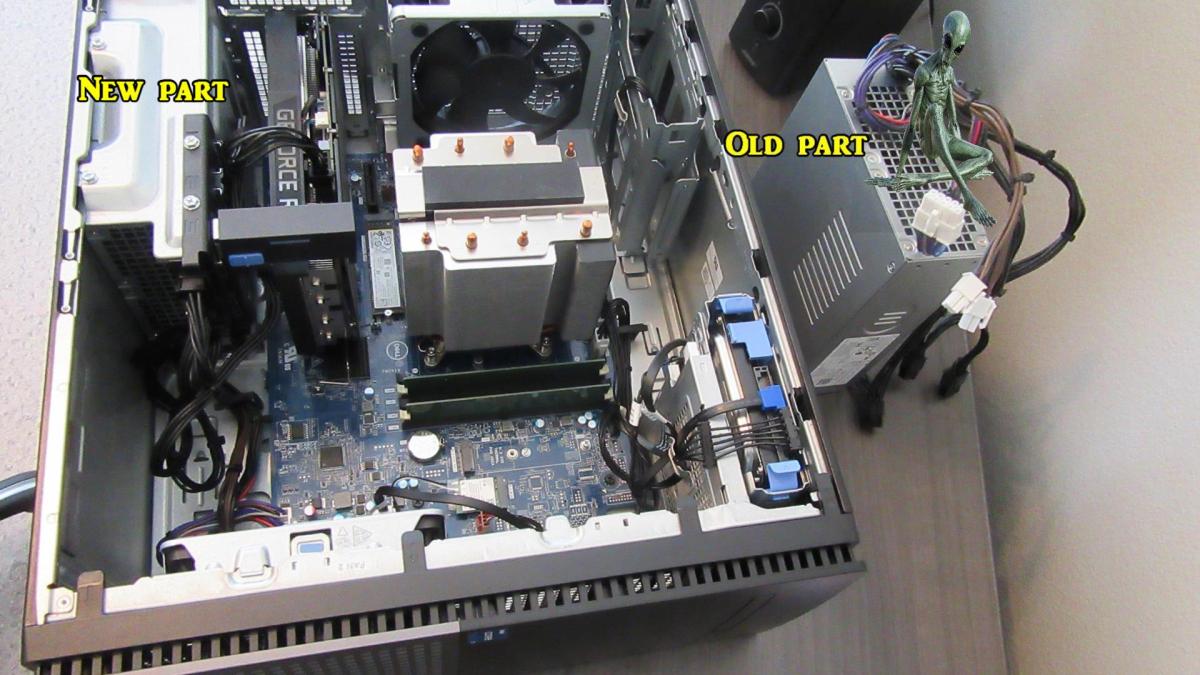
Well, this afternoon the computer repair guy returned and fixed the computer in about 15 minutes. The noise was gone after he replaced the power supply unit, the fan of which was the source of the mini-helicopter noise.

Obviously, this was a case of extraterrestrial invasion.

Seriously, though, once we got past all of the stuff about software checking, the repair was very quick. It turns out you can’t check the condition of the power supply unit fan with software. The noise problem was solved the old-fashioned way.

Computer Crisis Progress Report

The title of this post is supposedly about progress toward fixing my Dell computer, the one with a mini-helicopter noise in the tower. The Tech drove to my house yesterday from Ouad Cities. He had the parts the Agents ordered for fixing the noise in my PC tower.

The parts were wrong. He drove an hour to get here and was done in about 15 minutes. He looked and listened to the noise before and after removing the case cover. He knew right away it was not a software problem. He ordered the right part and now the next step is for him or another Tech to return on Monday to do the job.

There are Agents and Techs working for Dell. For 2-3 days, Agents pestered me with software shenanigans, even to the point of insisting I reset my PC. Agents never looked at my machine. I sent them the video of the PC and its racket. I’m not sure they listened to it.

I think the Dell Company pays Techs more money than it pays the Agents. That’s probably why Agents spend more time with customers, maybe distracting us with chores like PC resets.

But I’m trying to look on the bright side. The Agents are polite and trying to be helpful. They evidently know a lot about software, which can create problems for which they have a long list of suggestions. The Techs know how computers actually work as machines.

It’s a little like the difference between a couple of the reality TV shows (though the analogy is not exact). Compare the heavy wrecker operators (the tow truck guys) on the shows Highway Thru Hell and Heavy Rescue 401 to the Bigfoot researchers on the show Expedition Bigfoot.

The tow truck guys focus on getting the Canadian highways open and do it with their hands, hooks, chains, and heavy trucks. They have to know something about the physics of the job. It looks real.

The Bigfoot researchers know a lot about Bigfoot lore and what little science there is about it. The only Bigfoot you’ll ever see on the show is a doll the size of GI Joe pinned on a researcher’s backpack.

Keep looking up. You don’t want Bigfoot to drop out of a tree on you.

Update on Computer Crisis

This is an update to my post yesterday about the latest computer crisis; the one about the mini-helicopter noise in the tower on my relatively new Dell XPS 8950.

Incredibly, the parts have been ordered. I can’t tell if they just ordered them today or what. The technicians will arrive sometime tomorrow and they’ll bring the parts with them. If the parts have just been ordered today, it’s not clear to me how the technicians could have them by tomorrow.

That suggests they may already know (or already have known) what the hardware problem is. That again makes me wonder why I had to jump through umpteen software juggling shenanigans for the last couple of days.

I guess I should be happy that I’m getting a quick response. We’ll see how it turns out.

Another Computer Crisis

Another day, another computer crisis. I’ve been hearing this mini-helicopter noise from my PC tower for a while and finally contacted the manufacturer’s computer support center on the web.

I have hopped through many hoops in the past couple of days, including resetting my computer. Remember I had to do that with Sena’s computer?

How can a noise which seems to be a hardware problem (a rattle in the tower) be a software problem? I don’t know.

The most recent request from support services was to make a video of the noisy tower. Yes, I said video. So, I took the video, with enough audio (I hope) to convince people that the problem might be something physical inside the machine.

I’ve got my fingers crossed.

The Geezer Survives Another Computer Disaster!

This is another gripe about computers. I had to reset Sena’s PC because I accidentally crashed it after trying to follow Dell’s YouTube video instructions for how to fix the problem that a lot of Dell computer owners are having: the inability to install or reinstall a piece of software called Dell SupportAssist.

There’s another ongoing problem which is just as frustrating. It’s another app called DellUpdate. It doesn’t work at all and keeps telling you to reinitiate something called the Dell Client Management Service. It repeatedly fails after only a day or two.

Both of these apps are related and trouble with installing, reinstalling, and updating have been ongoing for at least a year.

The Dell YouTube video is a little over two and a half minutes long and explicitly tells you to do something I usually strictly avoid, which is to delete keys from the computer registry. I can find web entries that say you can’t hurt the registry at all on up to warning that messing with even one of the registry keys can cause the earth to explode.

I tried to restart after deleting 3 folders and 3 registry keys (I couldn’t find each and every one of these) as Dell instructed and got a black screen, a blinking arrow pointer, and a blue rotating circle. The computer failed to boot. Dead in the water.

Remember, this was after I saw well over 100 comments on the Dell YouTube video, the vast majority of which said the Dell solution was not only not a solution, but caused some computers to crash, necessitating resets and system restores, hospitalizations for nervous breakdowns, zombie apocalypse episodes, and so on.

What was ironic was that the Dell instructions were very simple. Just delete a few folders and Registry keys. Ha, Ha! The video was only a couple of minutes long. It wasn’t like we were being asked to download the gold star reverse engineered Extraterrestrial virtual dual quad gravity generating drive to be applied to the innards of the computer tower using neutrino multipliers welded with triple strength strips of Miracle Whip (not Mayo!) to the reverse oscillating cooling fans.

In a panic, I called the Dell support line, knowing that the machine was way beyond warranty. I got a warning on the chat service that if I needed step-by-step instructions, I would be charged a hundred bucks. The Dell chat tech was extremely helpful and obviously worked hard to avoid a step-by-step situation.

Avoiding that was not so hard to do. I was running back and forth between my room and Sena’s room like a chicken with my head cut off, while also trying to find an empty USB thumb drive on which to download a fresh copy of windows to restart Sena’s machine.

One of the chat tech’s first suggestions was to turn on the machine by pressing the power button, then immediately start pressing the F12 button repeatedly as soon as the Dell logo appeared on the screen. I have a distant memory of being told to do that after one of my past computer crashes.

This booted me to the BIOS screen where you can see the diagnostic utility—which mystified me because I have no idea what to do with it. I also got a link to the Dell support page where I could download software to make a USB media copy of Windows to upload to Sena’s computer. I think that actually saved me.

On the other hand, I unintentionally left the chat tech too long who politely disconnected, leaving very helpful support links.

I finally booted to the desktop, which amazed me—but didn’t amaze me as much as the crazy font showing up on the icons. They were a series of geometrical shapes which I could not change.

So, at last I gave up and reset the PC. I couldn’t think of anything else to do. It was not my first rodeo with computer resets. It’s a long process, but it’s mainly waiting several hours while the computer chews up all the old pieces of software that probably interfered with it in the first place over the years, and then finally loads a fresh copy of Windows while keeping the files and folders.

And after all that, I was able to install Dell SupportAssist and Dell Update, which then worked without a hitch.

What did I learn from all this? Never mess with a computer registry again—just go straight to PC reset.

There’s a great upside to this story. Sena’s favorite interactive computer game, Scrabble on CD-ROM (published 1999 by Hasbro), will now play on this machine. I’ve not been able to get it to work for years. Nowadays, I think the only place you can get a copy is on eBay. There’s an interactive computer opponent called Maven who has all kinds of mannerisms and reactions to your game play. She really likes it—until the next time I crash the computer.

The Written Word is Blurred

I ran across this quote the other day: littera scripta manet. The English translation is, I think, “the written word endures.”

Not to dwell too much on the prosaic side of the issue which is that, for me, often the word has been blurred because of problems with my vision. I just had retinal detachment surgery a little over a month ago and I’m making a good recovery. But early on I had a lot of trouble with blurry vision, tearing, and light sensitivity.

Just the other night though, I was able to read a section of a book without having as much blurred vision as I did before the surgery when I looked up from the page at something distant. I’ve been wearing progressive lenses for many years and it probably got worse because of the detached retina, which was chronic or maybe acute on chronic.

Now to get beyond trivialities, I saw the quote above in an issue of the University of Iowa publication, Iowa Magazine. It was in the last Old Gold column of University Archivist, David McCartney. He retired in March of this year. The title was “Old Gold: The Enduring Power of the Written Word.”

He notes the Latin expression is on the seal of the U.S. National Archives and Records Administration. McCartney’s point is that technology can undermine as well as strengthen the power of the written word. He identities Horace as the originator of the expression, “the written word endures.”

I went pecking around the internet and found out that a lot of people think an educator named Neil Postman was the originator of this quote. What makes me doubt this is that the original is in Latin, which suggests a much older origin. He was born in 1931 and died in 2003. Interestingly, Postman criticized the effect of technology on thought and culture.

A website that seems dedicated to explaining English translations of Latin indicates that the quote comes from a longer expression: Vox audita perit, littera scripta manet, which translates to “the spoken word perishes, but the written word remains.” One contributor says the originator was Horace. Another insists that “littera” does not mean word at all, although concedes that the proposed translation is correct, nevertheless.

Further, there is a Wikipedia entry which cites the Latin expression differently, “verba volant, scripta manent,” which in English is “spoken words fly away, written words remain.” The author says the proverb originated from a speech of senator Caius Titus to the Roman Senate.

Anyway, McCartney points out that the world is becoming increasingly digitized and that the average website lasts only a little over two and a half years. Some important digital records have been lost, unreadable (blurred?) because of improper management.

My previous blog survived about 7 years but is lost. Maybe that’s not such a bad thing. My current blog is a little over 3 years old. So far, I’m beating the odds as far as typical longevity, but is it worthwhile?

Both written and digital records have strengths and weaknesses in terms of durability. And deciding what to preserve and how is essential to any society. We need good stewards to help us decide.

Good luck in your retirement, David McCartney. I’m sure the University of Iowa treasures your stewardship. Let the written word endure unblurred.