I'm a retired consult-liaison psychiatrist. I navigated the path in a phased retirement program through the hospital where I was employed. I was fully retired as of June 30, 2020. This blog chronicles my journey.
Sena bought a couple of new brands of mayo, or new to us anyway. They were Bama Mayonnaise and McCormick Mayonesa. Sena didn’t much care for Bama Mayonnaise. And that is just her personal opinion; don’t send any nasty letters, please!
On the other hand, we both really liked McCormick Mayonesa. It has lime and sugar in it. It reminds me of Miracle Whip, which as you know, is my favorite (no offense, out there!). Sena really prefers Hellmann’s Real Mayonnaise. But I still love her.
Here’s the thing about my sensitivity about nasty comments. I want to emphasize here that we are not rating any of these mayos we’ve tried. OK, I’ve written a few blog posts about them, but you will not find any numerical ratings about them (I’m pretty sure, though I haven’t checked). I found a web site article by Sean of the South. The title is “Mayo Wars.” He rated the mayos. Big mistake. He got a lot of flak. There are a lot of folks out there who worship their favorite mayos.
Sean tried 73 brands of mayonnaise. I didn’t know there was anywhere near that many brands of mayo! I gather Sean’s ratings made some people stride briskly to their refrigerators, pack their favorite brands lovingly, and ship them to Sean with letters expressing deep devotion to their mayos while advising Sean to watch his step or suffer the consequences.
Anyway, we’re not rating mayos. In fact, we believe that all mayos are created equal. Only, we think you should give the McCormick Mayonesa a try. We think it’s pretty good in potato salad and as a sauce for fish.
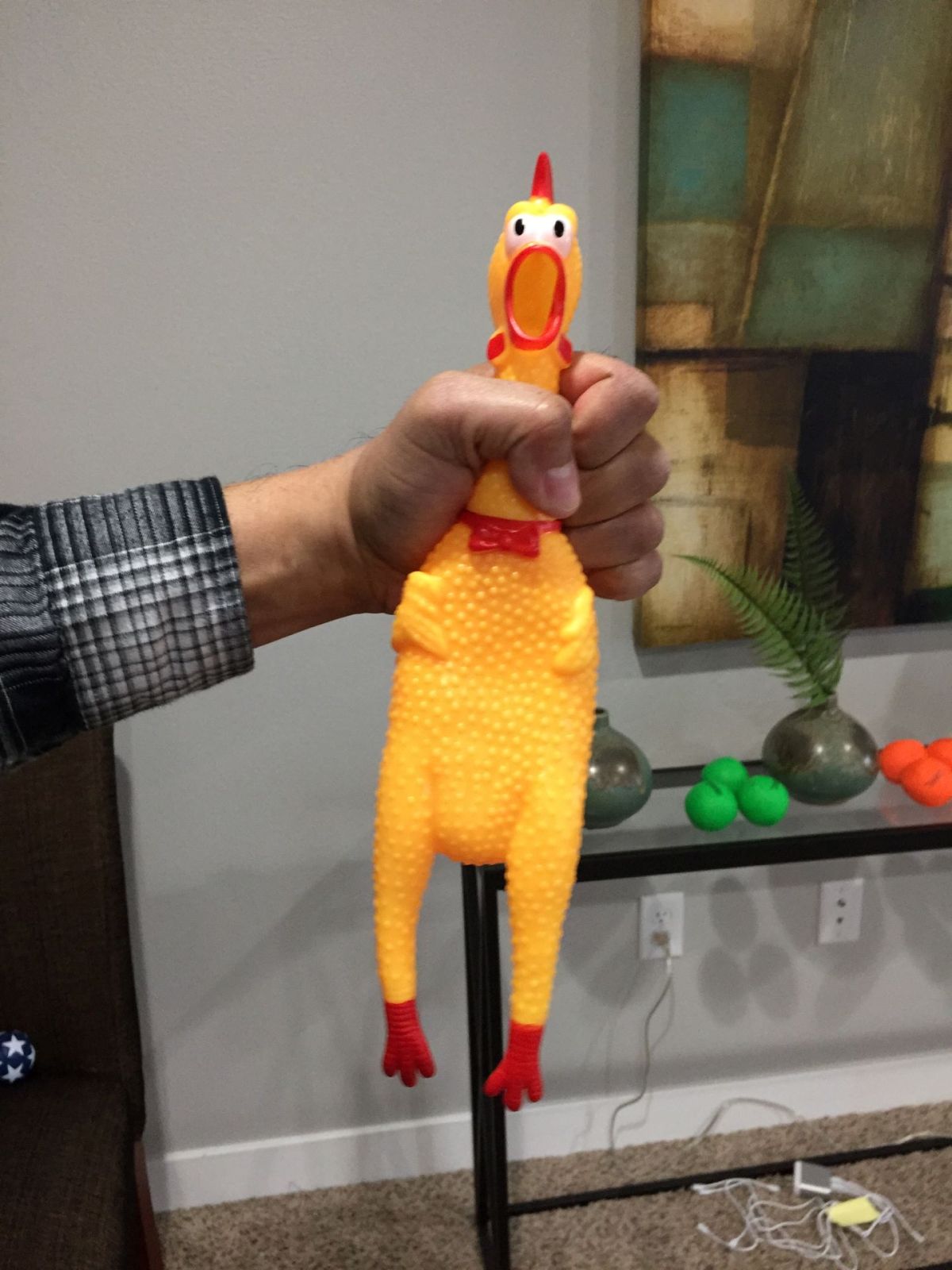
Remember that Shrilling Chicken I tried to juggle a few days ago? Well, I got my revenge for the sore finger it gave me. This is the message to chickens who peck me.
Chicken, meet your juggler!
This time, I put on gloves along with my usual safety goggles to prevent further injuries from the satanic cluck-meister.
Recently, we saw a rabbit in our back yard on one occasion and a feral tabby cat on another day doing what they do best.
The cat was hunting and the rabbit was on the lookout for hunters. The hunted and the hunter are both alike in many ways except for the most obvious—one gets to eat the other.
Otherwise, in action they are both like coiled springs: alert, jumpy, and ready to do what they do best, flee or pounce.
Whether you are predator or prey, you do this every day.
Both Sena and I stayed up to see the cheesy 1972 horror flick The Gargoyleslast Saturday night. No kidding, Sena stayed up for the whole thing! The show runs from 7-9:30 PM but the actual movie is only a little over an hour long. It’s about a clan of gargoyles that every 500 years hatch from eggs and wage war on humans to take over the planet. They never get the job done, probably because humans have all the guns and all the gargoyles have are claws and flimsy wings which you don’t see used until the very last scene. Like all of the Svengoolie movies, all of the jokes are so bad they’re good.
You can ask a fair question, which would be what else is on in addition to the movie? There’s a lot of commercials, of course, as well as the corny jokes and skits. But the other features last Saturday were excerpts from the Flashback Weekend Chicago Horror Con, in August 2023. I think it’s an annual historical horror convention that takes place in Rosemont, Illinois.
One of the attractions was a panel presentation about the history of the 90th anniversary of the drive-in theater hosted by Svengoolie and Joe Bob Briggs. It was arguably better than the feature flick. I have heard the history elsewhere about how the drive-in theatre began (I think it was on the travel or history channel).
The most interesting part of the history is how the Covid-19 pandemic influenced the recent history of the drive-in theaters. The point was that, when the pandemic hit the country, all indoor theaters closed, leaving the drive-ins the only place to watch movies for several weeks. They did pretty good business.
Moreover, horror movies and drive-ins go together like cheese and crackers (see what I did there, cheese as in cheesy movies?). OK, fine.
Anyway, horror films were mainly linked to low budget projects that big stars and big directors avoided like the plague. Mainly, those movies were played at the drive-ins—which is how they got a tarnished reputation. That led to cherished stories by older people who used to sneak their friends into the drive-ins by stowing them in the trunks of their cars. That probably did happen, even in the old Mason City Drive-In Theater in Iowa where Sena and I grew up. It was demolished in 1997.
As far as The Gargoyle movie goes, the one thing I couldn’t find out was exactly why Bernie Casey, who played the head gargoyle, didn’t voice his own lines. The web references I found just mentioned briefly that it was because his natural speaking voice didn’t fit the character. They were dubbed in by Vic Perrin who did the voice-over for the introduction to The Outer Limits.
Maybe the funniest scene was when the head gargoyle placated and playfully slapped the fanny of the female head breeder gargoyle after she noticed he was flirting with the human woman he kidnapped. The breeder was obviously really jealous. Maybe this means that the battle between gargoyles and humans will always come to a stalemate because we’re too much alike.
Remember that rubber chicken Sena ordered as a joke for what looks like my transformation into a Svengoolie fan? Svengoolie is the longstanding host on the MeTV channel which shows old, cheesy TV horror movies every Saturday.
Svengoolie always gets a lot of rubber chickens tossed at him after he tells a few jokes. Well, the rubber chicken arrived. Actually, I think it’s plastic, about which I’ll have a lot more to say. It’s called Shrilling Chicken. Sena ordered it from Wal-Mart. We’re still waiting for the Svengoolie glow-in-the-dark T-shirt, which she ordered through the Svengoolie web site.
The chicken is about a foot long and squeals when you squeeze it. It’s sold as a dog toy. It’s red and yellow and the first thing I did was to try to juggle with it along with two juggling balls. I thought it would be cool to get a YouTube video of it, especially while wearing the Svengoolie T-shirt.
I was trying to get the hang of juggling a linear chicken with juggling balls and was just getting to where I could do 3 or 4 throws while also squeezing it to make it squeal. And then it happened: the demonic chicken bit me (or is “pecked me” a better way to put it?)! That’s pretty spooky given the connection to Svengoolie, the horror show host.
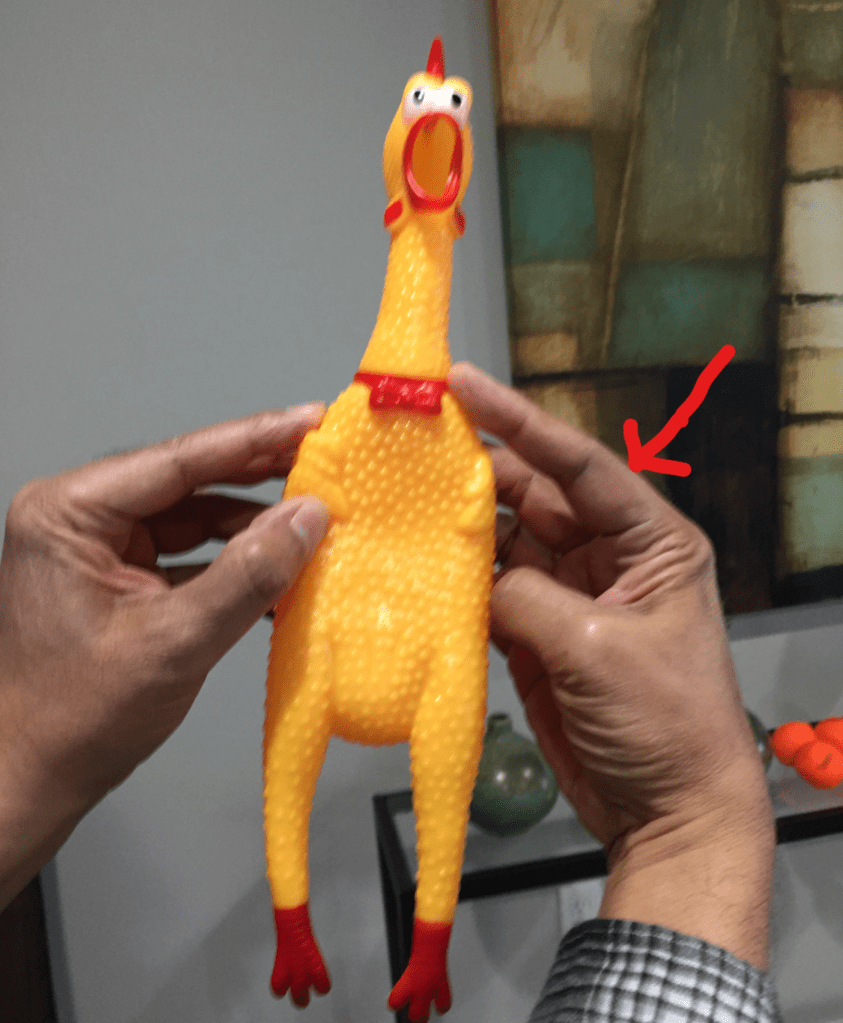
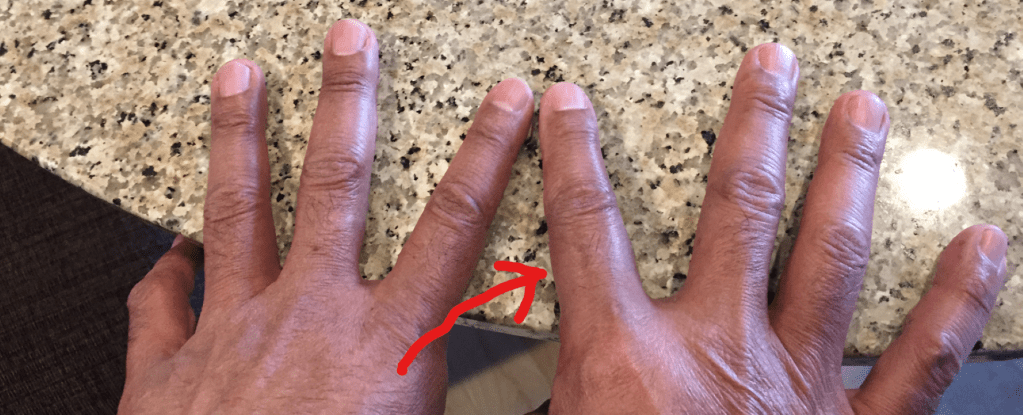
OK, so it didn’t actually peck me in a satanic manner, but I caught it awkwardly in my right hand. My right index finger swelled up and it got a little sore. It’s healing quickly although it did leave a faint bruise.
Then I looked up Shrilling Chicken on the web. What a rabbit hole! I found warnings seemingly all over the web against getting within 100 yards of the thing because of allegations it contains toxic chemicals. In fact, pretty much all the warnings came from a group called Ecowaste Coalition, with the chief spokesperson being someone named Thony Dizon, Chemical Safety Campaigner.
Thony’s main message is that Shrilling Chicken contains unacceptable levels of “toxic plastic additives.” He cites a long list of European countries that have banned Shrilling Chicken, despite the labels on the package, one of which is “CE” which means that it meets European Union standards.
The warnings go on to say that children should not be allowed to even touch it, although there are dozens of ads on the web showing where you can buy it for kids, with one image of a child hugging a Shrilling Chicken as tall as he is. I didn’t know they made them that big.
Thony also goes on to cite an “FDA Advisory No. 2020-042” which clearly is opposed to Shrilling Chicken being on this planet. I spent quite a while looking for that FDA Advisory in the U.S. FDA website. I couldn’t find it.
If you don’t look closely, you’ll miss the part at the bottom of the page indicating that the “FDA” referred to is the one in the Philippines.
The Shrilling Chicken label also indicates that the toy is approved for kids 6 years and older. It also has the Green Dot symbol on it. Wikipedia says it’s “…to indicate to consumers who see the logo that the manufacturer of the product contributes to the cost of recovery and recycling.” The Shrilling Chicken is made in China.
On the whole, I would say Shrilling Chicken is less than demonic in any sense of the word. However, given what happened to me, I probably would not toss it at Svengoolie.
Also, I would suggest you not try to juggle with it. I had to lay off juggling practice briefly so I can heal up.
Finally, I have found a copy of the FDA recommendation to the DEA to reschedule Marijuana from Schedule I to Schedule III. The whole document is in Dropbox and is 252 pages long. The actual recommendation starts on page 62. The basis for the recommendation is three-fold:
Marijuana has less abuse potential other drugs in Schedule I and II
Marijuana has a currently accepted medical use in treatment in the U.S.
Abuse of marijuana may lead to moderate or low physical dependence or high psychological dependence
The third one sounds like a reason not to reschedule marijuana until you read the clarifying text, which indicates low likelihood of serious outcomes.
On the other hand, the FDA did request feedback from professional organizations on the level of concern that might lead to not recommending marijuana. Only the American Psychiatric Association had reservations against it (pages 27-28):
“FDA also considered position statements from professional organizations relevant to the indications discussed. The vast majority of professional organizations did not recommend the use of marijuana in their respective specialty; however, none specifically recommended against it, with the exception of the American Psychiatric Association (APA), which stated that marijuana is known to worsen certain psychiatric conditions.”
Further, in Iowa which has passed restricted legislation since 2017, there is disagreement about a new bill, House Study Bill 665, which would add more regulation to the sale of some hemp products. Hemp product growers are less than pleased with it. It would restrict minors from access to all hemp products, even those not containing THC. Mental health advocates, while supporting medical marijuana, are understandably concerned about the psychiatric risks attributed to cannabis, especially in adolescents.
There is a recently published paper written by Canadian authors who raise concerns about the emergency room evaluations of children in the context of marijuana exposures. (Crocker CE, Emsley J, Tibbo PG. Mental health adverse events with cannabis use diagnosed in the Emergency Department: what are we finding now and are our findings accurate? Front Psychiatry. 2023 May 25;14:1093081. doi: 10.3389/fpsyt.2023.1093081. PMID: 37304435; PMCID: PMC10247977.):
“There are more studies on the impact of cannabis on mental health in the adolescent population since our last review. One recent study using sentinel surveillance of self-harm using the electronic Canadian Hospitals Injury Reporting and Prevention Program from 2011 to 2019 showed an increase of 15.9% per year in self harm with intentional substance-related injuries exceeding unintentional injury cases and 92.3% of the cannabis-related self-harm being in the 10–19 years of age group.”
I’m ambivalent about the FDA recommendation to reschedule marijuana. On the one hand, marijuana is probably less dangerous than alcohol. On the other hand, if it’s your child that has the bad outcome related to marijuana, you’d likely be opposed to making a change.
Sena recently got her bottle of Super Beets with Grape Seed Extract delivered the other day. They are capsules and the label enthusiastically advertises that they are “non-GMO” and will enable the average human to leap tall buildings in a single bound within just minutes of swallowing a total of 9,000 capsules (3 caps per serving and 90 servings per bottle). Just kidding. Sena will take only one capsule a day for now.
They are made and marketed by HumanN and they prominently display important information on the bottle:
“These statements have not been evaluated by the Food and Drug Administration. This product is not intended to diagnose, treat, cure, or prevent any disease.”
Just so you know, the FDA doesn’t approve dietary supplements for safety or effectiveness, although they recently put together a review of scientific data on Cannabis for the HHS which may lead to the DEA changing the schedule of marijuana from Schedule I to Schedule III along with the scientific conclusion that certain formulations of the product may enable the user to leap tall buildings in a single bound—or least feel like he can. Just kidding.
Wait till you see the data on their new product, Chupacabra Chewables. The chews are shaped like little chupacabras and mutilated chickens. Just kidding, they don’t make anything like that, and even if they did, you can be sure it would be non-GMO.
Even though the FDA does not approve dietary supplements (or disapprove of marijuana apparently), that non-GMO detail is something the FDA does have an opinion about. They say on their Agricultural Biotechnology web page that “GMO foods are as healthful and safe to eat as their non-GMO counterparts.”
I searched the internet for studies on super beets and grape seed extract and it turns out there has been some research published about them. There was a meta-analysis in 2017 in which the results that beet juice has blood pressure lowering effects:
Bahadoran Z, Mirmiran P, Kabir A, Azizi F, Ghasemi A. The Nitrate-Independent Blood Pressure-Lowering Effect of Beetroot Juice: A Systematic Review and Meta-Analysis. Adv Nutr. 2017 Nov 15;8(6):830-838. doi: 10.3945/an.117.016717. Erratum in: Adv Nutr. 2018 May 1;9(3):274. PMID: 29141968; PMCID: PMC5683004.
And there was a randomized, placebo-controlled study also published in 2017 (a good year for supplement studies evidently) showing that grape seed extract modulated blood pressure. It also relieved perceived stress:
Schön C, Allegrini P, Engelhart-Jentzsch K, Riva A, Petrangolini G. Grape Seed Extract Positively Modulates Blood Pressure and Perceived Stress: A Randomized, Double-Blind, Placebo-Controlled Study in Healthy Volunteers. Nutrients. 2021 Feb 17;13(2):654. doi: 10.3390/nu13020654. PMID: 33671310; PMCID: PMC7922661.
I’m going to pass for now on the beet and grape seed extract caps. I can already leap tall buildings in a single bound.
This post is mainly a reminiscence about my days as a consultation-liaison psychiatrist. I often evaluated patients who had chronic hepatitis C. The liver disease itself and the treatment (interferon alfa) often led to patients struggling with depression.
The impetus for this came from noticing a couple of items. One is the recent l blog post about treatment of depression by George Dawson, MD (“Are Medication Trials for Depression Too Long in Duration?”). The other is a Psychiatric Times article about the Star-*D depression treatment study published in Psychiatric Times (“Star*D: It’s Time to Atone and Retract” by Nicolas Badre, MD and Jason Compton, MD).
Back in the day, I thought it made sense to use depression rating scales in my clinic practice. I use the term “clinic practice” reservedly because in actual practice I was too often running the hospital psychiatry consultation service to see outpatients regularly.
There has been a recent call to retract the Star*D study. I wasn’t involved in the study, of course. I was too busy running around the hospital responding to consultation requests. I noticed the criticism in the Psychiatric Times article by Badre and Compton of the specific depression rating scale, the QIDS-SR (which stands for Quick Inventory of Depressive Symptomatology (Self-Report).
I tried to integrate into my practice the QIDS-SR as well as the Clinically Useful Depression Outcome Scale (CUDOS). The latter was designed by psychiatrist Dr. Mark Zimmerman around 2008. I believed in the principle of measurement-based assessment of psychiatric symptoms and did my level best to integrate them into my practice.
It was very difficult to do. My patients were typically suffering from both medical and psychiatric illness. Often, they had physical symptoms that you could attribute to either the medical problem itself or “depression”—or both. This is a common challenge in consultation psychiatry.
Returning to my experience with patients who had chronic hepatitis C, in my early career, some of them who were on interferon alfa would not uncommonly develop depressive symptoms during treatment. Sometimes that meant stopping the treatment. Moreover, they sometimes had other side effects including thyroid function abnormalities, which can also cause mood disturbance.
There have been debates about whether to count physical symptoms in depression because of the overlapping symptoms: fatigue, appetite loss, trouble sleeping and the like. There’s also what has been called the “fallacy of good reasons.” Wouldn’t you be depressed too if you were sick and tired of being sick and tired? This could lead to undertreatment of depression. Some diagnostic models suggested counting all symptoms regardless of etiology.
Some randomized controlled trials of antidepressants in the past showed antidepressants were effective in the medically ill with depression. Others showed they were not better than placebo.
Nowadays there is a new pharmacologic approach to treating hepatitis C and those are in the category of direct-acting antivirals (DAA). According to fairly recent literature, the DAAs offer a better chance of cure of hepatitis C and less psychiatric side effects. That doesn’t mean psychiatrists are no longer needed. The common issues such as comorbid substance use and cognitive disorders, highlighting the ongoing need for collaborative care between medicine and psychiatry.
I’ve seen an article posted in February of this year on the American Veterinary Medical Association (AVMA) about there being a plan afoot to change marijuana from DEA Schedule I to III or remove it from the Controlled Substances Act. I couldn’t find out anything about it except in in the AVMA article.
I can’t find what the FDA, HHS, or the DEA may or may not be doing as far as taking any action on about this, if any. I think it’s interesting that the AVMA reports the HHS plan to ask the DEA to change the scheduling of marijuana was “leaked” to the news outlets. There is a link to a New York Times story about it. I guess that’s better than nothing, though some might argue the point.
The AVMA article also linked to a letter from several members of congress urging the DEA to change the scheduling of marijuana, remove it from the Controlled Substances Act or risk getting their knuckles rapped with a ruler by Senator Chuck Schumer. Huh, what’s up with that?
I looked at the HHS website and found nothing suggesting that they are going after the DEA with a fire hose to get this done. The DEA is not mentioning anything about the project on their Drug Information web page.
The only ones talking about this publicly so far are the banks, the weed growers, and the AVMA as far as I can tell. The impression I get is that something is going to happen in a matter of months about decriminalizing and rescheduling marijuana. Things usually don’t happen that quickly in government.
I thought I was finished with this post until yesterday when I read U.S. Senator Mitt Romney’s letter to the DEA urging it not to move marijuana from Schedule I to Schedule III because it would violate something I needed to learn more about, which is an international treaty called the Single Convention.
The Single Convention was ratified by the U.S. Senate in 1967 and it’s part of an international treaty which says marijuana must remain classified as either Class I or II—until a congressman can clearly demonstrate the ability to walk heel to toe in a straight line for a distance not less than 10 yards after smoking a standard large bong of high-grade marijuana.
One thing I can gather from Senator Romney’s letter is that it verifies HHS’ did in fact recommend that the DEA reschedule marijuana.
We’re on a Svengoolie roll lately. I watched the Svengoolie show last Saturday and the made for TV movie was Dan Curtis’ Dracula. It was made in 1974. I thought I’d never seen this film before but that final scene in which Dracula (played by the phenomenal heavy, Jack Palance) gets skewered looked familiar. I may have seen part of it a long time ago.
I read the Bram Stoker novel, Dracula years ago when I was just a kid. It’s a scary book. I haven’t seen many movies about Dracula. I think we saw Bram Stoker’s Dracula produced and directed by Francis Ford Coppola, which came out in 1992.
In fact, Dan Curtis’ Dracula (produced and directed by Dan Curtis) was at first called Bram Stoker’s Dracula, although the title had to be changed so they wouldn’t be confused with each other. I got one joke from Svengoolie:
What’s Dracula’s favorite ice cream? Veinilla.
When you look at Svengoolie’s comments section about the movie, it’s astonishing to see there are over 3,900 comments (still counting) and over 3,000 just during the movie.
I thought Jack Palance was riveting as Dracula. Sena didn’t watch the show with me but she remembered Palance’s antics during the 1992 Academy Awards when he got the Oscar for best supporting actor in City Slickers. After he got the Oscar, he moved away from the podium, dropped to the floor and did one-arm pushups—and he was 72 years old at the time. I never saw that, probably because I was on call as a first-year psychiatry resident.
This upcoming Saturday, the movie will be Gargoyles, which I’ve never seen or even heard of before. Svengoolie is known for cheesy films, but many of the stars in some of them went on to have successful careers.
Sena plans to watch it with me! And she ordered a glow in the dark Svengoolie T-shirt as well as a rubber chicken for me. Svengoolie does a lot of dad jokes and he gets rubber chickens tossed at him. I’ll probably try to juggle using the rubber chicken.











 Go Retire Psychiatrist