Svengoolie Movie: “The Brides of Dracula”!

Svengoolie Intro: “Calling all stations! Clear the air lanes! Clear all air lanes for the big broadcast!”

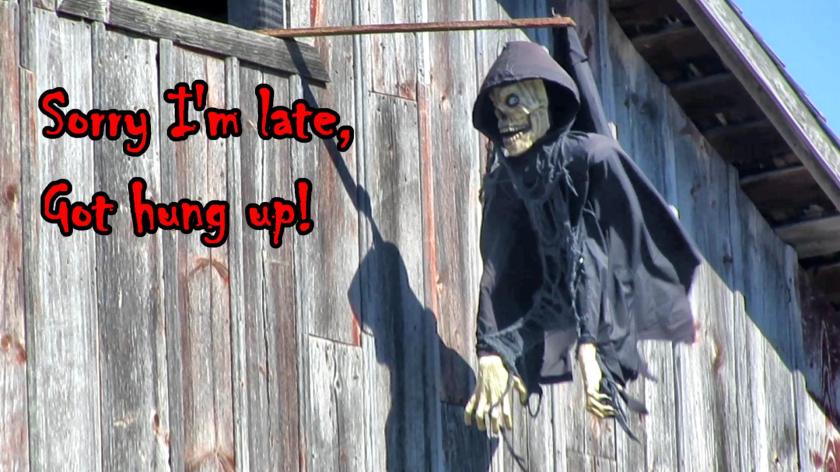
It’s almost Christmas and while I was watching the Svengoolie movie “The Brides of Dracula” last night, it struck me that the chief vampire Baron Meinster’s eyes reminded me of holly berries. Yo, Hondo, somebody needs to break out the Extra Strength Visine!

You probably don’t remember the sequels to this film:

The Rides of Dracula, about a vampire’s collection of fancy horse drawn carriages; he’s sort of like the Jay Leno of wealthy car collectors.

The Double Wides of Dracula, about a vampire who’s the landlord of a mobile home park and charges extravagant “rent” (several pints of blood).

Just to clarify, despite the title of the 1960 British bloodsucker movie from Hammer Film Productions, the boss biter is not played by Christopher Lee (because he wanted too much money) but by David Peel so he’s not Dracula but both vampires roll their bloodshot eyes at every girl they meet.

What’s refreshing about this flick is Baron Meinster the monster actually talks, which Dracula didn’t. In fact, Meinster is articulate and suave, as befitting the wealthy nobleman who just happens to sharpen his fangs on the necks of pretty girls.

And Peel actually gets a sarcastically funny line you might miss unless you listen closely. It’s when Baron Meinster meets the headmaster of the Transylvania School for Ladies Who Want to Cultivate Longer Teeth. Herr Otto Lang (Henry Oscar) gets his comeuppance after he threatens to throw Baron Meinster (whose real identity is at first unknown to him) off the school property when he comes to woo the new teacher Marianne Danielle (Yvonne Monlaur). But after the gracious Meinster reveals who he is, which is the baron who owns the property on which the school sits (after which Herr Lang abruptly changes his tone), the baron reminds Lang that his school does a great job “for such low rent.”

There’s a fair bit of comedy in the few scenes in which a local country medical man, Dr. Tobler (Miles Malleson) meets Dr. Van Helsing. When Tobler reads Van Helsing’s business card, he discovers that Van Helsing is a doctor of many disciplines—except medicine. Earlier, Dr. Tobler prepares a quackery-type vaporizer steam therapy home remedy for himself, which includes myrrh of all things. It turns out you can inhale things like frankincense and myrrh via vaporizer; it sounds so three-wisemen-Christmasy that it fits the season!

On the other hand, Dr. Tobler doesn’t buy Van Helsing’s vampire explanation for why so many villagers are dying (in the undead sense), though he is open to taking a cut of the fees for applying the usual remedies like stakes, garlic, crucifixes, and the occasional self-branding with hot coals that goes way beyond vaporizers.

The bats look arthritic, but other than that the movie is OK. I give it a 2.5/5 Shrilling Chicken rating.

Shrilling Chicken Rating 2.5/5

Big Mo Blues Show Christmas Music Featuring Peter Green

Last night was the second time John Heim (aka Big Mo) introduced the song “Silent Night” by Peter Green and the Men in Blue using the title in German, “Stille Nacht.” He also played it last Friday night, saying “Stille Nacht, Heilige Nacht” in what sounded like perfect German. I immediately liked this version.

I might be remembering this wrong, but when I was a kid, I think I somehow got assigned to sing “Silent Night” when I went out caroling (in a horse-drawn sleigh, no less!) with the members of our church. It’s a good thing smartphones weren’t around to record that.

I remember last week trying to find it on the Big Mo Blues Show playlist but I couldn’t. Then I tried to find it by searching the title in German. I forgot or didn’t hear the name of the band. I gave up looking for it and I wondered why he said the title in German.

So, after I heard it again last night and looked for it on the playlist, I found it right away on the web.

I have never heard of Peter Green, so I looked him up and found a Wikipedia article about him. His original name was Peter Allen Greenbaum. I found out that Greenbaum is a German surname (originally Grünbaum which means greenery or green tree. As an aside, Heim is also a German name. It means “home.” For many people (just listen to his Shout-Outs list!) the Big Mo Blues Show is home.

Those are just observations I find interesting and maybe point to a clue why Big Mo pronounced the title of the song “Silent Night” in German.

Anyway, the Wikipedia article doesn’t say anything about Peter Green’s ancestry. He was born in 1946 in London and died in his sleep at the age of 73 on Canvey Island, Essex.

He was a gifted blues rock guitarist and singer-songwriter and was founder and original leader of the band Fleetwood Mac. He was a very influential figure in the British blues movement. Some thought he was greater than the other often-mentioned blues guitarist, Eric Clapton.

Peter got some coaching early in life from his older brother but was essentially self-taught by the age of 11. In the mid to late 1960’s people were calling him “The Green God” which was similar to what many were calling Eric Clapton (“God’).

Around 1969(70) Peter started to develop signs of mental illness and during the 1970s he also used LSD several times. Eventually he was diagnosed with schizophrenia. Like other people who develop psychiatric illness, it was probably difficult to settle the chicken/egg question of which came first. He attributed much of his mental health issues to his use of LSD. He was hospitalized and treated with electroconvulsive therapy (ECT) in the mid-1970s.

However, by the 1980s, he returned to the music scene. He was inducted into the Rock and Roll Hall of Fame in 1998. He was described as being more interested in expressing emotion in music rather than displaying dazzling technical skill. He influenced many musicians.

Merry Christmas!

Swearing as a Performance Improvement Method?

I read this article about swearing being a good thing to do to increase your workout performance or whatever. There’s a link to the study that a researcher says supports that conclusion. I mean this story is talking about really bad words being good for you. It reminds me of a time when I was a pre-teen kid and broke my wrist falling out of a barn loft. I don’t remember exactly how I got to the emergency room. We didn’t have a car so our next-door neighbor must have driven me with my crooked arm and my hysterical mom to the hospital.

My mom was in the emergency room with me. When I cut loose with a torrent of really bad words, nurses had to practically carry her out because she fainted. This was right after I asked the doctor if it was OK if I swore and he said “Go ahead,” injected anesthetic—and immediately started to manhandle my wrist. I don’t think I ever swore in front of my mom before that.

I don’t remember if the swearing helped me withstand the pain or not. I don’t think so.

There was my other trip to a hospital for chest surgery when I was in my early teens. I had a chest tube after the operation. My roommate had undergone some kind of abdominal surgery. We had a lot of stitches and were in a lot of pain, which was bearable if we didn’t move at all. It even hurt to breathe. But the other factor was the TV in our room. It was way across the room and there was some kind of comedy show on. It was really funny—which made us feel really terrible. We could barely move and even had to talk quietly, yet this funny show made us laugh, which expanded our chest and abdomen areas, stretching the sutures. It was excruciating.

Even swearing would have hurt, not to mention laughing out loud. We really couldn’t stand to laugh and it was too bad I can’t describe the sound of two guys trying not to even chuckle. If you e4ver watched Loony Tunes cartoons and remember how Elmer Fudd sounded with he laughed—that was how we sounded because we were trying to suppress laughing. It was funny but pitiful. My roomie finally made this desperate slow motion move out of bed, crept to the TV and shut it off. I was so grateful. Neither one of us ever swore.

The other thing this swearing for power reminds me of is the movie Signs, which starred Mel Gibson as Graham Hess. It was about an alien invasion and in one scene, some people/aliens (they don’t’ yet know what) are running around the house and Graham’s brother Merril (Joaquin Phoenix) are getting set to chase them. Merril tells Graham to yell and curse, although because Graham is a former Episcopal priest, swearing is beyond him:

  • All right, listen, we both go outside, move around the house in opposite directions. We act crazy, insane with anger, make them crap in their pants, force them around till we meet up on the other side.
  • Graham Hess: Explain “act crazy”.
  • Merrill: You know, curse and stuff.
  • Graham Hess: You want me to curse?
  • Merrill: You don’t mean it. It’s just for show. What?
  • Graham Hess: Well, it won’t be convincing. It doesn’t sound natural when I curse.
  • Merrill: Just make noises, then.
  • Graham Hess: Explain “noises”.
  • Merrill: Are you gonna do this or what?
  • Graham Hess: No, I’m not.
  • Merrill: All right, you want them stealing something in the house next time?
  • [outside light comes on]
  • Merrill: On the count of three. One…
  • Graham Hess: All right.
  • Merrill: two… three!
  • Graham Hess: Ahh! I’m insane with anger!
  • Merrill: We’re gonna beat your ass bitch! We’re gonna tear your head off!
  • Graham Hess: I’m losing my mind! It’s time for an ass-whupping!
  • [Merrill and Graham meet each other]
  • Graham Hess: I cursed.
  • Merrill: I heard.

Anyway, I think we have to make a distinction between cursing about something or cursing at someone before we start claiming, like the author of the study says:

“Swearing is literally a calorie-neutral, drug-free, low-cost, readily available tool at our disposal for when we need a boost in performance.”—psychology researcher Richard Stephens of Keele University in the UK.

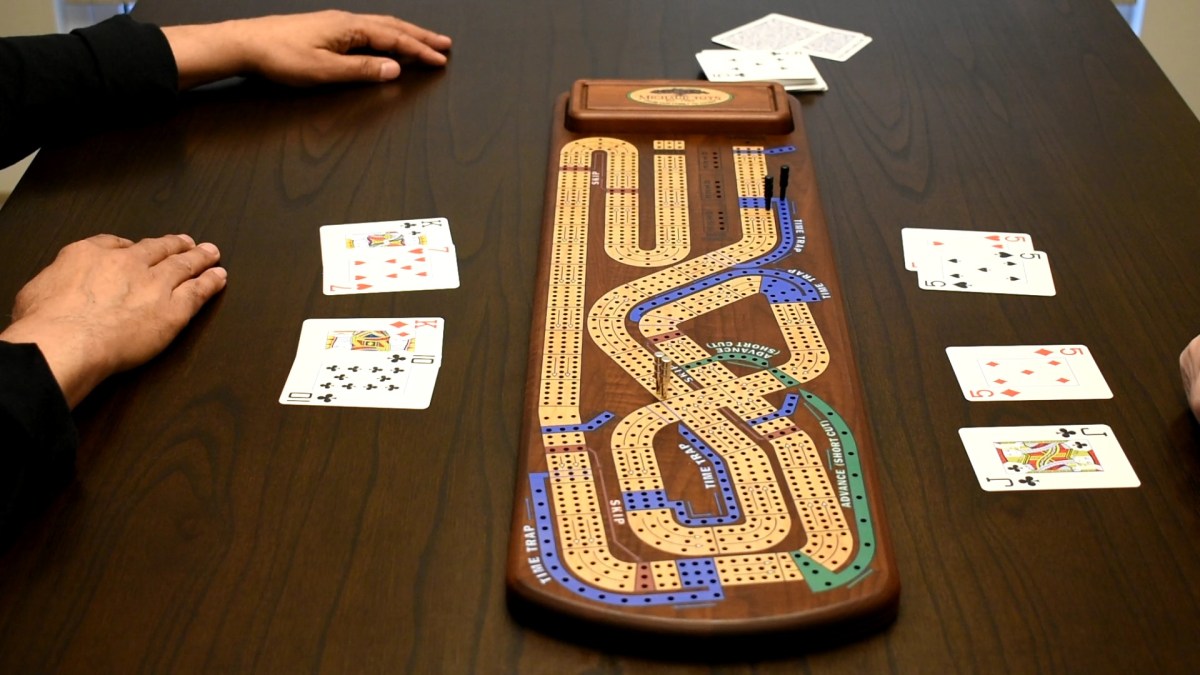
Our House Rules for Crib Wars

Based on what I found out from Artificial Intelligence (AI) yesterday, I thought I’d share our house rules for Crib Wars. The only reason I’m including information from AI is because I couldn’t find specifics on how to manage pegging for the Blue Penalty Box anywhere else.

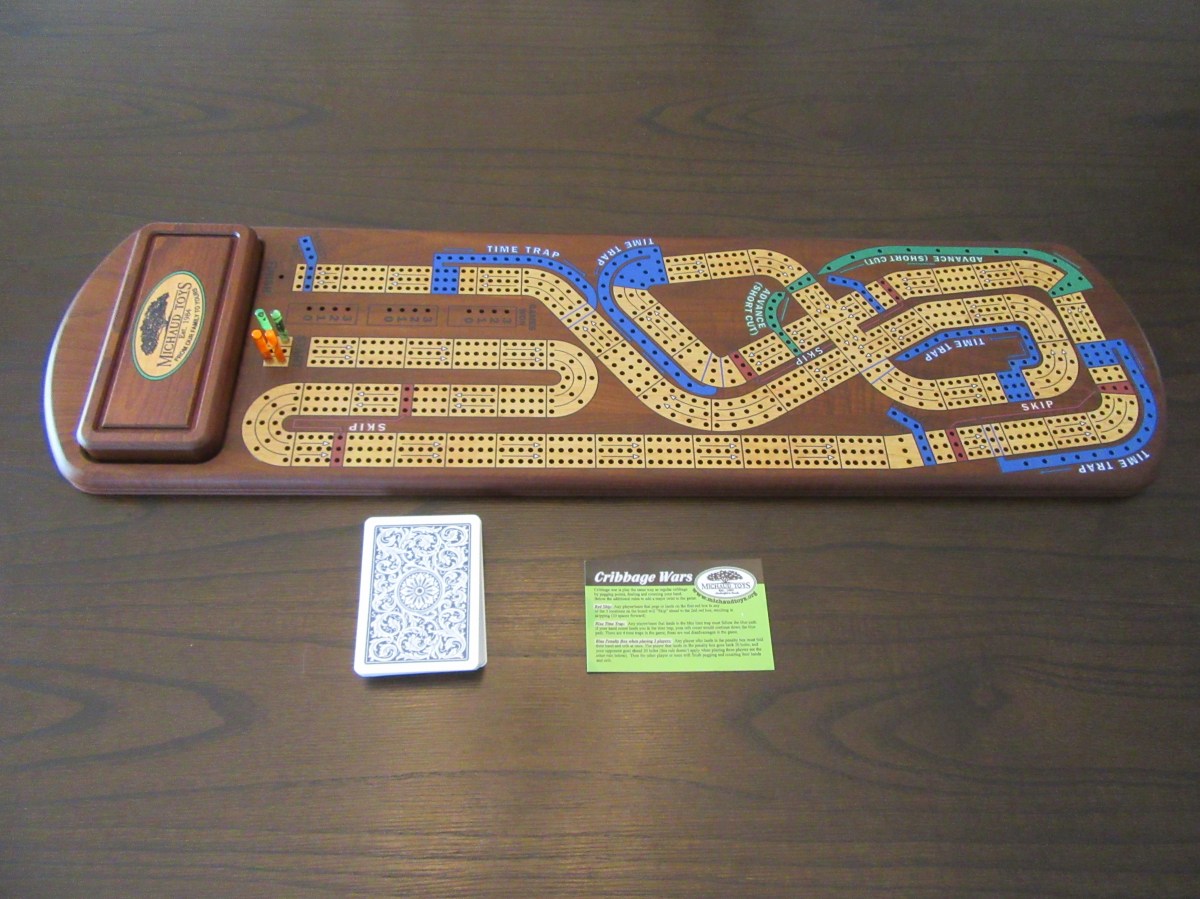
If you already know how to play basic cribbage, you can ignore most of what’s on the rules sheet (available on the web) because there’s only a short section for the Crib Wars rules. It describes the colored areas and what the players are supposed to do with them.

There’s no Muggers Alley on the Ebonwood board and we never play muggins. Below are my updated descriptions of the colored zones, which we discuss and demonstrate during the video.

Red Skips: There are 3 of these. The rule says if you land on the first red box you should slide to the next red box which gets you 20 holes further along the board. The red box just means the set of 3 holes highlighted with a red color. You get from the first one to the next one by just moving the peg 20 holes. You’ll land in the 2nd set of holes marked in red. This is a boon in the first Red Skip area. However, if you pay attention to the directional arrows in the path guiding you, it looks like they accelerate you toward two of the Blue Time Traps.

Blue Time Traps: There are 4 of these and there will be three blue lines, meaning the blue color covers all three holes and all three peg tracks (3 holes along the track and 3 holes across the track). If you land in a set of three holes highlighted in blue, you end up moving to a blue area of holes that actually set you behind several holes. You have to play your way out of them. Players note that you can end up in repetitious cycling back to the traps largely because of how often you can get one or two points at a time while scoring. In fact, some say that if their opponent gets close to a Blue Time Trap they may purposely lead with a five card (something you would rarely if ever do in a standard cribbage game). That could trap the opponent into playing a ten card or a 5 card, which might risk them moving only a couple of holes right back into the Blue Time Trap. The same thing could happen with falling into the Blue Penalty Boxes.

Blue Penalty Boxes: There are three of them. You fall into one of these by moving your peg into one of the single blue hole lines, meaning one blue track across the three peg tracks. This is a disaster because you immediately have to move back 20 holes and fold your hand and your crib while your opponent moves forward 20 holes and counts their hand and crib (if they have the crib). Asking AI is the only way I could find out how to learn how to peg moving back and forward 20 holes. The player who lands in the penalty box moves their front peg back 20 holes starting from the penalty box. You don’t move the rear peg. If your front peg lands behind the rear peg, it becomes the new rear peg. The player who doesn’t land in the penalty box moves their front peg forward 20 holes. The player who lands in the penalty box immediately folds their hand and crib.

Green Advances: There are two of them. If you land in a green hole, you take short cut path. The long one saves you from moving toward the Blue Time Trap in the left lower quadrant. You don’t avoid the potential other trap above. If you take the normal track instead you end up moving toward the lower left quadrant Blue Time Trap—but you have a chance at getting into the short Green Advance track before you get there which loops back away from it and you end up going in the direction of the upper Blue Time Trap.

You think you’re in the clear after that? You’re not because there is a sadistically placed Blue Penalty Box in the next to the last hole before the Finish Line!

Dr. Susan Shen University of Iowa Psychiatrist Wins Prestigious Avenir Award for Research!

This just in! University of Iowa Psychiatrist Dr. Susan Shen, MD, PhD, is an assistant professor of psychiatry at The University of Iowa Carver College of Medicine and, hold on to your hat, she’s the first female psychiatrist, the first from Iowa, and only the third psychiatrist overall to receive to win the Avenir Award (French for “future), a highly competitive grant!

The $2.3 million dollar grant will help fund her lab’s research into the underpinnings of substance use and psychiatric disorders. The grant is administered through the National Institute on Drug Abuse (NIDA), one of the National Institutes of Health (NIH).

Give Dr. Susan Shen a big shout-out!

A Conversation with AI about Backward Pegging in Crib Wars and Wicked Cribbage

I thought it might be interesting to see what AI has to say about backward pegging in Crib Wars and Wicked Cribbage. We haven’t found a set of Crib Wars that are specific on the 20-hole backward pegging because they don’t specify which peg you move back 20 holes. According to AI it’s the front peg you move back, starting the count at the penalty box hole.

In Wicked Cribbage you first move the rear peg back whatever number of holes the Twinkler or Lugger cards tells you and then you move the front peg back behind that—and it apparently doesn’t matter where you place that peg, just a few holes behind the front peg you moved back from the penalty box hole (the instructions are as follows: “Although it might sound logically easy to peg backward, it is quite tricky. Begin by using your back peg (no matter where it is) to count backward from your front peg. And (here’s the tricky part) do not forget to move your front peg behind your newly pegged back peg.”

The American Cribbage Congress (ACC) tournament expert does not have answers for questions about this because backwards pegging is not a thing in the ACC. The ACC representative says “Crazy questions are welcome!”

And these games are crazy. I usually try to ignore AI but here’s a summary of the question and answer sesssion today:

Crib Wars penalty box question: If you have to move backwards 20 holes in crib wars because you land in the penalty box, do you move the front or the back peg?

AI answer: In Crib Wars, when you move your peg back 20 holes for landing in the penalty box, you always move your front peg backwards, as pegging in cribbage involves advancing the rear peg to represent your score, and penalties just reverse that action, moving your leading peg back to show the score loss. You just count back 20 holes from your current position on the board, essentially putting your leading peg back where it was or further, then your rear peg stays put until you score again. 

Here’s the breakdown:

  1. Penalty Trigger: You land on a penalty square (or your hand/crib score does).
  2. Opponent Advances: Your opponent moves their peg forward 20 holes.
  3. You Move Back: You move your peg back 20 holes.
  4. Which Peg? You move your front peg back those 20 spaces, as that represents your current score, and your rear peg stays put until you earn more points. 

Dec 17, 2025 to AI: Which peg do you move forwards 20 holes in crib wars if your opponent lands in the penalty box; the front or the rear peg which normally leaps over the front peg?

When your opponent lands in the penalty box in a two-player game of Crib Wars, you move your front peg forward 20 holes. 

The rules state: “If two people or teams are playing, the team that hit the penalty box goes back twenty holes, and your opponents go ahead twenty holes”. 

The normal process of pegging in cribbage involves moving the rearmost peg ahead of the front peg to indicate your new score. However, a specific rule for the 20-hole advance in Crib Wars is not explicitly tied to the standard “rear peg jumps over front peg” scoring mechanism, it is a bonus advance of 20 holes. Therefore, you use your front peg to mark your new forward position, consistent with how you would mark any other score in a continuous manner. 

  • You take your front peg and advance it 20 holes from its current position.
  • Your opponent moves their own peg(s) backward 20 holes

Landing Behind the Rear Peg: If a 20-hole backward move places the now moving peg (which is currently the front peg) at a position behind the stationary rear peg, it effectively becomes the new rear peg. The other peg, which was the previous rear peg, is now the front peg, representing the current score, which is a common scenario in standard cribbage scoring when points are added in sequence. 

The process for a two-player game is as follows:

  • The penalized player folds their hand and crib.
  • The penalized player uses their front peg to count backward 20 holes from their current position in the penalty box.
  • The opponent advances 20 holes (using their own pegs in the standard leapfrog manner) and continues counting their hand and crib normally. 

For games with three or more players, the penalized player sits out for three consecutive hands instead of moving back 20 holes.”

December 17, 2025 question: In crib wars if I land in the penalty box, where do I start counting the 20-hole penalty backwards with my front peg, from right behind the penalty box or starting behind the rear peg?

AI Answer: “In Crib Wars, when you land in the penalty box, you start counting the 20-hole penalty backward using your front peg, beginning from the hole you are currently on (the penalty box hole itself is the starting point for counting back the 20 spaces). 

Dec 17, 2025 to AI: Which peg do you move forwards 20 holes in crib wars if your opponent lands in the penalty box; the front or the rear peg which normally leaps over the front peg?

When your opponent lands in the penalty box in a two-player game of Crib Wars, you move your front peg forward 20 holes. 

The rules state: “If two people or teams are playing, the team that hit the penalty box goes back twenty holes, and your opponents go ahead twenty holes”. 

The normal process of pegging in cribbage involves moving the rearmost peg ahead of the front peg to indicate your new score. However, a specific rule for the 20-hole advance in Crib Wars is not explicitly tied to the standard “rear peg jumps over front peg” scoring mechanism, it is a bonus advance of 20 holes. Therefore, you use your front peg to mark your new forward position, consistent with how you would mark any other score in a continuous manner. 

  • You take your front peg and advance it 20 holes from its current position.
  • Your opponent moves their own peg(s) backward 20 holes

December 17, 2025: Question to AI In Wicked Cribbage, there’s a specific rule for pegging backwards because a special card specifies moving backwards and is this wrong? The rule is as follows: “Although it might sound logically easy to peg backward, it is quite tricky. Begin by using your back peg (no matter where it is) to count backward from your front peg. And (here s the tricky part) do not forget to move your front peg behind your newly pegged back peg.”

AI Answer: “The rule you are describing for pegging backwards in Wicked Cribbage is the correct procedure for standard cribbage pegging (known as “leapfrogging”), but applied in reverse. The core mechanic is consistent with standard pegging principles, just adapted for a backward movement. 

Is the Rule Wrong?

No, the rule is not wrong; it is an official variation specific to the Wicked Cribbage expansion. The Wicked Cribbage game introduces special “Twinkler” and “Lugger” cards, some of which explicitly cause a player to peg backwards. The rule you described is the intended method for executing that backward movement. 

How to Peg Backwards in Wicked Cribbage

The rule ensures that when you peg backward, you maintain the standard cribbage practice of having a “placeholder” peg and a “moving” peg, making the score easy to verify: 

  • Start with your back peg: Identify the peg that is currently trailing.
  • Count backward: Move this back peg the required number of points backward from your front peg’s current position.
  • Leapfrog: Your new position is now behind what was previously your back peg (which is now your front peg, holding the previous score). 

This “leapfrog in reverse” ensures that the space between your two pegs continues to represent the points just scored (or in this case, lost/moved back), allowing for easy verification of the move by your opponent.”

December 17, 2025: Question to AI: Are the rules for pegging backwards in Crib Wars inconsistent with the rules for pegging backwards in Wicked Cribbage?

AI Answer: “Yes, the rules for pegging backwards in Crib Wars and Wicked Cribbage are inconsistent because they employ entirely different mechanics and triggers for moving pegs backward. 

Crib Wars Rules for Pegging Backwards

In Crib Wars, pegging backwards is a penalty associated with specific locations on a specialized, longer game board (363 holes instead of 121). The rules are a variation of the game “Snakes and Ladders”. 

  • Penalty Boxes (Blue): If a player lands exactly on a blue penalty box space via pegging or hand count, they are penalized. In a two-player game, the penalized player moves back 20 holes, and their opponent moves forward 20 holes.
  • Time Traps (Blue Paths): Landing on a blue time trap space forces a player to follow a designated backward path on the board, losing many spaces. The peg literally moves backward along the blue path and then rejoins the main track further back than where it entered. 

Wicked Cribbage Rules for Pegging Backwards

Wicked Cribbage uses a standard cribbage board and incorporates an extra deck of “Wicked” cards (Twinklers and Luggers) that introduce random, special abilities. 

  • Twinkler and Lugger Cards: Pegging backwards is one of many potential effects caused by drawing and playing a specific “Wicked” card. These cards are drawn when a player reaches exactly 15 or 31 during the play phase (Twinkler) or lands on a multiple of 5 during the show phase (Lugger). The effect (e.g., “cause someone to peg backwards”) is random and dictated by the specific card drawn. 

In summary, Crib Wars uses a board-based mechanic where landing on specific physical spaces triggers a forced backward movement, while Wicked Cribbage uses a card-based mechanic where a drawn action card dictates a backward movement as an effect.”

December 17, 2017) Further AI specific to Wicked Cribbage and Crib Wars:

The backward pegging methods in the game variations Wicked Cribbage and Crib Wars are generally not consistent with official American Cribbage Congress (ACC) rules. These variations introduce specific “house rules” for backward movement as core mechanics, which are not standard in ACC tournament play. 

The ACC rules mandate that all scoring is done by moving the back peg ahead of the front peg, always in a forward direction along the track. While ACC rules do contain specific penalties that involve moving a player’s peg backward (such as the 15-point penalty for a false claim of game), the general method of playing backwards as a standard scoring or movement option is unique to the game variations. 

Key Differences

  • Standard ACC Play: The only time a player’s peg moves backward is as a penalty for a serious infraction (e.g., false claim of game, where the pegs are moved back 15 holes from the out hole). The normal method of play is strictly forward movement.
  • Wicked Cribbage/Crib Wars: These games are designed as distinct variations and introduce non-standard mechanics that involve regular backward movement or penalties to move forward/backward in specific zones (like “Muggers Alley” or “Penalty Boxes”). In some “reverse cribbage” variations, the explicit goal is to avoid scoring points and force your opponent to move forward, which is the opposite of the standard game. 

In summary, the backward pegging methods as a general game mechanic are a feature of the specific game variations and are not an official part of the core ACC rules for traditional cribbage.

I’d say that’s enough.

New Do it Yourself (more or less) Electrotherapy for Depression at Home!

OK, so the title is a little provocative; on the other hand, this is my take on a legitimate treatment for depression that was just approved by the FDA only last week. A company called Flow Neuroscience is marketing the newly approved FL-100 device for treatment of depression and their website definitely has their marketing skills down. And I definitely was reminded of a TV commercial about removing your own appendix.

That’s my smartass joke, but hang on, there’s more to it than jokes. I had to search around a while to find actual FDA web evidence that they actually did approve the FL-100, but I was saved by the reliable and trustworthy Psychiatric Times article about the FL-100 with references that I could verified the FDA’s approval.

So, I’m a retired psychiatrist and I was a clinician educator type doctor, not a neuroscientist, but I can read the FDA approval document section XV. Conclusions Drawn from Preclinical and Clinical Studies (starts on page 12). It boils down to, yeah, this device’s probable benefits outweigh its probable risks.

The Effectiveness Conclusions subsection on effectiveness outcomes at Week 10 contains what sounds like realistic answers: “The medical literature lacks consensus regarding what constitutes a clinically significant or meaningful between-group difference in HDRS-17 scores. As such, the clinical significance or meaningfulness of the between-group difference of -2.3 points on the HDRS-17 scale has not been established. Nevertheless, the 2.3 point between-group difference helps support the view that FL-100 provides probable benefit.”

I’m not familiar with the EQ-5D-3L scale of health-related quality of life but the summary says:

“The EQ-5D-3L measures a person’s health-related quality of life by assessing five dimensions: mobility, self-care, usual activities, pain/discomfort, and anxiety/depression. There was no between-group statistical difference in EQ5D-3L scores at Week 10. The EQ-5D-3L frequently fails to detect mild depressive symptoms, as individuals with subclinical depression often select “no problems” on the anxiety/depression dimension. The insensitivity of EQ-5D-3L is documented in the literature.”

I happen to think that comparison of medical treatments with psychotherapy is a good idea but: “Data were not provided regarding FL-100 used adjunctively with psychotherapy or with psychotherapy and antidepressants.”

The device has no recommendation for use with patients with treatment-resistant depression:

“Patients who previously had an inadequate clinical response to two or more antidepressants at an adequate dose and duration were excluded from the study, limiting the evidence for use of the FL-100 in a more treatment resistant population.”

The potential risks are first degree skin burns if you’re not careful with the electrodes, headaches, and scalp pain. The benefit is modest but outweighs the risk.

You can use the device at home under the supervision of a clinician—they don’t do house calls so you’d presumably do this by zoom call. You can also get advice through an app on your device, which may or may not be a monotonal AI. You pay $500-800 and there won’t be any answers to questions about insurance coverage until at least next spring. But it’s being used by tens of thousands of people in Europe and beyond.

So go ahead, take your own appendix out (just kidding; put that jack knife away!). Did you know that at least one guy actually did that? A Russian surgeon, Dr. Leonid Rogozov managed it in 1961 while he was stranded in Antarctica.

It’s just my opinion, but the headset could be more stylish.

American Flags Flying at Half-Staff Today in Honor of Iowa Soldiers Killed in Enemy Attack in Syria

Iowa Governor Kim Reynolds ordered all public buildings in Iowa to fly all flags at half-staff until sundown today in honor of two Iowa Army National Guard soldiers and an American civilian interpreter killed in an enemy attack in Palmyra, Syria on December 13, 2025.

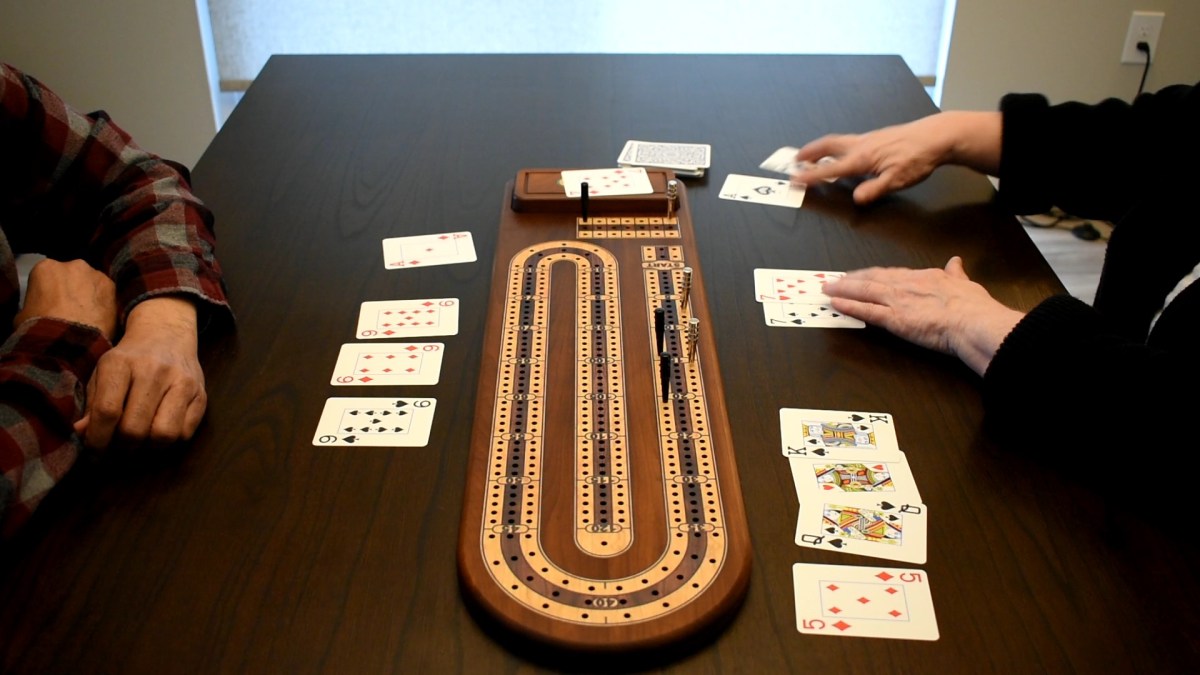
The Big Crib War Hybrid with 10 Card Cribbage!

Well, we did manage to get through a hybrid of 10-card Cribbage and Crib Wars although I had a kerfuffle with pegging which led to extra points I shouldn’t have got. I probably made other mistakes (just let me know).

However, it probably didn’t make that much difference. As luck would have it (as it tends to do in cribbage and in life) I won mainly because Sena ended up going through the final Blue Time Trap twice!

 Here’s a recap of the rules for 10-card Cribbage: This one is fun. Deal 10 cards each and two to the dealer’s crib. Divide your remaining 8 cards into 4 separate hands. Use one for pegging and both for the show (means scoring your hands). Play to 121 (unless you’re playing Crib Wars and then you’re in for a marathon). You get big scores but they’re manageable.

We completed the game in an hour, very similar to our time in regular 6 card cribbage on the big Ebonwood Crib Wars board. I started to get a little punchy mid to late phase in the game because of the several hands you get in 10-card cribbage. It’s a lot to count.

High scores over the long haul probably don’t affect what fairways and sand traps you fall into.

If you already know how to play basic cribbage, you can ignore most of what’s on the rules sheet (available on the web) because there’s only a short section for the Crib Wars rules. It describes the colored areas and what the players are supposed to do with them.

There’s no Muggers Alley on the Ebonwood board and we never play muggins. Below are my updated descriptions of the colored zones, which we discuss and demonstrate during the video.

Red Skips: There are 3 of these. The rule says if you land on the first red box you should slide to the next red box which gets you 20 holes further along the board. The red box just means the set of 3 holes highlighted with a red color. You get from the first one to the next one by just moving the peg 20 holes. You’ll land in the 2nd set of holes marked in red. This is a boon in the first Red Skip area. However, if you pay attention to the directional arrows in the path guiding you, it looks like they accelerate you toward two of the Blue Time Traps.

Blue Time Traps: There are 4 of these and there will be three blue lines, meaning the blue color covers all three holes and all three peg tracks (3 holes along the track and 3 holes across the track). If you land in a set of three holes highlighted in blue, you end up moving to a blue area of holes that actually set you behind several holes. You have to play your way out of them. Players note that you can end up in repetitious cycling back to the traps largely because of how often you can get one or two points at a time while scoring. In fact, some say that if their opponent gets close to a Blue Time Trap they may purposely lead with a five card (something you would rarely if ever do in a standard cribbage game). That could trap the opponent into playing a ten card or a 5 card, which might risk them moving only a couple of holes right back into the Blue Time Trap. The same thing could happen with falling into the Blue Penalty Boxes.

Blue Penalty Boxes: There are three of them. You fall into one of these by moving your peg into one of the single blue hole lines, meaning one blue track across the three peg tracks. This is a disaster because you immediately have to move back 20 holes and fold your hand and your crib while your opponent moves forward 20 holes and counts their hand and crib (if they have the crib). Asking AI is the only way I could find out how to learn how to peg moving back and forward 20 holes. The player who lands in the penalty box moves their front peg back 20 holes starting from the penalty box. You don’t move the rear peg. If your front peg lands behind the rear peg, it becomes the new rear peg. The player who doesn’t land in the penalty box moves their front peg forward 20 holes. The player who lands in the penalty box immediately folds their hand and crib.

Green Advances: There are two of them. If you land in a green hole, you take short cut path. The long one saves you from moving toward the Blue Time Trap in the left lower quadrant. You don’t avoid the potential other trap above. If you take the normal track instead you end up moving toward the lower left quadrant Blue Time Trap—but you have a chance at getting into the short Green Advance track before you get there which loops back away from it and you end up going in the direction of the upper Blue Time Trap.

You think you’re in the clear after that? You’re not because there is a sadistically placed Blue Penalty Box in the next to the last hole before the Finish Line!

Svengoolie Movie: “Duel” Roaring Road Rage!

Svengoolie Intro: “Calling all stations! Clear the air lanes! Clear all air lanes for the big broadcast!”

Well, we watched the 1971 film “Duel” on the Svengoolie show last night. This was Sena’s second time seeing it and it was my first time watching this truly gripping movie, which was either Steven Spielberg’s first or second feature-length directing effort, depending on whether you believe Wikipedia or Artificial Intelligence (AI).

It started off as a TV movie and was later made into a movie for theaters, although it was inspired by a short story of the same name by Richard Matheson about a man vs machine cat and mouse game, published in a 1971 issue of Playboy. You can find copies of Matheson’s full story on the web, which is puzzling given copyright laws, but I guess some people are getting away with it.

Anyway, Dennis Weaver starred David Mann as a traveling salesman or maybe it was the rust bucket satanic semi-tanker truck which hunts Mann (a name that makes me think of “man” in the general sense of humankind) down on dusty two-lane highways through the California desert in an apparent act of the worst road rage you ever saw, triggered by Mann simply passing it.

At first, I wondered if there was any person actually driving the truck; maybe it was just a driverless demon truck. But on occasion you see a guy’s arm waving to allow Mann to pass him although one time this was into the path of an oncoming car coming from the opposite direction.

Early in the movie, I thought Mann’s radio in his car, which is a Plymouth Valiant (does the car model’s name Valiant signify something?) there is a goofy-sounding radio question and answer show with some guy complaining about a census question asking who is the head of household. The guy sounds really insecure and he obsesses about not being the head of household because he’s not the breadwinner because his wife is, and I think this set the stage for one of the ideas behind the movie, which is male anxiety about not being the “man of the family” and, by extension, this might point to nagging doubts in general about masculinity and the place of men in society.

This is typically where the TV commercials appear with Frank Thomas and Doug Flutie pushing Nugenix Total-T man-boosting snake oil elixir, guaranteed to grow your package 10 times “normal” size, which should make you ask what was going on with those Popeye cartoons in which he swells up after wolfing down a can of spinach and kicks Bluto’s ass followed by Olive Oyl swooning over him.

This radio program almost counts as a character in the film because almost everything that happens afterward is about who is more of a man—Mann or machine. Is that why some of us are anxious about AI?

By the way, were it not for Svengoolie pointing it out, I would never have noticed that what looks like a highway patrol car, which Mann swerves toward but avoids at the last second is actually a pest control vehicle with the name of the company “Grebleips Pest Control”—which is Spielberg spelled backwards.

One of my favorite scenes is the roadside café where Mann gets paranoid about all the guys in there wearing boots similar to those he saw when the guy driving the truck gets out and walks around. The boots are the only parts visible. There are several boot-wearing guys in the café who act like typical non-Nugenix Triple Total Titanic-T needing men who talk with their mouths full, drink beer, scratch their scrotums, and snicker at Mann—who just wants aspirin. He neurotically wonders which one he should confront and when he does—it’s the wrong guy.

I don’t want to overfocus on it but when the radiator hose fails and steam billows all over, engine temperature rising leading to Mann’s car slowing down, overheating and actually shutting down while the raging truck chases him, Mann is able to restart his car. Is that even mechanically possible? I think he stopped, shifted to neutral and coasted for a while, but he never stopped to make temporary repairs. By the way, is it true you can crack an egg over a busted radiator hose as a stopgap fix?

Would taking a dose of Nugenix Whopping Hairy Total-T help at all? Would a satanic truck politely quit chasing you long enough to allow you to do that? Did Mann buy any groceries at the roadside rattlesnake place including eggs?

Is Nugenix Whopping Whackadoodle Walker Texas Ranger Chuck Norris Plays Jenga with Stonehenge Totally Triple T enough to reverse what is happening to American males so that we can see the sequel to Duel—which would be Double Dammit Duel?

Don’t answer that. In any case, I think this is a pretty cool movie and I give it a Shrilling Chicken Rating of 5/5.