I heard a song on the KCCK Big Mo Blues Show that I first heard in June of 2025. The song is “Artificial” by Walter Trout.
At first blush, I agree with what I think is the point of the song, which is basically a protest against artificiality which could manifest in a range of ways from superficiality and dishonesty in communications, attitudes, style of clothing, relationships, and all the way to Artificial Intelligence (AI).
The other connection I make is to the artist himself. Walter Trout developed Hepatitis C (eventually leading to liver transplant) according to a Wikipedia article which connected his lifestyle to contracting the disease. In my role as a consultation-liaison psychiatrist, I saw many patients with Hepatitis C who were referred to psychiatry from gastroenterology.
I was the main psychiatrist who evaluated them for treatment with Interferon-alpha. At the time it was the only treatment for Hepatitis C and was frequently associated with many side effects including depression. I was also one of the psychiatrists consulted as part of liver transplant evaluations.
Trout got very sick from Hepatitis C and made a remarkable (even miraculous) recovery after his liver transplant. Interferon is no longer used to treat Hepatitis C. It has been replaced by direct-acting antiviral (DAA) agents. They’re much better-tolerated and more effective.
The other aspect relevant to Trout’s song is ironic. The newest scientific literature supports the idea that AI can be helpful for diagnosing Hepatitis C, predicting its progression and response to treatment.
That doesn’t mean I’m completely sold on AI.
Aside from that, there’s interesting research suggesting that there may be a link between schizophrenia and bipolar disorder and Hepatitis C infection (which could be hiding deep in the brain’s choroid plexus lining the cerebral ventricles). In other words, some people might have mental illness because of the liver disease itself.
If you think about the dictionary definition of the word “artificial,” you can hardly dismiss this kind of research as insincere.
The National Weather Service predicts “snow squalls” for parts of eastern Iowa today in the afternoon.
I’m only using this GIF because I couldn’t find one for the State Farm commercial captain “A squall’s a’comin’!
Sena recognized the guy in the GIF above as W.C. Fields and wondered if there were any other videos of this scene with audio as well. They aren’t hard to find.
I’m sure you’ve seen the recently published articles on the web encouraging people to try exercising to treat depression. The articles rely on a new systematic review by the Cochrane Database, which you need to carefully interpret—not necessarily the whole paper; you could just skip to the bottom line in the Authors’ Conclusions:
“Authors’ conclusions: Exercise may be moderately more effective than a control intervention for reducing symptoms of depression. Exercise appears to be no more or less effective than psychological or pharmacological treatments, though this conclusion is based on a few small trials. Long-term follow-up was rare. The addition of 35 RCTs (at least 2526 participants) to this update has had very little effect on the estimate of the benefit of exercise on symptoms of depression. If further research is to take place, it should focus on improving trial quality, assessing which characteristics of exercise are effective for different people, and exploring health equity.”
Clegg AJ, Hill JE, Mullin DS, Harris C, Smith CJ, Lightbody CE, Dwan K, Cooney GM, Mead GE, Watkins CL. Exercise for depression. Cochrane Database Syst Rev. 2026 Jan 8;1(1):CD004366. doi: 10.1002/14651858.CD004366.pub7. PMID: 41500513; PMCID: PMC12779368.
As usual, though, several science news web sites talk it up as though it were a big deal. They usually do that at the top and then gradually toward the end of the story they slowly start to confess the truth about the limitations of the review.
I think this type of story could be called filler. It’s content that doesn’t really tell you anything new or earthshaking and most of the time it’s just to fill space left over from the bigger stories.
It’s almost like snake oil. Initially it sounds really good but you know the old saying: If it sounds too good to be true, it probably isn’t true.
This reminds me of my early career as an assistant professor of psychiatry at The University of Iowa. My superiors thought it was a great idea for me to give a major presentation (and it might have even been an Internal Medicine Grand Rounds) about adjustment disorders. I admit I was a new guy and somebody had to talk about something that non-psychiatrists might misdiagnose as a major mood or anxiety disorder.
There’s really not a whole lot to say about how to treat adjustment disorders, but it’s important to distinguish them from other major mood and anxiety disorders. That’s not to say adjustment disorders are unimportant. They can cause considerable distress and even some impairment. By and large, clinicians don’t often recommend treating adjustment disorders with medication, although there are exceptions. The diagnostic criteria are pretty clear. Psychotherapy is often the preferred intervention.
On the other hand, exercise could be one way to address the discomfort of some of those who struggle with adjustment disorders.
There’s a reason for why I so often tell Dad jokes. In keeping with my post from yesterday about Dr. Martin Luther King, Jr’s biographies:
I glued myself to my autobiography. You may not believe it, but that’s my story and I’m sticking to it.
We’ve ordered a couple of biographies about Dr. King. One of them is his autobiography and the other is Jonathan Eig’s book, “King: A Life.”
I’m getting to be too old to write my own autobiography—guess it’ll have to be done by autopen. Sorry about that one (no I’m not).
I’m a psychiatrist so I know when I’m using humor as a defense mechanism. A lot of good that does.
I’ve never seriously considered writing my autobiography. I could have it tattooed on my back—it would be my backstory.
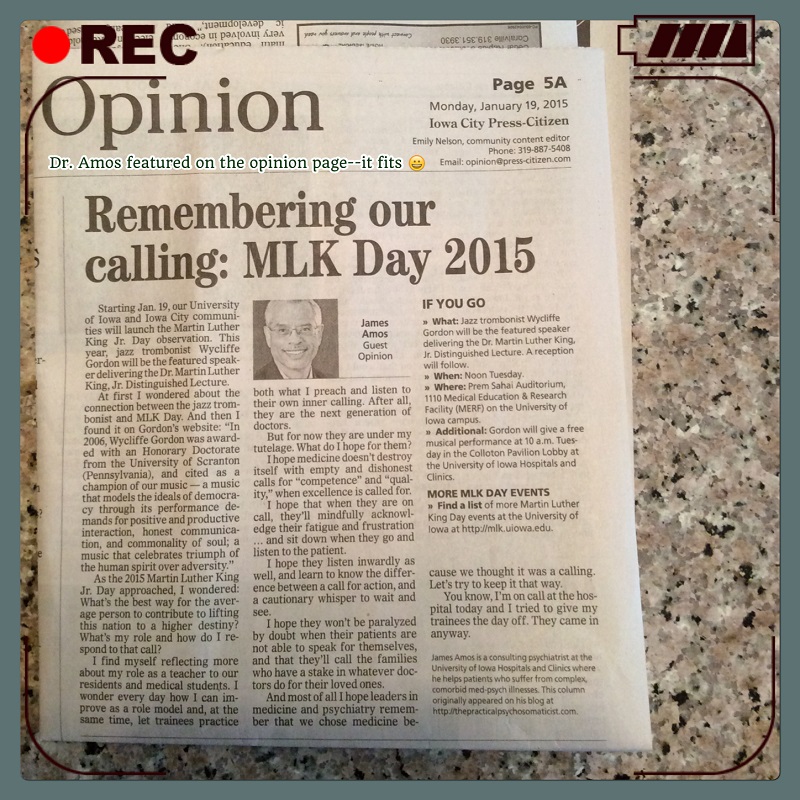
Seriously—no, I guess that’s impossible. On the other hand, every year about MLK Day, I think about the blog I wrote that the Iowa City Press Citizen published in 2015 on January 19th. It’s becoming almost something like a tradition. I think I need to repost it annually around this time. The title is “Remembering our calling: MLK Day 2015.”
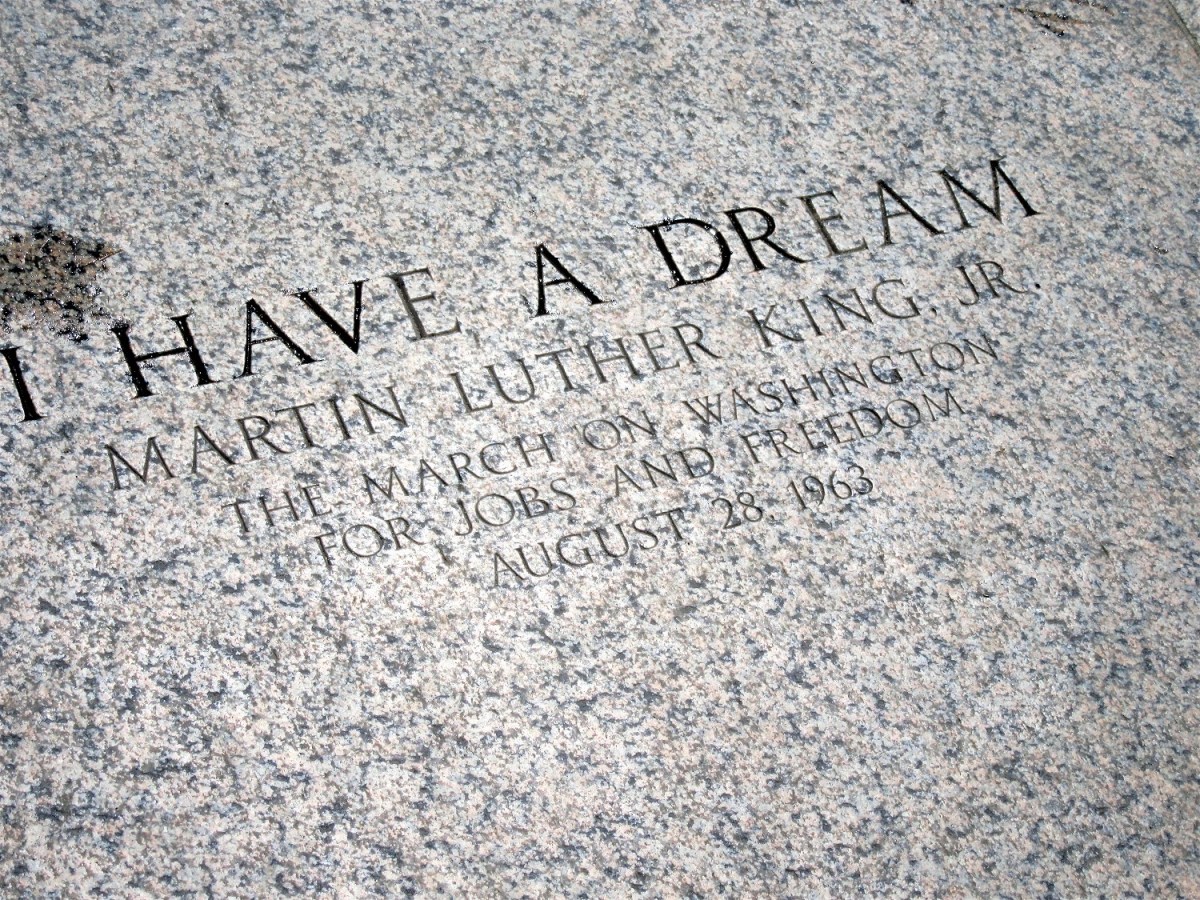
“Faith is taking the first step, even when you don’t see the whole staircase.”
-Martin Luther King, Jr.
That quote is interesting because Jonathan Eig’s biography of MLK can be said to reveal more of the staircase, so to speak, at least from the standpoint of his flaws as well as his strengths. But I stray from the tradition:
As the 2015 Martin Luther King Jr. Day approached, I wondered: What’s the best way for the average person to contribute to lifting this nation to a higher destiny? What’s my role and how do I respond to that call?
I find myself reflecting more about my role as a teacher to our residents and medical students. I wonder every day how I can improve as a role model and, at the same time, let trainees practice both what I preach and listen to their own inner calling. After all, they are the next generation of doctors.
But for now, they are under my tutelage. What do I hope for them?
I hope medicine doesn’t destroy itself with empty and dishonest calls for “competence” and “quality,” when excellence is called for.
I hope that when they are on call, they’ll mindfully acknowledge their fatigue and frustration…and sit down when they go and listen to the patient.
I hope they listen inwardly as well, and learn to know the difference between a call for action, and a cautionary whisper to wait and see.
I hope they won’t be paralyzed by doubt when their patients are not able to speak for themselves, and that they’ll call the families who have a stake in whatever doctors do for their loved ones.
And most of all I hope leaders in medicine and psychiatry remember that we chose medicine because we thought it was a calling. Let’s try to keep it that way.
You know, I’m on call at the hospital today and I tried to give my trainees the day off. They came in anyway.
I used to joke that they would erect a playdoh statue of me in the Quad (Quadrangle Hall was there) on the University of Iowa campus someday. Unfortunately, the Quad was demolished in 2016, so I guess I can’t put that in my autobiography.
Since I retired in 2020, I keep meaning to write my memoirs, but I never get around to it. I guess that makes it my oughta biography.
I just learned today about the new biography of Dr. Martin Luther King, Jr. written by Jonathan Eig. It was published a couple of years ago and I found a lot of YouTube interviews of him. I didn’t look through hardly any of them and saw only one in its entirety, which is below.
Like many people, I was surprised by what Eig found out about Dr. King’s life. It’s pertinent for the upcoming observation of the upcoming MLK holiday. It’s probably not going to be without some controversy. No doubt, some might find it a bit cringeworthy at times. It’s noteworthy that he consulted many who were personally acquainted with Dr. King.
During Eig’s presentation, I was uncomfortably aware of never having read any of the biographies of Dr. King that have already been published, including his autobiography. I was stunned to hear that there has not been a new biography published since the early 1980s.
I want to give a shout-out to Dr. George Dawson on his post today, “Enthusiasm is a plus…” It’s right on the mark.
Having a zest for medicine is the reason why many physicians undertook the rigorous training in medical school, residency, and beyond. A sense of humor is evident in George’s essay—and he doesn’t need to be comedian.
His essay reminded me of the many trainees who took their rotation through the psychiatry consultation service when I was running it (or tried to, anyway!). Many deserve a shout out as well for not only working hard on the service but teaching as well. I prevailed on them to make a short presentation during the rotation. I called it the Dirty Dozen.
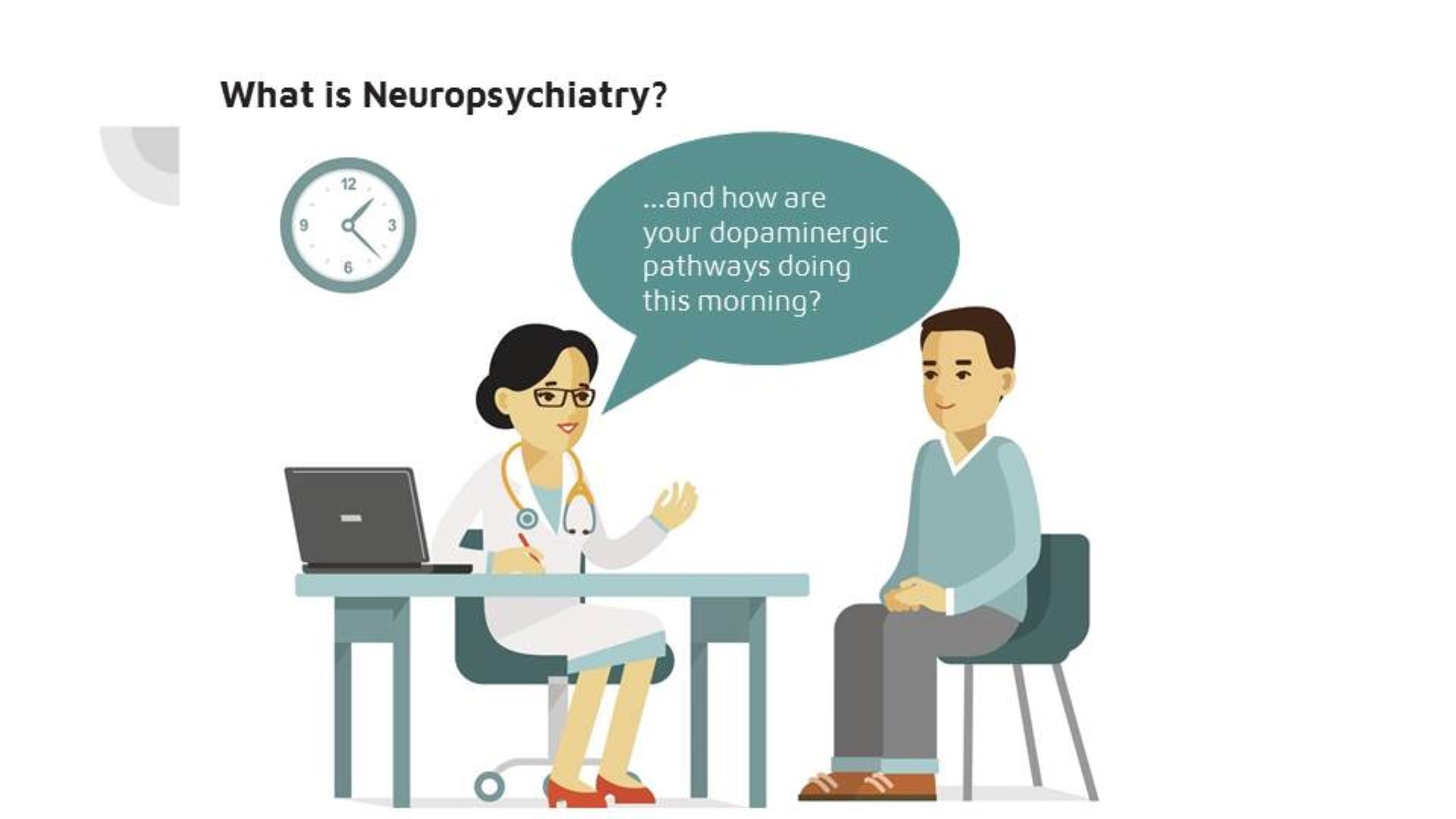
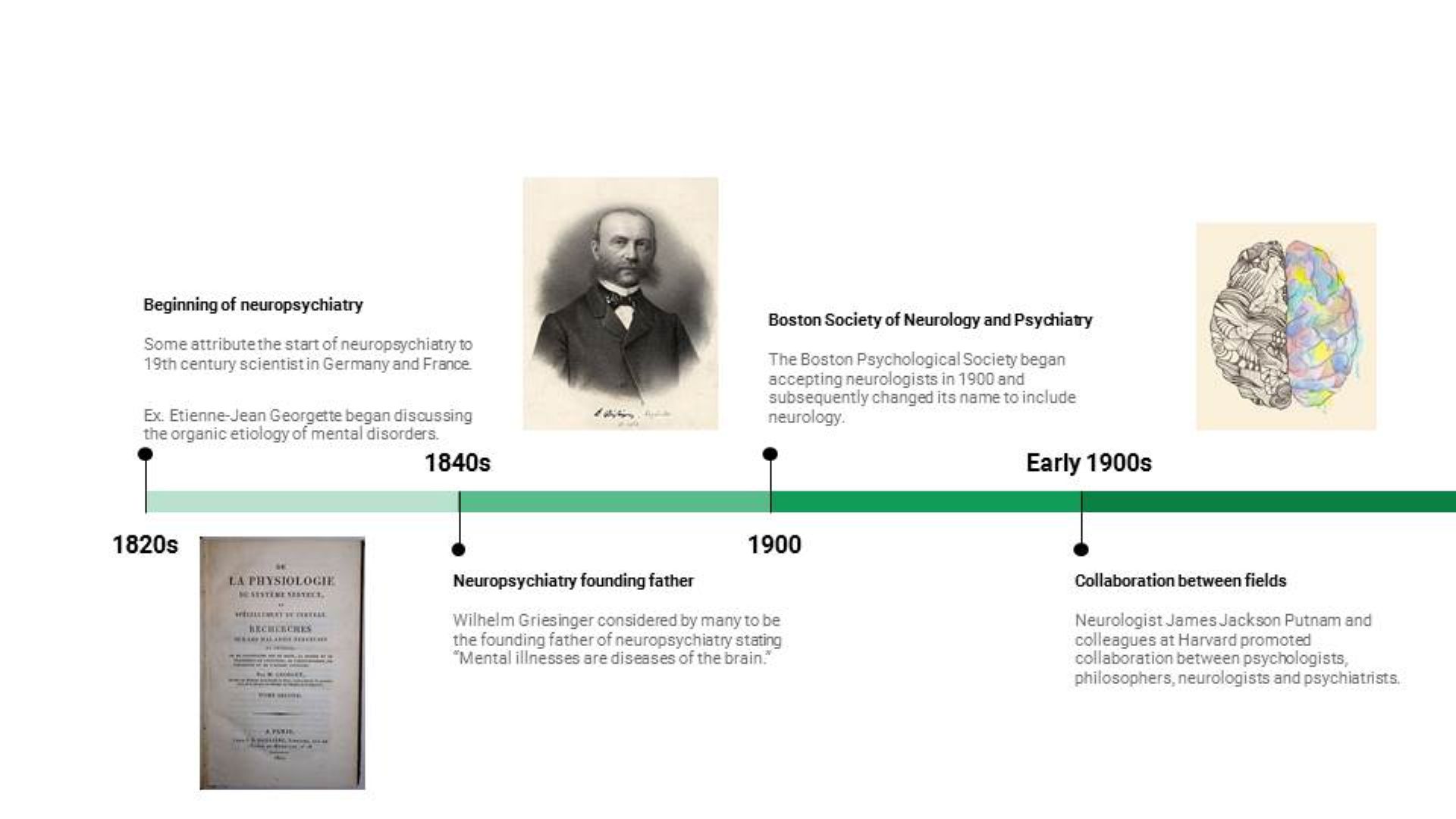
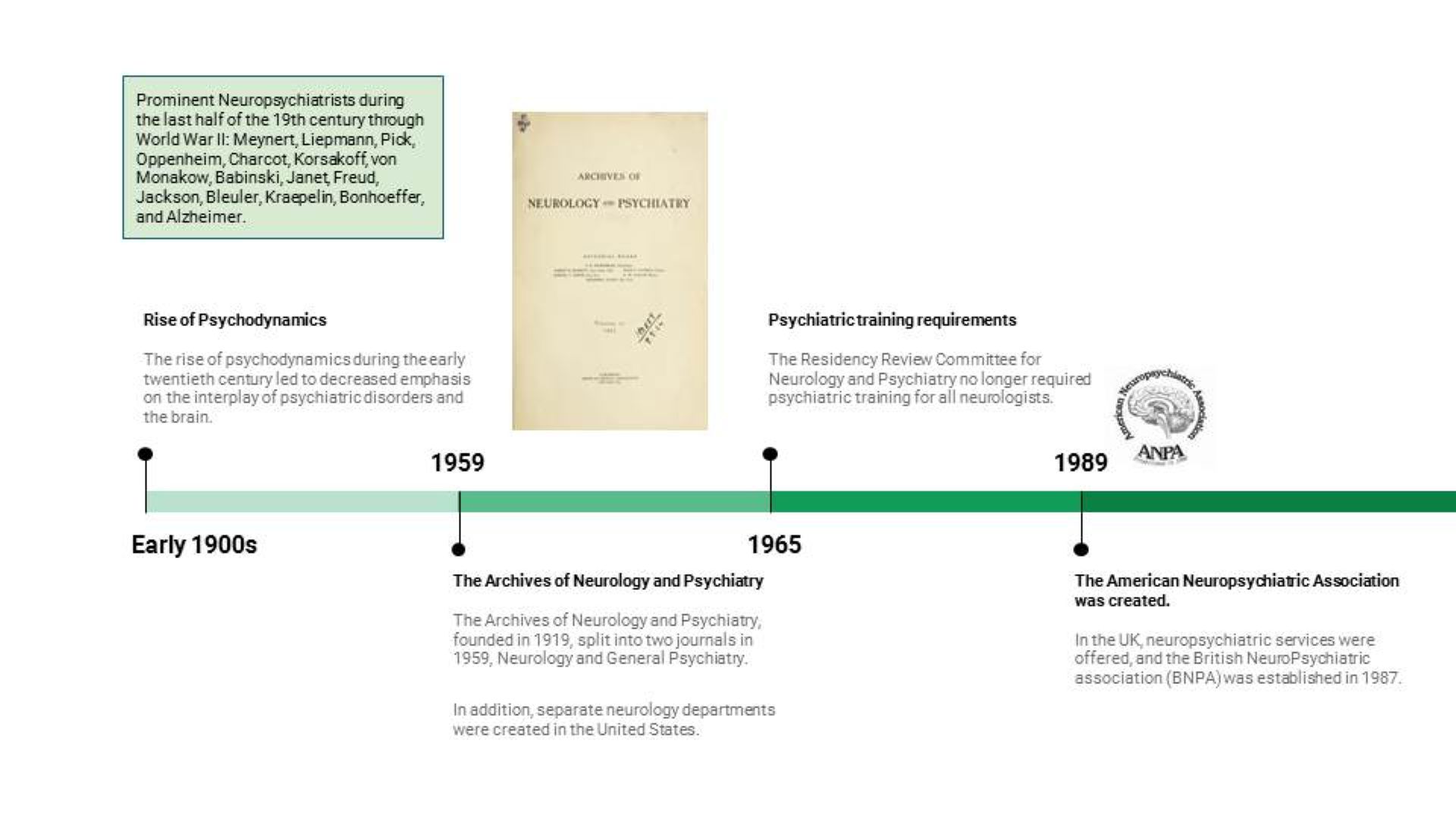
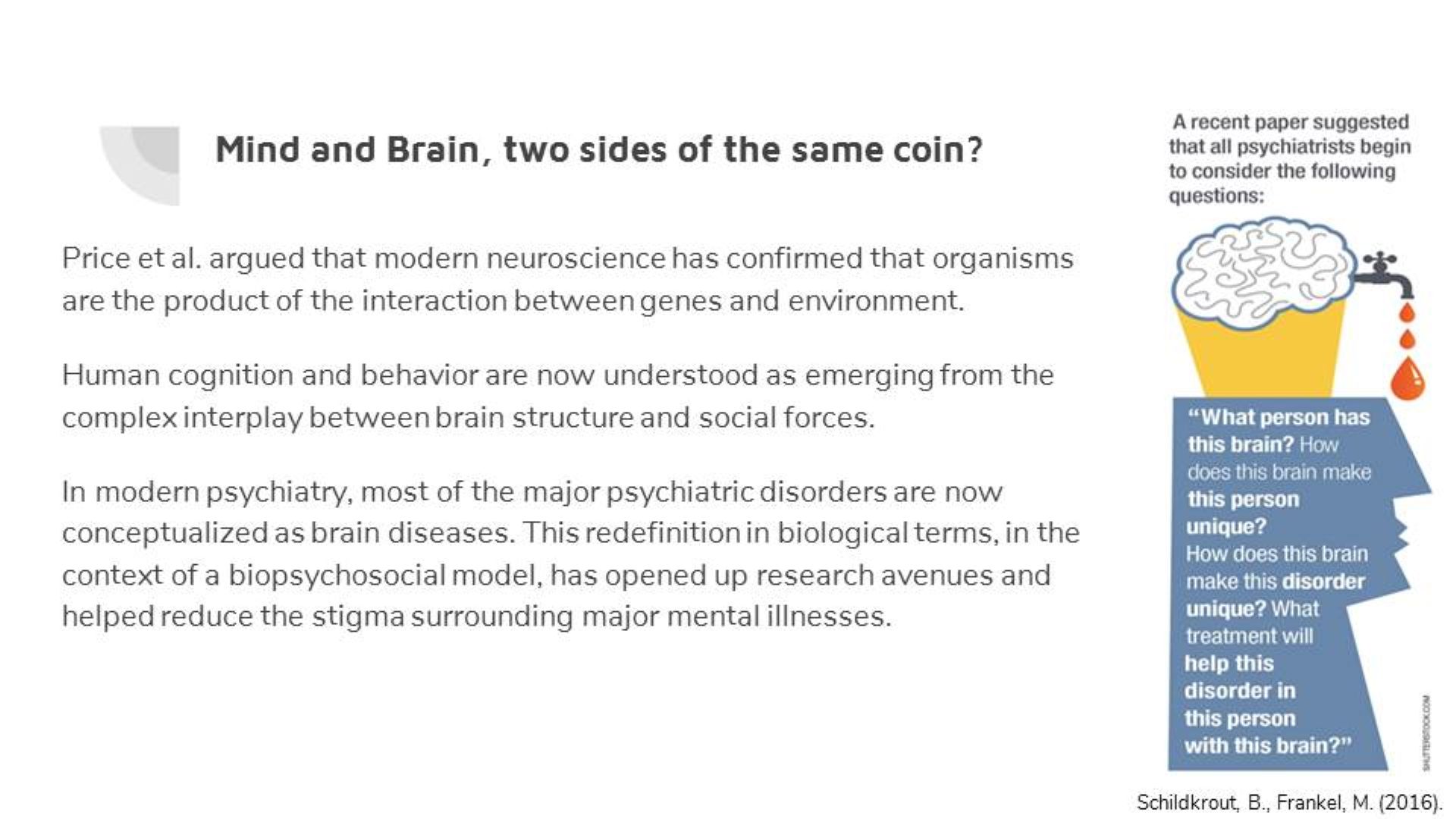
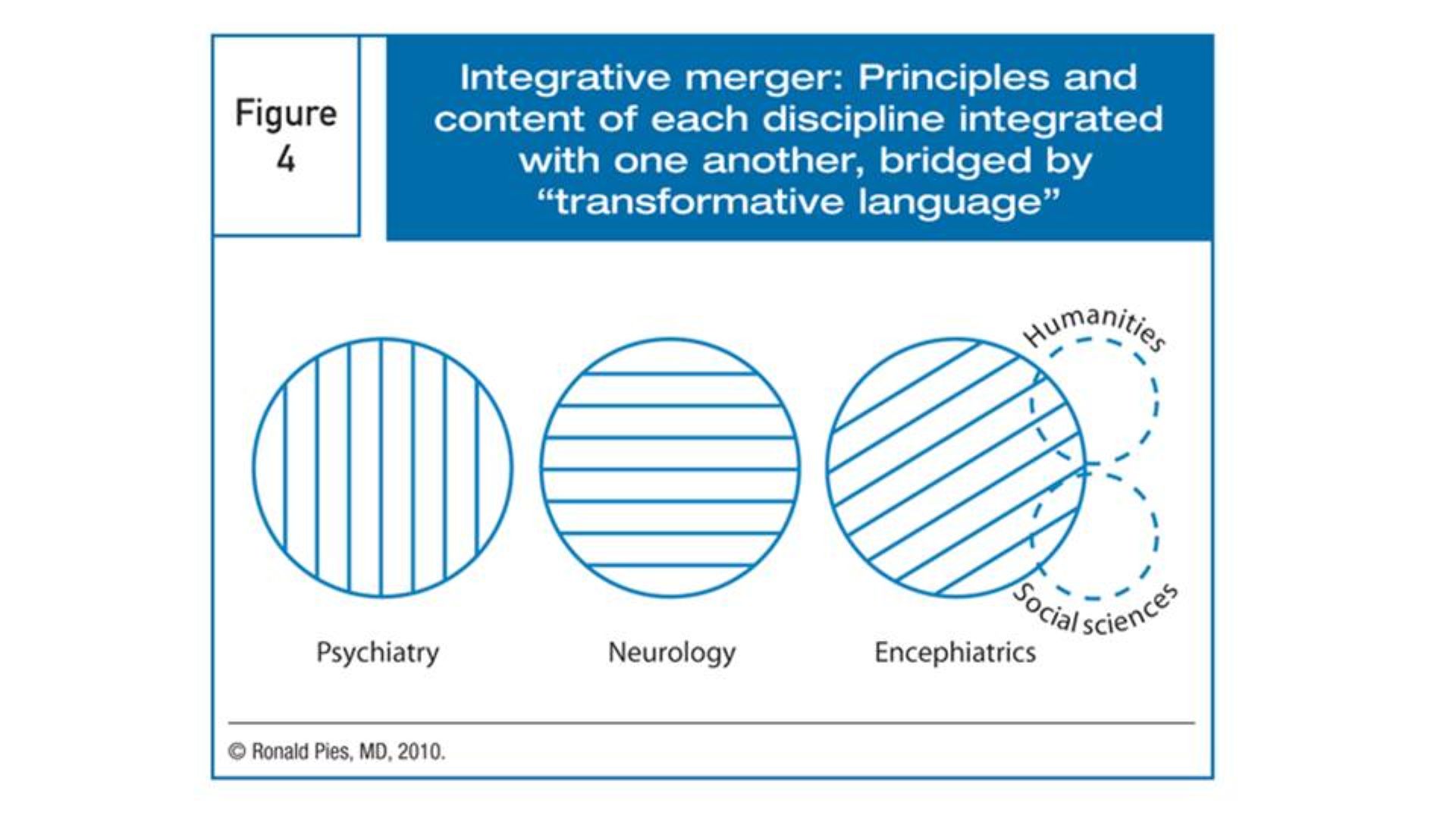
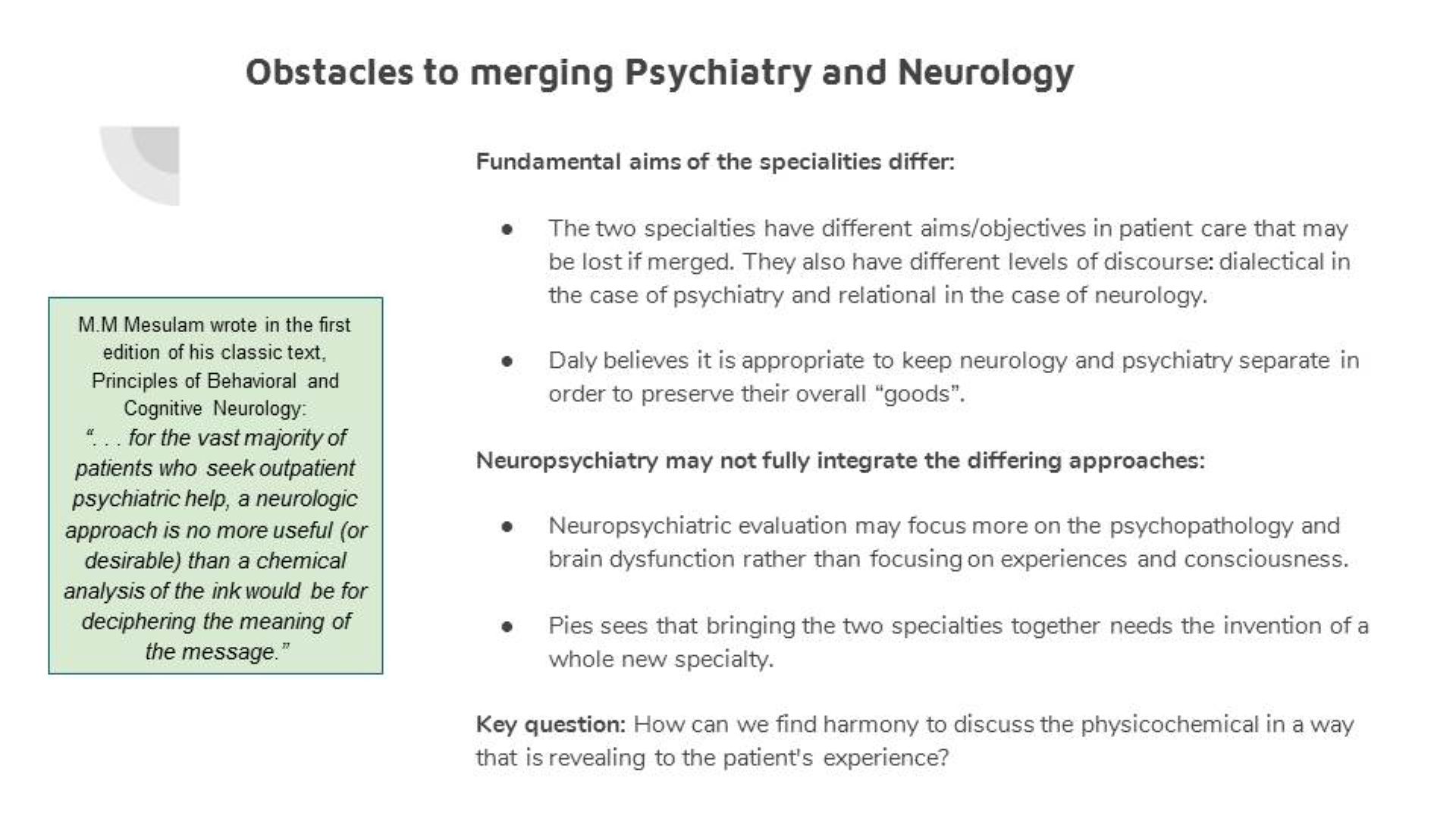
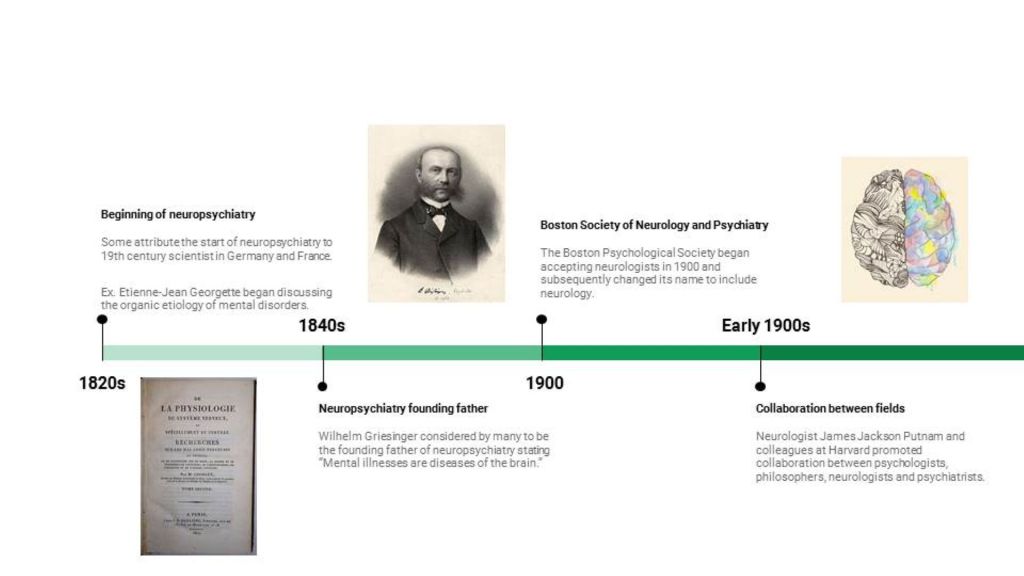
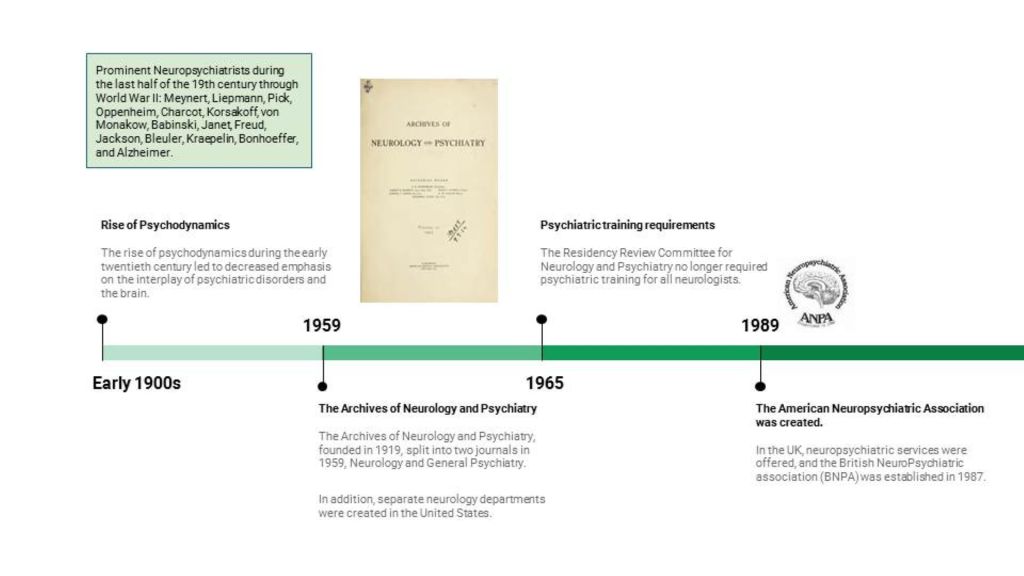
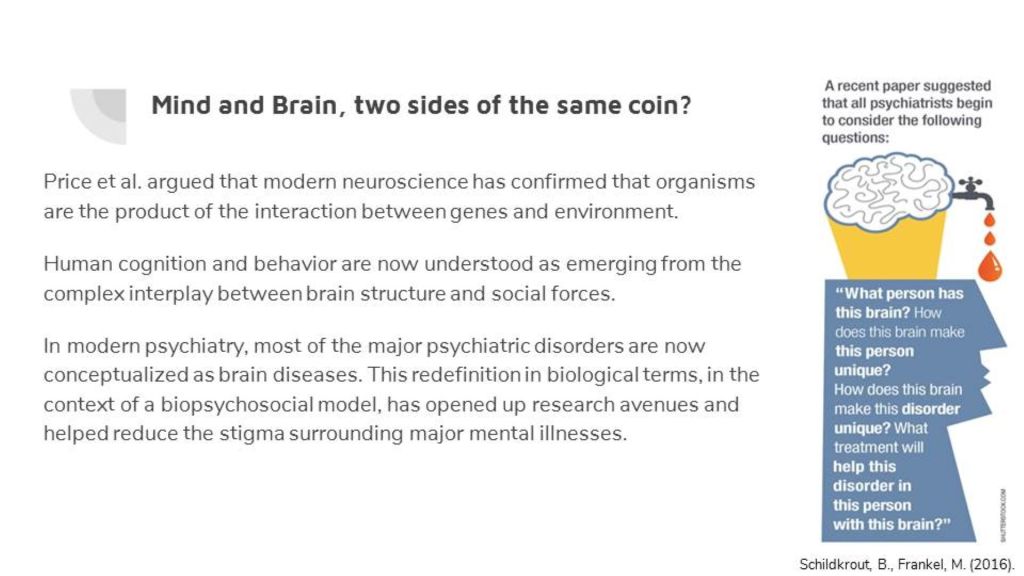
They picked a topic often about an interesting consultation case we had seen and put together a talk with a dozen slides. They gave a Dirty Dozen called: “Neurology and Psychiatry: Divided or United?” It included some of Dr. Ron Pies ideas on a subtopic of whether psychiatry and neurology can ever be combined as a discipline (three diagrams of his are in the slides). You can also see a sense of humor, especially in the first slide.
Note: Because I couldn’t locate all of the trainees to get their permission to leave their names on the title slide, I chose to identify them as “Trainees.” I’m still very proud of all of them.
Slides from trainees on Neurology and Psychiatry: Divided or United? from UIHC Psychiatry Consultation Service, 2017. Figures included from Dr. Pies’ article in Psychiatric Times (see below):
Citations:
Arzy, S. Danziger, S. (2014).. “The Science of Neuropsychiatry: Past, Present, and Future.” The Journal of neuropsychiatry and clinical neurosciences 26.4 2014): 392-395.
Daly, R. Pies, R. (2010). Should Psychiatry and Neurology Merge as a Single Discipline? Psychiatric Times.
Fitzgerald, M. (2015). Do psychiatry and neurology need a close partnership or a merger? BJPsych Bulletin, 39(3), 105–107.
Pies, R. (2005). Why psychiatry and neurology cannot simply merge. J Neuropsychiatry Clin Neurosci; 17: 304-309.
Schildkrout, B., Frankel, M. (2016). Neuropsychiatry: Toward Solving the Mysteries That Animate Psychiatry. Psychiatric Times.
Price, BH., Adams RD., Coyle, JT. (2000). Neurology and psychiatry, closing the great divide. Neurology January 11, 2000 vol. 54 no. 18
Svengoolie Intro: “Calling all stations! Clear the air lanes! Clear all air lanes for the big broadcast!”
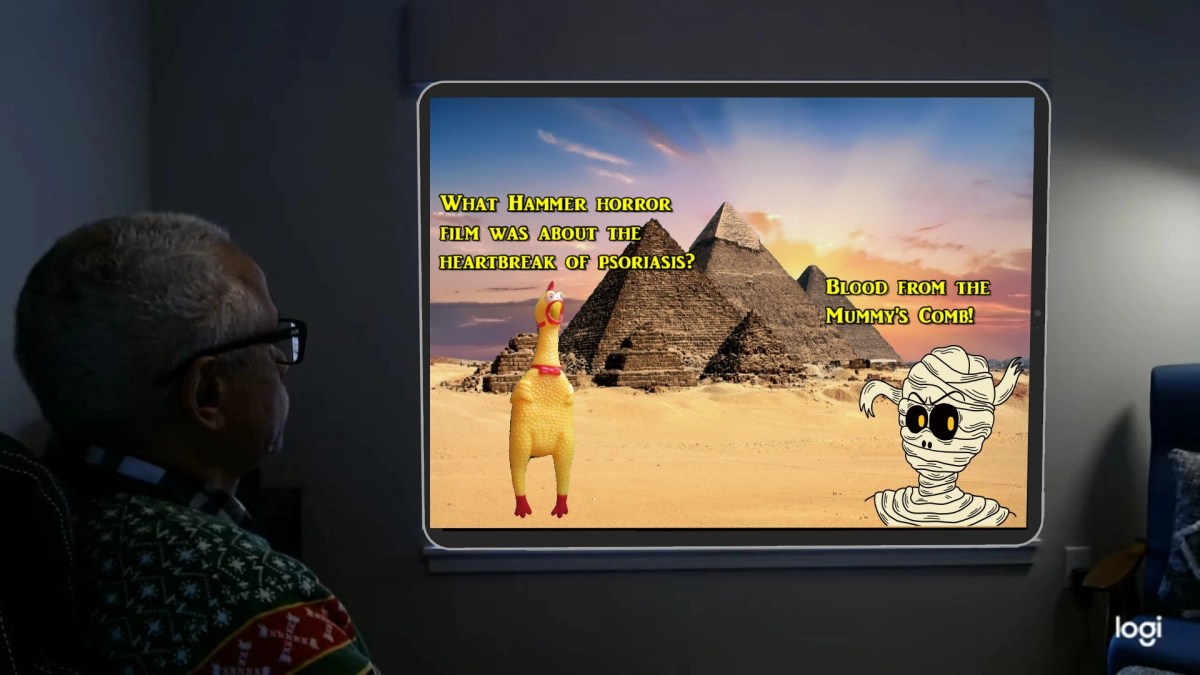
So, you can give me credit for watching the Svengoolie movie “Blood from the Mummy’s Tomb” last night instead of the Seattle Seahawks vs San Francisco 49ers football game. Sena watched a little of it and probably not enough to rate it. You need to know there is such a thing as scalp psoriasis to get the joke in the featured image.
Before I get into this Hammer horror flick, I need to have a little fun at Svengoolie’s expense about his Too Drawn Out picture. You have to know that this is a puzzle game. Svengoolie draws a few cartoons, gives some hints about what the pictures suggest, and puts them together to make a word that is connected to the movie. Some fans give him a hard time about them because, frankly, the clues occasionally reach a little too far.
His first picture in this bit would be familiar to people mainly in my generation or older. Although it’s a bit unfair to kids, you have to give him credit as an artist. The figure actually did resemble a character in a popular (to some of us) TV sitcom years ago. I guessed this one right because we watched The Honeymooners. It was Ed Norton climbing out of (or into?) a sewer because that was his occupation. Art Carney played Norton. Jackie Gleason played the “bus driver” that Svengoolie gives as another clue. The main goal is to name the common underground drainage feature in cities, which was “sewer.”
The next drawing is of a guy either sneezing or coughing and Svengoolie makes it clear that it’s not the former. The clue was “cough.”
The drawing after that was of an ugly old crone, which was a bit difficult to get but turns out to be “hag.”
The last drawing was of some guy with a speech balloon with the cartoon symbols often used to indicate foul language or swearing. This clue was “cuss.”
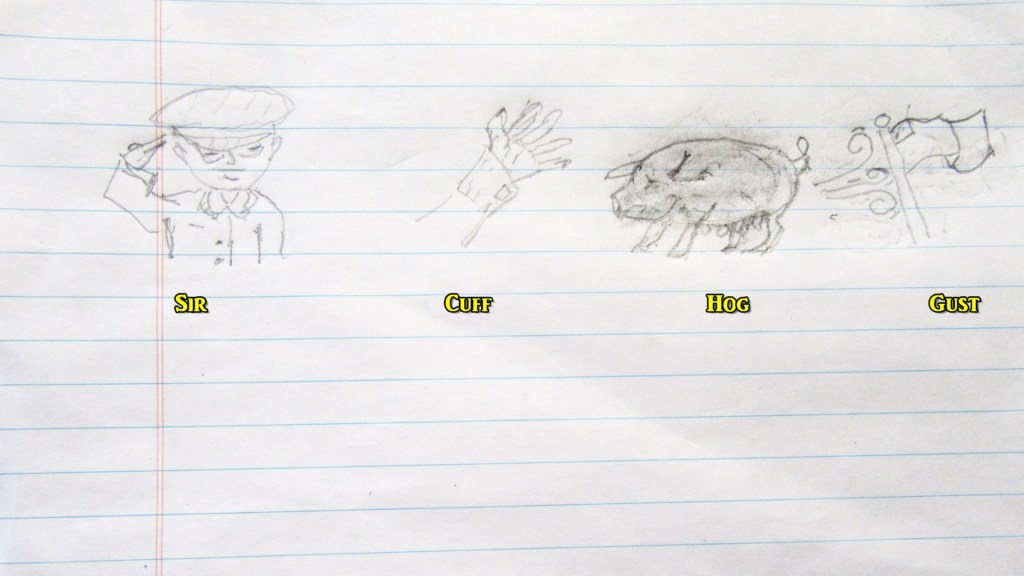
The final answer? It’s “sarcophagus.” Sewer-Cough-Hag-Cuss. OK, almost there. I’ve done my own version of these in the past and I thought of this one for “sarcophagus.” The word “sewer” is a stretch, especially if you’re not from my generation, given the hints. I use different clues with different hints:
Sir: the drawing is that of a soldier saluting. What do soldiers often say when they salute? “Sir!”
Cuff: the drawing is a shirt cuff with a cufflink. What is this part of a man’s shirt called?
Hog: the drawing is that of a big sow. A large pig, either sow or boar, is often called a hog. What is this large farm animal?
Gust: the drawing is of gusts of wind blowing a flag. What is making the flag fly and flap? A “gust” of wind.
It ends up as Sir-Cuff-Hog-Gust. You’re supposed to say these fairly fast, running the words together to solve the puzzle. If you sound this out right, you get…that’s right, Art Carney!
Sarcophagus
Moving right along, we need to discuss this 1971 Hammer production movie which doesn’t really have a mummy in it. The gist of the story is that a group of archeologist explorers go digging around somewhere in Egypt and find this tomb with the beautiful but blurred Queen Tera (Valerie Leon) who is more mammarized than mummified, which accounts for the blurring of her chest area. In fact, even the ancient drawings of women on the tomb walls blur their boobs.
The film makers go to a lot of trouble hiding parts of Queen Tera’s anatomy, yet could not come up with a way to prevent Ms. Leon from flinching when one of the priests shoves what looks like a nasal irrigation device up her nose. I mean he really jammed it in there and she reacted by nearly jumping off the table, sneezing blood repeatedly and cussing like a stevedore! In general, this is not the way dead people behave…unless they’re in a Hammer film.
Anyway, after the nasal sinus irrigation leads to the flushing of about a pint of blood and a fairly large mosquito from her nose, the priests proceed to cutting off her right hand, along with a ring with a huge ruby (although not nearly as big as other parts which I will not mention and which are massively blurred in any case). The ruby contains a replica of a constellation of 7 stars which do not include Art Carney.
Actually, the seven stars thing is adapted from Bram Stoker’s novel “The Jewel of Seven Stars,” although, technically, only seven stars would not count as a galaxy, according to Zed from the well-known documentary film, “Men in Black” who had to school Agent J that the galaxy was not on Orion’s Belt, as anybody knows.
The group of explorers take Queen Tera and a lot of artifacts from the tomb, which turn out to be very bad for their health, including the daughter, Margaret (also played by Valerie Leon) of one of them named Fuchs (Andrew Keir). Margaret apparently has a partial exemption from the blurring clause.
Margaret seems to have no fear of the groping chopped off hand (played by Thing from the Addams Family, if you’re curious) of Queen Tera. But the explorers get their throats torn out either by Thing or the Pharoah Hound (also lifted from Bram Stoker), which has an annoying tendency to bark along to “Who Let the Dogs Out” by the Baha Men.
I’m not going to reveal the ending although I can tell you that it involves the only scene which reveals anything that even remotely looks like a mummy.
I think the movie is OK, but a bit blurry in places. I give it a Shrilling Chicken Rating of 3/5.
The Big Mo Blues Show was really interesting last night. I’m just going to highlight a number done by John Hiatt called “Riding with the King.” The lore about this that I picked up from the internet is that Hiatt originally wrote and sang the song for the 1983 album Riding with the King. It was a tribute to a king known as Elvis Presley. The short story is that the song was inspired by a weird dream that the album’s producer, Scott Matthews, had about flying with Elvis Presley.
Years later, in 2000, the song was covered in an album by Eric Clapton, and the other king, B.B. King. The album was also called Riding with the King. Some reviewers thought the product was too slick, although to be frank about it, Hiatt’s production didn’t chart in the U.S.
The first time I heard Hiatt, I think it was on the Big Mo Blues Show. He sang “Gone,” which was on the album Crossing Muddy Waters, produced in 2000, the same year Clapton and King made the album which had the cover of Hiatt’s original song “Riding with the King.” I liked “Gone” because it was funny. I’m partial to humor in just about any context.
That reminds me of the Elvis Presley connection here about “Riding with the King.” About 8 years ago Sena and I made peanut butter and banana sandwiches, which Presley made famous. I blogged about it but I can’t find that post anymore. We didn’t really like the sandwich, although I wonder if the guy who had the dream that inspired the song “Riding with the King” had a PB & Banana sandwich just before bedtime. I kept the pictures but the post is—Gone!





























 Go Retire Psychiatrist