Sena just found a blogger psychiatrist who wrote the blog “The Good Enough Psychiatrist,” and her former blog link is still on my blog site. Dr. Jenna Cheng has a new blog and podcast, and it’s called “Attached and Enlivened Psychiatry.” The link is on the menu.
The featured image for this post is the Kintsugi pottery picture, which I first learned about from her blog and later blathered about back in September this year some more, relating to my link between it and blues music. She actually hit the like button on it.
When you get a chance, by all means check out the podcast that Dr. Cheng and Dr. Patrick Kelly run. “It’s called Good Enough Shrink, which rings a bell. I listened to “Münchausen and Münchausen by Proxy: Harming Self and Others to Play the Sick Role.” They did a great job!
I just want to send a link to Dr. George Dawson’s post The Phenomenological Suicide Assessment – The Legacy of Dr. H. It’s a great Christmas gift to teachers and learners everywhere. Happy holidays to George and everyone else.
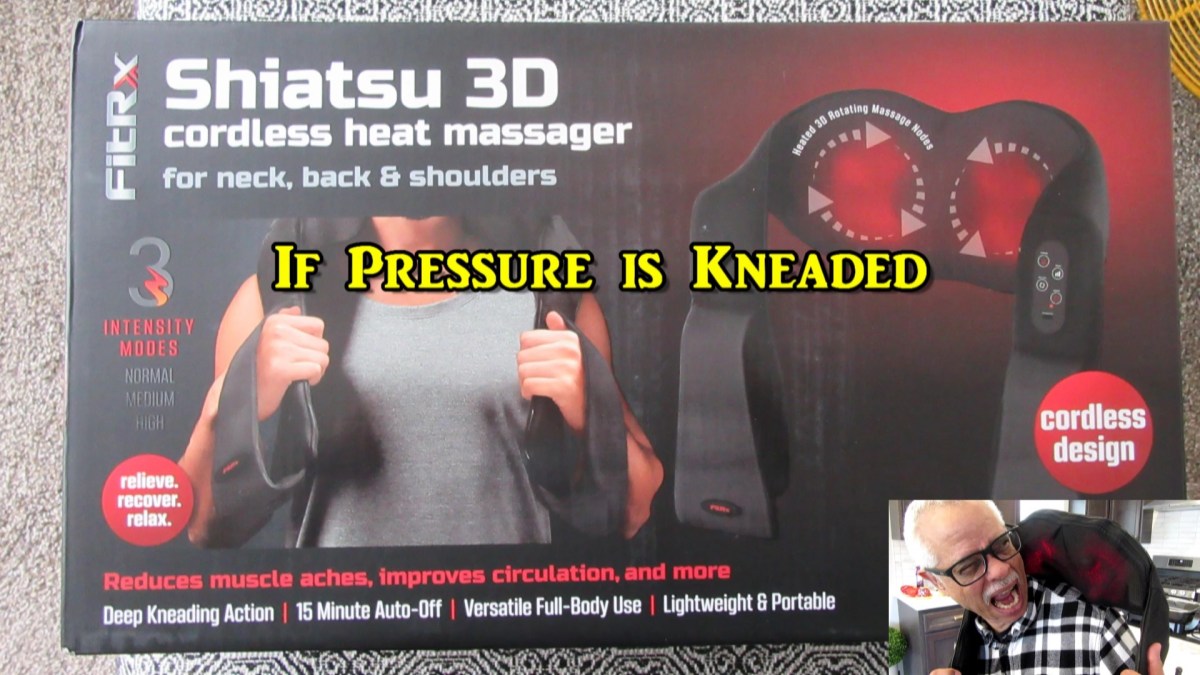
Sena bought some device for neck and shoulder massage called the Shiatsu cordless heat massager today. She tried it and then wanted me to try it. I’m not up for massagers of any kind, especially after seeing the extraterrestrial massage torturer I posted about early this month, “So, Is This Anything?”
She didn’t want it for various reasons. It doesn’t get warm enough, it’s difficult to hold on to it, and has this general weirdness that’s difficult to describe. That’s why I made a little video about it. Sena made me do it.
I watched the first half of the Colts vs 49ers game last night and I thought Philip Rivers didn’t look half bad for a 44-year-old guy who’s been out of the game for five years. Did you know he has 10 kids? OK, now that I’ve got that out of my system and that would be, what—the 44th time you’ve heard that since he took the field?
So what the Colts lost? His big family was up in the stands going crazy, cheering him on.
I read an article this morning which had Steve Young saying he could make a comeback at his age—which is 64. I couldn’t believe it. The same story mentions that George Blanda played for the Oakland Raiders when he was 48 back in 1975.
It got me wondering whether I could make a comeback as a general hospital consulting psychiatrist. Could I gallop up 6-8 floors of University of Iowa Health Care? You bet your bottom dollar—I couldn’t.
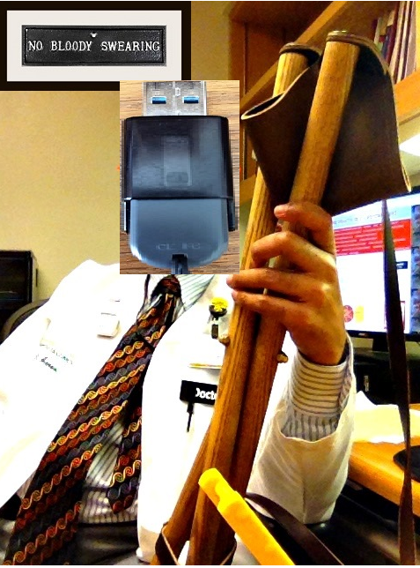
It’s hard to retire. Every once in a while, I miss hiking up and down the hospital with my camp stool, deftly swinging it around and sitting with the patients and families, telling medical students and residents all kinds of lies (I mean “wise old adages and pearls of clinical wisdom”).
I get a kick out of just wondering what it would be like. I get a vision of myself with a big, golden glowing aura of greatness around my head—until I come to my senses. Hey, nobody’s going to pay me a quarter million dollars to run the consult service for the few months I’d be able to limp around the hospital, falling off my camp stool when my legs go numb or the chair breaks.
It’s not like I can just throw a football like it’s nothing after 5 years. I’d have to prove I still have enough clinical smarts to figure out how to introduce myself (Hi! I’m Philip Rivers and you need to go long!”).
The Maintenance of Certification Circus is still a thing and it’s worse. I’m not saying doctors don’t undertake the arduous task of essentially retraining to be what they once were—because that’s not good enough anymore.
Last night, the camera caught Phil more than once being just as hard on himself as he was with other members of the team who weren’t in the right spot at the right time. Most physicians are perfectionists and if you’ve been out of the game for a while and you try to squeeze back in, you could wind up mumbling to yourself, “They don’t make footballs like they used to!”
I didn’t stay up for the second half of football game. It wasn’t because of anything Philip did or didn’t do on the field.
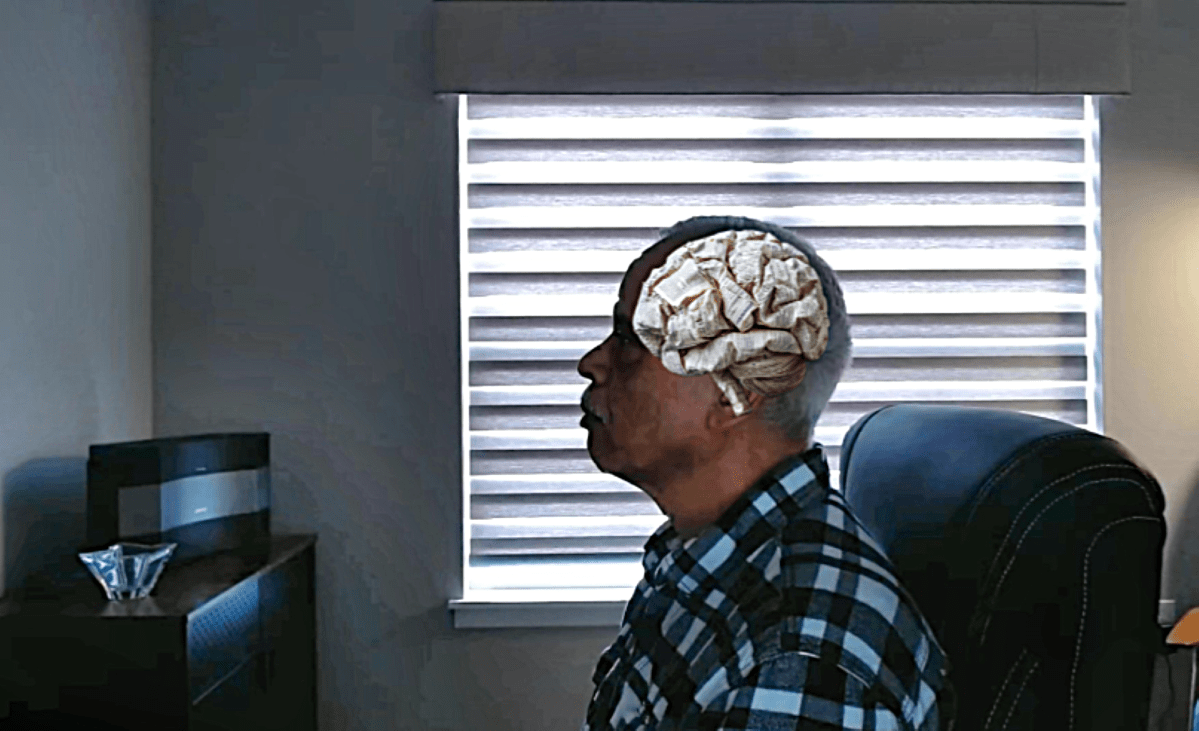
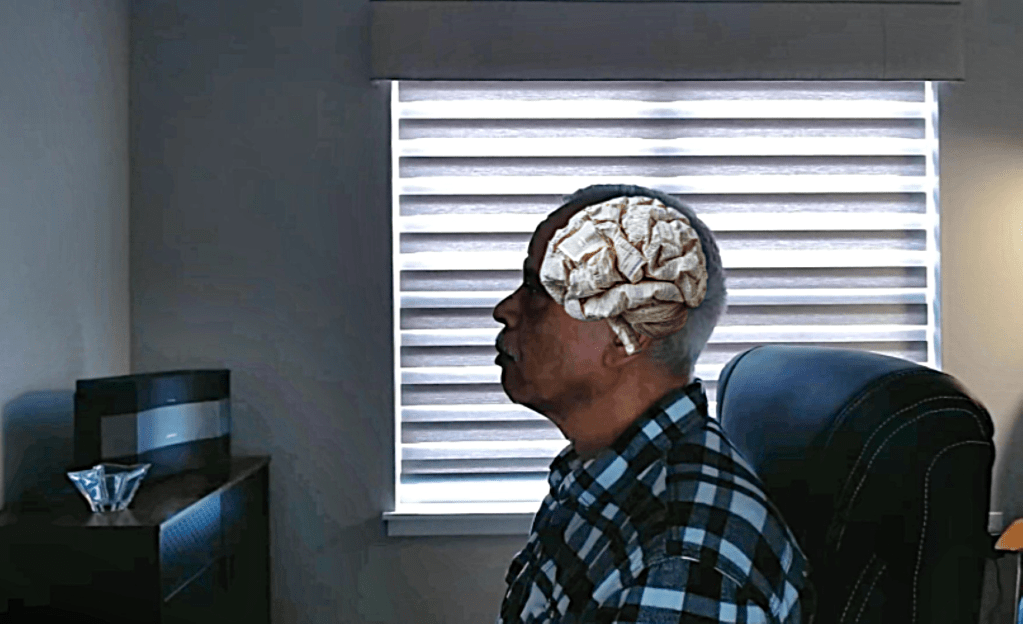
I ran across this article in the news about topological changes that happen in our brains as we age. You can try to read the original open access paper published by the author Alexa Mousley.
The topological changes in the brain that occur in the brain are linked to the structural connections that are made or not in human development and roughly correspond to the main epochs of brain structure in our lives: childhood (transition to adolescence around 9 years old), adolescence lasts until around 32 years old when we finally reach adulthood, then at age 66 we reach the early ageing stage and that finally changes into late ageing or old farthood around age 83. It’s a good thing I retired 5 years ago.
What this says, of course, is that nobody should be getting married or driving until they hit age 32. There are buses, you know, although we do have self-driving cars which explode on impact so thank goodness we don’t need to worry about that.
Also, it implies that you shouldn’t be drafted into military service until you’re presumably old enough to know that war doesn’t solve any problems.
Furthermore, this could lead to earlier retirements, reducing the need for awkward discussions with tenured professors who are apparently unaware they often arrive at the office with their pants on backwards. Just boot them out the door!
Why didn’t we think of this topology thing a long time ago?
For an interesting topology discussion, see the Wikipedia article, which has an interesting photo of something called homeomorphic topology, an amusing example of which is the picture of continuous transformation of a coffee mug into a donut, or as many Iowa City people would prefer, a bagel (something that looks like a doughnut but is so tasteless you have to slather it with a pound of cream cheese).
If you have any questions, call the author of the study. You’re welcome!
Mousley, A., Bethlehem, R.A.I., Yeh, FC. et al. Topological turning points across the human lifespan. Nat Commun16, 10055 (2025). https://doi.org/10.1038/s41467-025-65974-8
Svengoolie Intro: “Calling all stations! Clear the air lanes! Clear all air lanes for the big broadcast!”
It’s almost Christmas and while I was watching the Svengoolie movie “The Brides of Dracula” last night, it struck me that the chief vampire Baron Meinster’s eyes reminded me of holly berries. Yo, Hondo, somebody needs to break out the Extra Strength Visine!
You probably don’t remember the sequels to this film:
The Rides of Dracula, about a vampire’s collection of fancy horse drawn carriages; he’s sort of like the Jay Leno of wealthy car collectors.
The Double Wides of Dracula, about a vampire who’s the landlord of a mobile home park and charges extravagant “rent” (several pints of blood).
Just to clarify, despite the title of the 1960 British bloodsucker movie from Hammer Film Productions, the boss biter is not played by Christopher Lee (because he wanted too much money) but by David Peel so he’s not Dracula but both vampires roll their bloodshot eyes at every girl they meet.
What’s refreshing about this flick is Baron Meinster the monster actually talks, which Dracula didn’t. In fact, Meinster is articulate and suave, as befitting the wealthy nobleman who just happens to sharpen his fangs on the necks of pretty girls.
And Peel actually gets a sarcastically funny line you might miss unless you listen closely. It’s when Baron Meinster meets the headmaster of the Transylvania School for Ladies Who Want to Cultivate Longer Teeth. Herr Otto Lang (Henry Oscar) gets his comeuppance after he threatens to throw Baron Meinster (whose real identity is at first unknown to him) off the school property when he comes to woo the new teacher Marianne Danielle (Yvonne Monlaur). But after the gracious Meinster reveals who he is, which is the baron who owns the property on which the school sits (after which Herr Lang abruptly changes his tone), the baron reminds Lang that his school does a great job “for such low rent.”
There’s a fair bit of comedy in the few scenes in which a local country medical man, Dr. Tobler (Miles Malleson) meets Dr. Van Helsing (Peter Cushing). When Tobler reads Van Helsing’s business card, he discovers that Van Helsing is a doctor of many disciplines—except medicine. Earlier, Dr. Tobler prepares a quackery-type vaporizer steam therapy home remedy for himself, which includes myrrh of all things. It turns out you can inhale things like frankincense and myrrh via vaporizer; it sounds so three-wisemen-Christmasy that it fits the season!
On the other hand, Dr. Tobler doesn’t buy Van Helsing’s vampire explanation for why so many villagers are dying (in the undead sense), though he is open to taking a cut of the fees for applying the usual remedies like stakes, garlic, crucifixes, and the occasional self-branding with hot coals that goes way beyond vaporizers.
The bats look arthritic, but other than that the movie is OK. I give it a 2.5/5 Shrilling Chicken rating.
Last night was the second time John Heim (aka Big Mo) introduced the song “Silent Night” by Peter Green and the Men in Blue using the title in German, “Stille Nacht.” He also played it last Friday night, saying “Stille Nacht, Heilige Nacht” in what sounded like perfect German. I immediately liked this version.
I might be remembering this wrong, but when I was a kid, I think I somehow got assigned to sing “Silent Night” when I went out caroling (in a horse-drawn sleigh, no less!) with the members of our church. It’s a good thing smartphones weren’t around to record that.
I remember last week trying to find it on the Big Mo Blues Show playlist but I couldn’t. Then I tried to find it by searching the title in German. I forgot or didn’t hear the name of the band. I gave up looking for it and I wondered why he said the title in German.
So, after I heard it again last night and looked for it on the playlist, I found it right away on the web.
I have never heard of Peter Green, so I looked him up and found a Wikipedia article about him. His original name was Peter Allen Greenbaum. I found out that Greenbaum is a German surname (originally Grünbaum which means greenery or green tree. As an aside, Heim is also a German name. It means “home.” For many people (just listen to his Shout-Outs list!) the Big Mo Blues Show is home.
Those are just observations I find interesting and maybe point to a clue why Big Mo pronounced the title of the song “Silent Night” in German.
Anyway, the Wikipedia article doesn’t say anything about Peter Green’s ancestry. He was born in 1946 in London and died in his sleep at the age of 73 on Canvey Island, Essex.
He was a gifted blues rock guitarist and singer-songwriter and was founder and original leader of the band Fleetwood Mac. He was a very influential figure in the British blues movement. Some thought he was greater than the other often-mentioned blues guitarist, Eric Clapton.
Peter got some coaching early in life from his older brother but was essentially self-taught by the age of 11. In the mid to late 1960’s people were calling him “The Green God” which was similar to what many were calling Eric Clapton (“God’).
Around 1969(70) Peter started to develop signs of mental illness and during the 1970s he also used LSD several times. Eventually he was diagnosed with schizophrenia. Like other people who develop psychiatric illness, it was probably difficult to settle the chicken/egg question of which came first. He attributed much of his mental health issues to his use of LSD. He was hospitalized and treated with electroconvulsive therapy (ECT) in the mid-1970s.
However, by the 1980s, he returned to the music scene. He was inducted into the Rock and Roll Hall of Fame in 1998. He was described as being more interested in expressing emotion in music rather than displaying dazzling technical skill. He influenced many musicians.
I read this article about swearing being a good thing to do to increase your workout performance or whatever. There’s a link to the study that a researcher says supports that conclusion. I mean this story is talking about really bad words being good for you. It reminds me of a time when I was a pre-teen kid and broke my wrist falling out of a barn loft. I don’t remember exactly how I got to the emergency room. We didn’t have a car so our next-door neighbor must have driven me with my crooked arm and my hysterical mom to the hospital.
My mom was in the emergency room with me. When I cut loose with a torrent of really bad words, nurses had to practically carry her out because she fainted. This was right after I asked the doctor if it was OK if I swore and he said “Go ahead,” injected anesthetic—and immediately started to manhandle my wrist. I don’t think I ever swore in front of my mom before that.
I don’t remember if the swearing helped me withstand the pain or not. I don’t think so.
There was my other trip to a hospital for chest surgery when I was in my early teens. I had a chest tube after the operation. My roommate had undergone some kind of abdominal surgery. We had a lot of stitches and were in a lot of pain, which was bearable if we didn’t move at all. It even hurt to breathe. But the other factor was the TV in our room. It was way across the room and there was some kind of comedy show on. It was really funny—which made us feel really terrible. We could barely move and even had to talk quietly, yet this funny show made us laugh, which expanded our chest and abdomen areas, stretching the sutures. It was excruciating.
Even swearing would have hurt, not to mention laughing out loud. We really couldn’t stand to laugh and it’s too bad I can’t describe the sound of two guys trying not to even chuckle. If you ever watched Loony Tunes cartoons and remember how Elmer Fudd sounded when he laughed—that was how we sounded because we were trying to suppress laughing. It was funny but pitiful. My roomie finally made this desperate slow motion move out of bed, crept to the TV and shut it off. I was so grateful. Neither one of us ever swore.
The other thing this swearing for power reminds me of is the movie Signs, which starred Mel Gibson as Graham Hess. It was about an alien invasion and in one scene, some people/aliens (they don’t yet know what) are running around the house and Graham’s brother Merril (Joaquin Phoenix) are getting set to chase them. Merril tells Graham to yell and curse, although because Graham is a former Episcopal priest, swearing is beyond him:
All right, listen, we both go outside, move around the house in opposite directions. We act crazy, insane with anger, make them crap in their pants, force them around till we meet up on the other side.
Graham Hess: Explain “act crazy”.
Merrill: You know, curse and stuff.
Graham Hess: You want me to curse?
Merrill: You don’t mean it. It’s just for show. What?
Graham Hess: Well, it won’t be convincing. It doesn’t sound natural when I curse.
Merrill: Just make noises, then.
Graham Hess: Explain “noises”.
Merrill: Are you gonna do this or what?
Graham Hess: No, I’m not.
Merrill: All right, you want them stealing something in the house next time?
[outside light comes on]
Merrill: On the count of three. One…
Graham Hess: All right.
Merrill: two… three!
Graham Hess: Ahh! I’m insane with anger!
Merrill: We’re gonna beat your ass bitch! We’re gonna tear your head off!
Graham Hess: I’m losing my mind! It’s time for an ass-whupping!
[Merrill and Graham meet each other]
Graham Hess: I cursed.
Merrill: I heard.
Anyway, I think we have to make a distinction between cursing about something or cursing at someone before we start claiming, like the author of the study says:
“Swearing is literally a calorie-neutral, drug-free, low-cost, readily available tool at our disposal for when we need a boost in performance.”—psychology researcher Richard Stephens of Keele University in the UK.
Based on what I found out from Artificial Intelligence (AI) yesterday, I thought I’d share our house rules for Crib Wars. The only reason I’m including information from AI is because I couldn’t find specifics on how to manage pegging for the Blue Penalty Box anywhere else.
If you already know how to play basic cribbage, you can ignore most of what’s on the rules sheet (available on the web) because there’s only a short section for the Crib Wars rules. It describes the colored areas and what the players are supposed to do with them.
There’s no Muggers Alley on the Ebonwood board and we never play muggins. Below are my updated descriptions of the colored zones, which we discuss and demonstrate during the video.
Red Skips: There are 3 of these. The rule says if you land on the first red box you should slide to the next red box which gets you 20 holes further along the board. The red box just means the set of 3 holes highlighted with a red color. You get from the first one to the next one by just moving the peg 20 holes. You’ll land in the 2nd set of holes marked in red. This is a boon in the first Red Skip area. However, if you pay attention to the directional arrows in the path guiding you, it looks like they accelerate you toward two of the Blue Time Traps.
Blue Time Traps: There are 4 of these and there will be three blue lines, meaning the blue color covers all three holes and all three peg tracks (3 holes along the track and 3 holes across the track). If you land in a set of three holes highlighted in blue, you end up moving to a blue area of holes that actually set you behind several holes. You have to play your way out of them. Players note that you can end up in repetitious cycling back to the traps largely because of how often you can get one or two points at a time while scoring. In fact, some say that if their opponent gets close to a Blue Time Trap they may purposely lead with a five card (something you would rarely if ever do in a standard cribbage game). That could trap the opponent into playing a ten card or a 5 card, which might risk them moving only a couple of holes right back into the Blue Time Trap. The same thing could happen with falling into the Blue Penalty Boxes.
Blue Penalty Boxes: There are three of them. You fall into one of these by moving your peg into one of the single blue hole lines, meaning one blue track across the three peg tracks. This is a disaster because you immediately have to move back 20 holes and fold your hand and your crib while your opponent moves forward 20 holes and counts their hand and crib (if they have the crib). Asking AI is the only way I could find out how to learn how to peg moving back and forward 20 holes. The player who lands in the penalty box moves their front peg back 20 holes starting from the penalty box. You don’t move the rear peg. If your front peg lands behind the rear peg, it becomes the new rear peg. The player who doesn’t land in the penalty box moves their front peg forward 20 holes. The player who lands in the penalty box immediately folds their hand and crib.
Green Advances: There are two of them. If you land in a green hole, you take short cut path. The long one saves you from moving toward the Blue Time Trap in the left lower quadrant. You don’t avoid the potential other trap above. If you take the normal track instead you end up moving toward the lower left quadrant Blue Time Trap—but you have a chance at getting into the short Green Advance track before you get there which loops back away from it and you end up going in the direction of the upper Blue Time Trap.
You think you’re in the clear after that? You’re not because there is a sadistically placed Blue Penalty Box in the next to the last hole before the Finish Line!
This just in! University of Iowa Psychiatrist Dr. Susan Shen, MD, PhD, is an assistant professor of psychiatry at The University of Iowa Carver College of Medicine and, hold on to your hat, she’s the first female psychiatrist, the first from Iowa, and only the third psychiatrist overall to receive to win the Avenir Award (French for “future), a highly competitive grant!
The $2.3 million dollar grant will help fund her lab’s research into the underpinnings of substance use and psychiatric disorders. The grant is administered through the National Institute on Drug Abuse (NIDA), one of the National Institutes of Health (NIH).








 Go Retire Psychiatrist