Rife vs Ripe: Which is Right?

I noticed a couple of things about one of the President’s many new Executive Orders, which was “ESTABLISHING THE PRESIDENT’S MAKE AMERICA HEALTHY AGAIN COMMISSION,” or MAHA for short. It was posted on February 13, 2025. One thing it reminded me of is the tax filing season, which is upon us (everything reminds me of the tax filing season around this time of year). The other thing was a short article about the IRS, which is cutting staff sharply in response, probably as a response to the federal government workforce layoffs generally. One sentence in the article read:

“The IRS layoffs, first reported by the New York Times, come as part of a broader effort by President Donald Trump and Elon Musk’s overhaul of the federal government, which they argue is too bloated and inefficient, and ripe with waste and fraud.”

I put the word “ripe” in bold-face type because I sensed that the writer probably meant “rife” instead. I looked up the definitions of both just to make sure: Rife means abundant and ripe means mature (possibly overly mature as in smelly and ready for the garbage can).

I wonder if “rife” or “ripe” could apply to MAHA. I’m all for making us healthy. I agree with promoting health. I’m not sure what is meant by “assess the prevalence of and threat posed by the prescription of selective serotonin reuptake inhibitors, antipsychotics, mood stabilizers, stimulants, and weight-loss drugs.” It sounds like a shot across the bow for psychiatrists and primary care physicians.

Some of the content may be either “rife” (or is it “ripe”?) with potentially misleading innuendo, implying that health care professionals are not doing all we can already to promote health. I agree with promoting research into the “root causes” for mental illness. However, some people need psychiatric medications for “just managing disease.” Reducing the suffering of those who are tortured by depression and delusions and hallucinations makes sense because that’s the humane thing to do.

This reminds me of a very interesting article about what some scientists think about how life began on this planet and how it might start elsewhere in the universe. Some think life evolves mainly by chance, by a cosmic accident. Others think it’s inevitable and occurs when planetary conditions are right. So that might mean there’s a good chance there are extraterrestrials are out there. If they are, what would they think of us?

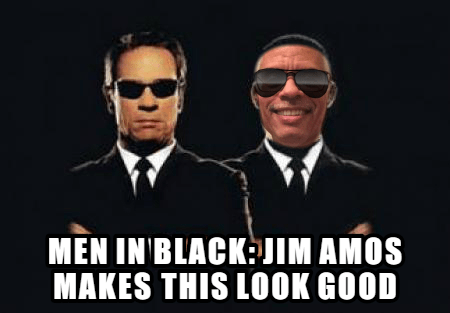
And this reminds me of a quote from the movie, Men in Black. Agent K is showing Edwards a universal translator, one of the many wonders in the extraterrestrial technology room, which gives us a perspective on how humans rank in the universe:

Agent K: We’re not even supposed to have it. I’ll tell you why. Human thought is so primitive it’s looked upon as an infectious disease in some of the better galaxies.

So is the universe “rife” with life—or is it “ripe”?

FDA Has Yet to Decide on What to Do About the Clozapine REMS Program

I checked on what the FDA is doing about changing or closing down the Clozapine REMS program. It doesn’t look like they’ve taken any action yet. Recall there was a Clozapine REMS Advisory Committee meeting about this on November 19, 2024 that I posted about recently. The upshot was that the committee voted overwhelmingly (14 yes to 1 No) to get rid of the Clozapine REMS program.

What I didn’t realize until today was that a former colleague of mine was a member of the committee. Dr. Jess Fiedorowicz, MD, PhD was on staff at The University of Iowa Health Care in the past and is now head of the Dept of Mental Health at The Ottawa Hospital in Ottawa, Ontario in Canada. I’ve included the YouTube video below of the meeting and you can find Dr. Fiedorowicz’s remarks via Zoom video at around the 8:05 or so mark into the meeting. You can view his vote to shut down the REMS program at around 8:33.

I also found out about a group called The Angry Moms (those who care for family members on clozapine) who are focused on stopping the Clozapine REMS program and one of their web pages makes it pretty clear they’re not happy that the FDA has not made a decision about REMS yet.

They mention Dr. Gil Honigfeld, PhD who I’d never heard of until now. You can tell from his T-shirt how he feels about clozapine. He has been called the “Godfather of Clozapine” and his opinion about the REMS program along with a short history of clozapine can be found at this link.

I don’t know what the FDA will do about the Advisory Committee’s recommendation, but I hope they do it soon.

Sena Double Dog Dared Me to Try the Electric Snow Shovel!

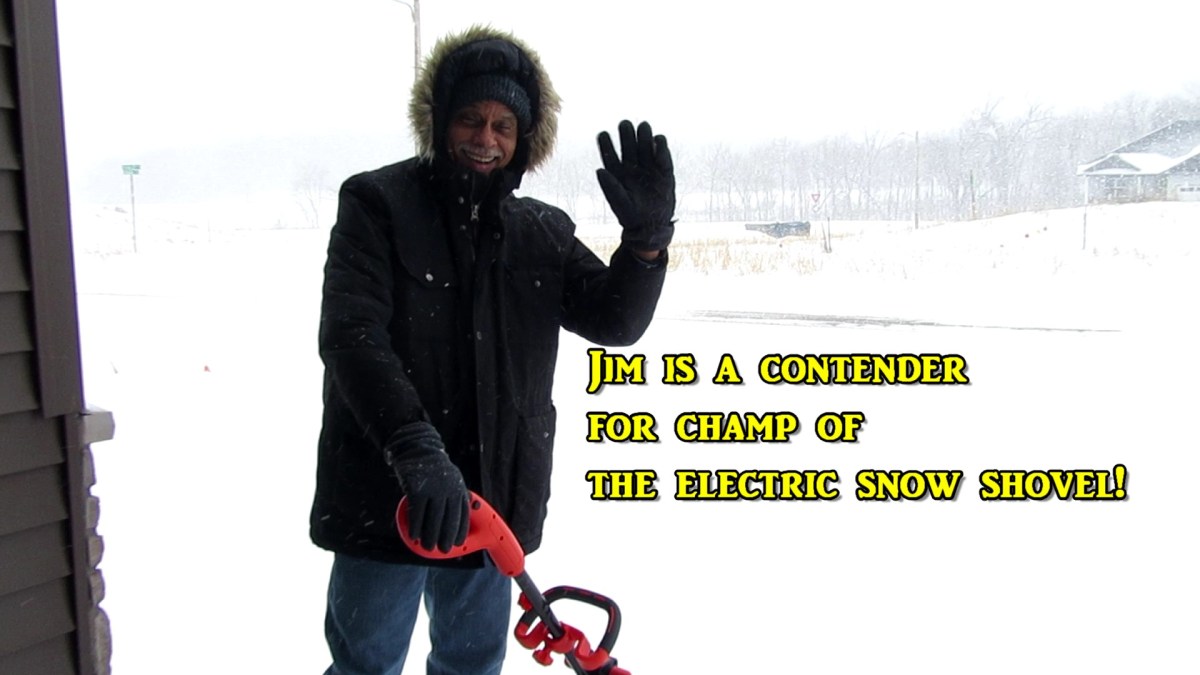
Well, the snow kept coming down. I had to go back out to shovel. I was going to use my plow shovel, but Sena said I was too chicken to try the electric snow shovel.

I couldn’t back down.

So, I had to go out there, after the wind had changed mind you, and use the battery powered shovel. I got snow all over me because no matter what I did to adjust the snow deflectors, the snow just blew back in my face.

I could have been a contender.

Sena Gives the Electric Snow Blower the Real Test!

We got a real snowfall starting last night and into this morning. Sena took the Voltask battery-powered 48V 16-inch snow shovel out and put it through its paces.

We got about 6 inches of snow and it chewed right through it. It threw the snow into the next county! It took her about 30 minutes to make my job a lot easier with the shovel.

How About Artificial Intelligence for Helping Reduce Delirium in the ICU?

I got the Winter 2025 Hopkins Brain Wise newsletter today and there was a fascinating article, “Using AI to Reduce Delirium in the ICU: Pilot Study will explore AI headset can help reduce delirium and delay post-delirium cognitive decline.”

The article has exciting news about what researchers are doing which will, hopefully, reduce the incidence of delirium in the intensive care unit (ICU). Another Hopkins researcher has published a study that has already used AI algorithms to detect early warning signs of delirium in the ICU;

Gong, Kirby D. M.S.E.1; Lu, Ryan B.S., M.D., Ph.D.2; Bergamaschi, Teya S. M.S.E., Ph.D.3; Sanyal, Akaash M.S.E.4; Guo, Joanna B.S.5; Kim, Han B. M.S.E.6; Nguyen, Hieu T. B.S., Ph.D.7; Greenstein, Joseph L. Ph.D.8; Winslow, Raimond L. Ph.D.9; Stevens, Robert D. M.D.10. Predicting Intensive Care Delirium with Machine Learning: Model Development and External Validation. Anesthesiology 138(3):p 299-311, March 2023. | DOI: 10.1097/ALN.0000000000004478

The list of references for the study of course include those by Dr. E. Wesley Ely, who delivered an internal medicine grand rounds about delirium at the University of Iowa in 2019.

Anybody who reads my blog knows I’ve been knocking AI for a while now. However, anybody who also knows that I’m a retired consultation-liaison psychiatrist knows how interested I am in preventing delirium in the hospital. I worked as a clinical track professor for many years at The University of Iowa Health Care in Iowa City.

It’s fortuitous that I found out about what Johns Hopkins research is doing on this topic because the director of the Johns Hopkins psychiatry department happens to be Dr. Jimmy Potash MD, MPH, who’s identified on the newsletter. He was the head of the psychiatry department at the University of Iowa from 2011-2017.

Besides all the name-dropping I’m doing here, I’m also admitting that I’ll probably soften my position against AI if the research described here does what the investigators and I hope for, which is to reduce delirium in the ICU.

Super Bowl Commercial “Mean Joe Frank” 2025 Looked Familiar!

We watched the Super Bowl last night and one of the many commercials (always a big thing) looked vaguely familiar only after Sena pointed it out. It was the Fareway Frank commercial about Fareway stores. It was a reprise of the famous 1979 Coca-Cola commercial with Mean Joe Green, defensive tackle for the Pittsburg Steelers and a kid. When you compare them, the similarities are obvious. There are two Fareway commercials that are the same, but have different titles, one of them being “Mean Joe Frank.”

The Hey Kid, Catch commercial with Mean Joe Green featured a 9-year-old kid named Tommy Okon. I couldn’t find a name for the kid in the “Mean Joe Frank” version.

But you can find film information on Turner Classic Movies titled “The Steeler and the Pittsburgh Kid” which is based on the commercial. The kid is Henry Martin who later starred in the movie, “E.T. The Extraterrestrial” (1982).

This led to reminiscence of Fareway Store in Mason City, Iowa. I used to walk to Fareway to get groceries and walked back carrying at least two big paper sacks. My arms were always pretty sore when I got home. I used a wagon later on, but had to be careful crossing the railroad tracks on the way back to ensure the eggs didn’t break.

There are Fareway stores all across Iowa and several neighboring states now, but the first one opened in Boone, Iowa in 1938. It popularized the idea of shoppers picking out their own items from the shelves rather than letting a store employee pick them out from the shopper’s list. The store name was inspired by what was sold (“fare”) and treating customers and employees fairly.

The Fareway Frank character was called Forrest Frank in 2024 although it looks like the company has settled on Fareway Frank.

The other Iowa connection worth mentioning is that rookie defensive player for the Philadelphia Eagles (Super Bowl winners), Cooper DeJean, who played for the University of Iowa Hawkeye football team, made a pick-6 interception touchdown in the game.

While the Fareway Frank version of the Super Bowl commercials line-up didn’t make the short list (or any list for that matter) of favorites, it sure did bring back memories for us.

The Big Mo Pod Show: “Variety is the Spice of Life”

We heard the Big Mo Blues Show last night and heard a couple of tunes that were fun. One of them was mentioned on the Big Mo Pod Show today, “Feelin’ Alright” by Stuff. The other was a riot but was not on the podcast, and it was “I Feel So Good (I Wanna Boogie” by Magic Sam.

Big Mo Pod Show 085 – “California Bluesin” KCCK's Big Mo Pod Show

After a short break during the Thanksgiving holiday your hosts are back at it again with another episode! This week features the usual mix of blues eras you’ve come to expect along with a few Californian artists, tune in to see which ones! Songs featured in the episode: Solomon Hicks – “Further On Up The … Continue reading
  1. Big Mo Pod Show 085 – “California Bluesin”
  2. Big Mo Pod Show 084 – “Garage Blues”
  3. Big Mo Pod Show 083 – “Legal Pirate radio”
  4. Big Mo Pod Show 082 – “Tribute”
  5. Big Mo Pod Show 081 – “Cheers To Kevin”

The one that brought back memories was “Feelin’ Alright” by Stuff. It sounded so familiar and we finally figured out it was a cover of song of the same title and sung by Joe Cocker (the one I remember). However, I guess it was originally written by Dave Mason of the group Traffic in 1968. And there’s even an album “Joe Cocker With Stuff Feelin’ Alright.”

The one Big Mo played last night was from the album Stuff Live at Montreux 1976. It was instrumental and hard to recognize at first. The lyrics are sad, though and it’s about unrequited love, I guess. I associated it years ago with drug and alcohol addiction after seeing the 2012 movie “Flight” on TV. Every scene in which the main character Whip Whitaker (played by Denzel Washington) got high, that song was a part of the scene.

Anyway, moving right along, the song that was not on the podcast and which was a whole lot of fun to listen to was “I Feel So Good (I Wanna Boogie) by Magic Sam. We’ve never heard of him but the way he sang the number made us laugh out loud.

The title of the podcast was right on target: “Variety is the Spice of Life.”

Okay, We Can Laugh Now!

Yesterday, I wrote a pretty serious post. Now I’m in withdrawal from jokes, but I can fix that.

Here’s a joke link to a site which has clean jokes for everyone.

And here are some Chuck Norris jokes (facts?) for everyone else. One of my personal favorites:

Chuck Norris can do a wheelie on a unicycle.

Give me your favorite clean jokes. I double-dog dare you.

All Jokes Aside, What Do I think About the Book “Caste: The Origins of Our Discontents?”

I just finished reading Isabel Wilkerson’s book, “Caste: The Origins of Our Discontents.” It was a painful read because it talks about racism in America, which is a part of my lived experience. Wilkerson’s compares it to the Nazi persecution of the Jews and the caste organization in India. The chapter on the pillars of caste make sense to me.

When I reached the last section (not at all “final” by any means), which is called “Awakening,” I was not surprised that there were no prescriptions or outlines or action plans for how to eliminate caste in any culture. It turns out that we’re all responsible for becoming aware of how we all are complicit in some way with maintaining caste divisions in society. And the word Wilkerson used for how to begin is “empathy,” or somehow becoming conscious of that tendency and to replace it with understanding.

As Wilkerson emphasizes, empathy isn’t sympathy or pity. Empathy is walking a mile in someone else’s shoes, as the song goes. But she goes a step further and uses the term “radical empathy.” It’s difficult to define concretely. It goes beyond trying to imagine how another person feels, going the extra mile and learning about what the other person’s experience. It’s not about my perspective; it’s about yours. It’s not clear exactly how to make that deep connection. She uses terms like “spirit” which may or may not resonate with a reader searching for a recipe or a cure.

Politics turns up in the book. How could it not? I’m going to just admit that I wanted to make this post humorous somehow, especially after I saw Dr. H. Steven Moffic’s article in Psychiatric Times about whether psychiatrists are to act in the role of “bystanders” or “upstanders” in the present era of political and social turmoil. He specifically mentioned the Goldwater Rule, which is the American Psychiatric Association Ethics Annotation barring psychiatrists from making public statements of a diagnostic opinion about any individual (often a politician) absent a formal examination or authorization to make any statements. The allusion to a specific person is unmistakable.

But, as a retired psychiatrist, I’m aware that my sense of humor could be deployed as a defense mechanism and it would certainly backfire in today’s highly charged political context. I’m not sure whether I’m a bystander or an upstander.

Sena and I had a spirited debate about whether America has a caste system or not. I think it’s self-evident and is nothing new to me. I suspect that calling racism (which certainly exists in the United States) a form of casteism would not be altogether wrong. Wilkerson mentions a psychiatrist, Sushrut Jadhav, who is mentioned in the Acknowledgments section of her book. Jadhav is a survivor of the caste system in India. I found some of insights on caste and racism in web article, “Caste, culture and clinic” which is the text of an interview with him.

His answers to two questions were interesting. On the question of whether there is a difference between the experience of racism and caste humiliation, he said “None on the surface” but added that more research was needed to answer the question adequately. And to the question of whether it’s possible to forget caste, he said you have to truly remember it before you can forget it—and it’s important to consider who might be asking you to forget it.

This reminded me of the speech in the movie “Guess Who’s Coming to Dinner,” said by John Prentice (played by Sidney Poitier) to his father:

“You’ve said what you had to say. You listen to me. You say you don’t want to tell me how to live my life? So, what do you think you’ve been doing? You tell me what rights I’ve got or haven’t got, and what I owe to you for what you’ve done for me. Let me tell you something. I owe you nothing! If you carried that bag a million miles, you did what you were supposed to do because you brought me into this world, and from that day you owed me everything you could ever do for me, like I will owe my son if I ever have another. But you don’t own me! You can’t tell me when or where I’m out of line, or try to get me to live my life according to your rules. You don’t even know what I am, Dad. You don’t know who I am. You don’t know how I feel, what I think. And if I tried to explain it the rest of your life, you will never understand. You are 30 years older than I am. You and your whole lousy generation believes the way it was for you is the way it’s got to be. And not until your whole generation has lain down and died will the deadweight of you be off our backs! You understand? You’ve got to get off my back! Dad. Dad. You’re my father. I’m your son. I love you. I always have and I always will. But you think of yourself as a colored man. I think of myself as a man. Hmm? Now, I’ve got a decision to make, hmm? And I’ve got to make it alone. And I gotta make it in a hurry. So, would you go out there and see after my mother?”

 And there was this dialogue that Sena found on the web, which was similar to that of John Prentice. It was a YouTube fragment of a 60 minutes interview in 2005 between actor Morgan Freeman and Mike Wallace. Wallace asked Freeman what he thought about Black History Month. Freeman’s answer stunned a lot of people because he said he didn’t want Black History Month and said black history is American history. He said the way to get rid of racism was to simply stop talking about it. His replies to questions about racism implied he thought everyone should be color blind. John Prentice’s remarks to his father are in the same vein.

I grew up thinking of myself as a black person. I don’t think there was any part of my world that encouraged me to think I was anything different. I think Wilkerson’s book is saying that society can’t be colorblind, but that people can try to walk a mile in each other’s shoes.