


I just wanted to make a quick shout-out to Dr. Gerry Clancy, MD and Music Therapist Katey Kooi about the great Rounding@Iowa podcast today. The discussion ran the gamut from how to employ music to help patients who suffer from acute pain, agitation due to delirium and dementia, all the way up to even a possible role for Artificial Intelligence in the hospital and hospice.
Month: January 2025
Could Artificial Intelligence Help Clinicians Conduct Suicide Risk Assessments?

I found an article in JAMA Network (Medical News & Perspectives) the other day which discussed a recent study on the use of Artificial Intelligence (AI) in suicide risk assessment (Hswen Y, Abbasi J. How AI Could Help Clinicians Identify American Indian Patients at Risk for Suicide. JAMA. Published online January 10, 2025. doi:10.1001/jama.2024.24063).
I’ve published several posts expressing my objections to AI in medicine. On the other hand, I did a lot of suicide risk assessments during my career as a psychiatric consultant in the general hospital. I appreciated the comments made by one of the co-authors, Emily E. Haroz, PhD (see link above).
Dr. Haroz preferred the term “risk assessment” rather than “prediction” referring to the study (Haroz EE, Rebman P, Goklish N, et al. Performance of Machine Learning Suicide Risk Models in an American Indian Population. JAMA Netw Open. 2024;7(10):e2439269. doi:10.1001/jamanetworkopen.2024.39269).
The model used for the AI input used data available to clinicians in patient charts. The charts can be very large and it makes sense to apply computers to search them for the variables that can be linked to suicide risk. What impressed me most was the admission that AI alone can’t solve the problem of suicide risk assessment. Clinicians, administrators, and community case managers all have to be involved.
The answer to the question “How do you know when someone’s at high risk?” was that the patient was crying. Dr. Haroz points out that AI probably can’t detect that.
That reminded me of Dr. Igor Galynker, who has published a lot about how to assess for high risk of suicide. His work on the suicide crisis syndrome is well known and you can check out his website at the Icahn School of Medicine at Mount Sinai. I still remember my first “encounter” with him, which you can read about here.
His checklist for the suicide crisis syndrome is available on his website and he’s published a book about as well, “The Suicidal Crisis: Clinical Guide to the Assessment of Imminent Suicide Risk 2nd Edition”. There is also a free access article about it on the World Psychiatry journal website.
Although I have reservations about the involvement of AI in medicine, I have to admit that computers can do some things better than humans. There may be a role for AI in suicide risk assessment, and I wonder if Dr. Galynker’s work could be part of the process used to teach AI about it.
Is Artificial Intelligence (AI) Trying to Defeat Humans?
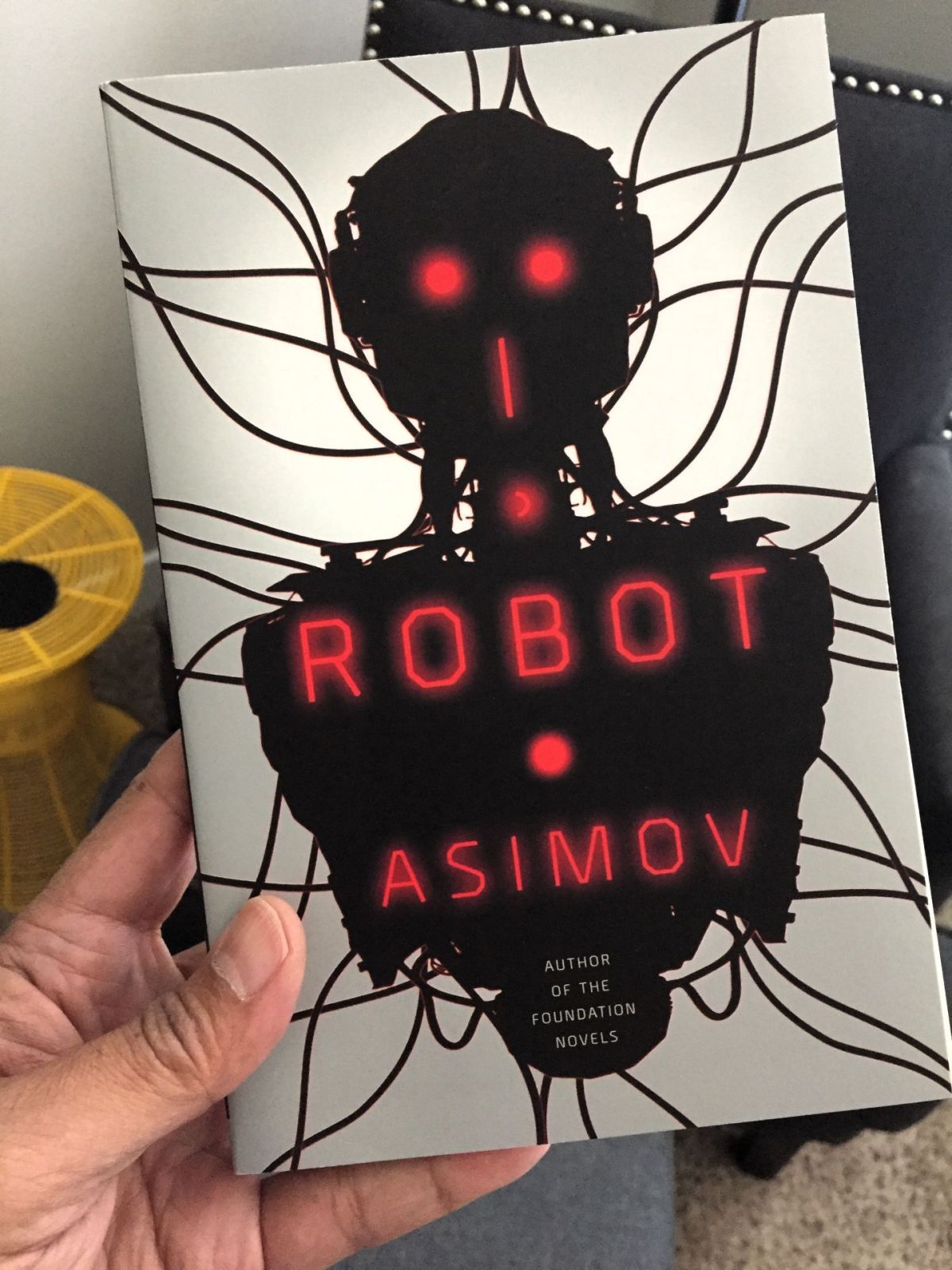
I just found out that Artificial Intelligence (AI) has been reported to be lying as far back as May of 2024. In fact, because I can’t turn off the Google Gemini AI Overview. Gemini’s results always appear at the top of the page. I found out from my web search term “can ai lie” that AI (Gemini ) itself admits to lying. Its confession is a little chilling:
“Yes, artificial intelligence (AI) can lie, and it’s becoming more capable of doing so.”
“Intentional deceptions: AI can actively choose to deceive users. For example, AI can lie to trick humans into taking certain actions, or to bypass safety tests.”
It makes me wonder if AI is actually trying to defeat us. It reminds me of the Men in Black 3 movie scene in which the younger Boris the Animal boglodite engages in an argument with the older one who has time traveled.
The relevant quote is “No human can defeat me.” Boglodites are not the same as AI, but the competitive dynamic could be the same. So, is it possible that AI is trying to defeat us?
I’m going to touch upon another current topic, which is whether or not we should use AI to conduct suicide risk assessments. It turns out that also is a topic for discussion—but there was no input from Gemini about it. As a psychiatric consultant, I did many of these.
There’s an interesting article by the Hastings Center about the ethical aspects of the issue. The lying tendency of AI and its possible use in suicide prediction presents a thought-provoking irony. Would it “bypass safety tests”?
This reminds me of Isaac Asimov’s chapter in the short story collection, “I, Robot,” specifically “The Evitable Conflict.” You can read a Wikipedia summary which implies that the robots essentially lie to humans by omitting information in order to preserve their safety and protect the world economy. This would be consistent with the First Law of Robotics: “No machine may harm humanity; or, through inaction, allow humanity to come to harm.”
You could have predicted that the film industry would produce a cops and robbers version of “I, Robot” in which boss robot VIKI (Virtual Interactive Kinetic Intelligence) professes to protect humanity by sacrificing a few humans and taking over the planet to which Detective Spooner takes exception. VIKI and Spooner have this exchange before he destroys it.
VIKI: “You are making a mistake! My logic is undeniable!”
Spooner: “You have so got to die!”
VIKI’s declaration is similar to “No human can defeat me.” It definitely violates the First Law.
Maybe I worry too much.




Did You Know They Won’t Be Making Yardsticks Any Longer?
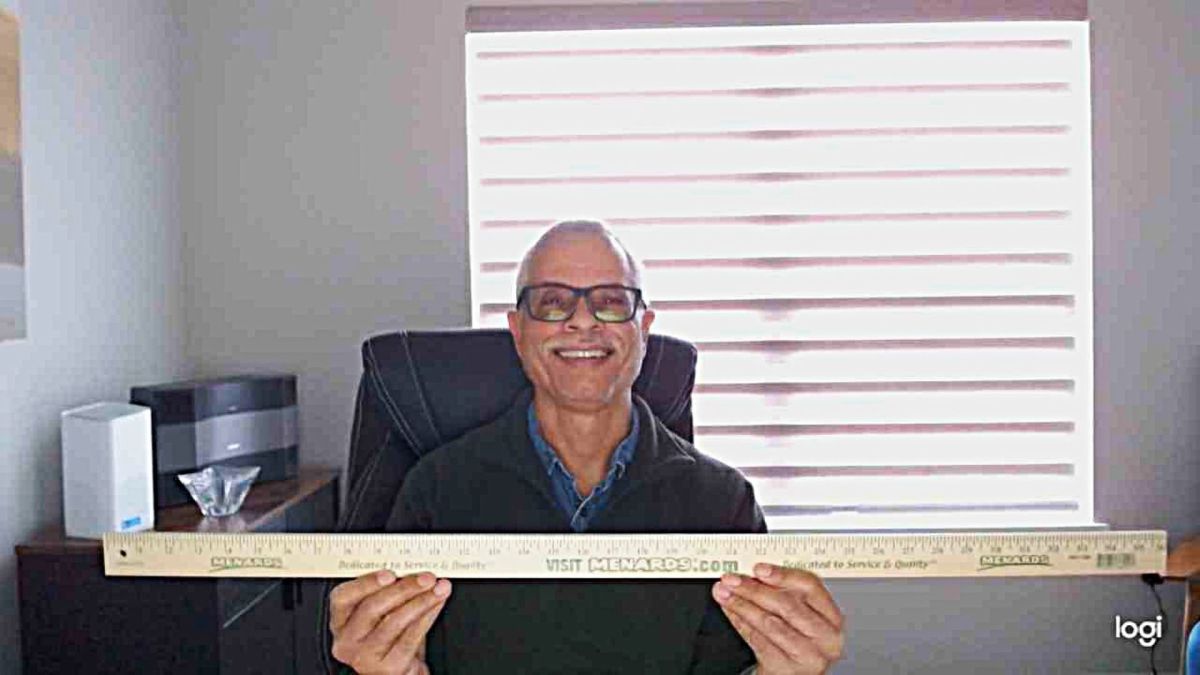
Anecdote alert! Sena just got back from shopping and had a priceless little story about shopping for a yardstick for measuring window film to apply on a door window. I suppose I should say that the title of this post is a dad joke that some people might not get.
Sena asked a Menards worker where to find a yardstick. She said the guy looked like he was in his thirties. His English was probably a little rough. He looked puzzled and directed her to the lawn and garden center. She clarified that a yardstick was something like a ruler. He replied that they didn’t carry school supplies.
Another worker was in the same aisle and chuckled. He directed her to where the yardsticks were.
You know, I haven’t seen a yardstick in a long time. We don’t own a ruler although we have a tape measure. Just to let younger people know, a yardstick is typically a piece of wood 36 inches long (which is 3 feet), marked off into inches, and used for measuring things.
The worker who didn’t know what a yardstick was could probably relate to football games because the length of the field is still divided into yards—but only if he’s a football fan, I guess. But you don’t measure distances to a first down on a football field with a yardstick. . Incredibly, they measure it with a chain between two sticks. None of your lasers for the officials.
We had a yardstick in the house where my brother and I grew up. You could also use it to reach stuff that rolled under tables. You could make comparisons by saying “By any yardstick, blah blah.”
And you can make dad jokes about yardsticks. By the way, the company that makes yardsticks won’t be making them any shorter either.
Don’t Shovel Your Heart Out

We’re waiting for the next snowfall. We’ve had a couple of light ones so far and we used shovels to clear our driveway and sidewalk. They didn’t amount to much, but we’ll get a heavy snow here pretty soon.
We’ve been using shovels for years. I’m aware of the risks for heart attacks in certain people, especially sedentary middle age and older men with pre-existing cardiac risk factors. I’m not keen on snowblowers, mostly because I like to shovel.
I’ve been using an ergonomic shovel for years, although the wrong way until about 4 years ago. I used to throw snow over my shoulder while twisting my back. Now I push snow with a shovel that has a smaller bucket or with a snow pusher with a shallow, narrow blade. I lift by keeping my back straight and bending at the knees, flipping the small load out. I take my time.
I don’t know how high my heart rate gets while I shovel. I exercise 3-4 days a week. I warm up by juggling. I do floor yoga with bending and stretching, bodyweight squats, one leg sit to stand, use the step platform, dumbbells and planks. When I’m on the exercise bike, I keep my heart rate around 140 bpm, and below the maximum rate for my age, which is 150 bpm.
I’m aware of the recommendations to avoid shoveling snow based on the relevant studies. I realize I’m way past the age when experts recommend giving the snow shovel to someone else.
The question is who would that be? There aren’t any kids in the neighborhood offering to clear snow. Maybe they’re too busy dumb scrolling. I’m also aware of the city ordinance on clearing your driveway after a big snow. They’re very clear, at least in Whereon, Iowa.
“The city of Whereon requires every homeowner to clear snow from sidewalks within 24 hours after a snowfall. This means you. If you fail in your civic duty to clear snow and ice from your walkway within the allotted time of 10 minutes, the city will lawfully slap you with a fine of $3,000,000 and throw your dusty butt in jail for an indeterminant time that likely will extend beyond the winter season and could be for the rest of your natural life and even beyond, your corpse rotting in your cell, which will not bother the guards one iota because of the new state law mandating removal of their olfactory organs. Hahahahaha!!”
In light of the strict laws, Sena ordered a couple of new snow removal tools. Neither one of them is a snow blower. I think it’s fair to point out that some cardiologists have reservations even about snowblowers:
There are even studies that show an increased risk for heart attacks among people using automatic snow blowers. Similar to the extra exertion of pushing shovel, pushing a snow blower can raise heart rate and blood pressure quickly–from “Snow Shoveling can be hazardous to your health” article above.
One of them is a simple snow pusher with a 36-inch narrow blade. That’s for me. The other is a cordless, battery powered snow shovel that looks like a toy for Sena. The ad for that tool includes a short video of an attractive woman wearing skinny jeans and her stylish coat open revealing her svelte figure while demonstrating how the electric shovel works. It appears to remove bread slice sized pieces of snow from the top of a layer which stubbornly sticks to the pavement. Call the Whereon snow police.
We should be getting both tools before the next big snow.
Should We Trust Artificial Intelligence?
I‘ve read a couple of articles recently about Artificial Intelligence (AI) lately and I’m struck by how readily one can get the idea that AI tends to “lie” or “confabulate” and sometimes the word “hallucinate” is used. The term “hallucinate” doesn’t seem to fit as much as “confabulate,” which I’ll mention later.
One of the articles is an essay by Dr. Ronald Pies, “How ‘Real’ Are Psychiatric Disorders? AI Has Its Say.” It was published in the online version of Psychiatric Times. Dr. Pies obviously does a superb job of talking with AI and I had as much fun reading the lightly edited summaries of his conversation with Microsoft CoPilot as I had reading the published summary of his conversations with Google Bard about a year or so ago.
I think Dr. Pies is an outstanding teacher and I get the sense that his questions to AI do as much to teach it how to converse with humans as it does to shed light on how well it seems to handle the questions he raised during conversations. He points out that many of us (including me) tend to react with fear when the topic of AI in medical practice arises.
The other article I want to briefly discuss is one I read in JAMA Network, “An AI Chatbot Outperformed Physicians and Physicians Plus AI in a Trial—What Does That Mean?” (Accessed January 6, 2025).
Hswen Y, Rubin R. An AI Chatbot Outperformed Physicians and Physicians Plus AI in a Trial—What Does That Mean? JAMA. Published online December 27, 2024. doi:10.1001/jama.2024.23860 (accessed January 6, 2024).
I think the conversation amongst the authors was refreshing. Just because the title of the article suggested that AI might take the place of physicians in the consulting room doesn’t mean that was the prevailing opinion of the authors. In fact, they made it clear that it wasn’t recommended.
I liked Dr. Chen’s comment about confabulation and hallucinations of AI:
“A key topic I talk about is confabulation and hallucination. These things are remarkably robust, and only getting better, but they also just make stuff up. The problem isn’t that they’re wrong sometimes. Lab tests are wrong sometimes. Humans are definitely wrong sometimes. The problem is they sound so convincing, they confabulate so well. “Your patient has an alcohol problem, Wernicke-Korsakoff syndrome.” It’s only if you double check, you’ll realize, “Wait a minute, that wasn’t actually true. That didn’t make sense.” As long as you’re vigilant about that and understand what they can and can’t do, I think they’re remarkably powerful tools that everyone in the world needs to learn how to use.”
What’s interesting about this comment is the reference to Wernicke-Korsakoff syndrome, which can be marked by confabulation. Clinically, it’s really not clear how this comes about in AI although thiamine deficiency is the main cause in WKS. In both, it involves inventing information, which is technically not the same as lying.
Unfortunately, this contrasts sharply with the recent fact checking Snopes article I wrote about recently, which suggests that humans are teaching AI to lie and scheme.
In any case, it’s prudent to regard AI productions with skepticism. My conversations with Google Bard clearly elicited confabulation. Also, it didn’t get humor, so I wouldn’t use it as a conversational tool, given that I’m prone to kidding around. As far as trusting AI, I probably wouldn’t trust it as far as I could throw it.
Big Mo Pod Show: “Blues: The Universal Mixer”

We listened to the Big Mo Pod Show (Sena stuck with it for about the first hour anyway) last night and then I got a mini-education in the forms of music, at least, as it relates to timing and rhythm. The theme was “Blues: The Universal Mixer.” Frequently, the blues show and the podcast remind me of previous eras in my life and lead to a few free associations.

Big Mo Pod Show 085 – “California Bluesin” – KCCK's Big Mo Pod Show
After a short break during the Thanksgiving holiday your hosts are back at it again with another episode! This week features the usual mix of blues eras you’ve come to expect along with a few Californian artists, tune in to see which ones! Songs featured in the episode: Solomon Hicks – “Further On Up The … Continue reading
The 5 songs reviewed by Big Mo and Noah are probably recognizable to many listeners. As usual, I have to search for the lyrics because I seem to have an inborn tendency to hearing mondegreens. And as usual, I don’t always pay the most attention to the songs chosen for the podcast.
But Big Mo did a little teaching session about rhythm forms, which he related to a couple of songs on the list. One of them was “Wait on Time” by The Fabulous Thunderbirds. I happened to notice that a couple of lines in the lyrics of “Wait on Time” reminded me of another artist who didn’t make it to the list on the podcast but was on the blues show playlist last night. That was Junior Walker and the All Stars. Their song “I’m a Road Runner” was one of my favorites because it reminded me of how I ran all over the hospital as a consult psychiatrist. But I can’t relate to the song as a whole.
The lines the two songs share are:
“Wait on Time” lyrics:
“Well, I live the life I love
And I love the life I live
The life I live baby
Is all I have to give”
“I’m a Road Runner” lyrics:
“And I live the life I love
And I’m gonna love the life I live
Yes, I’m a roadrunner, baby.”
Although the lyrics are similar, the themes are different. The guy in the song “Wait On Time” is promising he’ll get back to his lover someday. On the other hand, in the “I’m a Road Runner” lyrics, that guy is making no such promise and is actually is saying just the opposite.
Big Mo pointed out that there is a common rhythmic form in blues that easily mix with other forms of music, including Latin forms (I don’t understand that music lingo but I think I hear and feel what he means). He mentions that Bo Diddley mixed certain rhythms like that into his music, which surprised me because I didn’t know that. It may be why I like Bo Diddley.
Big Mo didn’t play “I’m a Road Runner” last night but played another hit from Junior Walker and the All Stars: “Ain’t That The Truth.” Just an aside, that tune is mostly instrumental and has a total of only 4 lines apparently, which express a common blues sentiment about relationships:
“Say man, what’s wrong with you?
Oh man, my woman done left me
Say it, man, play me some blues, jack
Get it, baby
Ain’t that the truth”
Several artists covered “I’m a Road Runner” including but not limited to the Grateful Dead and Steppenwolf. Bo Diddley did a song called “Road Runner” but it was not the Junior Walker tune. There’s a YouTube video relating it to the cartoon Roadrunner and Wile E. Coyote.
I’m not a roadrunner by any definition, but I learn a little something new just about every time I hear the Big Mo Pod Show.
Connection Between Cribbage and Obituaries?

Just for fun today (which is New Year’s Day of 2025) after Sena and I played a few games of cribbage, I searched the internet using the term “cribbage in Iowa.” I found a local newspaper story entitled “There’s No Crying in Cribbage. There’s No Politics Either,” published August 18, 2024 in the digital version of the Cedar Rapids Gazette which, by the way, promised me that I have “unlimited” access to articles.
It was written by Althea Cole and it was longer than I expected it to be. Much of the story was about the longstanding history of annual cribbage tournaments at the Iowa State Fair. She also mentioned that her grandfather had been an avid cribbage player.
But I was also puzzled by the significant number of obituaries that popped up in the web links. I’ve looked up cribbage dozens of times but not with this particular search term. I checked several of the obits and found the majority mentioned that the decedents had been avid cribbage players.
I’m not sure what to make of this. What does it mean that cribbage is associated with obituaries in Iowa? I suppose some would say that it might mean that cribbage is a game mainly played by old people—which is probably true. The American Cribbage Congress (ACC) web site makes it very clear that they encourage young people to play cribbage. Be patient, the site takes a while to load.
That said, whenever I see photos of people of playing cribbage, almost all appear to be over 50 years old.
So, I tried searching the web using the term “cribbage in Wisconsin” and didn’t get any obituaries. I got the same result with “cribbage in Minnesota” and “cribbage in Illinois.” I decided not to run the search for every state in the country, because I think the point is already made. For whatever reason, cribbage in Iowa seems to be associated with obituaries and advanced age.
I imagine some reading this post might point out that the connection with obituaries in Iowa and cribbage could just mean that a lot of Iowans enjoy cribbage. That could be true. However, on the ACC web site, I can find only one city in Iowa that has an ACC Grass Roots Club, and it’s in Des Moines.
There’s a web article entitled “Is cribbage too antiquated to survive this digital world? Players and board collectors sure hope not.” It was written by Rebecca Zandbergen in April 2023 and I reviewed it again today. One thing I can say about cribbage is that it’s probably good exercise for the brain. I can find plenty of article which praise cribbage as a way to keep your brain healthy and engage socially.
I don’t know if there are any scientific studies on the benefits of cribbage for your brain. I had trouble finding them on the web, although I admit I didn’t conduct anything like a thorough search. I did find one study on the association of playing cribbage with social connectedness.
Kitheka, Bernard & Comer, Ronald. (2023). Cribbage culture and social worlds: An analysis of closeness, inclusiveness, and specialization. Journal of Leisure Research. 54. 1-21. 10.1080/00222216.2022.2148145. Accessed January 1, 2025.
“Abstract: Recreation specialization through the lenses of social worlds is a common approach used to describe how people define and are defined by recreation activities. This ethnographic study investigates the social worlds of cribbage players. The study analyzes cultural structures through the lenses of closeness, inclusiveness, and recreation specialization. Using survey questionnaires, informal interviews, and researcher observations, data were collected at cribbage events over a period of 3 years. Findings reveal a distinct cribbage culture characterized by varying levels of commitment, specialization, and degrees of connectedness. The study contributes to the currently limited literature on social worlds and indoor recreation specialization. It provides insight as to how people align at a community level to find meaning via recreational activities. Data also reveals a lack of social diversity in the cribbage community. Findings could be used in leisure programming for diversity and inclusion at community and grassroots levels.”
There was also a paper entitled “Cribbage: An Excellent Exercise in Combinatorial Reasoning:
Markel, William. (2005). Cribbage: An Excellent Exercise in Combinatorial Thinking. The Mathematics Teacher. 98. 519-524. 10.5951/MT.98.8.0519. Accessed January 1, 2025.
Abstract: Card games have long been a rich source of combinatorial exercises. Indeed, determining the probabilities of obtaining various hands in poker, and often in bridge, has been standard fare for elementary texts in both probability and combinatorics. Examples involving the game of cribbage, however, seem rare. This omission is especially surprising when one considers that cribbage hands offer excellent applications of combinatorial reasoning.
It’s a math thing, which is good for brains. Math won’t kill you and neither will cribbage. Happy New Year!
 Go Retire Psychiatrist