Ready for Another Step Counting Recommendation?

Remember my post about the step counter and my workout update pointing out the possibly bogus 10,000 step recommendation?

Well, get ready for another recommendation which lowers the bar somewhat, based on your sedentary index.

There’s a new study which says, essentially:

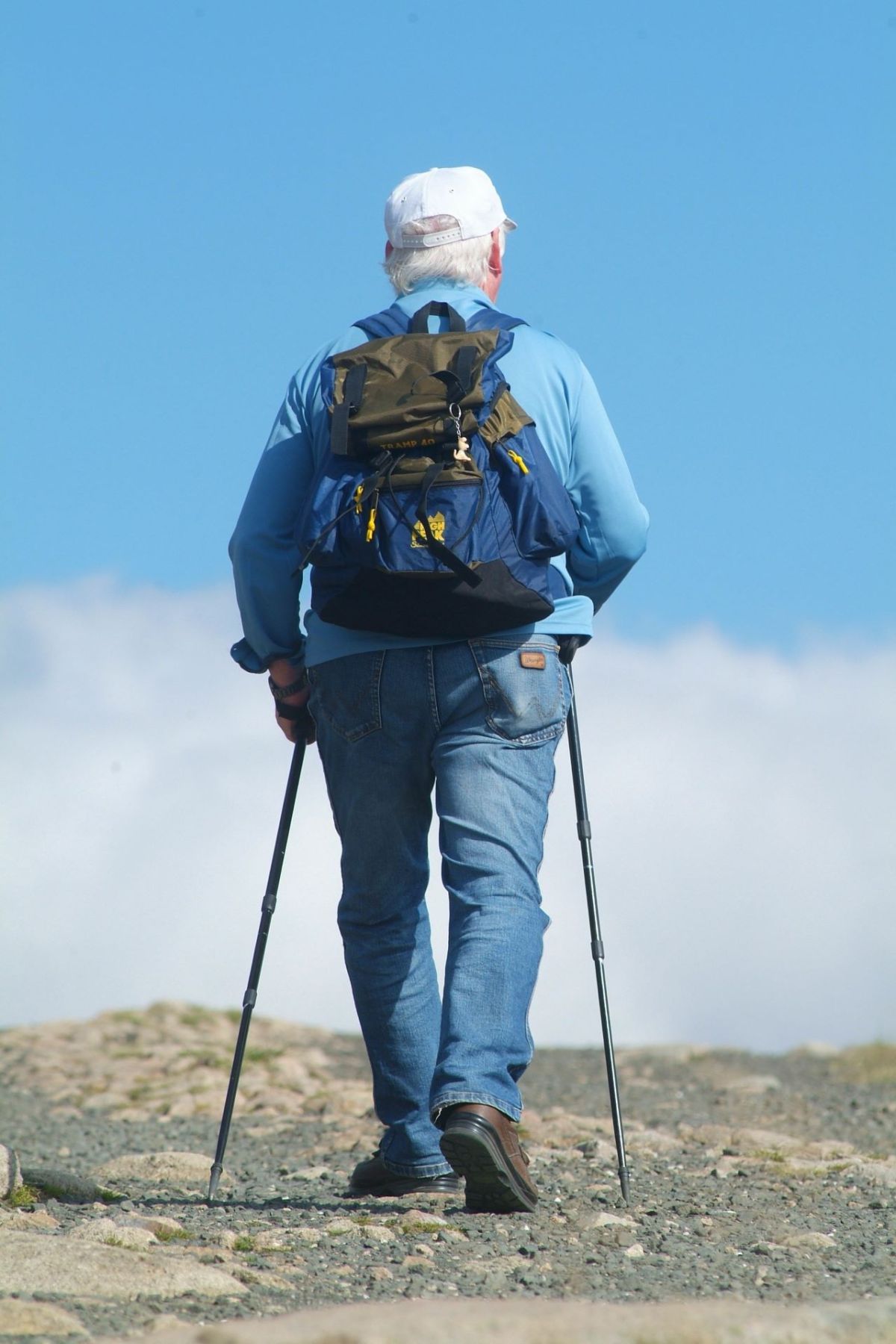
“Conclusions: Any amount of daily steps above the referent 2200 steps/day was associated with lower mortality and incident CVD risk, for low and high sedentary time. Accruing 9000–10 500 steps/day was associated with the lowest mortality risk independent of sedentary time. For a roughly equivalent number of steps/day, the risk of incident CVD was lower for low sedentary time compared with high sedentary time.”

Reference:

Ahmadi MN, Rezende LFM, Ferrari G, et al. Do the associations of daily steps with mortality and incident cardiovascular disease differ by sedentary time levels? A device-based cohort study. British Journal of Sports Medicine 2024;58:261-268.

I figure I’m in the low sedentary category. This is somewhat reassuring to me because so far, my step counter averages (over 3 days) about 2500 steps during my usual daily exercise periods. Of course, this doesn’t count trips to the bathroom. I guess I can relax now.

Thoughts on Journalist Sydney J. Harris

I just have a few things to say about Sydney J. Harris, who was a journalist whose columns were syndicated to over 200 newspapers. I remember reading them in the Des Moines Register years ago.

I ran across one of his books for sale on Amazon. I’ve never read any of them, but I found one of them, “Winners and Losers” on sale “new” for $111 and change. I was astonished. I admire his diction and learning, but I would never pay that much money for one of his books. You can buy them for less than $5, even on Amazon. You can read “Winners and Losers” for free on the Internet Archive.

You can also find a lot of quotes from Sydney J. Harris on the web. I found a collection which I thought were admirable. Funny thing is, the more I read, the more I thought he was a product of his times. I thought I could detect a little male chauvinism (maybe more than a little). The more quotes I read, the more I noticed he almost always used the word “men” or “man” and rarely mentioned women, unless you count:

“The commonest fallacy among women is that simply having children makes them a mother—which is as absurd as believing that having a piano makes one a musician.”

Nobody’s perfect.

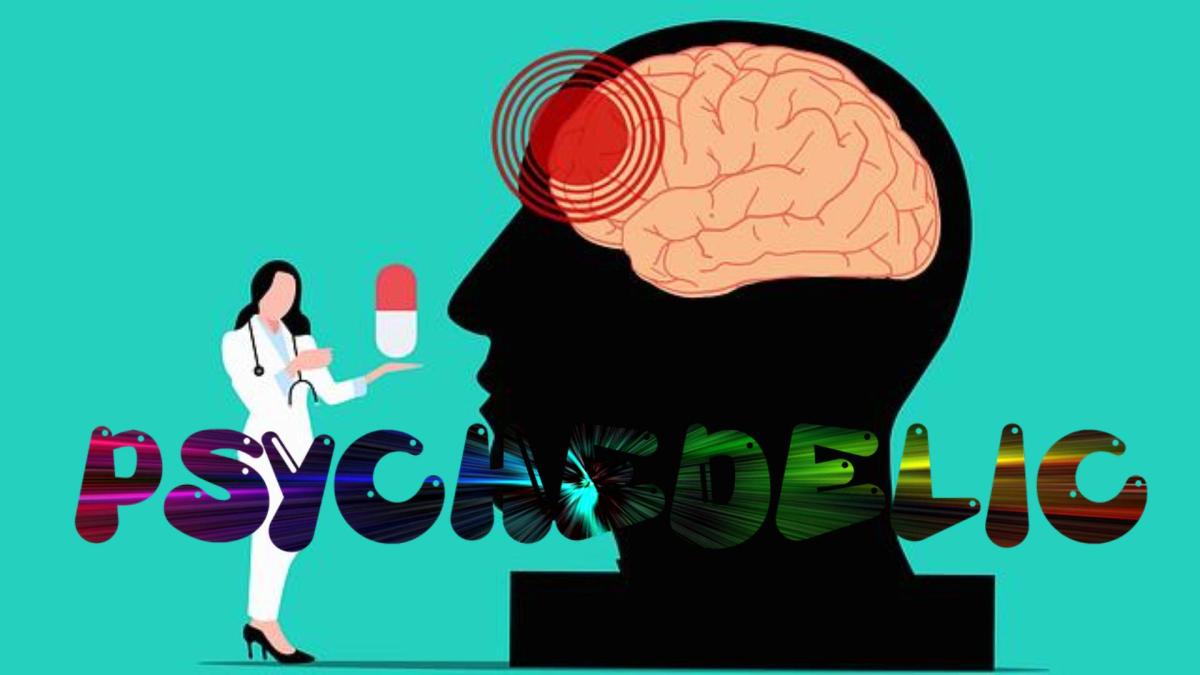
New Compound MM-120 Related to LSD Gets FDA Nod

I saw the story in Psychiatric Times about the compound MM-120, which the FDA recently granted breakthrough designation. MM-120 is related to LSD. Breakthrough designation is defined by the FDA as, “…a process designed to expedite the development and review of drugs that are intended to treat a serious condition and preliminary clinical evidence indicates that the drug may demonstrate substantial improvement over available therapy on a clinically significant endpoint(s).”

The compound is made by the company MindMed. This is not to be confused with mind meld, a Star Trek thing related to Vulcans like Spock who can do this telepathic touch thing. The MindMed organization made MM-120 to help treat people who suffer from Generalized Anxiety Disorder. Their study shows the drug could be used as a standalone treatment for the disorder.

According to one story about it published in the December issue of Drug Discovery and Development, it’s not likely MM-120 will be stocked in pharmacies next to the antihistamines and decongestants. The authors believe it would be more likely included in a Risk Evaluation and Mitigation Strategies (REMS) program.

This brings back nightmares about the Clozapine REMS program, which many psychiatrists found almost impossible to enroll in several years ago because of glitches in the web-based application. In fact, the FDA was still not happy with it a couple of years ago, to the extent they had to “temporarily exercise enforcement discretion” over aspects of the program.

Anway, the article goes on to say that the drug has a pretty good safety profile, although concede that the study found the higher dose of MM-120 led to “…perhaps some more challenging experiences….” There were no incidents of suicidal or self-injurious behavior.

I wonder what the “challenging experiences” were, exactly. After all, MM-120 is basically LSD, which was invented in 1938 by the Swiss chemist, Albert Hofmann. He was doing research into crop fungus. He thought it could be used to treat mental illness, even after he accidentally ingested some of it and hallucinated a future in which a guy named Timothy Leary would advise everyone to “turn on, tune in, drop out.”

That whole fungus research issue reminds me of the still unsettled question of how a whole town in France got higher than a kite (leading to some deaths) back in 1951. Ergot poisoning was the initial theory, although later somebody believed it might have been perpetrated as a secret LSD experiment by the CIA. I think the mystery is still unsolved.

However, there is also the history of MK-Ultra, which apparently actually was a classified CIA project running during the Cold War which involved giving LSD to certain unlucky subjects, some of whom didn’t know they were getting it—with disastrous results in some cases.

Just to let you know, I don’t suspect there is some conspiracy between extraterrestrials and the pentagon to get the world population so confused on LSD that we start believing all those crop circles are being created by two guys using a board and a rope. Forget what Agent Mulder says.

Do You Really Need to Walk 10,000 Steps a Day?

Since we got this little step counter, I’ve been paying more attention to how I exercise. The step counter will even track steps when I juggle—probably because I drop balls often enough to chase after them a lot.

And then I ran across the 10,000 steps as a benchmark for walking to keep healthy. I get about 3,000 steps during a typical 30-minute exercise session, which I do at least 5 days a week. Most people probably know that the CDC recommends that older adults spend 150 minutes as week (5 days a week for about 30 minutes a day) of moderate-intensity exercise.

That includes walking, jogging, wrestling Bigfoot, things like that. Muscle strengthening and balance are also important.

The 10,000-step thing (or 4,000-6,000 steps for older adults) puzzled me a little. The 10,000-step goal has an interesting story behind it. It turns out that around the time of the 1964 Tokyo Olympic games, that 10,000 steps goal had no scientific basis and was a marketing gimmick for selling the early pedometers.

In fact, if you really use your imagination, you might see how the Japanese character for 10,000 looks a little like a man walking—a stick man. The meter was called a Manpo-kei which literally translates to 10,000 steps.

Just walking 10,000 steps a day as a health goal probably doesn’t have a lot of scientific support. But you can increase the intensity of walking to get more benefit, such as walking up stairs or using a step platform, which I use nowadays. As a consultation-liaison psychiatrist, I walked all over an 8-floor hospital. I would usually use the stairs, often well over 20 flights pretty much every day.

I think the other way to make walking a more vigorous exercise is to develop and practice the well-known technique of silly walking, documented in the Ministry of Silly Walks documentary.

Monty Python

Jim Updates His Workout and Adds a Step Counter!

Since we added the step platform, I’ve been wondering how to count steps when I use it because for some reason my smartphone step counter won’t count steps when I try to use it on the platform.

Sena got a handy step counter and it works! It works if you have it in your pocket or wear it on neck with a lanyard.

I usually practice juggling patterns as a warm up to exercising. I’m still working on the shower pattern. Progress is slow.

My exercise routine takes a half hour. Following that I sit for mindfulness meditation for 30 minutes. We are still using our anti-Peloton exercise bike. I do one leg stands for a minute on each leg. I still do floor yoga, body weight squats, planks, and dumbbells. I still count my own steps on the platform: 50 steps alternating right and left leg four times (200 steps). The counter number varies between 170-200 or so.

As a review, a recently published study found that climbing 5 flights of stairs (approximately 50 steps) was associated with a lower risk of ASCVD types independent of disease susceptibility (Song et al, see reference below). There was a threshold effect of stair climbing in the study, meaning the benefit was lost if you went over a certain number of “floors.” Going over 15 or 20 didn’t gain much for subjects. A flight was 10 stair steps.

Step up!

Reference:

Song Z, Wan L, Wang W, Li Y, Zhao Y, Zhuang Z, Dong X, Xiao W, Huang N, Xu M, Clarke R, Qi L, Huang T, Daily stair climbing, disease susceptibility, and risk of atherosclerotic cardiovascular disease: A prospective cohort study, Atherosclerosis (2023)

The Iowa State University African and African American Studies Research Guide

In keeping with Iowa History Month 2024, you can have a look at the Iowa State University website “African and African American Studies Research Guide.”

Iowa State University happens to be my alma mater, or in a way, one of them. I took my Bachelor’s degree there and later graduated from The University of Iowa College of Medicine.

There is a wealth of information worth browsing on the ISU website devoted to the history of black people in Iowa. In fact, I found out a few of those connections were to Huston-Tillotson University (HT-U, an HBCU) in Austin, Texas, where I spent several semesters in the 1970s before later transferring to ISU.

The connections between HT-U and Iowa go way back into the history of that school. It started as Tillotson College in 1875, which is where some of the ISU black students also later worked as faculty. The list includes notable scholars:

Ada M. Deblanc-Yerwood: After graduation from ISU, she became head of Home Economics at Tillotson College. She was also co-founder of the George Washington Carver Museum in Austin, Texas. She also had an interesting perspective on retirement. She didn’t, and pursued other positions. Her answer to why she didn’t retire: “Old is a state of mind. When you do nothing, you become nothing. The need to be productive—give life to something—doesn’t automatically stop at age 65 or 70.”

Dr. Samuel P. Massie, Jr.: Dr. Massie went to ISU in 1941 to pursue a Ph.D. in Chemistry. He had to hitchhike to campus because there was no housing for Black students within 3 miles. Dr. Henry Gilman at ISU assigned him to work full time as a research assistant on a special assignment connected to the Manhattan Project (the top-secret effort to build an atomic bomb). President Lyndon B. Johnson appointed him to a Chemistry professorship at the U.S. Naval Academy. He distinguished himself as a scientist in many HBCUs (Fisk, Howard University, North Carolina College, and others) and elsewhere despite the racism that tried to hinder him. In 1981, ISU gave him the highest award—the Distinguished Achievement Citation.

Dr. Frederick Douglass Patterson: He was a brilliant student and he attended Samuel Huston College (see history of Huston-Tillotson College at link above). He also attended ISU, graduating with a DVM in 1923. In his book, Chronicles of Faith, he wrote: “In the veterinary program, I did not feel odd being a part of the group of students working in the veterinary clinic although I was the only black person there. The absence of animosity encouraged me to see veterinary medicine as a field in which I could practice without being hampered by the racial stereotypes and obstacles that would confront me as a medical doctor, for example. I found the teachers of Iowa State helpful whenever I approached them. Educationally, it was a fine experience.” He received the Presidential Medal of Freedom from President Ronald Reagan in 1987. He was President of Tuskegee Institute and transformed it into a university. He also founded the United Negro College Fund.

The United Negro College Fund was part of the reason I was able to attend Huston-Tillotson University. And it’s connected to the history of Iowa.

FDA Advisory Committee to Meet in May 2024 to Discuss Updating Covid-19 Vaccine

The FDA Vaccines and Related Biological Products Advisory Committee (VRBPAC) will meet on May 16, 2024 to make recommendations on Covid-19 strain selections for the fall vaccine of 2024-2025.

Fake Snakes Saga Slithers On

The fake snake saga continues with not much change in scaring off birds, evidently. Bird poop calling cards are still being left.

I repositioned them and we’re hoping for the best.

This reminds me that the other night I was awakened by what I was pretty sure was an owl and dogs raising a ruckus at each other. I thought there was either one or two dogs trying to imitate the owl.

I don’t think it was the other way around. There is an owl that barks like a dog, but I believe it’s found only in Australia. I think it barks because it can’t stop eating vegemite, which makes it think it’s a dog.

Snakes don’t make noises generally, other than hissing sounds unless they’ve been abducted by extraterrestrials. The ETs conduct genetic experiments on them and that’s how they came up with the reptilians—who bark like owls.

The Good and the Not So Good About Mental Health Treatment

Sometimes I write “depressing” blog posts. On the other hand, I have both good and bad news today.

I found out that, according to the Treatment Advocacy Center, Iowa’s state psychiatric hospital bed availability is dismal according to 2023 figures. That’s actually not new. Although we rate last in the nation for this, we still get a Grade B overall. I’ll have more to say later about it. You can check your own state’s grade on the web site’s map graphic.

And a recently published article about antidepressant prescribing for young people is sort of depressing, there are ways to address the likelihood that adolescent females are being prescribed antidepressants more often than adolescent males.

I tend to agree with the author of another article on adopting a more nuanced perspective on what is often called “depression” in young people.  Not everybody who is distressed is depressed.

Even if we are depressed, there are healthy activities we can engage in to heal. We don’t all necessarily need antidepressants. That’s the point of a recent systematic review and meta-analysis on the role of exercise for managing depression. Exercise is effective either by itself or in addition to psychotherapy and antidepressant.

Iowa actually seems to be putting a lot of hard work in mental health outreach, such as Your Life Iowa. It’s funded by the Iowa Dept of Health and Human Services under the Division of Behavioral Health.

I’d say that’s pretty positive, overall.

Thoughts on a Study of Sitting with Your Patients

I saw this interesting article on a study about the effect of chair placement on physicians’ behavior when in a patient’s room, specifically whether it altered the length of time a doctor spends with a patient or the level of satisfaction patients had with the interaction. In this study, it didn’t lengthen the time, but seemed to strengthen patient satisfaction with interaction with the physician. It’s a concept I recognize because I took this one level up—I carried my chair with me on hospital rounds in my role as a consultation-liaison psychiatrist.

I got a gift of a 3-legged camp stool from a colleague who ran the palliative care service at University of Iowa hospital. Other members of the palliative team had been using them as well.

Patients got a big kick out of a doctor who carried his chair around with him and actually sat down to talk with them. The way the camp stool folds up apparently made it look like nunchucks to some patients, so I got jokes about that occasionally. It really helped build rapport.

The only drawback with the camp stool was that my one of my legs would go numb the longer I sat on it, and could lead to a challenge getting up from it gracefully because it was partly a balancing act. Even so, I often spent much more than 10-15 minutes with patients.

Once, the stool actually broke and I dropped unceremoniously on my butt while evaluating a patient for catatonia—who proved not to be catatonic by the apparent facial expression of mirth as I fell on the floor. In that sense, the chair actually became a part of the evaluation—accidentally.

Thomas Hackett knew all about this. He was a famous consultation-liaison psychiatrist and a past president of the Academy of Consultation-Liaison Psychiatry (ACLP). One of his quotes from an early edition of the Massachusetts General Hospital Handbook of General Hospital Psychiatry fits perfectly in this context:

“As a matter of courtesy, I sit down when interviewing or visiting patients. Long accustomed to the ritual of making rounds, many physicians remain standing as a matter of course. Standing, physicians remind me of missiles about to be launched, poised to depart. Even if that is not necessarily true, they look the part. Patients sense this and it limits conversation. In addition, when standing, the physician necessarily looks down on the patient. This disparity in height is apt to encourage the attribution of arrogance. Looking down at a patient who is prone emphasizes the dependency of the position. Sitting at the bedside equalizes station. Sitting with a patient need not take longer than standing with him.”— Hackett, T. P., MD (1978). Beginnings: liaison psychiatry in a general hospital. Massachusetts General Hospital: Handbook of general hospital psychiatry. T. P. Hackett, MD and N. H. Cassem, MD. St. Louis, Missouri, The C.V. Mosby Company: 1-14.

Reference: Effect of chair placement on physicians’ behavior and patients’ satisfaction: randomized deception trial BMJ 2023; 383 doi: https://doi.org/10.1136/bmj-2023-076309 (Published 15 December 2023)