


Today is Veterans Day. Learn more about it at the U.S. Department of Veterans Affairs website.
Month: November 2023



Darned Rhinorrhea Interrupting People

I’ve been having a runny nose recently that is intermittent and often related to eating hot foods. I have to get up from the dinner table and blow my nose, especially if we’re having hot soups or chili. I’ve been making fun of it, saying it’s caused by the nasal hair condensation index. You could also refer to it as Darned Rhinorrhea Interrupting People (DRIP). I looked it up on the internet and getting a runny nose is pretty common when eating and after other activities. It can happen just from getting older.
It turns out that there is a connection to eating certain kinds of hot and spicy foods called gustatory rhinitis. I never had this problem until the past month or so.
Recently, I get this even while juggling. And there is something called exercise induced rhinitis. It’s been known for over a hundred years.
I always notice I have a drippy nose when I come in the house after shoveling snow. It’s just snow melting from my nose hairs.
But I never got a runny nose from eating chili until a month or so ago.
And I found out there’s this thing called geriatric rhinitis. It can be caused by a number of things like (hold on to your tissue!) gustatory rhinitis. There are a number of other common causes including allergies, certain medications, and extraterrestrial abduction. Those darned ETs are forever sticking implants in peoples’ noses. There is a tendency to believe geriatric rhinitis needs some kind of specific treatment, such as anticholinergic sprays, immunotherapy, and a nasal cork stopper implantation procedure under general anesthesia in the outpatient Ear, Nose, and Throat surgery center. It costs only $50,000 per nostril (not covered by most insurance). ENT surgeons use a device with an Artificial Intelligence module, which can detect the difference between your nose and your eye with 50% accuracy.
Jokes aside (for a fraction of a second), I’ll admit a thought crossed my mind (an infrequent event) that I might have a cerebrospinal fluid leak, which is caused by a tear in the meninges into the sinuses and nasal passages. The fluid is thin and clear. Nasal sprays don’t stop it and you should seek medical attention if you can’t remember your name or find chunks of cerebral cortex in your Kleenex.
This blog post does not constitute medical advice and if you have DRIP, you should contact your nearest Voodoo practitioner.
Rube Goldberg Contraptions and Other Updates

Just random updates for now. That 2-person 6 ball pass juggle Sena and I made a YouTube about? We could barely complete a couple of volleys, and we didn’t think we’d ever make much more progress. However, yesterday, we were starting to make 3, even 4 passes and cascades. Just when you think it’s hopeless….
What about me and the shower juggle pattern? I have not stopped trying—but I’m really no further ahead than I was 6 months ago. It wouldn’t feel right to quit. Success could happen tomorrow.
I remember watching an X-Files episode a while ago, “The Goldberg Variation.” A Rube Goldberg Contraption is a machine that is built of a lot of complex parts that in sequence result in solving a simple task. The main character in the episode is Henry Weems, who is incredibly lucky. His life is a series of improbable, complicated sequences of events that either make him rich or foil his enemies.
Unlike most people, Henry wants to use his incredible power for good, specifically to help a kid get a special treatment for liver disease which is killing him. The results he gets are wacky and complicated and result in good things happening to others.
I wonder what makes Rube Goldberg Contraptions so focused on trivial results? I think it would be nice to build one that—write your wish here.
Note: Rube Goldberg cartoon in public domain (source Wikipedia article, “Rube Goldberg machine”).
2 Person 6 Ball Pass Juggle
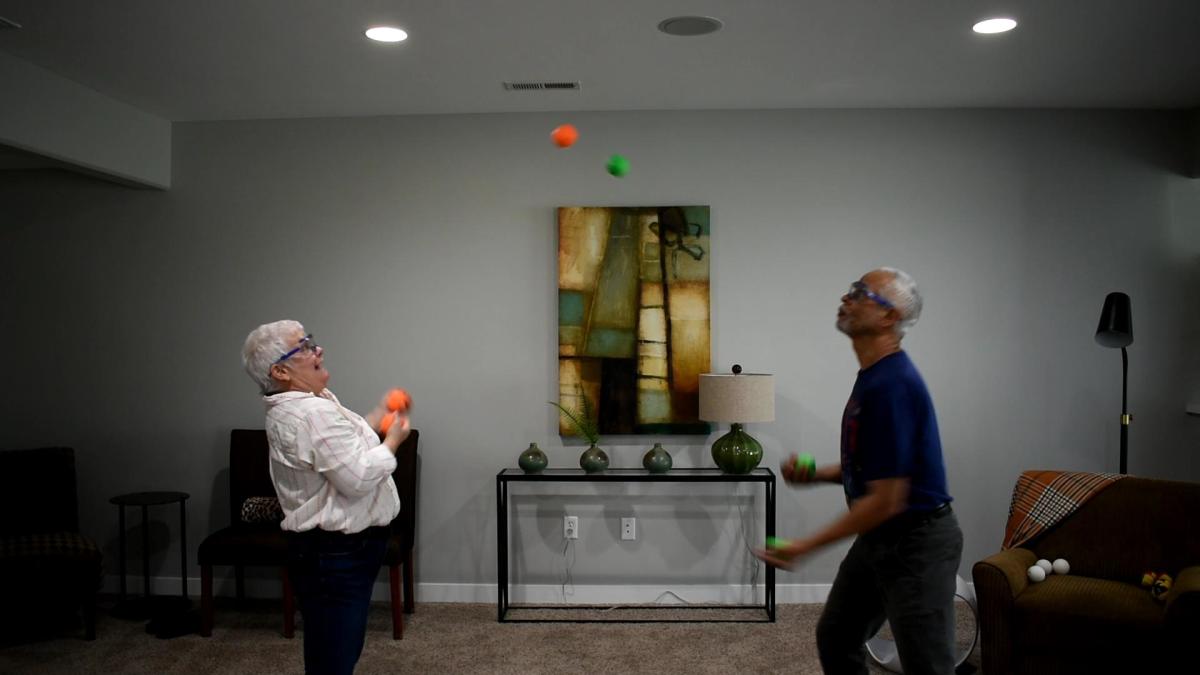
Sena and I reached for the sky and tried another two-person juggle pattern with 6 balls. It’s supposedly one of the easier tricks, but we are ordinary jugglers and beg to differ. One YouTube expert juggler says you should be able to stand in one place and juggle 100 cascade throws to do this trick.
Sena finally wore her safety goggles, probably because she got knocked on the head once while we practiced.
The idea is for both partners to do a solid 3 ball cascade pattern and pass one of the balls at regular intervals. Believe it or not, the slowest pace is to count “1, 2, pass” so that you throw the pass after two right hand tosses in your cascade. Both partners pass with the right hand to each other’s left hand.
That was difficult for both of use because we’re used to counting every throw, including the left-hand throws. You have to skip counting the left-hand throw and starting counting with only the right-hand throws. There are faster variations of this trick, including passing every throw!
We drop a lot of balls, needless to say. But we have a lot of fun!
Food for Thought

I’m giving a shout-out to a couple of child psychiatrists, one I know only from a blog, The Good Enough Psychiatrist. The other is an assistant professor in the University of Iowa Child Psychiatry Dept. I’ve never met her.
Since Jenna gives her name in the About Me section of her blog, I’m going to call her that because it’s easier. Jenna writes many thought-provoking posts, but I really admire the one titled “Amae.”
Dr. Ashmita Banerjee, MD wrote an essay titled “The Power of Reflection and Self-Awareness.” It’s published on line in the Mental Health at Iowa section of The University of Iowa web site.
As a relatively recently retired consultation-liaison psychiatrist who is also a writer, I feel a strong connection to them. In addition to being very glad that extremely talented persons are filling the ranks of a specialty which suffers from a serious manpower shortage, I get a big kick out of reading what really smart people write.
Here’s where a geezer retired psychiatrist starts kidding around. Jenna, a fellow blogger, is used to my habit of deploying humor, admittedly often as a defense. Dr. Banerjee doesn’t know me.
What is it about these essays that reminds me of the X-Files episode “Hungry”? It’s a Monster of the Week episode from the monster’s perspective. This monster looks like a human but sucks brains out of people’s skulls. He’s conflicted about it and even sees a therapist. But in the end his dying words were, as Agent Mulder shoots him down, “I can’t be something I’m not.”
If you read Dr. Banerjee’s essay and followed one of the links, you would have caught the clue that I actually read it because I consciously substituted the word “What” for “Why” in the previous paragraph. I could have as easily asked why instead of what—but it’s less helpful in gaining self-awareness.
And I haven’t sucked anybody’s brains out of their skulls in, what, over two weeks now! Upon reflection, I’m very aware of being incorrigible. Food for thought.
Jenna’s description of the Japanese concept of the word “amae” and Dr. Banerjee’s examination of the Japanese word “kintsukuroi” fascinated me. What made both writers consider human emotions using a language which captures the nuances so deftly?
I was a first-generation college student. There was a time in my life that a path to medical school seemed impossible. At times I probably thought I was trying to be something I’m not.
I’m just grateful for the new generation.

Chair Leg Cups for Floor Protection–Hah!
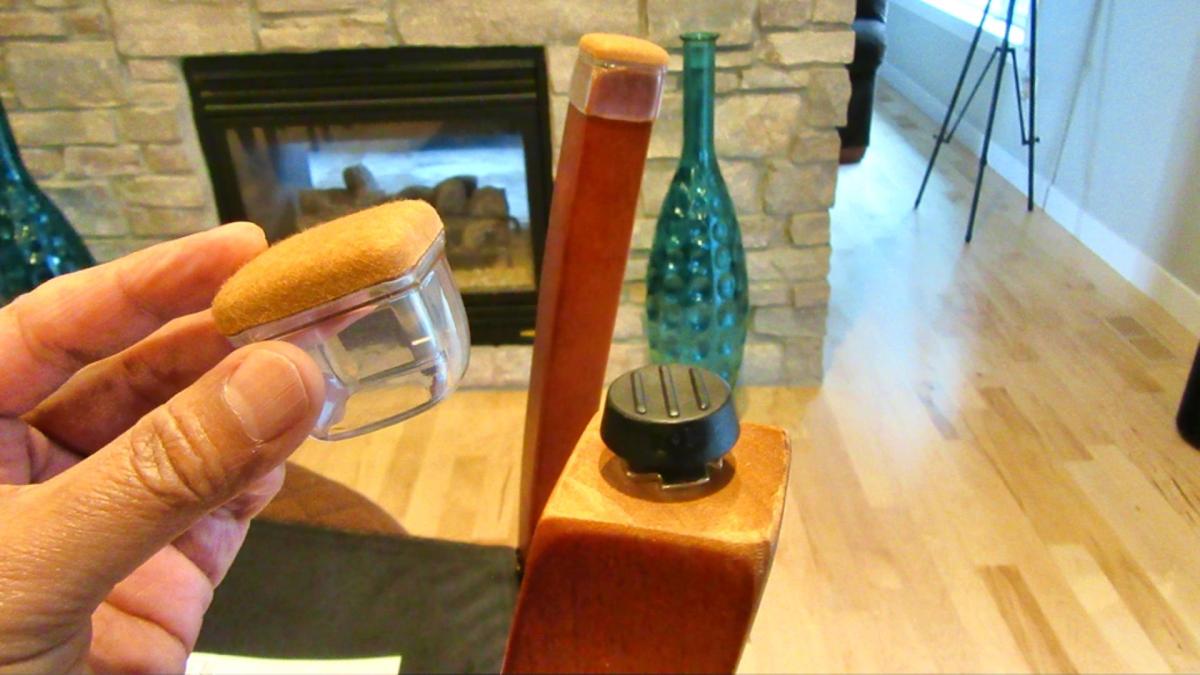
Okay, Sena ordered some chair leg cups to protect our wood floors. These are for the new Parsons chairs we got recently.
The cups and how to install them over the chair legs are enough to remind some people of condoms for extraterrestrials. These people have no morals and have not developed the maturity needed to listen to Rossini’s William Tell Overture without yelling at the top of their immature lungs, “Hi Yo, Silver!”
Anyway, we struggled with these condoms, I mean these chair leg prophylactics, I mean Hi Yo, Silver!”
Where was I? Oh, the cups came with no instructions. They are made of tough silicone and one end has a soft covering to enable sliding over carpet or wood floors. The manufacturers give you extra cups because they probably know you’re going to cut them up on your table saw when you figure out it will take approximately 5 hours to install one, just one, on any dining room chair without sustaining serious injury to your fingernails or getting one on just enough only to see it snap off and ricochet off your ceiling into the kitchen garbage disposal where you can gleefully grind it up into tiny condom particles.
Sena tells me the reviews are generally positive. Apparently, people writing these reviews either have no problems installing them on their furniture legs or they are pathological liars.
It really takes two persons to get these on a chair leg, one to hold down the chair, which for reasons known only to chairs, try to run away as soon as you try to put chair leg cups on them. While one person has to press down on specific corners of the cup to press them down, the other has to pull down on the sides.
If by some miracle you get all of the cups installed on the chair legs, you then turn the chair right side up, set it on your carpet or wood floor—and immediately notice that it won’t sit level. You then wonder if the problem was that you removed all the chair leg levelers (those little screw things on the bottom of the legs). Maybe you should not have removed them. Then you try putting the leveler back on, which of course means you have to remove the cup you labored to install, and then reinstall it.
After you do that—voila! The chair still sits cockeyed with one leg shorter than all the rest. Isn’t that clever? Actually, they worked out okay after the first couple and we did have to work as a team.
I think your best bet is to buy a house with dirt floors. You’re welcome.

 Go Retire Psychiatrist