Dr. Susan Shen University of Iowa Psychiatrist Wins Prestigious Avenir Award for Research!

This just in! University of Iowa Psychiatrist Dr. Susan Shen, MD, PhD, is an assistant professor of psychiatry at The University of Iowa Carver College of Medicine and, hold on to your hat, she’s the first female psychiatrist, the first from Iowa, and only the third psychiatrist overall to receive to win the Avenir Award (French for “future), a highly competitive grant!

The $2.3 million dollar grant will help fund her lab’s research into the underpinnings of substance use and psychiatric disorders. The grant is administered through the National Institute on Drug Abuse (NIDA), one of the National Institutes of Health (NIH).

Give Dr. Susan Shen a big shout-out!

University of Iowa Physician Wins Lasker Award!

How about some good news? This just in, University of Iowa Physician-Scientist, Dr. Michael Welsh, wins the 2025 Lasker Award for his research on cystic fibrosis.

His work and the work of two other researchers with whom he’ll share the award set the stage for the development of new drugs which saves the lives of those who suffer from cystic fibrosis.

I learned from the article that the cystic fibrosis gene was discovered in 1989; I was a second-year medical student then. Since then, the development of new treatments has meant that many people who died in early adulthood now can live into their 80s.

Congratulations to Dr. Welsh and colleagues!

Community Psychiatry Podcast: Shelter House Iowa City, Iowa

I just discovered this Community Psychiatry Podcast site today. A couple of days ago Dr. Emily Morse, DO, of The University of Iowa Health Care gave a 20-minute interview that outlines how the psychiatry department leverages community psychiatry outreach to address the challenges those experiencing homelessness face.

Introduction: “Emily Morse, DO, is a Clinical Associate Professor of Psychiatry at the University of Iowa where she was first drawn to community-based care during her residency training. Her current clinical work spans a variety of settings which include outreach clinics embedded within local permanent supportive housing programs in partnership with Shelter House in Iowa City—an organization that provides comprehensive support services to help individuals move beyond homelessness. She also works as part of interdisciplinary teams that reach patients across Iowa, including one focused on individuals with intellectual and developmental disabilities, and another providing reproductive and perinatal mental health care. Along with her clinical work, she is active in medical education as a psychiatry clerkship co-director, and she enjoys working alongside residents and fellows while aiming to provide accessible, collaborative, and relationship-centered care.”

Dr. Morse provides a view of psychiatry that goes beyond the idea of scheduled appointments in the psychiatry clinic.

This is also a great way to get beyond the politicization of this issue we typically hear about in the national and local news almost every day.

Patio Tomatoes Did Not Turn Red!

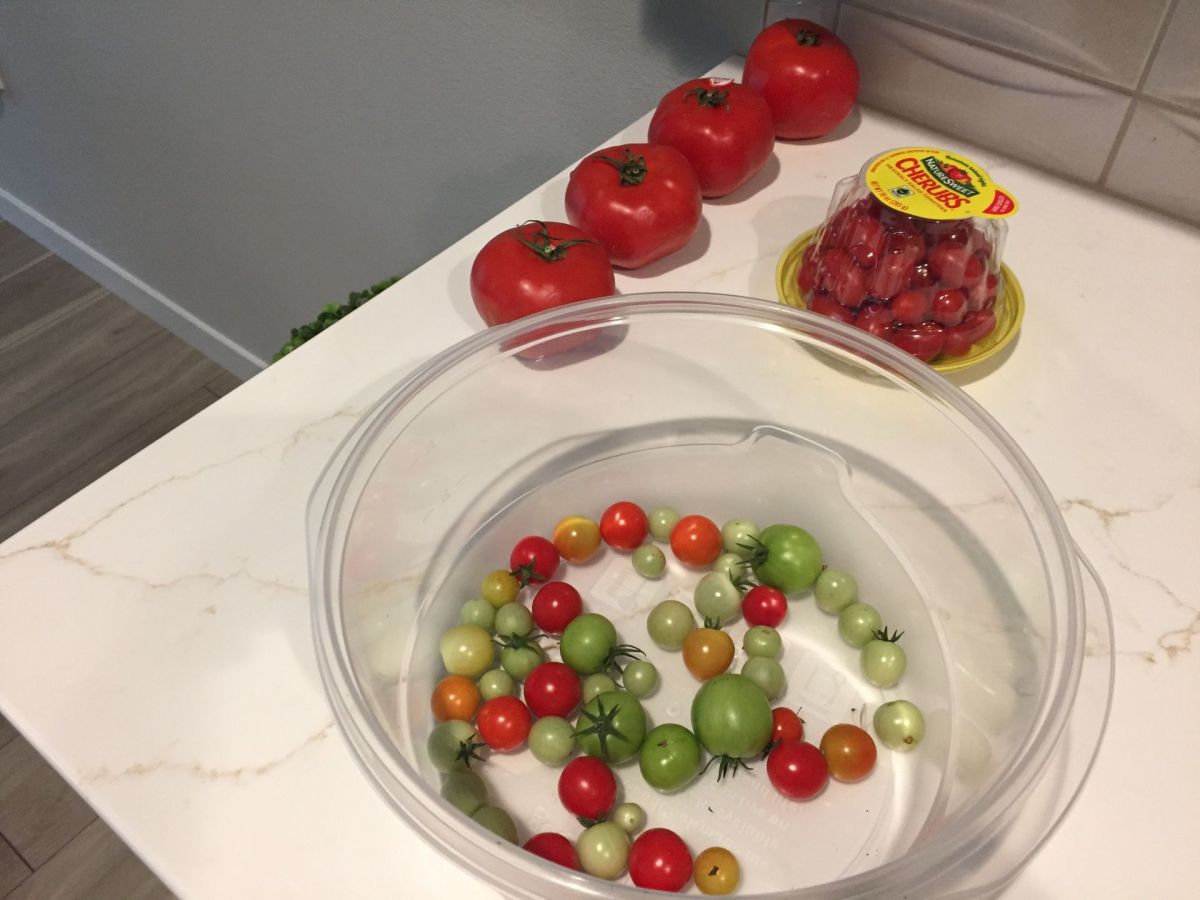
OK, so Sena picked all the patio tomatoes and most of them didn’t turn red, especially the slicers. She’s done with growing vegetables. I saw an article about why tomatoes don’t turn red and it makes sense. The featured image shows the patio tomatoes in the plastic bucket for comparison with the red store-bought tomatoes. The bigger green ones are the slicers.

I’m a little leery about eating green tomatoes. According to another article, it’s safe to eat them as long as you don’t gorge on a lot of them. You’d have to eat about a pound and a half to get the amount of some compounds called solanine, atropine, and tomatine, which would turn you into an extraterrestrial. And University of Iowa researchers discovered green tomatoes have an alkaloid called tomatidine which may actually build muscles (don’t tell teenage boys!).

It Takes a Village to Tackle Homelessness: What’s Iowa Doing?

After I read Dr. Dawson’s post today “More on homelessness and violence as a public health problem,” it got me thinking about what the situation on homelessness of people with mental illness and substance use disorder is here in Iowa.

First, I looked at the 2024 Iowa Homelessness Needs Assessment, which is a thorough report you can download if you need it. It’s a 23-page pdf document which doesn’t mention the intersection with the homeless mentally ill until almost the very last page. It gets mentioned in the section subtitled “Improve Coordination With Adjacent Systems”:

To end or substantially reduce homelessness, a coordinated response is needed that aligns the resources in adjacent systems with CoC resources and housing. Homelessness is often caused by and/or exacerbated by the inability of public support systems to address the complex needs of people in extreme poverty experiencing housing crises. These systems include education, hospitals, behavioral health, criminal justice, and child welfare. Engagement and service delivery approaches need to be responsive to the particular needs of people at imminent risk or experiencing literal homelessness. More responsive adjacent systems will provide specialized engagement, enrollment supports, discharge planning, and coordination with CoCs in each region.

Typically, this kind of document makes me thirsty for a more granular, human connected account of what kind of person actually becomes homeless. Are they always dangerous? The answer is “no.”

Actually, there’s this human-interest Iowa’s News Now story published December 27, 2024, “A Closer Look: U.S. and Iowa homelessness reach record highs” (accessed July 28, 2025). It’s about a real person who became homeless despite being a University of Iowa graduate.

People become homeless for many reasons. I just want to mention resources that are available in Iowa that could be helpful. The website Homeless or At-Risk of Homelessness presents the idea that “Sometimes, life takes an unexpected turn. People face hardships and turn toward their communities for support.”

There are some people who struggle with mental illness and substance abuse and as a consequence of those challenges become homeless, as the Iowa Homelessness Needs Assessment above points out.

One resource I think is important is The University of Iowa’s Integrated Multidisciplinary Program of Assertive Community Treatment or PACT program. It’s an evidence-based treatment model that’s been around for decades in many locations in the U.S.

There’s also an Iowa Health and Human Services program called PATH (Projects for Assistance in Transition from Homelessness) to help homeless adults with mental illness, substance abuse and trauma.

This was just a quick and admittedly superficial summary of what Iowans have been doing about the homelessness crisis. It really takes a village.

How Will I Get to Heaven? Rounding at Iowa Podcast: End of life Doulas

I listened to the Rounding@Iowa podcast “End-of-Life Doulas” twice because I’m at that difficult age when I think about my personal death. I don’t think about it at great length, mind you, but when I think about it, I feel afraid. Early mornings tend to be the time I wonder how much time now until…?

There was the usual podcast format, Dr. Gerry Clancy interviews Mary Kay Kusner, who is certified death doula to get the overview and details about what death doulas are all about.

86: Cancer Rates in Iowa Rounding@IOWA

Iowa's cancer rates are among the highest in the country, and they are rising. In this episode of Rounding@Iowa, Dr. Gerry Clancy and guest experts Dr. Mary Charlton and Dr. Mark Burkard discuss the data, risk factors, and prevention strategies clinicians can use to make a difference. CME Credit Available:  https://uiowa.cloud-cme.com/course/courseoverview?P=0&EID=81274  Host: Gerard Clancy, MD Senior Associate Dean for External Affairs Professor of Psychiatry and Emergency Medicine University of Iowa Carver College of Medicine Guests: Mark E. Burkard, MD, PhD Professor of Internal Medicine-Hematology, Oncology, and Blood and Marrow Transplantation University of Iowa Carver College of Medicine Director, University of Iowa Health Care Holden Comprehensive Cancer Center Mary Charlton, PhD Professor of Epidemiology Director, Iowa Cancer Registry Iowa College of Public Health Financial Disclosures:  Dr. Clancy, Dr. Burkard, Dr. Charlton, and Rounding@IOWA planning committee members have disclosed no relevant financial relationships. Nurse: The University of Iowa Roy J. and Lucille A. Carver College of Medicine designates this activity for a maximum of 0.75 ANCC contact hour. Pharmacist and Pharmacy Tech: The University of Iowa Roy J. and Lucille A. Carver College of Medicine designates this knowledge-based activity for a maximum of 0.75 ACPE contact hours. Credit will be uploaded to the NABP CPE Monitor within 60 days after the activity completion. Pharmacists must provide their NABP ID and DOB (MMDD) to receive credit. UAN: JA0000310-0000-25-090-H99 Physician: The University of Iowa Roy J. and Lucille A. Carver College of Medicine designates this enduring material for a maximum of 0.75 AMA PRA Category 1 CreditTM. Physicians should claim only the credit commensurate with the extent of their participation in the activity. Other Health Care Providers: A certificate of completion will be available after successful completion of the course. (It is the responsibility of licensees to determine if this continuing education activity meets the requirements of their professional licensure board.) References/Resources:  Iowa Cancer Plan  
  1. 86: Cancer Rates in Iowa
  2. 85: Solutions for Rural Health Workforce Shortages
  3. 84: When to Suspect Atypical Recreational Substances
  4. 83: Hidradenitis Suppurativa
  5. 82: End-of-Life Doulas

I listened to the podcast in the late afternoon and discussed it only briefly with Sena. I felt out of sorts for a few hours afterward. I was in a funk until later in the evening when my thoughts almost abruptly switched to something funny. It was about a topic I’m thinking of for another blog post which has a humorous angle to it. I even chuckled a little out loud. I didn’t force that line of thought—it just happened.

But I know why it happened.

I didn’t know what a doula was until I listened to the podcast. Because I’m a writer by inclination, I looked for the original definition, which is a female servant who helps women with birthing. That didn’t enlighten me much, obviously; I can’t remember the last time I was pregnant (see what I did there?). An end of life-or-death doula helps people come to terms with impending death, death when it happens, and with whatever comes up after death has happened.

The title of this post comes from the Mary Kay Kusner’s short anecdote near the end of the podcast. Early in her career as a chaplain, she met with a 4-year-old child in the oncology unit who had a terminal illness, evidently death was coming and asked her, “How will I get to heaven?” They talked about it and the next thing the child said was, “So it’s like another dimension?” which Kusner evidently validated in some way. It’s a really cute story.

Anyway, there was a thread running through the podcast which pointed to what is apparently an ongoing psychological disconnect medical professionals have about death because we’re so focused on cure. It’s disappointing, but there you go. Death doulas are around to fill the role of talking calmly and matter-of-factly about it with patients and families.

There are some nuts and bolts about the profession, some of which I get and others which I scratch my head about. There are a couple of doula organizations in Iowa City which Kusner mentions: Community Death Doulas and Death Collective Eastern Iowa. Mary Kay Kusner is certified as a death doula via online training through INELDA.

Interestingly some people do not believe that this is a profession which can be certified, at least without some practical clinical experience. There’s a web site in which the question-and-answer section is longer than the article itself about this. The author recommends specific courses.

Death doulas are not covered by health insurance, so the practitioners arrange for payment, often through a sliding scale hourly fee. Part of the reason for the training of and demand for death doulas is that hospice nurses have heavy caseloads.

This reminds me of the hospice where my younger brother died after his battle with cancer. He was in his forties. Before he entered hospice, I had to be one of his doctors on the medical psychiatry inpatient unit after he accidentally overdosed on his pain medication.

When my brother was in hospice, I sat at his bedside. Most of the time, he was delirious. I watched and listened as one of the hospice workers as he asked him whether he was entering the dying process. He used those words. My brother was just as delirious as he was when he had to be admitted to the medical-psychiatry unit. I don’t know how much he heard.

I sat at his bedside, determined to hold some kind of death watch vigil. This was interrupted, ironically, by some friends of his who visited. They stood opposite the bed so that I had to look at them instead—and to listen as they told me stories about how close they’d been to him and how much they loved him.

By the time they were finished and I turned back to my brother, he was gone. It took me a little while to figure out I had not missed anything I really needed.

So, I think death doulas could be vital in building a bridge between those who are dying and those who need to connect with them. That’s the main thing.

Have You Heard about the Iowa City Brain Rock?

We’ve lived in the Iowa City area for over 37 years and never heard of the Brain Rock until today. I don’t know how we ever missed it. It’s a work of art called Ridge and Furrow created by artist Peter Randall-Page, a world-famous artist from the United Kingdom.

It’s been called the Brain Rock for obvious reasons because the stone has what you might call gyri and sulci all over its surface. It has recently been relocated from the T. Anne Cleary walkway outside the Pomerantz Career Center to the Medical Education and Research Facility (MERF).

As Randall-Page says, if you trace the line from one side of the sculpture you can follow it to its end on the—far side of the rock, I guess you’d call it.

The other interesting thing about the Brain Rock is that a couple of intoxicated college students urinated on it back in November of 2021. No mention of whether they were trying to trace the furrow. Maybe they’d heard of the urinating sculpture and fountain called Piss in Prague.

CDC ACIP Meeting Today on Vaccines

There’s a CDC ACIP Meeting scheduled to start at 8:00 AM EST today (caught me off guard). The slides are here.

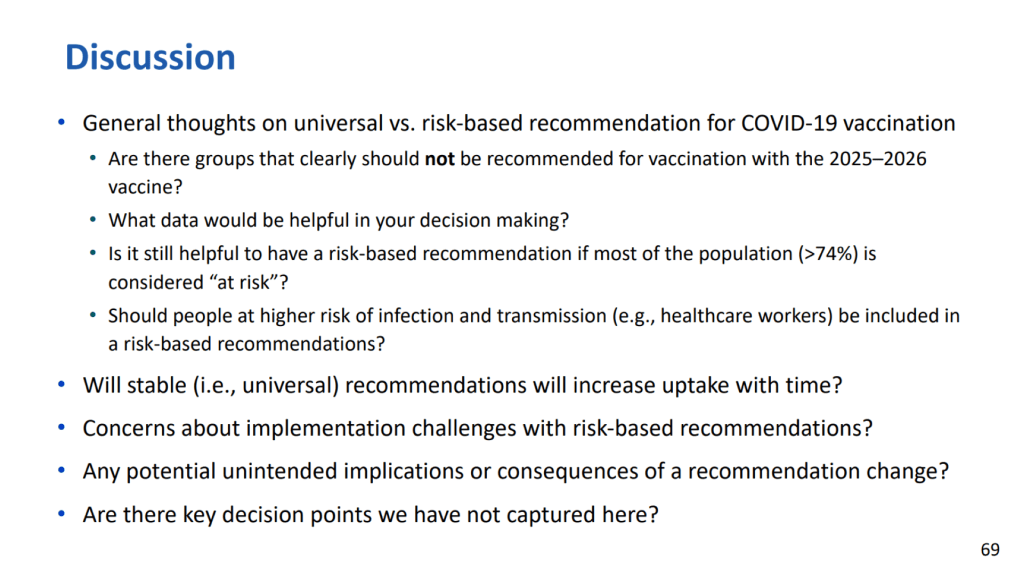
Noteworthy: Dr. Denise Jamieson, MD, MPH is chair of the CMV Working Group. She is Vice President for Medical Affairs and the Tyrone D. Artz Dean, Roy J. and Lucille A. Carver College of Medicine at University of Iowa. In the Q&A session following the Covid-19 vaccine presentation, Dr. Jamieson expressed a preference for a universal recommendation (citing implementation and uptake challenges, which other attendees mentioned as well) for the Covid-19 vaccine as opposed to a risk-based or permissive recommendation. See slide labeled “Discussion” below:

There was no vote scheduled for today’s meeting on the Covid-19 vaccine.

The presentation by Moderna on the new Covid-19 vaccine, mRNA-1283, was helpful. I gather there will be an FDA meeting about it in June.

University of Iowa Will Lead NASA Space Mission to Learn the Music of the Spheres

The big news for University of Iowa will be a NASA satellite mission to investigate how solar wind interacts with Earth’s magnetosphere. You can read the whole fascinating story in this issue of Iowa Magazine.

According to the story, “twin spacecraft known as TRACERS—Tandem Reconnection and Cusp Electrodynamics Reconnaissance Satellites—will begin their journey to study Earth’s mysterious magnetic interactions with the sun. The satellites will be packed with scientific instruments along with two small, but meaningful, tokens.”

The two small tokens happen to be purple guitar picks that belonged to University of Iowa physicist, Craig Kletzing, who died from cancer in 2023. Kletzing and colleagues got a $115 million contract from NASA for TRACERS. It’s the largest research award in University of Iowa history.

Kletzing played guitar in a few bands, and one them was named Bipolar—which is the only connection to psychiatry that I could see. He was dedicated to work in basic science, and he was often heard to ask “How can we make this simpler?” referring to chunking big scientific challenges into manageable goals. He was a rare person in that he was both a brilliant scientist and a great teacher. One example of his work ethic was that he skipped a meeting with NASA’s top brass in order to deliver a morning lecture on introductory physics to 275 students.

The members of the UI TRACERS team call the project “Craig’s mission.” I’m pretty sure he would have called it a team effort “… to help scientists better understand the powerful forces harmonizing throughout the universe—something the ancient Greeks described as the music of the spheres.”

And that’s what the purple guitar picks represent.

SAINT Therapy for Treatment Resistant Depression at The University of Iowa

First of all, if you looked up Saint therapy for depression, you might have accidentally found information on Saint Dymphna, the Catholic patron saint of those living with mental illness.

Actually, SAINT stands for Stanford accelerated intelligent neuromodulation therapy. It’s a personalized protocol for using transcranial magnetic stimulation (TMS) to treat severe depression. The University of Iowa is the first academic center to offer it in the Midwest.

This is a big step forward from the days many years ago when we were starting use right unilateral electrode placement for applying electroconvulsive therapy (ECT) to treat depression because it was thought to lead to fewer cognitive problems post-treatment.

SAINT is a game changer according to Dr. Nicholas Trapp, MD, assistant professor of psychiatry, who describes it as a method to pinpoint the best location in each patient’s brain to target with TMS to treat major depressive disorder. The procedure is quick and recovery from depression can be sustained for months.

Kudos to The University of Iowa. And maybe thanks to Saint Dymphna.