Pride or Rhetoric? What Would Dr. Melvin P. Sikes Say?

I noticed the headlines about the DEI flap at The University of Iowa, the one with the official apparently spilling the beans about University of Iowa’s DEI program not going away despite being illegal while maybe being unaware of being filmed. I’m not going to retell the story.

However, it does remind me of a time back in the 1970s in the days of affirmative action when I was a freshman student at Huston-Tillotson College (now Huston-Tillotson University) in Austin, Texas.

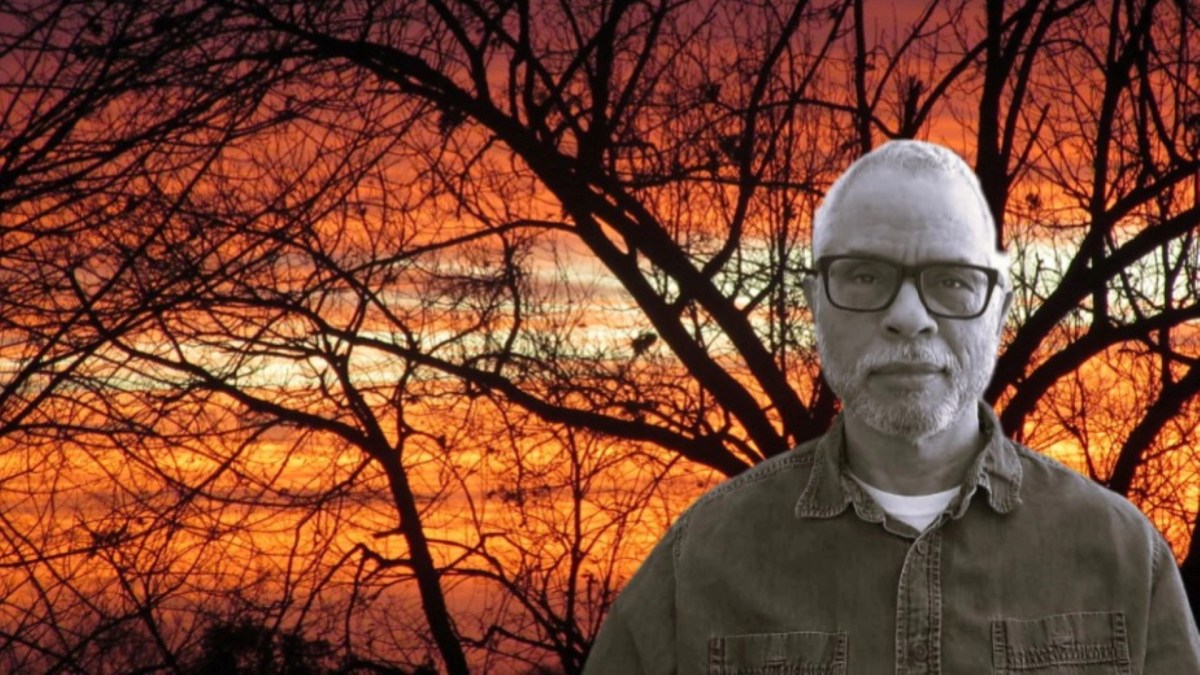
I learned about tenacity to principle and practice from a visiting African American professor in educational psychology from the University of Texas. It was 1975. Dr. Melvin P. Sikes paced back and forth across the Agard-Lovinggood auditorium stage in a lemon-yellow leisure suit as he talked about the importance of bringing about change in society.

He was a scholar yet decried the pursuit of the mere trappings of scholarship, exhorting us to work directly for change where it was needed most. He didn’t assign term papers, but sent me and another freshman to the Austin Police Department. The goal evidently was to make them nervous by our requests for the Uniform Crime Report, which Dr. Sikes suspected might reveal a tendency to arrest blacks more frequently than whites. He wasn’t satisfied with merely studying society’s institutions; he worked to change them for the better. Although we were probably just as nervous as the police were, this real-life lesson about the importance of applying principles of change directly to society was awkward.

Nothing like confronting social issues head on, right?

We would have preferred a term paper. We sat in the police station looking at the Uniform Crime Report, which was the only resource we could get. I think we were there a couple of hours; it felt a lot longer than that. The officer who got us the paperwork was polite, but a little stiff and wasn’t really open to anything like an interview or anything close to that. I can’t remember what we came up with as a write-up for what felt like a fiasco. I’m pretty sure we didn’t bring about anything even close to change. It was a humbling experience. Maybe that was the point but I’ll never know.

Dr. Melvin P. Sikes was a member of the Tuskegee Airmen although he didn’t see combat. He was the dean of two historically black colleges, a clinical psychologist, and a University of Texas professor. He died in 2012 after a long and successful career as a psychologist, teacher, and author.

I found a podcast about him which was sponsored by the Hogg Foundation for Mental Health and which aired February 15, 2024. It’s an hour long, but there are segments of interviews of him in 1972 that I consider fascinating. A couple of times he says something which I wish the interviewer had allowed him to expand on. The gist of it is that we need to have a system of education which allows people to speak from the standpoint of pride rather than rhetoric. I think what he might have meant is that it would be wonderful if we felt secure and confident in ourselves to express our minds sincerely. The word “rhetoric” makes me think of talk that is persuasive, even impressive, but maybe insincere. I think it still fits today.
Slow Down, Tithonus

What I sometimes don’t like about the X-Files episodes were the esoteric titles. One of them was “Tithonus.” I watched it again last night. It’s about a police photographer named Fellig who claimed to be about 150 years old because he cheated death sometime during the days of Yellow Fever in the U.S. in the 18th through the 20th centuries. He was in a hospital sick from Yellow Fever but didn’t look at Death, which was some kind of entity taking those who were dying from Yellow Fever. Death took his nurse instead because she looked at him.

Ever since then, he’s been trying to catch a glimpse of Death mainly by following people around who he somehow knew were about to die. I think the idea was that if he caught up with Death and stared at it, then he could finally die, because by this time he’s so tired of living that he’s attempted suicide several times. He often acts like he’s in a hurry to catch a glimpse of Death.

The main way Fellig knows who is about to die is because they look black and white instead of in living color. Agent Scully is working with another investigator who believes Fellig is a serial killer. Fellig looks at Scully and she’s monochromatic (black and white) which means she’s about to die. So, he tries to stick close to her so he can get a look at Death. The other investigator shoots Fellig and the bullet also hits Scully. Fellig tells her to close her eyes and he finally gets his chance to look at Death and dies. Scully survives.

So, that preamble leads me to talk about the title “Tithonus” a little. Tithonus in Greek mythology was this rich mortal with whom Eos, the goddess of dawn, fell in love. She made him immortal but forgot to give him eternal youth so he gradually because a shriveled up, demented old fart. This led to some pretty intense arguments between them:

Tithonus: So, here I am, senile because you neglected to give me eternal youth when you gave me immortality. This is just like the time you made me a Braunschweiger sandwich, but instead of using my favorite spread, Miracle Whip, you used mayonnaise!

Eos: How does that even make sense? I try my best! You should use your walker more often; then you wouldn’t trip and fall so much.

Tithonus: Excuses! And you hide my Geritol!

So, Eos turned him into a cricket to interrupt his constant babbling.

Anyway, occasionally I think about my mortality because I’m not getting any younger. I’m more forgetful. I can’t walk as far as I used to. I can still juggle, but I’m beginning to accept the fact that I may never be able to do the shower pattern or the off the head trick. Sena and I still play cribbage, but I’m starting to notice that I make certain mistakes in counting that I didn’t make in the past. I can’t stay up as late as I once did.

On the other hand, I can get along without certain things like TV, mainly because I notice I enjoy reading more. I ignore the news a lot more than I formerly did. I would rather listen to music or watch the birds. I admire Sena’s garden from our back windows, where I can watch the dawn arise.

I’m in no hurry.

It’s The Clay

I ran across something quotable in Ray Bradbury’s novel, “Something Wicked This Way Comes.” It’s another one of his books I’ve never read but which I’m reading now.

“God, how we get our fingers in each other’s clay.” In the novel, it’s about how two friends influence each other.

On the one hand, it’s a seemingly trivial observation about human nature. On the other, it also seems profound because it’s so pervasive. You could reformulate it in any number of ways, e.g., “We’re always getting into each other’s business.”

The response is just as trivial. Mind your own business. Get out of my hair. I wonder how that song “My Way,” done famously by Frank Sinatra, could ever make sense when the reality is that we’re always either getting in each other’s way—or less often, always trying to integrate our approaches to create something better in our lives.

It’s kind of like what a former presidential campaign advisor (Wikipedia and other sources say it was James Carville) said, “It’s the economy, stupid.”

Maybe it’s the clay, partner.

Remember The Calling

I recommend Dr. George Dawson’s recent posts on seeing the practice of medicine as a calling and his passing a big milestone with 2 million reads on his blog.

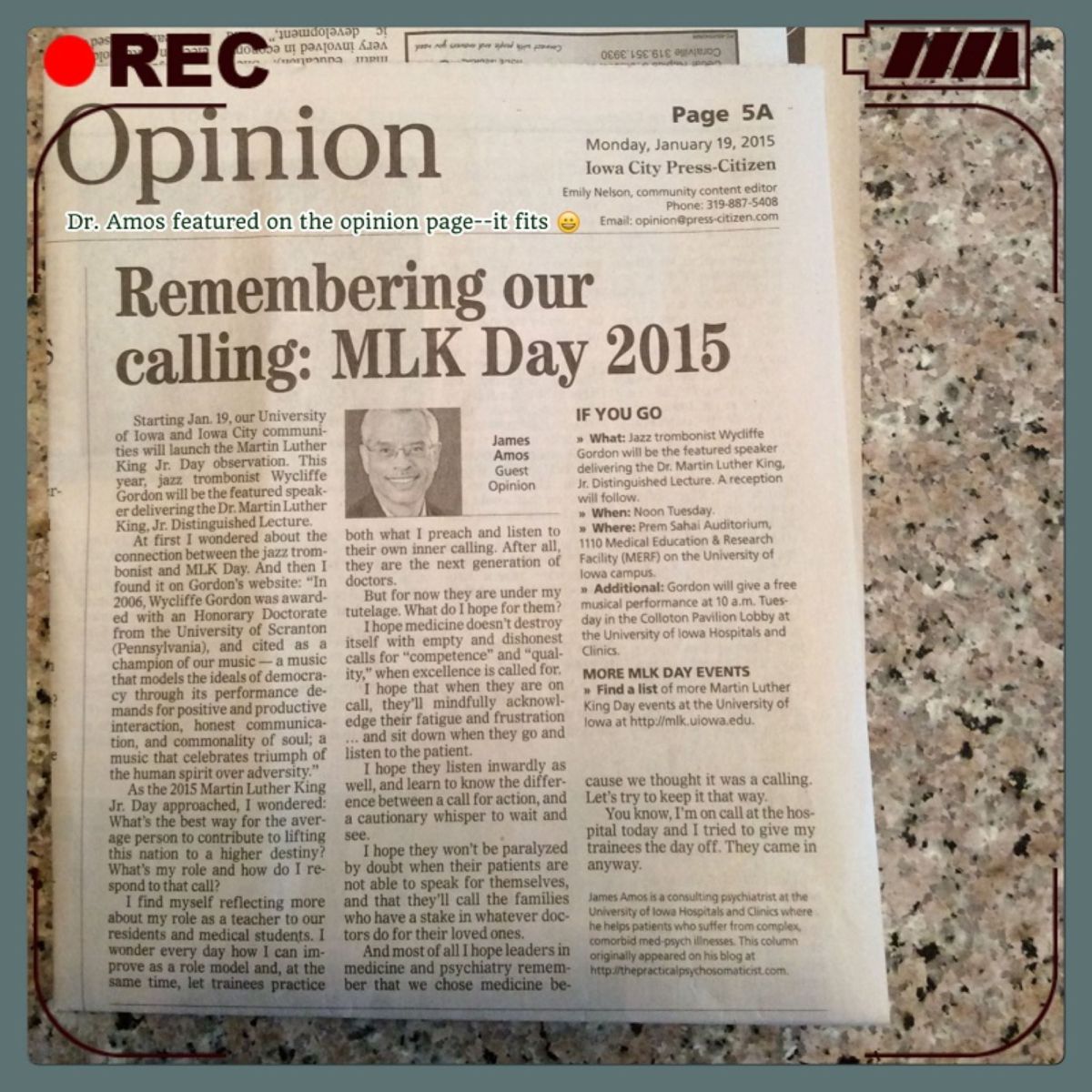
I wrote a post entitled “Remembering Our Calling: MLK Day 2015.” It was republished in a local newspaper, the Iowa City Press-Citizen on January 19, 2015. And I reposted it in 2019 on this blog.

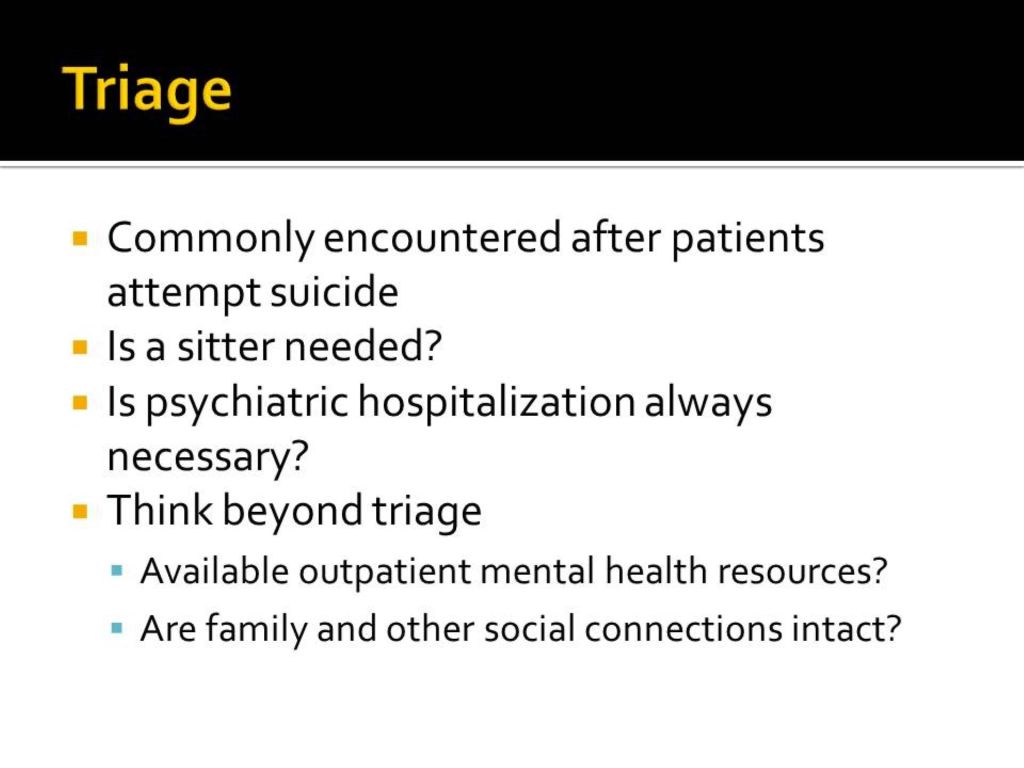
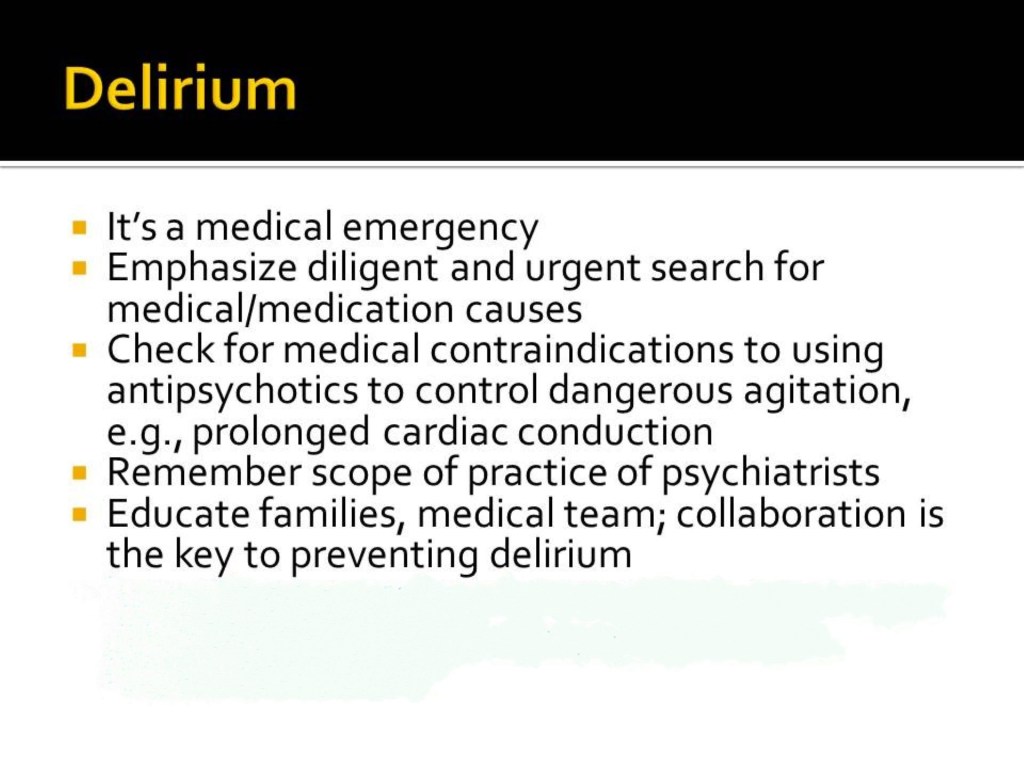
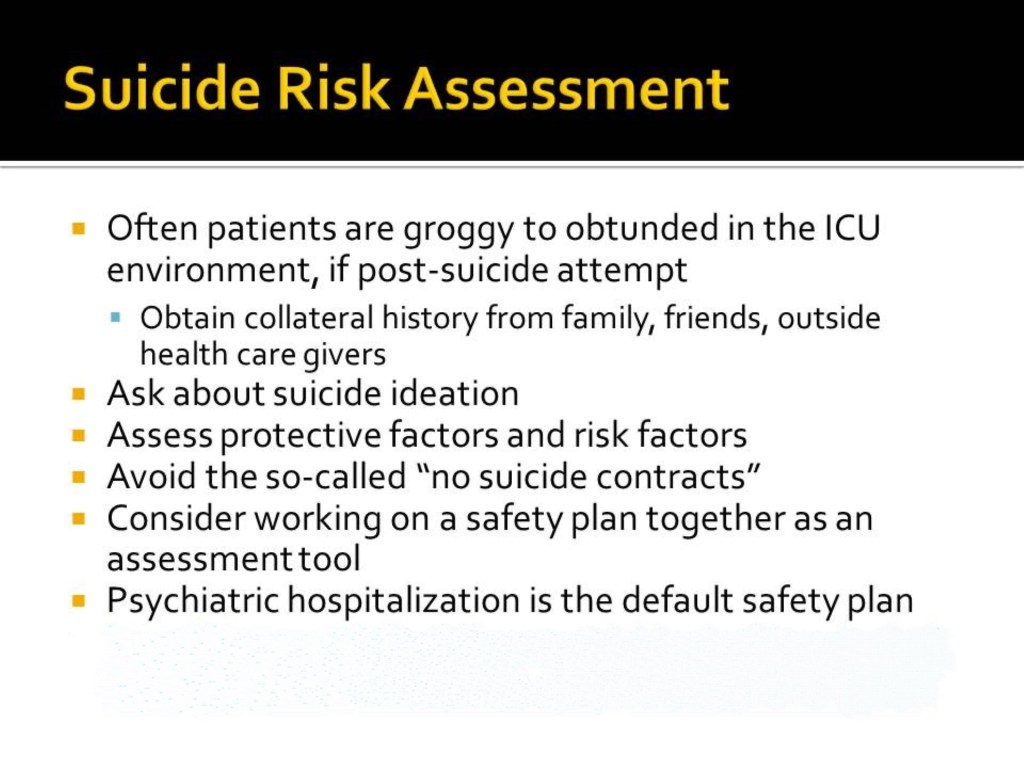
The trainees I taught also taught each other about psychiatry and medicine when they rotated on the consultation-liaison service at the hospital. We put them into the format of short presentations. I called mine the Dirty Dozen. The trainees and I also presented the Clinical Problems in Clinical Psychiatry (CPCP).

There were many of those meetings, which were necessarily short and to the point because the service was busy. We got called from all over the hospital. We answered those calls and learned something new every time.

I posted a lot of the trainees’ presentations in my previous blog, The Practical C-L Psychiatrist, which was replaced by this present blog. I haven’t posted the presentations partly because I wanted to give the younger teachers their due by naming them as they did on their title slides. But I would want to ask their permission first. They are long gone and far flung. Many are leaders now and have been for many years. I still have their slides. I’m very proud of their work. When they were called, they always showed up.

So, you’ll just have to put up with my work and my cornball jokes.  

Food for Thought

I’m giving a shout-out to a couple of child psychiatrists, one I know only from a blog, The Good Enough Psychiatrist. The other is an assistant professor in the University of Iowa Child Psychiatry Dept. I’ve never met her.

Since Jenna gives her name in the About Me section of her blog, I’m going to call her that because it’s easier. Jenna writes many thought-provoking posts, but I really admire the one titled “Amae.”

Dr. Ashmita Banerjee, MD wrote an essay titled “The Power of Reflection and Self-Awareness.” It’s published on line in the Mental Health at Iowa section of The University of Iowa web site.

As a relatively recently retired consultation-liaison psychiatrist who is also a writer, I feel a strong connection to them. In addition to being very glad that extremely talented persons are filling the ranks of a specialty which suffers from a serious manpower shortage, I get a big kick out of reading what really smart people write.

Here’s where a geezer retired psychiatrist starts kidding around. Jenna, a fellow blogger, is used to my habit of deploying humor, admittedly often as a defense. Dr. Banerjee doesn’t know me.

What is it about these essays that reminds me of the X-Files episode “Hungry”? It’s a Monster of the Week episode from the monster’s perspective. This monster looks like a human but sucks brains out of people’s skulls. He’s conflicted about it and even sees a therapist. But in the end his dying words were, as Agent Mulder shoots him down, “I can’t be something I’m not.”

If you read Dr. Banerjee’s essay and followed one of the links, you would have caught the clue that I actually read it because I consciously substituted the word “What” for “Why” in the previous paragraph. I could have as easily asked why instead of what—but it’s less helpful in gaining self-awareness.

And I haven’t sucked anybody’s brains out of their skulls in, what, over two weeks now! Upon reflection, I’m very aware of being incorrigible. Food for thought.

Jenna’s description of the Japanese concept of the word “amae” and Dr. Banerjee’s examination of the Japanese word “kintsukuroi” fascinated me. What made both writers consider human emotions using a language which captures the nuances so deftly?

I was a first-generation college student. There was a time in my life that a path to medical school seemed impossible. At times I probably thought I was trying to be something I’m not.

I’m just grateful for the new generation.

The Thing About Identity

I was searching on the web for something about my co-editor, Robert G. Robinson, MD, for our book Psychosomatic Medicine: An Introduction to Consultation-Liaison Psychiatry, published in 2010.

The reason I was searching for something about him was that I’ve had difficulties finding anything on the web lately about doctors I had worked with years ago and admired—and the search revealed they had died. It has been a little jarring and got me thinking about my own mortality.

My search didn’t turn up any obituary about Dr. Robinson, but I found a couple of interesting items. One of them is, of all things, a WordPress blog item, the About section. It’s dated April 2012. I’ve seen it before. It’s supposedly about a person named Dr. Robert G. Robinson, MD and the only thing on it is his name and affiliation with The University of Iowa Carver College of Medicine. Every WordPress blog has an About section. I have one and I’ve been blogging since 2010.

There’s no entry in the About section for him on WordPress. However, there was another item on the web that looked like it was a blog (It’s another blogging site called About.me), and it was labeled as an About section.  It was a biographical summary of his academic and scientific career. Of course, it was impressive. At first, it looked like he was planning to write a blog, which could have been very educational because he’s an extremely accomplished psychiatrist with a very long bibliography of published articles about psychiatric research, a lot of it about post-stroke syndromes.

But when I looked at the social media links on the WordPress page, it led to a picture of someone who is definitely not the Robinson I know. This person was a “Certified Rolfer.” Remember Rolfing? It’s a form of deep tissue massage developed in the 1970s. The Dr. Robinson I know was never involved in Rolfing.

I’m not sure what happened with the WordPress and other blog items, but it looked the WordPress section was a case of mistaken identity. The most recent genuine item on the web about him is a 2017 University of Iowa article about his receiving the Distinguished Mentor Award.

I hope somebody doesn’t get confused by that WordPress mistake.

Then, I happened to come across an article that, at first, I didn’t recognize. The link on the search page listed Dr. Robinson’s name. It’s on the Arnold P. Gold Foundation website for humanism in medicine. The title is “Are doctors rude? An Insider’s View.” It didn’t have my byline under it. It took me a minute, but I soon recognized that I wrote it in 2013. At the bottom of the page, I was identified as the author.

At first, I thought it was a mistake; there was a place for an icon that at one time had probably contained a photo of me, but it was missing. It’s my reflection about a Johns Hopkins study finding that medical interns were not doing basic things like introducing themselves to patients and sitting down with them.

This was not a case of mistaken identity. But I got a little worried about my memory for a few seconds.

Anyway, I was reminded of my tendency to have trainees find a chair for me so I could sit down with patients in their hospital rooms. I later got a camp stool as a gift from one of my colleagues on the Palliative Care consult service. It was handy, but one of my legs always got numb if I sat too long on it. It broke once and I landed flat on my fundament one time in front of a patient, family, and my trainees. The patient was mute and we had been asked to evaluate for a neuropsychiatric syndrome called catatonia. The evidence against it was the clear grin on the patient’s face after my comical pratfall—and because of the laughter that we could see but not hear.

One of the points of this anecdote is that it’s prudent to be skeptical about what you see on the internet. The other point is that parts of your identity can hang around on the web for a really long time, so it’s prudent to be skeptical about how permanent your current identity is.

Hickory Hill Park Ramble

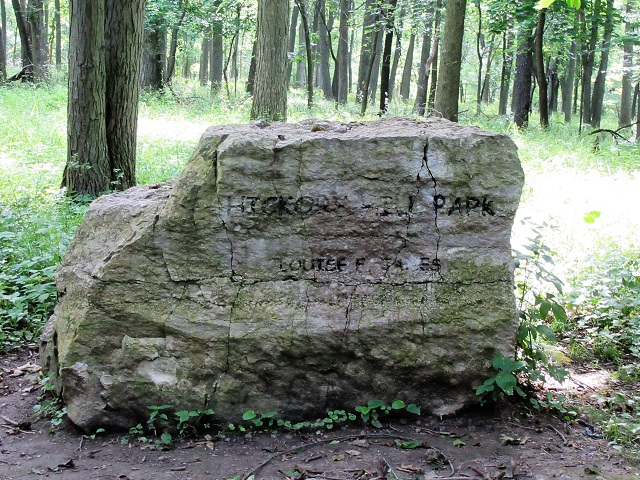
We visited Hickory Hill Park today in Iowa City. We’ve lived in this area for 30 years and have been near it but never walked a trail until now. It’s full of trees, birds, and other wildlife, including deer, which seemed to pose for the camera.

Deer posing

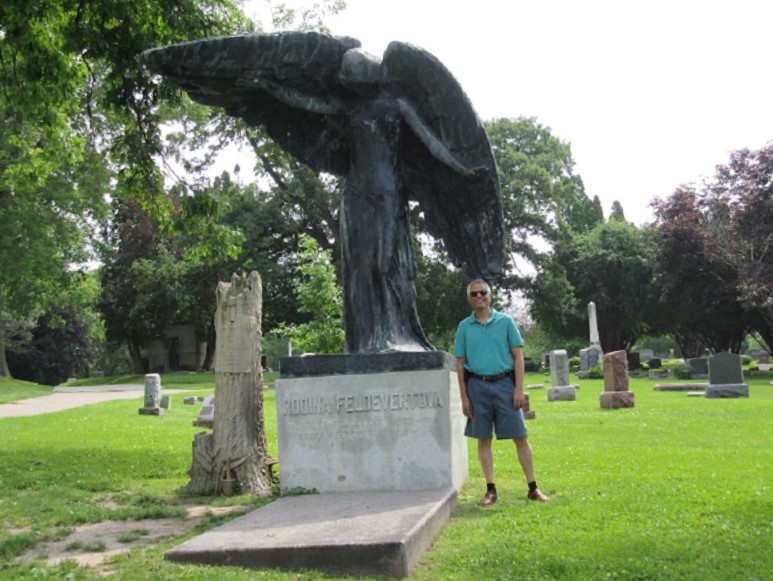
I say we’ve been near it because we have visited Oakland Cemetery, where the famous Black Angel monument is. At least one of the trails leads to one end of the cemetery—which we discovered today.

There are many legends about the Black Angel, most of which are in the vein of various curses and some of which claim that the curses can kill visitors—not true, of course. Many take selfies in front of the Black Angel and toss coins in the base (probably to ward off any curses, just in case).

I was feeling pretty reckless on the day Sena took a snapshot of me in front of the Black Angel. I left a little pocket change. That was a few years ago. The object of the visit was not to visit the Oakland Cemetery but to take part in the picnic and Psychiatry Department Matball Challenge game, Faculty vs Residents at Happy Hollow Park about a block away from the cemetery.

The Black Angel of Oakland Cemetery

Anyway, it was pretty hot today, in excess of 100 degrees with the heat index. We kept the walk short for that reason. It was warm, but the tree canopy kept the heat down a little. There’s something about walking through a thickly wooded area in which most of the sounds you hear are of nature. It tends to make me a little reflective.

Because I’m in my last year of a phased retirement contract and will fully retire next year, I’ve been thinking about transitions, the end of one era of my life and the unknowns about the beginning of another. There are a lot of unknowns. Sometimes I feel a little lost.

Retirement tends to lead me to think about death, which is pretty morbid, I know. I don’t ruminate about it, but walking past some of the park benches, some of which are memorialized to certain persons, got me to wondering about the next bend in the path. On one of them was a small plaque bearing a quote,

“Not all those who wander are lost.”

JRR Tolkien

There was a baseball on the bench.

And not long before we got to that bench, we saw a shoe, apparently lost by someone—who might have been lost. Hickory Hill Park is big. A person could get lost in there.

Lost shoe

We followed a path that others seemed to be taking. It led to the back of Oakland Cemetery where we saw a couple of headstones which puzzled us. The names were very familiar; man and wife, with only the birth years carved in them. But the strange thing was—as far as we knew they were still very much alive! The man had been the closest thing to a mentor that I could remember ever having.

Naturally, later I realized that it was just that they had thought through their own transitions a lot farther than many of us do. They had planned not only for retirement. They had planned for their own deaths. But until I finally got it, I actually searched on the web for obituaries.

Strange, I actually found a pdf file posted that sort of sounded like one—an exquisitely written letter from a relative who described the person we knew in enough detail that it seemed to identify him beyond much doubt. Why would such a beautiful and presumably private remembrance be posted on the web?

Maybe because the relative wanted the world to know how deeply loved this person is—while he is still alive.

Path