Sugar Pea Pod Prep

This is a follow up to the pea pod disaster I wrote about the other day. Recall they were inedible because they were tough and stringy.

We found a YouTube on the web showing how to remove the stems that sounded promising. After removing them, we tried eating them raw. We couldn’t do it. In fact, that little mound of what looks like chewed pea pod on the counter in the YouTube we made is exactly that.

We tried steaming them after removing the stems (or maybe it was boiling). I don’t think it matters. We still thought they were inedible. Maybe we’ll try the frozen variety.

Any advice?

Smoked Turkey Soup vs Blizzard!

January is National Soup Month and Sena made a smoked turkey soup in honor of the occasion. This is the counterbalance to the winter storm and blizzard warnings this month.

This morning we shoveled—and shoveled—and shoveled. It was the Sisyphean labor all over again, only this time with Winter Storm Gerri.

And then we went back out in the afternoon into the arctic dimension and shoveled some more. We could have just stayed out there until the blizzard warning took effect. As it was, we were out for an hour and a half, about to quit—and the city plow roared by and scraped a wall of snow boulders plug in our driveway. We had to stay out for an extra half hour. Thank you.

Anyway, during our morning break from shoveling, we got “near genius” level on a quiz about soups. Our answers were lucky guesses. How about a couple of turkey jokes?

Q: What’s the most musical part of a turkey? A: The drumstick.

Q: Why did the turkey refuse dessert? A: He was stuffed.

Soup wins! We were not so stuffed we couldn’t have cherry cobbler for dessert.

Soup’s on!

Iowa Winter Storms One Two Punch January 2024!

I just got the update on what I think is Winter Storm Gerri. The National Weather Service has now upgraded this catastrophe in our area to a Blizzard Warning.

Iowa is getting a one, two punch from winter storms Finn and Gerri.  We hardly got a break from Finn’s left hook before Gerri’s right cross connected.

This morning we scraped off less than an inch of new snow that fell last night. We might get from 8-12 inches of new snow. Wind gusts could be up to 50 mph with dangerous wind chills over the next several days. The party gets started late tonight.

If you want to drive anywhere, I suggest a Big Wheel race around your living room.

Winter Storm Finn Defines A Sisyphean Ordeal

Okay, we got about 14 inches of snow from Winter Storm Finn, but that doesn’t begin to convey the human meaning of it.

I’m going to call digging out from all that snow a Sisyphean labor. You don’t hear that term much, but it means a chore that never seems to end while you’re doing it. The short story about Sisyphus comes from Greek mythology.

Sisyphus was the king of Corinth. Just to be clear, it generally doesn’t snow in Corinth. One day, King Sisyphus saw a splendid, mighty eagle carrying a beautiful maiden to a nearby island (where it also does not snow). A river god named Asopus told him that his daughter had been abducted, but not by extraterrestrials. Sisyphus suspected Zeus, who had never seen a snow shovel, if you can imagine that. Like a fool, Sisyphus asked Zeus to help him find her. Because Zeus hated nosy mortals who aren’t supposed to know what the boss god is up to, he banished Sisyphus to Hades where he had to roll a giant rock uphill which always rolled back downhill (Hamilton, Edith. 1942. Mythology. New York: Little Brown and Company).

Anybody who knows what it’s like to try to shovel walks and driveways during a horizontal snowstorm knows that for every shovelful of snow you remove, twice that amount refills the space you empty almost immediately. You’d have to stay out in the snowstorm forever to keep up. It’s the definition of a Sisyphean labor.

And that’s why Sena and I left about a third of our driveway uncleared last night because we were exhausted. We’d been out in that storm shoveling all day since early morning. We ached everywhere and didn’t have much to show for it.

This morning we were up early again, anticipating trying to clear the driveway and again shovel all the walks, the curb ramp, the trees and whatnot.

The driveway had been cleared, probably sometime during the night, by a good Samaritan we’ll probably never know for sure. We could tell by the telltale friction wheel tracks, and the perfectly circular mark of the machine’s turning radius. A path to our curbside mailbox had also been cleared.

We are grateful. The only big job left was to clear the curb ramp, across which was a hip high mountain range of snow left by the city plow. It was also blocked by a large pickup truck. The driver must have seen us and he hurried over from where he was working with a crew building a house. He was more than happy to move it—although I was not so happy when I found out how hard we had to work to clear the curb ramp. If you start from the top, the snow spreads out over the mountain. If you start from the bottom, the snow from the top falls down. I would call that Sisyphean labor.

Anyway, we’re waiting for the next disaster, which I think the meteorologists are calling Winter Storm Gerri. They’re promising 4 inches of new snow by Friday. It almost sounds like light duty.

Winter Storm Finn and the One-Eyed Snowball Juggler!

Holy horizontal, heavy, wet, driving snow. At least you could make great snowballs for juggling! I got up around 4 in the morning to shovel. Sena came out a little later and we took shifts a couple of times. I still had to run back out again in the mid-afternoon to clear away what’s probably going to turn out to be better than a foot of snow.

The plows plugged our driveways whenever they felt like it. But we took a break so I could make the best snowballs ever and juggled them. I wore a balaclava which got all twisted on my head so that I ended up able to see out of just my right eye—the one I had surgery on for a torn retina.

I don’t know how I saw well enough to juggle.

Snow Removal in Iowa City

Iowa City has web pages for the rules on snow removal by the city plows and by residents.

You can see the pdf of the map for residential street priorities for snow removal.

Shoveling snow or using a heavy snow blower can be hazardous to your health. There is guidance from the National Safety Council about how to remove snow. On the other hand, there are definite rules about clearing snow from your sidewalk.

There are no rules against juggling snowballs that I know of.

The Intergalactic Angle on Your Point of View

I finally watched the movie “The Hitchhiker’s Guide to the Galaxy” the other night. It was released in 2005 and based on Douglas Adams’ book of the same title. In fact, he co-wrote the screenplay. A lot of it was not in the book. I thought a couple of scenes were noteworthy and pretty funny. I made connections to Dr. Martin Luther King, Jr. annual observance, which is this month.

One of them was the Point of View Gun. It’s probably unfortunate that the main prop was a gun, but hey, it was a ray gun. It didn’t kill anyone and in fact, it caused the person “shot” with it to be able to understand the perspective of another person. It was just temporary, but for a short while it enabled persons or extraterrestrials to understand another’s point of view. It was designed by the Intergalactic Consortium of Angry Housewives to influence their husbands to understand them better.

One of Dr. Martin Luther King’s main points was how important it is to try to understand and validate someone else’s point of view.

One drawback of the Point of View gun (besides the obvious associations with gun violence) was that the effect was specific to whoever was using it. So, when the ultra-maladjusted robot Marvin mowed down a gang of Vogons (hideous and cruel extraterrestrial bureaucrats who destroyed Earth in order to make room for an intergalactic bypass), they all collapsed from depression.

The other scene I thought was funny was the Vogon planet’s slap-happy encounter between the heroes and the creatures shaped like spatulas that popped out of the ground and smacked anyone in the face who had an idea.

I didn’t think the movie was nearly as good as Adams’ book. But I wonder if you could cross the spatula creatures with the Point of View gun that would take the perspective-taking power of the gun and give it to the spatula creatures who would slap you silly whenever you failed to even try to understand another’s point of view. I could use that kind of a slap sometimes.

It’s remarkable the connections you could make between Dr. Martin Luther King, Jr and The Hitchhiker’s Guide to the Galaxy.

Plate!

I was listening to the Big Mo Blues Show last night on KCCK radio, 88.3 on your FM dial. I didn’t hear him mention his favorite cook, May Ree. She cooks hand-battered catfish; it’s better because it’s battered. Often, he’ll add a little to the legend, like where you can find May Ree’s establishment where you can buy her hand-battered catfish, which is filled with nitrates, cooked to perfection with manic delight, and which you can pair with any one of three flavors of moonshine, including the famous Classic Clear.

I don’t know whether Classic Clear has fruity, nutty, or extraterrestrial notes. You’ll have to try to find her joint, which is somewhere at the intersection of a highway and a street the name of which I can never recall. The story gets a new variation every now and then. May Ree has many facets to her character.

May Ree actually reminds me of the head cook at Huston-Tillotson College (now Huston-Tillotson University) in Austin, Texas. Back in the 1970s, I was a student there for a while. The head cook in the college cafeteria was Miss Mack. I don’t think you could say she cooked anything with manic delight. In fact, some of us were regular visitors who rushed with manic delight to Church’s Chicken because the H-TC cafeteria didn’t always serve what you’d call top of the line fare.

I guess Church’s want to call themselves Church’s Texas Chicken these days, mainly because they got the business started in San Antonio. Back in the day, Church’s Texas Chicken was a five-minute walk from the college. I checked a map recently, and now there isn’t a joint within an hour’s walk.

Anyway, I was a fairly frequent customer to Church’s Texas Chicken. You didn’t have a whole lot of choices about what to select. In fact, I don’t recall that there was a selection, per se. What you saw was what you got.

Sometimes, certain students were pretty frank about what they thought of Miss Mack’s cooking. One day, a guy who was fed up, in a manner of speaking, of course, held up his plate so that it was vertical, and weirdly, none of the food slid off. It just stuck there, like it was sort of a sculpture of a meal.

And then he called out loudly to everyone else in the cafeteria (not that there were many people there) as if he were offering to give to anyone there:

“Plate!” (no takers). “Plate!” (still no takers). “Plate!” (students just ignored him, but started making funny looks at their own plates).

I don’t remember what happened, but I think he just left his plate on the table and departed. I doubt Miss Mack was there. I was ambivalent about the whole deal. I liked Miss Mack, as did a lot of other students. She was kind and always had a bright smile for us.

Maybe he made a run to Church’s Texas Chicken. Funny, I didn’t see him there.

Testament to Testiness on Liaison Psychiatry

The other day, I got an email message from the Academy of Consultation-Liaison Psychiatry (ACLP). It was from the Med-Psych Special Interest Group (SIG). It was an intriguing question about a paper somebody was looking for and having trouble getting it through the usual channels.

The paper was “The Liaison Psychiatrist as Busybody” by somebody named G.B. Murray and published in the Annals of Clinical Psychiatry in 1989. The person looking for the paper mentioned that there was a note from the editor that the paper was of a “controversial nature.”

I was immediately intrigued after doing a search of my own and finding out that the full note from the editor was as follows:

“Editor’s Note: We are aware of the controversial nature of this communication and invite responses from psychiatrists in practice as well in academic settings.”

Nothing is as exciting as holding something out to us and at the same time hiding it from us. Why was it unavailable through the usual channels? Nowadays “usual channels” means accessing the digital copy over the internet from the journal.

Anyway, soon enough somebody found a copy of what turned out to be Dr. George B. Murray’s presentation of the paper with the title “The Liaison Psychiatrist as Busybody” at the American Psychiatric Association (APA) meeting in 1983 in New York. It looked like it was copied from the Annals of Clinical Psychiatry journal where it was published in 1989.

The paper was one of four APA presentations (p. 76) in a symposium entitled “The Myth of Liaison Psychiatry.” The titles and presenters including Murray’s:

  1. Teaching Liaison Psychiatry as Medicine at Massachusetts General Hospital—Ned Cassem MD, Boston, MA
  2. The Liaison Psychiatrist as Busybody—George Murray MD, Boston, MA
  3. Liaison Psychiatry to the Internist—John Fetting, MD, Baltimore, MD
  4. The Hazards of “Liaison Psychiatry”—Michael G. Wise, MD, Baltimore, MD

Before I get to the paper itself, I should mention that it was my wife, Sena, who gets the credit for actually finding out that “G.B. Murray” was George B. Murray, a distinguished consultation psychiatrist at Massachusetts General Hospital.

I purposely omitted the word “liaison” from “consultation psychiatry” because he was said to have “loathed the word ‘liaison’.” This was according to the blogger (Fr Jack SJ MD) who posted an in-memoriam piece on his blog in 2013 shortly after Father George Bradshaw Murray died. He had been a Jesuit priest as well as a psychiatrist. Fr Jack SJ MD also noted that Murray ran the consult fellowship at Mass General, saying:

“George’s fellowship was unique.  He founded it in 1978 and directed it full-time until a few years ago.  By the time he retired he had trained 102 fellows mostly on his own.  His didactic methods would be frowned upon by politically-correct, mealy-mouthed, liberals of academe (bold face type by J. Amos).  His fellows thrived.  George turned us, in the words of Former Fellow Beatriz Currier, MD, “into the kind of psychiatrist I wanted to be but didn’t know how to become.”  We worked hard.  Many consults per day.  Vast amounts of reading for which he expected us to be prepared.  But he worked even harder for us.”

So, right about now, to quote one of my favorite Men in Black movies character, Agent J: “That grumpy guy’s story’s starting to come into focus a little bit here.”

I’m not going to dump big quotes from Murray’s presentation, but I can say that it’s understandable to me now why it has been described as controversial. He just sounds a little testy.

Getting back to the New York symposium, I noticed that the chairperson was Thomas P. Hackett, and the co-chair was Ned Cassem, both of Mass General, the latter also a Jesuit priest. I never met either of them, but they are legends. Hackett died in 1988 and Cassem died in 2015.

I’ve read what Hackett wrote about the difference between psychiatric consultation and psychiatric liaison:

“A distinction must be made between a consultation service and a consultation liaison service.  A consultation service is a rescue squad.  It responds to requests from other services for help with the diagnosis, treatment, or disposition of perplexing patients.  At worst, consultation work is nothing more than a brief foray into the territory of another service, usually ending with a note written in the chart outlining a plan of action.  The actual intervention is left to the consultee.  Like a volunteer firefighter, a consultant puts out the blaze and then returns home.  Like a volunteer fire brigade, a consultation service seldom has the time or manpower to set up fire prevention programs or to educate the citizenry about fireproofing.  A consultation service is the most common type of psychiatric-medical interface found in departments of psychiatry around the United States today.

A liaison service requires manpower, money, and motivation.  Sufficient personnel are necessary to allow the psychiatric consultant time to perform services other than simply interviewing troublesome patients in the area assigned.  He must be able to attend rounds, discuss patients individually with house officers, and hold teaching sessions for nurses. Liaison work is further distinguished from consultation activity in that patients are seen at the discretion of the psychiatric consultant as well as the referring physician.  Because the consultant attends social service rounds with the house officers, he is able to spot potential psychiatric problems.”—T. P. Hackett, MD.

Here’s the thing. This quote comes from Hackett’s chapter in the 1978 edition of the Massachusetts General Handbook of General Hospital Psychiatry. But I tended to gloss over what he wrote right below it:

“Once organized, a liaison service tends to expand. Most liaison services are appreciated and their contribution is recognized. Sometimes this brings tangible benefits such as space and salary from the departments being serviced. However, even under the best circumstances, the impact of a liaison effort seldom lingers after the effort is withdrawn. Lessons taught by the psychiatrist need constant reinforcement or they are forgotten by our medical colleagues. In a way, this is an advantage since it ensures a continuing need for our presence. Conversely, it disappoints the more pedagogical, because their students, while interested, fail to learn. I believe we must be philosophical. After all, our surgical colleagues do not insist that we learn to do laparotomies. They insist only that we be aware of the indications.”—T.P. Hackett, MD.

You get a clear sense of Hackett’s sense of humor as well as a practical appreciation of what can and maybe cannot be done when you try to apply liaison principles in a formal teaching approach.

So, what does Murray say about liaison psychiatry that seemed cloaked behind the term “controversial”? He starts off by admitting that his remarks will be “inflammatory” and makes no apology for it. He starts with three main statements:

  1. What all nonpsychiatric physicians appreciate, and what, in fact, works, is the medical model of consultation psychiatry.
  2. Liaison psychiatry is more myth than reality.
  3. The liaison psychiatrist is to a great extent a relatively high-status busybody.

It’s difficult to pick out excerpts from Murray’s presentation—so much of it is integral to the main message and entertaining as well that I hate to omit it. Here’s my pick anyway:

“There is a certain Olympian quality surrounding liaison psychiatrists. It is as if they will teach others the wonders of the labyrinthine biopsychosocial factors involved in patient care. The other Olympian feature centers on the so-called consultee-oriented consultation. In hearing discussions and reading the literature one can get a downwind whiff of antiphysician feeling. There are remarks made, for example, of the insensitivity of surgeons, of patient “harassment” and how little the attending physician understands this hysteric’s or sociopath’s inner dynamics. This attitude is snobbish, unhelpful, and in semistreet parlance, “chickendip.” It does not seem to bother liaison psychiatrists that there are no liaison cardiologists, liaison endocrinologists, and so forth—another clue to the vacuity of liaison psychiatry.”

He is testy and with good reason, if you define liaison in this way. His paper is uproarious. And there are lots of controversies in medicine. I’m still not sure why this one seemed hidden from public view.

I opened up the door by saying “…if you define liaison in this way.” There are other ways to convey useful information to “consultees.” For example, I had better luck talking in a casual way about what I could for a MICU medicine resident about how to help manage a very agitated delirious patient on a ventilator who was in restraints because of the fear of self-extubation (a common problem psychiatric consultants get called about).

We were sitting in the unit conference room and the unit pharmacist was present. I don’t remember if the attending was there. I started to describe what had been studied in the past, which was continuous intravenous infusions of haloperidol lactate (there are several studies which do not support the use of haloperidol for treating delirium). There was no way to administer oral sedatives. In fact, the patient was being given heavy doses of intravenous benzodiazepines and opioids.

I notice that the more details I shared about the intravenous haloperidol, the wider the pharmacist’s eyes got. Long story short, the MICU resident decided to try something other than psychiatric medication. Indirectly, you could say I was using a motivational interviewing technique to teach. But Murray would have described that as Olympian and in any case, I didn’t consciously do that. All I had were facts and I told the resident what they were. A matter-of-fact approach and tact can be part of a liaison approach, but that’s not what Murray was concerned about and probably not what he saw from most liaison psychiatrists.

And I had to work hard not to display testiness (much less loftiness), which I’m afraid I didn’t always do.

An Old Blog Post About My College Days in Texas

There’s something embarrassing yet fascinating about reading my old blog posts from years ago. The one I read yesterday is titled simply “I Remember HT Heroes.” I make connections between my undergraduate college days at Huston-Tillotson College (now Huston-Tillotson University (an HBCU in Austin, Texas) and my early career as a consultation psychiatrist at The University of Iowa Hospitals & Clinics (now rebranded to Iowa Health Care).

My first remark about getting mail from AARP reminds me that organization is sponsoring the Rolling Stones current tour, Hackney Diamonds. And the name of my specialty was changed from Psychosomatic Medicine to Consultation-Liaison Psychiatry in 2017.

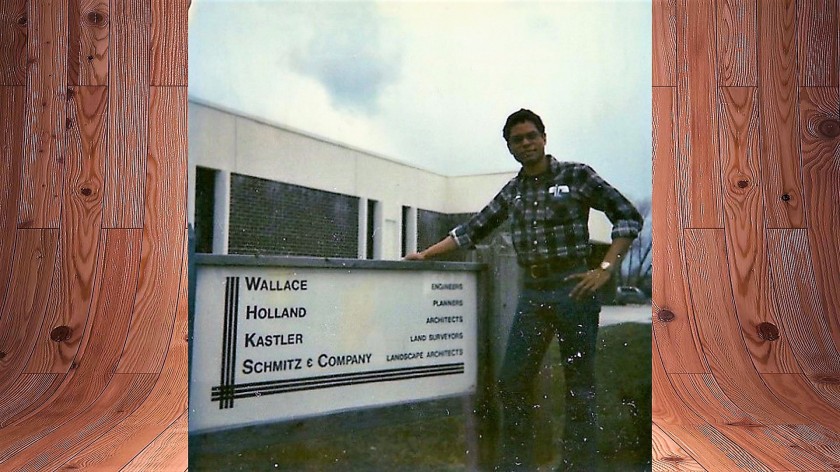
The photo of me attached to the original post reminds me of how I’ve gotten older—which also makes me hope that I’ve gotten wiser than how I sound in this essay. The pin in my lapel is the Leonard Tow Humanism in Medicine award I received in 2006.

I Remember HT Heroes

Getting membership solicitations in the mail from the American Association of Retired Persons (AARP) is a sure sign of aging, along with a growing tendency to reminisce. Reminiscence, especially about the seventies, may be a sign of encroaching senility.


Why would I reminisce about the seventies? Because I’m a baby boomer and because my ongoing efforts to educate my colleagues in surgery and internal medicine about Psychosomatic Medicine, (especially about how to anticipate and prevent delirium) makes me think about coming-of-age type experiences at Huston-Tillotson College (Huston Tillotson University since 2005) in Austin, Texas. Alas, I never took a degree there, choosing to transfer credit to Iowa State University toward my Bachelor’s, later earning my medical degree at The University of Iowa.


Alright, so I didn’t come of age at HT but I can see that a few of my most enduring habits of thought and my goals spring from those two years at this small, mostly African-American enrollment college on what used to be called Bluebonnet Hill. I learned about tenacity to principle and practice from a visiting professor in Sociology (from the University of Texas, I think) who paced back and forth across the Agard-Lovinggood auditorium stage in a lemon-yellow leisure suit as he ranted about the importance of bringing about change. He was a scholar yet decried the pursuit of the mere trappings of scholarship, exhorting us to work directly for change where it was needed most. He didn’t assign term papers, but sent me and another freshman to the Austin Police Department. The goal evidently was to make them nervous by our requests for the uniform police report, which our professor suspected might reveal a tendency to arrest blacks more frequently than whites (and yes, we called ourselves “black” then). He wasn’t satisfied with merely studying society’s institutions; he worked to change them for the better. Although I was probably just as nervous as the cops were, the lesson about the importance of applying principles of change directly to society eventually stuck. I remember it every time I encounter push-back from change-resistant hospital administrations.


I’m what they call a clinical track faculty member, which emphasizes my main role as a clinician-educator rather than a tenure track researcher. I chose that route not because I don’t value research. Ask anyone in my department about my enthusiasm for using evidence-based approaches in the practice of psychiatry. I have a passion for both science and humanistic approaches, which again I owe to HT, the former to Dr. James Means and the latter to Dr. Jenny Lind Porter. Dr. Means struggled to teach us mathematics, the language of science. He was a dyspeptic man, who once observed that he treated us better than we treated ourselves. Dr. Porter taught English Literature and writing. She also tried to teach me about Rosicrucian philosophy. I was too young and thick-headed. But it prepared the way for me to accept the importance of spirituality, when Marcia A. Murphy introduced me to her book, “Voices in the Rain: Meaning in Psychosis”, a harrowing account of her own struggle with schizophrenia and the meaning that her religious faith finally brought to it.


Passion was what Dr. Lamar Kirven (or Major Kirven because he was in the military) also modeled. He taught black history and he was excited about it. When he scrawled something on the blackboard, you couldn’t read it but you knew what he meant. And there was Dr. Hector Grant, chaplain and professor of religious studies, and champion of his native Jamaica then and now. He once said to me, “Not everyone can be a Baptist preacher”. My department chair’s echo is something about how I’ll never be a scientist. He’s right. I’m no longer the head of the Psychosomatic Medicine Division…but I am its heart.


I didn’t know it back in the seventies, but my teachers at HT would be my heroes. We need heroes like that in our medical schools, guiding the next generation of doctors. Hey, I’m doing the best I can, Dr. Porter.