Reasons to Be Proud and Hopeful for the Future

As the month of May Mental Health Awareness draws to a close, I reflect a little on the Make It OK calendar items that are salient for me: 3 things I’ve done that I’m most proud of and 3 reasons I’m hopeful for the future. I’ll keep it short.

One thing I’m most proud of is being the first one in my family to go to college. The biggest accomplishment was going to medical school at The University of Iowa in 1988. That was also the year Michael Jackson’s pop hit “Man in the Mirror” was released. That’s sort of how I felt about what I was doing that year—making a big change.

The more I reflect on this the more I realize the other thing I’m most proud of was getting a degree from Iowa State University in 1985. That paved the way for the path to becoming a doctor.

This process seems to work backwards because probably the first thing I’m proudest of is making a change even earlier in my life to land a job with a Mason City, Iowa consulting engineer firm, Wallace Holland, Kastler Schmitz & Co. That came before college and they’re all like stepping stones on the path of achievement. I think I started at the minimum wage back then, which was about $2.00/hr. I was an emancipated minor and couldn’t afford an apartment so I lived at the YMCA. It was a cramped sleeping room with no kitchen, a communal bathroom/shower, and a snack vending machine from which I got a worm infested candy bar. There were strict rules about what you could keep in your room—which somehow didn’t prevent one guy from building a motorcycle in his. Now this is getting too long.

In order to move on expeditiously with the mental health awareness calendar items, I’m going to cheat on the 3 reasons I’m hopeful for the future because they involve what is most important to a teacher. That’s what I was. I was so proud of the many medical students and residents I had the honor to teach. There were a lot more than 3 reasons to be hopeful for the future. I used to take group pictures of them and me at the end of each rotation through the consultation psychiatry service. We got a kick out of that because the only way I could do it was by using my old iPad that had a fun remote way to trigger the snapshot. I leaned the iPad up against something on a table. We all gathered as a group at the other end of the room. We posed, I raised my hand and counted to three, then closed my hand into a fist. That was our cue to smile. The shutter clicked.

Every time we did that, I was proud. Wherever they are, I hope they know how proud I am of them.
When Do We Get Out of the Woods?

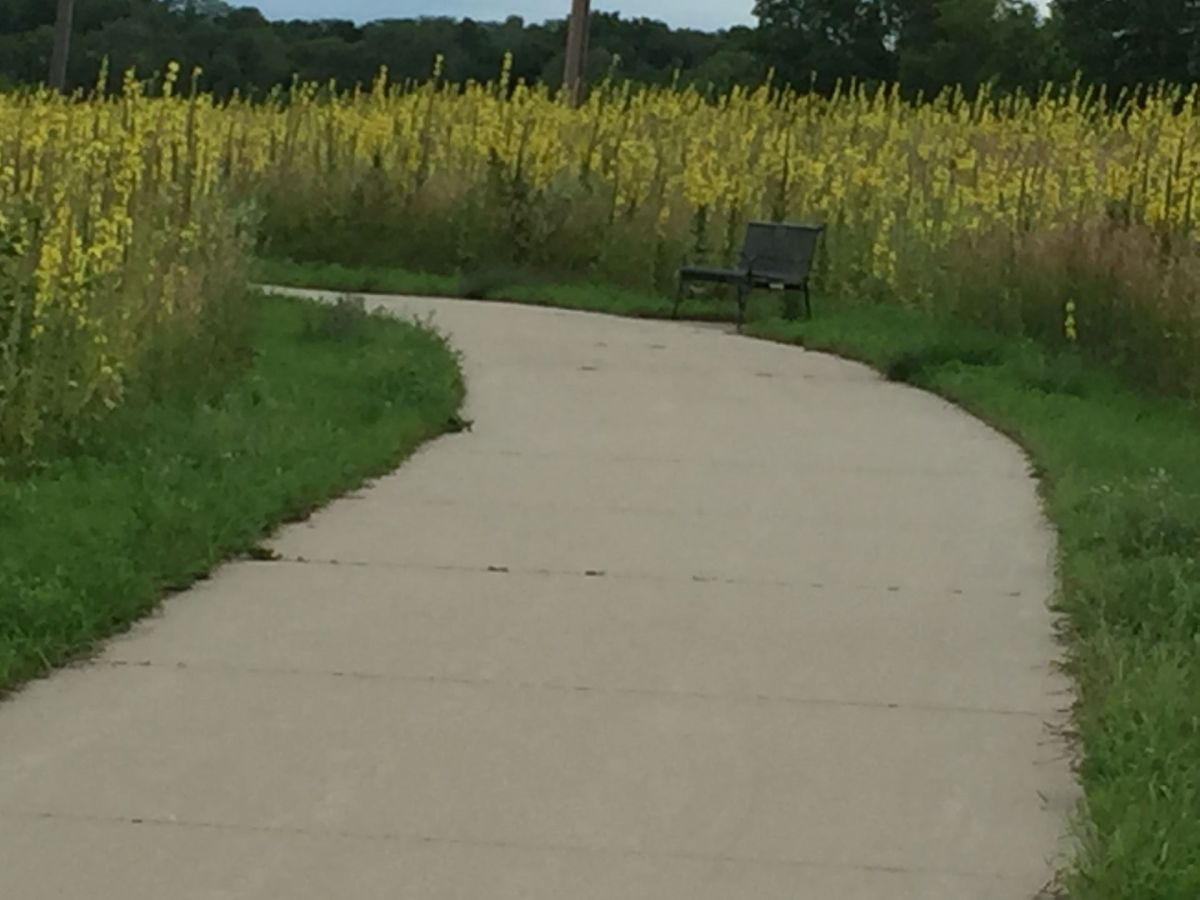
We were out walking the Terry Trueblood Trail the other day. It’s always good to get out of the hotel where we’re staying until our house is built. I get this cooped up feeling and it feels great to escape.

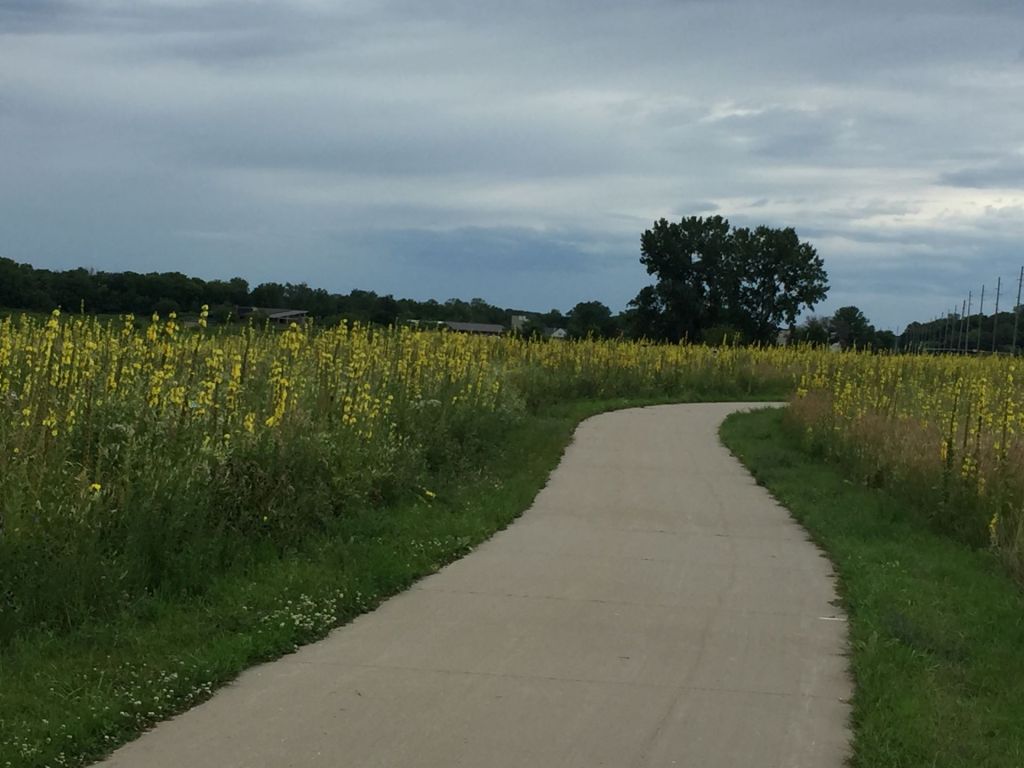
While we were on the trail, we saw this huge field of giant, golden prairie plants that looked familiar. It lined both sides of the walking trail. It was giant mullein. We saw it for the first time a couple of years ago while walking the trail.

Anyway, when you got perspective on it, it gave a sense of coming out of the dark, coming out of the woods.

It reminded me of that scene in Wizard of Oz when Dorothy and the guys emerge from the dark woods into the light. There’s this great little song in the scene that I finally discovered is called “Optimistic Voices.” I found this blog post about it posted back in 2015 by a writer named Marti Wukelic. The blog is called Is There Life After Retirement?

It captured how I felt that day, surrounded by giant mullein. I know that sounds ironic because we were in a sense in the woods of a field of giant prairie plants.

But giant mullein is a sunny color. On both sides of the trail, it rose high above our heads. It was like a giant, golden hallway to heaven and we were stepping into the sun.

Good Luck Dr. Chris Buresh

Sena was looking up the meaning of a four-leaf clover the other day. You might call it a shamrock although that’s usually reserved for the 3-leaf variety. It’s fitting for St. Patrick’s Day to say the four-leaf clover is special because it’s rare to see one. The four leaves represent faith, luck, love, and hope.

The trouble going on in Haiti is regrettable to say the least. However, it also reminded us of how lucky it was for us to have known one of my former colleagues, Dr. Christopher T. Buresh, MD. He was an emergency room physician at the University of Iowa Hospital until just a few years ago, when he and his family moved to Seattle, Washington. Dr. Buresh is now an Associate Professor in the Department of Emergency Medicine with the University of Washington. He’s also Assistant Program Director of their Emergency Medicine Residency Program.

The connection between Dr. Buresh and Haiti goes back a long way. Many Haitians were lucky he and other physicians volunteered to help provide medical care for them on an annual basis for years.

Chris is really a humble, likeable, and practical guy. He and his family were our next-door neighbors for a while and fascinating things were going on there at times. We remember they built this really cool tree house that sort of looked like it grew out of their main home. They even had an apparatus for a zip line between the two structures. I don’t think the zip line ever actually got installed, but it was intriguing.

He and I sometimes saw each other in the emergency room at University of Iowa Hospital. His energy, compassion, and dedication to patient care were an inspiration to colleagues and learners at all levels. Sena saw one of his presentations about his volunteer work in Haiti. He never mentioned the difficult politics of the situation. He emphasized the work of caring for the Haitians most of all and gave credit to members of the team doing everything they could in that challenging and, I’m sure, sometimes horrifying environment.

It would be easy to just sit and wonder why he left Iowa, and to be sorry about that. On the other hand, when you thing about the 4-leaf clover, you really have to wonder about something else. Maybe he had one in his pocket with all four of what we all want: faith, luck, love, and hope.

Martin Luther King Day About Peace and Unity

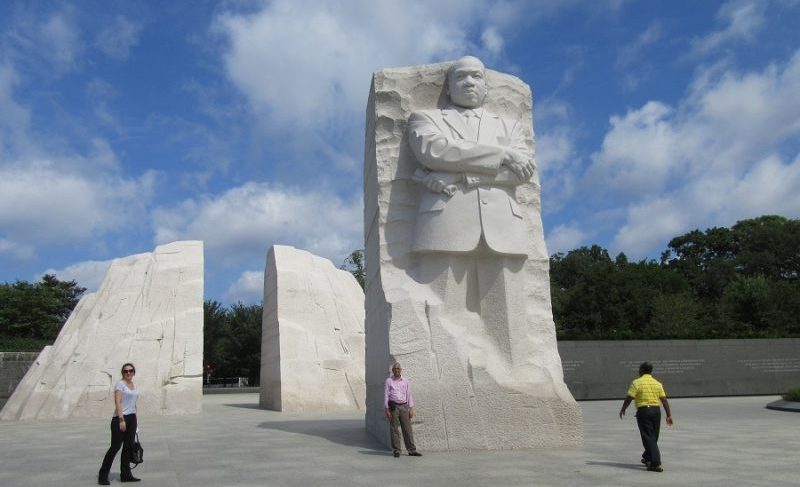
I noticed that Iowa City and Huston-Tillotson University in Austin, Texas have a couple of things in common regarding the celebration of the Martin Luther King holiday this week—one is inclement weather. The other thing is hope for peace and unity.

I was a student at Huston-Tillotson (one of the HBCUs) back in the 1970s. I saw it snow there once. It turns out that one of the MLK events will be postponed to January 27, 2024, and that’s the Austin MLK March. It’ll be too cold, with a chance for freezing rain. The event is billed as the MLK CommUnity March. The MLK Festival and Food Drive has been rescheduled to January 27th as well, and that will be at Huston-Tillotson University. The emphasis is on unity.

In Iowa City, the MLK Peace March on January 15, 2024 will instead be a vehicular parade because of the really cold weather we’ve been having recently. The emphasis is on peace. The parade will start at 9:30 AM.

All of my life I’ve admired Dr. Martin Luther King for his efforts to unite everyone in peace. Despite the world’s current events, I still have hope that the effort will continue.

We all have a lot in common, and it’s not just the weather.

Rearranging My Books

The other day, I finally rearranged my bookshelf. I’ve put it off for a long time. While I was doing it, I remembered where I spend the most time in my thoughts. I don’t have a very broad library, which probably illustrates where my mind wanders. It has changed very little over the years. Retirement affected it some, but not a great deal. After I rearranged the books, it was not just better organized. It made me think about the past, the present, and the future.

I have a lot of books by Malcolm Gladwell for some reason. The Tipping Point was published around the time when all of my immediate family members died for one reason for another. They died within a few years of each other. It was a difficult time. I remember hoping I would just get through it. I did.

I’m still a fan of Stephen Covey. The 7 Habits Manual for the Signature Program marks a time when I was contemplating leaving my position at The University for a position in private practice. It didn’t work out, and it’s just as well.

Of course, there are many books about consultation psychiatry, including the one I wrote with my former Dept. of Psychiatry Chair, Robert Robinson. Every once in a while, I search the web to find out what former colleagues and trainees are doing now. I can’t find a few, which makes me wonder. A couple have died. I’m a little less eager to look around each time I find out about those. Finding obituaries is a sad thing—and it makes me a little nervous about my own mortality. One or two have apparently simply dropped off the face of the earth.

I read some books for fun. I’m a fan of humorists, which is no surprise. The most recent is The Little Prince. That book and others like it inspire me.

I like books that make me laugh and give me hope. It’s difficult to sustain hope in humanity, if you read much of the news, which I tend to avoid.

I feel better when we go out for walks. Recently we did that about a week ago when there were a couple of warm days. On one day, we saw a couple of bald eagles and northern shovelers (the latter of which we’ve never seen before), at Terry Trueblood Recreation Area.

On another warm day we saw a couple Harvest Preserve staff members preparing to hang a big Christmas wreath on the side of a barn on the property that faces Scott Boulevard. They’d got some evergreen branches from an “overgrown Christmas tree farm.” It had a big red bow. They were going to decorate it further and hang it. We hoped it would be finished by the time we returned that day, but it wasn’t done.

When we returned a day later, it was very cold but the wreath was on the barn wall and it was festooned with gorgeous decorative balls. It was worth waiting for.

Video music credit:

Canon and Variation by Twin Musicom is licensed under a Creative Commons Attribution 4.0 license. https://creativecommons.org/licenses/by/4.0/

Artist: http://www.twinmusicom.org/

Kindness Is Still Out There

The other day, Sena and I were talking about growing up in Mason City, Iowa. As kids, both of us were the ones who lugged the groceries home. That was back in the days of paper sacks and, for me and her, food stamps. The food stamp program got started during the Great Depression. The goal was to keep people from starving and farmers from going under. In other words, it was kindness.

Food stamps were a sign of hard times and I don’t think that has changed much, except now I think you get a debit card instead of stamps.

I did grocery shopping at Fareway Store, which got its start in Boone, Iowa. Sena did hers at Grupps Food Center.

When it comes to shopping, I followed what my mother put on a list. I got the items and paid with food stamps. I can’t remember ever coming up short. I think I just gave them the cashier the stamps and they took what was needed to cover the price. I walked to Fareway and then I just walked home carrying two or three paper sacks of groceries. It was about a mile trip up and a mile back. My arms were pretty sore when I got home.

On the other hand, Sena came up short on stamps one day. It was embarrassing enough to have to pay using food stamps. But it was awkward as hell when you didn’t have enough to pay. At that time, the cashier was a guy named Bud Grupp. Bud was Carl Grupp’s son. Carl bought the store in the early 1960s.

Bud counted out the stamps and had to tell Sena that there wasn’t enough. She didn’t know what to say. People were lined up behind her and they could probably tell something was wrong. Bud just said “We’ll put you on credit,” and that was that. He sacked all of the groceries like there was nothing out of the ordinary. Sena didn’t know what was done about the balance on credit, whether it was ever settled or it became just a running bill that never got paid off.

Sena also had to walk home carrying bags of groceries. One winter day during a light snowfall, she dropped all of the bags in the snow. They got wet and all torn up. A woman saw it, came out of her house with some bags and helped Sena get the groceries sacked up again. She got home alright.

About a year ago, Sena was in line waiting to check out groceries. An elderly woman was ahead of her and came up short on money to pay for her few items. She fished in her purse and looked embarrassed and pathetic. Sena was thinking about paying for them herself but just before she could, a guy behind her handed the cashier his credit card and told her he would cover it.

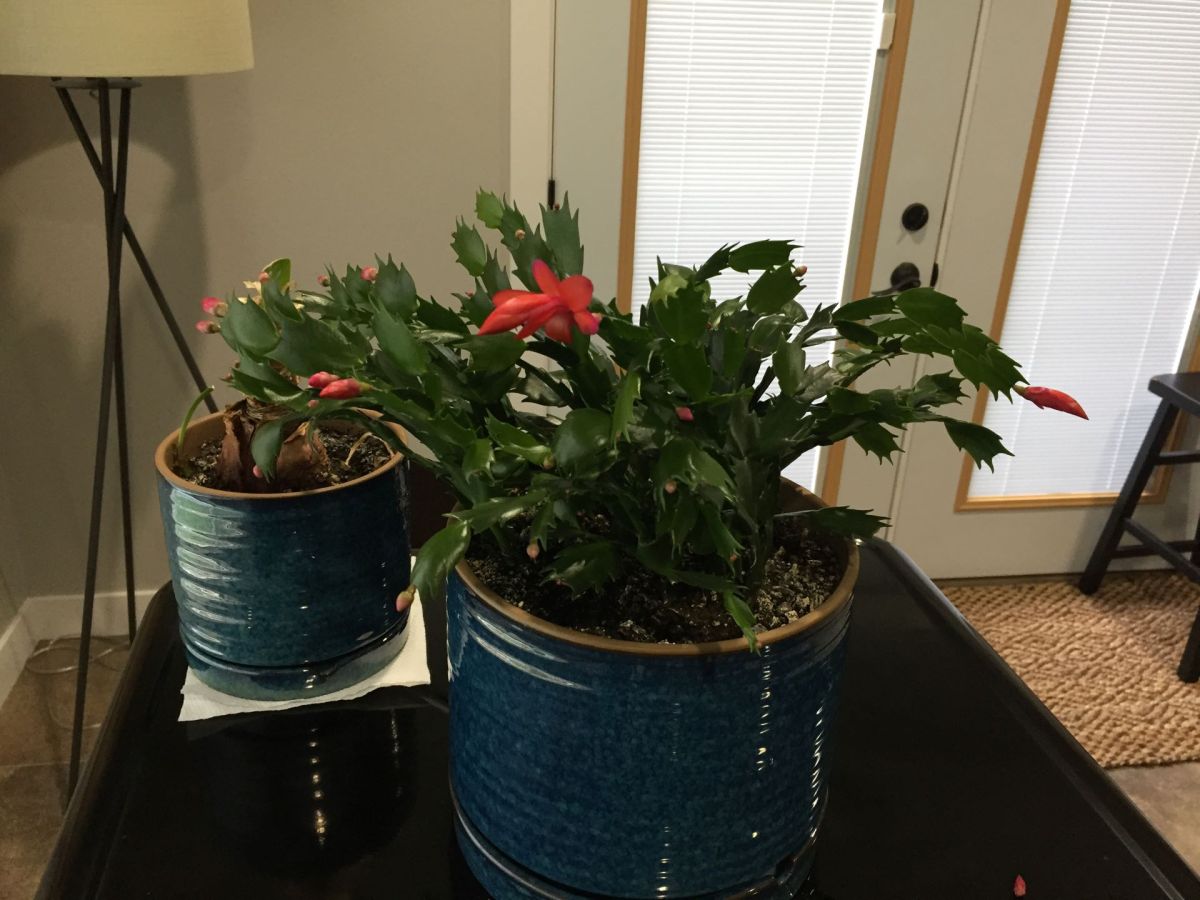
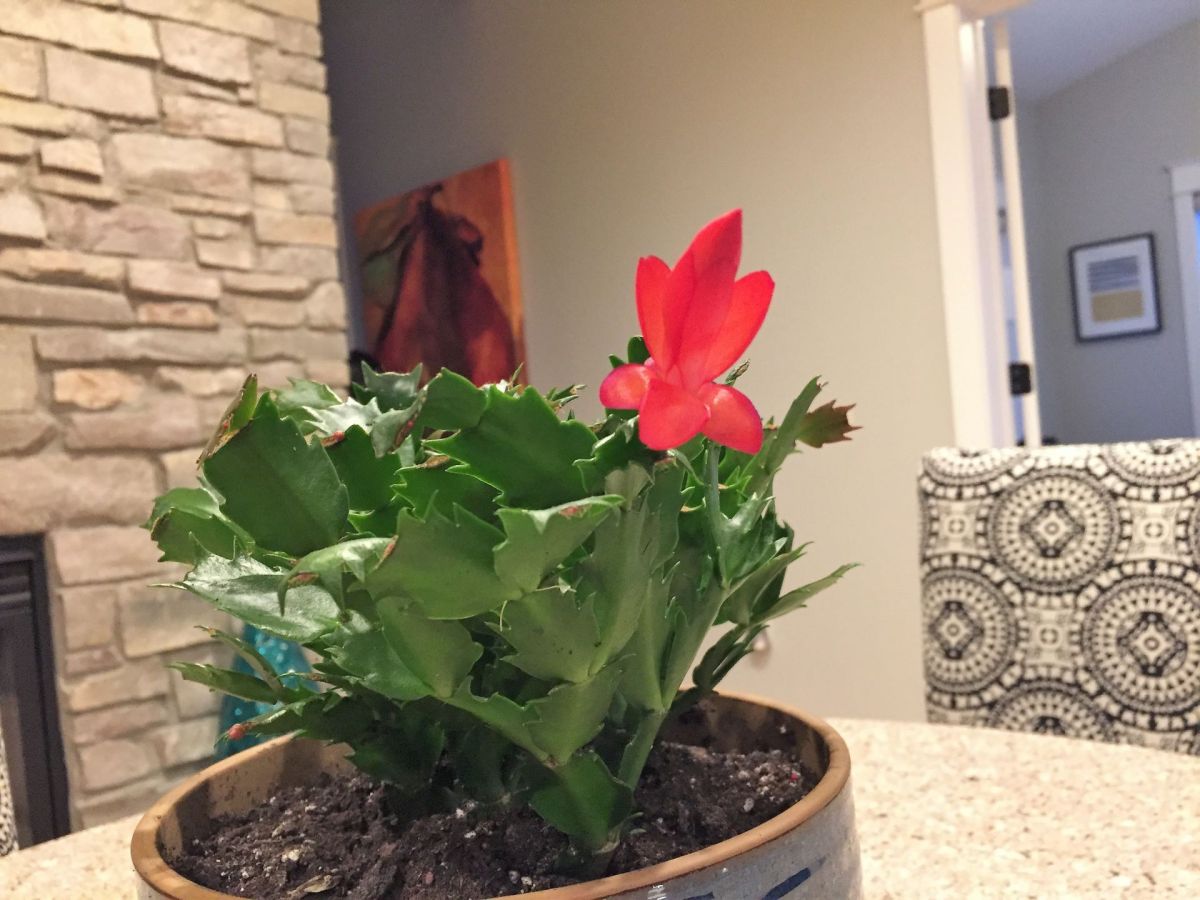
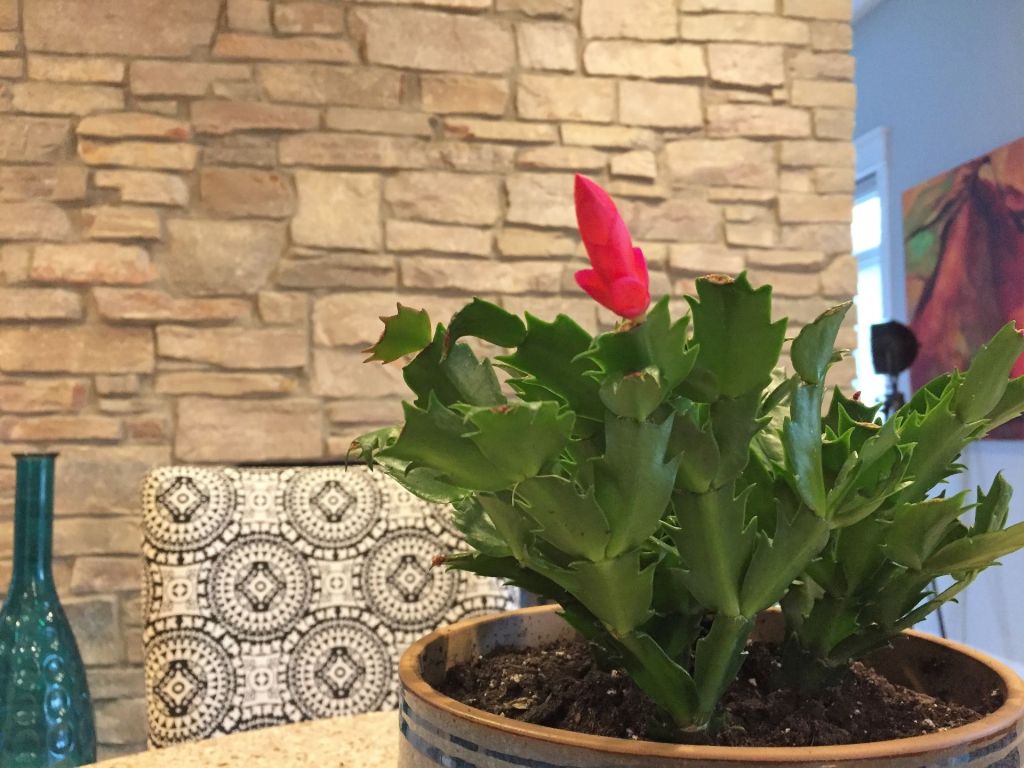
Regardless of what you see in the news, kindness is still out there. Our Christmas cactus is already blooming.

Hawaii Memories

The wildfires in Maui are so devastating. We wish everyone the best. We also had a wave of nostalgia back to 1997 when we visited the Hawaiian Islands on our first vacation in a long while after I finished my psychiatry residency in 1996.

The plane trip was very long and what I remember most about it, flying all the way from Iowa, was the terrible case of bilateral airplane ear which lasted for a couple of hours after we landed in Honolulu. After that, things got a lot better. It was a long time ago, so the memories are a little hazy.

We remember the bus from the airport stopped at the hotel where the tour guide got out to check the reservations for all of us. It was very hot because the bus driver didn’t want to let the vehicle run so as to allow the air conditioner to cool us off. We were probably the youngest members of the tour group. It was the oldest who complained the loudest, finally convincing the bus driver to start the bus to cool everybody off.

After we arrived at the hotel, it was also the oldest members who had the energy to go out and see Don Ho perform. When they got back, they said he got drunk, but he was able to sing “Tiny Bubbles.” We were too exhausted to go. The oldest group members were often the most energetic.

We went a great little restaurant in either Kauai or maybe it was in Hilo, Hawaii (the Big Island) and got plates of huge shrimp. They were shorthanded on servers and several members of the tour group (again the older ones) pitched in to help out.

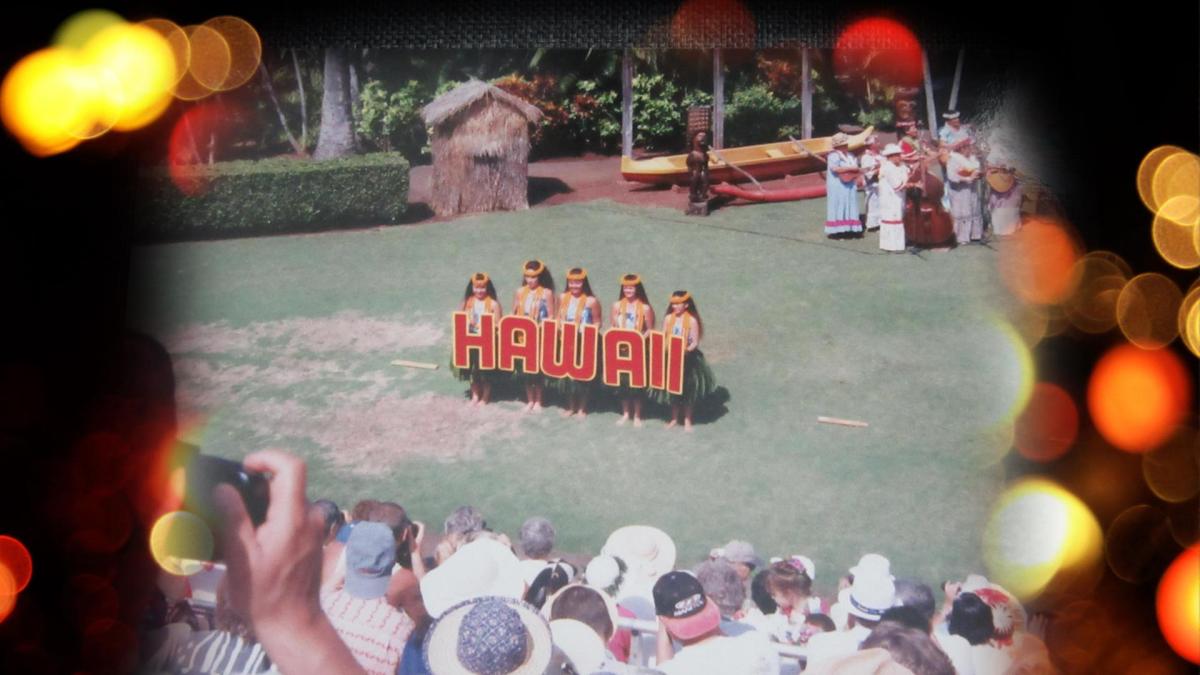
We saw the Kodak Hula Show in Honolulu on the island of Oahu. I read a little about it and the show nearly closed in 1999, but it was taken over by the Hogan Family Foundation for three years at a cost of half-million dollars per year. The show closed in 2002 so that the money could be used to fund educational programs.

Of course. we also visited the USS Arizona Memorial at Pearl Harbor. One of our tour group members who was a veteran of that war wept as he read the names. We became friends with him and his wife and sent each other Christmas cards for a few years afterward.

We saw the Hawaii Tropical Botanical Gardens in Hilo, Hawaii. It’s huge. It was a tribute to the Japanese immigrants to The Big Island who helped build its agricultural history beginning in 1868.

We visited the Wailua River State Park Fern Grotto Area and the Waimea Canyon in Kauai. The latter is also known as The Grand Canyon of the Pacific. I think Kauai was where I first tried coffee-flavored ice cream—Kona coffee, I’m sure. It remains one of my favorites, next to plain vanilla.

We got a few photos of the Iao Needle in the Iao Valley on Maui. We went to a big luau, but I can’t remember exactly where it was. I remember I was coming down with a head cold and had a runny nose. We tried poi, and I’m afraid I didn’t find it very tasty—and it had nothing to do with cold.  Maui was the final island to see on our itinerary. I think we saw the huge Banyan Tree in Lahaina because we have a picture of a very large tree with Sena standing in front of it.

The 150-year-old Banyan Tree was charred in the fire, but it’s still standing.

The Waving Man

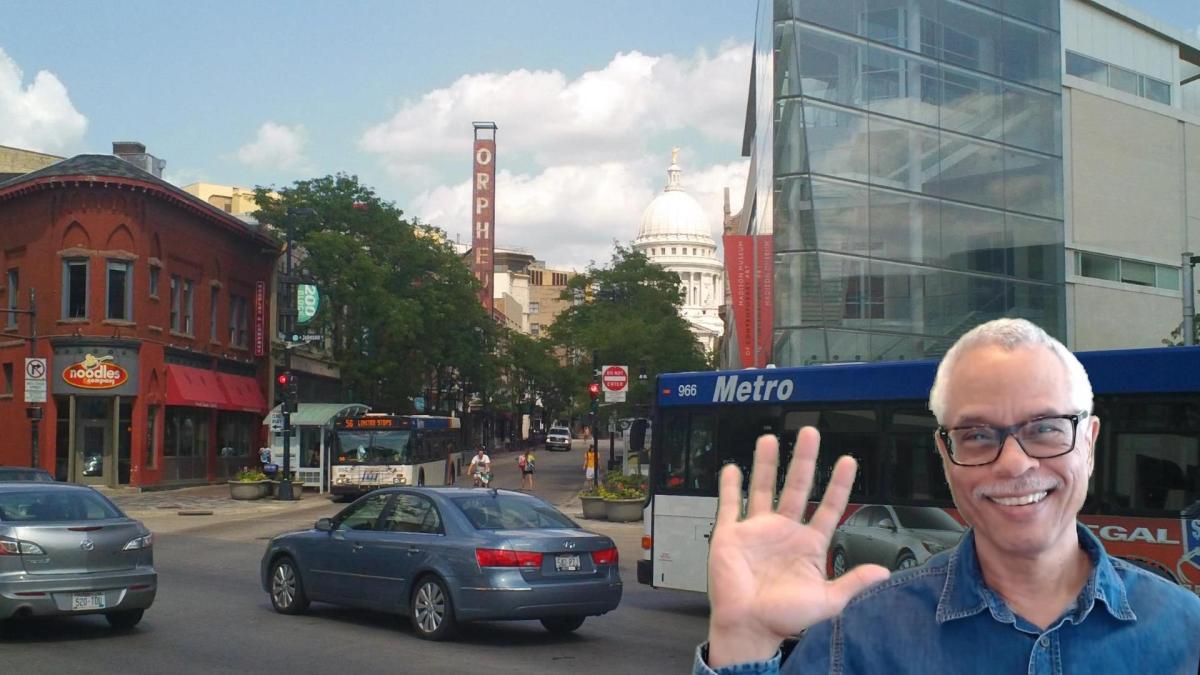
There’s this guy who waves at every passing motorist as he walks to and from his job moving boxes around at the Coralville Hy-Vee. He’s been doing it for years and age is beginning to take over the deepening creases in his face. But it doesn’t dim his smile as he waves at every car he can.

He has to cross the street to and from the store parking lot. When the light changes to green he hustles across. His work apron flaps a little. That’s the only time he doesn’t wave. After he’s safely on the other side of the street, he starts waving and smiling.

We figure he walks to and from wherever he lives. We never could figure out where home is for him. It’s hard to see how he ever makes his destination as often as he stops to wave at all of us driving by.

When we lived in the neighborhood and as I was driving to work and driving home, I would wave back—as I kept my eyes fixed on the road ahead of me.

Every once in a while, I’ll google various questions framed around the term “waving man.” I’ll find occasional news items about a waving man in some city. Nobody ever complains about the waving man and most find him to be the bright spot in the day. There’s never an explanation for this behavior, scientific or otherwise. It’s just accepted for what it is—a generous greeting, wishing you well.

When times are good, the waving man is out there. And when times are bad; when the pain and sorrow and loss are overwhelming—the waving man is there.

Go Baby Robins!

We have a robin’s nest in our back yard with 3 nestlings. I can hear Momma robin nearby, nervous about me and my camera. I’m careful not to disturb them too much, not to stay too long. I hope they make it. I hope for a lot of things like civility, peace, love, acceptance. It should be alright to hope for this one little thing extra—that baby robins grow up.

Music credit:

Midsummer Sky by Kevin MacLeod is licensed under a Creative Commons Attribution 4.0 license. https://creativecommons.org/licenses/by/4.0/

Source: http://incompetech.com/music/royalty-free/index.html?isrc=USUAN1100158

Artist: http://incompetech.com/